Sulpiride-zn
Ukraine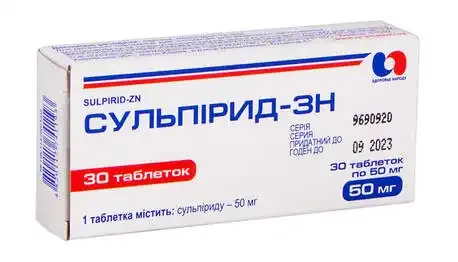
Table of Contents
INSTRUCTIONS FOR MEDICAL USE OF THE MEDICINAL PRODUCT SULPIRID-ZN (SULPIRID-ZN)
Composition:
Active ingredient: sulpiride;
One tablet contains 50 mg of sulpiride;
Excipients: celactose 80 (a mixture of monohydrate lactose and powdered cellulose (75:25)), microcrystalline cellulose, corn starch, colloidal anhydrous silicon dioxide, talc, magnesium stearate.
Pharmaceutical form. Tablets.
Main physicochemical properties: tablets are white or almost white, round cylindrical in shape with flat surfaces and bevelled edges.
Pharmacotherapeutic group. Antipsychotic agents. ATC code N05A L01
Pharmacological properties.
Pharmacodynamics.
Sulpiride affects dopaminergic neurotransmission in the brain as a dopamine agonist, thereby exerting an activating effect at low doses. At higher doses, sulpiride also has antipsychotic activity.
Pharmacokinetics.
After oral administration of a single 50 mg tablet, peak plasma concentration of sulpiride (0.25 mg/L) is reached within 3–6 hours.
The bioavailability of oral dosage forms is 25–35%, with wide individual variability; sulpiride exhibits a linear pharmacokinetic profile following administration in doses ranging from 50 to 300 mg.
Sulpiride is rapidly distributed into body tissues: the apparent volume of distribution at steady state is 0.94 L/kg. Plasma protein binding is 40%.
Sulpiride is found in negligible amounts in breast milk and is able to cross the placental barrier.
Sulpiride is minimally metabolized in the human body.
Sulpiride is primarily excreted by the kidneys via glomerular filtration. Its renal clearance is 126 mL/min. The elimination half-life from plasma is 7 hours.
Clinical characteristics.
Indications.
Short-term symptomatic treatment of anxiety disorders in adults when usual therapeutic measures have not been effective.
Severe behavioural disorders (agitation, self-mutilation, stereotypy) in children aged 6 years and older, particularly in patients with autistic syndromes.
Contraindications.
- Hypersensitivity to sulpiride or to any of the excipients of the medicinal product (see section "Composition").
- Prolactin-dependent tumours (e.g., prolactin-secreting pituitary adenoma (prolactinoma) and breast cancer).
- Known or suspected diagnosis of phaeochromocytoma.
- Acute porphyria.
- Combinations with dopamine receptor agonists not used for the treatment of Parkinson's disease (cabergoline, quinagolide), citalopram, escitalopram, hydroxyzine, domperidone, and piperazine (see section "Interaction with other medicinal products and other forms of interaction").
Interaction with other medicinal products and other forms of interaction.
Sedatives
It should be borne in mind that many medicinal products or substances may exhibit additive central nervous system depressant effects and lead to reduced mental alertness. These include morphine derivatives (analgesics, antitussives, and substitution therapy agents), neuroleptics, barbiturates, benzodiazepines, non-benzodiazepine anxiolytics (such as meprobamate), hypnotics, sedative antidepressants (amitriptyline, doxepin, mianserin, mirtazapine, trimipramine), sedative H1-antihistamines, centrally acting antihypertensive agents, baclofen, and thalidomide.
Medicinal products that may induce paroxysmal ventricular tachycardia (torsades de pointes)
This serious cardiac arrhythmia may be caused by several medicinal products, with or without antiarrhythmic activity. Precipitating factors include hypokalaemia (see "Combinations requiring caution (Potassium-sparing agents)") and bradycardia (see "Combinations requiring caution (Medicinal products causing bradycardia)") or the presence of congenital or acquired QT interval prolongation.
Such agents include, in particular, antiarrhythmic drugs of class Ia and III, and some neuroleptics. This effect is also induced by other medicinal products not belonging to these classes. These include erythromycin, dolasetron, spiramycin, and vinpocetine, but only in intravenous formulations.
Concomitant administration of two "torsadogenic" (inducing torsades de pointes) medicinal products is generally contraindicated.
However, some of these medicinal products are exceptions, as their use cannot be avoided. Therefore, they are not recommended for use in combination with medicinal products that may induce torsades de pointes. This applies to methadone, antiparasitic agents (chloroquine, halofantrine, lumefantrine, pentamidine), and neuroleptics.
However, citalopram, domperidone, and escitalopram are not included among these exceptions: their concomitant use with all medicinal products that may induce torsades de pointes is contraindicated.
Contraindicated combinations (see section "Contraindications").
Citalopram, escitalopram
Increased risk of ventricular arrhythmias, particularly paroxysmal torsade de pointes (torsades de pointes).
Non-Parkinson’s disease dopamine receptor agonists (cabergoline, quinagolide)
Mutual antagonism exists between dopamine agonists and neuroleptics.
Domperidone
Increased risk of ventricular arrhythmia, particularly paroxysmal torsade de pointes (torsades de pointes).
Hydroxyzine
Increased risk of ventricular arrhythmia, particularly paroxysmal torsade de pointes (torsades de pointes).
Piperazine
Increased risk of ventricular arrhythmia, particularly paroxysmal torsade de pointes (torsades de pointes).
Unwanted combinations (see section "Special precautions for use").
Antiparasitic agents that may induce paroxysmal ventricular tachycardia (torsades de pointes) (chloroquine, halofantrine, lumefantrine, pentamidine)
Increased risk of ventricular arrhythmias, particularly paroxysmal torsade de pointes (torsades de pointes). If possible, one of the two concomitantly used medicinal products should be discontinued.
If concomitant treatment cannot be avoided, QT interval should be assessed by ECG before initiating treatment and monitored during therapy.
Anti-Parkinson’s dopamine agonists (amantadine, apomorphine, bromocriptine, entacapone, lisuride, pergolide, piribedil, pramipexole, ropinirole, rasagiline, rotigotine, selegiline)
Mutual antagonism exists between dopamine agonists and neuroleptics.
Dopamine agonists may induce or exacerbate psychiatric disorders. In patients with Parkinson’s disease receiving treatment with dopamine agonists, if neuroleptics are required, the doses of dopamine agonists should be gradually reduced until complete withdrawal (abrupt discontinuation may expose the patient to the risk of neuroleptic malignant syndrome).
Other medicinal products that may cause torsade de pointes (paroxysmal ventricular tachycardia) (Class Ia antiarrhythmics (quinidine, hydroquinidine, disopyramide) and class III (amiodarone, dronedarone, sotalol, dofetilide, ibutilide), and other agents such as arsenic compounds, diphenylhydantoin, intravenous dolasetron, domperidone, intravenous erythromycin, hydroxychloroquine, levofloxacin, mequitazine, mizolastine, prucalopride, intravenous vinpocetine, moxifloxacin, intravenous spiramycin, toremifene, and vandetanib).
High risk of ventricular arrhythmias, particularly torsade de pointes (torsades de pointes).
Other neuroleptics that may induce torsade de pointes (paroxysmal ventricular tachycardia) (amisulpride, chlorpromazine, thiethylazine, droperidol, flupentixol, fluphenazine, haloperidol, levomepromazine, pimozide, pipamperone, pipotiazide, sulpiride, tiapride, zuclopenthixol)
High risk of ventricular arrhythmias, particularly torsade de pointes (torsades de pointes).
Alcohol (beverage or excipient)
Potentiation of sedative effects of neuroleptics.
Due to impaired concentration ability, driving vehicles and operating machinery may be hazardous.
Patients should avoid consuming alcoholic beverages or using medicinal products containing alcohol.
Levodopa
Mutual antagonism exists between levodopa and neuroleptics.
In patients with Parkinson’s disease receiving treatment with dopamine agonists and neuroleptics, the minimum effective doses of both agents should be prescribed.
Metadone
Increased risk of ventricular arrhythmias, particularly torsade de pointes (torsades de pointes).
Combinations requiring caution
Anagrelide
Increased risk of ventricular arrhythmias, particularly torsade de pointes (torsades de pointes). During concomitant use, ECG monitoring and clinical surveillance are required.
Azithromycin
Increased risk of ventricular arrhythmias, particularly torsade de pointes (torsades de pointes). During concomitant use, ECG monitoring and clinical surveillance are required.
Beta-blockers used in patients with heart failure (bisoprolol, carvedilol, metoprolol, nebivolol)
Increased risk of ventricular arrhythmias, particularly torsade de pointes (torsades de pointes). Clinical monitoring and ECG control are required.
Medicinal products causing bradycardia (e.g., class Ia antiarrhythmics, beta-blockers, some class III antiarrhythmics, certain calcium channel blockers, crizotinib, digoxin glycosides, pasireotide, pilocarpine, cholinesterase inhibitors)
Increased risk of ventricular arrhythmias, particularly torsade de pointes (torsades de pointes). Clinical monitoring and ECG control are required.
Cyprofl oxacin, levofloxacin, norfloxacin
Increased risk of ventricular arrhythmias, particularly torsade de pointes (torsades de pointes). During concomitant use, ECG monitoring and clinical surveillance are required.
Clarithromycin
Increased risk of ventricular arrhythmias, particularly torsade de pointes (torsades de pointes). During concomitant use, ECG monitoring and clinical surveillance are required.
Potassium-sparing agents (potassium-sparing diuretics, alone or in combination, stimulant laxatives, glucocorticoids, tetracosactide, and intravenous amphotericin B)
Increased risk of ventricular arrhythmias, particularly torsade de pointes (torsades de pointes).
Prior to administration, any existing hypokalaemia should be corrected, and clinical monitoring, electrolyte control, and ECG monitoring should be performed.
Lithium
Risk of neuropsychiatric symptoms suggestive of neuroleptic malignant syndrome or lithium intoxication.
Clinical status and laboratory results should be monitored regularly, especially at the beginning of concomitant treatment. If early signs of neurotoxicity appear, discontinuation of one of the two medicinal products is recommended.
Ondansetron
Increased risk of ventricular arrhythmias, particularly torsade de pointes (torsades de pointes). During concomitant use, ECG monitoring and clinical surveillance are required.
Roxithromycin
Increased risk of ventricular arrhythmias, particularly torsade de pointes (torsades de pointes). During concomitant use, ECG monitoring and clinical surveillance are required.
Sucralfate
Reduced gastrointestinal absorption of sulpiride.
A time interval (preferably more than 2 hours) should be maintained between administration of sucralfate and sulpiride.
Locally acting gastrointestinal agents, antacids, and activated charcoal
Reduced gastrointestinal absorption of sulpiride.
A time interval (preferably more than 2 hours) should be maintained between administration of these agents and sulpiride.
Combinations with warnings for use
Other sedative agents
More pronounced central nervous system depression. Due to impaired concentration ability, driving vehicles and operating machinery may be hazardous.
Antihypertensive agents
Increased risk of arterial hypotension, particularly orthostatic hypotension.
Beta-blockers used in patients with heart failure (bisoprolol, carvedilol, metoprolol, nebivolol)
For beta-blockers used in heart failure, see "Combinations requiring caution". Vasodilatory effect and risk of hypotension, particularly postural (additive effect).
Dapoxetine
Risk of increased frequency of adverse effects, particularly dizziness or syncope.
Orlistat
Risk of reduced treatment efficacy when used concomitantly with orlistat.
Special precautions for use.
In patients suffering from diabetes mellitus or having risk factors for developing diabetes, blood glucose levels should be adequately monitored at the beginning of sulpiride therapy.
Except for specific indications, this medicinal product should not be prescribed to patients with Parkinson's disease.
For patients with renal impairment, reduced dosage and intensified monitoring are recommended; in cases of severe renal impairment, intermittent treatment courses are advisable.
Careful monitoring during sulpiride therapy is required for:
- Patients with epilepsy, as sulpiride may lower the seizure threshold; cases of seizures have been reported in patients treated with sulpiride (see section "Side effects");
- Elderly patients, who are more susceptible to postural hypotension, sedative effects, and extrapyramidal effects of the drug.
Leukopenia, neutropenia, and agranulocytosis have been reported during treatment with antipsychotics, including sulpiride. Infections of unknown etiology or unexplained fever may be signs of leukopenia (see section "Side effects"); in such cases, a blood test should be performed immediately.
Potentially fatal neuroleptic malignant syndrome.
If unexplained fever occurs, treatment must be discontinued immediately, as this may be one of the symptoms of a potentially fatal syndrome that may develop during treatment with neuroleptics (pallor, hyperthermia, autonomic dysfunction, impaired consciousness, muscle rigidity). Signs of autonomic dysfunction, such as excessive sweating and changes in blood pressure, may develop prior to hyperthermia and should therefore be considered as early warning signs.
Although this effect of neuroleptics may be idiopathic in nature, risk factors such as dehydration and organic brain damage may be present.
QT interval prolongation.
Sulpiride may cause dose-dependent prolongation of the QT interval. This effect, which increases the risk of serious ventricular arrhythmias, including torsades de pointes, is more frequently observed in patients with bradycardia, hypokalemia, and congenital or acquired QT prolongation (especially when sulpiride is taken concomitantly with medicinal products that prolong the QT interval) (see section "Side effects").
Therefore, before initiating treatment and whenever clinically feasible, the presence of risk factors for this type of arrhythmia should be assessed: heart rate below 55 beats per minute, hypokalemia, congenital QT prolongation, or concomitant use of medicinal products that may cause marked bradycardia (below 55 beats per minute), hypokalemia, slowed intracardiac conduction, or QT interval prolongation (see sections "Contraindications" and "Interaction with other medicinal products and other forms of interaction").
Except in emergency situations, ECG monitoring is recommended during the initial evaluation of patients scheduled to receive neuroleptic therapy.
Stroke.
In randomized, placebo-controlled clinical trials in elderly patients with dementia treated with certain atypical antipsychotics, an increased risk of stroke was observed compared to those receiving placebo. The mechanism of this increased risk is unknown. An increased risk cannot be excluded when other antipsychotics are used or in other patient populations. This medicinal product should be prescribed with caution to patients who have risk factors for stroke.
Elderly patients with dementia.
The risk of mortality is increased in elderly patients with psychosis associated with dementia who are treated with antipsychotics.
An analysis of data from 17 placebo-controlled trials (with a mean duration of 10 weeks), involving patients generally treated with atypical antipsychotics, showed that the risk of death was 1.6 to 1.7 times higher in patients receiving these drugs compared to placebo.
After a mean treatment period of 10 weeks, the mortality risk was 4.5% in the treatment group compared to 2.6% in the placebo group.
Although the causes of deaths in clinical trials with atypical antipsychotics varied, most deaths resulted from cardiovascular events (such as heart failure, sudden death) or infectious diseases (e.g., pneumonia).
Epidemiological studies suggest that treatment with conventional antipsychotics may increase mortality to a similar extent as atypical antipsychotics.
The relative contribution of the antipsychotic agent and patient characteristics to the increased mortality rate in epidemiological studies remains unclear.
Venous thromboembolism (VTE).
Cases of venous thromboembolism (VTE), sometimes fatal, have been reported during antipsychotic treatment. Since patients taking antipsychotics often have acquired risk factors for VTE, all potential risk factors for VTE should be assessed before and during treatment with Sulpiride-ZN, and preventive measures should be taken (see section "Side effects").
Breast cancer.
Since sulpiride may increase prolactin levels, it should be used with caution. Regardless of sex, all patients with a personal or family history of breast cancer require careful monitoring during sulpiride treatment.
Reduced intestinal motility.
Cases of intestinal obstruction have been reported in patients receiving antipsychotic drugs. Rare cases of ischemic colitis and intestinal necrosis, sometimes fatal, have also been reported. Most patients were concurrently receiving one or more drugs that reduce gastrointestinal motility (particularly drugs with anticholinergic properties). Particular attention should be paid to symptoms such as abdominal pain with vomiting and/or diarrhea. Constipation should be promptly recognized and actively treated. The development of paralytic or mechanical intestinal obstruction requires immediate medical intervention.
Concomitant use of this medicinal product with alcohol, levodopa, dopamine receptor agonists, antiparasitic agents that may cause torsades de pointes, methadone, other neuroleptics, or medicinal products that may induce torsades de pointes is not recommended (see section "Side effects").
Even at low doses, the risk of developing tardive dyskinesia should be considered, particularly in elderly patients.
Since the efficacy and safety of sulpiride in children have not been fully established, caution is required when using this agent (see section "Dosage and administration"). Due to the drug's effect on cognitive function, annual clinical assessments to evaluate learning ability are recommended. The dosage should be periodically adjusted according to the child's clinical status. The use of tablets is contraindicated in children under 6 years of age due to the risk of airway obstruction.
Sulpiride has anticholinergic effects; therefore, it should be used with caution in patients with glaucoma, intestinal obstruction, congenital stenosis of the gastrointestinal tract, urinary retention, or a history of prostate hyperplasia.
Sulpiride should be used with caution in patients with hypertension, especially in elderly patients, due to the risk of hypertensive crisis. Close patient monitoring is required.
This medicinal product contains lactose. If the patient has a known intolerance to certain sugars, medical advice should be sought before taking this medicinal product.
Use during pregnancy or breastfeeding.
Pregnancy.
In animal studies, reduced fertility related to the pharmacological properties of the drug (prolactin-mediated effect) has been observed. Results from animal studies do not indicate a direct or indirect harmful effect on pregnancy, embryonic/fetal development, or postnatal development. Data in humans regarding the effects on pregnancy are very limited. In nearly all reported cases of fetal or neonatal developmental abnormalities associated with sulpiride use during pregnancy, alternative explanations appear more plausible. Therefore, due to limited experience with sulpiride use during pregnancy, its use is not recommended. Neonates whose mothers received antipsychotics (including Sulpiride-ZN) during the third trimester of pregnancy are at risk of developing adverse effects after birth, including extrapyramidal symptoms and/or withdrawal symptoms, with varying severity and duration. Reported adverse reactions include agitation, hypertonia, hypotonia, tremor, somnolence, respiratory disorders, and feeding difficulties. Therefore, newborns should be closely monitored.
Breastfeeding period.
Since sulpiride is excreted in breast milk, breastfeeding during treatment is not recommended.
Ability to influence reaction speed when driving or operating machinery.
Patients, especially those who drive vehicles or operate machinery, should be warned that use of this medicinal product may cause somnolence (see section "Side effects"). Driving vehicles or operating machinery is contraindicated during treatment with this drug.
Method of Administration and Dosage
For oral use.
The minimum effective dose should always be prescribed.
If the patient's clinical condition allows, treatment should start with a low dose, followed by gradual dose titration.
Adults.
Short-term symptomatic treatment of anxiety states in cases where conventional therapeutic measures have failed: the daily dose is 50–150 mg for no more than 4 weeks.
Children aged 6 years and older.
Severe behavioral disorders (agitation, self-mutilation, stereotypy) in children aged 6 years and older, especially in patients with autistic syndromes: 5–10 mg/kg body weight per day.
Children. The use of tablets is contraindicated in children under 6 years of age.
Overdose.
Experience with sulpiride overdose is limited. Dystonic reactions may occur, including spasmodic torticollis, tongue protrusion, and trismus. In some patients, life-threatening parkinsonian symptoms or even coma may develop.
Fatal cases have mainly been reported with sulpiride used in combination with other psychotropic substances.
Sulpiride is partially eliminated during hemodialysis. There is no specific antidote for sulpiride.
Treatment should be symptomatic. Resuscitation with careful monitoring of cardiac and respiratory function (risk of QT interval prolongation and ventricular arrhythmias) should be maintained until full recovery. In case of severe extrapyramidal syndrome, anticholinergic agents should be administered.
Adverse reactions.
Blood and lymphatic system disorders.
Uncommon: leucopenia.
Frequency unknown: neutropenia, agranulocytosis.
Immune system disorders.
Frequency unknown: anaphylactic reactions: urticaria and anaphylactic shock.
Endocrine disorders.
Common: hyperprolactinaemia.
Psychiatric disorders.
Common: insomnia.
Frequency unknown: confusion.
Nervous system disorders.
Common: sedative effect or drowsiness; extrapyramidal syndrome, which is partially reversible upon administration of anticholinergic anti-Parkinson drugs; parkinsonism, tremor, akathisia.
Uncommon: hypertonia, dyskinesia, dystonia.
Rare: oculogyric crisis.
Frequency unknown: potentially fatal neuroleptic malignant syndrome (see section "Special precautions"); hypokinesia; seizures (see section "Special precautions").
Tardive dyskinesia, which may occur during prolonged treatment with all neuroleptics. In this case, anti-Parkinson drugs are ineffective and may worsen clinical manifestations.
Metabolism and nutrition disorders.
Frequency unknown: hyponatraemia, syndrome of inappropriate antidiuretic hormone secretion.
Cardiac disorders.
Rare: ventricular arrhythmias, including paroxysmal ventricular tachycardia of the torsades de pointes type and ventricular tachycardia, which may lead to ventricular fibrillation or cardiac arrest.
Frequency unknown: QT interval prolongation, sudden fatal outcome (see section "Special precautions").
Vascular disorders.
Uncommon: orthostatic hypotension.
Frequency unknown: venous thromboembolism, pulmonary artery embolism, deep vein thrombosis (see section "Special precautions"), increased blood pressure (see section "Special precautions").
Respiratory, thoracic and mediastinal disorders.
Frequency unknown: aspiration pneumonia (mainly when sulpiride is used concomitantly with other central nervous system depressants).
Gastrointestinal disorders.
Common: constipation.
Uncommon: hypersalivation.
Hepatobiliary disorders.
Common: increased liver enzyme activity.
Frequency unknown: hepatocellular, cholestatic or mixed liver injury.
Skin and subcutaneous tissue disorders.
Common: maculopapular rash.
Pregnancy, postpartum and perinatal period.
Frequency unknown: withdrawal syndrome in newborns (see section "Use during pregnancy or breastfeeding").
Reproductive system and breast disorders.
Common: galactorrhoea.
Uncommon: amenorrhoea, impotence or frigidity.
Frequency unknown: gynaecomastia.
General disorders.
Common: weight gain.
Reporting of suspected adverse reactions.
Reporting suspected adverse reactions after medicine authorization is important. It allows ongoing monitoring of the benefit-risk balance of the medicine. Healthcare professionals are required to report any adverse reactions via the adverse reaction reporting system in Ukraine.
Shelf life. 3 years.
Storage conditions.
Store in the original packaging at a temperature not exceeding 25 °C.
Keep out of reach of children.
Packaging.
10 tablets in a blister; 2 or 3 blisters in a carton.
Prescription category. Prescription only.
Manufacturer.
Limited liability company "Kharkiv Pharmaceutical Enterprise "Zdorov'ya Narodu".
Manufacturer's location and address of business activity.
41 Kuilikivska Street, Kharkiv, Kharkiv region, 61002, Ukraine.