Sulfasalazine-en
Ukraine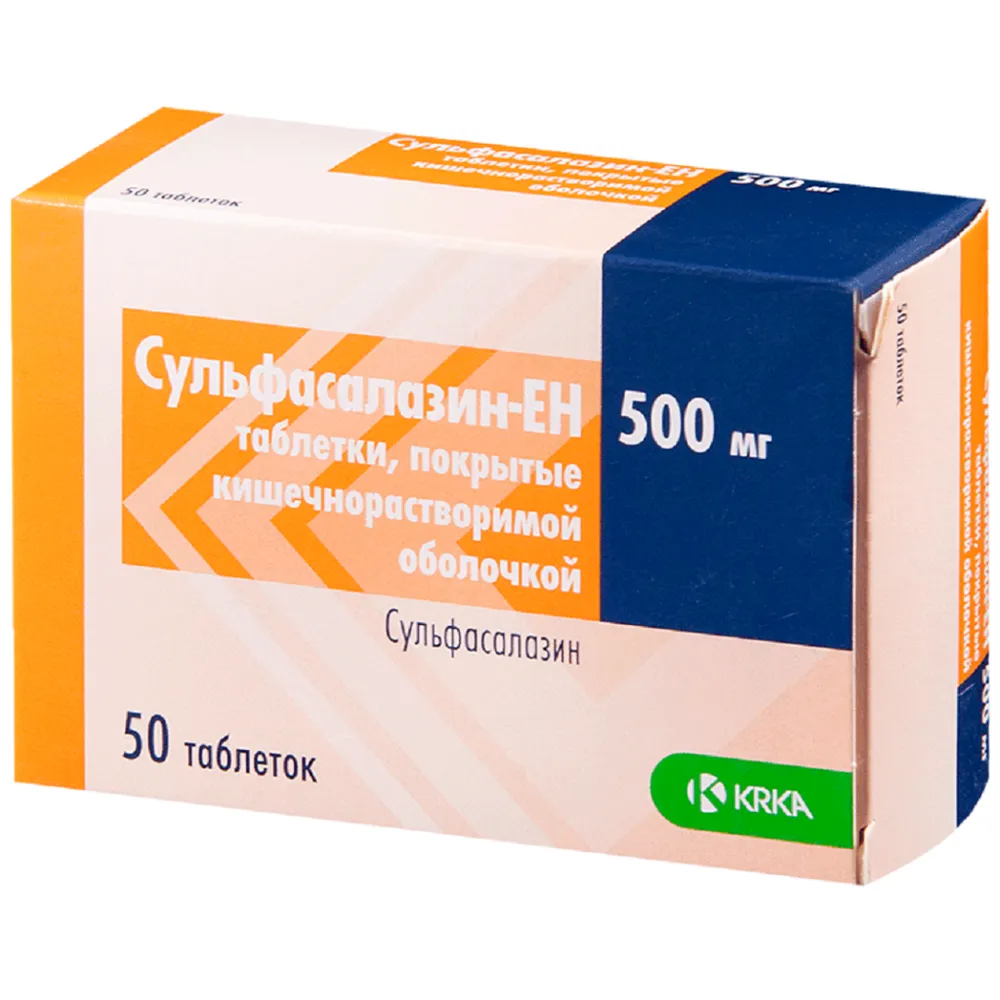
Table of Contents
INSTRUCTIONS FOR MEDICAL USE OF THE MEDICINAL PRODUCT Sulfasalazin-EN (Sulfasalazin-EN)
Composition:
Active substance: sulfasalazine;
One tablet contains 500 mg of sulfasalazine;
Excipients: povidone, pregelatinized starch, magnesium stearate, colloidal anhydrous silicon dioxide, titanium dioxide (E 171), iron oxide yellow (E 172), talc, triethyl citrate, macrogol 6000, sodium carboxymethylcellulose, methacrylate copolymer (type A).
Pharmaceutical form. Enteric-coated tablets.
Main physicochemical properties: round, light-brown, slightly biconvex tablets, coated with a film layer.
Pharmacotherapeutic group. Anti-inflammatory agents used in intestinal diseases. Aminosalicylic acid and related substances. Sulfasalazine.
ATC code A07EC01.
Pharmacological properties.
Pharmacodynamics.
Accumulates in connective tissue of the intestine with release of 5-aminosalicylic acid, which has anti-inflammatory properties, and sulfapyridine, which exerts antimicrobial activity against diplococci, streptococci, gonococci, and Escherichia coli. Exhibits immunosuppressive action, particularly in connective tissue, intestinal wall, and serous fluid, where its concentration is highest. Sulfapyridine reduces systemic inflammation and exerts antibacterial effects, interferes with the activity of natural killer cells and leukocyte transformation. The anti-inflammatory effect of 5-aminosalicylic acid (mesalazine) is most significant in the treatment of inflammatory bowel diseases. Primarily acting locally, it inhibits cyclooxygenase and lipoxygenase in the intestinal wall, thereby preventing the formation of prostaglandins, leukotrienes, and other inflammatory mediators. Due to low systemic absorption, it reduces inflammation in the colon.
Pharmacokinetics.
Approximately 30% of the administered sulfasalazine dose is absorbed in the small intestine; the remaining 70% is metabolized by intestinal bacteria in the colon into sulfapyridine and 5-aminosalicylic acid. Maximum serum concentrations of sulfasalazine and its metabolites vary considerably between patients—higher in individuals with low acetylation capacity, and associated with a higher incidence of adverse effects. Maximum serum concentration of sulfasalazine is reached 3–12 hours after administration of enteric-coated tablets. It binds well to plasma proteins and connective tissue. Most of the absorbed sulfasalazine undergoes enterohepatic recirculation via bile into the intestine; a small amount is excreted unchanged in urine. The elimination half-life of sulfasalazine ranges from 5 to 10 hours.
The majority of released sulfapyridine is absorbed and reaches peak serum concentration 12–24 hours after drug administration. It is metabolized in the liver through acetylation, hydroxylation, and conjugation with glucuronic acid, and is excreted by the kidneys. The elimination half-life ranges from 6 to 14 hours, depending on acetylation rate. Only about 30% of 5-aminosalicylic acid is absorbed, acetylated in the liver, and excreted renally in urine. The remainder is excreted unchanged in feces.
Clinical characteristics.
Indications.
- Treatment of mild to moderate ulcerative colitis and as adjunctive therapy in severe ulcerative colitis; prolongation of the remission period between acute attacks of ulcerative colitis;
- treatment of patients with rheumatoid arthritis in whom salicylates or other nonsteroidal anti-inflammatory drugs (NSAIDs) have been insufficiently effective (e.g., inadequate therapeutic response or intolerance despite appropriate dosing of one or more NSAIDs);
- treatment of juvenile rheumatoid arthritis with polyarticular syndrome when salicylates or other NSAIDs have been insufficiently effective.
Contraindications.
- Hypersensitivity to sulfasalazine, its metabolites, sulfonamides, or salicylates;
- intestinal obstruction or urinary tract obstruction;
- porphyria, as sulfonamides have been reported to precipitate attacks in acute porphyria;
- severe renal impairment (glomerular filtration rate < 30 mL/min/1.73m²) and/or severe hepatic impairment;
- patients with a history of severe asthma attacks, urticaria, rhinitis, or other allergic reactions induced by acetylsalicylic acid or other NSAIDs. Anaphylactic reactions with fatal outcomes have been reported in such patients.
Interaction with other medicinal products and other forms of interaction.
Reduced absorption of folic acid and digoxin has been observed when administered concomitantly with sulfasalazine.
Cases of bone marrow suppression and leukemia have been reported with concomitant use of 6-mercaptopurine or its prodrug azathioprine with sulfasalazine (oral administration).
Concomitant administration of 2 g daily doses of sulfasalazine and 7.5 mg weekly doses of methotrexate in 15 patients with rheumatoid arthritis (in a drug interaction study) did not result in changes in pharmacokinetic parameters of these medicinal products.
Daily doses of sulfasalazine 2 g (up to 3 g) and weekly doses of methotrexate 7.5 mg (up to 15 mg) were administered either as monotherapy or in combination in 310 patients with rheumatoid arthritis in two controlled 52-week clinical trials. The overall toxicity profile for this combination showed an increased frequency of gastrointestinal adverse events, particularly nausea, compared to the frequency observed with either medicinal product used alone.
Laboratory parameters. There have been several reports of possible interference with laboratory test results (liquid chromatography) for normetanephrine in urine, leading to false-positive results in patients receiving sulfasalazine or its metabolite, mesalamine/mesalazine.
Special precautions for use.
Sulfasalazine-EN is particularly indicated for patients with ulcerative colitis who cannot tolerate uncoated sulfasalazine tablets due to gastrointestinal intolerance and in whom there is evidence that this intolerance is not primarily related to high serum levels of sulfapyridine and its metabolites—for example, in patients experiencing nausea and vomiting after the first few doses of the drug, or in patients in whom dose reduction has not alleviated gastrointestinal side effects. Patients with rheumatoid arthritis or juvenile rheumatoid arthritis should continue to follow recommended rest and physiotherapy regimens as appropriate. Unlike anti-inflammatory agents, the therapeutic effect of Sulfasalazine-EN is not immediate. Concomitant treatment with analgesics and/or nonsteroidal anti-inflammatory drugs (NSAIDs) is recommended at least until the onset of the drug's effect.
Cases of liver failure and elevated serum liver enzymes have been reported during treatment with 5-aminosalicylic acid/mesalazine products in patients with a history of liver disease. Therefore, Sulfasalazine-EN is contraindicated in patients with severe hepatic impairment (see "Contraindications"). Caution is required when administering the drug to patients with moderate to severe liver impairment, and it should only be used if the expected benefit significantly outweighs the potential risk. Liver function should be monitored before starting therapy and periodically during treatment. Renal adverse events, including minimal change nephropathy and chronic interstitial nephritis, have been associated with mesalamine and its prodrugs. Sulfasalazine-EN is contraindicated in patients with severe renal impairment (see "Contraindications"). Caution is required when administering the drug to patients with moderate to severe renal impairment, and it should only be used if the expected benefit significantly outweighs the potential risk. Renal function should be monitored before starting therapy and periodically during treatment.
Fatal reactions associated with sulfasalazine use, including hypersensitivity reactions, agranulocytosis, aplastic anemia, other blood dyscrasias, liver and kidney damage, irreversible neuromuscular and central nervous system disorders, and fibrosing alveolitis, have been reported. The presence of clinical symptoms such as sore throat, fever, pallor, purpura, or jaundice may indicate serious blood disorders or hepatotoxicity. Patients receiving Sulfasalazine-EN should undergo a complete blood count and urine analysis with careful microscopic examination. Treatment with sulfasalazine should be discontinued pending the results of blood tests.
Oligospermia and infertility may occur in men receiving sulfasalazine therapy. These effects are reversible upon discontinuation of the drug within 2–3 months.
Serious infections, including fatal sepsis and pneumonia, have been reported. Some infections were associated with agranulocytosis, neutropenia, or myelosuppression. If a patient develops a serious infection, the drug should be discontinued. Patients should be closely monitored during and after treatment for signs and symptoms of infection. Any patient who develops a new infection during treatment should undergo immediate and comprehensive diagnostic evaluation to rule out infection and myelosuppression. Caution should be exercised when considering the use of sulfasalazine in patients with a history of recurrent or chronic infections, concomitant diseases, or those receiving other medications that may increase the risk of infection.
Severe hypersensitivity reactions may affect internal organs, leading to hepatitis, nephritis, myocarditis, mononucleosis-like syndrome (pseudomononucleosis), hematological abnormalities (e.g., hemophagocytic histiocytosis), and/or pneumonitis, including eosinophilic infiltration.
Serious skin reactions associated with sulfasalazine use, some with fatal outcomes, including exfoliative dermatitis, Stevens-Johnson syndrome, and toxic epidermal necrolysis, have been reported. Patients are at highest risk during the early stages of therapy, and most such events occur within the first month of treatment.
Sulfasalazine must be discontinued at the first sign of skin rash, mucosal lesions, or other signs of hypersensitivity.
Severe, life-threatening systemic hypersensitivity reactions, such as drug rash with eosinophilia and systemic symptoms (DRESS), have been reported in patients receiving sulfasalazine. Early signs of hypersensitivity, such as fever or lymphadenopathy, may appear even in the absence of skin rash. If such signs or symptoms occur, the patient must be evaluated immediately. If no other cause can be identified, sulfasalazine therapy must be discontinued.
Patients with known hypersensitivity to furosemide, thiazide diuretics, or carbonic anhydrase inhibitors should be monitored for signs of skin rash, mucosal damage, or other allergic reactions.
Precautionary measures.
General considerations. The drug should be prescribed with caution in patients with severe allergies or bronchial asthma. Adequate fluid intake should be ensured to prevent crystalluria and stone formation. Patients with glucose-6-phosphate dehydrogenase (G6PD) deficiency should be closely monitored for signs of hemolytic anemia, which is usually dose-dependent. In the event of toxic or hypersensitivity reactions, treatment with the drug should be immediately discontinued.
Isolated cases have been reported where Sulfasalazine-EN tablets passed through the gastrointestinal tract without disintegrating. In such cases, the drug should be discontinued immediately.
Patient information.
Patients should be informed about the potential for adverse effects and the need for careful medical monitoring. The appearance of sore throat, fever, pallor, purpura, or jaundice may indicate a serious blood disorder. Patients experiencing any of these symptoms should seek immediate medical attention.
Patients should be instructed to take the drug in two equal doses, preferably after meals, and to swallow the tablets whole. They should also be informed that sulfasalazine may cause a change in urine or skin color to orange-yellow.
Ulcerative colitis. Patients with ulcerative colitis should be informed that the disease is rarely completely curable, but the risk of flare-ups may be significantly reduced with long-term maintenance therapy using Sulfasalazine-EN.
Rheumatoid arthritis. Rheumatoid arthritis rarely resolves completely. Therefore, long-term treatment is indicated. Ongoing monitoring of patients requiring sulfasalazine therapy should be conducted by physicians to determine the need for continued treatment.
Laboratory tests. Prior to initiating Sulfasalazine-EN, a complete blood count with differential and liver function tests should be performed. During the first three months of therapy, these tests should be repeated every two weeks. For the next three months, they should be performed monthly, and thereafter every three months or as clinically indicated. Urinalysis and renal function assessment should also be performed periodically during treatment with Sulfasalazine-EN (see section "Effect on laboratory test results" below).
Serum sulfapyridine level monitoring may be useful, as concentrations above 50 µg/mL are likely associated with an increased incidence of adverse reactions.
Oral sulfasalazine inhibits the absorption and metabolism of folic acid, potentially leading to folic acid deficiency (see section "Use during pregnancy or breastfeeding") and, consequently, possibly contributing to serious hematological disorders such as macrocytosis and pancytopenia.
Effect on laboratory test results
There are several reports of possible interference by sulfasalazine or its metabolite mesalamine/mesalazine in the urinary normetanephrine assay using liquid chromatography, leading to false-positive test results.
Sulfasalazine or its metabolites may interfere with ultraviolet light absorption, particularly at 340 nm, and may interfere with certain laboratory assays that use NAD(H) or NADP(H) for measuring ultraviolet absorption around this wavelength. Examples of such assays include those for urea, ammonia, LDH, α-HBDH, and glucose. During high-dose sulfasalazine therapy, possible interference with alanine aminotransferase (ALT), aspartate aminotransferase (AST), creatine kinase muscle/brain (CK-MB), glutamate dehydrogenase (GLDH), or thyroxine may occur. Consultation with the laboratory regarding the methodology used is recommended. When a patient is receiving sulfasalazine, this should be taken into account when interpreting laboratory results. Results should be interpreted in conjunction with clinical findings.
Use during pregnancy or breastfeeding.
Published data on sulfasalazine use in pregnant women show no evidence of teratogenic risk. The likelihood of adverse effects on the fetus during pregnancy is low. However, oral sulfasalazine inhibits the absorption and metabolism of folic acid and may lead to folic acid deficiency. Since a harmful effect cannot be entirely ruled out, sulfasalazine should be prescribed to pregnant women only if clearly necessary and at the lowest possible dose.
Breastfeeding should be discontinued during treatment.
Ability to affect reaction speed when driving or operating machinery.
The effect of sulfasalazine on the ability to drive or operate machinery has not been systematically evaluated.
Method of Administration and Dosage
The dose should be individually adjusted, taking into account the severity of the disease and the patient's tolerance to the drug.
Patients should take the tablets during meals. Tablets should be swallowed whole, without breaking or crushing, and taken with one glass of liquid.
If a patient misses a dose, it should be taken as soon as possible. If the time for the next dose is approaching, the patient should continue with the recommended dosing schedule (without doubling the dose).
Ulcerative colitis
Induction therapy
Adults: 3–4 g per day in equally divided doses, with intervals between doses not exceeding 8 hours. It may be advisable to initiate therapy with lower doses, e.g., 1–2 g per day, to reduce possible gastrointestinal intolerance. If a daily dose exceeding 4 g is required to achieve the desired therapeutic effect, the increased risk of toxic reactions should be considered.
Children aged 6 years and older: 40–60 mg/kg body weight per 24-hour period, divided into 3–6 doses. The drug is not recommended for children for whom the dose calculated according to body weight is less than 1 tablet (500 mg).
Maintenance therapy
Adults: 2 g per day.
Children aged 6 years and older: 30 mg/kg body weight per 24-hour period, divided into 4 doses. The drug is not recommended for children for whom the dose calculated according to body weight is less than 1 tablet (500 mg).
The efficacy of Sulfasalazine-EN in acute ulcerative colitis can be assessed based on clinical criteria, including elevated body temperature, changes in body weight, and the severity and frequency of diarrhea and bleeding, as well as sigmoidoscopy findings and biopsy results. It is often necessary to continue the medication even after clinical symptoms, including diarrhea, have been controlled. If endoscopic examination confirms satisfactory improvement, the dose of Sulfasalazine-EN should be reduced to the maintenance level. If diarrhea recurs, the dose should be increased to the previously effective dose.
Sulfasalazine-EN is particularly indicated for patients who cannot tolerate uncoated sulfasalazine tablets due to gastrointestinal intolerance (e.g., loss of appetite, nausea). If gastrointestinal intolerance symptoms (loss of appetite, nausea, vomiting, etc.) occur during the initial doses of Sulfasalazine-EN, they are likely due to increased total serum sulfapyridine levels and may be reduced by halving the daily dose of Sulfasalazine-EN, followed by gradual dose escalation over several days. If gastrointestinal intolerance persists, the drug should be discontinued for 5–7 days and then restarted at a lower daily dose.
Rheumatoid arthritis in adults
2 g per day in two equal doses. Therapy should be initiated with lower doses of Sulfasalazine-EN, e.g., 0.5–1 g per day, to reduce possible gastrointestinal intolerance. The recommended dosing regimen is provided below.
In rheumatoid arthritis, the effect of Sulfasalazine-EN can be evaluated by the degree of improvement, the number of joints with active inflammation, and the severity of inflammation. Therapeutic efficacy may be observed as early as 4 weeks after starting treatment; however, in some patients, treatment may need to continue for up to 12 weeks before clinical benefits become evident. Increasing the daily dose to 3 g may be considered if clinical efficacy is insufficient after 12 weeks. Close monitoring of the patient is recommended when doses exceeding 2 g per day are used.
Recommended dosing regimen for rheumatoid arthritis in adults:
| Week |
Number of Sulphasalazine-EN tablets |
|
| Treatment |
Morning |
Evening |
| 1st |
- |
One |
| 2nd |
One |
One |
| 3rd |
One |
Two |
| 4th |
Two |
Two |
Juvenile rheumatoid arthritis with polyarticular course
The drug is not recommended for children whose single dose, calculated according to body weight, is less than 1 tablet (500 mg).
Children aged 6 years and older: 30–50 mg/kg body weight per day, divided into 2 equal doses. The usual maximum dose is 2 g per day. To minimize possible gastrointestinal intolerance, treatment should be initiated with one-quarter or one-third of the planned maintenance dose, increasing weekly until the maintenance dose is reached within 1 month.
Some patients may be sensitive to sulfasalazine therapy. Various desensitization regimens have been reported effective in 34 of 53 patients, in 7 of 8 patients, and in 19 of 20 patients. These regimens involve starting with an initial total daily dose of 50–250 mg sulfasalazine, doubling the dose every 4–7 days until the desired therapeutic level is achieved. If symptoms of hypersensitivity occur, treatment with the drug must be discontinued. Desensitization must not be attempted in patients with a history of agranulocytosis or in patients who have experienced an anaphylactoid reaction to previous administration of sulfasalazine.
Children.
The safety and efficacy of the drug in patients under 2 years of age with ulcerative colitis have not been established.
The safety and efficacy of the drug in the treatment of signs and symptoms of juvenile rheumatoid arthritis with polyarticular course in patients aged 6 to 16 years are supported by data from adequate and well-controlled studies in adult patients with rheumatoid arthritis. Extrapolation of data from adult rheumatoid arthritis patients to children with juvenile rheumatoid arthritis with polyarticular course is based on the similarity of the disease and therapeutic response in these two patient groups. Published study results confirm the feasibility of extrapolating safety and efficacy data of sulfasalazine in juvenile rheumatoid arthritis with polyarticular course (see section "Adverse reactions").
A high incidence of adverse events has been reported in patients with systemic-onset juvenile arthritis. The use of the drug in children with systemic-onset juvenile rheumatoid arthritis frequently led to a reaction resembling serum sickness. This reaction was often severe and manifested by fever, nausea, vomiting, headache, rash, and abnormal liver function tests. The use of sulfasalazine in systemic-onset juvenile rheumatoid arthritis is not recommended.
Overdose.
There is evidence that the frequency and severity of toxic reactions in overdose are directly related to the total serum concentration of sulfapyridine. Symptoms of overdose may include nausea, vomiting, gastric distress, and abdominal pain. In more severe cases, central nervous system symptoms such as drowsiness and seizures may occur. Serum sulfapyridine concentrations can be used to monitor recovery after overdose.
Patients with impaired renal function are at increased risk of developing severe toxicity.
There are no documented reports of fatalities following ingestion of large single doses of sulfasalazine. The LD50 in laboratory animals, including mice, could not be determined because the highest oral daily dose of sulfasalazine that could be administered (12 g/kg) did not result in death. Chronic administration of sulfasalazine in doses up to 16 g per day in tablet form did not result in death in patients.
Management of overdose. Gastric lavage or induction of emesis and administration of cathartics may be indicated. Alkalinization of urine is recommended. With normal renal function, intensive hydration should be maintained. In cases of oliguria, fluid and saline intake should be restricted and appropriate treatment initiated. In cases of complete renal obstruction by crystals, ureteral catheterization may be performed. The low molecular weight of sulfasalazine and its metabolites may facilitate their removal by dialysis.
Patients should be examined for signs of methemoglobinemia or sulfhemoglobinemia. If these conditions occur, appropriate therapy should be initiated.
Adverse reactions.
The most common adverse reactions associated with the use of sulfasalazine in ulcerative colitis were anorexia, headache, nausea, vomiting, gastrointestinal disturbances, and reversible oligospermia. These reactions occurred in approximately one-third of patients. Less frequent adverse reactions included pruritus, urticaria, rash, fever, anemia with Heinz bodies, hemolytic anemia, and cyanosis (occurring in 1 out of 30 patients or fewer). Experience indicates that the incidence of adverse reactions tends to increase with daily doses of 4 g or higher, or when serum sulfapyridine levels exceed 50 mcg/mL.
The use of sulfasalazine in adult rheumatoid arthritis was associated with similar adverse reactions, although the frequency of individual reactions was higher. In rheumatoid arthritis studies, the following adverse reactions were commonly reported: nausea (19%), dyspepsia (13%), rash (13%), headache (9%), abdominal pain (8%), vomiting (8%), fever (5%), dizziness (4%), stomatitis (4%), pruritus (4%), abnormal liver function tests (4%), leukopenia (3%), and thrombocytopenia (1%). One report described a 10% level of immunoglobulin suppression. This reaction had a slow reversal and rarely was associated with clinical symptoms.
Overall, adverse reactions in patients with juvenile rheumatoid arthritis were similar to those observed in adults with rheumatoid arthritis, except for a higher incidence of serum sickness-like syndrome in systemic-onset juvenile rheumatoid arthritis. A 10% level of immunoglobulin suppression was observed in one clinical study.
Although only a limited number of adverse reactions are listed below, the pharmacological similarity of sulfonamides suggests that each of these reactions should be considered when using Sulfasalazine-EN.
Adverse reactions occurring infrequently or rarely
Infections and infestations: aseptic meningitis, pseudomembranous colitis.
Blood and lymphatic system disorders: pancytopenia, aplastic anemia, agranulocytosis, megaloblastic (macrocytic) anemia, purpura, hypoprothrombinemia, methemoglobinemia, macrocytosis, congenital neutropenia, and myelodysplastic syndrome.
Immune system disorders: Stevens-Johnson syndrome (erythema multiforme), exfoliative dermatitis, toxic epidermal necrolysis (Lyell’s syndrome) with corneal damage, drug rash with eosinophilia and systemic symptoms (DRESS), anaphylaxis, serum sickness syndrome, interstitial lung disease, pneumonitis with or without eosinophilia, vasculitis, fibrosing alveolitis, pleuritis, pericarditis with or without tamponade, allergic myocarditis, polyarteritis nodosa, lupus-like syndrome, hepatitis and liver necrosis with or without immune complexes, fulminant hepatitis sometimes requiring liver transplantation, acute papular parapsoriasis (Muche-Hebra syndrome), rhabdomyolysis, photosensitization, arthralgia, periorbital edema, conjunctival and scleral injection, alopecia, and hypersensitivity reactions.
Gastrointestinal disorders: hepatitis, hepatic failure, pancreatitis, bloody diarrhea, impaired absorption of folic acid, impaired absorption of digoxin, stomatitis, diarrhea, abdominal pain, neutropenic enterocolitis, and exacerbation of ulcerative colitis.
Psychiatric disorders: depression.
Central nervous system disorders: taste disturbances, transverse myelitis, seizures, meningitis, posterior spinal cord involvement, cauda equina syndrome, Guillain-Barré syndrome, encephalopathy, peripheral neuropathy, mental depression, dizziness, hearing loss, olfactory disturbances, insomnia, ataxia, hallucinations, tinnitus, and somnolence.
Renal and urinary disorders: toxic nephropathy with oliguria and anuria, nephritis, nephrotic syndrome, urinary tract infections, hematuria, crystalluria, proteinuria, hemolytic-uremic syndrome, interstitial nephritis.
Other reactions: change in urine color and change in skin color.
Sulfonamides have definite chemical similarities to certain goitrogenic agents, diuretics (acetazolamide and thiazides), and oral hypoglycemic agents. Rarely, patients receiving sulfonamides may develop goiter enlargement, hypoglycemia, or diuresis.
Cross-sensitivity with these agents may occur. Rats appear to be particularly sensitive to the goitrogenic effects of sulfonamides, and long-term administration in this species has led to malignant thyroid tumors.
Post-marketing reports
The following events have been identified during post-marketing use of mesalazine-containing (or mesalazine-metabolizing) drugs in clinical practice. Because these reports are voluntarily submitted from a population of unknown size, it is not possible to reliably estimate their frequency. These events are included based on a combination of factors such as severity, reporting frequency, or potential causal relationship to mesalazine.
Blood and lymphatic system disorders: pseudomononucleosis.
Cardiac disorders: myocarditis.
Hepatobiliary disorders: reports of hepatotoxicity, including elevated liver function tests (SGOT/AST, SGPT/ALT, GGT, LDH, alkaline phosphatase, bilirubin), jaundice, cholestatic jaundice, cirrhosis, cholestatic hepatitis, cholestasis, and possible hepatocellular injury, including liver necrosis and hepatic failure. Some of these cases resulted in fatal outcomes. One case of a Kawasaki-like syndrome, including liver function abnormalities, has been reported.
Immune system disorders: anaphylaxis.
Metabolism and nutrition disorders: loss of appetite, folate deficiency.
Renal and urinary system disorders: nephrolithiasis.
Respiratory, thoracic and mediastinal disorders: cough, dyspnea, oropharyngeal pain.
Skin and subcutaneous tissue disorders: angioneurotic edema, purpura, exanthema, toxic pustular dermatosis, lichen planus, photosensitivity, Sjögren’s syndrome.
Vascular disorders: pallor.
Drug abuse and dependence: not reported.
Laboratory investigations: elevated liver enzymes, induction of autoantibodies.
Shelf life. 5 years.
Storage conditions. Store at temperatures not exceeding 25 °C in the original packaging. Keep out of reach of children.
Packaging. 10 tablets in a blister; 5 blisters in a cardboard box.
Prescription category. Prescription only.
Manufacturer.
KRKA, d.d., Novo mesto / KRKA, d.d., Novo mesto.
Manufacturer's address and location of business operations.
Smarjeska cesta 6, 8501 Novo mesto, Slovenia / Smarjeska cesta 6, 8501 Novo mesto, Slovenia.