Sulfargin®
Ukraine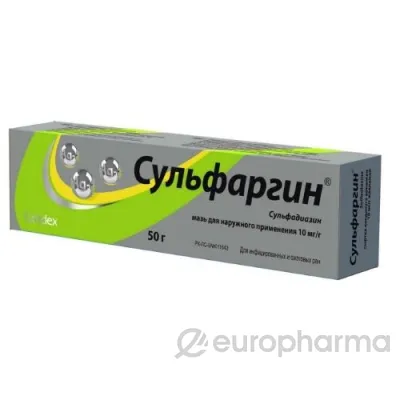
Table of Contents
- INSTRUCTIONS FOR MEDICAL USE OF THE MEDICINAL PRODUCT SULFARGIN® (SULFARGIN)
- Composition:
- Pharmacological properties.
- Clinical characteristics.
- Special precautions for use
- Method of Administration and Dosage
- Adverse Reactions
- Composition:
- Pharmacological properties.
- Clinical characteristics.
- Special precautions for use
- Method of Administration and Dosage
- Adverse Reactions
INSTRUCTIONS FOR MEDICAL USE OF THE MEDICINAL PRODUCT SULFARGIN® (SULFARGIN)
Composition:
Active substance: silver sulfadiazine;
1 g of cream contains 10 mg of silver sulfadiazine;
Excipients: mineral oil, propylene glycol, cetostearyl alcohol, glycerol monostearate, polysorbate 80, methylparaben (E 218), propylparaben (E 216), purified water.
Pharmaceutical form. Cream.
Main physicochemical properties: white or almost white cream with a characteristic odor.
Pharmacotherapeutic group.
Antibacterial and chemotherapeutic agents used in dermatology. Sulfonamides. ATC code D06B A01.
Pharmacological properties.
Pharmacodynamics. Silver sulfadiazine exerts antimicrobial activity against gram-positive and gram-negative microorganisms and fungi (Candida, Phycomycetes, and Aspergillus spp., dermatophytes). The activity of the ointment is based on silver ions, which are released into the wound as a result of the moderate dissociation of silver sulfadiazine, thus providing prolonged antimicrobial action, which is supplemented by sulfadiazine (a sulfanilamide). Silver ions are adsorbed onto the surface of microbial cells and exert an oligodynamic bacteriostatic and bactericidal effect. The ointment does not exhibit necrolytic or mutagenic effects and is characterized by moderate osmotic activity.
Pharmacokinetics. When applied topically, up to 1% of silver ions and up to 10% of sulfadiazine may be absorbed from the total amount of ointment applied to the wound. The majority of absorbed silver is excreted via bile. Absorbed sulfadiazine does not accumulate in the body and is rapidly excreted by the kidneys.
Clinical characteristics.
Indications.
- Prevention of infection and treatment of infected burns, pressure ulcers, ulcers, superficial wounds with mild exudation, abrasions;
- skin transplantation.
Contraindications.
- Hypersensitivity to silver sulfadiazine, sulfonamides, or to any excipient contained in the ointment;
- glucose-6-phosphate dehydrogenase deficiency (when applied over large areas, hemolysis may occur);
- purulent wounds and burn wounds with abundant exudation (not advisable);
- porphyria;
- use in premature infants, newborns, and children under 3 months of age (due to the risk of kernicterus).
Interaction with other medicinal products and other types of interactions.
Silver sulfadiazine may inactivate enzymatic wound debriding agents; therefore, simultaneous use of these products is not recommended.
Concomitant use with cimetidine may increase the frequency of leucopenia.
When treating extensive burns, when serum concentrations of silver sulfadiazine reach therapeutic levels, it should be considered that the effects of systemically administered drugs may be altered.
Special precautions for use
Avoid contact of the ointment with the eyes.
Use with caution in the following cases:
- Hypersensitivity to sulfonamides (due to the possibility of allergic reactions);
- Congenital glucose-6-phosphate dehydrogenase deficiency (hemolysis may occur after application of the ointment to large skin areas);
- Impaired kidney or liver function (cumulation may occur; serum levels of sulfonamide should be monitored in such patients).
The ointment should not be used in patients suffering from porphyria.
During treatment with sulfadiazine, serious skin reactions such as Stevens–Johnson syndrome and toxic epidermal necrolysis have been reported. The highest risk of such reactions occurs during the first weeks of treatment. If signs of hypersensitivity appear (progressive skin rash, often with blisters and mucosal involvement), the drug should be discontinued immediately.
The cream may be used without medical supervision only for minor superficial burns. Patients with deeper burns should always consult a physician before initiating treatment. Burns affecting 2% or more of the body surface area (the patient’s palm is approximately 1% of their body surface area), as well as burns affecting the eyes, ears, face, hands, feet, and/or genital area, require medical evaluation.
Medical consultation is necessary for skin wounds containing foreign material that cannot be removed; for deep puncture wounds; for animal bites; and for wounds with significant redness, sudden onset of swelling, or associated fever.
If prolonged treatment over large skin areas is anticipated, blood parameters should be monitored, as leukopenia, thrombocytopenia, and eosinophilia may occur. When treating extensive wounds, plasma concentrations of sulfadiazine may reach therapeutic levels. Systemic adverse effects of sulfonamides may therefore develop. It is recommended to monitor serum sulfadiazine concentrations, kidney function, and urine for possible crystalluria. The patient should be given sufficient alkaline fluids.
As with topical use of other antimicrobial agents, superinfections may also occur during treatment with silver sulfadiazine.
Very rarely, an increase in body temperature may occur, related to undesirable side effects.
Excipients of the ointment, methylparaben (E 218) and propylparaben (E 216), may cause allergic reactions (including delayed-type reactions), and in rare cases, bronchospasm.
Cetostearyl alcohol may cause local skin reactions (e.g., contact dermatitis); propylene glycol may cause skin irritation.
Use during pregnancy or breastfeeding
Silver sulfadiazine should be used with caution in women planning pregnancy.
The ointment should not be used during pregnancy or breastfeeding.
Sulfonamides are known to increase the risk of bilirubin encephalopathy in neonates; therefore, use of the ointment is contraindicated during breastfeeding. If treatment with the ointment is necessary during breastfeeding, alternative infant feeding should be considered.
Ability to affect reaction speed when driving or operating machinery
No data on adverse effects are available.
Method of Administration and Dosage
The ointment is intended for topical external use.
After removal of necrotic tissue, the ointment is applied in a thin layer (2–4 mm) to the affected area usually 1–2 times daily, under a sterile dressing or to an open surface. In severe cases, it may be applied up to 4 times daily. It is important that the affected skin areas remain continuously covered with a layer of ointment.
Before each subsequent application, the affected area should be washed with 0.9% sodium chloride solution or an antiseptic solution to remove residual ointment and wound exudate.
The ointment should be used until complete wound healing or until the wound surface is prepared for appropriate surgical intervention.
The method of administration and dosage of the ointment does not depend on the patient's age but depends on the size and depth of the wound surface. The maximum single dose is 300 g.
When applying the ointment over a large surface area, renal and hepatic function and blood parameters (blood cellular elements) should be monitored. The patient should be given ample alkaline fluids.
Children
Due to the risk of developing kernicterus, silver sulfadiazine must not be used in premature infants, newborns, or children under 3 months of age.
Since the efficacy and safety of the drug in children aged 3 months and older have not been established, administration to patients in this age group is recommended only after consultation with a physician.
Overdose
In case of overdose, adverse effects associated with systemic use of all sulfonamides may occur (see section "Adverse Reactions").
Prolonged use of large doses of silver sulfadiazine may lead to increased serum silver levels. However, these levels normalize after discontinuation of treatment.
In patients with severe burns, prolonged use has been associated with a significant increase in serum osmolarity. This may be due to increased absorption of propylene glycol, an ingredient of the preparation, through damaged skin.
Treatment is symptomatic. If necessary, renal function and blood parameters should be monitored. Absorbed sulfadiazine is readily removed by hemodialysis and peritoneal dialysis.
Adverse Reactions
Local Reactions
The cream may rarely cause local irritation (transient burning, pain), which usually resolves within 5–10 minutes. In patients with increased sensitivity, allergic reactions may occur, including skin rash, burning sensation, itching, redness, allergic rhinitis, allergic asthma, photosensitization, skin necrosis, hyperpigmentation, and contact dermatitis.
With prolonged treatment or treatment of large skin areas, argyria may develop—due to accumulation of silver in tissues, the skin may acquire a slightly grayish discoloration.
Systemic Reactions
During prolonged treatment of large burn surfaces, plasma concentrations of sulfonamides may reach levels comparable to those achieved with systemic administration. Sulfonamide-related adverse effects may therefore occur, including: nausea, vomiting, diarrhea, glossitis, joint pain, liver dysfunction and necrosis, cholestatic hepatosis, hepatic failure, headache, drug-induced fever, confusion, restlessness, seizures, crystalluria, interstitial nephritis, skin reactions, rashes, nodular erythema, Stevens-Johnson syndrome, toxic epidermal necrolysis, exfoliative dermatitis, leukopenia, thrombocytopenia, eosinophilia, anemia, and folate deficiency.
Transient leukopenia usually does not require discontinuation of therapy or other specific interventions. Monitoring of blood parameters is recommended.
Shelf Life. 2 years.
Do not use after the expiry date stated on the packaging.
Storage Conditions.
Store at a temperature not exceeding 25 °C. Do not store in the refrigerator or freezer. Keep out of reach of children.
Packaging.
50 g in an aluminum tube; 1 tube per cardboard box.
Prescription Status.
Prescription only.
Manufacturer.
JSC "Grindeks"
Manufacturer's Address and Place of Business.
53 Krustpils Street, Riga, LV-1057, Latvia.
Marketing Authorization Holder.
JSC "Grindeks"
Address of the Marketing Authorization Holder and/or its Representative.
53 Krustpils Street, Riga, LV-1057, Latvia. Tel./Fax: +371 67083205 / +371 67083505. E-mail: [email protected]
INSTRUCTION
for medical use of the medicinal product
SULFARGIN®
(SULFARGIN)
Composition:
Active substance: silver sulfadiazine;
1 g of cream contains 10 mg of silver sulfadiazine;
Excipients: mineral oil, propylene glycol, cetostearyl alcohol, glycerol monostearate, polysorbate 80, methylparaben (E 218), propylparaben (E 216), purified water.
Pharmaceutical form. Cream.
Main physicochemical properties: white or almost white cream with a characteristic odor.
Pharmacotherapeutic group.
Antibacterial and chemotherapeutic agents used in dermatology. Sulfonamides. ATC code D06B A01.
Pharmacological properties.
Pharmacodynamics. Silver sulfadiazine exerts antimicrobial activity against gram-positive and gram-negative microorganisms and fungi (Candida, Phycomycetes, and Aspergillus spp., dermatophytes). The activity of the ointment is based on silver ions, which are released into the wound as a result of the moderate dissociation of silver sulfadiazine, thus providing prolonged antimicrobial action, which is complemented by sulfadiazine (a sulfanilamide). Silver ions are adsorbed onto the surface of microbial cells and exert an oligodynamic bacteriostatic and bactericidal effect. The ointment does not exhibit necrolytic or mutagenic effects and is characterized by moderate osmotic activity.
Pharmacokinetics. When applied topically, up to 1% of silver ions and up to 10% of sulfadiazine may be absorbed from the total amount of ointment applied to the wound. The majority of absorbed silver is excreted via bile. Absorbed sulfadiazine does not accumulate in the body and is rapidly eliminated by the kidneys.
Clinical characteristics.
Indications.
- Prevention of infection and treatment of infected burns, pressure ulcers, ulcers, superficial wounds with mild exudation, abrasions;
- skin transplantation.
Contraindications.
- Hypersensitivity to silver sulfadiazine, sulfonamides, or to any excipient included in the ointment;
- glucose-6-phosphate dehydrogenase deficiency (when applied to large areas, hemolysis may occur);
- purulent wounds and burn wounds with abundant exudation (inappropriate);
- porphyria;
- use in premature infants, newborns, and children under 3 months of age (due to the risk of kernicterus).
Interaction with other medicinal products and other forms of interaction.
Silver sulfadiazine may inactivate enzymatic wound debriding agents; therefore, concomitant use of these products is not recommended.
Concomitant use of cimetidine may increase the frequency of leukopenia development.
When treating extensive burns, where serum concentrations of silver sulfadiazine reach therapeutic levels, it should be considered that the effects of systemically administered drugs may be altered.
Special precautions for use
Avoid contact of the ointment with the eyes.
Use with caution in the following cases:
- Hypersensitivity to sulfonamides (due to the possibility of allergic reactions);
- Congenital glucose-6-phosphate dehydrogenase deficiency (hemolysis may occur after application of the ointment over large surfaces);
- Impaired kidney or liver function (cumulation may occur; such patients require monitoring of sulfonamide levels in blood serum).
The ointment should not be used in patients suffering from porphyria.
During treatment with sulfadiazine, serious skin reactions have been reported, such as Stevens–Johnson syndrome and toxic epidermal necrolysis. The highest risk of such reactions occurs during the first weeks of treatment. Treatment should be discontinued at the first signs of hypersensitivity (progressive skin rash, often with blisters and mucosal involvement).
The cream may be used alone only for minor superficial burns. Patients with deeper burns should always consult a physician before starting treatment. Burns affecting 2% or more of the body surface area (approximately one patient's palm corresponds to 1% of their body surface area), as well as burns involving the eyes, ears, face, hands, feet, and/or perineum, require medical evaluation.
Medical consultation is necessary for skin wounds containing foreign material that cannot be removed; for deep puncture wounds; for animal bites; and for wounds with significant redness, sudden onset of swelling, or associated fever.
If prolonged treatment over large skin areas is anticipated, blood monitoring is required, as leukopenia, thrombocytopenia, and eosinophilia may occur. When treating extensive wounds, plasma concentrations of sulfadiazine may reach therapeutic levels, potentially leading to systemic adverse effects of sulfonamides. Therefore, monitoring of serum sulfadiazine concentrations, kidney function, and urine testing for possible crystalluria is recommended. The patient should be given sufficient alkaline fluids.
As with topical use of other antimicrobial agents, superinfections may also develop during treatment with silver sulfadiazine.
Very rarely, elevated body temperature may occur, related to undesirable side effects.
Excipients of the ointment, methylparaben (E 218) and propylparaben (E 216), may cause allergic reactions (including delayed-type reactions), and in rare cases bronchospasm.
Cetostearyl alcohol may cause local skin reactions (e.g., contact dermatitis); propylene glycol may cause skin irritation.
Use during pregnancy or breastfeeding
Silver sulfadiazine should be prescribed with caution to women planning pregnancy.
The ointment should not be used during pregnancy or breastfeeding.
Sulfonamides are known to increase the risk of bilirubin encephalopathy in newborns; therefore, use of the ointment is contraindicated during breastfeeding. If use of the ointment is necessary during breastfeeding, alternative feeding of the infant should be implemented.
Ability to affect reaction speed when driving or operating machinery
No data on adverse effects are available.
Method of Administration and Dosage
The ointment is intended for topical external use.
After removal of necrotic tissue, the ointment should be applied as a thin layer (2–4 mm) to the affected area once or twice daily, under a sterile dressing or to an open surface. In severe cases, it may be applied up to four times daily. It is important that the affected skin areas remain continuously covered with a layer of ointment.
Before each subsequent application, the affected area must be cleansed with 0.9% sodium chloride solution or an antiseptic solution to remove residual ointment and wound exudate.
The ointment should be used until complete wound healing or until the wound surface is prepared for appropriate surgical intervention.
The method of administration and dosage of the ointment does not depend on patient age but depends on the size and depth of the wound lesion. The maximum single dose is 300 g.
When applying the ointment over large body surface areas, renal and liver function and blood parameters (blood cell counts) should be monitored. The patient should be given ample alkaline fluids.
Children
Due to the risk of developing kernicterus, silver sulfadiazine must not be used in premature infants, newborns, or children under 3 months of age.
Since the efficacy and safety of the drug in children aged 3 months and older have not been established, its use in this age group is recommended only after consultation with a physician.
Overdose
In case of overdose, adverse effects associated with systemic use of sulfonamides may occur (see section "Adverse Reactions").
Prolonged use of high doses of silver sulfadiazine may lead to increased serum silver levels. However, these levels return to normal after discontinuation of treatment.
In patients with severe burns, prolonged use has been associated with a significant increase in serum osmolality. This may be due to enhanced absorption of propylene glycol—a component of the formulation—through damaged skin.
Treatment is symptomatic. If necessary, renal function and blood parameters should be monitored. Absorbed sulfadiazine is readily removed by hemodialysis and peritoneal dialysis.
Adverse Reactions
Local Reactions
The ointment may rarely cause local irritation (transient burning, pain), which resolves within 5–10 minutes. In patients with increased sensitivity, allergic reactions may occur, including skin rash, burning sensation, itching, redness, allergic rhinitis, allergic asthma, photosensitization, skin necrosis, hyperpigmentation, and contact dermatitis.
With prolonged treatment or treatment of large skin areas, argyria may develop—due to silver accumulation in tissues, the skin may acquire a slightly grayish discoloration.
Systemic Reactions
During prolonged treatment of large burn surfaces, plasma concentrations of sulfonamides comparable to those achieved with systemic administration may develop. Systemic sulfonamide-related adverse effects may occur, including nausea, vomiting, diarrhea, glossitis, joint pain, impaired liver function and liver necrosis, cholestatic hepatosis, hepatic failure, headache, drug fever, confusion, restlessness, seizures, crystalluria, interstitial nephritis, skin reactions, rashes, nodular erythema, Stevens-Johnson syndrome, toxic epidermal necrolysis, exfoliative dermatitis, leukopenia, thrombocytopenia, eosinophilia, anemia, and folate deficiency.
Transient leukopenia usually does not require discontinuation of therapy or other special measures. Monitoring of the patient's blood parameters is recommended.
Shelf Life. 2 years.
Do not use after the expiry date stated on the packaging.
Storage Conditions.
Store at a temperature not exceeding 25 °C. Do not store in the refrigerator or freezer. Keep out of reach of children.
Packaging.
50 g in an aluminum tube; 1 tube per cardboard box.
Prescription Status.
Prescription only.
Manufacturer.
JSC Tallinn Pharmaceutical Plant.
Manufacturer's Address and Place of Business.
Tondi TN 33, Kristiine District, Tallinn, Harju County, 11316, Estonia.
Marketing Authorization Holder.
JSC "Grindeks".
Address of the Marketing Authorization Holder and/or its Representative.
Krustpils St. 53, Riga, LV-1057, Latvia. Tel./Fax: +371 67083205 / +371 67083505. E-mail: [email protected]