Sulfadimidine
Ukraine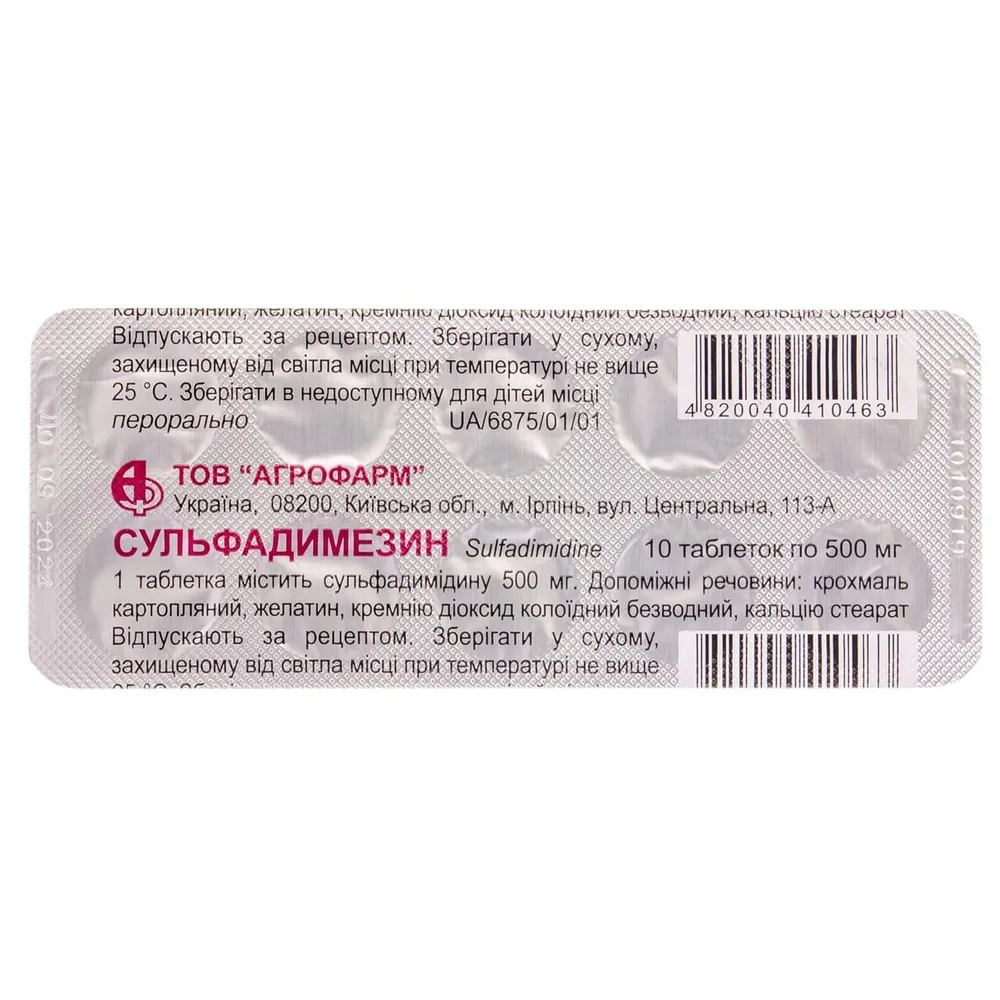
Table of Contents
INSTRUCTION FOR MEDICAL USE OF THE MEDICINAL PRODUCT SULFADIMESINE (SULFADIMESINE)
Composition:
Active substance: sulfadimidine;
1 tablet contains 500 mg of sulfadimidine;
Excipients: potato starch, gelatin, colloidal anhydrous silicon dioxide, calcium stearate.
Dosage form. Tablets.
Main physicochemical properties: round-shaped tablets with a flat surface, bevelled edges and a score line, white or slightly yellowish in colour.
Pharmacotherapeutic group. Antimicrobial agents for systemic use. Short-acting sulfonamides. Sulfadimidine. ATC Code J01EB03.
Pharmacological Properties.
Pharmacodynamics.
Sulfadimethoxine is a short-acting sulfonamide drug. It is active against Gram-positive and Gram-negative cocci, Escherichia coli, Shigella species, Klebsiella species, Vibrio cholerae, causative agents of gas gangrene, anthrax, diphtheria, catarrhal pneumonia, plague, as well as Chlamydia, Actinomyces, and Toxoplasma gondii. It exerts a bacteriostatic effect. Its mechanism of action is related to para-aminobenzoic acid (PABA) and involves competitive inhibition of dihydropteroate synthetase, leading to disruption of tetrahydrofolic acid synthesis, which is essential for the synthesis of purines and pyrimidines.
Pharmacokinetics.
It is rapidly absorbed from the gastrointestinal tract (mainly in the small intestine) and 75–86% bound to plasma proteins. It penetrates well into tissues and body fluids (including lungs and cerebrospinal fluid), and is rapidly eliminated from the body, with a half-life of 7 hours. Elimination occurs primarily via the kidneys through glomerular filtration. In the liver, it undergoes biotransformation (acetylation); acetylated metabolites may precipitate when concentrated in urine. The solubility of metabolites improves with urinary alkalinization.
Clinical characteristics.
Indications.
Infections caused by microorganisms sensitive to the drug:
- respiratory tract and ENT organ infections (bronchitis, pneumonia, tonsillitis, sinusitis, otitis);
- inflammatory diseases of the biliary and urinary tracts;
- skin and soft tissue infections (wound infection, pyoderma, impetigo);
- gonorrhea, trachoma;
- shigellosis;
- toxoplasmosis.
Contraindications.
- Hypersensitivity to sulfadimidine or other components of the drug;
- history of toxic-allergic reactions to other sulfonamides or their derivatives;
- systemic blood disorders, bone marrow suppression, including anemia, leukopenia;
- severe impairment of liver and/or kidney function, hepatic and/or renal insufficiency;
- acute porphyria;
- hyperthyroidism;
- azotemia;
- glucose-6-phosphate dehydrogenase deficiency (hemolysis possible).
Interaction with other medicinal products and other forms of interaction.
Cyclosporine – possible decrease in its plasma concentrations; increased risk of nephrotoxicity.
Antithrombotic agents, indirect-acting anticoagulants (including phenindione, warfarin) – their anticoagulant effect is enhanced when used concomitantly.
General anesthetics (thiopental) – enhanced effects of thiopental.
Pyrazolone derivatives, indomethacin, and salicylates: enhanced activity and toxicity of sulfonamides.
Other nonsteroidal anti-inflammatory drugs, sulfonylurea derivatives (including oral antidiabetic agents), phenytoin – possible increase in their plasma concentrations, enhanced therapeutic effect, and increased risk of adverse effects. Dose adjustment of these drugs, including oral antidiabetic agents, may be necessary.
Clozapine and other potentially hematotoxic drugs (e.g., chloramphenicol, thiamazole, mercazole) – increased risk of hematotoxicity, including agranulocytosis and leukopenia. Concomitant use with sulfonamides should be avoided.
Hexamethylenetetramine (urotropine), high doses of ascorbic acid, diuretics – increased risk of crystalluria. Combined use is not recommended.
Erythromycin, lincomycin, tetracyclines, trimethoprim, pyrimethamine – mutual enhancement of antibacterial activity and broadening of the spectrum of action. Risk of pancytopenia and megaloblastic anemia when used concomitantly with pyrimethamine (increased inhibition of folic acid synthesis).
Folic acid, bactericidal antibiotics (including penicillins, cephalosporins), rifampicin – reduced efficacy of sulfadimidine.
Methotrexate – sulfonamides increase methotrexate toxicity.
PAS drugs, barbiturates, local anesthetics (benzocaine, tetracaine, procaine), drugs containing para-aminobenzoic acid – reduced antimicrobial activity of sulfadimidine. Increased risk of methemoglobinemia when sulfonamides are used concomitantly with prilocaine.
Oral estrogen-containing contraceptives – their contraceptive effect is reduced when used concomitantly. Additional contraceptive measures should be used during treatment and for 7 days after discontinuation of sulfonamide therapy.
Oral typhoid vaccine – sulfonamides, as antibacterial agents, inactivate the vaccine. Use of antibacterial agents should be avoided within 3 days before and after oral vaccination.
Antacids – intestinal absorption of sulfadimidine is reduced under their influence.
Diagnostic tests: sulfonamides may cause false-positive Benedict's test results for glucose in urine; may interfere with urinary urobilinogen testing.
Special precautions for use.
Due to the similarity in chemical structure, sulfonamides must not be administered to individuals with hypersensitivity to furosemide, thiazide diuretics, carbonic anhydrase inhibitors, or sulfonylurea derivatives.
Sulfonamides, including sulfadimidine, should not be used for the treatment of infectious diseases caused by group A beta-hemolytic streptococci, as they do not promote eradication of the pathogen and therefore cannot prevent complications such as rheumatic fever and glomerulonephritis.
Fatal cases associated with the use of sulfonamides have been reported very rarely and occurred as a result of severe adverse reactions, including Stevens-Johnson syndrome, toxic epidermal necrolysis, fulminant hepatic necrosis, agranulocytosis, aplastic anemia, and other hematological disorders.
Administration of sulfonamides must be discontinued immediately upon the appearance of any skin rash and/or mucosal lesions or any other signs of adverse reaction. In rare cases, severe adverse reactions may develop following the onset of a skin rash. Patients should be informed about the symptoms of Stevens-Johnson syndrome and toxic epidermal necrolysis and the necessity of immediate and permanent discontinuation of sulfonamide therapy at the first signs of these conditions. The highest risk of developing Stevens-Johnson syndrome and toxic epidermal necrolysis occurs during the first weeks of treatment. Optimal outcomes in managing Stevens-Johnson syndrome or toxic epidermal necrolysis are associated with early diagnosis and immediate discontinuation of the suspected drug. Immediate withdrawal of the drug is linked to a better prognosis. If a patient develops Stevens-Johnson syndrome or toxic epidermal necrolysis during treatment with sulfonamides, including sulfadimidine, any sulfonamide-containing drugs must never be administered to this patient again for the rest of their life.
Hematological disorders also require immediate and permanent discontinuation of sulfonamide therapy. Skin rash, sore throat, fever, joint pain, pallor, purpura, or jaundice may be early signs of a serious adverse reaction affecting the blood system during treatment with sulfonamides, including sulfadimidine.
The risk of developing pseudomembranous colitis, which may range from mild to life-threatening, exists with the use of nearly all antibacterial agents, including sulfonamides (due to overgrowth of Clostridium difficile). Therefore, it is important to consider this potential complication in patients presenting with diarrhea when determining further treatment strategy.
Sulfonamides, including sulfadimidine, should be used with caution in patients with impaired renal or hepatic function, severe allergic disorders or bronchial asthma, and in patients with diabetes mellitus (as sulfonamides may affect blood glucose levels). If possible, sulfonamides should be avoided in patients aged 65 years and older due to an increased risk of severe adverse reactions.
During treatment, especially prolonged therapy, regular monitoring is required for renal function (creatinine clearance), liver function (serum transaminase levels), peripheral blood picture (complete blood count, platelet count, reticulocyte count), and blood glucose levels.
Patients should consume sufficient fluids to maintain high diuresis (at least 1200 mL/day) to prevent crystalluria and the development of urolithiasis. For the same purpose, sulfadimidine may be administered in combination with urine-alkalinizing agents when necessary.
Exposure to direct sunlight and artificial ultraviolet radiation should be avoided due to the potential for photosensitization reactions during sulfonamide therapy.
Since sulfonamides are bacteriostatic rather than bactericidal agents, a full course of therapy is essential to prevent infection relapse and the development of resistant microbial strains.
During treatment, the prescribed dosing regimen must be strictly followed, and doses should not be missed. If a dose is missed, the next dose should not be doubled.
Use during pregnancy or breastfeeding.
The use of this drug during pregnancy is contraindicated.
If it is necessary to use the drug in women who are breastfeeding, breastfeeding should be discontinued.
Ability to affect reaction speed when driving or operating machinery.
Until the individual patient's response to the drug is known, driving vehicles or operating machinery should be avoided, considering that adverse reactions of the nervous system such as dizziness, seizures, somnolence, and hallucinations may occur during treatment with sulfadimidine.
Administration and Dosage.
Sulfadimethoxine is taken orally.
The average doses for adults are 2 g (4 tablets) for the first dose, followed by 1 g (2 tablets) 4–6 times daily. Higher doses for adults: single dose – 2 g, daily dose – 7 g.
For children aged 3 years and older, the initial dose is 0.1 g/kg body weight, followed by 0.025 g/kg body weight every 4–6–8 hours.
For the treatment of shigellosis, the following regimen is recommended for adults:
Days 1–2: 1 g, 6 times daily (every 4 hours);
Days 3–4: 1 g, 4 times daily (every 6 hours);
Days 5–6: 1 g, 3 times daily (every 8 hours).
Total for the treatment course: 25–30 g of the drug.
After a 5–6-day break, a second course of therapy should be administered:
Days 1–2: 1 g, 5 times daily (every 4 hours, and at night – every 8 hours);
Days 3–4: 1 g, 4 times daily (do not take at night);
Day 5: 1 g, 3 times daily.
A total of 21 g of Sulfadimethoxine is taken during the second course. In mild cases of shigellosis, the dose may be reduced to 18 g.
Doses for the treatment of shigellosis in children aged 3 years and older: single dose – from 0.4 g to 0.75 g, to be taken 4 times daily. The drug should be administered for 5–7 days. In most infectious diseases, treatment should continue for at least another 48–72 hours after symptoms have disappeared and recovery has been confirmed by bacteriological analysis.
Children.
The drug is indicated for use in children aged 3 years and older.
Overdose.
Symptoms: anorexia, abdominal cramps, nausea, vomiting, dizziness, headache, drowsiness, loss of consciousness. Hyperthermia, hematuria, and crystalluria may occur. Blood abnormalities (leukopenia, agranulocytosis, hemolytic anemia) and jaundice are later manifestations of overdose. Methemoglobinemia may develop.
Treatment: immediate discontinuation of the drug, gastric lavage, increased fluid intake with alkalizing solutions; in cases of decreased diuresis with normal kidney function – intravenous administration of fluids. Subsequent treatment is symptomatic.
In confirmed cases of methemoglobinemia, intravenous administration of 1% methylene blue is indicated.
Peritoneal dialysis is ineffective; hemodialysis is only moderately effective in the treatment of sulfonamide overdose.
Adverse Reactions
The adverse reactions that may occur are the same as those observed with other sulfonamides.
Gastrointestinal system: abdominal pain, dyspeptic symptoms including nausea, vomiting, diarrhea, anorexia; stomatitis, sialadenitis, pancreatitis, pseudomembranous colitis.
Hepatobiliary system: elevated serum levels of liver transaminases, hepatomegaly, jaundice, hepatitis, and possibly hepatic necrosis.
Nervous system: headache, neurological reactions including aseptic meningitis, ataxia, benign intracranial hypertension, seizures, dizziness, vertigo, somnolence/insomnia, fatigue, peripheral or optic neuropathies, tinnitus.
Psychiatric disorders: depression, psychosis, hallucinations.
Immune system: hypersensitivity reactions, including pruritus, skin rashes (including urticaria), drug fever, chills, photosensitivity reactions, exfoliative dermatitis, toxic epidermal necrolysis (Lyell's syndrome), nodular erythema, erythema multiforme, erythroderma, fixed drug eruption, Stevens-Johnson syndrome, serum sickness-like syndrome, periorbital edema, anaphylactic reactions including angioneurotic edema, and very rarely anaphylactic shock. Cases of allergic myocarditis, polyarteritis nodosa, systemic lupus erythematosus/lupus-like syndrome have also been reported.
Blood and lymphatic system: very rarely – agranulocytosis, aplastic anemia, thrombocytopenia, leukopenia, neutropenia, eosinophilia, acute hemolytic anemia in glucose-6-phosphate dehydrogenase deficiency, purpura, hypoprothrombinemia, methemoglobinemia.
Urinary system: crystalluria (possibly associated with flank pain, hematuria, oliguria, anuria), the risk of which can be reduced by taking the drug with sufficient fluid intake; treatment includes urine alkalinization; nephrotoxic reactions: interstitial nephritis, tubular necrosis, renal failure. Increased serum levels of urea and creatinine.
Endocrine system: hypothyroidism, hypoglycemia.
Respiratory system: cough, sore throat, dyspnea, pulmonary eosinophilic infiltrates, fibrosing alveolitis.
Other: tachycardia, arteritis, vasculitis, joint pain, muscle pain.
If adverse reactions occur, the drug should be discontinued immediately.
Shelf life. 5 years.
Do not use after the expiry date stated on the packaging.
Storage conditions.
Store in a dry, light-protected place at a temperature not exceeding 25°C.
Keep out of reach of children.
Packaging.
10 tablets per blister pack.
Prescription category. Prescription only.
Manufacturer.
LLC "Agrofarm".
Manufacturer's name and address of place of business.
113-A Centralna St., Irpin, Kyiv region, 08200, Ukraine.