Sugammadex-vista
Ukraine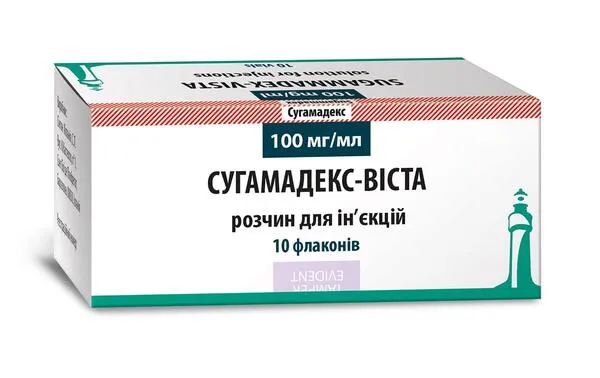
Table of Contents
INSTRUCTIONS FOR MEDICAL USE OF THE MEDICINAL PRODUCT SUGAMMADEX-VISTA (SUGAMMADEX-VISTA)
Composition:
Active substance: sugammadex;
1 ml of solution contains 8.8 mg;
Excipients: sodium hydroxide, concentrated hydrochloric acid, water for injections.
Pharmaceutical form. Injection solution.
Main physicochemical characteristics: clear solution, colorless to slightly yellowish-brown, practically free from particles, in a colorless glass vial of type I (2 ml or 6 ml) with a rubber stopper and an aluminum cap with a colored flip-top cap.
Pharmacotherapeutic group. Antidotes. ATC code V03A B35.
Pharmacological properties.
Pharmacodynamics.
Sugammadex is a modified gamma-cyclodextrin that selectively binds neuromuscular blocking agents. It forms a complex in plasma with the neuromuscular blocking agents rocuronium and vecuronium, reducing the amount of neuromuscular blocker available to bind to nicotinic receptors at the neuromuscular junction. This results in reversal of neuromuscular blockade induced by rocuronium or vecuronium.
In dose-effect relationship studies, sugammadex was administered at doses ranging from 0.5 mg/kg to 16 mg/kg during neuromuscular blockade induced by rocuronium (0.6, 0.9, 1.0, and 1.2 mg/kg rocuronium bromide with or without maintenance doses) or vecuronium (0.1 mg/kg vecuronium bromide with or without maintenance doses). Sugammadex was administered at various time points and at different depths of blockade. In these studies, a clear dose-response relationship was observed.
Sugammadex can be administered at various time points after administration of rocuronium or vecuronium bromide.
Standard reversal – deep neuromuscular blockade.
In the main study, patients were randomized into groups receiving either rocuronium or vecuronium. After the last dose of rocuronium or vecuronium, when 1–2 post-tetanic counts were observed, sugammadex 4 mg/kg or neostigmine 70 μg/kg was administered. The time from initiation of sugammadex or neostigmine administration to recovery of the T4/T1 ratio to 0.9 was:
Time (minutes) from administration of sugammadex or neostigmine during deep neuromuscular blockade (1–2 post-tetanic twitches) induced by rocuronium or vecuronium to recovery of the T4/T1 ratio to 0.9.
| Neuromuscular blocking agent |
Treatment regimen |
||
| Sugammadex (4.0 mg/kg) |
Neostigmine (70 mcg/kg) |
||
| Rocuronium |
|||
| N |
37 |
37 |
|
| Mean value (min) |
2.7 |
49 |
|
| Range |
1.2–16.1 |
13.3–145.7 |
|
| Vecuronium |
|||
| N |
47 |
36 |
|
| Mean value (min) |
3.3 |
49.9 |
|
| Range |
1.4–68.4 |
46–312.7 |
|
Standard reversal – moderate neuromuscular blockade.
In another main study, patients were randomized into groups receiving either rocuronium or vecuronium. After the last dose of rocuronium or vecuronium, upon reappearance of T2, either sugammadex 2 mg/kg or neostigmine 50 mcg/kg was administered. The time from administration of sugammadex or neostigmine to recovery of the T4/T1 ratio to 0.9 was:
Time (min) from administration of sugammadex or neostigmine at reappearance of T2 after rocuronium or vecuronium administration to recovery of T4/T1 ratio to 0.9.
| Neuromuscular blocking agent |
Treatment regimen |
|
| Sugammadex (2.0 mg/kg) |
Neostigmine (50 mcg/kg) |
|
| Rocuronium |
||
| N |
48 |
48 |
| Mean value (min) |
1.4 |
17.6 |
| Range |
0.9–5.4 |
3.7–106.9 |
| Vecuronium |
||
| N |
48 |
45 |
| Mean value (min) |
2.1 |
18.9 |
| Range |
1.2–64.2 |
2.9–76.2 |
Reversal with sugammadex of neuromuscular blockade induced by rocuronium was compared to reversal with neostigmine of neuromuscular blockade induced by cisatracurium. Upon reappearance of T2, 2 mg/kg sugammadex or 50 mcg/kg neostigmine was administered. Administration of sugammadex resulted in faster reversal of rocuronium-induced neuromuscular blockade compared to reversal of cisatracurium-induced neuromuscular blockade with neostigmine:
Time (min) from administration of sugammadex or neostigmine upon reappearance of T2 after administration of rocuronium or cisatracurium to recovery of T4/T1 ratio to 0.9.
| Neuromuscular blocking agent |
Treatment regimen |
|
| Rocuronium and sugammadex (2.0 mg/kg) (2.0 mg/kg) |
Cisatracurium and neostigmine (50 mcg/kg) |
|
| N |
34 |
39 |
| Mean value (min) |
1.9 |
7.2 |
| Range |
0.7–6.4 |
4.2–28.2 |
Immediate reversal.
Time to recovery from neuromuscular blockade induced by succinylcholine (1 mg/kg) was compared to recovery with sugammadex (16 mg/kg, administered 3 minutes later) following neuromuscular blockade induced by rocuronium (1.2 mg/kg):
Time (min) from administration of rocuronium and sugammadex or succinylcholine to recovery of T1 to 10%.
| Neuromuscular agent |
Treatment regimen |
|
| Rocuronium and sugammadex (16.0 mg/kg) |
Succinylcholine (1.0 mg/kg) |
|
| N |
55 |
55 |
| Mean value (min) |
4.2 |
7.1 |
| Range |
3.5–7.7 |
3.7–10.5 |
The following data on recovery time were obtained from the pooled analysis following administration of 16 mg/kg sugammadex after administration of 1.2 mg/kg rocuronium bromide:
Time (min) from sugammadex administration (given 3 min after rocuronium) to recovery of T4/T1 ratio to 0.9, 0.8, or 0.7.
| T4/T1 ratio up to 0.9 |
T4/T1 ratio up to 0.8 |
T4/T1 ratio up to 0.7 |
|
| N |
65 |
65 |
65 |
| Mean value (min) |
1.5 |
1.3 |
1.1 |
| Range |
0.5−14.3 |
0.5−6.2 |
0.5−3.3 |
Renal impairment.
The efficacy and safety of sugammadex administration during surgery in patients with or without severe renal impairment were compared in two open-label studies. In one study, sugammadex was administered following rocuronium-induced neuromuscular blockade at a level of 1–2 post-tetanic counts (4 mg/kg; N=68); in the other study, sugammadex was given upon reappearance of T2 (2 mg/kg; N=30). Recovery from neuromuscular blockade was slightly prolonged in patients with severe renal impairment compared to those with normal renal function. In these studies, residual or recurrent neuromuscular blockade was not observed in patients with severe renal impairment.
Patients with pathological obesity.
In a clinical study involving 188 patients diagnosed with pathological obesity (body mass index ≥ 40 kg/m²), the time to recovery from moderate or deep neuromuscular blockade induced by rocuronium or vecuronium was evaluated. Patients received either 2 mg/kg or 4 mg/kg sugammadex, depending on the depth of blockade, dosed based on actual body weight or ideal body weight randomly, in a double-blind design. According to pooled data across all depths of blockade and neuromuscular blocking agents, the mean time to recovery of train-of-four (TOF) ratio ≥ 0.9 in patients dosed based on actual body weight (1.8 minutes) was statistically significantly faster (p < 0.0001) compared to those dosed based on ideal body weight (3.3 minutes).
Pediatric patients.
A study involving 288 patients aged 2 to < 17 years evaluated the safety and efficacy of sugammadex compared to neostigmine as an agent reversing neuromuscular blockade induced by rocuronium or vecuronium. Recovery from moderate blockade to a train-of-four (TOF) ratio ≥ 0.9 was significantly faster in the sugammadex 2 mg/kg group compared to the neostigmine group (geometric mean 1.6 minutes for sugammadex 2 mg/kg and 7.5 minutes for neostigmine; ratio of geometric means 0.22, 95% CI (0.16, 0.32), (p < 0.0001)). Sugammadex 4 mg/kg achieved reversal from deep blockade with a geometric mean time of 2.0 minutes, similar to results observed in adults. These effects were consistent across all studied age cohorts (2 to < 6; 6 to < 12; 12 to < 17 years) and for both rocuronium and vecuronium (see section “Dosage and administration”).
Patients with severe systemic diseases.
In a study involving 331 patients classified as ASA class 3 or 4, the incidence of treatment-emergent arrhythmias (sinus bradycardia, sinus tachycardia, or other cardiac arrhythmias) following sugammadex administration was evaluated.
In patients receiving sugammadex (2 mg/kg, 4 mg/kg, or 16 mg/kg), the incidence of treatment-emergent arrhythmias was generally similar to that observed with neostigmine (50 mcg/kg up to a maximum dose of 5 mg) + glycopyrrolate (10 mcg/kg up to a maximum dose of 1 mg). The percentage of patients with treatment-emergent sinus bradycardia was significantly lower (p=0.026) in the group receiving 2 mg/kg sugammadex compared to the neostigmine group. The percentage of patients with treatment-emergent sinus tachycardia was significantly lower in both the 2 mg/kg and 4 mg/kg sugammadex groups compared to the neostigmine group (p=0.007 and 0.036, respectively). The adverse reaction profile in ASA class 3 and 4 patients was generally similar to that observed in adult patients in pooled phase 1–3 studies; therefore, dose adjustment is not required (see section “Adverse reactions”).
Pharmacokinetics.
Pharmacokinetic parameters of sugammadex were determined based on the total concentration of both free and complex-bound drug. In anesthetized patients, pharmacokinetic parameters such as clearance and volume of distribution are the same for both free and complex-bound sugammadex.
Distribution.
The steady-state volume of distribution of sugammadex is approximately 11–14 L in adult patients with normal renal function (based on standard non-compartmental pharmacokinetic analysis). Neither sugammadex nor the sugammadex-rocuronium complex binds to plasma proteins or erythrocytes, as demonstrated in vitro using human plasma and whole blood (male gender). After intravenous bolus administration at doses ranging from 1 to 16 mg/kg, sugammadex exhibits linear kinetics.
Metabolism.
No metabolites of sugammadex were detected in preclinical or clinical studies; the only elimination pathway observed was renal excretion of unchanged drug.
Elimination.
In adult patients with normal renal function undergoing anesthesia, the elimination half-life (t½) of sugammadex is approximately 2 hours, and the calculated plasma clearance is about 88 mL/min. Mass balance studies showed that more than 90% of the dose is excreted within 24 hours. Of the administered dose, 96% is excreted in urine, of which at least 95% is unchanged sugammadex. Less than 0.02% of sugammadex is excreted in feces and exhaled air. Following sugammadex administration in healthy volunteers, increased renal elimination of rocuronium as part of the complex was observed.
Special patient populations.
Renal impairment and age.
In a pharmacokinetic study comparing patients with severe renal impairment and those with normal renal function, plasma concentrations of sugammadex were similar for at least the first hour after administration, then declined more rapidly in the control group. Total exposure to sugammadex was prolonged, resulting in approximately a 17-fold increase in exposure in patients with severe renal impairment. Low concentrations of sugammadex were detectable for at least 48 hours after administration in patients with severe renal impairment. In a second study comparing patients with moderate or severe renal impairment to those with normal renal function, elimination of sugammadex gradually decreased and t½ progressively prolonged with decreasing renal function. Exposure was 2-fold and 5-fold higher in patients with moderate and severe renal impairment, respectively. Sugammadex concentrations were not detectable beyond 7 days after dosing in patients with severe renal impairment.
Pharmacokinetic parameters of sugammadex by age group and renal function (based on compartmental modeling) are presented in the table below.
| Patient-specific characteristics |
Predicted pharmacokinetic parameters (CV* %) |
|||||
| Demographic parameters Age, weight |
Kidney function (creatinine clearance, mL/min) |
Clearance, mL/min (CV) |
Steady-state volume of distribution, L (CV) |
Half-life, hours (CV) |
||
| Adults |
Normal |
100 |
84 (24) |
13 |
2 (22) |
|
| 40 years 75 kg |
Impairment (degree): |
mild moderate severe |
50 30 10 |
47 (25) 28 (24) 8 (25) |
14 14 15 |
4 (22) 7 (23) 24 (25) |
| Advanced age |
Normal |
80 |
70 (24) |
13 |
3 (21) |
|
| 75 years 75 kg |
Impairment (degree): |
mild moderate severe |
50 30 10 |
46 (25) 28 (25) 8 (25) |
14 14 15 |
4 (23) 7 (23) 24 (24) |
| Adolescents |
Normal |
95 |
72 (25) |
10 |
2 (21) |
|
| 15 years 56 kg |
Impairment (degree): |
mild moderate severe |
48 29 10 |
40 (24) 24 (24) 7 (25) |
11 11 11 |
4 (23) 6 (24) 22 (25) |
| Child, middle age |
Normal |
60 |
40 (24) |
5 |
2 (22) |
|
| 9 years 29 kg |
Impairment (degree): |
mild moderate severe |
30 18 6 |
21 (24) 12 (25) 3 (26) |
6 6 6 |
4 (22) 7 (24) 25 (25) |
| Child, early age |
Normal |
39 |
24 (25) |
3 |
2 (22) |
|
| 4 years 16 kg |
Impairment (degree): |
mild moderate severe |
19 12 4 |
11 (25) 6 (25) 2 (25) |
3 3 3 |
4 (23) 7 (24) 28 (26) |
*CV – coefficient of variation.
Sex.
No differences were observed depending on sex.
Race.
In a study involving healthy volunteers of Japanese and European origin, no clinically significant differences in pharmacokinetic parameters were observed. Limited data do not indicate differences in pharmacokinetic parameters in individuals of Black race.
Body weight.
Population pharmacokinetic analysis in adult and elderly patients showed no clinically significant relationship between clearance, volume of distribution, and body weight.
Obesity.
In one clinical study involving patients with morbid obesity, sugammadex 2 mg/kg and 4 mg/kg was dosed according to actual body weight (n = 76) or ideal body weight (n = 74). Sugammadex exposure increased linearly with dose when administered based on actual body weight or ideal body weight. No clinically significant differences in pharmacokinetic parameters were observed between patients with morbid obesity and the general population.
Clinical characteristics.
Indications.
Adults. Reversal of neuromuscular blockade induced by rocuronium or vecuronium. Children. Sugammadex is recommended for use in children and adolescents aged 2 to 17 years only for standard reversal of blockade induced by rocuronium.
Contraindications. Hypersensitivity to the active substance or to any of the excipients.
Interaction with other medicinal products and other forms of interaction.
The information presented in this section is based on data regarding binding affinity between sugammadex and other medicinal products, non-clinical experimental data, clinical studies, modeling using a model that accounts for the pharmacodynamic effect of neuromuscular blockers and sugammadex, as well as data on pharmacokinetic interactions between neuromuscular blockers and sugammadex. Based on these data, clinically significant pharmacodynamic interactions with other medicinal products are not expected, except for the following:
- displacement-type interaction with toremifene and fusidic acid cannot be excluded (capture-type interaction is not expected to be clinically significant);
- capture-type interaction with hormonal contraceptives cannot be excluded (displacement-type interaction is not expected).
Interactions potentially affecting the efficacy of sugammadex (displacement-type interactions).
Since some medicinal products are administered after sugammadex administration, rocuronium or vecuronium could theoretically be displaced from the complex with sugammadex. Currently, displacement-type interactions are expected only for a few medicinal products (toremifene and fusidic acid). As a result, recurrence of neuromuscular blockade may occur. In such a case, artificial ventilation of the lungs must be maintained in the patient. If an intravenous infusion of the interacting medicinal product is being administered, it should be discontinued. In situations where a displacement-type interaction may occur, the patient's condition should be closely monitored for signs of recurrence of neuromuscular blockade (approximately for 15 minutes) after parenteral administration of other medicinal products given within 7.5 hours after sugammadex administration.
Toremifene.
Toremifene has relatively high binding affinity to sugammadex and may reach relatively high plasma concentrations, making displacement of vecuronium or rocuronium from the sugammadex complex likely. Physicians should be aware that for this reason, recovery of the T4/T1 ratio to 0.9 may be delayed in patients who have received toremifene on the day of surgery.
Intravenous administration of fusidic acid.
Preoperative administration of fusidic acid may cause some delay in recovery of the T4/T1 ratio to 0.9. Recurrence of neuromuscular blockade in the postoperative period is not expected, as the administration period of fusidic acid is several hours, while its blood levels persist for 2–3 days.
Interactions potentially affecting the efficacy of other medicinal products (capture-type interactions).
Following sugammadex administration, certain medicinal products may become less effective due to reduced (free) plasma concentration. If such a situation occurs, the physician is advised to consider re-administering the same medicinal product, a therapeutically equivalent medicinal product (preferably of a different chemical class), and/or, where appropriate, non-pharmacological procedures. Hormonal contraceptives.
An interaction between sugammadex at a dose of 4 mg/kg and progesterone may lead to reduced activity of progesterone (34% reduction in AUC), which is comparable to the reduction observed when a daily dose of oral contraceptive is taken 12 hours late, potentially resulting in reduced contraceptive efficacy. A reduction in effect is also expected for estrogens. Therefore, administration of a bolus dose of sugammadex is considered equivalent to missing one daily dose of a steroidal oral contraceptive (combined or progestogen-only). If the oral contraceptive was taken on the day of sugammadex administration, refer to the section in the oral contraceptive's instruction leaflet describing actions to be taken in case of a missed dose.
In case of using non-oral hormonal contraceptives, the patient should use an additional non-hormonal contraceptive method for the next 7 days and follow the recommendations specified in the contraceptive's instruction leaflet.
Interactions caused by prolonged effect of rocuronium or vecuronium.
When administering medicinal products in the postoperative period that potentiate neuromuscular blockade, special attention should be paid to the possible recurrence of neuromuscular blockade. Refer to the prescribing information for rocuronium or vecuronium for a list of specific medicinal products that potentiate neuromuscular blockade. In case of recurrence of neuromuscular blockade, the patient may require mechanical ventilation or re-administration of sugammadex.
Effect on laboratory tests.
Overall, sugammadex does not affect laboratory tests, except possibly for quantitative determination of progesterone in serum. An effect on this test result was observed at a plasma concentration of sugammadex of 100 µg/mL (maximum plasma level after a bolus injection of 8 mg/kg).
In a study involving healthy volunteers, administration of sugammadex at doses of 4 mg/kg and 16 mg/kg resulted in a maximum mean prolongation of aPTT (activated partial thromboplastin time) by 17% and 22%, respectively, and of PT (prothrombin time) (INR) (international normalized ratio) by 11% and 22%, respectively. These peak mean prolongations of aPTT and PT (INR) were observed for a short duration (≤ 30 minutes).
In vitro studies showed pharmacodynamic interaction (prolongation of aPTT and PT) when used concomitantly with vitamin K antagonists, unfractionated heparin, low-molecular-weight heparinoids, rivaroxaban, and dabigatran.
Children.
Formal interaction studies have not been conducted. The interactions described above in adult patients, as well as the warnings in the section "Special precautions for use," should be taken into account when treating children.
Special precautions for use.
According to standard practice in the post-anesthesia period following neuromuscular blockade, patient monitoring is recommended during the postoperative period to detect adverse complications, including recurrence of neuromuscular blockade. Respiratory function monitoring during recovery.
Mechanical ventilation is mandatory until adequate spontaneous respiration has been restored after reversal of neuromuscular blockade.
Even if neuromuscular conduction has been fully restored, other medicinal products administered during and after surgery may still depress respiratory function; therefore, continued mechanical ventilation may be required.
If neuromuscular blockade recurs after extubation, adequate lung ventilation must be ensured.
Recurrent neuromuscular blockade.
During clinical trials, recurrence of neuromuscular blockade was reported, primarily with suboptimal dosing (in dose-finding studies). To prevent recurrent neuromuscular blockade, recommended doses for routine or immediate reversal should be used.
Effect on hemostasis.
In studies involving healthy volunteers, administration of sugammadex at doses of 4 mg/kg and 16 mg/kg resulted in a maximum mean prolongation of activated partial thromboplastin time (aPTT) by 17% and 22%, respectively, and prothrombin time (international normalized ratio, PT [INR]) by 11% and 22%, respectively. These peak mean increases in aPTT and PT (INR) were transient and observed for a short duration (≤ 30 minutes). Based on clinical data (n=3519), there was no clinically significant effect of sugammadex alone at a dose of 4 mg/kg, or its combination with anticoagulants, on the incidence of bleeding complications during or after surgery.
In a dedicated study involving 1184 surgical patients receiving concomitant anticoagulants, a minor and transient increase in aPTT and PT (INR) associated with sugammadex 4 mg/kg administration was observed, which did not result in an increased risk of bleeding compared to standard treatment.
In vitro studies have shown a pharmacodynamic interaction (prolongation of aPTT and PT) when sugammadex is used concomitantly with vitamin K antagonists, unfractionated heparin, low-molecular-weight heparinoids, rivaroxaban, and dabigatran. In patients receiving standard postoperative prophylactic anticoagulant therapy, this pharmacodynamic interaction was not clinically significant. Sugammadex should be used with caution in patients receiving anticoagulants for treatment of existing or concomitant disorders.
An increased risk of bleeding cannot be excluded in patients:
- with congenital deficiency of vitamin K-dependent clotting factors;
- with coagulopathies;
- receiving coumarin derivatives, especially when INR is above 3.5;
- receiving anticoagulants together with sugammadex at a dose of 16 mg/kg.
When there is a medical indication for sugammadex use in such patients, the anesthesiologist should weigh the benefits of treatment against the potential risk of bleeding, taking into account the patient’s bleeding history and the type of planned surgical procedure. Monitoring of hemostasis and coagulation parameters is recommended when sugammadex is administered to these patients.
Recurrence of neuromuscular blockade.
In clinical studies involving patients who received rocuronium or vecuronium, where sugammadex was administered at the standard recommended dose to reverse neuromuscular blockade (N=2022), the incidence of recurrence of neuromuscular blockade based on neuromuscular monitoring or clinical evidence was 0.20%. Use of lower than recommended doses may increase the risk of recurrence of neuromuscular blockade after initial administration and is therefore not recommended.
Waiting time before re-administration of neuromuscular blockers after reversal with sugammadex.
Re-administration of rocuronium or vecuronium after standard reversal (up to 4 mg/kg sugammadex):
| Minimum waiting time |
Neuromuscular blockers and dose |
| 5 minutes |
1.2 mg/kg rocuronium |
| 4 hours |
0.6 mg/kg rocuronium or 0.1 mg/kg vecuronium |
The onset of neuromuscular blockade may be prolonged by approximately 4 minutes, and the duration of neuromuscular blockade may be shortened by approximately 15 minutes after repeated administration of rocuronium at a dose of 1.2 mg/kg within 30 minutes.
Based on pharmacokinetic modeling results, for patients with mild to moderate renal impairment, the recommended interval before re-administration of rocuronium at a dose of 0.6 mg/kg or vecuronium at a dose of 0.1 mg/kg after standard recovery of neuromuscular transmission with sugammadex should be 24 hours. If a shorter interval is required, the dose of rocuronium for a new neuromuscular blockade should be 1.2 mg/kg.
Re-administration of rocuronium or vecuronium after immediate reversal (16 mg/kg sugammadex). In very rare cases when this is necessary, the waiting time is 24 hours.
If neuromuscular blockade is required before the recommended waiting time has elapsed, non-depolarizing neuromuscular blockers should be used. The onset of action of a depolarizing neuromuscular blocker may be slightly delayed compared to expected, as the majority of postsynaptic nicotinic receptors may still be occupied by the neuromuscular blocking agent.
Renal impairment.
The use of sugammadex is not recommended in patients with severe renal impairment, including patients requiring dialysis (see section "Dosage and administration").
Light anesthesia.
When neuromuscular blockade was intentionally reversed in the middle of anesthesia in clinical studies, signs of light anesthesia (movement, coughing, grimacing, or biting the endotracheal tube) were sometimes observed. If neuromuscular blockade has been reversed while anesthesia is still ongoing, additional doses of anesthetic and/or opioid should be administered to the patient as clinically indicated.
Profound bradycardia.
In isolated cases, profound bradycardia has been observed within several minutes after sugammadex administration for reversal of neuromuscular blockade. Sometimes bradycardia may lead to cardiac arrest. Careful monitoring of hemodynamic changes in the patient during and after reversal of neuromuscular blockade is required. If clinically significant bradycardia occurs, anticholinergic agents such as atropine should be administered.
Hepatic impairment.
Sugammadex is not metabolized or eliminated by the liver; therefore, specific studies in patients with hepatic impairment have not been conducted. Treatment of patients with severe hepatic impairment should be performed with great caution. In cases of hepatic impairment associated with coagulopathy, refer to the above information regarding effects on hemostasis.
Use in intensive care.
The use of sugammadex in patients who have received rocuronium or vecuronium in intensive care settings has not been studied.
Use of sugammadex for reversal of neuromuscular blockade induced by other neuromuscular blocking agents (except rocuronium and vecuronium). Sugammadex should not be used for reversal of blockade induced by non-depolarizing neuromuscular blocking agents such as succinylcholine or benzylisoquinolinium compounds.
Sugammadex should not be used for reversal of neuromuscular blockade induced by steroidal neuromuscular blocking agents other than rocuronium and vecuronium, as there is no information on efficacy and safety in such cases. Sugammadex is not recommended for reversal of neuromuscular blockade induced by pancuronium, as experience with its use in such cases is insufficient.
Delayed recovery.
In conditions associated with reduced blood flow, such as cardiovascular disease, advanced age, or edema (e.g., in severe hepatic impairment), recovery time may be prolonged.
Hypersensitivity reactions to the drug.
The physician should be prepared for possible development of hypersensitivity reactions to the drug (including anaphylactic reactions) and take necessary preventive measures (see section "Adverse reactions").
Important information about excipients.
This medicinal product contains less than 1 mmol (9.7 mg sodium per 1 mL), i.e., it is practically sodium-free.
Use during pregnancy or breastfeeding.
Pregnancy. There is no clinical information on the use of sugammadex during pregnancy.
Animal studies have not shown any direct or indirect harmful effects on pregnancy, embryonic/fetal development, parturition, or postnatal development. Sugammadex should be used with caution in pregnant women.
Breastfeeding. It is unknown whether sugammadex passes into human breast milk. Animal studies have shown that sugammadex is excreted in breast milk. Oral absorption of cyclodextrin is generally low; no effect on the infant is expected following a single dose of sugammadex administered to a breastfeeding woman.
Use with caution in women who are breastfeeding.
Fertility. The effect of sugammadex on human fertility has not been studied. Animal fertility studies did not reveal any adverse effects.
Ability to affect reaction speed when driving or operating machinery.
There is no information available on the effects of sugammadex on the ability to drive or operate machinery.
Method of Administration and Dosage.
Route of administration. Sugammadex should be administered intravenously as a single bolus injection. The bolus injection should be given rapidly, within 10 seconds, into an existing intravenous infusion system.
During clinical studies, sugammadex was administered only as a single bolus injection.
The medicinal product should be administered only by an anaesthesiologist or under his/her supervision. Appropriate neuromuscular monitoring techniques are recommended to monitor recovery from neuromuscular blockade.
The recommended dose of sugammadex depends on the degree of neuromuscular blockade to be reversed and does not depend on the anaesthesia regimen.
Sugammadex can be used to reverse various levels of neuromuscular blockade induced by rocuronium or vecuronium.
Adults.
Standard reversal of neuromuscular blockade.
The recommended dose of sugammadex for recovery reaching at least level 1–2 post-tetanic counts during blockade induced by rocuronium or vecuronium is 4.0 mg/kg body weight. The median time to recovery of the T4/T1 ratio to 0.9 is approximately 3 minutes.
The recommended dose of the medicinal product for spontaneous recovery with reappearance of T2 during blockade induced by rocuronium or vecuronium is 2 mg/kg body weight. The median time to recovery of the T4/T1 ratio to 0.9 is approximately 2 minutes.
When the recommended doses are used for standard reversal, recovery of the T4/T1 ratio to 0.9 occurs slightly faster if the neuromuscular blockade is induced by rocuronium compared to vecuronium.
Immediate reversal of rocuronium-induced neuromuscular blockade.
In cases where immediate reversal of rocuronium-induced neuromuscular blockade is required, the recommended dose of sugammadex is 16 mg/kg body weight. When 16 mg/kg of sugammadex is administered 3 minutes after a bolus dose of 1.2 mg/kg bromide rocuronium, the median time to recovery of the T4/T1 ratio to 0.9 is expected to be approximately 1.5 minutes.
There are no data on the use of sugammadex for immediate reversal of vecuronium-induced blockade.
Repeat administration of sugammadex.
Repeat administration of sugammadex at a dose of 4 mg/kg is recommended in exceptional cases of recurrence of neuromuscular blockade in the postoperative period after an initial dose of sugammadex of 2 mg/kg or 4 mg/kg. After administration of a second dose of sugammadex, the patient should be carefully monitored to ensure complete recovery of neuromuscular function.
Repeat administration of rocuronium or vecuronium after sugammadex. Information regarding the interval between repeat administration of rocuronium or vecuronium after sugammadex is provided in the section «Special instructions».
Additional information on special patient groups.
Renal impairment.
The use of sugammadex in patients with severe renal impairment (including patients requiring dialysis (CrCl < 30 mL/min)) is not recommended (see section «Special instructions»).
Clinical studies involving patients with severe renal impairment do not provide sufficient safety data to confirm the use of sugammadex in these patients (see section «Pharmacological properties»).
For patients with mild to moderate renal impairment (creatinine clearance ≥ 30 and < 80 mL/min): the recommended doses are the same as for adults without renal impairment.
Elderly patients.
After administration of sugammadex at reappearance of T2 during rocuronium-induced blockade, the median time to recovery of the T4/T1 ratio to 0.9 was 2.2 minutes in adults (18–64 years), 2.6 minutes in elderly patients (65–74 years), and 3.6 minutes in very elderly patients aged 75 years and older. Although recovery time is prolonged in elderly patients, the recommended dose of sugammadex is the same as for adult patients (see section «Special instructions»).
Patients with obesity.
For patients with obesity, including those with morbid obesity (body mass index ≥ 40 kg/m²), the dose of sugammadex should be based on actual body weight. The recommended dosing guidelines for adult patients should be followed.
Hepatic impairment.
Studies in patients with hepatic impairment have not been conducted. Sugammadex should be used with caution in patients with severe hepatic impairment and in patients with hepatic impairment associated with coagulopathy. Dose adjustment is not necessary in mild to moderate hepatic impairment, as sugammadex is predominantly excreted by the kidneys.
Paediatric patients.
Children and adolescents (2–17 years):
The medicinal product SUGAMMADEKS-VISTA may be diluted with 0.9% sodium chloride solution to a concentration of 10 mg/mL to improve dosing accuracy in the paediatric population. Standard reversal:
A dose of 4 mg/kg sugammadex is recommended for reversal of rocuronium-induced blockade when recovery has reached at least level 1–2 post-tetanic counts. A dose of 2 mg/kg is recommended for reversal of rocuronium-induced blockade at reappearance of T2 (see section «Pharmacological properties»).
Immediate reversal:
Immediate reversal has not been studied in children and adolescents.
Term newborns and infants:
There is only limited experience with the use of sugammadex in infants (from 30 days to 2 years of age), and term newborns (less than 30 days) have not been studied. Therefore, the use of sugammadex in term newborns and infants is not recommended until additional data are available.
SUGAMMADEKS-VISTA can be administered through the same intravenous infusion system together with the following solutions: 0.9% sodium chloride solution (9 mg/mL); 5% glucose solution (50 mg/mL); 0.45% sodium chloride solution (4.5 mg/mL) and 2.5% glucose solution (25 mg/mL); Ringer’s lactate solution; Ringer’s solution; 5% glucose solution (50 mg/mL) in 0.9% sodium chloride solution (9 mg/mL). Unused solution should be disposed of according to local requirements.
Children.
The medicinal product is administered to children according to the recommendations in the section «Method of administration and dosage».
Overdose.
Symptoms. One case of accidental overdose of sugammadex (40 mg/kg) without development of clinically significant adverse reactions was reported during clinical trials. In human tolerance studies, sugammadex was administered at doses up to 96 mg/kg, with no dose-dependent adverse reactions or serious adverse reactions reported.
Treatment. Sugammadex can be removed from the body by hemodialysis using a high-flux filter, but not with a low-flux filter. Clinical study data show that plasma concentration of sugammadex decreased by up to 70% after 3–6 hours of dialysis.
Adverse reactions.
Short description of the safety profile.
Sugammadex is administered concomitantly with neuromuscular blocking agents and anesthetics in surgical patients. Therefore, it is difficult to assess the causal relationship of adverse events.
The most commonly reported adverse reactions in surgical patients were cough, respiratory complications after anesthesia, anesthetic complications, arterial hypotension, and procedure-related complications (common (from ≥ 1/100 to < 1/10)).
The safety of sugammadex was evaluated in 3519 subjects based on pooled phase I–III data presented in the safety database.
In the initial placebo-controlled studies, subjects received anesthesia and/or neuromuscular blockade (1078 subjects received sugammadex compared to 544 who received placebo).
All adverse reactions are listed by system organ class and frequency: very common (≥ 1/10), common (≥ 1/100 to < 1/10), uncommon (≥ 1/1000 to < 1/100), rare (≥ 1/10000 to < 1/1000), very rare (< 1/10000), frequency not known (cannot be estimated from available data).
| System organ class |
Frequency |
Adverse reactions (preferred terms) |
| Immune system disorders. |
uncommon |
Drug hypersensitivity reactions. |
| Respiratory, thoracic and mediastinal disorders. |
common |
Cough |
| Injury, poisoning and procedural complications. |
common |
Respiratory complications during anaesthesia. |
Description of selected adverse reactions.
Hypersensitivity reactions to the medicinal product.
Hypersensitivity reactions (including anaphylaxis) have been reported in some patients and volunteers (information regarding volunteers is provided below). In clinical trials involving patients requiring surgery, reports of these reactions were infrequent, while in post-marketing reports, the frequency is unknown.
These reactions varied from isolated skin reactions to severe systemic reactions (anaphylaxis, anaphylactic shock) and occurred in patients without prior exposure to sugammadex.
Symptoms associated with these reactions may include: flushing, urticaria, erythematous rash, (severe) hypotension, tachycardia, tongue swelling, throat swelling, bronchospasm, and pulmonary obstructive complications. Severe hypersensitivity reactions may lead to fatal outcomes.
In post-marketing reports, hypersensitivity has been observed both to sugammadex and to the sugammadex-rocuronium complex.
Respiratory complications during anesthesia.
Respiratory complications during anesthesia include resistance to endotracheal intubation, coughing, moderate resistance, emergence agitation during surgery, coughing during anesthesia procedure or during surgery, or spontaneous breathing of the patient related to the anesthesia procedure.
Anesthesia complications.
Complications during anesthesia indicating recovery of neuromuscular function include limb or body movements, coughing during anesthesia procedure or during surgery, grimacing, or sucking on the endotracheal tube.
Procedural complications.
Procedural complications include coughing, tachycardia, bradycardia, body movement, and increased heart rate.
Profound bradycardia.
During the post-marketing period, isolated cases of profound bradycardia and bradycardia with cardiac arrest were observed within several minutes after administration of sugammadex.
Return of neuromuscular blockade.
In clinical trials involving patients who received rocuronium or vecuronium, where sugammadex was administered at the standard recommended dose to reverse neuromuscular blockade (N = 2022), the recurrence rate of neuromuscular blockade based on neuromuscular monitoring or clinical evidence was 0.20%.
Adverse reactions in healthy volunteers.
In a randomized, double-blind study, the frequency of suspected hypersensitivity reactions to the medicinal product was evaluated in healthy volunteers who received up to 3 repeated doses of placebo (N = 76), sugammadex 4 mg/kg (N = 151), or sugammadex 16 mg/kg (N = 148). Suspected hypersensitivity reactions were identified by a committee reviewing blinded data. The incidence of suspected hypersensitivity reactions was 1.3%, 6.6%, and 9.5% in the placebo, sugammadex 4 mg/kg, and sugammadex 16 mg/kg groups, respectively. There were no reports of anaphylaxis with placebo or sugammadex 4 mg/kg. One case of suspected anaphylaxis was reported after the first dose of sugammadex 16 mg/kg (incidence 0.7%). There was no evidence of increased frequency or severity of hypersensitivity reactions upon repeat dosing of sugammadex.
In a previous study with a similar design, three cases of suspected anaphylaxis were reported, all after administration of sugammadex 16 mg/kg (incidence 2.0%).
In the pooled Phase I database, adverse effects considered common (≥ 1/100 to < 1/10) or very common (≥ 1/10) and occurring more frequently in patients receiving sugammadex than in the placebo group include dysgeusia (10.1%), headache (6.7%), nausea (5.6%), urticaria (1.7%), pruritus (1.7%), dizziness (1.6%), vomiting (1.2%), and abdominal pain (1.0%).
Additional information regarding specific populations.
Patients with lung disease.
During the post-marketing period and in one targeted clinical study involving patients with a history of pulmonary complications, bronchospasm was reported as an adverse reaction possibly related to the use of the medicinal product. Physicians should be aware of the potential for bronchospasm when administering the medicinal product to patients with a history of pulmonary complications.
Children.
In studies involving children aged 2 to 17 years, the safety profile of sugammadex (up to 4 mg/kg) was generally similar to that observed in adults.
Patients with pathological obesity.
Based on data from a specialized clinical study involving patients with pathological obesity, the adverse reaction profile was generally similar to that observed in adult patients in pooled Phase 1–3 studies (see table above).
Patients with severe systemic diseases.
In a study involving patients classified as ASA class 3 or 4 (patients with severe systemic disease or patients with severe systemic disease that is a constant threat to life), the adverse reaction profile in these ASA class 3 and 4 patients was generally similar to that observed in adult patients in pooled Phase 1–3 studies (see section "Pharmacological properties. Pharmacodynamics" and see table above).
Reporting of suspected adverse reactions.
Reporting of adverse reactions after medicinal product registration is important. It enables continuous monitoring of the benefit-risk balance of the medicinal product. Healthcare professionals and patients or their legal representatives should report all suspected adverse reactions and lack of efficacy to the State Expert Center of the Ministry of Health of Ukraine via the following link: https://aisf.dec.gov.ua/
Shelf life.
3 years.
After first opening and dilution, chemical and physical stability has been demonstrated for 48 hours at temperatures from 2 °C to 25 °C.
From a microbiological standpoint, the diluted product should be used immediately.
If not used immediately, the user is responsible for the duration and conditions of storage during use and it generally should not exceed 24 hours at temperatures from 2 °C to 8 °C, unless dilution was performed under controlled and validated aseptic conditions.
Storage conditions.
Store in the original packaging. No special temperature storage conditions are required for this medicinal product. Keep out of reach of children.
Incompatibilities.
Physical incompatibility has been reported with verapamil, ondansetron, and ranitidine. Sugammadex must not be mixed with any other medicinal products or solutions except those specified in the section "Method of administration and dosage". The infusion system should be thoroughly flushed (e.g., with 0.9% sodium chloride solution) after administration of SUGAMMADEX-VISTA before administering other medicinal products.
Packaging.
2 ml or 5 ml in a vial; 10 vials in a cardboard box.
Prescription category.
Prescription only.
Manufacturer.
Sintrop Spain, S.L.
Manufacturer's location and address of its place of business.
Calle C/ Castello, n° 1, Sant Boi de Llobregat, Barcelona, 08830, Spain.