Streitoxol
Ukraine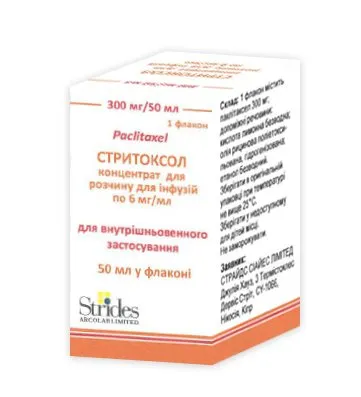
Table of Contents
INSTRUCTIONS FOR MEDICAL USE OF THE MEDICINAL PRODUCT STIRTOXOL (STRITOXOL)
Composition:
Active substance: paclitaxel;
1 ml contains 6 mg of paclitaxel;
Excipients: citric acid anhydrous; polyoxyl 35 hydrogenated castor oil; ethanol anhydrous.
Pharmaceutical form. Concentrate for solution for infusion.
Main physicochemical characteristics: clear, viscous liquid, from colorless to light yellow.
Pharmacotherapeutic group.
Antineoplastic agents. Plant alkaloids and other natural agents. Taxanes. Paclitaxel. ATC code L01C D01.
Pharmacological Properties
Pharmacodynamics
Paclitaxel is an antimicrotubule agent that acts on the cellular microtubular apparatus. It promotes the assembly of microtubules from tubulin dimers and stabilizes them by preventing depolymerization. As a result, the normal dynamic reorganization of microtubular networks, essential for cellular functions during interphase and mitosis, is disrupted. Additionally, paclitaxel induces the formation of abnormal aggregates or bundles of microtubules throughout the cell cycle, as well as multiple microtubule asters during mitosis.
Pharmacokinetics
After intravenous administration, a biphasic decline in plasma concentrations of paclitaxel is observed.
The pharmacokinetics of paclitaxel have been studied following intravenous infusions lasting 3 and 24 hours at doses of 135 mg/m² and 175 mg/m² body surface area. The mean terminal half-life ranged from 3 to 52.7 hours, and the mean total systemic clearance ranged from 11.6 to 24 L/h·m². Total clearance of paclitaxel from the body is likely reduced as plasma concentrations increase. The mean steady-state volume of distribution was 198–688 L/m², indicating extensive extravascular distribution and/or tissue binding. With 3-hour infusions, the pharmacokinetics of paclitaxel were nonlinear. When doses were increased by 30% (from 135 mg/m² to 175 mg/m² body surface area), the maximum plasma concentration (Cmax) and the area under the pharmacokinetic curve (AUC→∞) increased by 75% and 81%, respectively.
After administration of paclitaxel at a dose of 100 mg/m² body surface area via 3-hour intravenous infusions, the mean Cmax in 19 patients with Kaposi's sarcoma was 1530 ng/mL (range: 761–2860 ng/mL), the mean AUC was 5619 ng·h/mL (range: 2609–9428 ng·h/mL), clearance was 20.6 L/h·m² (range: 11–38 L/h·m²), volume of distribution was 291 L/m² (range: 121–638 L/m²), and the terminal half-life was 23.7 hours (range: 12–33 hours).
Inter-individual variability in systemic exposure to paclitaxel was minimal. There was no evidence of paclitaxel accumulation after multiple treatment cycles.
In vitro studies indicate that 89–98% of paclitaxel is protein-bound in human plasma. The presence of cimetidine, ranitidine, dexamethasone, or diphenhydramine does not affect paclitaxel protein binding.
The metabolism of paclitaxel in humans has not been fully elucidated. Between 1.3% and 12.6% of the administered dose is excreted unchanged in urine, indicating extensive non-renal clearance. Paclitaxel is likely metabolized primarily in the liver via cytochrome P450 isoenzymes and excreted in bile. After administration of radiolabeled paclitaxel, approximately 26%, 2%, and 6% of radioactivity were excreted in feces as 6α-hydroxypaclitaxel, 3’-p-hydroxypaclitaxel, and 6α-3’-p-dihydroxypaclitaxel, respectively. The formation of these hydroxylated metabolites is catalyzed by the isoenzymes CYP2C8, CYP3A4, and the combination of CYP2C8 + CYP3A4, respectively.
The effects of renal or hepatic impairment on the pharmacokinetics of paclitaxel following 3-hour infusions have not been formally studied. However, pharmacokinetic parameters in one patient undergoing hemodialysis and treated with paclitaxel at 135 mg/m² body surface area via 3-hour infusions were similar to those in patients without renal impairment.
When paclitaxel and doxorubicin are used concomitantly, an increase in the distribution and elimination phases of doxorubicin and its metabolites has been observed. When paclitaxel was administered immediately after doxorubicin, total plasma exposure to doxorubicin was 30% higher compared to when paclitaxel was administered 24 hours after doxorubicin.
Clinical characteristics.
Indications.
Ovarian cancer (first-line chemotherapy for advanced disease or residual tumors (>1 cm) after laparotomy, in combination with cisplatin; second-line chemotherapy for metastatic ovarian cancer refractory to standard platinum-based therapy).
Breast cancer (adjuvant chemotherapy in patients with node-positive breast cancer following treatment with anthracyclines and cyclophosphamide; primary chemotherapy for locally advanced or metastatic breast cancer, in combination with anthracyclines or in combination with trastuzumab in cases of immunohistochemically confirmed HER-2 protein overexpression (3+) or in cases of contraindications to anthracycline therapy; monotherapy for metastatic breast cancer in patients not eligible for standard anthracycline therapy or in cases of prior anthracycline treatment failure).
Advanced non-small cell lung cancer (NSCLC) (combination chemotherapy with cisplatin when surgical treatment and/or radiotherapy are not feasible).
Kaposi’s sarcoma in AIDS patients (second-line treatment of advanced Kaposi’s sarcoma refractory to prior therapy with liposomal anthracyclines).
Contraindications.
Hypersensitivity to paclitaxel or to any of the excipients, particularly to polyoxyethylated castor oil.
Neutropenia prior to treatment initiation (neutrophil count < 1.5 × 10⁹/L; in AIDS patients with Kaposi’s sarcoma, neutrophil count < 1.0 × 10⁹/L).
Severe uncontrolled infections in Kaposi’s sarcoma.
Severe hepatic impairment.
Safety precautions.
Handling of Stritoxol, as with all cytotoxic agents, requires special caution. The drug should be reconstituted under aseptic conditions in a designated area by trained personnel. All necessary precautions must be taken to avoid contact of paclitaxel solutions with skin or mucous membranes, including the use of protective clothing (gowns, caps, masks, goggles, and disposable gloves). In case of skin exposure (which may cause local reactions such as stinging, burning, or erythema), the affected area should be thoroughly washed with soap and water. In case of contact with mucous membranes, they should be rinsed thoroughly with copious amounts of water. Cases of dyspnea, chest pain, throat burning, and nausea have been reported following inhalation of aerosolized paclitaxel solutions.
Precipitation may occur in unopened vials when cooled; this precipitate dissolves upon gentle swirling or even without agitation upon warming to room temperature. This phenomenon does not affect the quality of the drug. However, if the solution remains cloudy or contains undissolved precipitate, the vial must not be used and should be disposed of according to established hazardous waste disposal procedures.
Disposal
Unused solutions and all equipment and materials that have come into contact with paclitaxel must be disposed of in accordance with standard hospital procedures for cytotoxic waste, in compliance with applicable regulations for hazardous waste disposal.
Interaction with other medicinal products and other forms of interaction.
Premedication with cimetidine does not affect paclitaxel clearance.
In first-line combination chemotherapy for ovarian cancer, paclitaxel should be administered before cisplatin. In this sequence, the safety profile of paclitaxel is comparable to that observed during monotherapy. If paclitaxel is administered after cisplatin, more severe myelosuppression occurs, and paclitaxel clearance decreases by approximately 20%. The risk of renal insufficiency in ovarian cancer patients receiving combination therapy with paclitaxel and cisplatin is higher than with cisplatin monotherapy.
Since the elimination of doxorubicin and its active metabolites may be reduced when the interval between paclitaxel and doxorubicin administration is shortened, paclitaxel should be administered 24 hours after doxorubicin in first-line chemotherapy for metastatic breast cancer.
Paclitaxel metabolism is partially catalyzed by the CYP2C8 and CYP3A4 isoenzymes of the cytochrome P450 system. Therefore, due to the lack of interaction studies, concomitant use of paclitaxel with known inhibitors of CYP2C8 and CYP3A4 (e.g., ketoconazole or other imidazole antifungals, erythromycin, fluoxetine, gemfibrozil, clopidogrel, cimetidine, ritonavir, saquinavir, indinavir, and nelfinavir) should be approached with caution due to the potential for increased paclitaxel toxicity resulting from elevated exposure. Concomitant use of paclitaxel with known inducers of CYP2C8 or CYP3A4 (e.g., rifampicin, carbamazepine, phenytoin, efavirenz, nevirapine) is not recommended due to the potential for reduced efficacy resulting from decreased paclitaxel exposure.
Studies have shown that the main metabolic pathway in humans is CYP2C8-mediated conversion of paclitaxel to 6α-hydroxypaclitaxel. Concomitant administration of ketoconazole, a potent CYP3A4 inhibitor, does not significantly delay paclitaxel elimination in humans; therefore, both drugs can be used together without dose adjustment. Information on potential interactions between paclitaxel and CYP3A4 inducers or inhibitors is limited; therefore, caution is required when co-administering inhibitors (e.g., erythromycin, fluoxetine, gemfibrozil) or inducers (e.g., rifampicin, carbamazepine, phenytoin, phenobarbital, efavirenz, nevirapine) of CYP2C8 and CYP3A4 isoenzymes.
Pharmacokinetic studies in patients with Kaposi’s sarcoma receiving concomitant therapy with multiple drugs indicate a significant reduction in systemic paclitaxel clearance when co-administered with nelfinavir and ritonavir, but not with indinavir. Data on interactions between paclitaxel and other protease inhibitors are insufficient. Therefore, paclitaxel should be administered with caution in patients receiving concomitant therapy with protease inhibitors.
Special precautions for use.
Paclitaxel therapy should be administered under the supervision of a qualified oncologist. Since serious hypersensitivity reactions may occur, appropriate resuscitation equipment must be available. Because extravasation may occur during drug administration, careful observation of the infusion site for signs of possible infiltration is recommended. Prior to paclitaxel administration, patients must receive premedication with corticosteroids, antihistamines, and H2-receptor antagonists to prevent severe hypersensitivity reactions.
When paclitaxel is used in combination with cisplatin, paclitaxel should be administered before cisplatin.
Severe hypersensitivity reactions (manifested as dyspnea and hypotension requiring therapeutic intervention, angioneurotic edema, and generalized urticaria) occur in less than 1% of patients when paclitaxel is administered after adequate premedication. These reactions are likely histamine-mediated. In case of severe hypersensitivity reactions, paclitaxel infusion must be stopped immediately and symptomatic treatment initiated. Paclitaxel should not be re-administered to such patients.
Myelosuppression (mainly neutropenia) is the principal dose-limiting toxic effect. Blood cell counts must be frequently monitored during paclitaxel therapy. Re-administration of the drug is permitted only after neutrophil counts have recovered to ≥ 1.5×10⁹/L (≥ 1.0×10⁹/L in patients with Kaposi's sarcoma) and platelet counts to ≥ 100×10⁹/L (≥ 75×10⁹/L in patients with Kaposi's sarcoma). In clinical trials, most patients with Kaposi's sarcoma received granulocyte colony-stimulating factor (G-CSF).
Paclitaxel is not recommended for patients with severe hepatic impairment, as this may increase the risk of toxic effects of the drug, including grade III–IV myelosuppression.
There is no evidence that administration of paclitaxel as a 3-hour infusion increases its toxicity in patients with mild hepatic impairment. However, with longer infusions in patients with moderate to severe hepatic impairment, increased myelosuppression has been observed. Patients should be closely monitored for the development of severe myelosuppression (see "Dosage and administration").
There is insufficient data on dose adjustment in patients with cholestasis. Paclitaxel should not be administered to patients with severe hepatic impairment.
Severe cardiac conduction disturbances are rarely observed during monotherapy with paclitaxel. If significant cardiac conduction disturbances develop during paclitaxel therapy, appropriate treatment should be initiated, and continuous cardiac monitoring should be performed during subsequent paclitaxel infusions. Hypotension, hypertension, and bradycardia have been reported during paclitaxel infusion; these are usually asymptomatic and do not require therapeutic intervention. Frequent monitoring of vital signs, especially during the first hour of paclitaxel infusion, is recommended. Severe cardiovascular events are more frequently observed in patients with non-small cell lung cancer than in patients with breast or ovarian cancer. One case of heart failure following paclitaxel therapy was reported in a patient with Kaposi's sarcoma and AIDS.
When paclitaxel is used in combination with doxorubicin or trastuzumab for primary chemotherapy of metastatic breast cancer, cardiac function monitoring is essential. Patients scheduled for such combination therapy should undergo thorough cardiological evaluation before treatment initiation, including ECG, echocardiography, and MUGA scanning. Cardiac function should be regularly monitored during treatment (e.g., every 3 months). This monitoring allows early detection of cardiac dysfunction. When determining the frequency of ventricular function monitoring, the cumulative dose of anthracyclines (in mg/m² body surface area) should be considered. If test results indicate cardiac dysfunction, even if asymptomatic, the potential benefit of continuing treatment must be carefully weighed against the risk of cardiac damage, which may sometimes be irreversible. If combination chemotherapy is continued, cardiac function should be monitored more frequently (every 1–2 cycles).
Although peripheral neuropathy is a common adverse effect of paclitaxel therapy, severe neuropathy is rare. In severe cases, subsequent paclitaxel doses should be reduced by 20% (by 25% in Kaposi's sarcoma). Peripheral neuropathy may develop after the first treatment cycle and worsen with continued paclitaxel therapy. Sensory disturbances usually diminish or resolve within several months after discontinuation of paclitaxel. Pre-existing neuropathy due to prior chemotherapy is not a contraindication for paclitaxel therapy.
The risk of toxic effects (particularly grade III–IV myelosuppression) is higher in patients with hepatic impairment. With 3-hour paclitaxel infusions, no increased toxicity has been observed in patients with mild hepatic impairment. However, with longer infusions in patients with moderate hepatic impairment, more pronounced myelosuppression may occur. Paclitaxel should not be administered to patients with severe hepatic impairment. Patients should be closely monitored for signs of profound myelosuppression. Currently, there is insufficient data to provide dose adjustment recommendations for patients with mild or moderate hepatic impairment. There is no information on paclitaxel use in patients with severe cholestasis.
Stritoxel contains polyoxyl 35 castor oil, which may cause severe allergic reactions.
Since Stritoxel contains ethanol (396 mg/mL), its potential effects on the central nervous system and other effects should be considered.
All necessary precautions must be taken to prevent intra-arterial administration of paclitaxel, as severe tissue reactions may occur following intra-arterial injection.
Isolated cases of pseudomembranous colitis have been reported, including in patients not receiving concomitant antibiotic therapy. This should be considered in differential diagnosis if severe or persistent diarrhea develops during or shortly after paclitaxel therapy.
Cases of interstitial pneumonitis have been reported when paclitaxel chemotherapy was combined with radiotherapy to the lung area, regardless of sequence.
Severe mucosal inflammation is rare in patients with Kaposi's sarcoma. In cases of severe reactions, paclitaxel doses should be reduced by 25%.
When paclitaxel is used in combination with other antineoplastic agents (cisplatin, doxorubicin, trastuzumab), the recommendations for use of these medicinal products must be considered.
Use during pregnancy or breastfeeding.
Animal studies have shown that paclitaxel is embryotoxic and fetotoxic in animals and adversely affects fertility. Additionally, based on literature data, paclitaxel can be considered a potentially carcinogenic and genotoxic agent when used at therapeutic doses, considering its pharmacodynamics and mechanism of action.
There is no information on paclitaxel use in pregnant women. Like other cytotoxic agents, paclitaxel may harm the fetus; therefore, it should not be administered during pregnancy. Women of reproductive age should avoid conception during paclitaxel therapy and must inform their physician immediately if pregnancy occurs.
Men and women should use contraceptive methods to prevent pregnancy during paclitaxel therapy and for at least 6 months after completion of treatment, and must inform their physician immediately if pregnancy occurs. Breastfeeding should be discontinued during paclitaxel therapy. Sperm cryopreservation should be considered before starting paclitaxel therapy due to the potential risk of infertility in men.
Ability to affect driving and operating machinery.
During paclitaxel therapy, patients should refrain from potentially hazardous activities requiring heightened attention and rapid psychomotor responses.
It should be noted that Stritoxel contains alcohol, and certain adverse effects may negatively affect the ability to drive or operate machinery.
Method of administration and dosage.
All patients must receive premedication with corticosteroids, antihistamines, and H2-receptor antagonists according to the following regimen:
| Drug |
Dose |
Time of administration |
| Dexamethasone |
20 mg orally or intravenously (8–20 mg orally in the case of Kaposi's sarcoma) |
For oral administration – approximately 12 and 6 hours before paclitaxel infusion. For intravenous administration – 30–60 minutes before paclitaxel infusion. |
| Diphenhydramine |
50 mg intravenously |
30–60 minutes |
| Cimetidine or |
300 mg intravenously |
30–60 minutes |
The paclitaxel solution must be administered intravenously by infusion using infusion sets equipped with in-line membrane filters with pore size ≤ 0.22 μm.
First-line chemotherapy for ovarian cancer. A combination regimen of paclitaxel and cisplatin is recommended. Depending on the duration of infusion, two dosing regimens of Stritoxol are recommended:
- paclitaxel administered at a dose of 175 mg/m² body surface area over a 3-hour intravenous infusion, followed by cisplatin at a dose of 75 mg/m² body surface area. Treatment intervals are 3 weeks;
- paclitaxel administered at a dose of 135 mg/m² body surface area over a 24-hour intravenous infusion, followed by cisplatin at a dose of 75 mg/m² body surface area. Treatment intervals are 3 weeks.
Second-line chemotherapy for ovarian cancer. Paclitaxel is recommended at a dose of 175 mg/m² body surface area administered via 3-hour intravenous infusions. Treatment intervals are 3 weeks.
Adjuvant chemotherapy for breast cancer. Paclitaxel should be administered after anthracycline and cyclophosphamide chemotherapy. Paclitaxel is recommended at a dose of 175 mg/m² body surface area via 3-hour intravenous infusions, for a total of 4 cycles with 3-week intervals between them.
First-line chemotherapy for breast cancer. When used in combination with doxorubicin (at a dose of 50 mg/m² body surface area), paclitaxel should be administered 24 hours after doxorubicin. The recommended dose of paclitaxel is 220 mg/m² body surface area administered via 3-hour intravenous infusions. Treatment intervals are 3 weeks.
When used in combination with trastuzumab, paclitaxel is recommended at a dose of 175 mg/m² body surface area via 3-hour intravenous infusions with 3-week intervals between cycles. Paclitaxel may be administered the day after the first dose of trastuzumab or immediately after subsequent doses, provided previous doses of trastuzumab were well tolerated.
Second-line chemotherapy for breast cancer. Paclitaxel is recommended at a dose of 175 mg/m² body surface area via 3-hour intravenous infusions. Treatment intervals are 3 weeks.
First-line chemotherapy for advanced non-small cell lung cancer (NSCLC). A combination regimen of paclitaxel and cisplatin is recommended. Paclitaxel should be administered at a dose of 175 mg/m² body surface area via 3-hour intravenous infusions, followed by cisplatin at a dose of 80 mg/m² body surface area. Treatment intervals are 3 weeks.
Chemotherapy for Kaposi’s sarcoma in AIDS patients. Paclitaxel is recommended at a dose of 100 mg/m² body surface area via 3-hour intravenous infusions. Treatment intervals are 2 weeks.
Treatment of patients with hepatic impairment. Currently, there are insufficient data to recommend dose adjustments for patients with mild or moderate hepatic impairment. Paclitaxel should not be administered to patients with severe hepatic impairment.
Subsequent doses of paclitaxel should be individually adjusted based on treatment tolerability. The next dose of paclitaxel may be administered only after neutrophil counts have recovered to ≥ 1.5×10⁹/L (≥ 1.0×10⁹/L in Kaposi’s sarcoma) and platelet counts to ≥ 100×10⁹/L (≥ 75×10⁹/L in Kaposi’s sarcoma). In patients who experienced severe neutropenia (neutrophil count < 0.5×10⁹/L for 7 days or longer) or severe peripheral neuropathy, subsequent doses should be reduced by 20% (by 25% in Kaposi’s sarcoma).
Preparation of infusion solution
The concentrate for infusion solution must be diluted under aseptic conditions with 0.9% sodium chloride solution, 5% glucose solution, 5% glucose in 0.9% sodium chloride solution, or 5% glucose in Ringer’s solution to a final concentration of 0.3–1.2 mg/mL.
When multiple withdrawals are made from the vial, the concentrate for infusion solution remains microbiologically, physically, and chemically stable for up to 28 days at 25°C.
Infusion solutions prepared by diluting Stritoxol with 0.9% sodium chloride solution or 5% glucose solution are physically and chemically stable for 51 hours when stored at 25°C and for 14 days when stored at 5°C. From a microbiological standpoint, the infusion solution should be used immediately after preparation. If not used immediately, the user must monitor the duration and conditions of storage. Generally, storage time should not exceed 24 hours at 2–8°C, unless the solution was prepared under controlled and validated aseptic conditions.
The prepared infusion solution may appear slightly cloudy due to the composition of the vehicle. Filtration does not eliminate this cloudiness. The infusion solution must be administered through an in-line membrane filter with pore size ≤ 0.22 μm.
Prepared infusion solutions do not require protection from light.
There have been isolated reports of precipitate formation in the infusion solution during administration (usually toward the end of a 24-hour infusion). Although the exact causes of precipitate formation have not been fully elucidated, this phenomenon is likely due to supersaturation of the infusion solution. To minimize the risk of precipitate formation, the infusion solution should be administered immediately after dilution, and excessive agitation, vibration, or shaking should be avoided. The infusion set should be thoroughly flushed before use. The appearance of the solution should be monitored regularly during administration, and infusion should be discontinued if precipitate is observed.
To minimize patient exposure to di-(2-ethylhexyl)phthalate (DEHP), which may leach from infusion bags, systems, or other medical equipment made of plasticized polyvinyl chloride (PVC), infusion solutions should be stored in containers made of non-PVC materials (glass or polypropylene bottles, polypropylene or polyolefin bags) and administered through infusion systems lined with polyethylene. Short PVC tubing used to connect filters does not result in significant DEHP leaching.
Elderly patients
No additional dose reductions are recommended for patients aged 65 years and older beyond those applicable to all patients. Among 229 patients receiving paclitaxel monotherapy for breast cancer, 13% were at least 65 years old and 2% were 75 years or older. No increased incidence of toxicity was observed in patients aged 65 years and older. However, further analysis of 981 patients receiving paclitaxel monotherapy for metastatic breast cancer, of whom 15% were under 65 years and 2% were ≥75 years, revealed higher frequencies of epistaxis, diarrhea, dehydration, malaise, and peripheral edema in patients aged ≥65 years. Among 421 patients with pancreatic adenocarcinoma receiving paclitaxel and gemcitabine in a randomized trial, 41% were aged 65 years or older and 10% were aged 75 years or older. In patients aged 75 years and older receiving paclitaxel and gemcitabine, higher frequencies of serious adverse reactions and adverse reactions leading to treatment discontinuation were observed (see section "Special precautions"). Patients with pancreatic adenocarcinoma aged 75 years and older should be carefully evaluated before initiating therapy (see section "Special precautions"). Among 514 patients with non-small cell lung cancer receiving paclitaxel in combination with carboplatin, 31% were aged 65 years or older and 3.5% were aged 75 years or older. Myelosuppression, peripheral neuropathy, and arthralgia occurred more frequently in patients aged 65 years and older compared to those under 65 years. Experience with paclitaxel/carboplatin in patients aged 75 years and older is limited. Pharmacokinetic/pharmacodynamic modeling using data from 125 patients with advanced solid tumors indicated that patients aged ≥65 years may be more susceptible to developing neutropenia during the first treatment cycle.
Patients with renal impairment
No initial dose adjustment is required for patients with mild to moderate renal impairment (creatinine clearance ≥30 to <90 mL/min). Insufficient data are available to recommend dose adjustments for patients with severe renal impairment or end-stage renal disease (estimated creatinine clearance <30 mL/min).
CNS metastases
The efficacy and safety of the drug in patients with CNS metastases have not been established. Treatment of CNS metastases is generally poorly controlled by systemic chemotherapy.
Children
The efficacy and safety of the drug for pediatric use have not been established; therefore, the drug should not be used in pediatric practice.
Overdose.
Symptoms: intensification of adverse effects, potentially more severe adverse effects, primarily bone marrow suppression, peripheral neuropathy, and mucosal inflammation.
Treatment: in case of overdose, administration of the drug should be immediately discontinued and symptomatic treatment initiated, with monitoring of blood cell counts and vital organ function. There is no known antidote for paclitaxel.
Adverse Reactions
The frequency and intensity of adverse effects in patients with ovarian cancer, breast cancer, and non-small cell lung cancer do not differ significantly. Age did not influence any of the observed types of toxicity.
Severe hypersensitivity reactions with potentially fatal outcomes (hypotension requiring therapeutic intervention; angioedema; respiratory dysfunction requiring bronchodilators; generalized urticaria); mild hypersensitivity reactions, primarily flushing and rashes, which do not require therapeutic intervention or discontinuation of paclitaxel therapy.
The most common adverse effect during paclitaxel treatment is bone marrow suppression: thrombocytopenia; anemia (frequency and severity of anemia depend on baseline hemoglobin levels). Severe neutropenia (˂ 0.5×10⁹/L) has been reported, which was not associated with febrile episodes.
Neurotoxicity, mainly peripheral neuropathy, is likely to occur more frequently and be more severe when paclitaxel is administered at a dose of 175 mg/m² over 3 hours compared to 135 mg/m² over 24 hours in combination with cisplatin. A clear increase in the frequency of severe neurotoxicity has been observed in patients with NSCLC and ovarian carcinoma treated with a 3-hour paclitaxel infusion followed by cisplatin.
Peripheral neuropathy may develop after the first cycle of treatment and worsen with subsequent paclitaxel administrations. It may sometimes necessitate discontinuation of paclitaxel therapy. Sensory symptoms typically diminish or resolve within several months after stopping paclitaxel treatment. However, peripheral neuropathies have been shown to persist beyond 6 months after discontinuation of paclitaxel. Pre-existing neuropathy due to prior therapy is not a contraindication for paclitaxel treatment.
Musculoskeletal system: arthralgia, myalgia.
Local reactions: at injection sites, local swelling, pain, erythema, and induration may occur. Accidental extravasation may lead to cellulitis. Cases of skin desquamation and/or peeling have been reported, sometimes associated with extravasation. Skin pigmentation changes are possible. There have been isolated reports of recurrence of skin reactions at sites of previous paclitaxel extravasation following subsequent administrations. There is currently no specific treatment for transudation reactions.
In some cases, injection site reactions occurred either during prolonged infusion or as late as 7–10 days afterward.
Skin
Alopecia occurred in >87% of patients, with sudden onset. Marked hair loss is expected in ≥50% of patients with alopecia.
Palmar-plantar erythrodysesthesia syndrome—reported in post-marketing surveillance of paclitaxel.
Listed below are adverse reactions observed in patients receiving paclitaxel monotherapy via 3-hour infusions
Infections and infestations: infections (mainly urinary tract and upper respiratory tract, including herpes simplex, oral candidiasis, pharyngitis, rhinitis), sometimes fatal; common cold; sinusitis; severe infections; nasopharyngitis; viral infections; catheter-associated infections; fungal infections; herpes zoster; injection site infections; septic shock; pneumonia; peritonitis; sepsis.
Benign, malignant, and unspecified neoplasms (including cysts and polyps): metastases may present with pain symptoms; tumor necrosis.
Blood and lymphatic system disorders: myelosuppression, severe neutropenia, anemia, thrombocytopenia, severe leukopenia, hemorrhage, lymphopenia, neutropenic fever, severe anemia, febrile neutropenia, pancytopenia, acute myeloid leukemia, myelodysplastic syndrome. Cases of disseminated intravascular coagulation (DIC), often in association with sepsis or multiorgan failure, have been reported.
Immune system disorders: mild hypersensitivity reactions (mainly flushing and rashes), serious hypersensitivity reactions requiring therapeutic intervention (including arterial hypotension, angioedema, respiratory distress, generalized urticaria, chills, back pain, chest pain, tachycardia, abdominal pain, limb pain, profuse sweating, arterial hypertension), anaphylactic reactions, anaphylactic shock (including fatal hypersensitivity reactions).
Metabolic and nutritional disorders: anorexia, decreased appetite, hypokalemia, weight loss/gain, hypophosphatemia, fluid retention, hypoalbuminemia, polydipsia. Hyperglycemia, hypocalcemia, hypoglycemia, hyponatremia, tumor lysis syndrome*.
Psychiatric disorders: insomnia, depression, anxiety, restlessness, confusion.
Nervous system disorders: neurotoxic effects (mainly peripheral neuropathy), paresthesia, somnolence, depression, severe neuropathy (mainly peripheral neuropathy), nervousness, insomnia, cognitive disturbances, hypokinesia, gait disturbance, hypoesthesia, taste distortion, sensory disturbances, somnolence, motor neuropathy (manifested as mild distal muscle weakness), facial nerve paralysis, polyneuropathy, areflexia, dyskinesia, hyporeflexia, neuralgia, loss of sensation, postural dizziness, neuropathic pain, tremor, grand mal seizures, autonomic neuropathy (leading to paralytic ileus and orthostatic hypotension), encephalopathy, convulsions, dizziness, ataxia, headache.
Eye disorders: increased lacrimation, loss of eyebrows or eyelashes, dry keratoconjunctivitis, dry eyes, blurred vision, visual field defects, eye irritation, eye pain, decreased visual acuity, conjunctivitis, eye itching, keratitis, optic nerve damage and/or visual disturbances (scintillating scotoma), especially in patients receiving doses above recommended, macular edema, photopsia, floaters in the vitreous body.
Ear and labyrinth disorders: ear pain, ototoxic damage, hearing loss, tinnitus, vertigo.
Cardiac disorders: bradycardia, tachycardia, palpitations, syncope, congestive heart failure, myocardial infarction, atrioventricular block and syncope, cardiomyopathy, asymptomatic ventricular tachycardia, tachycardia combined with bigeminy, arrhythmia, extrasystoles, heart failure, cardiac arrest, left ventricular dysfunction, atrial fibrillation, supraventricular tachycardia.
Vascular disorders: arterial hypotension, vasodilation (flushing), lymphedema, arterial hypertension, thrombosis, thrombophlebitis, cold extremities, orthostatic hypotension, shock, phlebitis.
Respiratory, thoracic and mediastinal disorders: epistaxis, throat/esophagus pain, rhinitis, rhinorrhea, productive cough, exertional dyspnea, nasal sinus congestion, decreased breath sounds, allergic rhinitis, hoarseness, nasal congestion, dryness of nasal mucosa, wheezing, pulmonary embolism, pulmonary artery thromboembolism, interstitial pneumonia, respiratory failure, pulmonary artery embolism, interstitial pneumonitis, dyspnea, pleural effusion, cough, pulmonary hypertension.
Gastrointestinal disorders: nausea, vomiting, diarrhea, mucositis, abdominal pain, dry mouth, oral ulcers, melena, dyspepsia, bloating, upper abdominal pain, dyspepsia, gastroesophageal reflux disease, oral hypoesthesia, dysphagia, flatulence, glossalgia, dry mouth, gum pain, loose stools, lower abdominal pain, oral ulcers, mouth pain, rectal bleeding, intestinal obstruction, intestinal perforation, ischemic colitis, acute pancreatitis, mesenteric thrombosis, pseudomembranous colitis, esophagitis, constipation, ascites, neutropenic colitis, dehydration.
Hepatobiliary disorders: hepatomegaly, liver necrosis, hepatic encephalopathy (including fatal cases).
Skin and subcutaneous tissue disorders: alopecia, transient mild nail and skin changes, dry skin, acne, nail discoloration, nail bed tenderness, skin tenderness, photosensitivity reactions, pigmentation disorders, skin disorders, increased sweating, onychomadesis, generalized rash, dermatitis, excessive night sweating, vitiligo, hypotrichosis, nail discomfort, maculopapular rash, skin damage, facial swelling, pruritus, rashes, erythema, swelling, Stevens-Johnson syndrome, epidermal necrolysis, erythema multiforme, exfoliative dermatitis, urticaria, onycholysis (patients receiving paclitaxel should wear long-sleeved clothing to protect arms and legs from sunlight), folliculitis, scleroderma.
Musculoskeletal and connective tissue disorders: arthralgia, myalgia, limb pain, bone pain, leg cramps, myasthenia, back pain, chest pain, muscle weakness, neck and groin pain, muscle spasms, musculoskeletal pain, limb discomfort, systemic lupus erythematosus.
Renal and urinary disorders: acute renal failure, hemolytic uremic syndrome, pollakiuria, frequent urination, hematuria, nocturia, polyuria, urinary incontinence.
General disorders and administration site conditions: fatigue, hyperthermia, asthenia, pain; edema, including peripheral edema and facial swelling; injection site reactions (including localized swelling, pain, erythema, induration, weakness, loss of color, and skin swelling; accidental extravasation may cause cellulitis, skin fibrosis, and skin necrosis); mucositis, chills, reduced performance, chest pain, flu-like illness, malaise, lethargy, hyperpyrexia, chest discomfort, gait disturbance, swelling, asthenia, elevated body temperature, dehydration, edema, malaise, extravasation.
Investigations: significant elevation of liver enzymes—AST, ALT, and alkaline phosphatase; weight loss; decreased hematocrit; decreased erythrocyte count; elevated body temperature; increased gamma-glutamyltransferase; significant elevation of bilirubin; significant elevation of blood pressure; increased body weight; significant elevation of blood lactate dehydrogenase; significant elevation of blood glucose; significant elevation of blood phosphorus; decreased blood potassium; elevated blood creatinine.
Injury, poisoning, and procedural complications: hematoma, local inflammatory reaction in previously irradiated areas, radiation pneumonitis.
Adverse Reactions with Combination Chemotherapy
One case of macular edema was reported in clinical trials using the combination of paclitaxel/gemcitabine; such reactions were not observed in the group receiving gemcitabine alone.
In patients with ovarian cancer receiving first-line chemotherapy with paclitaxel via 3-hour intravenous infusions in combination with cisplatin, the frequency and severity of neurotoxic effects, arthralgia/myalgia, and hypersensitivity reactions are higher than with cyclophosphamide combined with cisplatin. The frequency and severity of myelosuppression are lower in patients receiving paclitaxel via 3-hour intravenous infusions combined with cisplatin compared to those receiving cyclophosphamide combined with cisplatin.
In first-line chemotherapy for metastatic breast cancer, the frequency and severity of neutropenia, anemia, peripheral neuropathy, arthralgia/myalgia, asthenia, fatigue, and diarrhea are higher with paclitaxel administered at 220 mg/m² body surface area via 3-hour intravenous infusions 24 hours after doxorubicin at 50 mg/m² body surface area, compared to standard therapy with 5-fluorouracil (500 mg/m²), doxorubicin (50 mg/m²), and cyclophosphamide (500 mg/m²) (FAC regimen). The frequency and severity of nausea and vomiting with paclitaxel (220 mg/m²) and doxorubicin (50 mg/m²) are lower than with the FAC regimen. This difference may be partly explained by the use of corticosteroids.
In first-line chemotherapy with paclitaxel via 3-hour intravenous infusions combined with trastuzumab, the frequency of the following adverse effects (regardless of causal relationship to paclitaxel or trastuzumab) in patients with metastatic breast cancer is higher than with paclitaxel monotherapy: heart failure (8% vs. 1%), infections (46% vs. 27%), chills (42% vs. 4%), fatigue (47% vs. 23%), cough (42% vs. 22%), rash (39% vs. 18%), arthralgia (37% vs. 21%), tachycardia (12% vs. 4%), diarrhea (45% vs. 30%), arterial hypertension (11% vs. 3%), epistaxis (18% vs. 4%), acne (11% vs. 3%), herpes simplex (12% vs. 3%), accidental injuries (13% vs. 3%), insomnia (25% vs. 13%), rhinitis (22% vs. 5%), sinusitis (21% vs. 7%), injection site reactions (7% vs. 1%). Differences in frequency of some adverse effects may be explained by the greater number and duration of treatment cycles with paclitaxel and trastuzumab compared to paclitaxel monotherapy. The frequency of serious adverse effects with combination chemotherapy of paclitaxel and trastuzumab is comparable to that with paclitaxel monotherapy.
Impaired cardiac contractility (left ventricular ejection fraction decrease >20%) occurs in 15% of patients with metastatic breast cancer receiving doxorubicin combined with paclitaxel and in 10% of patients receiving standard therapy with 5-fluorouracil, doxorubicin, and cyclophosphamide (FAC regimen). The incidence of congestive heart failure is <1% with both paclitaxel combined with doxorubicin and standard FAC therapy. With combination chemotherapy using trastuzumab and paclitaxel, the frequency and severity of cardiac dysfunction in patients previously treated with anthracyclines are higher than with paclitaxel monotherapy (heart failure NYHA class I-II in 10% vs. 0%, heart failure NYHA class III-IV in 2% vs. 1%). In isolated cases, these disorders were associated with fatal outcomes. In all cases except the rare fatal ones, adequate therapy resulted in positive outcomes.
In patients undergoing concurrent radiotherapy, radiation pneumonitis has been reported.
Adverse Effects in AIDS Patients with Kaposi's Sarcoma
Except for hematological and hepatic adverse effects, the frequency and severity of adverse effects in patients with Kaposi's sarcoma are comparable to those in patients with other solid tumors receiving paclitaxel monotherapy.
Bone marrow suppression is the main dose-limiting toxic effect. The most significant manifestation of hematological toxicity is neutropenia. During the first treatment cycle, severe neutropenia (<0.5×10⁹/L) occurs in 20% of patients. Throughout the treatment period, severe neutropenia was observed in 39% of patients. Neutropenia lasts longer than 7 days in 41% of patients and 30–35 days in 8% of patients. Hematological parameters normalize within 35 days in all monitored patients. The frequency of grade IV neutropenia lasting more than 7 days is 22%.
Neutropenic fever associated with paclitaxel treatment occurs in 14% of patients during 1.3% of treatment cycles. During paclitaxel therapy, three septic episodes (2.8%) occurred, leading to fatal outcomes.
Thrombocytopenia occurs in 50% of patients, and severe thrombocytopenia (<50×10⁹/L) in 9%. Only 14% of patients experience platelet counts below 75×10⁹/L at least once during treatment. Bleeding episodes related to paclitaxel therapy occur in less than 3% of patients and are localized.
Anemia (Hb <11 g/dL) occurs in 61% of patients, and severe anemia (Hb <8 g/dL) in 10%. Erythrocyte transfusions were required in 21% of patients.
Elevated levels of bilirubin, alkaline phosphatase, and AST occur in 28%, 43%, and 44% of patients, respectively, with normal baseline liver function (more than half of these patients receive protease inhibitors). Significant elevations of these parameters occur in 1% of cases.
Shelf Life
2 years.
Storage Conditions
Store in original packaging at a temperature not exceeding 25°C.
Keep out of reach of children.
Do not freeze.
Incompatibilities
Polyoxylated hydrogenated castor oil, an excipient in Stritoxel, may cause leaching of di-(2-ethylhexyl)phthalate (DEHP) from plasticized polyvinyl chloride (PVC). The extent of this process depends on the duration of exposure and the concentration of castor oil. Therefore, solutions for infusion must be prepared, stored, and administered using containers and systems that do not contain PVC.
Do not use with other solvents except those specified in the section "Dosage and Administration."
Packaging
5 mL, 16.7 mL, or 50 mL of the drug in a glass vial sealed with a rubber stopper and an aluminum crimp cap fitted with a flip-off cap ensuring tamper evidence.
One vial per cardboard box.
Prescription Category
Prescription only.
Manufacturer
MYLAN LABORATORIES LIMITED (OTL)
MYLAN LABORATORIES LIMITED (OTL)
Manufacturer's Address
Plot No. 284-B, Bommasandra Jigani Link Road, Industrial Area, Anekal Taluk, Bangalore, Karnataka 560105, India
Marketing Authorization Holder
m. biotech ltd
Marketing Authorization Holder's Address
Gladstone House, 77-79 High Street, Egham TW20 9HY, Surrey, United Kingdom