Strepsils® intensive with honey and lemon
Ukraine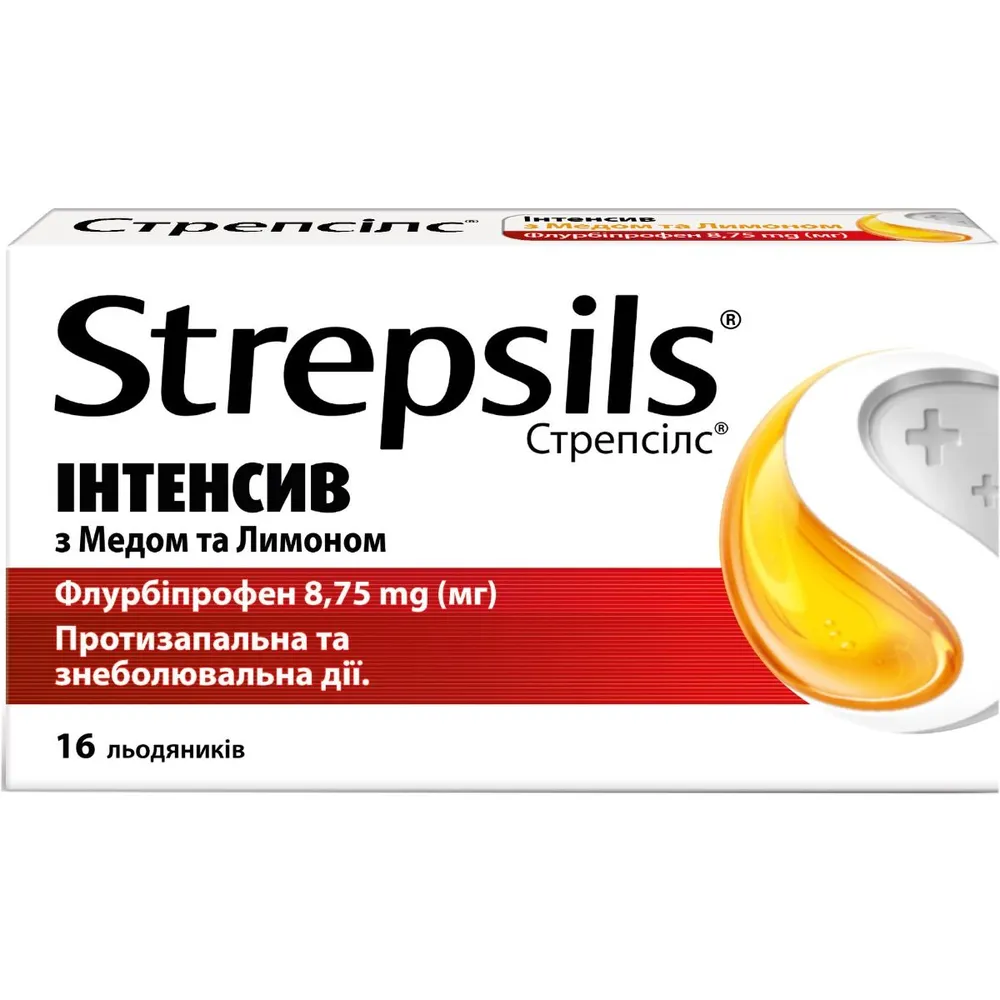
Table of Contents
INSTRUCTIONS FOR MEDICAL USE OF THE MEDICINAL PRODUCT Strepsils® Intensive with Honey & Lemon (Strepsils® Intensive Honey & Lemon)
Composition:
Active substance: flurbiprofen;
1 lozenge contains flurbiprofen 8.75 mg;
Excipients: macrogol 300, potassium hydroxide, lemon flavoring, levomenthol, glucose solution, sucrose solution, honey.
Pharmaceutical form. Lozenges.
Main physicochemical properties: round lozenges ranging in color from pale yellow to brown, embossed with the letter S on both sides.
Pharmacotherapeutic group. Preparations used in throat disorders. Flurbiprofen. ATC code R02AX01.
Pharmacological Properties.
Pharmacodynamics. Flurbiprofen is a propionic acid derivative belonging to the group of non-steroidal anti-inflammatory drugs (NSAIDs), which acts by inhibiting the synthesis of prostaglandins. In humans, flurbiprofen exerts potent analgesic, antipyretic, and anti-inflammatory effects.
It has been demonstrated that a dose of 8.75 mg dissolved in artificial saliva inhibits prostaglandin synthesis in cultured human respiratory tract cells. According to whole blood assay data, flurbiprofen is a mixed inhibitor of COX-1 and COX-2 with some selectivity towards COX-1.
Preclinical data suggest that the R(-)-enantiomer of flurbiprofen and other NSAIDs may affect the central nervous system; the proposed mechanism of action involves inhibition of COX-2 induction at the spinal cord level.
An ex vivo model has demonstrated penetration of flurbiprofen from the 8.75 mg lozenge formulation into human pharyngeal tissues, including deep layers.
Significant pain relief was observed in patients on average within 42.9 minutes after a single 8.75 mg dose of flurbiprofen administered locally to the throat via lozenge dissolution, with the first signs of pain relief (analgesic effect) appearing on average within 13.2 minutes.
Pain relief in the throat, including reduction of swelling and inflammation of the pharyngeal mucosa, was shown to occur through significant pain reduction (least squares mean difference) starting at 22 minutes (-5.5 mm), peaking at 70 minutes (-13.7 mm), and remaining significant for up to 240 minutes (-3.5 mm), including in patients with streptococcal and non-streptococcal infections. Improvement in swallowing difficulty began at 20 minutes (-6.7 mm), peaked at 110 minutes (-13.9 mm), and persisted for 240 minutes (-3.5 mm). Reduction in the sensation of throat swelling was observed at 60 minutes (-9.9 mm), peaked at 120 minutes (-11.4 mm), and remained significant for 210 minutes (-5.1 mm).
The efficacy of multiple doses, measured as the sum of pain intensity differences (SPID) over 24 hours, demonstrated significant reduction in throat pain intensity (from -473.7 mm * hr to -529.1 mm * hr), difficulty in swallowing (from -458.4 mm * hr to -575.0 mm * hr), and throat swelling (from -482.4 mm * hr to -549.9 mm * hr), with statistically greater cumulative pain reduction at each time point over 23 hours for all three parameters, and statistically significant greater hourly pain relief over a 6-hour evaluation period. Efficacy of multiple doses was also demonstrated at 24 hours and over 3 days.
In patients receiving antibiotics for streptococcal infection treatment, statistically significant greater throat pain relief was observed with flurbiprofen 8.75 mg therapy starting at 7 hours and continuing after antibiotic administration. The analgesic effect of flurbiprofen 8.75 mg was not diminished when patients received antibiotics for streptococcal tonsillitis.
Two hours after the first dose of flurbiprofen 8.75 mg lozenges, significant reduction in certain concomitant symptoms of throat pain present at baseline was observed, including cough (50% vs. 4%), loss of appetite (84% vs. 57%), and elevated body temperature (68% vs. 29%).
The lozenge has been shown to have efficacy comparable to a topical flurbiprofen spray, based on differences in pain intensity before and 2 hours after administration.
The lozenge dissolves in the mouth within 5–12 minutes and provides a significant soothing and coating effect within 2 minutes after administration.
Children
No specific studies in children have been conducted. Studies on the efficacy and safety of flurbiprofen 8.75 mg lozenges included children aged 12–17 years; however, the small sample size limits the ability to draw statistically significant conclusions.
Pharmacokinetics.
Maximum plasma concentration of flurbiprofen is observed 30–40 minutes after dissolving the lozenge in the oral cavity. Peak flurbiprofen concentrations are achieved more rapidly after lozenge administration than after swallowing an equivalent dose, although plasma concentration levels are similar in both cases. Flurbiprofen is rapidly distributed throughout the body. The drug is extensively metabolized via methylation and hydroxylation, followed by renal elimination. The main metabolites are 4'-hydroxy-flurbiprofen and 3'-hydroxy-4'-methoxy-flurbiprofen. Approximately 70% of each dose is excreted in urine within 24 hours. The elimination half-life is 3–6 hours.
Clinical characteristics.
Indications. For short-term symptomatic relief of sore throat pain in adults and children aged 12 years and older.
Contraindications.
- Hypersensitivity to flurbiprofen or to any of the excipients of the medicinal product.
- History of hypersensitivity reactions (e.g., bronchial asthma, bronchospasm, rhinitis, angioedema, or urticaria) after taking acetylsalicylic acid or other nonsteroidal anti-inflammatory drugs (NSAIDs).
- Recurrent peptic ulcer/bleeding in history or in the phase of exacerbation (two or more episodes confirmed by characteristic clinical manifestations) and intestinal ulcers.
- Gastrointestinal bleeding or perforations in history, severe colitis, hemorrhagic or hematopoietic disorders associated with previous NSAID therapy.
- Third trimester of pregnancy.
- Severe heart failure, severe renal failure, or severe hepatic failure.
Interaction with other medicinal products and other forms of interaction.
Concomitant use of flurbiprofen with the following should be avoided:
other NSAIDs, including selective cyclooxygenase-2 (COX-2) inhibitors: concomitant use of two or more NSAIDs should be avoided, as this increases the risk of adverse effects (particularly gastrointestinal side effects such as ulcers and bleeding);
acetylsalicylic acid (at low doses): if aspirin has not been prescribed by a physician at low doses (not exceeding 75 mg per day), because this increases the risk of adverse reactions.
Flurbiprofen should be used with caution in combination with the following medicinal products:
anticoagulants: NSAIDs may enhance the effects of anticoagulants such as warfarin;
antiplatelet agents: increased risk of gastrointestinal ulceration or bleeding;
antihypertensive agents (diuretics, ACE inhibitors, and angiotensin II antagonists): NSAIDs may reduce the efficacy of diuretics and other antihypertensive agents and may enhance nephrotoxicity caused by cyclooxygenase inhibition, especially in patients with impaired renal function. (Patients should receive adequate fluid intake);
alcohol: increases the risk of adverse reactions, especially gastrointestinal bleeding;
cardiac glycosides: NSAIDs may exacerbate heart failure, reduce glomerular filtration rate, and increase plasma levels of glycosides. Monitoring of the patient is recommended, and dose adjustment if necessary;
cyclosporine: increased risk of nephrotoxicity;
corticosteroids: increase the risk of adverse reactions, particularly in the gastrointestinal tract;
lithium: possible increase in serum lithium levels; appropriate monitoring and, if necessary, dose adjustment are recommended;
metotrexate: NSAID use within 24 hours before or after administration of methotrexate may lead to increased methotrexate concentrations and enhanced toxicity;
mifepristone: NSAIDs should not be taken within 8–12 days after mifepristone administration, as NSAIDs may reduce the efficacy of mifepristone;
oral antidiabetic agents: blood glucose levels may change (increased monitoring of blood glucose levels is recommended);
phenytoin: possible increase in plasma phenytoin levels; appropriate monitoring and, if necessary, dose adjustment are recommended;
potassium-sparing diuretics: concomitant use may lead to hyperkalemia;
probenecid, sulfinpyrazone, medicinal products containing probenecid or sulfinpyrazone: may cause delayed elimination of flurbiprofen;
quinolone antibiotics: animal studies indicate that NSAIDs increase the risk of seizures associated with quinolone antibiotics. Patients taking NSAIDs and quinolones have an increased risk of developing seizures;
selective serotonin reuptake inhibitors (SSRIs): increased risk of gastrointestinal ulceration or bleeding;
tacrolimus: possible increased risk of nephrotoxicity when NSAIDs are used concomitantly with tacrolimus;
zidovudine: increased risk of hematological toxicity when NSAIDs are used concomitantly with zidovudine.
Studies conducted to date have not revealed any interaction between flurbiprofen and tolbutamide or antacids.
Special precautions for use.
Adverse effects can be minimized by using the lowest effective dose required to control symptoms for the shortest duration necessary.
In elderly patients, the frequency of adverse reactions associated with NSAIDs increases, particularly gastrointestinal bleeding or perforations, which may be fatal.
Respiratory effects. Bronchospasm may occur in patients suffering from bronchial asthma or allergic diseases, or with a history of such conditions. These patients should use lozenges containing flurbiprofen with caution.
Other NSAIDs. Concomitant use of flurbiprofen lozenges with other NSAIDs, including selective cyclooxygenase-2 (COX-2) inhibitors, should be avoided.
Systemic lupus erythematosus and mixed connective tissue disease. Patients with systemic lupus erythematosus or mixed connective tissue disorders have an increased risk of aseptic meningitis.
Cardiac, renal, and hepatic impairment. Nephrotoxicity. There have been reports that NSAIDs may cause nephrotoxicity in various forms, including interstitial nephritis, nephrotic syndrome, and renal failure, particularly with the use of multiple analgesic agents or prolonged regular use. NSAID use may lead to dose-dependent reduction in prostaglandin production and provoke renal failure. The highest risk of this reaction occurs in patients with pre-existing renal impairment, heart failure, hepatic dysfunction, those taking diuretics, and elderly patients. Renal function should be monitored in such patients. However, this effect is generally not observed with short-term, limited use of medications such as flurbiprofen lozenges.
Cardiovascular and cerebrovascular effects. Initiation of treatment should be done cautiously (after consultation with a physician) in patients with a history of elevated blood pressure and/or heart failure, as fluid retention, increased blood pressure, and edema have been reported during use of nonsteroidal anti-inflammatory drugs.
Clinical trials and epidemiological data indicate that the use of certain NSAIDs (particularly at high doses and for prolonged periods) increases the risk of arterial thrombotic complications (e.g., myocardial infarction or stroke). There is insufficient data to exclude such a risk with the use of 5 lozenges per day.
Hepatic effects. Liver function abnormalities ranging from mild to moderate severity.
Neurological effects. Analgesic-related headache: headache may occur with prolonged use of analgesics or failure to follow recommendations, and should not be treated with increased doses of the medication.
Gastrointestinal effects.
During treatment with all NSAIDs at any stage, gastrointestinal bleeding, ulcers, or perforations—potentially fatal—have been reported, regardless of the presence of warning symptoms or a history of severe gastrointestinal disorders. The risk increases with higher NSAID doses, in patients with a history of peptic ulcer disease (especially complicated by bleeding or perforation), and in elderly patients. These patients should start treatment with the lowest available dose. Patients with such risk factors, as well as those requiring concomitant use of low-dose acetylsalicylic acid or other medications that may increase gastrointestinal risk, should be considered for combination therapy with protective agents (e.g., misoprostol or proton pump inhibitors). Patients should consult a physician if they experience any unusual gastrointestinal symptoms (especially gastrointestinal bleeding), particularly at the beginning of treatment. The medication should be used cautiously in patients receiving concomitant therapy with drugs that increase the risk of ulceration or gastrointestinal bleeding, such as oral corticosteroids, anticoagulants (e.g., warfarin), selective serotonin reuptake inhibitors, or antiplatelet agents such as acetylsalicylic acid. If gastrointestinal bleeding or ulceration occurs in patients receiving flurbiprofen, treatment should be discontinued. NSAIDs should be used cautiously in patients with a history of gastrointestinal disorders (e.g., ulcerative colitis, Crohn’s disease), as their condition may worsen.
Skin and subcutaneous tissue effects. Very rarely, severe skin reactions, which may be fatal, including exfoliative dermatitis, Stevens-Johnson syndrome, and toxic epidermal necrolysis, may occur during NSAID use. Flurbiprofen lozenges should be discontinued at the first signs of skin rash, mucosal lesions, or any other signs of hypersensitivity.
Masking of symptoms of underlying infection. Epidemiological studies suggest that NSAIDs may mask symptoms of infection, potentially delaying appropriate treatment and thereby worsening the outcome of infection. This has been observed in bacterial pneumonia and bacterial complications of varicella. If Strepsils® Intensive with Honey and Lemon is used in patients with fever or pain associated with infection, monitoring for infection is recommended.
Since isolated cases of serious infectious complications (e.g., development of necrotizing fasciitis) have been observed in temporal association with systemic NSAID use as a class, patients should be advised to seek immediate medical attention if signs of bacterial infection occur or if their condition worsens during treatment with flurbiprofen lozenges. Anti-infective antibiotic therapy should be considered as necessary.
Sugar intolerance. This product should not be used by patients with rare hereditary fructose intolerance, glucose/galactose malabsorption, or sucrase-isomaltase deficiency.
If symptoms worsen or new symptoms develop, treatment should be reassessed.
If irritation in the oral cavity occurs, treatment should be discontinued.
Fertility impairment in women.
Flurbiprofen use may impair fertility in women; therefore, this medication is not recommended for women attempting to conceive. Discontinuation of this medication should be considered in women experiencing difficulty conceiving or undergoing fertility investigations.
Use during pregnancy or breastfeeding.
Pregnancy.
Inhibition of prostaglandin synthesis may adversely affect pregnancy and/or embryonic/fetal development. Epidemiological data indicate an increased risk of miscarriage and congenital heart defects and gastroschisis following exposure to prostaglandin synthesis inhibitors during early pregnancy. The absolute risk of cardiac malformations increases from less than 1% to approximately 1.5%. The risk is considered to increase with higher doses and longer duration of therapy. In animal studies, prostaglandin synthesis inhibitors administered during organogenesis have been associated with increased incidence of various developmental abnormalities, including cardiovascular defects.
There are no clinical data on the use of Strepsils® Intensive with Honey and Lemon during pregnancy. Even though systemic exposure is lower compared to oral administration, it is unknown whether the systemic exposure achieved after local use could be harmful to the embryo/fetus.
Flurbiprofen should not be used during the first two trimesters of pregnancy except when absolutely necessary. If flurbiprofen is used by women attempting to conceive or during the first and second trimesters of pregnancy, the lowest possible dose for the shortest duration should be applied.
During the third trimester of pregnancy, all prostaglandin synthesis inhibitors may pose the following risks:
- to the fetus: cardiopulmonary toxicity (characterized by premature closure of the ductus arteriosus and pulmonary hypertension); renal dysfunction, which may progress to renal failure associated with oligohydramnios;
- to the mother at the end of pregnancy and to the newborn: prolonged bleeding time, antiplatelet effect (which may occur even at very low doses), and inhibition of uterine contractions leading to delayed or prolonged labor.
Therefore, flurbiprofen is contraindicated during the third trimester of pregnancy.
Breastfeeding.
Flurbiprofen has been detected in breast milk at very low concentrations in some studies. It is unlikely to have a negative effect on the breastfed infant. However, due to the potential adverse effects of NSAIDs on breastfed infants, Strepsils® Intensive with Honey and Lemon is not recommended for use in breastfeeding women.
Fertility.
There is some evidence that drugs which inhibit prostaglandin synthesis/cyclooxygenase may impair female fertility by affecting ovulation. This effect is reversible upon discontinuation of the drug.
Ability to affect driving or operating machinery.
No studies on the ability to affect reaction speed while driving or operating machinery have been conducted.
Administration and Dosage
Lozenges should be sucked until completely dissolved.
For adults and children aged 12 years and older, take 1 lozenge every 3–6 hours as needed for pain relief. The maximum daily dose is 5 lozenges.
The lowest effective dose for the shortest duration necessary to relieve symptoms should be used (see section "Special precautions"). If symptoms persist, worsen, or last longer than 3 days, medical advice should be sought.
The product is not recommended for use beyond 3 consecutive days.
While sucking, the lozenge should be moved around the entire oral cavity to prevent local irritation of the mucous membrane at the site of dissolution.
Elderly patients: Due to limited clinical experience, general dosage recommendations cannot currently be provided for elderly patients. Elderly individuals are at increased risk of severe adverse reactions.
Children
Do not use in children under 12 years of age.
Overdose
Symptoms
In most patients, ingestion of a clinically significant amount of NSAIDs causes only nausea, vomiting, epigastric pain, or less commonly, diarrhea. Other possible symptoms include tinnitus, headache, and gastrointestinal bleeding. In more severe poisoning, toxic effects on the central nervous system may occur, such as drowsiness, occasionally excitement, visual disturbances, disorientation, or coma. Severe intoxication may lead to metabolic acidosis and prolonged prothrombin time, likely due to interaction with circulating blood coagulation factors. Acute renal failure and liver damage may also occur. In patients with bronchial asthma, an exacerbation of asthma symptoms is possible.
Treatment
Treatment should be symptomatic and supportive, including maintenance of airway patency and continuous monitoring of cardiac function and vital signs until the patient's condition stabilizes. Oral activated charcoal is recommended within 1 hour after ingestion of a potentially toxic dose. For frequent or prolonged muscle spasms, treatment with intravenous diazepam or lorazepam is indicated. Bronchodilators should be administered in cases of bronchial asthma. There is no specific antidote for flurbiprofen.
Adverse Reactions
Hypersensitivity reactions to NSAIDs have been reported, which may include:
- non-specific allergic reactions and anaphylaxis;
- respiratory tract reactivity, for example: bronchial asthma, exacerbation of bronchial asthma, bronchospasm, dyspnea;
- various skin reactions, for example: pruritus, urticaria, angioneurotic edema;
- less frequently – exfoliative and bullous dermatoses (including epidermal necrolysis and erythema multiforme).
Edema, arterial hypertension, and heart failure have been reported in connection with NSAID therapy. Clinical trials and epidemiological data suggest that the use of certain NSAIDs (particularly at high doses and during long-term treatment) may be associated with a slightly increased risk of arterial thrombotic complications (e.g., myocardial infarction or stroke). There is insufficient data to exclude such a risk with the use of 8.75 mg flurbiprofen lozenges.
The adverse reactions listed below were observed during short-term use of flurbiprofen at over-the-counter doses.
(Very common: ≥1/10; common: from ≥1/100 to <1/10; uncommon: from ≥1/1,000 to <1/100; rare: from ≥1/10,000 to <1/1,000; very rare: <1/10,000; frequency not known: cannot be estimated from available data.)
Blood and lymphatic system disorders:
Frequency not known: anemia, thrombocytopenia.
Immune system disorders:
Rare: anaphylactic reactions.
Psychiatric disorders:
Uncommon: insomnia.
Cardiac, vascular and cerebrovascular disorders:
Frequency not known: edema, arterial hypertension, heart failure.
Nervous system disorders:
Common: dizziness, headache, paraesthesia;
Uncommon: somnolence.
Respiratory, thoracic and mediastinal disorders:
Common: throat irritation;
Uncommon: exacerbation of bronchial asthma and bronchospasm, dyspnea, wheezing, oral blisters, pharyngeal hypoaesthesia.
Gastrointestinal disorders:
Common: diarrhea, oral ulcers, nausea, oral pain, oral paraesthesia, oropharyngeal pain, oral discomfort (sensation of warmth, burning, or tingling in the mouth);
Uncommon: abdominal distension, abdominal pain, constipation, dry mouth, dyspepsia, flatulence, glossodynia, dysgeusia, oral dysaesthesia, vomiting.
Hepatobiliary disorders:
Frequency not known: hepatitis.
Skin and subcutaneous tissue disorders:
Uncommon: various skin rashes, pruritus;
Frequency not known: severe skin reactions such as bullous reactions, including Stevens-Johnson syndrome and toxic epidermal necrolysis.
General disorders and administration site conditions:
Uncommon: pyrexia, pain.
If adverse reactions occur, treatment should be discontinued and medical advice should be sought.
Shelf life. 3 years.
Storage conditions.
Store at a temperature not exceeding 25°C. Keep out of reach of children.
Packaging.
8 lozenges in a blister pack, 2 blisters in a cardboard box.
Marketing authorization category. Over-the-counter (without prescription).
Manufacturer.
Reckitt Benckiser Healthcare International Limited.
Manufacturer's address and place of business.
Nottingham site, Taymount Road, Nottingham, NG90 2DB, United Kingdom.