Sporagal
Ukraine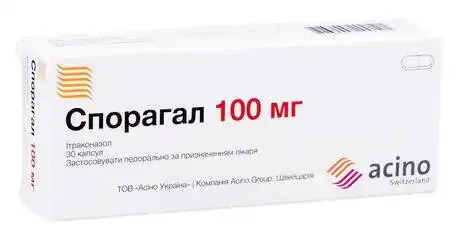
Table of Contents
INSTRUCTIONS FOR MEDICAL USE OF THE MEDICINAL PRODUCT SPORAGAL (SPORAGAL)
Composition:
Active substance: itraconazole;
1 capsule contains 100 mg of itraconazole (in the form of pellets);
Excipients: hydroxypropylmethylcellulose, acrylic copolymer, sucrose, polyethylene glycol 20000;
capsule composition: gelatin, titanium dioxide (E 171), indigo carmine (E 132).
Pharmaceutical form. Capsules.
Main physicochemical properties: hard gelatin capsules with blue opaque cap and blue opaque body. The capsule contents are spherical pellets ranging from almost white to yellowish-cream in color.
Pharmacotherapeutic group. Antifungal agents for systemic use. Triazole and tetrazole derivatives. Itraconazole. ATC code J02AC02.
Pharmacological properties.
Pharmacodynamics.
Mechanism of action
Itraconazole inhibits fungal 14α-demethylase, leading to decreased ergosterol levels and disruption of fungal membrane synthesis.
Pharmacokinetic (PK)/pharmacodynamic (PD) relationship
The PK/PD relationship for itraconazole and triazoles in general is not well characterized.
Mechanism(s) of resistance
Resistance to azoles develops slowly and is usually the result of multiple genetic mutations. Described mechanisms include overexpression of ERG11, encoding 14α-demethylase (the target enzyme), point mutations in ERG11 leading to reduced affinity of 14α-demethylase for itraconazole, and/or overexpression of efflux transporters, resulting in increased export of itraconazole from fungal cells (i.e., removal of itraconazole from its target site). Cross-resistance among azole-class drugs has been observed within Candida species; however, resistance to one azole does not necessarily imply resistance to other azoles.
Breakpoints
Breakpoints have not been established by the European Committee on Antimicrobial Susceptibility Testing (EUCAST) for antifungal agents, version 10.0, effective as of February 4, 2020.
| Candida and Aspergillus species |
Breakpoint MIC (mg/l) |
|
| ≤ S (susceptible) |
> R (resistant) |
|
| Candida albicans |
0.06 |
0.06 |
| Candida dubliniensis |
0.06 |
0.06 |
| Candida parapsilosis |
0.125 |
0.125 |
| Candida tropicalis |
0.125 |
0.125 |
| Aspergillus flavus 1,2 |
1 |
1 |
| Aspergillus fumigatus 1,2 |
1 |
1 |
| Aspergillus nidulans 1,2 |
1 |
1 |
| Aspergillus terreus 1,2 |
1 |
1 |
MIC – minimum inhibitory concentration.
Currently, there is insufficient evidence to establish clinical breakpoints for Candida glabrata3, C. krusei3, C. guilliermondii3, Cryptococcus neoformans, and species-unrelated breakpoints for Candida spp.
There is also insufficient evidence to establish clinical breakpoints for Aspergillus niger4,5 and species-unrelated breakpoints for Aspergillus spp5.
1It is recommended to monitor azole minimum concentrations in patients being treated for fungal infections.
2The technical uncertainty range (ATU) equals 2. Report as R with the following comment: "In certain clinical situations (non-invasive forms of infection), itraconazole may be used provided adequate exposure is ensured."
3Epidemiological cutoff values (ECOFF) for these species are generally higher than for C. albicans.
4Epidemiological cutoff values (ECOFF) for these species are typically 1–2 times higher than for A. fumigatus.
5MIC values for individual strains of A. niger and A. versicolor are generally higher than for A. fumigatus.
It is currently unknown whether this leads to poorer clinical response. Interpretive susceptibility breakpoints for itraconazole have not been established for Candida species and filamentous fungi using methods from the Clinical and Laboratory Standards Institute (CLSI), M60 Performance Standards for Testing Antifungal Susceptibility of Yeasts. 2nd edition, 2020.
The prevalence of acquired resistance may vary depending on geographical location and time for individual species; therefore, local resistance data are desirable, especially when treating severe infections. Expert advice should be sought when local resistance prevalence is such that the benefit of the drug is at least questionable for certain types of infections.
Fungal susceptibility to itraconazole in vitro depends on inoculum size, incubation temperature, fungal growth phase, and the culture medium used. For these reasons, itraconazole MIC values may vary widely.
Susceptibility is based on an MIC90 < 1 mg itraconazole/L. There is no correlation between in vitro susceptibility and clinical efficacy.
| Most susceptible species |
| Aspergillus spp. 2 |
| Blastomyces dermatitidis 1 |
| Candida albicans |
| Candida parapsilosis |
| Candida dubliniensis |
| Cladosporium spp. |
| Coccidioides immitis 1 |
| Cryptococcus neoformans |
| Epidermophyton floccosum |
| Fonsecaea spp. 1 |
| Geotrichum spp. |
| Histoplasma spp. |
| Malassezia (formerly Pityrosporum) spp. |
| Microsporum spp. |
| Paracoccidioides brasiliensis 1 |
| Penicillium marneffei 1 |
| Pseudallescheria boydii |
| Sporothrix schenckii |
| Trichophyton spp. |
| Trichosporon spp. |
| Species for which acquired resistance may be a problem |
| Candida glabrata 3 |
| Candida krusei |
| Candida guilliermondii |
| Inherently resistant organisms |
| Absidia spp. |
| Fusarium spp. |
| Mucor spp. |
| Rhizomucor spp. |
| Rhizopus spp. |
| Scedosporium prolificans |
| Scopulariopsis spp. |
1These microorganisms may be found in patients who have returned from traveling outside Europe.
2Resistant strains of Aspergillus fumigatus to itraconazole have been reported.
3Natural intermediate susceptibility.
Pharmacokinetics.
General pharmacokinetic characteristics. Maximum plasma concentration (Cmax) after oral administration of itraconazole is reached within 2 to 5 hours. Due to nonlinear pharmacokinetics, itraconazole accumulates in plasma upon repeated dosing. Steady-state concentrations are typically achieved within 15 days, with Cmax values of 0.5 µg/mL after administration of 100 mg once daily, 1.1 µg/mL after 200 mg once daily, and up to 2.0 µg/mL after 200 mg twice daily. The terminal half-life of itraconazole generally ranges from 16 to 28 hours after a single dose and increases to 34–42 hours after multiple doses. After discontinuation of treatment, itraconazole concentrations decline to nearly undetectable levels in plasma within 7–14 days, depending on the dose and duration of therapy. The average plasma clearance of itraconazole after intravenous administration is 278 mL/min. Due to saturated hepatic metabolism at higher doses, the clearance of itraconazole decreases.
Absorption. Itraconazole is rapidly absorbed after oral administration. Maximum plasma concentration of unchanged drug after oral capsule administration is reached within 2–5 hours. The absolute bioavailability of itraconazole is 55%. Maximum bioavailability following oral administration is observed when the drug is taken immediately after a meal.
Absorption of itraconazole from capsules is reduced in patients with decreased gastric acidity, such as those taking medications that reduce gastric secretion (H2-receptor antagonists, proton pump inhibitors), or in patients with achlorhydria due to certain diseases (see sections "Interaction with other medicinal products and other forms of interaction" and "Special precautions for use").
Absorption of itraconazole may be increased in fasting patients if the drug is taken with an acidic beverage, such as non-diet cola. When administered as a single 200 mg dose on an empty stomach with non-diet cola following prior administration of ranitidine (an H2-receptor antagonist), absorption of itraconazole was similar to that observed when the drug was taken alone.
Exposure to itraconazole after capsule administration is lower than after oral solution administration at the same dose.
Distribution. Itraconazole is 99.8% bound to plasma proteins, primarily to albumin (99.6% for the hydroxymetabolite). Itraconazole also has high affinity for lipids. Only 0.2% of itraconazole in blood remains as unbound substance. The apparent volume of distribution of itraconazole is quite large (>700 L), suggesting extensive tissue distribution: concentrations in the lungs, kidneys, liver, bones, stomach, spleen, and muscles were 2–3 times higher than plasma concentrations. Accumulation of itraconazole in keratinous tissues, particularly in the skin, was four times higher than in plasma. Concentrations in cerebrospinal fluid are significantly lower than in plasma, but efficacy against infections localized in cerebrospinal fluid has been demonstrated.
Biological transformation. Itraconazole is extensively metabolized in the liver, forming numerous metabolites. According to in vitro studies, CYP3A4 is the main enzyme involved in the metabolism of itraconazole. The primary metabolite is hydroxyitraconazole, which exhibits antifungal activity in vitro comparable to that of itraconazole. Plasma concentrations of this metabolite are approximately twice those of itraconazole.
Elimination. Approximately 35% of itraconazole is excreted as inactive metabolites in urine and about 54% in feces within one week after administration of the oral solution dose. Renal excretion of itraconazole and its active metabolite hydroxyitraconazole after intravenous administration accounts for less than 1% of the dose. With respect to orally administered radiolabeled dose, excretion of unchanged drug in feces ranges from 3 to 18%. Since redistribution of itraconazole from keratin-containing tissues is negligible, elimination from these tissues is likely associated with epidermal regeneration. While itraconazole is no longer detectable in plasma 7 days after completion of treatment, concentrations in the skin persist for 2–4 weeks after discontinuation of a 4-week treatment course. In nail keratin, itraconazole can be detected as early as one week after initiation of therapy, with therapeutic levels maintained for at least six months after completion of a 3-month treatment period.
Special patient populations
Hepatic impairment. Itraconazole is predominantly metabolized in the liver. A pharmacokinetic study using a single 100 mg dose of itraconazole (1 capsule of 100 mg) was conducted in 6 healthy subjects and 12 patients with cirrhosis. A statistically significant reduction in mean Cmax (by 47%) and a doubling of the elimination half-life of itraconazole (37 ± 17 vs. 16 ± 5 hours) were observed in cirrhotic patients compared to healthy volunteers. However, overall itraconazole concentrations based on the area under the pharmacokinetic concentration-time curve (AUC) were comparable between the two groups.
No data are available on long-term use of itraconazole in patients with cirrhosis.
Renal impairment. Data on the use of oral itraconazole in patients with impaired renal function are limited. A pharmacokinetic study using a single 200 mg dose of itraconazole (4 capsules of 50 mg) was conducted in 3 groups of patients with renal dysfunction (uremia: n = 7; hemodialysis: n = 7; continuous ambulatory peritoneal dialysis: n = 5). In patients with uremia and a mean creatinine clearance of 13 mL/min × 1.73 m², AUC-based concentrations were slightly reduced compared to healthy volunteers. This study did not demonstrate any significant effect of hemodialysis or continuous ambulatory peritoneal dialysis on the pharmacokinetics of itraconazole (Tmax, Cmax, AUC0–8h). AUC showed considerable inter-individual variability across all three groups.
After a single intravenous dose, mean terminal half-life values in patients with mild (CrCl 50–79 mL/min), moderate (CrCl 20–49 mL/min), and severe (CrCl < 20 mL/min) renal impairment were similar to those in healthy volunteers (range: 42–49 hours vs. 48 hours in patients with renal impairment and healthy volunteers, respectively). Total itraconazole concentrations based on AUC were reduced in patients with moderate and severe hepatic impairment (by 30% and 40%, respectively) compared to healthy volunteers.
No data are available on long-term use of itraconazole in patients with renal impairment. Dialysis does not affect the elimination half-life or clearance of itraconazole or hydroxyitraconazole (see section "Special precautions for use").
Children. Data on the use of itraconazole in children and adolescents are limited. Clinical pharmacokinetic studies in children and adolescents aged 5 months to 17 years have been conducted using itraconazole. Individual doses using capsules and oral solution ranged from 1.5 to 12.5 mg/kg/day, administered once or twice daily. Intravenous doses were given as a single infusion of 2.5 mg/kg or as infusions of 2.5 mg/kg once or twice daily. At the same daily dose, Cmax and concentrations after twice-daily administration compared to once-daily administration were comparable to those in adults receiving single doses. No significant age dependence of itraconazole AUC or total clearance was observed; however, a weak relationship between age, volume of distribution, Cmax, and terminal elimination was noted. Apparent clearance and volume of distribution were dependent on body weight.
Clinical characteristics.
Indications.
- Vulvovaginal candidiasis;
- pityriasis versicolor;
- dermatomycoses caused by itraconazole-sensitive pathogens (Trichophyton spp., Microsporum spp., Epidermophyton floccosum), such as tinea pedis, tinea cruris, tinea corporis, tinea manuum;
- oropharyngeal candidiasis;
- onychomycoses caused by dermatophytes and/or yeasts;
- histoplasmosis;
- systemic mycoses (in cases where first-line antifungal therapy cannot be used, or when treatment with other antifungal agents is ineffective due to underlying disease, pathogen resistance, or drug toxicity):
- aspergillosis and candidiasis;
- cryptococcosis (including cryptococcal meningitis): treatment of immunocompromised patients with cryptococcosis and all patients with central nervous system cryptococcosis;
- maintenance therapy in AIDS patients to prevent recurrence of existing fungal infections.
Itraconazole is also indicated for prophylaxis of fungal infections in patients with prolonged neutropenia when standard therapy is inadequate.
Contraindications.
Itraconazole capsules are contraindicated in patients with known hypersensitivity to the active substance or to any of the excipients of the product.
Concomitant use of itraconazole and CYP3A4 substrates is contraindicated (see sections "Interaction with other medicinal products and other forms of interaction" and "Special warnings and precautions for use"). These include:
| Analgesics; anesthetics |
||
| Ergot alkaloids (e.g., dihydroergotamine, ergometrine, ergotamine, methylergometrine) |
||
| Antibacterials for systemic use; antimycobacterials; antifungals for systemic use |
||
| Isavuconazole |
||
| Antihelminthics; antiprotozoals |
||
| Halofantrine |
||
| Systemic antihistamines |
||
| Astemizole |
Mizolastine |
Terfenadine |
| Antineoplastic agents |
||
| Irinotecan |
Venetoclax (in patients with chronic lymphocytic leukemia during the initiation and dose-titration phase of venetoclax) |
|
| Antithrombotic agents |
||
| Dabigatran |
Ticagrelor |
|
| Systemic antiviral agents |
||
| Ombitasvir/paritaprevir/ritonavir (with or without dasabuvir) |
||
| Cardiovascular system (agents affecting the renin-angiotensin system; antihypertensives; beta-blockers; calcium channel blockers; cardiology therapy; diuretics) |
||
| Aliskiren |
Eplerenone |
Quinidine |
| Bepridil |
Finerenone |
Ranolazine |
| Disopyramide |
Ivabradine |
Sildenafil (pulmonary hypertension) |
| Dofetilide |
Lercanidipine |
|
| Dronedarone |
Nisoldipine |
|
| Gastrointestinal agents, including antidiarrheals, intestinal anti-inflammatory/antibacterial agents; antiemetics and antinauseants; laxatives; agents for functional gastrointestinal disorders |
||
| Cisapride |
Domperidone |
Naloxegol |
| Immunosuppressants |
||
| Voclosporin |
||
| Lipid-modifying agents |
||
| Lovastatin |
Lomitapide |
Simvastatin |
| Psychoanaleptics; psycholeptics (e.g., antipsychotics, anxiolytics, and hypnotics) |
||
| Lurasidone |
Pimozide |
Sertindole |
| Midazolam (oral) |
Quetiapine |
Triazolam |
| Urologicals |
||
| Avanafil |
Darifenacin |
Solifenacin (in patients with severe renal impairment or moderate to severe hepatic impairment) |
| Dapoxetine |
Fesoterodine (in patients with moderate or severe renal or hepatic impairment) |
Vardenafil (in patients aged 75 years and older) |
| Other medicinal products and other substances |
||
| Colchicine (in patients with renal or hepatic impairment) |
Eliglustat (in patients who are poor, intermediate, or extensive metabolizers of CYP2D6 and who are taking a strong or moderate inhibitor of CYP2D6) |
|
Itraconazole can be administered to patients with ventricular dysfunction, such as those with decompensated heart failure, or with a history of decompensated heart failure, except for the treatment of life-threatening infections (see section «Special precautions for use»).
Itraconazole capsules may be used during pregnancy only in life-threatening situations, following a careful assessment of the benefit-risk ratio for the fetus (see section «Use during pregnancy or breastfeeding»).
Women of childbearing potential should use effective contraceptive methods during treatment with itraconazole capsules and continue until the end of the menstrual cycle following the end of treatment.
Interaction with other medicinal products and other forms of interaction.
Itraconazole is primarily metabolized by cytochrome CYP3A4. Other drugs that are metabolized via this pathway or that modify CYP3A4 activity may affect the pharmacokinetics of itraconazole. Itraconazole may also affect the pharmacokinetics of other substances sharing common metabolic or protein transport pathways. Itraconazole is a potent inhibitor of CYP3A4 and P-glycoprotein, as well as an inhibitor of breast cancer resistance protein (BCRP).
When concomitant medicinal products are used, it is recommended to consult the respective product information leaflets regarding their elimination characteristics and potential need for dose adjustment.
Itraconazole may alter the pharmacokinetics of other substances that utilize the same metabolic or protein transporter pathways.
Examples of active substances that may affect itraconazole plasma concentrations are listed by drug classes in Table 1. Examples of active substances whose plasma concentrations may be affected by itraconazole are listed in Table 2. Because numerous interactions between itraconazole and other medicinal products have been documented, not all potential changes in safety or efficacy due to drug interactions are included in this medical instruction. The list of drug interaction examples provided in the tables below is not exhaustive. It is necessary to refer to the medical instructions of interacting medicinal products for additional information on biotransformation, interactions, potential risks, and special precautions when used concomitantly with itraconazole.
Drug interactions described in these tables are classified as contraindicated, not recommended, or requiring cautious use with itraconazole, based on the degree of concentration increase and safety profile of the interacting drugs (see also sections «Contraindications» and «Special precautions for use» for additional information).
The interaction potential of the listed drugs was evaluated based on human pharmacokinetic studies of itraconazole and/or human pharmacokinetic studies with other strong CYP3A4 inhibitors (e.g., ketoconazole) and/or in vitro data:
- Contraindicated. Under no circumstances should these medicinal products be used concomitantly or within 2 weeks after discontinuation of itraconazole treatment.
- Not recommended. Concomitant use of these medicinal products, as well as use within 2 weeks after discontinuation of itraconazole, should be avoided, except when the expected benefit outweighs the potential risk of adverse reactions. If concomitant use cannot be avoided, such patients should be closely monitored for signs or symptoms of increased or prolonged pharmacological effect of itraconazole, and the dose of itraconazole should be reduced if necessary. Monitoring of plasma concentrations of concomitantly administered drugs is recommended when necessary.
- Use with caution. Close monitoring is recommended when used concomitantly with itraconazole. Patients should be closely observed for signs or symptoms of increased or prolonged pharmacological effect of the interacting drug, and the dose should be reduced or the drug discontinued if necessary. Monitoring of plasma concentrations of concomitantly administered drugs is recommended when necessary.
The interactions listed in these tables were characterized in studies conducted using recommended doses of itraconazole. However, the extent of interaction may depend on the dose of itraconazole administered. Stronger interactions may occur when higher doses are used or when doses are administered with shorter intervals. Study results should be cautiously extrapolated to other dosing regimens or other drugs.
After discontinuation of treatment, itraconazole concentrations decrease to nearly undetectable levels in plasma within 7 to 14 days, depending on the dose and duration of treatment. In patients with liver cirrhosis or in patients concurrently using CYP3A4 enzyme inhibitors, the decline in concentration may be slower. This is particularly important at the initiation of therapy with drugs whose metabolism is affected by itraconazole.
Table 1
Examples of active substances that may affect itraconazole plasma concentrations, presented by classes
| Medicinal products (oral (PO)). Single dose, unless otherwise stated within the class |
Expected/potential effect on itraconazole level (↑ = increase; ↔ = no change; ↓ = decrease) |
Clinical comment (see above, as well as sections "Contraindications" and "Special precautions for use") |
| Antibacterials for systemic use; antimycobacterials |
||
| Isoniazid |
Although isoniazid has not been directly studied, it is likely to reduce itraconazole concentration |
Not recommended |
| Rifampicin PO 600 mg once daily |
↓ Itraconazole AUC |
Not recommended |
| Rifabutin PO 300 mg once daily |
↓ Itraconazole Cmax by 71%, ↓ AUC by 74% |
Not recommended |
| Ciprofloxacin PO 500 mg twice daily |
↑ Itraconazole Cmax by 53%, ↑ AUC by 82% |
Use with caution |
| Erythromycin 1 g |
↑ Itraconazole Cmax by 44%, ↑ AUC by 36% |
Use with caution |
| Clarithromycin PO 500 mg twice daily |
↑ Itraconazole Cmax by 90%, ↑ AUC by 92% |
Use with caution |
| Antiepileptic agents |
||
| Carbamazepine, phenobarbital |
Although direct interaction has not been studied, these agents may reduce itraconazole concentration |
Not recommended |
| Phenytoin PO 300 mg once daily |
↓ Itraconazole Cmax by 83%, ↓ AUC by 93% ↓ Hydroxyitraconazole Cmax by 84%, AUC by 95% |
Not recommended |
| Antineoplastic agents |
||
| Idelalisib |
Although not directly studied, idelalisib is likely to increase itraconazole concentration |
Use with caution |
| Antiviral agents for systemic use |
||
| Paritaprevir/ombitasvir/ritonavir (with or without dasabuvir) |
Although these agents have not been directly studied, they are expected to increase itraconazole concentration |
Contraindicated |
| Efavirenz 600 mg |
↓ Itraconazole Cmax by 37%, ↓ AUC by 39% ↓ Hydroxyitraconazole Cmax by 35%, AUC by 37% |
Not recommended |
| Nevaripine PO 200 mg once daily |
↓ Itraconazole Cmax by 38%, ↓ AUC by 62% |
Not recommended |
| Cobicistat, darunavir (boosted), elvitegravir (ritonavir-boosted), fosamprenavir (ritonavir-boosted), ritonavir, saxinavir (ritonavir-boosted) |
Although direct interaction has not been studied, these agents may increase itraconazole concentration |
Use with caution |
| Indinavir PO 800 mg three times daily |
↑ Itraconazole concentration |
Use with caution |
| Calcium channel blockers |
||
| Diltiazem |
Although direct interaction has not been studied, diltiazem is likely to increase itraconazole concentration |
Use with caution |
| Drugs for acid-related disorders |
||
| Antacids (aluminum, calcium, magnesium or sodium bicarbonate), H2-receptor antagonists (e.g., cimetidine, ranitidine), proton pump inhibitors (e.g., lansoprazole, omeprazole, rabepazole) |
↓ Itraconazole Cmax, ↓ AUC |
Use with caution |
| Respiratory system: Other respiratory drugs |
||
| Lumacaftor/ivacaftor PO 200/250 mg twice daily |
↓ Itraconazole concentration |
Not recommended |
| Others |
||
| St. John's wort (Hypericum perforatum) |
Although direct interaction has not been studied, St. John's wort may reduce itraconazole concentration |
Not recommended |
Table 2
Examples of medicinal products whose plasma concentrations may be affected by itraconazole, listed by medicinal product classes
| Medicinal products (PO single dose, unless otherwise stated) within class |
Expected/potential effect on drug levels (↑ = increase; ↔ = no change; ↓ = decrease) |
Clinical comment (see sections "Contraindications" and "Special precautions for use" above) |
|
| Analgesics; anaesthetics |
|||
| Ergot alkaloids (e.g., dihydroergotamine, ergometrine, ergotamine, methylergometrine) |
Although not studied directly, itraconazole is likely to increase concentrations of these drugs |
Contraindicated |
|
| Eletriptan, fentanyl |
Although not studied directly, itraconazole is likely to increase concentrations of these drugs |
Not recommended |
|
| Alfentanil, buprenorphine (for intravenous and sublingual use), cannabinoids, methadone, sufentanil |
Although not studied directly, itraconazole is likely to increase concentrations of these drugs |
Use with caution |
|
| Oxycodone PO 1 mg |
Oxycodone PO: Cmax ↑ 45%, AUC ↑ 2.4-fold |
Use with caution |
|
| Oxycodone intravenous 0.1 mg/kg |
Intravenous oxycodone: AUC ↑ 51% |
Use with caution |
|
| Antibacterials for systemic use; antimycobacterials; antifungals for systemic use |
|||
| Isavuconazole |
Although not studied directly, itraconazole is likely to increase isavuconazole concentration |
Contraindicated |
|
| Bedaquiline |
Although not studied directly, itraconazole is likely to increase bedaquiline concentration |
Not recommended |
|
| Rifabutin PO 300 mg once daily |
Rifabutin concentration ↑ (extent unknown) |
Not recommended |
|
| Clarithromycin PO 500 mg twice daily |
Clarithromycin concentration ↑ |
Use with caution |
|
| Delamanid |
Although not studied directly, itraconazole is likely to increase delamanid concentration |
Use with caution |
|
| Antiepileptics |
|||
| Carbamazepine |
Although not studied directly, itraconazole is likely to increase carbamazepine concentration |
Not recommended |
|
| Anti-inflammatory and antirheumatic agents |
|||
| Meloxicam 15 mg |
Meloxicam Cmax ↓ 64%, AUC ↓ 37% |
Use with caution |
|
| Antihelminthics, antiprotozoals |
|||
| Halofantrine |
Although not studied directly, itraconazole is likely to increase halofantrine concentration |
Contraindicated |
|
| Artemether-lumefantrine, praziquantel |
Although itraconazole has not been directly studied, it is likely to increase concentrations of these drugs |
Use with caution |
|
| Quinine 300 mg |
Quinine Cmax ↔, AUC ↑ 96% |
Use with caution |
|
| Antihistamines for systemic use |
|||
| Astemizole, mizolastine, terfenadine |
Although not studied directly, itraconazole is likely to increase concentrations of these drugs |
Contraindicated |
|
| Ebastine 20 mg |
Ebastine Cmax ↑ 2.5-fold, AUC ↑ 6.2-fold Carbastine Cmax ↔, AUC ↑ 3.1-fold |
Not recommended |
|
| Bilastine, rupatadine |
Although not studied directly, itraconazole is likely to increase concentrations of these drugs |
Use with caution |
|
| Antineoplastic agents |
|||
| Irinotecan |
Although not studied directly, itraconazole is likely to increase concentrations of irinotecan and its active metabolite |
Contraindicated |
|
| Venetoclax |
Although not studied directly, itraconazole is likely to increase venetoclax concentration |
Contraindicated in patients with chronic lymphocytic leukaemia during initiation and dose-titration phases of venetoclax. Not recommended otherwise unless benefit outweighs risk. Refer to the medical prescribing information |
|
| Axitinib, bosutinib, cabazitaxel, cabozantinib, ceritinib, crizotinib, dabrafenib, dasatinib, docetaxel, everolimus, glasdegib, ibrutinib, lapatinib, nilotinib, pazopanib, regorafenib, sunitinib, temsirolimus, trabectedin, trastuzumab emtansine, vinca alkaloids (e.g., vinflunine, vinorelbine) |
Although not studied directly, itraconazole is likely to increase concentrations of these drugs, except for cabazitaxel and regorafenib. No statistically significant change in cabazitaxel exposure was observed, but high variability was noted. AUC of regorafenib is expected to decrease (based on active fraction estimation) |
Not recommended |
|
| Cobimetinib 10 mg |
Cobimetinib Cmax ↑ 3.2-fold, AUC ↑ 6.7-fold |
Not recommended |
|
| Entrectinib |
Entrectinib Cmax ↑ 73%, AUC ↑ 6.0-fold |
Not recommended |
|
| Olapatari 100 mg |
Olapatari Cmax ↑ 40%, AUC ↑ 2.7-fold |
Not recommended |
|
| Talazoparib |
Talazoparib Cmax ↑ 40%, AUC ↑ 56% |
Not recommended |
|
| Alitretinoin (PO), bortezomib, brentuximab vedotin, erlotinib, idelalisib, imatinib, nintedanib, panobinostat, ponatinib, ruxolitinib, sonidegib, tretinoin (PO) |
Although not studied directly, itraconazole is likely to increase concentrations of these drugs |
Use with caution |
|
| Busulfan 1 mg/kg every 6 hours |
Busulfan Cmax ↑, AUC ↑ |
Use with caution |
|
| Geftinib 250 mg |
Geftinib 250 mg Cmax ↑, AUC ↑ 78% |
Use with caution |
|
| Pemigatinib |
Pemigatinib Cmax ↑ 17%, AUC ↑ 91% |
Use with caution |
|
| Antithrombotic agents |
|||
| Dabigatran, ticagrelor |
Although not studied directly, itraconazole is likely to increase concentrations of these drugs |
Contraindicated |
|
| Apixaban, edoxaban, rivaroxaban, vorapaxar |
Although not studied directly, itraconazole is likely to increase concentrations of these drugs |
Not recommended |
|
| Cilostazol, coumarins (e.g., warfarin) |
Although not studied directly, itraconazole is likely to increase concentrations of these drugs |
Use with caution |
|
| Antiviral agents for systemic use |
|||
| Ombitasvir/paritaprevir/ritonavir (with or without dasabuvir) |
Itraconazole may increase paritaprevir concentration |
Contraindicated |
|
| Elbasvir/grazoprevir, tenofovir alafenamide fumarate (TAF), tenofovir disoproxil fumarate (TDF) |
Although not studied directly, itraconazole is likely to increase concentrations of these drugs |
Not recommended |
|
| Cobicistat, elvitegravir (boosted with ritonavir), glecaprevir/pibrentasvir, maraviroc, ritonavir, sacquinavir |
Although not studied directly, itraconazole is likely to increase concentrations of these drugs |
Use with caution |
|
| Indinavir PO 800 mg three times daily |
Indinavir Cmax ↔, AUC ↑ |
Use with caution |
|
| Cardiovascular system (agents acting on the renin-angiotensin system; antihypertensives; beta-blockers; calcium channel blockers; cardiac agents; diuretics) |
|||
| Bepridil, disopyramide, dofetilide, dronedarone, eplerenone, finerenone, ivabradine, lercanidipine, nisoldipine, ranolazine, sildenafil (pulmonary hypertension) |
Although not studied directly, itraconazole is likely to increase concentrations of these drugs |
Contraindicated |
|
| Aliskiren 150 mg |
Aliskiren Cmax ↑ approximately 5.8-fold, AUC ↑ 6.5-fold |
Contraindicated |
|
| Quinidine 100 mg |
Quinidine Cmax ↑ approximately 5.8-fold, AUC ↑ 6.5-fold |
Contraindicated |
|
| Felodipine 5 mg |
Felodipine Cmax ↑ 7.8-fold, AUC ↑ 6.3-fold |
Not recommended |
|
| Riociguat, tadalafil (pulmonary hypertension) |
Although not directly studied, itraconazole is likely to increase concentrations of these drugs |
Not recommended |
|
| Bosentan, diltiazem, guanfacine, other dihydropyridines (e.g., amlodipine, isradipine, nifedipine, nimodipine), verapamil |
Although not studied directly, itraconazole is likely to increase concentrations of these drugs |
Use with caution |
|
| Digoxin 0.5 mg |
Digoxin Cmax ↑ 34%, AUC ↑ 68% |
Use with caution |
|
| Nadolol 30 mg |
Nadolol Cmax ↑ 4.7-fold, AUC ↑ 2.2-fold |
Use with caution |
|
| Corticosteroids for systemic use; agents for obstructive respiratory diseases |
|||
| Ciclesonide, salmeterol |
Although not studied directly, itraconazole is likely to increase salmeterol and active metabolite of ciclesonide concentrations |
Not recommended |
|
| Budesonide, inhaled 1 mg single dose |
Budesonide INH Cmax ↑ 65%, AUC ↑ 4.2-fold Budesonide (other formulations) concentration ↑ |
Use with caution |
|
| Dexamethasone IV 5 mg Dexamethasone PO 4.5 mg |
Dexamethasone IV: Cmax ↔, AUC ↑ 3.3-fold Dexamethasone PO: Cmax ↑ 69%, AUC ↑ 3.7-fold |
Use with caution |
|
| Fluticasone inhaled 1 mg twice daily |
Inhaled fluticasone concentration ↑ |
Use with caution |
|
| Methylprednisolone 16 mg |
Methylprednisolone PO Cmax ↑ 92%, AUC ↑ 3.9-fold Methylprednisolone IV AUC ↑ 2.6-fold |
Use with caution |
|
| Fluticasone nasal |
Although not directly studied, itraconazole is likely to increase nasal fluticasone concentration |
Use with caution |
|
| Agents used in diabetes |
|||
| Repaglinide 0.25 mg |
Repaglinide Cmax ↑ 47%, AUC ↑ 41% |
Use with caution |
|
| Saxagliptin |
Although not studied directly, itraconazole is likely to increase saxagliptin concentration |
Use with caution |
|
| Gastrointestinal medicinal products, including antidiarrhoeals, intestinal anti-inflammatory/anti-infectives; antiemetics and antinauseants; laxatives; agents for functional gastrointestinal disorders |
|||
| Cisapride, naloxegol |
Although not studied directly, itraconazole is likely to increase concentrations of these drugs |
Contraindicated |
|
| Domperidone 20 mg |
Domperidone Cmax ↑ 2.7-fold, AUC ↑ 3.2-fold |
Contraindicated |
|
| Aprepitant, loperamide, netupitant |
Although itraconazole has not been directly studied, it is likely to increase concentrations of these drugs |
Use with caution |
|
| Immunosuppressants |
|||
| Sirolimus (rapamycin) |
Although not directly studied, itraconazole is likely to increase sirolimus concentration |
Not recommended |
|
| Voclosporin |
Although not directly studied, itraconazole is likely to increase voclosporin concentration |
Contraindicated |
|
| Cyclosporine, tacrolimus |
Although not directly studied, itraconazole is likely to increase concentrations of these drugs |
Use with caution |
|
| Tacrolimus IV 0.03 mg/kg single dose |
↑ concentration |
Use with caution |
|
| Lipid-modifying agents |
|||
| Lomitapide |
Although not directly studied, itraconazole is likely to increase lomitapide concentration |
Contraindicated |
|
| Lovastatin 40 mg |
Lovastatin Cmax ↑ 14.5–20-fold, AUC ↑ >14.8–>20-fold Lovastatin acid Cmax ↑ 11.5–13-fold, AUC ↑ 15.4–20-fold |
Contraindicated |
|
| Simvastatin 40 mg |
Simvastatin acid Cmax ↑ 17-fold, AUC ↑ 19-fold |
Contraindicated |
|
| Atorvastatin |
Atorvastatin acid: Cmax ↔ to ↑ 2.5-fold, AUC ↑ from 40% to 3-fold |
Not recommended |
|
| Psychoanaleptics; psychotropics (e.g., antipsychotics, anxiolytics and hypnotics) |
|||
| Lurasidone, pimozide, quetiapine, sertindole |
Although not studied directly, itraconazole is likely to increase concentrations of these drugs |
Contraindicated |
|
| Midazolam (oral) 7.5 mg |
Midazolam (oral) Cmax ↑ 2.5–3.4-fold, AUC ↑ 6.6–10.8-fold |
Contraindicated |
|
| Triazolam 0.25 mg |
Triazolam Cmax ↑, AUC ↑ |
Contraindicated |
|
| Alprazolam 0.8 mg |
Alprazolam Cmax ↔, AUC ↑ 2.8-fold |
Use with caution |
|
| Aripiprazole 3 mg |
Aripiprazole Cmax ↑ 19%, AUC ↑ 48% |
Use with caution |
|
| Brotizolam 0.5 mg |
Brotizolam Cmax ↔, AUC ↑ 2.6-fold |
Use with caution |
|
| Buspirone 10 mg |
Buspirone Cmax ↑ 13.4-fold, AUC ↑ 19.2-fold |
Use with caution |
|
| Midazolam (IV) 7.5 mg |
Midazolam (IV) 7.5 mg: concentration. Although not directly studied, itraconazole is likely to increase midazolam concentration after oro-mucosal administration. |
Use with caution |
|
| Risperidone 2–8 mg/day |
Risperidone concentration and active metabolite concentrations ↑ |
Use with caution |
|
| Zopiclone 7.5 mg |
Zopiclone Cmax ↑ 30%, AUC ↑ 70% |
Use with caution |
|
| Cariprazine, galantamine, haloperidol, reboxetine, venlafaxine |
Although not studied directly, itraconazole is likely to increase concentrations of these drugs |
Use with caution |
|
| Respiratory system: Other respiratory agents |
|||
| Lumacaftor/ivacaftor PO 200/250 mg twice daily |
Ivacaftor Cmax ↑ approximately 3.6-fold, AUC ↑ 4.3-fold Lumacaftor Cmax ↔, AUC ↔ |
Not recommended |
|
| Ivacaftor |
Although not studied directly, itraconazole is likely to increase ivacaftor concentration |
Use with caution |
|
| Hormonal agents and modulators of reproductive system; other gynaecological agents |
|||
| Cabergoline, dienogest, ulipristal |
Although not studied directly, itraconazole is likely to increase concentrations of these drugs |
Use with caution |
|
| Urological agents |
|||
| Avanafil, dapoxetine, darifenacin |
Although not studied directly, itraconazole is likely to increase concentrations of these drugs |
Contraindicated |
|
| Fesoterodine |
Although not studied directly, itraconazole is likely to increase concentrations of active metabolites, 5-hydroxymethyl-tolterodine |
Severe renal or hepatic impairment: contraindicated. Mild renal or hepatic impairment: avoid concomitant use. Normal renal or hepatic function: use with caution, maximum fesoterodine dose 4 mg. |
|
| Solifenacin |
Although not studied directly, itraconazole is likely to increase solifenacin concentration |
Severe renal impairment: contraindicated. Moderate or severe hepatic impairment: contraindicated. Use with caution in all other patients, maximum solifenacin dose 5 mg. |
|
| Vardenafil |
Although not studied directly, itraconazole is likely to increase vardenafil concentration |
Contraindicated in patients aged 75 years and older; not recommended in others. |
|
| Alfuzosin, silodosin, tadalafil (erectile dysfunction and benign prostatic hyperplasia), tamsulosin, tolterodine |
Although not studied directly, itraconazole is likely to increase concentrations of these drugs |
Not recommended |
|
| Dutasteride, imidafenacin, sildenafil (erectile dysfunction) |
Although not studied directly, itraconazole is likely to increase concentrations of these drugs |
Use with caution |
|
| Oxybutynin 5 mg |
Oxybutynin Cmax ↑ 2-fold, AUC ↑ 2-fold N-desethyloxybutynin Cmax ↔, AUC ↔ After transdermal administration: although not directly studied, itraconazole is likely to increase oxybutynin concentration after transdermal administration |
Use with caution |
|
| Other medicinal products and other substances |
|||
| Colchicine |
Although not studied directly, itraconazole is likely to increase colchicine concentration |
Contraindicated in patients with renal or hepatic impairment. Not recommended for other patients |
|
| Eliglustat |
Although not directly studied, itraconazole is expected to increase eliglustat concentration |
Contraindicated in patients who are CYP2D6 poor metabolizers. Contraindicated in patients who are CYP2D6 intermediate or extensive metabolizers and are taking a strong or moderate CYP2D6 inhibitor. Use with caution in patients who are CYP2D6 intermediate or extensive metabolizers. In patients who are CYP2D6 extensive metabolizers with mild hepatic impairment, consider eliglustat dose of 84 mg/day. |
|
| Cinacalcet |
Although not studied directly, itraconazole is likely to increase cinacalcet concentration |
Use with caution |
|
Drugs that may decrease itraconazole plasma concentrations (e.g., rifampicin, rifabutin, and phenytoin)
Medicinal products that reduce gastric acidity (acid-reducing agents such as aluminium hydroxide, H2-receptor antagonists, and proton pump inhibitors) affect the absorption of itraconazole from capsules. Caution should be exercised when co-administering the following medicinal products with itraconazole capsules:
- when itraconazole is co-administered with acid-reducing agents, itraconazole capsules should be taken with acidic beverages such as non-diet cola;
- acid-neutralizing agents (e.g., aluminium hydroxide) should be administered at least 1 hour before or 2 hours after administration of itraconazole capsules;
- antifungal activity should be monitored and, if necessary, the dose of itraconazole increased.
Concomitant administration of itraconazole with strong inducers of the CYP3A4 enzyme results in reduced bioavailability of itraconazole and hydroxyitraconazole, leading to a significant decrease in treatment efficacy.
These medicinal products include:
- antibacterials: isoniazid, rifabutin (also listed in the section “Drugs whose plasma concentrations are increased by itraconazole”), rifampicin;
- anticonvulsants: carbamazepine (also listed in the section “Drugs whose plasma concentrations are increased by itraconazole”), phenobarbital, phenytoin;
- antivirals: efavirenz, nevirapine;
- herbal products: Hypericum perforatum (St. John's wort).
Concomitant use of strong CYP3A4 enzyme inducers with itraconazole is not recommended. Initiation of the above-mentioned medicinal products should be avoided 2 weeks before, during, and for 2 weeks after itraconazole treatment, except when the expected benefit clearly outweighs the potential risk. Antifungal activity should be closely monitored and the dose of itraconazole increased if necessary.
- Drugs that increase itraconazole plasma concentrations
- Strong inhibitors of the CYP3A4 enzyme may increase the bioavailability of itraconazole. Examples include:
- antibacterials: ciprofloxacin, clarithromycin, erythromycin;
- antivirals: darunavir boosted with ritonavir, fosamprenavir boosted with ritonavir, indinavir, ritonavir (also listed in the section “Drugs whose plasma concentrations are increased by itraconazole”), and telaprevir.
These agents should be used with caution when co-administered with itraconazole. Patients who require concomitant administration of itraconazole and strong CYP3A4 inhibitors should be closely monitored for signs or symptoms of increased or prolonged pharmacological effect of itraconazole, and the dose of itraconazole should be reduced if necessary. Monitoring of itraconazole plasma concentrations is recommended.
When using medicinal products whose plasma concentrations are increased by itraconazole, the following effects may occur
Itraconazole and its major metabolite hydroxyitraconazole may inhibit the metabolism of drugs metabolized by the CYP3A4 enzyme and P-glycoprotein-mediated drug transport, potentially leading to increased plasma concentrations of these medicinal products and/or their metabolites. The effect of itraconazole in increasing the AUC of other drugs may be enhanced up to 11-fold, as observed with concomitant administration of 200 mg itraconazole daily and oral midazolam (a sensitive CYP3A4 substrate). Concomitant use of itraconazole and medicinal products metabolized by CYP3A4 that prolong the QT interval is contraindicated, as this may lead to ventricular tachyarrhythmias, including cases of ventricular fibrillation with fatal outcome. The full inhibitory effect is not achieved until steady-state itraconazole concentrations are reached. For itraconazole capsules, this may take approximately 15 days (see section “Pharmacological properties”). After discontinuation of treatment, itraconazole concentrations decrease to levels that are nearly undetectable in plasma within 7 to 14 days, depending on the dose and duration of treatment. In patients with hepatic cirrhosis or in patients who are concomitantly receiving CYP3A4 enzyme inhibitors, the drug should be discontinued gradually. This is particularly important when initiating a medicinal product whose metabolism is impaired by itraconazole.
Medicinal products interacting with itraconazole are classified as contraindicated, not recommended, or those requiring cautious use, based on the extent of concentration increase and the safety profile of the interacting drug.
Interactions of the listed medicinal products have been studied in the context of human pharmacokinetic studies with itraconazole and/or pharmacokinetic studies in humans with other strong CYP3A4 inhibitors (e.g., ketoconazole) and/or in vitro data.
Table 3
Examples of medicinal products whose plasma concentrations may be increased by itraconazole, listed by drug classes and recommendations for concomitant use with itraconazole
| Pharmacological class |
Contraindicated |
Not recommended |
Use with caution |
| Alpha blockers |
Tamsulosin |
||
| Analgesics |
Fentanyl |
Alfentanil, buprenorphine (intravenous and sublingual), oxycodone, methadone, sufentanil |
|
| Antiarrhythmic agents |
Disopyramide, dofetilide, dronedarone, quinidine |
Digoxin |
|
| Antibacterial agents |
telithromycin, in patients with severe renal or severe hepatic impairment |
Rifabutin |
telithromycin |
| Anticoagulant and antiplatelet agents |
Dabigatran, tikagrelor |
Apixaban, rivaroxaban |
Coumarin, cilostazol |
| Anticonvulsants |
Carbamazepine |
||
| Antidiabetic agents |
Repaglinide, saxagliptin |
||
| Anthelmintic and antiprotozoal agents |
Halofantrine |
Praziquantel |
|
| Antihistamines |
Mizolastine, terfenadine |
Ebastine |
|
| Migraine treatments |
Ergot alkaloids such as dihydroergotamine, ergometrine (ergonovine), ergotamine, methylergometrine (methylergonovine) |
Eletriptan |
|
| Antineoplastic agents |
Irinotecan |
Axitinib, dabrafenib, dasatinib, ibrutinib, lapatinib, nilotinib, sunitinib, trabectedin |
Bortezomib, busulfan, docetaxel, erlotinib, gefitinib, imatinib, ixabepilone, ponatinib, trimetrexate, vinca-alkaloids |
| Antipsychotics, anxiolytics, and hypnotics |
Lurasidone, midazolam for oral use, pimozide, quetiapine, sertindole, triazolam |
Alprazolam, aripiprazole, brotizolam, buspirone, haloperidol, midazolam (for intravenous use), perospirone, risperidone |
|
| Antiviral agents |
Simeprevir |
Maraviroc, indinavirb, ritonavirb, squunavir |
|
| Beta-blockers |
Nadolol |
||
| Calcium channel blockers |
Bepridil, lercanidipine, nisoldipine |
Felodipine |
Other dihydropyridines, including verapamil |
| Drugs for cardiovascular diseases, other classes of active substances |
Aliskiren, ivabradine, ranolazine |
Riociguat |
Boceprevir |
| Diuretics |
Eplerenone |
||
| Drugs for gastrointestinal disorders |
Cisapride, domperidone |
Aprepitant |
|
| Immunosuppressants |
Ciclesonide, everolimus, temsirolimus |
Budesonide, cyclosporine, dexamethasone, fluticasone, methylprednisolone, rapamycin (also known as sirolimus), tacrolimus |
|
| Hypolipidemic agents |
lovastatin, simvastatin |
Atorvastatin |
|
| Respiratory system agents |
Salmetrol |
||
| SSRIs, tricyclic and other antidepressants |
Reboxetine |
||
| Urological agents |
Darifenacin, fesoterodine, in patients with moderate to severe renal or hepatic impairment; sildenafil, for treatment of pulmonary arterial hypertension; solifenacin – in patients with severe or moderate hepatic impairment; vardenafil – in men aged 75 years and older |
Tolterodine, vardenafil, in men aged 75 years and younger |
Fesoterodine, oxybutynin, sildenafil, for treatment of erectile dysfunction, solifenacin, tadalafil |
| Others |
Colchicine in patients with renal or hepatic impairment |
Colchicine |
Alitretinoin (oral dosage form), cinacalcet, tolvaptan |
a See also section "Medicinal products that decrease itraconazole plasma concentrations".
b See also section "Medicinal products that increase itraconazole plasma concentrations".
c Cases of torsade de pointes have been reported.
Medicinal products that decrease itraconazole plasma concentrations
Concomitant administration of itraconazole with the nonsteroidal anti-inflammatory drug meloxicam may result in decreased plasma concentrations of meloxicam. Caution is recommended when using meloxicam concomitantly with itraconazole; this includes monitoring for reduced meloxicam efficacy and dose adjustment if necessary.
Paediatric population
Interaction studies have only been conducted in adults.
Special precautions for use.
Cross-sensitivity. There are no data regarding cross-sensitivity between itraconazole and other azole antifungal agents. Caution should be exercised when prescribing itraconazole capsules to patients who are hypersensitive to other azoles.
Effect on the heart. Transient asymptomatic decreases in left ventricular ejection fraction have been reported in clinical studies of intravenous itraconazole involving healthy volunteers; these returned to baseline before the next infusion. The clinical significance of these findings for oral formulations has not been established.
It is known that itraconazole exerts a negative inotropic effect. Cases of congestive heart failure associated with itraconazole use have been reported. In spontaneous reports, the incidence of congestive heart failure was higher with a total daily dose of 400 mg compared to lower daily doses. Therefore, the risk of heart failure may increase depending on the total daily dose of itraconazole.
The drug should not be administered to patients with existing or prior history of congestive heart failure, except when the expected benefit clearly outweighs the potential risk. Individual benefit-risk assessment should take into account factors such as severity of the indication, dosing regimen and duration of treatment (total daily dose), and individual risk factors for developing congestive heart failure. These risk factors include pre-existing cardiac conditions such as ischemic heart disease or valvular disease; severe pulmonary diseases, including chronic obstructive pulmonary disease; renal impairment; or other conditions associated with edema. Such patients should be informed about signs and symptoms of congestive heart failure, treatment should be administered cautiously, and symptoms of heart failure should be monitored. If such symptoms occur during treatment, itraconazole therapy should be discontinued immediately.
Calcium channel blockers may have a negative inotropic effect, which may be enhanced by the similar effect of itraconazole. Additionally, itraconazole may inhibit the metabolism of calcium channel blockers. Therefore, caution is advised when co-administering itraconazole with calcium channel blockers due to an increased risk of congestive heart failure (see section "Interaction with other medicinal products and other forms of interaction").
Effect on the liver. Severe hepatotoxicity, including cases of acute liver failure with fatal outcomes, has been reported very rarely with itraconazole capsules. Most of these cases occurred in patients with pre-existing liver disease, those treated for systemic indications, patients with other serious underlying conditions, and/or those receiving other hepatotoxic drugs. In some patients, no obvious risk factors for liver disease were identified. Some of these cases occurred within the first month of treatment, including the first week. Therefore, monitoring of liver function is advisable in patients receiving itraconazole. Patients should be warned to seek immediate medical attention if signs or symptoms of hepatitis occur: anorexia, nausea, vomiting, fatigue, abdominal pain, or darkening of urine. If these symptoms occur, treatment must be stopped immediately and liver function tests should be performed. Data on the use of oral itraconazole in patients with hepatic impairment are limited. This medicinal product should be used with caution in such patients. Close monitoring of patients with impaired liver function who are receiving itraconazole is recommended. When considering treatment with other drugs metabolized by CYP3A4, the prolonged elimination half-life of itraconazole observed in clinical studies in patients with cirrhosis receiving single doses of itraconazole capsules should be taken into account. Treatment should only be initiated in patients with elevated liver enzymes, active liver disease, or signs of hepatotoxicity from other drugs if the expected benefit outweighs the risk of liver injury. Monitoring of liver enzymes is required in patients with pre-existing liver dysfunction or those who have experienced hepatotoxic effects from other medicinal products (see section "Pharmacokinetics").
Reduced gastric acidity. Reduced gastric acidity impairs the absorption of itraconazole from itraconazole capsules. Patients with reduced gastric acidity due to disease (e.g., achlorhydria) or concomitant use of other medications (e.g., acid-reducing agents) are advised to take Sporagal capsules with acidic beverages (e.g., non-diet cola) (see section "Interaction with other medicinal products and other forms of interaction"). Antifungal activity should be monitored, and the itraconazole dose increased if necessary (see section "Interaction with other medicinal products and other forms of interaction").
Children. The safety and efficacy of the medicinal product in children under 18 years of age have not been established.
Elderly patients. Clinical data on the use of itraconazole capsules in elderly patients are limited. Itraconazole capsules should not be used in elderly patients unless the expected benefit outweighs the potential risk. In general, dose selection for elderly patients should take into account the higher likelihood of decreased hepatic, renal, or cardiac function, and of concomitant diseases or other drug therapies.
Renal impairment. Data on the use of oral itraconazole in patients with renal impairment are limited. Caution is advised when administering the drug to this patient group. The oral bioavailability of itraconazole may be reduced in patients with renal insufficiency. In such cases, dose adjustment should be considered.
Hearing loss. Cases of temporary or permanent hearing loss have been reported in patients receiving itraconazole. In some cases, hearing loss occurred during concomitant use with quinidine, which is contraindicated (see sections "Contraindications" and "Interaction with other medicinal products and other forms of interaction"). Hearing usually recovers after discontinuation of itraconazole therapy, but in some patients, hearing loss is irreversible.
Immunocompromised patients. In some immunocompromised patients (e.g., patients with neutropenia, AIDS, or organ transplant recipients), the oral bioavailability of itraconazole capsules may be reduced.
Patients with life-threatening systemic fungal infections. Due to its pharmacokinetic properties (see section "Pharmacokinetics"), itraconazole capsules are not recommended for primary therapy of acute, life-threatening systemic fungal infections.
Patients with AIDS. For patients with AIDS who have been treated for systemic fungal infections such as sporotrichosis, blastomycosis, histoplasmosis, or cryptococcosis (meningeal or non-meningeal), and who are at risk of relapse, the physician should evaluate the need for maintenance therapy.
Neuropathy. If neuropathy occurs related to the use of itraconazole capsules, the drug should be discontinued.
Cystic fibrosis.
In patients with cystic fibrosis, fluctuations in therapeutic levels of itraconazole have been observed with a constant dose of oral solution calculated at 2.5 mg/kg body weight. Steady-state concentrations > 250 ng/mL were achieved in approximately 50% of patients aged 16 years and older, but not in patients under 16 years of age. If a patient does not respond to treatment, consideration should be given to switching to alternative therapy.
Carbohydrate metabolism disorders. Patients with rare hereditary problems of fructose intolerance, glucose-galactose malabsorption, or sucrase-isomaltase deficiency should not take this medicinal product.
Cross-resistance. In systemic candidiasis, if there is suspicion that the Candida species causing the infection are resistant to fluconazole, it cannot be assumed that they will be sensitive to itraconazole. Therefore, susceptibility testing should be performed before initiating treatment with itraconazole capsules.
Interchangeability. It is not recommended to use Sporagel capsules and itraconazole oral solution interchangeably. This is because drug exposure with the oral solution is higher than with capsules at the same dose.
Interaction potential. Concomitant use of itraconazole and certain medicinal products may lead to altered efficacy of itraconazole and/or the co-administered drug, serious or life-threatening adverse reactions, and/or sudden death. Medicinal products that are contraindicated, not recommended, or recommended for use with caution together with itraconazole are listed in the section "Interaction with other medicinal products and other forms of interaction."
Use during pregnancy or breastfeeding.
Pregnancy
Itraconazole should not be administered during pregnancy except in life-threatening conditions where the potential benefit to the mother outweighs the risk to the fetus (see section "Contraindications").
Reproductive toxicity of itraconazole has been reported in animal studies.
Data on the use of itraconazole during pregnancy are limited. During the post-marketing period, cases of developmental abnormalities have been reported, including skeletal, genitourinary, cardiovascular, and ocular malformations, chromosomal abnormalities, and multiple congenital defects. A causal relationship with itraconazole capsules has not been established.
Epidemiological data on the use of itraconazole during the first trimester of pregnancy (mainly in patients using it for short-term treatment of vulvovaginal candidiasis) have not shown an increased risk of congenital malformations compared to women not exposed to teratogenic drugs.
Women of childbearing potential
Women of childbearing potential who are taking itraconazole capsules should use reliable contraceptive methods throughout the treatment period and until the first menstrual period after completion of therapy.
Lactation
Very small amounts of itraconazole are excreted in breast milk. During lactation, the potential risk to the infant should be weighed against the expected benefit of itraconazole treatment for the mother. In case of doubt, the woman should discontinue breastfeeding.
Fertility
In rat studies, itraconazole did not affect fertility in males or females at doses showing signs of general toxicity. The effect on humans is unknown.
Ability to influence reaction speed when driving or operating machinery.
Studies on the effect on reaction speed during driving or operating machinery have not been conducted. The possibility of adverse reactions such as dizziness, visual disturbances, and hearing loss (see section "Adverse reactions") should be considered, as these may impair the ability to drive or operate machinery.
Administration and dosage.
Itraconazole capsules should be administered orally immediately after a meal to ensure maximum drug absorption. Swallow the capsules whole.
Table 4
Treatment regimens for adults for each indication
| Indications |
Dose |
Duration |
Notes |
| Vulvovaginal candidiasis |
200 mg twice daily |
1 day |
|
| Tinea versicolor |
200 mg once daily |
7 days |
|
| Tinea cruris, tinea corporis |
100 mg once daily |
15 days |
|
| 200 mg once daily |
7 days |
||
| Tinea pedis, tinea manuum |
100 mg once daily |
30 days |
|
| Oropharyngeal candidiasis |
100 mg once daily |
15 days |
Dose should be increased to 200 mg once daily for 15 days in patients with neutropenia or AIDS due to impaired drug absorption in these patients |
| Onychomycosis (nail plate involvement of toes, with or without fingernail involvement) |
200 mg once daily |
3 months |
Optimal clinical and mycological effects are achieved 1–4 weeks after completion of treatment for skin infections, vulvovaginal and oropharyngeal candidiasis, and 6–9 months after completion of treatment for nail plate infections. This is due to the fact that elimination of itraconazole from skin, nail, and mucosal tissues occurs more slowly than from blood plasma.
Table 5
Duration of treatment for systemic fungal infections should be adjusted depending on the mycological and clinical response to therapy.
| Systemic mycosis |
||
| Indications |
Dosage1 |
Notes |
| Aspergillosis |
200 mg once daily |
Dose increase to 200 mg twice daily in case of invasive or disseminated disease |
| Candidiasis |
100–200 mg once daily |
Dose increase to 200 mg twice daily in case of invasive or disseminated disease |
| Cryptococcosis (without signs of meningitis) |
200 mg once daily |
|
| Cryptococcal meningitis |
200 mg twice daily |
Maintenance therapy (see section "Special precautions") |
| Histoplasmosis |
from 200 mg once daily to 200 mg twice daily |
|
| Maintenance treatment in AIDS patients |
200 mg once daily |
See note on impaired absorption below |
| Prophylaxis in patients with neutropenia |
200 mg once daily |
See note on impaired absorption below |
| 1Treatment duration should be adjusted according to clinical response. Impaired absorption in AIDS patients and those with neutropenia may result in low itraconazole blood concentrations and reduced efficacy. In such cases, monitoring of itraconazole blood levels is recommended, and dose escalation to 200 mg twice daily should be considered if necessary. |
||
Elderly patients
The use of itraconazole in elderly patients is not recommended (see section "Special precautions").
Patients with renal impairment
Clinical data on the use of oral formulations of itraconazole in patients with impaired renal function are limited. Bioavailability of the drug after oral administration may be reduced in patients with renal insufficiency. Caution should be exercised when administering this medicinal product to such patients, and dose adjustment should be considered.
Patients with hepatic impairment
Clinical data on the use of oral formulations of itraconazole in patients with impaired liver function are limited. Caution should be exercised when administering this medicinal product to such patients (see section "Pharmacological properties. Pharmacokinetics").
Children
The use of itraconazole in children is not recommended (see section "Special precautions").
Overdose.
Signs and symptoms
In general, adverse reactions reported in cases of overdose had a similar profile to those occurring during normal itraconazole treatment (see section "Adverse reactions").
Treatment
In case of overdose, supportive measures should be implemented. Itraconazole cannot be removed by hemodialysis. There is no specific antidote. Medical advice should be sought for recommendations on managing overdose.
Adverse Reactions
Summary of Safety Profile
The most commonly reported adverse reactions during clinical trials and spontaneous reporting with itraconazole capsules are headache, abdominal pain, and nausea. The most serious adverse reactions include severe allergic reactions, heart failure/congestive heart failure/pulmonary edema, pancreatitis, severe hepatotoxicity (including several cases of acute liver failure resulting in death), and severe skin reactions. The frequency and other adverse reactions are listed below.
Adverse reactions listed below were reported during open-label and double-blind clinical trials of itraconazole capsules involving 8,499 patients treated with itraconazole for dermatomycoses or onychomycoses, as well as from spontaneous reports.
Within each frequency class, adverse reactions are listed in order of decreasing severity. Frequency is defined as: very common (≥ 1/10), common (≥ 1/100, < 1/10), uncommon (≥ 1/1,000, < 1/100), rare (≥ 1/10,000, < 1/1,000), very rare (< 1/10,000), and not known (cannot be estimated from available data).
Infections and infestations: uncommon – sinusitis, upper respiratory tract infections, rhinitis.
Blood and lymphatic system disorders: rare – leukopenia.
Immune system disorders: uncommon – hypersensitivity*; rare – serum sickness, angioedema, anaphylactic reactions.
Metabolism and nutrition disorders: rare – hypertriglyceridemia.
Nervous system disorders: common – headache; rare – tremor, paresthesia, hypoesthesia, dysgeusia.
Eye disorders: rare – visual disturbances (including diplopia and blurred vision).
Ear and labyrinth disorders: rare – transient or permanent hearing loss*, tinnitus.
Cardiac disorders: rare – congestive heart failure*.
Respiratory, thoracic and mediastinal disorders: rare – dyspnea.
Gastrointestinal disorders: common – abdominal pain, nausea; uncommon – diarrhea, vomiting, constipation, dyspepsia, flatulence; rare – pancreatitis.
Hepatobiliary disorders: uncommon – liver function abnormalities; rare – severe hepatotoxicity (including several cases of severe acute liver failure resulting in death)*, hyperbilirubinemia.
Skin and subcutaneous tissue disorders: uncommon – urticaria, rash, pruritus; rare – toxic epidermal necrolysis, Stevens-Johnson syndrome, acute generalized exanthematous pustulosis, erythema multiforme, exfoliative dermatitis, leukocytoclastic vasculitis, alopecia, photosensitivity.
Renal and urinary disorders: rare – polyuria.
Reproductive system and breast disorders: uncommon – menstrual disorders; rare – erectile dysfunction.
General disorders and administration site conditions: rare – edema.
Investigations: rare – increased blood creatine phosphokinase levels.
* See section "Special Warnings and Precautions for Use".
Description of Selected Adverse Reactions
The following adverse reactions associated with itraconazole use were reported during clinical trials of itraconazole capsules, oral solution, and intravenous solution, excluding injection site inflammation, which is specific only to the intravenous formulation.
Blood and lymphatic system disorders: granulocytopenia, thrombocytopenia.
Immune system disorders: anaphylactoid reactions.
Metabolism and nutrition disorders: hyperglycemia, hyperkalemia, hypokalemia, hypomagnesemia.
Psychiatric disorders: confusion.
Nervous system disorders: peripheral neuropathy*, dizziness, somnolence.
Cardiac disorders: heart failure, left ventricular dysfunction, tachycardia.
Vascular disorders: arterial hypertension, arterial hypotension.
Respiratory, thoracic and mediastinal disorders: pulmonary edema, dysphonia, cough.
Gastrointestinal disorders: gastrointestinal disorders.
Hepatobiliary disorders: liver failure*, hepatitis, jaundice.
Skin and subcutaneous tissue disorders: erythematous rash, hyperhidrosis.
Musculoskeletal and connective tissue disorders: myalgia, arthralgia.
Renal and urinary disorders: renal function impairment, urinary incontinence.
General disorders and administration site conditions: generalized edema, facial swelling, chest pain, fever, pain, fatigue, chills.
Investigations: increased alanine aminotransferase levels, increased aspartate aminotransferase levels, increased alkaline phosphatase levels, increased lactate dehydrogenase levels, increased gamma-glutamyl transferase levels, increased liver enzyme levels, abnormal urine test results.
* See section "Special Warnings and Precautions for Use".
Paediatric Population
The safety of itraconazole capsules was evaluated in 165 paediatric patients aged 1 to 17 years enrolled in 14 clinical trials (4 double-blind, placebo-controlled trials; 9 open-label trials; 1 trial with an open phase followed by a double-blind phase). These patients received at least one dose of itraconazole capsules for treatment of fungal infections, and safety data were collected.
Based on pooled safety data from these clinical trials, the most frequently reported adverse reactions in children were: headache (3.0%), vomiting (3.0%), abdominal pain (2.4%), diarrhea (2.4%), liver function abnormalities (1.2%), arterial hypotension (1.2%), nausea (1.2%), and urticaria (1.2%). Overall, the adverse reaction profile is similar to that in adults, although the frequency of occurrence is higher in children.
Shelf Life
3 years.
Storage Conditions
Store out of reach of children. Keep in the original packaging at a temperature not exceeding 25 °C.
Packaging
10 capsules in a blister; 1 or 3 blisters per cardboard pack.
Prescription Category
Prescription only.
Manufacturer
LLC "Pharma Start".
Manufacturer's Address and Place of Business
8 Vatslava Havela Boulevard, Kyiv, Ukraine, 03124.
If you experience any adverse reactions or have questions regarding the safety and efficacy of the medicinal product, please contact the Pharmacovigilance Department of LLC "ASINO UKRAINA" at: 8 Vatslava Havela Boulevard, Kyiv, 03124, Tel/Fax: +380442812333.