Split-vaccine for prevention of influenza quadrivalent, inactivated
Ukraine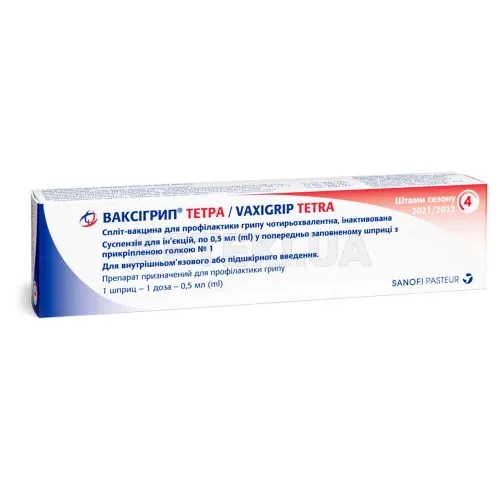
Table of Contents
- INSTRUCTIONS FOR MEDICAL USE OF THE MEDICINAL PRODUCT
- Abbreviations: QIV – quadrivalent inactivated split influenza vaccine; TIV – trivalent influenza vaccine; HI – hemagglutination inhibition; GMT – geometric mean titer; CI – confidence interval; BV – B Victoria; BY – B Yamagata. a QIV contains A/Michigan/45/2015 (H1N1), A/Hong Kong/4801/2014 (H3N2), B/Brisbane/60/2008 (Victoria lineage), and B/Massachusetts/2/2012 (Yamagata lineage). b The combined TIV group included subjects vaccinated with either TIV-BV or TIV-BY. c TIV-BV contains A/Michigan/45/2015 (H1N1), A/Hong Kong/4801/2014 (H3N2), and B/Brisbane/60/2008 (Victoria lineage). d TIV-BY contains A/Michigan/45/2015 (H1N1), A/Hong Kong/4801/2014 (H3N2), and B/Massachusetts/2/2012 (Yamagata lineage). e GMT: QIV vaccine characteristics non-inferior to TIV were confirmed if the lower limit of the two-sided 95% CI of the GMT ratio (QIV divided by combined TIV for A strains, or TIV containing the corresponding B strain) ≥ 2/3; f Seroconversion rate: QIV vaccine characteristics non-inferior to TIV were confirmed if the lower limit of the two-sided 95% CI of the seroconversion rate difference (QIV minus combined TIV for A strains, or TIV containing the corresponding B strain) > -10%; g Seroconversion: defined as either a pre-vaccination HI titer <1:10 and a post-vaccination titer ≥1:40, or a pre-vaccination HI titer ≥1:10 and at least a 4-fold increase in HI antibody titer. Table 2 Immune responses to A (H1N1) and B (H3N2) strains 28 days after vaccination with QIV or TIV in age subgroups
- Abbreviations: QIV – quadrivalent inactivated split influenza vaccine; TIV – trivalent influenza vaccine; HI – hemagglutination inhibition; GMT – geometric mean titer; CI – confidence interval; BV – B Victoria; BY – B Yamagata. aQIV contains A/Michigan/45/2015 (H1N1), A/Hong Kong/4801/2014 (H3N2), B/Brisbane/60/2008 (Victoria lineage), and B/Massachusetts/2/2012 (Yamagata lineage). bThe combined TIV group included subjects vaccinated with either TIV-BV or TIV-BY. TIV-BV contains A/Michigan/45/2015 (H1N1), A/Hong Kong/4801/2014 (H3N2), and B/Brisbane/60/2008 (Victoria lineage). TIV-BY contains A/Michigan/45/2015 (H1N1), A/Hong Kong/4801/2014 (H3N2), and B/Massachusetts/2/2012 (Yamagata lineage). cSeroprotection: defined as a pre-vaccination HI titer <1:10 and a post-vaccination titer ≥1:40, or a pre-vaccination HI titer ≥1:10 and at least a 4-fold increase in HI antibody titer. Table 3 Immune responses to BV and BY strains 28 days after vaccination with QIV or TIV in age subgroups
- Abbreviations: QIV – Split quadrivalent inactivated influenza vaccine; TIV – Trivalent influenza vaccine; HI – Hemagglutination inhibition; GMT – Geometric mean titer; CI – Confidence interval; BV – B Victoria; BY – B Yamagata
- 1 Reported in adults aged 18 to 59 years. 2 Reported in elderly individuals (aged 60 years and older). Adults and elderly individuals Table 5 Post-marketing surveillance data for influenza vaccines
- 1 In adults. 2 Uncommon in elderly individuals. 3 Rare in adults. 4 In elderly individuals. Pediatric patient population In clinical studies, split-virion quadrivalent inactivated influenza vaccine was administered to healthy children aged 3 to 17 years. Adverse reactions were also reported in this age group (see Table 6). Table 6 Adverse reactions reported in 340 children aged 3 to 17 years
- Table 7 Post-marketing surveillance data on influenza vaccines involving children
- Post-marketing Experience
- Reporting of Suspected Adverse Reactions
INSTRUCTIONS FOR MEDICAL USE OF THE MEDICINAL PRODUCT
Quadrivalent Inactivated Split Influenza Vaccine
Composition:
Inactivated split influenza virus; the composition of the split vaccine complies with WHO recommendations and European Union decisions regarding the composition of influenza vaccines for the 2025/2026 season for the Northern Hemisphere.
One immunizing dose of vaccine (0.5 mL) contains:
Active substances:
- Inactivated split influenza virus of the following strains*:
- A/Victoria/4897/2022 (H1N1)pdm09-like* – 15 µg HA**
- A/Croatia/10136RV/2023 (H3N2)-like* – 15 µg HA**
- B/Austria/1359417/2021 (B/Victoria lineage)-like* – 15 µg HA**
- B/Phuket/3073/2013 (B/Yamagata lineage)-like* – 15 µg HA**
___________________________________________
* Cultivated in embryonated eggs of healthy chickens.
** Hemagglutinin.
Excipients:
Sodium chloride, sodium dihydrogen phosphate, disodium hydrogen phosphate, water for injections.
Pharmaceutical form:
Injectable suspension.
Basic physicochemical properties:
Slightly opalescent liquid, free from foreign particles.
Pharmacotherapeutic group:
Influenza vaccines. Split influenza virus or surface antigen.
ATC code: J07BB02.
Immunological and biological properties
Pharmacodynamics
Mechanism of action
The quadrivalent inactivated split influenza vaccine (QIV) provides active immunization against four influenza virus strains contained in the vaccine (two subtypes A and two type B). The vaccine induces the production of humoral antibodies against hemagglutinins within 2–3 weeks after vaccination. These antibodies neutralize influenza viruses.
The duration of immunity following vaccination against homologous strains or strains closely related to vaccine strains varies but typically lasts 6–12 months. Annual revaccination with QIV is recommended due to the limited duration of vaccine-induced immunity and the potential for circulating influenza virus strains to change from year to year.
Vaccine immunogenicity
The immunogenicity of the quadrivalent inactivated split influenza vaccine (QIV) was evaluated in individuals aged 3 years and older in a randomized, double-blind, controlled Phase III clinical trial conducted in China (NCT03853993). In this study, 2320 individuals received one dose of QIV or one of two formulations of a comparator trivalent influenza vaccine (TIV-BV or TIV-BY), and 2244 individuals were included in the immunogenicity analysis according to the protocol.
Primary immunogenicity endpoints were geometric mean titers (GMT) of hemagglutination inhibition (HI) antibodies and the percentage of individuals achieving seroconversion, defined as either:
- Pre-vaccination HI titer <1:10 and post-vaccination titer ≥1:40, or
- Pre-vaccination HI titer ≥1:10 and at least a 4-fold increase in HI antibody titer.
Twenty-eight days after vaccination, geometric mean titers (GMT) and seroconversion rates for QIV were non-inferior to those observed after each TIV formulation for all four vaccine strains.
Immunogenicity results in the overall study population are presented in Table 1. Immunogenicity results by age subgroups (3–17 years, 18–59 years, and ≥60 years) are presented in Tables 2 and 3.
Table 1
Evidence that QIV vaccine characteristics are non-inferior to TIV for each strain in terms of geometric mean titers (GMT) of hemagglutination inhibition (HI) antibodies and seroconversion rates on Day 28 after vaccination in individuals aged 3 years and older.
Strain antigen |
Characteristics |
QIVa |
Combined TIVb |
GMT ratio |
Difference in seroconversion ratef (95% CI) |
|
A(H1N1) |
GMT (95% CI) |
523.91 |
549.93 |
0.95 |
- |
|
Seroconversion rateg (95% CI) |
77.15 |
(74.92, 79.91) |
- |
-0.34 |
||
A(H3N2) |
GMT (95% CI) |
274.13 |
(261.21, 300.81) |
0.98 |
- |
|
Seroconversion rateg (95% CI) |
81.93 |
80.36 |
- |
1.57 |
||
Strain antigen |
Characteristics |
QIVa |
TIV-BVc |
TIV-BYd |
GMT ratioe |
Difference in seroconversion ratef (95% CI) |
BV |
GMT (95% CI) |
115.35 |
118.67 |
45.54 |
1.00 |
- |
Seroconversion rateg (95% CI) |
60.14 |
58.86 |
18.71 |
- |
1.29 |
|
BY |
GMT (95% CI) |
257.81 |
128.79 |
239.63 |
1.10 |
- |
Seroconversion rateg (95% CI) |
64.57 |
33.63 |
57.01 |
- |
7.56 |
|
Abbreviations: QIV – quadrivalent inactivated split influenza vaccine; TIV – trivalent influenza vaccine; HI – hemagglutination inhibition; GMT – geometric mean titer; CI – confidence interval; BV – B Victoria; BY – B Yamagata. a QIV contains A/Michigan/45/2015 (H1N1), A/Hong Kong/4801/2014 (H3N2), B/Brisbane/60/2008 (Victoria lineage), and B/Massachusetts/2/2012 (Yamagata lineage). b The combined TIV group included subjects vaccinated with either TIV-BV or TIV-BY. c TIV-BV contains A/Michigan/45/2015 (H1N1), A/Hong Kong/4801/2014 (H3N2), and B/Brisbane/60/2008 (Victoria lineage). d TIV-BY contains A/Michigan/45/2015 (H1N1), A/Hong Kong/4801/2014 (H3N2), and B/Massachusetts/2/2012 (Yamagata lineage). e GMT: QIV vaccine characteristics non-inferior to TIV were confirmed if the lower limit of the two-sided 95% CI of the GMT ratio (QIV divided by combined TIV for A strains, or TIV containing the corresponding B strain) ≥ 2/3; f Seroconversion rate: QIV vaccine characteristics non-inferior to TIV were confirmed if the lower limit of the two-sided 95% CI of the seroconversion rate difference (QIV minus combined TIV for A strains, or TIV containing the corresponding B strain) > -10%; g Seroconversion: defined as either a pre-vaccination HI titer <1:10 and a post-vaccination titer ≥1:40, or a pre-vaccination HI titer ≥1:10 and at least a 4-fold increase in HI antibody titer. Table 2 Immune responses to A (H1N1) and B (H3N2) strains 28 days after vaccination with QIV or TIV in age subgroups
Age group (years) |
Characteristics |
A(H1N1) |
A(H3N2) |
||
QIV a |
Combined TIV b |
QIV a |
Combined TIV b |
||
3–17 |
N |
317 |
314 |
317 |
314 |
Serum conversion factor c |
66.88 (61.40, 72.04) |
67.83 (62.36, 72.97) |
79.81 (74.96, 84.09) |
78.34 (73.37, 82.77) |
|
GMT (95% CI) |
750.76 (655.75, 859.55) |
727.42 (647.10, 817.70) |
473.30 (422.23, 530.53) |
467.78 (412.75, 530.16) |
|
18–59 |
N |
497 |
487 |
497 |
487 |
Serum conversion factor c |
80.48 (76.72, 83.88) |
79.88 (76.04, 83.35) |
82.90 (79.29, 86.10) |
81.52 (77.78, 84.87) |
|
GMT (1:) (95% CI) |
461.79 (418.37, 509.72) |
532.65 (482.78, 587.66) |
193.69 (176.72, 212.28) |
219.45 (198.94, 242.08) |
|
≥ 60 |
N |
315 |
314 |
315 |
314 |
Serum conversion factor c |
82.22 (77.54, 86.28) |
83.44 (78.86, 87.38) |
82.54 (77.89, 86.57) |
80.57 (75.76, 84.80) |
|
GMT (95% CI) |
445.14 (383.62, 516.53) |
436.84 (375.13, 508.71) |
273.72 (240.38, 311.68) |
245.53 (213.33, 282.59) |
|
Abbreviations: QIV – quadrivalent inactivated split influenza vaccine; TIV – trivalent influenza vaccine; HI – hemagglutination inhibition; GMT – geometric mean titer; CI – confidence interval; BV – B Victoria; BY – B Yamagata. aQIV contains A/Michigan/45/2015 (H1N1), A/Hong Kong/4801/2014 (H3N2), B/Brisbane/60/2008 (Victoria lineage), and B/Massachusetts/2/2012 (Yamagata lineage). bThe combined TIV group included subjects vaccinated with either TIV-BV or TIV-BY. TIV-BV contains A/Michigan/45/2015 (H1N1), A/Hong Kong/4801/2014 (H3N2), and B/Brisbane/60/2008 (Victoria lineage). TIV-BY contains A/Michigan/45/2015 (H1N1), A/Hong Kong/4801/2014 (H3N2), and B/Massachusetts/2/2012 (Yamagata lineage). cSeroprotection: defined as a pre-vaccination HI titer <1:10 and a post-vaccination titer ≥1:40, or a pre-vaccination HI titer ≥1:10 and at least a 4-fold increase in HI antibody titer. Table 3 Immune responses to BV and BY strains 28 days after vaccination with QIV or TIV in age subgroups
Age group (years) |
Chr |
BV |
BY |
||||
QIV a |
TIV-BV b |
TIV-BY c |
QIV a |
TIV-BV b |
TIV-BY c |
||
3–17 |
N |
317 |
156 |
158 |
317 |
156 |
158 |
Serconversion ratee (95% CI) |
59.62 |
61.54 |
2.53 |
51.74 |
17.95 |
43.67 |
|
GMT (95% CI) |
119.89 |
136.96 |
30.61 |
284.98 |
145.10 |
273.25 |
|
18–59 |
N |
497 |
245 |
242 |
497 |
245 |
242 |
Serconversion ratee (95% CI) |
64.39 |
61.22 |
27.27 |
69.01 |
41.22 |
62.40 |
|
GMT (95% CI) |
121.22 |
112.02 |
51.03 |
261.05 |
126.51 |
231.52 |
|
≥ 60 |
N |
315 |
158 |
156 |
315 |
158 |
156 |
Serconversion ratee (95% CI) |
53.97 |
52.53 |
21.79 |
70.48 |
37.34 |
62.18 |
|
GMT (95% CI) |
102.58 |
112.64 |
57.07 |
228.53 |
117.69 |
221.30 |
|
Abbreviations: QIV – Split quadrivalent inactivated influenza vaccine; TIV – Trivalent influenza vaccine; HI – Hemagglutination inhibition; GMT – Geometric mean titer; CI – Confidence interval; BV – B Victoria; BY – B Yamagata
b The combined TIV group included subjects vaccinated with either TIV-BV or TIV-BY.
c TIV-BV contains A/Michigan/45/2015 (H1N1), A/Hong Kong/4801/2014 (H3N2), and B/Brisbane/60/2008 (Victoria lineage).
d TIV-BY contains A/Michigan/45/25 (H1N1), A/Hong Kong/4801/2014 (H3N2), and B/Massachusetts/2/2012 (Yamagata lineage).
e Seroconversion: defined as a pre-vaccination HI titer < 1:10 with a post-vaccination titer ≥ 1:40, or a pre-vaccination HI titer ≥ 1:10 and at least a 4-fold increase in HI antibody titer.
Pharmacokinetics. Not studied.
Clinical characteristics.
Indications.
Prevention of influenza, particularly in individuals at increased risk of associated complications. The vaccine is intended for active immunization of adults and children aged 3 years and older. Vaccine use should be based on official recommendations. For immunization schedules, contraindications, and interactions with other medicinal products in Ukraine, current orders of the Ministry of Health of Ukraine should be followed.
Contraindications.
Hypersensitivity to any active substance, excipient, or any component of the vaccine that may be present in trace amounts, such as egg components, formaldehyde, Triton X-100, or gentamicin sulfate. Vaccination should be postponed in cases of illness accompanied by moderate or severe fever (above 38.0 °C) or acute illness.
Interaction with other medicinal products and other forms of interaction.
Individuals at high risk who have not previously been vaccinated with 23-valent pneumococcal vaccine are recommended to receive pneumococcal vaccines and QIV simultaneously. Both vaccines can be administered simultaneously at different injection sites without increasing adverse effects. Children at high risk of complications associated with influenza may receive QIV simultaneously with other routine vaccinations, including hepatitis A vaccine, pertussis vaccine, and, if possible, DTP vaccine, which is less frequently associated with fever. This vaccine must not be mixed in the same container with other vaccines.
After influenza vaccination, false-positive reactions have been observed in serological tests using the ELISA method for detecting antibodies against HIV1, hepatitis C, and particularly HTLV1. The Western Blot method confirms or rules out false-positive ELISA results. Transient false-positive reactions may be due to immunoglobulin M (IgM) response following vaccination.
Special precautions for use.
- Medical products such as adrenaline must be readily available for immediate use in case of a rare severe anaphylactic reaction following vaccination. Recipients should be observed for at least 30 minutes after injection.
- Revaccination should be contraindicated if neurological reactions occur after injection.
- Immunization must not be performed via intravenous injection.
- Keep out of reach of children.
- Consult a physician if you have impaired immunity or any other questions.
- Immune response may be inadequate in patients with endogenous or iatrogenic immunosuppression.
Traceability.
To improve traceability of biological medicinal products, the name and batch number of the administered product should be clearly recorded. The vaccine should be administered with caution to individuals with thrombocytopenia or coagulation disorders, as bleeding may occur at the intramuscular injection site in these individuals. Syncope (fainting) may occur following, or even before, any vaccination as a psychogenic response to needle injection. Appropriate procedures should be followed to prevent injury from fainting and to manage syncopal reactions.
The vaccine contains sodium. This vaccine contains less than 1 mmol (23 mg)/dose of sodium, i.e., the medicinal product is practically sodium-free.
Use during pregnancy or breastfeeding.
Pregnancy. Available data do not indicate that inactivated split influenza vaccine causes harm to the fetus when administered to pregnant women. The WHO recommends administering the vaccine to pregnant women at any stage of pregnancy.
Breastfeeding. Split influenza vaccine may be used during breastfeeding.
Effects on ability to drive and use machines.
There are no clinical or scientific data on the effects on the ability to drive or operate machinery. To date, no cases of effects on the ability to drive or use machinery have been reported with the use of quadrivalent inactivated split influenza vaccine.
Method of administration and dosage.
Dosage
Adults: one 0.5 mL dose.
Pediatric patients:
- Children aged 3 years and older: one 0.5 mL dose.
- Children under 3 years of age: Safety and efficacy of the vaccine in children under 3 years of age have not been established. Data are lacking.
Method of administration.
The vaccine should be administered by intramuscular injection into the deltoid muscle. The vaccine should reach room temperature before administration. The prefilled syringe should be shaken before use. After shaking, the vaccine should appear as a homogeneous injectable liquid. The vaccine must be inspected visually before administration and should not be used if any changes in appearance are observed (see section "Pharmaceutical form"). Do not use the vaccine if the prefilled syringe has cracks, the label is illegible, the expiry date has passed, or if the contents are cloudy or show changes in appearance, including granulosity. Any unused product or waste material must be disposed of in accordance with current regulations.
Children.
The vaccine is indicated for children aged 3 years and older (see section "Method of administration and dosage"). Safety and efficacy of the vaccine in children under 3 years of age have not been established.
Overdose.
No cases of overdose with quadrivalent inactivated split influenza vaccine have been reported to date.
Adverse reactions.
Summary of safety profile.
The safety of the vaccine was evaluated in Phase I/III clinical trials in which 540 subjects aged 18 to 59 years, 340 subjects aged 60 years and older, and 340 subjects aged 3 to 17 years received one dose of the vaccine. Safety monitoring began on the day of vaccination and continued throughout the procedure until Day 28 after vaccination. For most subjects, long-term safety monitoring began on Day 29 after vaccination and continued until Day 180. All reported adverse reactions occurred within the first 7 days after vaccination, and the overall frequency of adverse reactions in subjects who received the vaccine was 10.33%. The most frequently reported adverse reactions in subjects who received the vaccine were:
Local reactions: erythema at injection site (1.07%), pain (3.11%).
Systemic reactions: fever (5.98%).
Tabulated list of adverse reactions.
Adverse reactions are categorized by frequency: very common (≥ 1/10); common (≥ 1/100 to < 1/10); uncommon (≥ 1/1,000 to < 1/100); rare (≥ 1/10,000 to < 1/1,000); very rare (< 1/10,000); frequency not known (cannot be estimated from available data). Within each frequency category, adverse reactions are listed in order of decreasing severity.
Table 4. Adverse reactions reported in 880 adults (aged 18 years and older)
System of organs |
Frequency of adverse reactions |
||
very common |
common |
uncommon |
|
General disorders and injection site conditions |
Fever, erythema at injection site, pain |
Fatigue1, pruritus1, swelling, induration2 |
|
Nervous system disorders |
Headache1 |
||
Musculoskeletal and connective tissue and bone disorders |
Myalgia1 |
||
Gastrointestinal disorders |
Nausea and vomiting1 |
||
Respiratory system disorders |
Cough1 |
||
Cardiac disorders |
Palpitations1 |
||
1 Reported in adults aged 18 to 59 years. 2 Reported in elderly individuals (aged 60 years and older). Adults and elderly individuals Table 5 Post-marketing surveillance data for influenza vaccines
System Organ Class |
Frequency of adverse reactions |
||||
Very common |
Common |
Uncommon |
Rare |
Frequency not known |
|
Blood and lymphatic system disorders |
Lymphadenopathy1 |
||||
Immune system disorders |
Hypersensitivity1, allergic reactions such as erythema, urticaria, pruritus2, generalized pruritus1, allergic dermatitis1, angioedema1 |
Anaphylactic reactions |
|||
Nervous system disorders |
Headache |
Dizziness3 |
Somnolence, paraesthesia |
||
Vascular disorders |
Hot flush sensation4 |
||||
Respiratory, thoracic and mediastinal disorders |
Dyspnoea1 |
||||
Gastrointestinal disorders |
Diarrhoea, nausea5 |
||||
Skin and subcutaneous tissue disorders |
Hyperhidrosis |
||||
Musculoskeletal and connective tissue disorders |
Myalgia, |
Arthralgia1 |
|||
General disorders and administration site conditions |
Malaise6, injection site pain |
Chills, pyrexia2, |
Increased fatigue, injection site bruising, injection site pruritus, injection site warmth |
Asthenia, influenza-like illness, |
|
1 In adults. 2 Uncommon in elderly individuals. 3 Rare in adults. 4 In elderly individuals. Pediatric patient population In clinical studies, split-virion quadrivalent inactivated influenza vaccine was administered to healthy children aged 3 to 17 years. Adverse reactions were also reported in this age group (see Table 6). Table 6 Adverse reactions reported in 340 children aged 3 to 17 years
System of organs |
Frequency of adverse reactions |
||
very common |
common |
uncommon |
|
General disorders and administration site conditions |
Fever, erythema at injection site, pain |
Fatigue, pruritus, swelling, induration |
|
Nervous system disorders |
Headache |
||
Musculoskeletal and connective tissue disorders |
Muscle pain |
||
Gastrointestinal disorders |
Nausea and vomiting, diarrhea |
||
Respiratory system disorders |
Cough |
||
Table 7 Post-marketing surveillance data on influenza vaccines involving children
System organ |
Frequency of adverse reactions |
||||
Very common |
Common |
Uncommon |
Rare |
Frequency unknown |
|
Immune system disorders |
Hypersensitivity |
Generalized pruritus, papular rash |
Anaphylactic reactions |
||
General disorders and administration site conditions |
Restlessness, loss of appetite, abnormal crying, malaise3, fever, somnolence, pain/tenderness at injection site, erythema at injection site |
Chills, induration at injection site, bruising at injection site |
Rash at injection site, fatigue, pruritus, swelling at injection site, influenza-like illness |
||
Nervous system disorders |
Headache |
||||
Musculoskeletal and connective tissue disorders |
Myalgia |
||||
Gastrointestinal disorders |
Vomiting, nausea |
Diarrhea |
|||
Post-marketing Experience
The following adverse reactions have been reported during post-marketing surveillance of Split Influenza Vaccine Quadrivalent, Inactivated (QIV):
- Immune system disorders: anaphylactic shock.
- Skin and subcutaneous tissue disorders: rash, urticaria, angioneurotic edema, and erythema multiforme, Henoch-Schönlein purpura.
- Vascular disorders: hyperemia.
- Blood and lymphatic system disorders: thrombocytopenic purpura.
- Nervous system disorders: convulsions.
- Metabolism and nutrition disorders: tetany.
- Psychiatric disorders: respiratory arrest.
- Gastrointestinal disorders: dry mouth.
- Renal and urinary disorders: renal function impairment.
- Vascular disorders: lymphedema.
- General disorders and administration site conditions: crying, local soft tissue inflammation, and facial swelling.
Reporting of Suspected Adverse Reactions
It is important to report suspected adverse reactions after the authorization of the medicinal product. This allows continued monitoring of the benefit-risk balance of the medicinal product. Healthcare professionals should report any suspected adverse reactions in accordance with local requirements.
Shelf life: 1 year.
Storage conditions: Store in the original packaging at +2 °C to +8 °C. Do not freeze. Store protected from light.
Incompatibilities: Due to the lack of compatibility studies, this vaccine must not be mixed with other medicinal products.
Packaging: 0.5 mL of suspension in a pre-filled syringe, 1 pre-filled syringe with needle in a blister pack in a cardboard carton, or 10 pre-filled syringes with needles in blisters, 5 blisters per cardboard carton.
Prescription status: Prescription only.
Manufacturer: Sinovac Biotech Co., Ltd., People's Republic of China.
Manufacturer's address and sites of manufacturing activity:
No. 39, Shangdi West Road, Haidian District, Beijing, People's Republic of China (manufacturing of bulk vaccine (inactivated split influenza viruses (virions)))
No. 15, Zhichun Road, Changping Science Park, Changping District, Beijing, People's Republic of China (filling, packaging, quality control, batch release)
Marketing Authorization Holder: Sinovac Biotech Co., Ltd., People's Republic of China.
Address of Marketing Authorization Holder: No. 39, Shangdi West Road, Haidian District, Beijing, People's Republic of China