Spectracef
Ukraine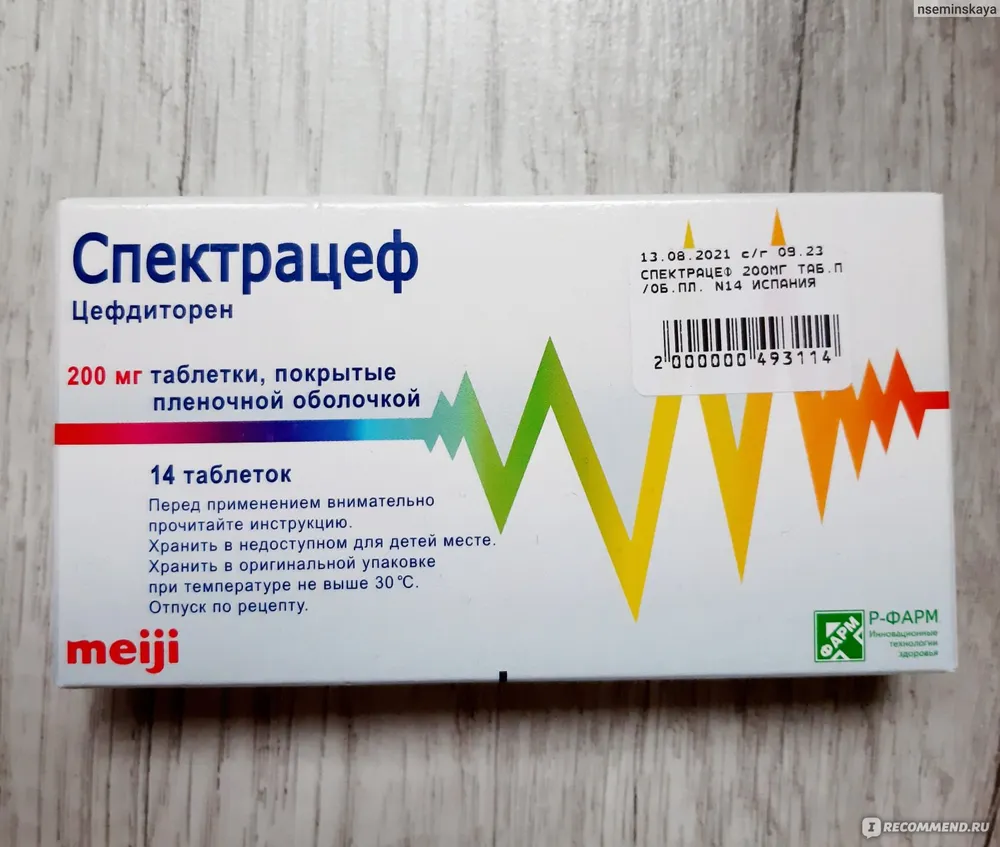
Table of Contents
INSTRUCTIONS FOR MEDICAL USE OF THE MEDICINAL PRODUCT SPECTRACEF (SPECTRACEF)
Composition:
Active substance: cefditoren (cefditoren);
One tablet contains 245.1 mg of cefditoren pivoxil, equivalent to 200 mg of cefditoren;
Excipients:
Tablet core: mannite (E 421), sodium caseinate, sodium croscarmellose, sodium tripolyphosphate, magnesium stearate;
Tablet coating: Opadry Y-1-7000 (containing hypromellose, titanium dioxide (E 171), macrogol 400), carnauba wax;
Printing ink for tablet marking: Opacode S-1-20986 blue ink (containing shellac, FD&C Blue No. 1/Diamond Blue FCF lake (E 133), titanium dioxide (E 171), propylene glycol, concentrated ammonia solution).
Pharmaceutical form. Film-coated tablets.
Main physicochemical properties: elliptical, film-coated tablets of white color, marked "TMF" in blue ink on one side.
Pharmacotherapeutic group.
Antibacterials for systemic use. Other beta-lactam antibiotics. Third-generation cephalosporins. ATC code J01DD16.
Pharmacological Properties.
Pharmacodynamics.
Mechanism of action. The mechanism of antibacterial action of cefditoren is related to the inhibition of bacterial cell wall synthesis due to its affinity for penicillin-binding proteins.
Mechanisms of resistance. Microbial resistance to cefditoren may be due to one or several mechanisms:
- Hydrolysis by beta-lactamases. Cefditoren can be effectively hydrolyzed by certain extended-spectrum beta-lactamases and chromosomal AmpC enzymes, which may be inducible or stably derepressed in some species of aerobic Gram-negative bacteria.
- Reduced affinity of penicillin-binding proteins for cefditoren.
- Decreased outer membrane permeability, limiting access of cefditoren to penicillin-binding proteins in Gram-negative bacteria.
- Presence of efflux pumps that remove the drug from the cell.
Several resistance mechanisms may be present simultaneously within a single bacterial cell. Depending on the mechanisms present, bacteria may exhibit cross-resistance to some or all other beta-lactams and/or to antibacterial agents of other classes.
Gram-negative microorganisms containing inducible chromosomal beta-lactamases, particularly Enterobacter spp., Serratia spp., Citrobacter spp., and Providencia spp., should be considered resistant to cefditoren pivoxil, regardless of apparent in vitro susceptibility.
Breakpoints. The recommended breakpoints for minimum inhibitory concentration (MIC) values for cefditoren (which allow differentiation of susceptible microorganisms from those with intermediate susceptibility, and intermediate from resistant organisms) are as follows: susceptible microorganisms ≤ 0.5 μg/mL, resistant microorganisms ≥ 2 μg/mL (or > 1 μg/mL according to recently adopted criteria).
Microbiological susceptibility. The prevalence of acquired resistance in certain microbial species may vary depending on geographical location and over time. Local information on resistance patterns is therefore desirable, especially when treating severe infections. Expert advice should be sought when local prevalence of resistant strains raises doubts about the appropriateness of using the drug, at least for the treatment of certain types of infections.
| Usually susceptible microorganisms |
| Aerobic Gram-positive bacteria: Streptococci groups C and G Staphylococcus aureus methicillin-susceptible strains2 Streptococcus agalactiae Streptococcus pneumoniae2, 3 Streptococcus pyogenes2 |
| Aerobic Gram-negative bacteria: Haemophilus influenzae2 Moraxella catarrhalis2 |
| Anaerobic bacteria: Clostridium perfringens Peptostreptococcus spp. |
| Species with natural resistance to the drug |
| Aerobic Gram-positive bacteria: Enterococcus spp. Staphylococcus aureus methicillin-resistant strains (MRSA)1 |
| Aerobic Gram-negative bacteria: Acinetobacter baumannii Pseudomonas aeruginosa |
| Anaerobic bacteria: Bacteroides fragilis group Clostridium difficile |
| Others: Chlamydia spp. Mycoplasma spp. Legionella spp. |
| 1 MRSA strains have acquired resistance to cephalosporins, but are included in the list for convenience. 2 Clinical efficacy has been demonstrated for susceptible pathogens when the drug is used according to approved indications. 3 Some strains highly resistant to penicillin may have reduced susceptibility to cefditoren. Strains resistant to cefotaxime and ceftriaxone should not be considered susceptible to cefditoren. |
Pharmacokinetics.
Absorption. After oral administration, cefditoren pivoxil is absorbed in the gastrointestinal tract and hydrolyzed by esterases to cefditoren. The absolute bioavailability of cefditoren after oral intake is approximately 15–20%.
In the presence of food in the gastrointestinal tract, absorption of cefditoren pivoxil increases, resulting in approximately 50% and 70% higher Cmax and AUC values, respectively, compared to fasting conditions.
Approximately 2.5 hours after administration of 200 mg or 400 mg of cefditoren taken with food, mean Cmax values are 2.6 µg/mL and 4.1 µg/mL, respectively.
Distribution. Plasma protein binding of cefditoren is 88%.
The volume of distribution of cefditoren at steady state does not significantly differ from that calculated after single-dose administration. It is almost independent of the administered dose and ranges from 40 to 65 L.
After a single 400 mg dose, cefditoren concentrations in bronchial mucosa and bronchial secretions were approximately 60% and 20% of plasma concentrations, respectively. Following the same dose, cefditoren concentrations in skin blister fluid at 8 and 12 hours were 40% and 56% of plasma levels, respectively.
Metabolism and elimination. Pharmacokinetic parameters after multiple and single doses are similar, indicating absence of accumulation.
Up to 18% of the administered dose of cefditoren is excreted unchanged in urine.
The elimination half-life of cefditoren from plasma is approximately 1.0–1.5 hours. Total clearance, corrected for bioavailability, is about 25–30 L/h, and renal clearance is approximately 80–90 mL/min. Studies in healthy volunteers showed that after oral administration of radiolabeled cefditoren, the unabsorbed portion of the drug is excreted in feces, and most of the cefditoren is converted into inactive metabolites.
Cefditoren pivoxil is not detected in feces or urine. The pivoxil moiety is excreted by the kidneys as conjugated pivaloylcarnitine.
Special populations and conditions
Gender differences. The pharmacokinetics of cefditoren pivoxil show no clinically significant differences between male and female subjects.
Elderly patients. Cmax and AUC values for cefditoren in plasma in elderly patients (aged over 65 years) are approximately 26% and 33% higher, respectively, than in middle-aged adults. However, dose adjustment in elderly patients is not required, except for those with marked renal and/or hepatic impairment.
Patients with renal impairment. After repeated administration of cefditoren 400 mg, Cmax values in patients with moderate and severe renal impairment were approximately twice those in healthy volunteers, and AUC values were 2.5–3 times higher. Data for patients undergoing hemodialysis are currently unavailable.
Patients with hepatic impairment. After repeated administration of cefditoren 400 mg, pharmacokinetic parameters in patients with mild or moderate hepatic impairment (Child-Pugh classes A and B) were only slightly higher than those in healthy volunteers. Data for patients with severe hepatic impairment (Child-Pugh class C) are currently unavailable.
Pharmacokinetic/pharmacodynamic relationships. When the drug is administered at a dose of 200 mg twice daily, plasma concentrations of cefditoren exceed the minimum inhibitory concentrations (MIC90) for Moraxella catarrhalis, Haemophilus influenzae, Streptococcus pyogenes, and penicillin-sensitive strains of Streptococcus pneumoniae for at least 50% of the dosing interval. At a dose of 400 mg twice daily, sufficient time above the minimum inhibitory concentrations (MIC90) is achieved for penicillin-resistant strains of Streptococcus pneumoniae.
Clinical characteristics.
Indications.
Infections caused by microorganisms sensitive to the drug (see section "Pharmacodynamics"):
- Acute tonsillopharyngitis.
- Acute sinusitis.
- Exacerbation of chronic bronchitis.
- Mild to moderate community-acquired pneumonia.
- Uncomplicated skin and soft tissue infections, including phlegmon, infected wounds, abscesses, folliculitis, impetigo, and furunculosis.
Contraindications.
- Hypersensitivity to cefditoren, other cephalosporins, or any other component of the drug. Since the drug contains sodium caseinate, this should be taken into account in patients with hypersensitivity to casein.
- Immediate-type hypersensitivity reactions and/or severe hypersensitivity reactions to penicillins or other beta-lactam antibiotics in medical history.
- Primary carnitine deficiency.
Interaction with other medicinal products and other forms of interaction.
Antacids. When cefditoren pivoxil (taken with food) is administered concomitantly with antacids containing magnesium and aluminum hydroxides, Cmax and AUC values for cefditoren are reduced by 14% and 11%, respectively. It is recommended that the interval between administration of antacids and cefditoren pivoxil be at least 2 hours.
Probenecid. When probenecid and cefditoren pivoxil are used concomitantly, renal excretion of cefditoren is reduced, resulting in an increase in Cmax by 49%, AUC by 122%, and elimination half-life by 53%.
H2-histamine receptor blockers. When famotidine is administered intravenously concomitantly with oral cefditoren pivoxil, Cmax and AUC values for cefditoren are reduced by 27% and 22%, respectively. Therefore, cefditoren pivoxil is not recommended for use in combination with H2-histamine receptor blockers.
Oral contraceptives. Cefditoren pivoxil does not affect the pharmacokinetics of ethinylestradiol; therefore, it can be used in combination with combined oral contraceptives containing ethinylestradiol.
Effect on laboratory parameters. Similar to other cephalosporins, cefditoren may cause false-positive results in the direct Coombs test, which should be considered when performing compatibility testing.
False-positive results may occur when determining glucose in urine by the copper reduction method. The drug does not affect the results of glucose determination in urine performed by enzymatic methods.
Since false-negative results in the ferricyanide test for glucose determination in plasma or blood are possible, it is recommended to measure glucose concentration in blood or plasma using glucose oxidase or hexokinase methods in patients treated with cefditoren.
Special precautions for use.
When prescribing this medicinal product, official recommendations on the appropriate use of antibacterial agents should be taken into account.
Prior to initiating treatment with cefditoren, it is essential to determine whether the patient has previously experienced hypersensitivity reactions to cefditoren, cephalosporins, penicillins, or other beta-lactam antibiotics.
Cefditoren should be prescribed with caution in patients who have previously had non-anaphylactic types of hypersensitivity reactions to penicillins or other beta-lactam antibiotics (anaphylactic reaction is a contraindication).
Cases of antibiotic-associated diarrhea, colitis, and pseudomembranous colitis have been reported during treatment with cefditoren. This should be considered if diarrhea develops during or shortly after cefditoren therapy. In the event of severe and/or hemorrhagic diarrhea, the drug should be discontinued and appropriate treatment initiated.
Cefditoren should be used with caution in patients with gastrointestinal disorders, particularly those with a history of colitis.
In patients with moderate to severe renal impairment, systemic exposure to cefditoren increases (see section "Pharmacokinetics"). Therefore, the daily dose of cefditoren should be reduced in patients with acute renal failure or moderate to severe chronic renal failure to prevent potentially serious clinical effects, such as seizures (see section "Dosage and administration").
Cephalosporin antibiotics should be used cautiously in combination with nephrotoxic medicinal products, particularly aminoglycosides or potent diuretics (e.g., furosemide), as such combinations may adversely affect renal function and may also cause ototoxic effects.
Prolonged treatment with cefditoren may lead to overgrowth of resistant microorganisms, including enterococci and Candida spp.
During treatment with cephalosporins, a reduction in prothrombin activity may occur. Therefore, prothrombin time should be monitored in patients at risk (those with renal or hepatic impairment or those receiving concomitant anticoagulant therapy).
When prodrugs that generate pivalate are administered, decreased plasma concentrations of carnitine may occur. However, clinical studies have demonstrated that the reduction in carnitine concentrations associated with cefditoren pivoxil administration is not clinically significant.
Use during pregnancy or breastfeeding.
There are insufficient data on the use of cefditoren pivoxil in pregnant women. Therefore, the drug should be used during pregnancy only if the expected benefit to the mother outweighs the potential risk to the fetus.
There are insufficient data on the excretion of cefditoren in human breast milk. Therefore, the drug is not recommended for use in breastfeeding women.
Ability to affect reaction speed when driving or operating machinery.
The drug may have a minor or moderate influence on the ability to drive or operate machinery, as cefditoren pivoxil may cause adverse effects such as dizziness and somnolence.
Method of Administration and Dosage
Tablets should be swallowed whole with an adequate amount of water.
The tablets should be taken either with food or immediately after a meal.
Recommended doses depend on the severity of infection, the patient's condition, and the potential causative pathogens.
Dosage for Adults
For acute tonsillopharyngitis: 200 mg of cefditoren every 12 hours for 10 days.
- For acute sinusitis: 200 mg of cefditoren every 12 hours for 10 days.
- For acute exacerbation of chronic bronchitis: 200 mg of cefditoren every 12 hours for 5 days.
- For community-acquired pneumonia:
– Mild severity: 200 mg of cefditoren every 12 hours for 14 days.
– Moderate severity: 400 mg of cefditoren every 12 hours for 14 days. - For uncomplicated skin and soft tissue infections: 200 mg of cefditoren every 12 hours for 10 days.
Dose Adjustment for Special Patient Groups
Elderly Patients
For elderly patients, dose adjustment is not required, except for those with severe renal and/or hepatic impairment.
Patients with Renal Impairment
For patients with mild renal impairment, no dose adjustment is necessary.
For patients with moderate renal impairment (creatinine clearance 30–50 mL/min), the dose should not exceed 200 mg of cefditoren every 12 hours.
For patients with severe renal impairment (creatinine clearance < 30 mL/min), the recommended dose is 200 mg of cefditoren once daily.
For patients undergoing hemodialysis, the recommended dose has not yet been established.
Patients with Hepatic Impairment
For patients with mild or moderate hepatic impairment (Child-Pugh classes A and B), no dose adjustment is necessary.
For patients with severe hepatic impairment (Child-Pugh class C), the recommended dose has not yet been established.
Children
The safety and efficacy of the medicinal product in children have not been established.
Overdose
There have been no reports of cefditoren overdose.
Symptoms of overdose: with overdose of other cephalosporins, cerebral irritation leading to seizures has been observed.
Treatment of overdose: gastric lavage, symptomatic and supportive therapy.
The patient should remain under close medical supervision.
Cefditoren pivoxil is partially removed by hemodialysis.
Adverse Reactions
During clinical studies, approximately 6000 patients received cefditoren at doses of 200 mg or 400 mg twice daily for up to 14 days. At least one adverse reaction was observed in approximately 24% of patients. In 2.6% of cases, treatment with cefditoren was discontinued due to adverse effects.
The most commonly reported adverse reactions were gastrointestinal in nature. Diarrhea was observed in more than 10% of patients in most clinical trials. The incidence of diarrhea was higher with the 400 mg twice daily dose compared to the 200 mg twice daily dose.
Like other cephalosporins, cefditoren may cause adverse reactions such as cholestasis and aplastic anemia.
The following information details adverse reactions observed during clinical trials and post-marketing surveillance. Within each group, adverse effects are listed in descending order of severity.
Adverse reactions are categorized by frequency as follows: very common (≥ 1/10), common (≥ 1/100, < 1/10), uncommon (≥ 1/1000, < 1/100), rare (≥ 1/10,000, < 1/1000), and frequency not known (available data do not allow estimation of frequency).
Laboratory parameters
Uncommon: Leukopenia, increased ALT levels.
Rare: Prolonged blood coagulation time, increased AST levels, increased alkaline phosphatase levels, albuminuria, decreased prothrombin time, increased lactate dehydrogenase levels, increased creatinine levels.
Frequency not known: Decreased serum carnitine levels.
Cardiac disorders
Rare: Atrial fibrillation, heart failure, syncope, tachycardia, ventricular extrasystoles.
Blood and lymphatic system disorders
Uncommon: Thrombocytosis, leukopenia.
Rare: Eosinophilia, neutropenia, thrombocytopenia, hemolytic anemia, lymphadenopathy.
Frequency not known: Agranulocytosis.
Nervous system disorders
Common: Headache.
Uncommon: Restlessness, dizziness, insomnia, somnolence, sleep disturbances.
Rare: Amnesia, coordination disorder, hypertension, meningitis, tremor.
Eye disorders
Rare: Amblyopia, visual disturbances, eye pain, blepharitis.
Ear and labyrinth disorders
Rare: Tinnitus.
Respiratory, thoracic and mediastinal disorders
Uncommon: Pharyngitis, rhinitis, sinusitis.
Rare: Asthma.
Frequency not known: Eosinophilic pneumonia, interstitial pneumonia.
Gastrointestinal disorders
Very common: Diarrhea.
Common: Nausea, abdominal pain, dyspepsia.
Uncommon: Constipation, flatulence, vomiting, oral candidiasis, belching, dry mouth, taste disturbance.
Rare: Stomatitis, oral ulcers, hemorrhagic colitis, non-specific ulcerative colitis, gastrointestinal hemorrhage, glossitis, hiccups, tongue discoloration.
Renal and urinary disorders
Rare: Dysuria, renal pain, nephritis, nocturia, polyuria, urinary incontinence, albuminuria.
Frequency not known: Acute renal failure.
Skin and subcutaneous tissue disorders
Uncommon: Rash, pruritus, urticaria.
Rare: Acne, alopecia, eczema, exfoliative dermatitis, herpes simplex, photosensitivity reactions.
Frequency not known: Stevens-Johnson syndrome, erythema multiforme, toxic epidermal necrolysis.
Musculoskeletal and connective tissue disorders
Rare: Myalgia.
Metabolism and nutrition disorders
Uncommon: Anorexia.
Rare: Dehydration, hyperglycemia, hypokalemia, hypoproteinemia.
Infections and infestations
Common: Vaginal candidiasis.
Uncommon: Fungal infections.
Rare: Urinary tract infections, pseudomembranous enterocolitis.
Vascular disorders
Rare: Postural hypotension.
General disorders and administration site conditions
Uncommon: Increased body temperature, asthenia, pain, sweating.
Rare: Unpleasant body odor, chills.
Immune system disorders
Frequency not known: Anaphylactic shock, serum sickness.
Hepatobiliary disorders
Uncommon: Hepatic function abnormalities.
Rare: Hyperbilirubinemia.
Frequency not known: Hepatic injury, hepatitis.
Reproductive system and breast disorders
Uncommon: Vaginitis, leukorrhea.
Rare: Mastalgia, menstrual cycle disturbances, metrorrhagia, erectile dysfunction.
Psychiatric disorders
Rare: Dementia, depersonalization, emotional lability, euphoria, hallucinations, thought disorders, increased libido.
Shelf life.
3 years.
Storage conditions.
Store in the original packaging, out of reach of children, at a temperature not exceeding 30°C.
Packaging.
10 tablets per blister, 2 blisters per cardboard box.
Prescription status.
Prescription only.
Manufacturer.
Tedec-Meiji Farma, S.A. / Tedec-Meiji Farma, S.A.
Manufacturer's address.
Ctra. M-300, Km. 30,500, Alcala de Henares, Madrid, 28802, Spain.
Marketing authorization holder.
Meiji Seika Pharma Co., Ltd. / Meiji Seika Pharma Co., Ltd.
Address of the marketing authorization holder.
4-16, Kyobashi 2-chome, Chuo-ku, 104-8002, Tokyo, Japan.