Spazomen
Ukraine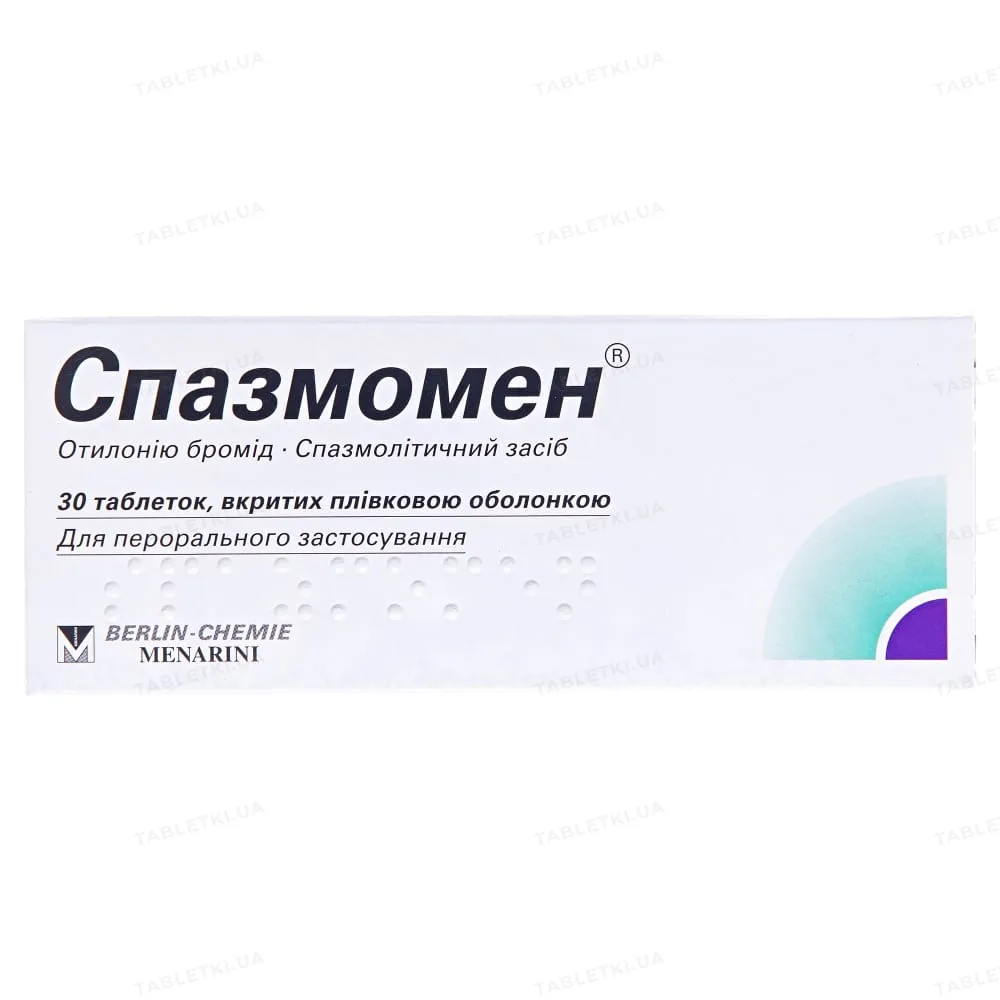
Table of Contents
INSTRUCTIONS FOR MEDICAL USE OF THE MEDICINAL PRODUCT SPASMOMENâ (SPASMOMEN®)
Composition:
Active substance: otilonium bromide;
One film-coated tablet contains 40 mg of otilonium bromide;
Excipients: lactose monohydrate, rice starch, sodium starch glycolate (type A), magnesium stearate, hypromellose, titanium dioxide (E 171), polyethylene glycol 4000, polyethylene glycol 6000, talc.
Pharmaceutical form. Film-coated tablets.
Main physicochemical properties: white to almost white, biconvex, round-shaped film-coated tablets.
Pharmacotherapeutic group. Agents used in functional gastrointestinal disorders. Synthetic anticholinergic agents, quaternary ammonium compounds.
ATC code A03AB06.
Pharmacological properties
Pharmacodynamics
Otilonium bromide is a typical representative of the class of drugs based on the quaternary salt of 2-aminoethyl-N-benzylamino-benzoate.
Otilonium bromide exerts a spasmolytic effect on the smooth muscle of the distal intestine (colon and rectum). This effect is observed when using doses that do not affect gastric secretion and do not produce typical atropine-like side effects.
Mechanism of action
Otilonium bromide acts primarily by altering the Ca2+ ion flux between intracellular and extracellular compartments, reducing contractile activity and visceral pain by inhibiting L-type and T-type calcium channels in the intestinal smooth muscle and sensory neurons of the enteric nervous system, respectively. An additional pharmacological effect is achieved through interaction with tachykinin and muscarinic receptors in the colon.
Clinical efficacy and safety
An extended analysis of a double-blind, placebo-controlled 15-week study of otilonium bromide (SpC1M study) involving 378 patients with irritable bowel syndrome (IBS) showed that the rate of therapeutic response over 2–4 months was significantly higher in the otilonium bromide group (36.9%) than in the placebo group (22.5%; p=0.007). Monthly rates of achieving therapeutic response were higher in the otilonium bromide group compared to placebo (p<0.05). The overall monthly and weekly proportion of the population achieving therapeutic response across individual endpoints (intensity and frequency of pain and discomfort, bloating/distension, severity of diarrhea and constipation, mucus in stools) was significantly higher in the otilonium bromide group compared to placebo, with differences ranging from 10 to 20%. Analysis of defecation frequency and stool consistency data indicates additional benefit in patients with diarrhea. Safety data for otilonium bromide were similar in nature to those of placebo.
In a double-blind, placebo-controlled clinical trial (n=365 IBS patients) (OBIS study), the efficacy of otilonium bromide versus placebo was confirmed regarding reduction in frequency of abdominal pain, degree of abdominal distension, and prevention of symptom relapse.
Pharmacokinetics
Otilonium bromide is expected to reach the site of pharmacological action by penetrating the intestinal wall, as systemic absorption after oral administration is very low (3%). Therefore, its plasma concentration is low. After oral administration, a high distribution rate of the drug into the smooth muscle of the colon and rectum has been described. Administration shortly before meals ensures pharmacologically effective local bioavailability of the drug at the site of therapeutic action and during the period when symptoms are most pronounced. The use of otilonium bromide in patients with impaired renal or hepatic function has not been studied. Since otilonium bromide enters the systemic circulation in very small amounts, impairment of kidney or liver function is not expected to have a significant impact.
Preclinical safety data
Acute toxicity: no lethal effects were reported in dogs after oral administration at doses up to 1000 mg/kg; the oral LD50 in rats was 1500 mg/kg.
Chronic toxicity: no hematological or histological abnormalities were observed in animals after administration of otilonium bromide at a dose of 80 mg/kg for 180 days.
Embryotoxicity: no embryotoxic or teratogenic effects were observed in rats and rabbits at doses up to 60 mg/kg.
Genotoxicity: standard clinical tests in vitro and in vivo did not reveal any mutagenic potential of otilonium bromide.
Clinical characteristics.
Indications.
Symptomatic treatment of irritable bowel syndrome (IBS) and spasms of the distal segments of the intestine (colon and rectum) accompanied by pain, relief of abdominal pain, bloating and impaired peristalsis caused by spasm of the smooth musculature of the distal intestinal segments in patients aged 18 years and older.
Treatment of IBS should begin with non-pharmacological measures (lifestyle changes, diet, emotional support, psychotherapy). Pharmacotherapy is prescribed when these measures do not achieve the desired effect.
Contraindications.
History of hypersensitivity reactions to the active substance or to any of the excipients of the medicinal product.
Interaction with other medicinal products and other forms of interaction.
Studies on the interaction of otilonium bromide with other medicinal products have not been conducted. It is expected that administration of otilonium bromide at the recommended daily dose of 1 tablet 2 or 3 times daily throughout its passage through the gastrointestinal tract will not affect the absorption of other concurrently administered oral medicinal products.
Special precautions for use.
The drug should be used with caution in glaucoma, prostate hypertrophy, and pyloric stenosis.
The drug contains lactose; therefore, it is contraindicated in patients with lactase deficiency, galactosemia, or glucose/galactose malabsorption syndrome.
This medicinal product contains less than 1 mmol of sodium (23 mg) per film-coated tablet, i.e., it is practically sodium-free.
Use during pregnancy or breastfeeding.
Pregnancy
Clinical data on the use of the medicinal product Spazmomen® during pregnancy are lacking. In animal studies, Spazmomen® showed no embryotoxic, teratogenic, or mutagenic effects and did not demonstrate reproductive or ontogenetic toxicity (see section "Preclinical safety data").
Breastfeeding
Clinical data on the use of the medicinal product Spazmomen® during breastfeeding are lacking.
As a precautionary measure, it is advisable to avoid using the medicinal product Spazmomen® during pregnancy and breastfeeding. Spazmomen® should be used during pregnancy or breastfeeding only if absolutely necessary and under strict medical supervision.
Fertility
There are no data on the effect of the medicinal product Spazmomen® on human fertility. During studies in male and female rats, no effect on fertility was observed.
Ability to influence reaction speed when driving vehicles or operating machinery.
Spazmomen® has no effect or has a negligible effect on reaction speed when driving vehicles or operating machinery.
Dosage and Administration.
Administration.
The tablets should be swallowed whole with a glass of water. It is advisable to take the tablets 20 minutes before meals.
Dosage.
The recommended single dose is 1 tablet of 40 mg; the recommended daily dose is 80–120 mg (1 tablet 2–3 times daily). The dose depends on the clinical condition and response to therapy, and should be prescribed according to therapeutic guidelines for the treatment of IBS.
Duration of treatment: depends on the course of the disease. The physician should periodically evaluate the need for continuing therapy.
Special patient groups
Patients with hepatic or renal impairment.
Dose adjustment is not required (for detailed information, see section "Pharmacokinetics").
Elderly patients.
Dose adjustment is not required.
Children.
Clinical data on the use of the drug in patients under 18 years of age are limited; therefore, it is not recommended for use in children.
Overdose.
In animal studies, otilonium bromide showed almost no toxic effects when administered at doses many times higher than the usual pharmacological dose (for detailed information, see section "Preclinical Safety Data"). Therefore, serious adverse events following overdose in humans are not expected. In case of overdose, symptomatic and supportive treatment is recommended.
Adverse reactions.
During clinical studies, the medicinal product Spasmomen® was well tolerated; a low number of adverse reactions were reported, which were similar in nature to those observed with placebo/reference medicinal product (see table).
The frequency of adverse reactions in patients treated with otilonium bromide can be classified as follows: common (≥1/100 to <1/10), uncommon (≥1/1000 to <1/100), rare (≥1/10,000 to <1/1000).
Adverse reactions observed during clinical studies.
| Gastrointestinal disorders |
Uncommon: dry mouth, nausea, upper abdominal pain |
| Skin and subcutaneous tissue disorders |
Uncommon: pruritus, erythema |
| General disorders and administration site conditions |
Uncommon: weakness, asthenia |
| Nervous system disorders |
Uncommon: headache |
| Ear and labyrinth disorders |
Uncommon: dizziness |
During post-marketing surveillance, isolated cases of skin hypersensitivity reactions (urticaria, angioedema) have been reported. These cases were reported voluntarily in a population of undefined size, making it impossible to reliably estimate their frequency; therefore, the frequency is unknown.
Reporting of suspected adverse reactions.
Reporting of adverse reactions after medicinal product registration is of great importance. It enables ongoing monitoring of the benefit-risk balance of the medicinal product. Healthcare professionals, as well as patients or their legal representatives, should report all suspected adverse reactions and lack of efficacy through the Automated Information System for Pharmacovigilance at the following link: https://aisf.dec.gov.ua.
Shelf life. 3 years.
Do not use the medicinal product after the expiry date stated on the packaging.
Storage conditions.
No special storage conditions required.
Packaging.
10 film-coated tablets per blister; 3 blisters per cardboard box. Or 15 film-coated tablets per blister; 2 blisters per cardboard box.
Prescription status. Prescription only.
Manufacturer.
- BERLIN-CHEMIE AG.
- A. Menarini Manufacturing Logistics and Services S.r.l.
- A. Menarini Manufacturing Logistics and Services S.r.l.
Manufacturer's address.
- Glienicker Weg 125, 12489 Berlin, Germany.
- Via Campo di Pile, 67100 L’Aquila (AQ), Italy.
- Via Sette Santi 3, 50131 Florence (FI), Italy.
Marketing Authorization Holder.
A. Menarini Industrie Farmaceutiche Riunite S.r.l.
Address of the Marketing Authorization Holder.
Via Sette Santi 3, 50131 Florence, Italy.