Sonobarbaval
Ukraine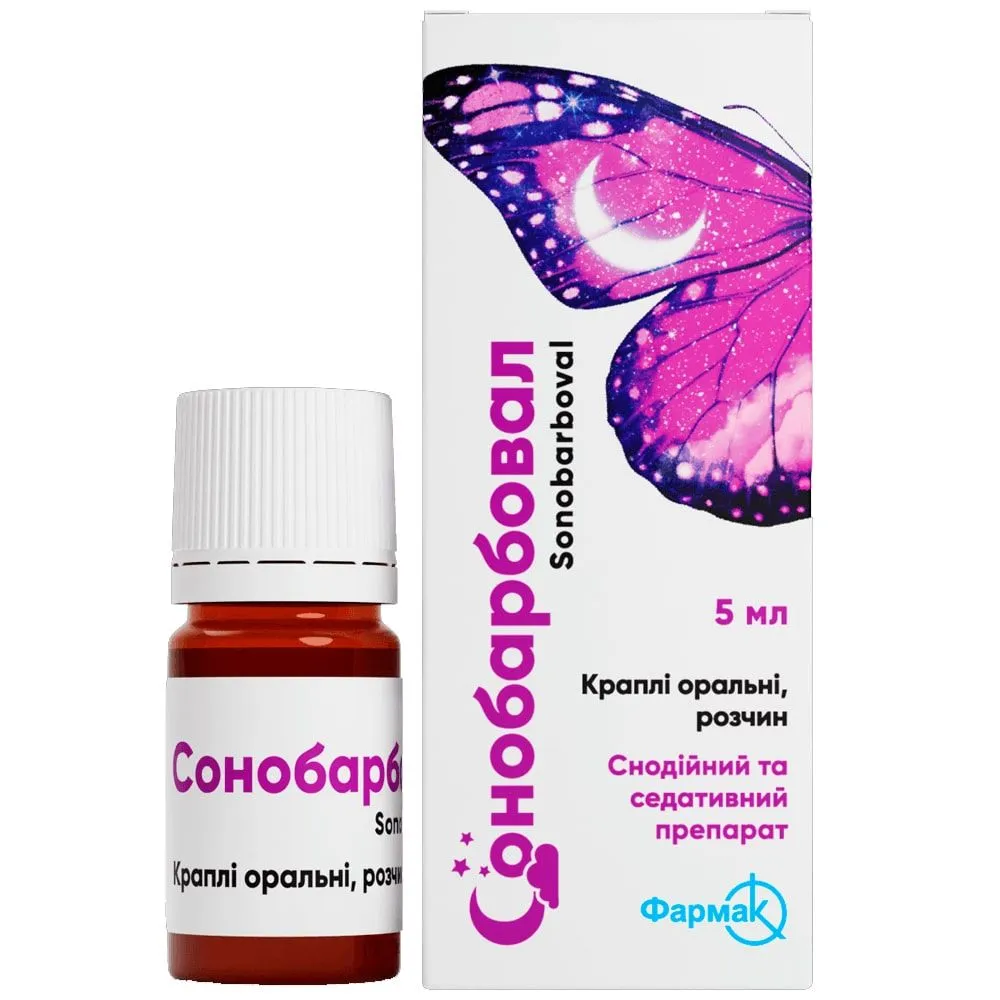
Table of Contents
INSTRUCTIONS FOR MEDICAL USE OF THE MEDICINAL PRODUCT SONOBARBOVAL (SONOBARBOVAL)
Composition:
Active substances: ethyl ether of α-bromoisovaleric acid, menthol solution in menthyl ether of isovaleric acid (validol), doxylamine hydrogen succinate;
1 ml of solution contains: ethyl ether of α-bromoisovaleric acid, calculated as 100 % substance – 18 mg; menthol solution in menthyl ether of isovaleric acid (validol) – 80 mg; doxylamine hydrogen succinate, calculated as 100 % dry substance – 16.875 mg;
Excipients: sodium acetate trihydrate; ethanol 96 %; purified water.
Pharmaceutical form. Oral drops, solution.
Main physicochemical properties: clear, colorless liquid with a characteristic aromatic odor.
Pharmacotherapeutic group. Hypnotics and sedatives. Combinations of hypnotics and sedatives, excluding barbiturates. ATC code N05CX.
Pharmacological Properties
Pharmacodynamics
A combination drug whose therapeutic efficacy is determined by the pharmacological properties of its constituent components.
Ethyl ether of α-bromoisovaleric acid is a brominated derivative of α-isovaleric acid — one of the active components of valerian roots and rhizomes. The inclusion of bromide ions into the molecule of ethyl ether of isovaleric acid enhances sedative and hypnotic effects. It possesses the characteristic sedative, tranquilizing, and spasmolytic properties typical of valerian preparations. The mechanism of valerian's sedative action is associated with its regulatory influence on the functions of the cerebral cortex: potentiation of GABAergic neurotransmission through facilitation of GABA (gamma-aminobutyric acid) release and inhibition of its reuptake, as well as agonistic effects on adenosine and benzodiazepine receptors.
Doxylamine is a hypnotic, sedative, and antihistamine medicinal agent. It is an H1-histamine receptor blocker of the ethanolamine group, exhibiting pronounced sedative and M-cholinolytic effects. It facilitates falling asleep, increases sleep duration, and improves sleep quality without altering the physiological phases of sleep.
Menthol solution in isovaleric acid menthyl ester (validol) exerts a moderate sedative and reflex coronary vasodilating effect, largely mediated by reflex reactions due to stimulation of sensory nerve endings. Stimulation of mucosal receptors is accompanied by increased production and release of enkephalins, endorphins, and other endogenous physiologically active compounds.
Pharmacokinetics
Pharmacokinetic studies of ethyl ether of α-bromoisovaleric acid and menthol solution in isovaleric acid menthyl ester (validol) have not been conducted.
Doxylamine is well absorbed from the gastrointestinal tract after oral administration. Maximum plasma concentration (Cmax) is reached on average within 1 hour (tmax) after oral intake. It penetrates histohematic barriers (including the blood-brain barrier) and distributes throughout tissues and organs. It is partially metabolized in the liver via demethylation and N-acetylation, forming inactive metabolites.
The elimination half-life (t1/2) averages 10 hours. It is excreted by the kidneys (60% in unchanged form) and partially via the intestine.
Clinical characteristics
Indications
Treatment of insomnia associated with somatoform autonomic dysfunction; neurotic disorders accompanied by insomnia.
Contraindications
- Hypersensitivity to the components of the medicinal product and to antihistamines;
- acute angle-closure glaucoma, either in the patient's medical history or in family history;
- urethroprostatic disorders with risk of urinary retention;
- pronounced arterial hypotension;
- acute myocardial infarction.
Interaction with other medicinal products and other forms of interaction
Concomitant use with central nervous system stimulants (caffeine, cordiamine, etc.) results in mutual weakening of the effects of each drug.
Combinations to be avoided
Alcohol enhances the sedative effect of most H1-antihistamines. Consumption of alcoholic beverages and medicinal products containing ethanol should be avoided.
Avoid concomitant use with sodium oxybate due to enhanced central nervous system depression. Reduced reaction speed may be dangerous when driving or operating machinery.
Combinations requiring caution
Concomitant use of the medicinal product with drugs that depress the central nervous system [other sedative medicinal products; morphine derivatives; analgesics; antitussives; drugs used in substitution therapy; neuroleptics; barbiturates; tranquilizers; sedative antidepressants (amitriptyline, doxepin, mianserin, mirtazapine, trimipramine); benzodiazepines; other hypnotics; anxiolytics other than benzodiazepines (e.g., meprobamate); sedative antihistamines; non-benzodiazepine sedative drugs; others: baclofen, thalidomide] and with opioid analgesics or centrally acting antihypertensive agents enhances central nervous system depression. Reduced reaction speed may be dangerous when driving or operating machinery.
Anticholinesterase agents: risk of reduced efficacy of anticholinesterase drugs due to antagonism at muscarinic acetylcholine receptors.
Atropine and atropine-like drugs (tricyclic antidepressants, most atropine-like H1-antihistamines, anticholinergic antiparkinsonian agents, atropine-like spasmolytics, disopyramide, phenothiazines, clozapine) increase the risk of developing anticholinergic side effects such as urinary retention, constipation, and dry mouth.
Morphine-like substances/opioids: significant risk of intestinal akinesia with severe constipation.
Special precautions for use
If insomnia persists for more than 5 days during treatment, the patient should consult a physician regarding further use of the drug.
If daytime drowsiness occurs, the dose should be reduced.
Like all hypnotic or sedative agents, doxylamine succinate may exacerbate nocturnal apnea syndrome (increasing the frequency and duration of breathing pauses).
The risk of abuse and development of drug dependence is low. However, cases of abuse and subsequent development of drug dependence have been reported. Patients should be carefully monitored for signs of abuse or dependence. Treatment duration should not exceed 5 days. The drug is not recommended for patients with a history of disorders related to psychoactive substance use.
Doxylamine succinate remains in the body for approximately 5 half-lives (see section "Pharmacokinetics").
Caution should be exercised during use, especially in elderly patients, due to the risk of cognitive disorders, sedative effects, slowed reaction time, and/or vertigo/dizziness, for example, during nighttime awakening. Additionally, sudden movements should be avoided in the morning after evening administration of the drug, as slowed reaction and dizziness may occur.
The elimination half-life may be significantly prolonged in elderly patients and in patients with renal or hepatic impairment.
With repeated administration, the drug or its metabolites reach steady-state levels much later and at higher concentrations. The efficacy and safety of the drug can only be assessed after steady-state levels have been achieved.
Dosage adjustment may be required (see section "Dosage and administration").
In elderly patients and in those with renal or hepatic impairment, increased plasma concentrations and reduced plasma clearance are observed. It is recommended to reduce the dose of the drug.
This medicinal product contains 73% v/v ethanol (alcohol), i.e., 0.262 g per dose, equivalent to 5.4 ml of beer or 2.3 ml of wine per dose (calculated for a dose of 12 drops). It is harmful for patients suffering from alcoholism. Caution is advised when administering to patients with liver or kidney disease, or epilepsy. Alcohol consumption should be avoided during treatment.
Use during pregnancy or breastfeeding
The drug is not prescribed during pregnancy due to the presence of bromide in its composition. Use during lactation is not recommended.
Ability to affect reaction speed when driving or operating machinery
The drug affects psychomotor reaction speed; therefore, patients should refrain from driving vehicles or operating machinery.
During the 24 hours following drug administration, possible development of daytime drowsiness, reduced attention span, and accommodation disturbances should be taken into account.
When sleep duration is insufficient, the risk of impaired reaction speed is increased (see section "Dosage and administration").
Dosage and Administration
The dosage of the medicinal product is determined individually, depending on the severity and duration of insomnia.
The medication should be taken once orally with a small amount of water (½ glass) 15–30 minutes before bedtime.
The recommended single dose for adult patients is 12 drops, equivalent to 7.5 mg of doxylamine. If necessary, the dose may be increased. The maximum single dose is 24 drops (15 mg of doxylamine). 1 mL of solution corresponds to 27 drops.
Elderly patients and patients with renal or hepatic impairment should receive a reduced dose.
To prevent daytime drowsiness, it is important to ensure that at least 7 hours of sleep are possible after taking the medication.
The recommended duration of treatment is 2–5 days.
Children
The medicinal product is not recommended for use in children (under 18 years of age), as safety and efficacy have not been established.
Overdose
Overdose is possible only with intake of very high doses of the medication.
Symptoms: headache, nausea, cardiac disturbances, hypersensitivity reactions to the components of the medication, excitation, delirium, hallucinations, impaired motor coordination, athetosis, tremor, mydriasis, accommodation paralysis, dry mouth, facial and neck flushing, hyperthermia, sinus tachycardia, central nervous system depression, ataxia, decreased arterial pressure, seizures, coma.
Acute doxylamine poisoning may sometimes cause rhabdomyolysis, which can lead to acute kidney injury.
Symptoms of chronic bromine intoxication (bromism) include: depression, apathy, rhinitis, conjunctivitis, hemorrhagic diathesis, and impaired motor coordination. Symptomatic therapy should be administered to manage these symptoms.
Prolonged use of the medication may occasionally be associated with increased psychodynamic activity.
Treatment: symptomatic.
Adverse reactions
The medicinal product is generally well tolerated by patients. The following adverse reactions are possible:
From the nervous system: daytime drowsiness (in case this effect occurs, the dose should be reduced), dizziness, sluggishness, decreased concentration of attention, hallucinations, confusion, exacerbation of nocturnal apnea syndrome, increased psychodynamic activity;
From the gastrointestinal system: abdominal discomfort, nausea, dry mouth, constipation;
From the cardiovascular system: tachycardia, arterial hypotension;
From the immune system: allergic reactions, including skin rash, itching, urticaria, angioneurotic edema;
From the eye organs: accommodation disorders, blurred vision, visual defects, impaired visual acuity, lacrimation;
From the urinary system: urinary retention.
Prolonged use of preparations containing bromine may lead to bromine poisoning, which is characterized by the following symptoms: central nervous system depression, depressive mood, confusion, ataxia, apathy, conjunctivitis, rhinitis, lacrimation, acne, purpura.
Cases of abuse and development of drug dependence have been reported.
H1-antihistamine medicinal products cause sedative effect, cognitive disorders, and psychomotor impairment.
Reporting suspected adverse reactions
Reporting of adverse reactions after medicinal product registration is of great importance. It enables continuous monitoring of the benefit-risk balance of the medicinal product. Medical and pharmaceutical professionals, as well as patients or their legal representatives, should report all suspected adverse reactions and lack of efficacy of the medicinal product via the Automated Pharmacovigilance Information System at the following link: https://aisf.dec.gov.ua.
Shelf life. 3 years.
Do not use the medicinal product after the expiry date stated on the packaging.
Storage conditions. Store in the original packaging at a temperature not exceeding 25 °C.
Keep out of reach of children.
Packaging. 5 ml in a bottle. 1 bottle per pack.
Supply category. Over-the-counter.
Manufacturer. JSC "Farmak".
Manufacturer's address and place of business activity
74, Kyrylivska Street, Kyiv, 04080, Ukraine