Solu-cortef
Ukraine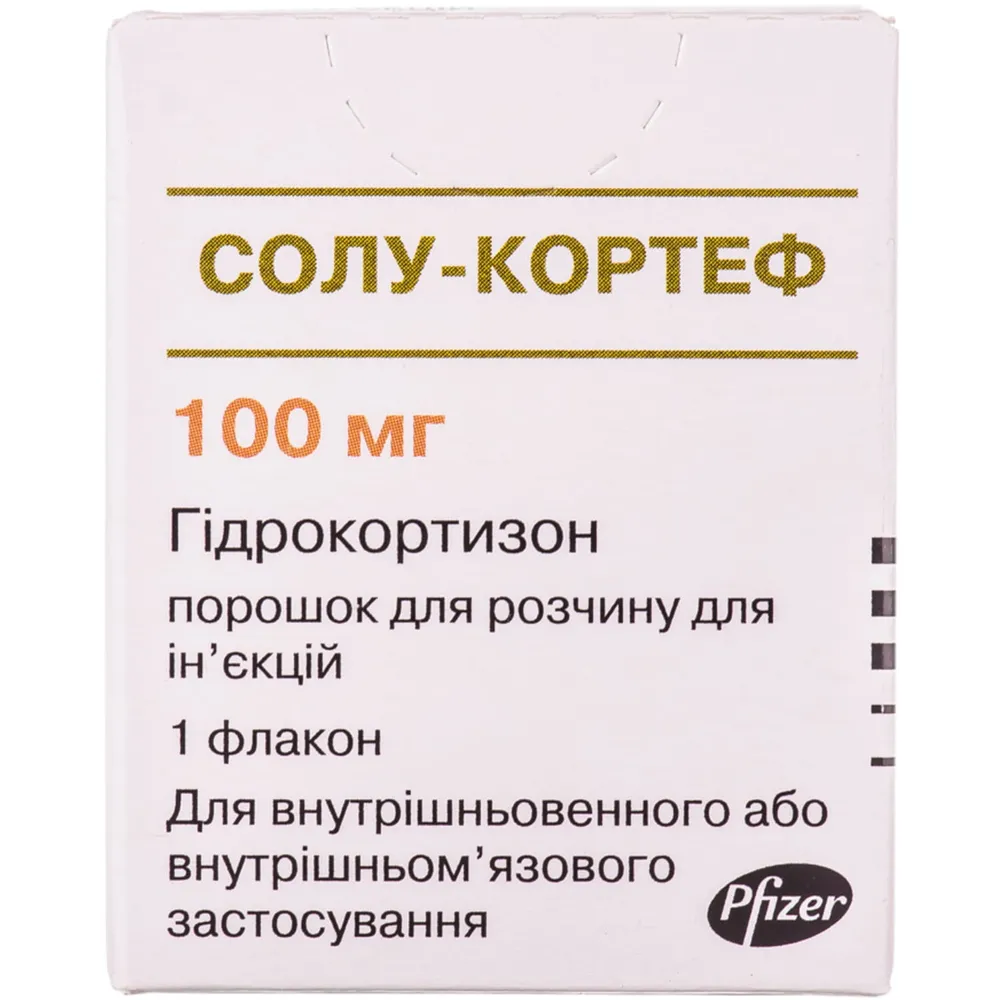
Table of Contents
INSTRUCTIONS FOR MEDICAL USE OF THE MEDICINAL PRODUCT Solu-Cortef (Solu-Cortef®)
Composition:
Active substance: hydrocortisone;
1 vial contains 100 mg of hydrocortisone in the form of hydrocortisone sodium succinate;
Excipients: sodium dihydrogen phosphate monohydrate; anhydrous sodium hydrogen phosphate.
Pharmaceutical form. Powder for solution for injection.
Main physicochemical properties: lyophilisate of white to almost white color.
Pharmacotherapeutic group. Simple corticosteroid preparations for systemic use. Glucocorticoids. Hydrocortisone. ATC code H02AB09.
Pharmacological Properties
Pharmacodynamics
Glucocorticoids of natural and synthetic origin are steroid hormones produced by the adrenal cortex.
Natural glucocorticoids (hydrocortisone and cortisone), which also possess salt-retaining properties, are used as replacement therapy in adrenal insufficiency. Their synthetic analogs are used in disorders affecting multiple organ systems, primarily due to their anti-inflammatory effects.
Hydrocortisone sodium succinate has the same metabolic and anti-inflammatory activity as hydrocortisone. When equimolar amounts are administered parenterally, both compounds demonstrate identical biological activity. The ester hydrocortisone sodium succinate has high water solubility, allowing rapid intravenous administration of high doses of hydrocortisone in a small volume of solvent. This is particularly important when a high plasma concentration of hydrocortisone needs to be achieved quickly. After intravenous administration of hydrocortisone sodium succinate, a noticeable effect appears within one hour and persists for a variable period.
Glucocorticoids exert significant and diverse metabolic effects. In addition, these agents modulate the body's immune response to various stimuli.
After intravenous administration, the relative activity index of methylprednisolone sodium succinate versus hydrocortisone sodium succinate, based on reduction in eosinophil count, is five to one. This ratio corresponds to the relative activity index of oral methylprednisolone and hydrocortisone.
Pharmacokinetics
After single intravenous administration of hydrocortisone sodium succinate in doses exceeding 20 mg to healthy males, nonlinear pharmacokinetics of hydrocortisone were observed. The corresponding pharmacokinetic parameters of hydrocortisone are presented in the table below.
Mean pharmacokinetic parameters of hydrocortisone after intravenous administration of single doses
| Parameters |
Healthy adult males (age 21–29 years, N = 6) |
|||
| Dose (mg) |
5 |
10 |
20 |
40 |
| Total concentration (AUC0-∞; ng·h/mL) |
410 (80) |
790 (100) |
1480 (310) |
2290 (260) |
| Clearance (mL/min/m²) |
209 (42) |
218 (23) |
239 (44) |
294 (34) |
| Volume of distribution at steady state (Vdss; L) |
20.7 (7.3) |
20.8 (4.3) |
26.0 (4.1) |
37.5 (5.8) |
| Elimination half-life (t1/2; h) |
1.3 (0.3) |
1.3 (0.2) |
1.7 (0.2) |
1.9 (0.1) |
AUC0-∞ – area under the curve from zero to infinity.
Absorption
At 10 minutes after intravenous administration to healthy males of single doses of sodium hydrocortisone succinate 5, 10, 20 and 40 mg, maximum drug concentrations were 312, 573, 1095 and 1854 ng/mL, respectively. Sodium hydrocortisone succinate is rapidly absorbed after intramuscular administration.
Distribution
Hydrocortisone is widely distributed in body tissues, crosses the blood-brain barrier, and penetrates into breast milk. The volume of distribution of hydrocortisone at steady state is approximately 20 to 40 L (see table). Hydrocortisone binds to the glycoprotein transcortin (corticosteroid-binding globulin) and to albumin. In humans, plasma protein binding of hydrocortisone is approximately 92%.
Biotransformation
Hydrocortisone (i.e., cortisol) is metabolized by 11β-HSD2 to cortisone and further to dihydrocortisone and tetrahydrocortisone. Other metabolites include dihydrocortisol, 5α-dihydrocortisol, tetrahydrocortisol, and 5α-tetrahydrocortisol. Cortisone can be converted back to cortisol by 11β-hydroxysteroid dehydrogenase type 1 (11β-HSD1).
Hydrocortisone is also metabolized by CYP3A4 to 6β-hydroxycortisol (6β-OHF), with 6β-OHF accounting for 2.8–31.7% of total metabolites formed. This parameter demonstrates high inter-individual variability in biotransformation.
Elimination
The administered dose is almost completely eliminated within 12 hours. When sodium hydrocortisone succinate is administered via intramuscular injection, elimination of the drug is similar to that following intravenous injection.
Clinical characteristics.
Indications.
Conditions where a rapid and intense corticosteroid effect is desired.
Endocrine disorders:
- primary or secondary adrenal insufficiency;
- acute adrenal insufficiency;
- use in the preoperative period, in cases of severe trauma or illness in patients with adrenal insufficiency or when adrenal reserve function is questionable;
- shock unresponsive to conventional therapy when adrenal insufficiency is present or suspected;
- congenital adrenal hyperplasia;
- nonsuppurative thyroiditis;
- hypercalcemia associated with malignant neoplasms.
Non-endocrine disorders
Rheumatic diseases, as adjunctive therapy for short-term use (to help the patient through an acute episode or exacerbation) in the following conditions:
- acute and subacute bursitis;
- acute gouty arthritis;
- acute nonspecific tenosynovitis;
- ankylosing spondylitis;
- epicondylitis;
- post-traumatic osteoarthritis;
- psoriatic arthritis;
- rheumatoid arthritis, including juvenile rheumatoid arthritis (some cases may require maintenance therapy with low doses of the drug);
- synovitis associated with osteoarthritis.
Collagenoses, during exacerbations or as supportive therapy in individual cases of the following diseases:
- acute rheumatic carditis;
- systemic dermatomyositis (polymyositis);
- systemic lupus erythematosus.
Dermatological diseases:
- bullous pemphigoid;
- exfoliative dermatitis;
- mycosis fungoides;
- pemphigus;
- severe forms of erythema multiforme (Stevens–Johnson syndrome);
- severe forms of psoriasis;
- severe forms of seborrheic dermatitis.
Allergic conditions: control of severe allergic conditions or allergic conditions causing loss of work capacity and unresponsive to conventional treatment, in the following diseases:
- acute non-infectious laryngeal edema;
- atopic dermatitis;
- bronchial asthma;
- contact dermatitis;
- hypersensitivity reactions to drugs;
- serum sickness;
- urticarial transfusion reactions.
Ophthalmological diseases: severe acute and chronic allergic and inflammatory processes affecting the eyes, such as:
- allergic conjunctivitis;
- allergic marginal corneal ulcers;
- anterior segment inflammation;
- chorioretinitis;
- diffuse posterior uveitis and choroiditis;
- ocular forms of herpes zoster;
- iritis and iridocyclitis;
- keratitis;
- optic neuritis;
- sympathetic ophthalmia.
Gastrointestinal diseases: to help the patient through a critical period in the following conditions:
- ulcerative colitis (systemic therapy);
- regional enteritis (systemic therapy).
Respiratory diseases:
- aspiration pneumonia;
- berylliosis;
- fulminant or disseminated pulmonary tuberculosis, when used concomitantly with appropriate antituberculous chemotherapy;
- Loeffler’s syndrome unresponsive to other treatments;
- sarcoidosis.
Hematological diseases:
- acquired (autoimmune) hemolytic anemia;
- congenital (erythroid) hypoplastic anemia;
- erythroblastopenia (erythrocytic anemia);
- idiopathic thrombocytopenic purpura in adults (intravenous administration only; intramuscular administration is contraindicated);
- secondary thrombocytopenia in adults.
Neoplastic diseases, palliative treatment of the following conditions:
- acute leukemia in children;
- leukemias and lymphomas in adults.
Conditions associated with edema: to induce diuresis or remission of proteinuria in nephrotic syndrome, without uremia, of idiopathic type or due to systemic lupus erythematosus.
Emergency conditions:
- shock due to adrenal insufficiency, or shock unresponsive to conventional therapy when adrenal insufficiency is possible;
- acute allergic conditions (status asthmaticus, anaphylactic reactions, insect stings, etc.) that do not resolve after epinephrine administration.
Others:
- trichinosis involving nerves or myocardium;
- tuberculous meningitis with subarachnoid block or threat of block, used concomitantly with appropriate antituberculous chemotherapy.
Contraindications.
Sodium hydrocortisone succinate is contraindicated:
- in patients with hypersensitivity to the active substance or any of the excipients listed in the section "Composition";
- in patients with systemic fungal infections;
- for intrathecal administration, unless included as part of certain chemotherapy regimens;
- for epidural administration;
- in patients receiving immunosuppressive doses of corticosteroids, the use of live or attenuated vaccines is contraindicated (see section "Special instructions").
In adult idiopathic thrombocytopenic purpura, intramuscular administration is contraindicated. For this indication, only intravenous administration is permitted.
Interaction with other medicinal products and other forms of interaction.
Hydrocortisone is metabolized by 11β-hydroxysteroid dehydrogenase type 2 (11β-HSD2) and cytochrome P450 3A4 (CYP3A4) enzyme. The CYP3A4 enzyme catalyzes 6β-hydroxylation of steroids, which is an important phase I metabolism step for endogenous and synthetic corticosteroids. Many other compounds are also substrates of CYP3A4. Some of them may affect glucocorticoid metabolism by inducing (activating) or inhibiting the CYP3A4 enzyme.
INHIBITORS OF CYP3A4. Medicinal products that may reduce hepatic clearance and increase plasma concentration of hydrocortisone. When using a CYP3A4 inhibitor (e.g., ketoconazole, itraconazole, clarithromycin, or grapefruit juice), including HIV protease inhibitors (e.g., ritonavir) and drugs that enhance hydrocortisone pharmacokinetics (e.g., medicinal products containing cobicistat used in HIV treatment), it may be necessary to reduce the hydrocortisone dose to avoid steroid toxicity.
INDUCERS OF CYP3A4. Medicinal products that may increase hepatic clearance and reduce plasma concentration of hydrocortisone. When using a CYP3A4 inducer (e.g., rifampicin, carbamazepine, phenobarbital, or phenytoin), it may be necessary to increase the hydrocortisone dose to achieve the desired therapeutic response.
SUBSTRATES OF CYP3A4. In the presence of another CYP3A4 substrate, hepatic clearance of hydrocortisone may change, requiring appropriate dose adjustment. Adverse effects that occur with individual use of each drug may occur more frequently when used concomitantly.
EFFECTS NOT MEDIATED BY CYP3A4. Other drug interactions and effects observed during hydrocortisone use are described below, listing and describing the most common and/or clinically significant drug interactions or effects observed during hydrocortisone administration.
Antibacterial agents: isoniazid – CYP3A4 INHIBITOR.
Antibiotics, antituberculosis agents: rifampicin – CYP3A4 INDUCER.
Oral anticoagulants: – the effect of corticosteroids on oral anticoagulants may vary. Reports exist of both enhanced and reduced anticoagulant effects when used concomitantly with corticosteroids. Coagulation parameters must be monitored to maintain the desired anticoagulant effect.
Anticonvulsants: carbamazepine – CYP3A4 INDUCER (and SUBSTRATE); phenobarbital, phenytoin – CYP3A4 INDUCERS.
Anticholinergic agents: neuromuscular blocking agents – corticosteroids may affect the action of anticholinergic agents.
- Cases of acute myopathy have been observed during concomitant use of high-dose corticosteroids and anticholinergic agents such as neuromuscular blocking agents (see section "Special instructions. Effect on the musculoskeletal system").
- In patients receiving corticosteroids, antagonism of neuromuscular blockade by pancuronium and vecuronium has been reported. This interaction may occur with all competitive neuromuscular blocking agents.
Anticholinesterase agents: – steroids may reduce the effect of anticholinesterase agents in myasthenia gravis.
Antidiabetic agents: – corticosteroids may increase blood glucose concentration, thus requiring dose adjustment of antidiabetic agents.
Antiemetics: aprepitant, fosaprepitant – CYP3A4 INHIBITORS (and SUBSTRATES).
Antifungal agents: itraconazole, ketoconazole – CYP3A4 INHIBITORS (and SUBSTRATES).
Antiviral agents: HIV protease inhibitors – CYP3A4 INHIBITORS (and SUBSTRATES).
- HIV protease inhibitors, such as indinavir and ritonavir, may increase plasma concentrations of corticosteroids.
- Corticosteroids may induce metabolism of HIV protease inhibitors, leading to reduced plasma concentrations of the inhibitors.
Aromatase inhibitors: aminoglutethimide – adrenal suppression caused by aminoglutethimide may exacerbate endocrine disturbances arising from prolonged glucocorticoid therapy.
Calcium channel blockers: diltiazem – CYP3A4 INHIBITOR (and SUBSTRATE).
Estrogens (including estrogen-containing oral contraceptives) – CYP3A4 INHIBITOR (and SUBSTRATE). Estrogens may potentiate the effects of hydrocortisone by increasing transcortin concentration, thereby reducing the amount of hydrocortisone available for metabolism. Dose adjustment of hydrocortisone may be required when estrogens are added to or withdrawn from a stable dosing regimen.
Grapefruit juice – CYP3A4 INHIBITOR.
Immunosuppressants: cyclosporine – CYP3A4 INHIBITOR (and SUBSTRATE). Concomitant use of cyclosporine and corticosteroids may increase the activity of both drugs. Seizures have been observed in patients receiving this combination.
Immunosuppressants: cyclophosphamide, tacrolimus – CYP3A4 SUBSTRATES.
Macrolide antibiotics: clarithromycin, erythromycin – CYP3A4 INHIBITORS (and SUBSTRATES).
Macrolide antibiotics: troleandomycin – CYP3A4 INHIBITOR.
Nonsteroidal anti-inflammatory drugs (NSAIDs): high-dose acetylsalicylic acid.
- Concomitant use of NSAIDs and corticosteroids may increase the frequency of gastrointestinal bleeding and ulcers.
- Corticosteroids may increase the clearance of high-dose aspirin, leading to low serum salicylate levels.
Discontinuation of corticosteroids may lead to increased serum salicylate levels, potentially increasing the risk of salicylate intoxication.
Potassium-sparing diuretics: in patients receiving corticosteroids concomitantly with potassium-wasting diuretics, careful monitoring for possible development of hypokalemia is required. Additionally, an increased risk of hypokalemia exists with combined use of corticosteroids and amphotericin B, xanthines, or β2-adrenergic receptor antagonists. Cases of myocardial enlargement and congestive heart failure have been reported with concomitant use of amphotericin B and hydrocortisone.
Special precautions for use.
Immunosuppressive effect/Increased susceptibility to infections
Corticosteroids may increase susceptibility to infections, mask some signs of infection, and new infections may occur during corticosteroid therapy. In addition, during corticosteroid use, the body's resistance to infections and its ability to localize infection may be reduced.
Development of infections in any body site caused by various pathogens (including viral, bacterial, fungal, protozoal infections, and helminth-induced infections) may be associated with both monotherapy with corticosteroids and their use in combination with other immunosuppressive agents affecting cellular immunity, humoral immunity, or neutrophil function. Such infections may be mild but can also be severe and sometimes fatal. The frequency of infectious complications increases with higher corticosteroid doses.
Patients receiving immunosuppressants are more susceptible to infectious diseases compared to healthy individuals. For example, varicella or measles may have a more severe course or even fatal outcome in children or adults who have not previously had these diseases and are taking corticosteroids.
Live or attenuated vaccines should not be administered to patients receiving immunosuppressive doses of corticosteroids. Inactivated or killed vaccines may be administered to such patients, although the response to these vaccines may be reduced. Immunization procedures are indicated for patients receiving corticosteroids at non-immunosuppressive doses.
Hydrocortisone may be used for the treatment of active disseminated or fulminant tuberculosis only in combination with appropriate antituberculosis therapy. If corticosteroids are indicated for patients with latent tuberculosis or tuberculin reactivity, careful monitoring is required, as the disease may reactivate. During prolonged corticosteroid therapy, such patients should receive chemoprophylaxis.
Kaposi's sarcoma has been reported in patients receiving corticosteroids. Discontinuation of therapy may lead to clinical remission.
The role of corticosteroids in the treatment of septic shock remains controversial, as early studies showed both positive and negative outcomes. Later, it was established that adjunctive corticosteroid therapy demonstrates beneficial effects in patients with septic shock and adrenal insufficiency. However, corticosteroids are not recommended as standard therapy for septic shock. Systematic reviews of short-term high-dose corticosteroid therapy have not provided evidence supporting its benefit. However, meta-analyses and data reviews indicate that longer treatment courses (5–11 days) with low-dose corticosteroids may reduce mortality, particularly in patients with septic shock requiring vasopressor therapy.
Concomitant use of CYP3A inhibitors, including drugs containing cobicistat, is expected to increase the risk of systemic adverse effects. It is recommended to avoid using such drug combinations, except when the benefit of treatment outweighs the increased risk of systemic corticosteroid side effects. Patients receiving such therapy should be monitored for signs of systemic corticosteroid adverse effects (see section "Interaction with other medicinal products and other forms of interaction").
Effect on the immune system
There is a risk of allergic reactions. Rare cases of skin reactions and anaphylactic/anaphylactoid reactions (e.g., bronchospasm) have been reported in patients receiving parenteral corticosteroid therapy. Therefore, appropriate precautionary measures should be taken before drug administration, especially in patients with a history of allergic reactions to any medicinal products.
Effect on the endocrine system
Patients receiving corticosteroid therapy who experience unusual stress should be treated with fast-acting corticosteroids in increased doses before, during, and after such stressful situations.
Prolonged use of pharmacological doses of corticosteroids may lead to suppression of the hypothalamic-pituitary-adrenal system (secondary adrenal insufficiency). The severity and duration of drug-induced adrenal insufficiency vary among patients and depend on the dose, frequency, timing, and duration of glucocorticoid therapy.
Additionally, abrupt discontinuation of glucocorticoids may cause acute adrenal insufficiency with a fatal outcome.
Manifestations of secondary drug-induced adrenal insufficiency can be minimized by gradually reducing the dose. This type of relative insufficiency may persist for many months after completion of treatment. If a stressful situation occurs during this period, hormonal therapy should be reinstated.
Also, after abrupt withdrawal of glucocorticoids, a steroid withdrawal syndrome may develop, which is most likely unrelated to adrenal insufficiency. Symptoms include anorexia, nausea, vomiting, lethargy, headache, fever, joint pain, skin desquamation, myalgia, weight loss, and/or arterial hypotension. These effects are believed to result from a sudden change in glucocorticoid concentration and are not related to low corticosteroid levels.
Glucocorticoids should not be used in patients with Cushing's disease, as these drugs may cause or exacerbate Cushing's syndrome.
Enhanced corticosteroid effects are observed in patients with hypothyroidism.
Effect on metabolism and nutrition
Corticosteroids, including hydrocortisone, may increase blood glucose levels, promote the development of diabetes mellitus, or worsen the course of pre-existing diabetes in patients receiving long-term corticosteroid therapy.
Effect on the psyche
Psychiatric disorders ranging from euphoria, insomnia, mood swings, and personality changes to overt psychosis may occur during corticosteroid use. Existing emotional instability or predisposition to psychosis may also worsen during corticosteroid therapy.
Potentially severe psychiatric adverse reactions may occur with systemic steroid use. Symptoms usually appear within days or weeks after starting treatment. Most reactions resolve after dose reduction or drug discontinuation, although specific therapy may be required. Psychiatric disorders of unknown frequency have been observed after discontinuation of corticosteroids. Patients and caregivers should be advised to seek medical help if they notice the development of concerning psychiatric symptoms, especially depression or suicidal thoughts. Patients and caregivers should be warned about psychiatric disturbances that may occur during or immediately after gradual dose reduction/withdrawal of systemic steroids.
Effect on the nervous system
Corticosteroids should be used cautiously in patients with epileptic disorders.
Corticosteroids should be used cautiously in patients with myasthenia gravis.
Severe adverse events have been observed with intrathecal/epidural administration of the drug (see section "Adverse reactions").
When administered by contraindicated routes (intrathecal/epidural), adverse reactions such as arachnoiditis, gastrointestinal dysfunction/bladder dysfunction, headache, meningitis, paraparesis/paraplegia, seizures, and sensory disturbances have been reported. The frequency of these events is unknown.
Epidural lipomatosis has been reported in patients taking corticosteroids, usually after prolonged high-dose use.
Effect on the eyes
Corticosteroids should be used cautiously in patients with ocular herpes simplex due to the risk of corneal perforation.
Prolonged corticosteroid use may lead to the development of posterior subcapsular cataract and nuclear cataract (particularly in children), exophthalmos, or increased intraocular pressure, which may result in glaucoma with potential damage to the optic nerves. In patients receiving glucocorticoids, secondary fungal and viral eye infections may also progress more rapidly.
During systemic or local use of corticosteroids, reports of visual disturbances may occur. If a patient experiences symptoms such as blurred vision or other visual disturbances, the patient should be referred for ophthalmologic examination to determine possible causes, including cataract, glaucoma, or rare conditions such as central serous chorioretinopathy (CSCR), which has been reported after systemic or local corticosteroid use. CSCR may lead to retinal detachment (see section "Adverse reactions").
Effect on the heart
Undesirable effects of glucocorticoids on the cardiovascular system, such as dyslipidemia and arterial hypertension, may increase the risk of additional cardiovascular effects in patients with pre-existing cardiovascular risk factors when high-dose and long-term glucocorticoid therapy is used. Therefore, corticosteroids should be used judiciously in such patients, with attention to risk modification and, if necessary, additional cardiac monitoring. Using lower doses may reduce the frequency of corticosteroid therapy complications.
Systemic corticosteroids should be used cautiously in congestive heart failure and only if absolutely necessary.
Effect on the blood vessels
Thrombosis, including venous thromboembolism, has been reported during corticosteroid therapy. Corticosteroids should be used cautiously in patients with thromboembolic disorders or predisposition to them.
Corticosteroids should be used cautiously in patients with arterial hypertension.
Effect on the gastrointestinal tract
High doses of corticosteroids may cause acute pancreatitis.
There is no evidence of a direct link between corticosteroid use and peptic ulcer development during treatment. However, glucocorticoid therapy may mask symptoms of peptic ulcers, resulting in perforation and hemorrhage occurring without significant pain. Glucocorticoid therapy may mask peritonitis or other symptoms of gastrointestinal disorders such as perforations, obstructions, or pancreatitis. The risk of gastrointestinal ulceration increases when used concomitantly with NSAIDs.
Corticosteroids should be used cautiously in patients with ulcerative colitis if there is a risk of perforation, abscess, or other pyogenic infection, as well as in diverticulitis, recent intestinal anastomoses, or active or latent peptic ulcers.
Effect on the hepatobiliary system
Disorders of the hepatobiliary system, which may be reversible after discontinuation of therapy, have been reported. Therefore, appropriate monitoring of patients is necessary.
Enhanced hydrocortisone effects may occur in patients with liver disease due to significantly impaired metabolism and elimination of the drug.
Effect on the musculoskeletal system
Acute myopathy has been reported during high-dose corticosteroid use, most commonly observed in patients with neuromuscular transmission disorders (e.g., myasthenia gravis) or in patients receiving concomitant therapy with anticholinergic agents, such as neuromuscular blockers (e.g., pancuronium). This acute myopathy is generalized, may affect ocular and respiratory muscles, and may lead to quadriparesis. Elevated creatine kinase levels are possible. Clinical improvement or complete recovery after discontinuation of corticosteroid therapy may occur within weeks to years.
Osteoporosis usually occurs with prolonged use of high-dose glucocorticoids. Corticosteroids should be used cautiously in patients with osteoporosis.
Disorders of the kidneys and urinary tract
Corticosteroids should be used cautiously in patients with renal insufficiency.
Laboratory findings
Hydrocortisone may cause increased blood pressure, sodium and water retention, and increased potassium excretion. Patients may require dietary sodium restriction and potassium supplementation. All corticosteroids increase calcium excretion.
Injuries, poisonings, and procedure complications
Systemic corticosteroids are not indicated and therefore should not be used for the treatment of traumatic brain injury. A multicenter study showed increased mortality at 2 weeks and 6 months after injury in patients treated with methylprednisolone sodium succinate compared to those receiving placebo. A causal relationship with methylprednisolone sodium succinate treatment has not been established.
Other
Since complications of glucocorticoid therapy depend on dose and duration of treatment, the benefit-risk ratio should be evaluated in each individual case, determining the drug dose, treatment duration, and whether daily or intermittent therapy should be used.
The lowest effective corticosteroid dose that controls the patient's condition should be selected. If dose reduction is possible, it should be done gradually.
Aspirin and nonsteroidal anti-inflammatory drugs should be used cautiously in combination with corticosteroids (see section "Interaction with other medicinal products and other forms of interaction").
Tumor lysis syndrome (TLS) has been reported in post-marketing studies in patients with malignant neoplasms, including hematological malignancies and solid tumors, after administration of systemic corticosteroids alone or in combination with other chemotherapeutic agents. Patients at high risk of TLS, such as those with tumors exhibiting high proliferation rates, high tumor burden, and high sensitivity to cytotoxic agents, should be closely monitored, and appropriate preventive measures taken.
This medicinal product contains less than 1 mmol of sodium (23 mg per injection vial), i.e., it is practically sodium-free. This medicinal product contains 0.4 mmol (9.37 mg) of sodium per injection vial. This should be considered when using doses exceeding 200 mg in patients on a sodium-restricted diet.
Use during pregnancy or breastfeeding.
Use during pregnancy
Animal studies have shown that administration of high doses of corticosteroids, including hydrocortisone, to pregnant females may cause fetal developmental abnormalities. However, corticosteroids do not cause congenital fetal anomalies when used in pregnant women. Since adequate studies on the effects of corticosteroids on human reproductive function have not been conducted, this medicinal product should be used during pregnancy only after careful evaluation of the benefit-risk ratio for the mother and fetus.
Some corticosteroids readily cross the placenta. In some retrospective studies, an increased frequency of low birth weight in infants born to mothers receiving corticosteroids has been observed. In humans, the risk of low birth weight depends on the drug dose. This risk can be minimized by using low doses of corticosteroids. Infants whose mothers received high-dose corticosteroids should be carefully monitored for signs of adrenal insufficiency. Corticosteroids have no known effect on labor or delivery.
Cataracts have been observed in infants whose mothers received prolonged corticosteroid therapy during pregnancy.
Use during breastfeeding
Corticosteroids are excreted in breast milk. Since adequate studies on the effects of glucocorticoids on human reproductive function have not been conducted, this medicinal product should be used during breastfeeding only after careful evaluation of the benefit-risk ratio for mother and child.
Reproductive function
Animal studies have shown a negative effect of corticosteroids on reproductive function.
Ability to influence reaction speed when driving or operating machinery.
The effect of corticosteroids on the ability to drive or operate machinery has not been evaluated. Undesirable effects such as syncope, vertigo, and seizures may occur after corticosteroid treatment. If such effects occur, patients should not drive or operate machinery.
Administration and Dosage
Route of administration: for intravenous (bolus, infusion) or intramuscular use.
For intravenous or intramuscular injection: Prepare a solution by adding 2 mL of bacteriostatic water for injection or 0.9% sodium chloride solution for injection to the vial (following aseptic technique). Further dilution is not required for intravenous or intramuscular injection.
For intravenous infusion: The solution prepared as described above may, if necessary, be further diluted with 5% dextrose solution (or isotonic sodium chloride solution, or 5% dextrose in isotonic sodium chloride solution) provided the patient does not have sodium retention. A solution containing 100 mg of hydrocortisone sodium succinate may be diluted to a volume of 100–1000 mL. From a microbiological standpoint, the prepared infusion solution should be used immediately.
The infusion solution must be prepared under aseptic conditions.
From a microbiological perspective, the solution should be used immediately unless the method of opening/reconstitution/dilution excludes the risk of microbial contamination. If the solution is not used immediately, the responsibility for storage conditions and duration lies with the user.
When a small fluid volume is desired, hydrocortisone sodium succinate equivalent to 100–3000 mg of hydrocortisone may be diluted to 50 mL with the above-mentioned diluents. The resulting solution is stable for at least 4 hours.
Parenteral preparations should be visually inspected for discoloration or particulate matter in the prepared solution. If discoloration or particulate matter is observed in the prepared solution, the product should be discarded.
For initial emergency treatment, intravenous administration is preferred. After initial emergency treatment, longer-acting injectable or oral corticosteroids are recommended. Treatment should begin with intravenous administration over a period of 30 seconds to 10 minutes (e.g., initial dose of hydrocortisone sodium succinate equivalent to 100 mg of hydrocortisone, or up to 500 mg or more).
Dosage requirements may vary; dosing should be individualized depending on the disease being treated, its severity, and the patient's response throughout the treatment period. In each individual case, the decision must always be based on the risk/benefit ratio.
The lowest possible corticosteroid dose that controls the patient's condition should be used for the shortest duration necessary. The appropriate maintenance dose should be determined by gradually reducing the initial dose in small increments at appropriate intervals until the lowest dose that maintains an adequate clinical response is reached.
High-dose corticosteroid therapy should be continued until the patient's condition stabilizes—usually no longer than 48–72 hours.
Although adverse effects are highly associated with high-dose use, peptic ulceration may occasionally occur even during short-term corticosteroid therapy. Therefore, prophylactic therapy with antacids may be recommended.
If high-dose hydrocortisone therapy is required for longer than 48–72 hours, hypernatremia may develop. Under such conditions, it is advisable to replace hydrocortisone sodium succinate with a corticosteroid containing methylprednisolone sodium succinate, which causes minimal or no sodium retention.
If discontinuation of the drug is required after prolonged therapy, it should be withdrawn gradually, not abruptly (see section "Special precautions").
The initial dose of hydrocortisone equivalent to hydrocortisone sodium succinate ranges from 100 mg to 500 mg (or more), depending on the severity of the condition.
This dose may be repeated at intervals of 2, 4, or 6 hours, depending on the patient's response to treatment and clinical status.
Patients who have undergone corticosteroid therapy and experienced significant stress should be closely monitored for signs and symptoms of adrenal insufficiency.
Corticosteroid therapy is used as an adjunctive treatment and does not replace conventional therapy.
In patients with liver disease, the effect may be enhanced (see section "Special precautions"), and dose reduction may be considered.
Children
The dose of the drug may be reduced in children, including infants; however, dosing should be based primarily on the severity of the condition and the patient's response to treatment rather than age or body weight. The daily dose should be no less than 25 mg.
During prolonged corticosteroid use, careful monitoring of a child's growth and development is required. Growth may accelerate after discontinuation of systemic corticosteroid therapy.
In children receiving prolonged, multiple daily doses of glucocorticoids, growth retardation may occur. Such treatment regimens should be limited to the most serious indications.
Children receiving prolonged corticosteroid therapy are at particular risk of increased intracranial pressure.
High-dose corticosteroids may induce pancreatitis in children.
Cases of hypertrophic cardiomyopathy have been reported after hydrocortisone administration in premature infants; therefore, appropriate diagnosis and monitoring of cardiac function and structure are recommended.
Overdose
There is no clinical syndrome of hydrocortisone sodium succinate overdose.
Hydrocortisone is removed by dialysis.
Adverse Reactions
The adverse reactions listed below are typical for all systemic corticosteroids. Their inclusion in this list does not necessarily imply that the specific reaction was observed during the use of this particular medicinal product.
Information on the frequency of adverse reactions is not available.
Infections and infestations: Opportunistic infections, infectious diseases.
Benign, malignant and unspecified neoplasms (including cysts and polyps): Development of Kaposi's sarcoma has been reported in patients receiving corticosteroids.
Blood and lymphatic system disorders: Leukocytosis.
Immune system disorders: Hypersensitivity reactions, anaphylactic reactions, anaphylactoid reactions.
Endocrine disorders: Cushingoid state, hypothalamic-pituitary-adrenal (HPA) axis suppression, steroid withdrawal syndrome.
Metabolism and nutrition disorders: Metabolic acidosis, sodium retention, fluid retention, hypokalemic alkalosis, dyslipidemia, impaired glucose tolerance, increased insulin requirement (or increased need for oral hypoglycemic agents in patients with diabetes mellitus), worsening of pre-existing diabetes mellitus, lipomatosis, increased appetite (which may lead to weight gain).
Psychiatric disorders: Affective disorders (including depression, euphoria, affective lability, drug dependence, suicidal ideation), psychotic disorders (including mania, delusions, hallucinations, and schizophrenia), psychiatric disorders, personality changes, anxiety, mood swings; pathological behavior, insomnia, irritability.
Nervous system disorders: Epidural lipomatosis, increased intracranial pressure, benign intracranial hypertension, seizures, amnesia, cognitive disorders, dizziness, headache.
Eye disorders: Central serous chorioretinopathy; cataract, glaucoma, exophthalmos, blurred vision (see section "Special precautions").
Ear and labyrinth disorders: Vertigo.
Cardiac disorders: Congestive heart failure (in patients predisposed to this condition), hypertrophic cardiomyopathy in premature infants.
Vascular disorders: Thrombosis, arterial hypertension and hypotension.
Respiratory, thoracic and mediastinal disorders: Pulmonary embolism, humping syndrome, hiccups.
Gastrointestinal disorders: Peptic ulcer (with possible perforation and hemorrhage), intestinal perforation, gastrointestinal bleeding, pancreatitis, esophagitis, abdominal distension, abdominal pain, diarrhea, dyspepsia, nausea.
Skin and subcutaneous tissue disorders: Angioneurotic edema, hirsutism, petechiae, ecchymosis, skin atrophy, erythema, hyperhidrosis, striae, rash, pruritus, urticaria, acne, hypopigmentation of the skin.
Musculoskeletal and connective tissue disorders: Muscle weakness, myalgia, myopathy, muscle atrophy, osteoporosis, osteonecrosis, pathological fractures, neuropathic arthropathy, arthralgia; growth retardation.
Reproductive system and breast disorders: Irregular menstrual cycle.
General disorders and administration site conditions: Impaired healing, peripheral edema, fatigue, asthenia, injection site reactions.
Investigations: Increased intraocular pressure, decreased carbohydrate tolerance, elevated blood glucose, decreased serum potassium, increased urinary calcium, elevated alanine aminotransferase, aspartate aminotransferase, alkaline phosphatase, elevated blood urea, suppression of skin test reactions*, weight gain.
*Not included in the Medical Dictionary for Regulatory Activities (MedDRA) preferred terms.
Reporting of suspected adverse reactions
Reporting suspected adverse reactions after medicine authorization is important. It allows continuous monitoring of the benefit-risk balance of the medicine. Medical and pharmaceutical professionals, as well as patients or their legal representatives, should report all suspected adverse reactions and lack of efficacy through the Automated Pharmacovigilance Information System at the following link: https://aisf.dec.gov.ua.
Shelf life.
5 years.
Storage conditions.
Store at temperatures not exceeding 25 °C. Keep out of the reach of children.
Incompatibilities.
This medicinal product must not be mixed with other medicinal products except those specified in the section "Instructions for use and dosage".
Packaging.
Powder in a vial. 1 vial in a cardboard box or 25 vials without secondary packaging on a transportation tray.
Prescription status. Prescription only.
Manufacturer.
Pfizer Manufacturing Belgium NV.
Manufacturer's address and place of business.
Rijksweg 12, Puurs-Sint-Amands, 2870, Belgium.