Sofgen
Ukraine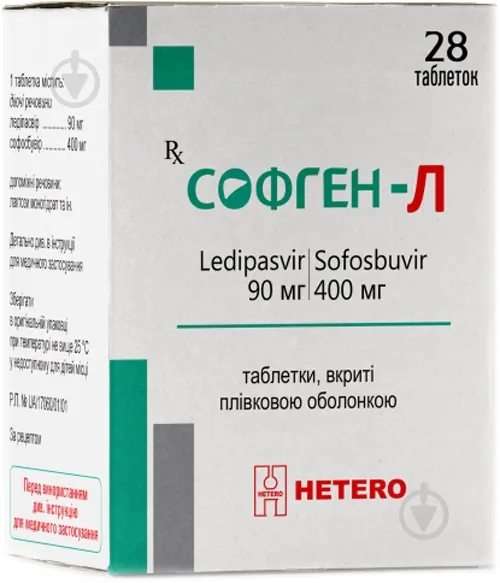
Instructions for Use
INSTRUCTION FOR MEDICAL USE OF THE MEDICINAL PRODUCT SOFGEN (SOFGEN)
Composition:
Active substance: sofosbuvir;
One film-coated tablet contains 400 mg of sofosbuvir;
Excipients: mannitol, microcrystalline cellulose, sodium croscarmellose, colloidal anhydrous silicon dioxide, magnesium stearate, Opadry II orange 85F530007 ((polyvinyl alcohol (E1203), macrogol (E1521), talc (E553b), titanium dioxide (E171), yellow iron oxide FCF (E110))).
Pharmaceutical form. Film-coated tablets.
Main physicochemical properties: film-coated tablets, orange-colored, oval-shaped, beveled-edged, biconvex, with the inscription "H" on one side and "S14" on the other.
Pharmacotherapeutic group.
Direct-acting antiviral agents. ATC code J05A P08.
Pharmacological Properties
Pharmacodynamics
Mechanism of Action
Sofosbuvir is a pan-genotypic inhibitor of the hepatitis C virus (HCV) NS5B RNA-dependent RNA polymerase, an enzyme essential for viral replication. Sofosbuvir is a nucleotide prodrug that undergoes intracellular metabolism to form the pharmacologically active uridine analog triphosphate (GS-461203), which can be incorporated into the HCV RNA by the NS5B polymerase and acts as a chain terminator. In biochemical assays, GS-461203 inhibited recombinant NS5B polymerase activity of HCV genotypes 1b, 2a, 3a, and 4a with 50% inhibitory concentration (IC50) values ranging from 0.7 to 2.6 µM. GS-461203 (the active metabolite of sofosbuvir) is not an inhibitor of human DNA- or RNA-polymerases, nor is it an inhibitor of mitochondrial RNA polymerase.
Antiviral Activity
In HCV replication assays, the effective concentration (EC50) values of sofosbuvir against full-length replicons of genotypes 1a, 1b, 2a, 3a, and 4a were 0.04, 0.11, 0.05, 0.05, and 0.04 µM, respectively. EC50 values of sofosbuvir against hybrid replicons encoding NS5B from genotypes 2b, 5a, or 6a were between 0.014 and 0.015 µM. The mean ± SD EC50 of sofosbuvir against hybrid replicons encoding NS5B sequences from clinical isolates were 0.068 ± 0.024 µM for genotype 1a (n = 67), 0.11 ± 0.029 µM for genotype 1b (n = 29), 0.035 ± 0.018 µM for genotype 2 (n = 15), and 0.085 ± 0.034 µM for genotype 3a (n = 106). In these assays, the in vitro antiviral activity of sofosbuvir against less common genotypes 4, 5, and 6 was similar to that observed against genotypes 1, 2, and 3.
The presence of 40% human serum did not affect the antiviral activity of sofosbuvir against HCV.
Resistance
Cell Culture. HCV replicons with reduced susceptibility to sofosbuvir were selected in cell culture for multiple genotypes, including 1b, 2a, 2b, 3a, 4a, 5a, and 6a. Reduced susceptibility to sofosbuvir was associated with the primary NS5B substitution S282T across all tested replicon genotypes. Site-directed mutagenesis of the S282T substitution in replicons of 8 genotypes resulted in a 2- to 18-fold reduction in susceptibility to sofosbuvir and a 89–99% reduction in viral replication capacity compared to the corresponding wild-type. In biochemical assays, recombinant NS5B polymerase from genotypes 1b, 2a, 3a, and 4a expressing the S282T substitution showed reduced susceptibility to GS-461203 compared to the corresponding wild-type enzymes.
Clinical Studies. In a pooled analysis of 991 patients receiving sofosbuvir in Phase 3 trials, 226 patients were selected for resistance analysis due to virologic failure or early discontinuation and had HCV RNA > 1000 IU/mL. Baseline NS5B sequences were available for 225 of these 226 patients, and deep sequencing (analysis cutoff 1%) was performed on samples from 221 patients. The resistance-associated S282T substitution was not detected in any of these patients by deep sequencing or population sequencing. The S282T substitution in NS5B was detected in one patient who received sofosbuvir monotherapy in a Phase 2 trial. This patient had < 1% HCV S282T at baseline and S282T (> 99%) at week 4 of treatment, resulting in a 13.5-fold shift in EC50 for sofosbuvir and reduced viral replication capacity. The S282T substitution reverted to wild-type within 8 weeks and was no longer detectable by deep sequencing at week 12 post-treatment.
Two NS5B substitutions (L159F and V321A) were detected in post-treatment samples from three patients infected with various HCV genotypes in Phase 3 clinical trials. No change in phenotypic susceptibility to sofosbuvir or ribavirin was observed in isolates with these substitutions. Additionally, the S282R and L320 substitutions were detected during treatment by deep sequencing in a patient undergoing transplantation with partial response to therapy. The clinical significance of these findings is unknown.
Impact of Baseline HCV Polymorphisms on Treatment Outcome
Baseline NS5B sequences were obtained from 1292 patients in Phase 3 trials by population sequencing; the S282T substitution was not detected in any patient with available baseline sequence. In the analysis assessing the impact of baseline polymorphisms on treatment outcome, no statistically significant association was found between the presence of baseline HCV NS5B variants and treatment outcome.
Cross-resistance
HCV replicons expressing the S282T substitution associated with resistance to sofosbuvir remained fully susceptible to other classes of HCV antiviral agents. Sofosbuvir retained activity against NS5B substitutions L159F and L320F associated with resistance to other nucleoside inhibitors. Sofosbuvir was fully active against substitutions associated with resistance to other direct-acting antiviral agents (DAAs) with different mechanisms of action, such as non-nucleoside NS5B inhibitors, NS3 protease inhibitors, and NS5A inhibitors.
Pharmacokinetics
Sofosbuvir is a nucleotide prodrug that undergoes extensive metabolism. The active metabolite is formed in hepatocytes and is not detectable in plasma. The major circulating metabolite (>90%), GS-331007, is inactive. It is formed through sequential and parallel metabolic pathways leading to the formation of the active metabolite.
Absorption
The pharmacokinetic properties of sofosbuvir and the major circulating metabolite GS-331007 were evaluated in healthy adult volunteers and patients with chronic hepatitis C. After oral administration, sofosbuvir was rapidly absorbed, with peak plasma concentrations observed at approximately 0.5–2 hours post-dose, independent of dose level. Peak plasma concentrations of GS-331007 were observed 2–4 hours after dosing. Based on population pharmacokinetic analysis in patients with HCV genotypes 1–6 (n = 986), steady-state AUC0–24 values for sofosbuvir and GS-331007 were 1010 ng•h/mL and 7200 ng•h/mL, respectively. In healthy volunteers (n = 284), sofosbuvir AUC0–24 was 57% higher and GS-331007 AUC0–24 was 39% lower compared to HCV-infected patients.
Effect of Food. Under fed conditions, administration of a single dose of sofosbuvir with a high-fat meal slowed the rate of absorption of sofosbuvir. The extent of absorption of sofosbuvir was increased by approximately 1.8-fold, with minimal effect on maximum concentration (Cmax). The exposure of GS-331007 was not altered by a high-fat meal.
Distribution
Sofosbuvir is not a substrate for hepatic uptake drug transporters, organic anion transporting polypeptides (OATP) 1B1 or 1B3, or organic cation transporters (OCT) 1. Regarding active tubular secretion, GS-331007 is not a substrate for renal transporters, including organic anion transporters (OAT) 1 or 3, OCT2, MRP2, P-gp, BCRP, or MATE1. Sofosbuvir and GS-331007 are not inhibitors of drug transporters P-glycoprotein (P-gp), BCRP, MRP2, BSEP, OATP1B1, OATP1B3, or OCT1. GS-331007 is not an inhibitor of OAT1, OCT2, or MATE1.
Sofosbuvir is approximately 85% bound to human plasma proteins (ex vivo data), and this binding is independent of drug concentration outside the range of 1–20 µg/mL. Protein binding of GS-331007 to human plasma proteins is minimal. After administration of a single 400 mg dose of [14C]-sofosbuvir to healthy volunteers, the blood-to-plasma ratio of 14C radioactivity was approximately 0.7.
Metabolism
Sofosbuvir is extensively metabolized in the liver to form the pharmacologically active nucleoside analog triphosphate GS-461203. The metabolic activation pathway involves sequential hydrolysis of the carboxylic acid ester moiety catalyzed by human cathepsin A (CatA) or carboxylesterase 1 (CES1), followed by cleavage of the phosphoramidate moiety by histidine triad nucleotide-binding protein 1 (HINT1), and subsequent phosphorylation via the pyrimidine nucleotide biosynthesis pathway. Dephosphorylation leads to the formation of the nucleoside metabolite GS-331007, which cannot be efficiently rephosphorylated and lacks anti-HCV activity in vitro. Sofosbuvir and GS-331007 are not substrates or inhibitors of the enzymes UGT1A1 or CYP3A4, CYP1A2, CYP2B6, CYP2C8, CYP2C9, CYP2C19, and CYP2D6.
After a single oral 400 mg dose of [14C]-sofosbuvir, sofosbuvir and GS-331007 accounted for approximately 4% and > 90% of systemic exposure to drug-related materials (sum of the area under the concentration-time curve (AUC) of sofosbuvir and its metabolites, corrected for molecular weight), respectively.
Elimination
After administration of a single 400 mg oral dose of [14C]-sofosbuvir, mean recovery of the dose exceeded 92%, consisting of approximately 80%, 14%, and 2.5% excreted in urine, feces, and expired air, respectively. Most of the sofosbuvir dose was excreted in urine as GS-331007 (78%), while 3.5% was excreted as unchanged sofosbuvir. These data indicate that renal clearance is the primary route of elimination for GS-331007, with a significant portion actively secreted. The mean half-life of sofosbuvir and GS-331007 was 0.4 and 27 hours, respectively.
Linearity/Non-linearity
Dose proportionality of sofosbuvir and its major metabolite GS-331007 was evaluated in healthy volunteers on a controlled diet. AUC values of sofosbuvir and GS-331007 were nearly proportional to dose over the range of 200 to 400 mg.
Age, Gender, and Race
No clinically significant pharmacokinetic differences based on gender or race were observed for sofosbuvir and GS-331007.
The pharmacokinetics of sofosbuvir and GS-331007 in pediatric patients have not been studied.
Population pharmacokinetic analysis in HCV-infected patients showed that within the analyzed age range (19–75 years), age had no clinical effect on exposure to sofosbuvir and GS-331007. A total of 65 patients aged 65 years and older were included in clinical trials. The response rate observed in patients aged 65 years and older was similar to that in younger patients.
Renal Impairment
The pharmacokinetics of sofosbuvir were studied in non-HCV-infected patients with mild (estimated glomerular filtration rate (eGFR) ≥ 50 to < 80 mL/min/1.73 m²), moderate (eGFR ≥ 30 to < 50 mL/min/1.73 m²), severe renal impairment (eGFR < 30 mL/min/1.73 m²), and patients with end-stage renal disease requiring hemodialysis, after a single 400 mg dose of sofosbuvir. Compared to patients with normal renal function (eGFR > 80 mL/min/1.73 m²), AUC0–∞ of sofosbuvir was 61%, 107%, and 171% higher in mild, moderate, and severe renal impairment, respectively, and AUC0–∞ of GS-331007 was 55%, 88%, and 451% higher, respectively. In patients with end-stage renal disease compared to those with normal renal function, AUC0–∞ of sofosbuvir was 28% higher when the dose was administered 1 hour before hemodialysis and 60% higher when administered 1 hour after hemodialysis. AUC0–∞ of GS-331007 in patients with end-stage renal disease could not be reliably determined. Although data suggest exposure to GS-331007 is at least 10- and 20-fold higher in end-stage renal disease when sofosbuvir is administered 1 hour before and 1 hour after hemodialysis, respectively.
Hemodialysis effectively removes the major circulating metabolite GS-331007 (53% clearance coefficient). Approximately 18% of the administered dose was removed during a 4-hour hemodialysis session. Dose adjustment is not required for patients with mild or moderate renal impairment. The safety of sofosbuvir has not been evaluated in patients with severe renal impairment or end-stage renal disease (see section "Special Warnings and Precautions for Use").
Hepatic Impairment
The pharmacokinetics of sofosbuvir were studied after 7 days of 400 mg daily dosing in HCV-infected patients with moderate and severe hepatic impairment (Child-Pugh class B and C). Compared to patients with normal hepatic function, AUC0–24 of sofosbuvir was 126% and 143% higher in moderate and severe hepatic impairment, respectively, and AUC0–24 of GS-331007 was 18% and 9% higher, respectively. Population pharmacokinetic analysis in HCV-infected patients showed that cirrhosis had no clinically relevant effect on exposure to sofosbuvir and GS-331007. Dose adjustment is not recommended for patients with mild, moderate, or severe hepatic impairment (see section "Dosage and Administration").
Pharmacokinetic/Pharmacodynamic Relationship
Efficacy as measured by rapid virologic response was found to be related to exposure to sofosbuvir and GS-331007. However, neither of these parameters was identified as a general surrogate marker of efficacy (SVR12) at the therapeutic dose of 400 mg.
Non-clinical Safety Data
In repeat-dose toxicity studies in rats and dogs, high doses of the diastereomeric (1:1) mixture caused adverse effects on the liver (in dogs) and heart (in rats) and gastrointestinal reactions (in dogs). The effects of sofosbuvir were not observed in rodent studies, likely due to high esterase activity, although the exposure to the major metabolite GS-331007 associated with adverse effects was 29-fold (rat) and 123-fold (dog) higher than the clinical exposure from 400 mg sofosbuvir. No liver or heart toxicity was observed in chronic toxicity studies at exposures 9-fold (rat) and 27-fold (dog) higher than the clinical exposure.
Sofosbuvir was not genotoxic in in vitro or in vivo tests, including bacterial mutagenicity, chromosomal aberration using human peripheral blood lymphocytes, and in vivo mouse micronucleus assays.
Carcinogenicity studies in mice and rats showed no carcinogenic potential of sofosbuvir at doses up to 600 mg/kg/day in mice and 750 mg/kg/day in rats. Exposure to GS-331007 in these studies was up to 30-fold (mice) and 15-fold (rats) higher than the clinical exposure from 400 mg sofosbuvir.
Sofosbuvir did not affect embryo-fetal viability or fertility in rats and was not teratogenic in rats and rabbits in developmental studies. No adverse effects on behavior, reproduction, or offspring development were observed in rats. In rabbit studies, sofosbuvir exposure was 9-fold higher than the expected clinical exposure. In rat studies, sofosbuvir exposure could not be determined, but exposure based on the major human metabolite ranged from 8- to 28-fold higher than the clinical exposure from 400 mg sofosbuvir.
Sofosbuvir-related substances crossed the placenta in pregnant rats and were excreted into the milk of lactating rats.
Clinical characteristics.
Indications.
Sofgen is indicated in combination with other medicinal products for the treatment of chronic hepatitis C (CHC) in adults (see sections "Special precautions" and "Dosage and administration").
For specific activity against hepatitis C virus (HCV) genotypes, see section "Special precautions".
Contraindications.
Hypersensitivity to the active substance or to any of the excipients of the medicinal product.
Use with strong P-glycoprotein (P-gp) inducers.
Medicinal products that are strong intestinal P-gp inducers (carbamazepine, phenobarbital, phenytoin, rifampicin, and St. John's wort [Hypericum perforatum]) — concomitant use significantly reduces sofosbuvir plasma concentrations and may lead to loss of efficacy of Sofgen (see section "Interaction with other medicinal products and other forms of interaction").
Interaction with other medicinal products and other forms of interaction.
Sofosbuvir is a nucleotide prodrug. After administration, sofosbuvir is rapidly absorbed and undergoes extensive first-pass metabolism in the liver and stomach. Intracellular hydrolysis of the prodrug, catalyzed in part by enzymes such as carboxylesterase 1, and subsequent phosphorylation catalyzed by nucleotide kinases, lead to the formation of the pharmacologically active triphosphate, a uridine nucleoside analog. The major inactive circulating metabolite, GS-331007, which accounts for more than 90% of systemic exposure to drug-derived materials, is formed through sequential and parallel pathways prior to the formation of the active metabolite. The parent sofosbuvir accounts for approximately 4% of systemic exposure to drug-derived materials (see section "Pharmacokinetics"). In pharmacological clinical studies, both sofosbuvir and GS-331007 were monitored for pharmacokinetic analysis.
Sofosbuvir is a substrate of the drug transporter P-glycoprotein (P-gp) and breast cancer resistance protein (BCRP), whereas GS-331007 is not a substrate of these transporters.
Medicinal products that are strong intestinal P-gp inducers (carbamazepine, phenobarbital, phenytoin, rifampicin, and St. John's wort) may significantly reduce sofosbuvir plasma concentrations, leading to reduced therapeutic effect of Sofgen; therefore, their concomitant use with Sofgen is contraindicated (see section "Contraindications"). Medicinal products that are moderate intestinal P-gp inducers (e.g., modafinil, oxcarbazepine, and rifapentine) may reduce sofosbuvir plasma concentrations, resulting in reduced therapeutic efficacy of Sofgen. Concomitant use of such medicinal products with Sofgen is not recommended (see section "Special precautions").
Concomitant use of Sofgen with medicinal products that are inhibitors of P-gp and/or BCRP may increase sofosbuvir plasma concentrations without increasing GS-331007 plasma concentrations; therefore, Sofgen may be used with P-gp and/or BCRP inhibitors. Sofosbuvir and GS-331007 are not inhibitors of P-gp or BCRP; therefore, enhanced effects of drugs that are substrates of these transporters are not expected.
The intracellular metabolic activation pathway of sofosbuvir involves minimal covalent binding and efficient hydrolysis, as well as nucleotide phosphorylation pathways unlikely to be affected by concomitant medicinal products (see section "Pharmacokinetics").
Patients treated with vitamin K antagonists
Since liver function may change during treatment with Sofgen, careful monitoring of international normalized ratio (INR) is recommended.
Effect of DAA therapy on medicinal products metabolized in the liver
Changes in liver function during DAA therapy related to HCV clearance may affect the pharmacokinetics of drugs metabolized in the liver (e.g., immunosuppressants such as calcineurin inhibitors).
Other forms of interaction
Information on interactions between sofosbuvir and potentially co-administered medicinal products is summarized in Table 1 (where the 90% geometric mean confidence interval (CI), calculated by the least squares method (GLSM), was within "↔", increased "↑", or decreased "↓" within predefined equivalence limits). This table is not comprehensive.
Table 1
Interaction of sofosbuvir with other medicinal products
| Medicinal product by therapeutic indication |
Effect on drug levels. |
Recommendations for co-administration with Sofogen |
| STIMULANTS |
||
| Modafinil |
Interaction not studied. Expected: ↓ sofosbuvir ↔ GS-331007 (P-gp induction) |
Co-administration of Sofogen with modafinil is expected to decrease sofosbuvir concentrations, resulting in reduced therapeutic effect of Sofogen. This combination is not recommended. |
| ANTIARRHYTHMIC AGENTS |
||
| Amiodarone |
Effect on concentrations of amiodarone and sofosbuvir is unknown. |
Concomitant use of amiodarone with a regimen containing sofosbuvir may result in serious symptomatic bradycardia. Use only if no alternative treatment options are available. If this medicinal product is administered with Sofogen, close monitoring is recommended (see sections "Special warnings and precautions for use" and "Adverse reactions"). |
| ANTICOAGULANTS |
||
| Vitamin K antagonists |
Interaction not studied |
Close monitoring of INR is recommended with all vitamin K antagonists due to changes in liver function during treatment with Sofogen. |
| ANTICONVULSANTS |
||
| Phenobarbital Phenytoin |
Interaction not studied. Expected: ↓ sofosbuvir ↔ GS-331007 (P-gp induction) |
Concomitant use of Sofogen with phenobarbital and phenytoin is contraindicated (see section "Contraindications"). |
| Carbamazepine |
Sofosbuvir ↓ Cmax 0.52 (0.43; 0.62) ↓ AUC 0.52 (0.46; 0.59) Cmin (NA) GS-331007 ↔ Cmax 1.04 (0.97; 1.11) ↔ AUC 0.99 (0.94; 1.04) Cmin (NA) (P-gp induction) |
Concomitant use of Sofogen with carbamazepine is contraindicated (see section "Contraindications"). |
| Oxcarbazepine |
Interaction not studied. Expected: ↓ sofosbuvir ↔ GS-331007 (P-gp induction) |
Co-administration of Sofogen with oxcarbazepine is expected to decrease sofosbuvir concentrations, resulting in reduced therapeutic effect of Sofogen. Concomitant use is not recommended (see section "Special warnings and precautions for use"). |
| ANTITUBERCULOSIS AGENTS |
||
| Rifampicinf (single dose of 600 mg) |
Sofosbuvir ↓ Cmax 0.23 (0.19; 0.29) ↓ AUC 0.28 (0.24; 0.32) Cmin (NA) GS-331007 ↔ Cmax 1.23 (1.14; 1.34) ↔ AUC 0.95 (0.88; 1.03) Cmin (NA) (P-gp induction) |
Concomitant use of Sofogen with rifampicin is contraindicated (see section "Contraindications"). |
| Rifabutin |
Sofosbuvir ↓ Cmax 0.64 (0.53, 0.77) ↓ AUC 0.76 (0.63, 0.91) Cmin (NA) GS-331007 ↔ Cmax 1.15 (1.03, 1.27) ↔ AUC 1.03 (0.95, 1.12) Cmin (NA) (P-gp induction) |
No dose adjustment of Sofogen is required when co-administered with rifabutin. |
| Rifapentine |
Interaction not studied. Expected: ↓ sofosbuvir ↔ GS-331007 (P-gp induction) |
Co-administration of Sofogen with rifapentine is expected to decrease sofosbuvir concentrations, resulting in reduced therapeutic effect of Sofogen. This combination is not recommended (see section "Special warnings and precautions for use"). |
| HERBAL SUPPLEMENTS |
||
| St. John’s wort (Hypericum perforatum) |
Interaction not studied. Expected: ↓ sofosbuvir ↔ GS-331007 (P-gp induction) |
Sofogen is contraindicated with St. John’s wort (see section "Contraindications"). |
| ANTIVIRAL AGENTS HCV: HCV PROTEASE INHIBITORS |
||
| Boceprevir (BOC) Telaprevir (TPV) |
Interaction not studied. Expected: ↑ sofosbuvir (TPV) ↔ sofosbuvir (BOC) ↔ GS-331007 (TPV or BOC) |
There is no information on the interaction between sofosbuvir and boceprevir or telaprevir. |
| NARCOTIC ANALGESICS |
||
| Methadonef (methadone maintenance therapy [30–130 mg daily]) |
R-methadone ↔ Cmax 0.99 (0.85; 1.16) ↔ AUC 1.01 (0.85; 1.21) ↔ Cmin 0.94 (0.77; 1.14) S-methadone ↔ Cmax 0.95 (0.79; 1.13) ↔ AUC 0.95 (0.77; 1.17) ↔ Cmin 0.95 (0.74; 1.22) Sofosbuvir ↓ Cmax 0.95c (0.68; 1.33) ↑ AUC 1.30c (1.00; 1.69) Cmin (NA) GS-331007 ↓ Cmax 0.73c (0.65; 0.83) ↔ AUC 1.04c (0.89; 1.22) Cmin (NA) |
No dose adjustment of either sofosbuvir or methadone is required when administered together. |
| IMMUNOSUPPRESSANTS |
||
| Cyclosporinee (single dose of 600 mg) |
Cyclosporine ↔ Cmax 1.06 (0.94; 1.18) ↔ AUC 0.98 (0.85; 1.14) Cmin (NA) Sofosbuvir ↑ Cmax 2.54 (1.87; 3.45) ↑ AUC 4.53 (3.26; 6.30) Cmin (NA) GS-331007 ↓ Cmax 0.60 (0.53; 0.69) ↔ AUC 1.04 (0.90; 1.20) Cmin (NA) |
No dose adjustment of sofosbuvir or cyclosporine is required at initiation of co-administration. Subsequently, careful monitoring and possible dose adjustment of cyclosporine may be needed. |
| Tacrolimuse (single dose of 5 mg) |
Tacrolimus ↓ Cmax 0.73 (0.59; 0.90) ↔ AUC 1.09 (0.84; 1.40) Cmin (NA) Sofosbuvir ↓ Cmax 0.97 (0.65; 1.43) ↑ AUC 1.13 (0.81; 1.57) Cmin (NA) GS-331007 ↔ Cmax 0.97 (0.83; 1.14) ↔ AUC 1.00 (0.87; 1.13) Cmin (NA) |
No dose adjustment of sofosbuvir or tacrolimus is required at initiation of co-administration. Subsequently, careful monitoring and possible dose adjustment of tacrolimus may be needed. |
| ANTIVIRAL AGENTS HIV: REVERSE TRANSCRIPTASE INHIBITORS |
||
| Efavirenzf (600 mg once daily)d |
Efavirenz ↔ Cmax 0.95 (0.85; 1.06) ↔ AUC 0.96 (0.91; 1.03) ↔ Cmin 0.96 (0.93; 0.98) Sofosbuvir ↓ Cmax 0.81 (0.60; 1.10) ↔ AUC 0.94 (0.76; 1.16) Cmin (NA) GS-331007 ↓ Cmax 0.77 (0.70; 0.84) ↔ AUC 0.84 (0.76; 0.92) Cmin (NA) |
No dose adjustment of either sofosbuvir or efavirenz is required when administered together. |
| Emtricitabinef (200 mg once daily)d |
Emtricitabine ↔ Cmax 0.97 (0.88; 1.07) ↔ AUC 0.99 (0.94; 1.05) ↔ Cmin 1.04 (0.98; 1.11) Sofosbuvir ↓ Cmax 0.81 (0.60; 1.10) ↔ AUC 0.94 (0.76; 1.16) Cmin (NA) GS-331007 ↓ Cmax 0.77 (0.70; 0.84) ↔ AUC 0.84 (0.76; 0.92) Cmin (NA) |
No dose adjustment of either sofosbuvir or emtricitabine is required when administered together. |
| Tenofovir disoproxil fumaratef (300 mg once daily)d |
Tenofovir ↑ Cmax 1.25 (1.08; 1.45) ↔ AUC 0.98 (0.91; 1.05) ↔ Cmin 0.99 (0.91; 1.07) Sofosbuvir ↓ Cmax 0.81 (0.60; 1.10) ↔ AUC 0.94 (0.76; 1.16) Cmin (NA) GS-331007 ↓ Cmax 0.77 (0.70; 0.84) ↔ AUC 0.84 (0.76; 0.92) Cmin (NA) |
No dose adjustment of either sofosbuvir or tenofovir disoproxil fumarate is required when administered together. |
| Rilpivirinef (25 mg once daily) |
Rilpivirine ↔ Cmax 1.05 (0.97; 1.15) ↔ AUC 1.06 (1.02; 1.09) ↔ Cmin 0.99 (0.94; 1.04) Sofosbuvir ↑ Cmax 1.21 (0.90; 1.62) ↔ AUC 1.09 (0.94; 1.27) Cmin (NA) GS-331007 ↔ Cmax 1.06 (0.99; 1.14) ↔ AUC 1.01 (0.97; 1.04) Cmin (NA) |
No dose adjustment of either sofosbuvir or rilpivirine is required when administered together. |
| ANTIVIRAL AGENTS HIV: HIV PROTEASE INHIBITORS |
||
| Darunavir boosted with ritonavirf (800/100 mg once daily) |
Darunavir ↔ Cmax 0.97 (0.94; 1.01) ↔ AUC 0.97 (0.94; 1.00) ↔ Cmin 0.86 (0.78; 0.96) Sofosbuvir ↑ Cmax 1.45 (1.10; 1.92) ↑ AUC 1.34 (1.12; 1.59) Cmin (NA) GS-331007 ↔ Cmax 0.97 (0.90; 1.05) ↔ AUC 1.24 (1.18; 1.30) Cmin (NA) |
No dose adjustment of either sofosbuvir or darunavir (boosted with ritonavir) is required when administered together. |
| ANTIVIRAL AGENTS HIV: INTEGRASE INHIBITORS |
||
| Raltegravirf (400 mg twice daily) |
Raltegravir ↓ Cmax 0.57 (0.44; 0.75) ↓ AUC 0.73 (0.59; 0.91) ↔ Cmin 0.95 (0.81; 1.12) Sofosbuvir ↔ Cmax 0.87 (0.71; 1.08) ↔ AUC 0.95 (0.82; 1.09) Cmin (NA) GS-331007 ↔ Cmax 1.09 (0.99; 1.20) ↔ AUC 1.03 (0.97; 1.08) Cmin (NA) |
No dose adjustment of either sofosbuvir or raltegravir is required when administered together. |
| ORAL CONTRACEPTIVES |
||
| Norgestimate/ethinyl estradiol |
Norgestrel ↔ Cmax 1.06 (0.93; 1.22) ↔ AUC 1.05 (0.92; 1.20) Cmin (NA) Norethisterone ↔ Cmax 1.18 (0.99; 1.41) ↔ AUC 1.19 (0.98; 1.44) Cmin (NA) Ethinyl estradiol ↔ Cmax 1.14 (0.96; 1.36) ↔ AUC 1.08 (0.93; 1.25) Cmin (NA) |
No dose adjustment of either sofosbuvir or norgestimate/ethinyl estradiol is required when administered together. |
NA – not applicable.
a Geometric mean ratio (90 % CI) for the pharmacokinetics of the coadministered drug with/without sofosbuvir and geometric mean ratio of sofosbuvir and GS-331007 with/without the coadministered drug. No effect = 1.00.
b All drug interaction studies were conducted in healthy volunteers.
c Comparison is based on historical control.
d Administered as Atripla.
e Bioequivalence limit is 80–125 %.
f Equivalence limit is 70–143 %.
Medicinal products that are strong inducers of intestinal P-gp (e.g., rifampicin, St. John's wort, carbamazepine, and phenytoin) may substantially reduce sofosbuvir plasma concentrations, resulting in reduced therapeutic effect. Therefore, sofosbuvir should not be taken with known P-gp inducers.
Special precautions for use.
Special warnings
The medicinal product Sofgen is not recommended for use as monotherapy; it should be prescribed in combination with other medicinal products for the treatment of hepatitis C virus. If treatment with other medicinal products used in combination with Sofgen is interrupted, Sofgen should also be discontinued (see section "Dosage and administration"). Prior to initiating treatment with Sofgen, review the list of medicinal products that can be co-administered with it.
Severe bradycardia and heart block
Life-threatening cases of severe bradycardia and heart block have been observed when regimens containing sofosbuvir were used in combination with amiodarone. Bradycardia usually occurred within hours or days, although cases with longer time to onset were observed predominantly within 2 weeks after initiation of HCV treatment.
Amiodarone should be used only in patients receiving Sofgen if alternative antiarrhythmic medicinal products are not tolerated or are contraindicated.
If concomitant use of amiodarone is considered necessary, it is recommended that patients undergo cardiac monitoring in a hospital setting for the first 48 hours of co-administration, followed by daily outpatient monitoring or self-monitoring of heart rate for at least the first 2 weeks of treatment.
Due to the long half-life of amiodarone, appropriate monitoring is required for patients who have discontinued amiodarone within the previous several months and are about to start treatment with Sofgen.
All patients receiving Sofgen and another direct-acting antiviral (DAA) in combination with amiodarone and/or other agents that reduce heart rate should also be warned about symptoms of bradycardia and heart block and advised to seek immediate medical attention if such symptoms occur.
HCV/HBV co-infection (hepatitis B virus)
Cases of hepatitis B virus (HBV) reactivation, some of which were fatal, have been reported during or after treatment with direct-acting antiviral agents. Screening for HBV should be performed in all patients prior to starting treatment. Patients co-infected with HBV/HCV are at risk of HBV reactivation and should be monitored and managed according to current clinical guidelines.
Patients with prior treatment experience and HCV genotypes 1, 4, 5, and 6
The efficacy of sofosbuvir in previously treated patients with HCV genotypes 1, 4, 5, and 6 has not been studied. Therefore, the optimal duration of treatment for this population has not been established (see sections "Pharmacological properties" and "Dosage and administration").
Such patients should be closely monitored, and if possible, treatment with sofosbuvir, peginterferon alfa-2, and ribavirin should be extended from 12 to 24 weeks. This is particularly relevant for subgroups of patients with one or more factors historically associated with lower response rates to interferon-based therapy (marked fibrosis/cirrhosis, high baseline viral load, non-Caucasian race, IL28B non-CC genotype).
Treatment of patients with HCV genotype 5 or 6
Data on the use of sofosbuvir in patients with HCV genotypes 5 and 6 are very limited (see section "Pharmacodynamics").
Interferon-free therapy in patients with HCV genotypes 1, 4, 5, and 6
Interferon-free regimens in patients with HCV genotypes 1, 4, 5, and 6 using sofosbuvir have not been studied in phase 3 trials (see section "Pharmacodynamics"). The optimal regimen and duration of treatment have not been established. Such regimens should only be used in patients who are intolerant of or ineligible for interferon therapy and have an urgent need for treatment.
Concomitant use with other direct-acting antivirals against HCV
Sofgen should be used concomitantly with other direct-acting antiviral agents only if, based on available data, the expected benefit outweighs the risk. There are no data supporting the concomitant use of sofosbuvir with telaprevir or boceprevir. Concomitant use is not recommended (also see section "Interaction with other medicinal products and other forms of interaction").
Pregnancy and concomitant use with ribavirin
When Sofgen is used in combination with ribavirin or peginterferon alfa-2/ribavirin, women of childbearing potential and their male partners must use effective contraception during treatment and for the period after treatment as recommended in the ribavirin prescribing information. For additional information, refer to the ribavirin prescribing information.
Use with moderate P-gp inducers
Medicinal products that are moderate inducers of intestinal P-glycoprotein (P-gp) (modafinil, oxcarbazepine, and rifapentine) may reduce plasma concentrations of sofosbuvir, leading to reduced therapeutic effect of Sofgen. Concomitant use of these medicinal products with Sofgen is not recommended (see section "Interaction with other medicinal products and other forms of interaction").
Use in patients with diabetes
After initiating treatment for hepatitis C with direct-acting antiviral agents, patients with diabetes may experience improved glucose control, which could lead to symptomatic hypoglycemia. Patients with diabetes starting DAA therapy should have more frequent monitoring of blood glucose levels, especially during the first 3 months, and antidiabetic therapy should be adjusted as needed. The physician prescribing therapy to a patient with diabetes should be informed about the prescription of Sofgen.
Renal impairment
Safety data in patients with severe renal impairment (eGFR < 30 mL/min/1.73 m²) or chronic kidney disease requiring hemodialysis are limited. Sofgen may be used in these patients without dose adjustment if no other appropriate treatment options are available (see sections "Pharmacokinetics" and "Side effects"). When Sofgen is used in combination with ribavirin or peginterferon alfa-2/ribavirin, also refer to the ribavirin prescribing information for patients with creatinine clearance (CrCl) < 50 mL/min (also see section "Pharmacokinetics").
Pediatric population
Sofgen is not recommended for use in children (under 18 years of age) as safety and efficacy have not been established in this population.
Excipients
Sofgen contains the azo dye Yellow West FCF, which may cause allergic reactions.
The product contains less than 1 mmol (23 mg)/dose of sodium, i.e., essentially sodium-free.
Use during pregnancy or breastfeeding.
Pregnancy
There are no or limited data on the use of sofosbuvir in pregnant women (less than 300 pregnancy cases).
Animal studies have not shown direct or indirect harmful effects with regard to reproductive toxicity. In studies using the highest doses in rats and rabbits, no effect on embryonic development was observed. However, it was not possible to fully assess the level of exposure achieved for sofosbuvir in rats relative to the exposure in humans at the recommended clinical dose.
As a precautionary measure, use of Sofgen during pregnancy is not recommended.
However, if ribavirin is used concomitantly with sofosbuvir, the contraindications for ribavirin use during pregnancy must be strictly followed (also see the ribavirin prescribing information).
Breastfeeding
It is unknown whether sofosbuvir and its metabolites are excreted in human breast milk.
Available pharmacokinetic data in animals indicate excretion of metabolites into milk.
Risk to newborns/infants cannot be excluded. Therefore, Sofgen should not be used in women who are breastfeeding.
Fertility
Data on the effect of sofosbuvir on human fertility are insufficient. Animal studies do not indicate harmful effects on fertility.
Ability to affect the speed of reactions when driving vehicles or operating machinery
Sofosbuvir has a moderate influence on the ability to drive vehicles and operate machinery. Patients should be informed that fatigue, impaired concentration, dizziness, and blurred vision have been reported during treatment with sofosbuvir in combination with peginterferon alfa-2 and ribavirin (see section "Side effects").
Dosage and Administration
Treatment with the medicinal product Sofgen should be initiated under the supervision of a physician experienced in the management of patients with CHC.
Adults
The recommended dose is 400 mg as a tablet taken orally once daily with food.
The medicinal product Sofgen should be used in combination with other medicinal products. This medicinal product is not recommended for use as monotherapy. See also the package leaflet of the medicinal products used in combination with Sofgen. The recommended medicinal products for concomitant use and the duration of combination therapy with Sofgen are presented in Table 2.
Table 2
Recommended concomitant medicinal products and duration of combination therapy with Sofgen
| Patient population* |
Treatment |
Treatment duration |
| Patients with HCV genotype 1, 4, 5 or 6 |
Sofosbuvir + ribavirin + peginterferon alfa |
12 weeksa,b |
| Sofosbuvir + ribavirin For use only in patients for whom peginterferon alfa is not suitable or who are intolerant to it (see section "Contraindications") |
24 weeks |
|
| Patients with HCV genotype 2 |
Sofosbuvir + ribavirin |
12 weeksb |
| Patients with HCV genotype 3 |
Sofosbuvir + ribavirin + peginterferon alfa |
12 weeksb |
| Sofosbuvir + ribavirin |
24 weeks |
|
| Patients with HCV awaiting liver transplantation |
Sofosbuvir + ribavirin |
up to liver transplantationc |
* Including patients with human immunodeficiency virus (HIV) co-infection.
a For patients with HCV genotype 1 infection who have been previously treated, there are no data on the combination of sofosbuvir, ribavirin, and peginterferon alfa-2 (see section "Dosage and Administration").
b Consider extending the duration of treatment from 12 to 24 weeks. This particularly applies to subgroups of patients with one or more factors historically associated with lower response rates to interferon-based therapy (e.g., marked fibrosis/cirrhosis, high baseline viral load, non-Caucasian race, IL28B genotype other than CC, prior non-response to peginterferon alfa-2 and ribavirin therapy).
c See section "Patients awaiting liver transplantation" below.
The dose of ribavirin in combination with sofosbuvir should be determined according to the patient's body weight (< 75 kg = 1000 mg; ≥ 75 kg = 1200 mg) and administered orally in two divided doses with food.
For information on concomitant use with other direct-acting antiviral agents against HCV, see section "Dosage and Administration".
Dosage adjustments
Dose reduction of Sofgen is not recommended.
If sofosbuvir is used in combination with peginterferon alfa-2 and the patient develops serious adverse reactions related to this medicinal product, the dose of peginterferon alfa-2 should be reduced or its administration discontinued. For further information on how to reduce the dose and/or discontinue peginterferon alfa-2, refer to the prescribing information for peginterferon alfa-2.
If the patient develops serious adverse reactions potentially related to ribavirin, the ribavirin dose should be adjusted or administration discontinued (as needed) until the adverse reaction resolves or its severity decreases. Table 3 provides recommendations for dose modification and discontinuation based on hemoglobin concentration and the patient's cardiac status.
Table 3
Recommendations for ribavirin dose adjustment when used in combination with Sofgen
| Laboratory test data |
Reduce ribavirin dose to 600 mg per day if: |
Discontinue ribavirin if: |
| Hemoglobin level in patients without heart disease |
< 10 g/dL |
< 8.5 g/dL |
| Hemoglobin level in patients with a history of stable heart disease |
hemoglobin decreases by ≥ 2 g/dL during a 4-week treatment period |
< 12 g/dL, despite dose reduction over a 4-week period |
After discontinuation of ribavirin due to laboratory abnormalities or clinical manifestations of disease, treatment may be resumed by restarting ribavirin at a dose of 600 mg per day, with subsequent increase to 800 mg per day. However, increasing the previously prescribed dose of ribavirin (from 1000 to 1200 mg per day) is not recommended.
Discontinuation of dosing
If other medicinal products used in combination with Sofgen are discontinued, Sofgen should also be discontinued (see section "Special precautions").
Elderly patients
Dose adjustment is not required in elderly patients (see section "Pharmacokinetics").
Renal impairment
No dose adjustment of Sofgen is required in patients with mild or moderate renal impairment. The safety and appropriate dosing of sofosbuvir have not been established in patients with acute renal failure (eGFR < 30 mL/min/1.73 m²) or end-stage renal disease requiring hemodialysis.
Hepatic impairment
Dose adjustment of Sofgen is not required in patients with mild, moderate, or severe hepatic impairment (Child-Pugh class A, B, or C) (see section "Pharmacokin游戏副本). The safety and efficacy of sofosbuvir in patients with decompensated cirrhosis have not been established.
Patients awaiting liver transplantation
The duration of Sofgen treatment in patients awaiting liver transplantation should be determined based on an individual assessment of potential benefits and risks (see section "Pharmacodynamics").
Liver transplant recipients
Liver transplant recipients are recommended to take Sofgen in combination with ribavirin for 24 weeks. Initiate ribavirin at a dose of 400 mg, administered orally in two divided doses with food. If the initial ribavirin dose is well tolerated, it may be gradually increased to a maximum of 1000–1200 mg per day (1000 mg for patients with body weight < 75 kg and 1200 mg for patients with body weight ≥ 75 kg). If the initial ribavirin dose is poorly tolerated, it should be reduced according to clinical indications and hemoglobin levels (see section "Pharmacodynamics").
Method of administration
The film-coated tablet is intended for oral administration. Patients should be instructed to swallow the tablet whole. The film-coated tablet must not be chewed or crushed due to the bitter taste of the active substance. The tablet should be taken with food (see section "Pharmacodynamics").
Patients should be informed that if vomiting occurs within 2 hours after taking a dose, they should take another tablet. If vomiting occurs more than 2 hours after taking the tablet, an additional dose is not required. These recommendations are based on the absorption kinetics of sofosbuvir and GS-331007, indicating that most of the dose is absorbed within 2 hours after administration.
Patients should be advised that if they miss a dose and less than 18 hours have passed, they should take the missed tablet immediately and then take the next dose at the usual time. If more than 18 hours have passed, they should take the next dose at the usual time without doubling the dose.
Children
The safety and efficacy of Sofgen in children (under 18 years of age) have not been established. Data are unavailable.
Overdose
The maximum recorded dose of sofosbuvir was a single supratherapeutic dose of 1200 mg administered to 59 healthy volunteers. During the study at this dose level, no harmful effects or adverse reactions with increased frequency or severity compared to those reported in therapeutic groups receiving placebo or 400 mg of sofosbuvir were observed. The effects of higher doses are unknown.
In case of Sofgen overdose, there is no specific antidote; patients should be monitored for signs of toxicity. Management of Sofgen overdose consists of general supportive measures, including monitoring of vital signs and clinical status. Hemodialysis may effectively remove the major circulating metabolite GS-331007 (53% clearance coefficient). A 4-hour hemodialysis session removed 18% of the administered dose.
Adverse Reactions
Brief Overview of Safety Profile
During treatment with sofosbuvir in combination with ribavirin or with peginterferon alfa and ribavirin, the most commonly reported adverse drug reactions were consistent with the expected safety profiles of sofosbuvir and peginterferon alfa. The frequency or severity of adverse reactions was not increased.
The safety of sofosbuvir was primarily studied in combination with ribavirin, with or without peginterferon alfa. Therefore, no adverse reactions specifically attributable to sofosbuvir alone have been identified. The most common adverse reactions observed in patients receiving sofosbuvir with ribavirin or sofosbuvir with ribavirin and peginterferon alfa were fatigue, headache, nausea, and insomnia.
The following adverse reactions have been identified when sofosbuvir is used in combination with ribavirin or with peginterferon alfa and ribavirin (see Table 4), classified by system organ class and frequency: very common (≥ 1/10), common (≥ 1/100 to < 1/10), uncommon (≥ 1/1000 to < 1/100), rare (≥ 1/10,000 to < 1/1000), or very rare (< 1/10,000).
Table 4
Adverse reactions associated with the use of sofosbuvir in combination with ribavirin or peginterferon alfa-2 and ribavirin
| Frequency |
SOFa + RBVb |
SOF + PEGc + RBV |
| Infections and infestations: |
||
| Common |
pharyngitis |
|
| Blood and lymphatic system disorders: |
||
| Very common |
decreased hemoglobin |
anemia, neutropenia, decreased lymphocyte count, decreased platelet count |
| Common |
anemia |
|
| Metabolism and nutrition disorders: |
||
| Very common |
decreased appetite |
|
| Common |
weight loss |
|
| Psychiatric disorders: |
||
| Very common |
insomnia |
insomnia |
| Common |
depression |
depression, anxiety, irritability |
| Nervous system disorders: |
||
| Very common |
headache |
dizziness, headache |
| Common |
attention disorders |
migraine, memory impairment, attention disorders |
| Eye disorders: |
||
| Common |
blurred vision |
|
| Respiratory, thoracic and mediastinal disorders: |
||
| Very common |
dyspnea, cough |
|
| Common |
dyspnea, exertional dyspnea, cough |
exertional dyspnea |
| Gastrointestinal disorders: |
||
| Very common |
nausea |
diarrhea, nausea, vomiting |
| Common |
abdominal discomfort, constipation, dyspepsia |
constipation, dry mouth, gastroesophageal reflux |
| Hepatobiliary disorders: |
||
| Very common |
increased blood bilirubin |
increased blood bilirubin |
| Skin and subcutaneous tissue disorders: |
||
| Very common |
rash, pruritus |
|
| Common |
alopecia, dry skin, pruritus |
alopecia, dry skin |
| Musculoskeletal and connective tissue disorders: |
||
| Very common |
arthralgia, myalgia |
|
| Common |
arthralgia, back pain, muscle spasms, myalgia |
back pain, muscle spasms |
| General disorders: |
||
| Very common |
fatigue, irritability |
chills, fatigue, influenza-like illness, irritability, pain, increased temperature |
| Common |
increased temperature, general weakness |
chest pain, general weakness |
a SOF – sofosbuvir; b RBV – ribavirin; c PEG – peginterferon alfa-2.
Description of certain adverse reactions
Cardiac arrhythmia
Cases of severe bradycardia and heart block have been reported when regimens containing sofosbuvir were used in combination with amiodarone and/or other drugs that reduce heart rate (see sections "Special warnings and precautions for use" and "Interaction with other medicinal products and other forms of interaction").
Skin disorders
Frequency unknown: Stevens-Johnson syndrome.
HIV/HCV co-infection
Safety findings for sofosbuvir and ribavirin in patients with HCV/HIV co-infection were similar to those observed in phase 3 clinical trials in HCV-monoinfected patients treated with sofosbuvir and ribavirin.
Patients awaiting liver transplantation
Safety findings for sofosbuvir and ribavirin in HCV-infected patients awaiting liver transplantation were similar to those observed in phase 3 clinical trials in patients treated with sofosbuvir and ribavirin.
Patients with renal impairment
Sofosbuvir in fixed-dose combination with ledipasvir was administered for 12 weeks to 18 patients with genotype 1 chronic hepatitis C (CHC) and severe renal impairment in an open-label study. The safety of sofosbuvir in combination with a fixed dose of ledipasvir or velpatasvir was evaluated in 154 patients with end-stage renal disease (ESRD) requiring dialysis. Under these conditions, exposure to the sofosbuvir metabolite GS-331007 increases 20-fold, exceeding levels at which adverse reactions were observed in preclinical studies. In this limited clinical safety dataset, the frequency of adverse reactions and fatal outcomes was not clearly higher than expected in patients with end-stage chronic disease.
Liver transplant recipients
Safety findings for sofosbuvir and ribavirin in liver transplant recipients with chronic hepatitis C were similar to those observed in phase 3 clinical trials in patients treated with sofosbuvir and ribavirin (see section "Pharmacodynamics"). In the study, hemoglobin decrease was very common: hemoglobin levels decreased to <10 g/dL in 32.5% (13 out of 40) of patients, and to <8.5 g/dL in one patient. Eight patients (20%) received epoetin and/or blood components. In 5 patients (12.5%), administration of the investigational medicinal products was completely or temporarily discontinued or adjusted due to an adverse reaction.
Reporting of adverse reactions
Reporting of adverse reactions after marketing authorization is important. It allows continued monitoring of the benefit-risk balance of the medicinal product. Medical and pharmaceutical professionals, as well as patients or their legal representatives, should report any suspected adverse reactions and lack of efficacy via the Automated Pharmacovigilance Information System at the following link: https://aisf.dec.gov.ua.
Shelf life.
2 years.
Storage conditions.
Store in the original packaging at a temperature not exceeding 30 °C, in a place inaccessible to children.
Packaging.
28 tablets in a container; 1 container in a cardboard box.
Prescription category. Prescription only.
Manufacturer. Hetero Labs Limited.
Manufacturer's address and location of manufacturing site.
Unit-V, Block V and V-A, TSIIC - Formulation SEZ, S. Nos 439, 440, 441 & 458, Polepally Village, Jadcherla Mandal, Telangana State, 509301, India.
Frequently Asked Questions
What is Sofgen (SOFGEN) prescribed for?
The drug is intended for the treatment of adults with chronic hepatitis C. It should be used only in combination with other medicinal products.
How should Sofgen (SOFGEN) be taken correctly?
For adults, it is recommended to take one tablet (400 mg) once daily with food. The tablet should be swallowed whole, without chewing or crushing.
What side effects may occur from taking Sofgen (SOFGEN)?
The most common side effects (especially when combined with other drugs) are fatigue, headache, nausea, insomnia, anemia, and decreased hemoglobin. Diarrhea, dizziness, shortness of breath, and changes in liver function (increased bilirubin) may also be observed.
Can I take this drug if I am taking other medicines?
Some drugs may reduce the effectiveness of the treatment. It must not be combined with strong P-glycoprotein inducers (e.g., carbamazepine, phenytoin, rifampicin, or St. John's wort). Caution should be exercised with amiodarone, as it may cause serious slowing of the heart rate.
Who should not take this drug?
The drug is contraindicated in people with hypersensitivity to its composition or to any of its excipients. It is also not recommended for use in children under 18 years of age.
What should I do if I missed a dose?
If you missed a dose and more than 18 hours have passed since your last dose, take the tablet immediately, and take the next one at the usual time. If less than 18 hours have passed, take the missed dose. Do not double the dose to compensate for a missed one.
What should I do if vomiting occurs after taking the drug?
If vomiting occurs within 2 hours after taking the tablet, another dose must be taken. If vomiting occurs more than 2 hours after administration, an additional dose is not required.
Similar Medications
-
Kyrled
Form: tablets, film-coated
Active substance Dosage sofosbuvir 400 mg Manufacturer: Strides Pharma Science Limited
-
Mayhep
Form: tablets, film-coated
Active substance Dosage sofosbuvir 400 mg Manufacturer: Maylan Laboratories Limited
-
Virso
Form: tablets, film-coated
Active substance Dosage sofosbuvir 400 mg Manufacturer: Strides Pharma Science Limited
This page has been machine-translated and may contain inaccuracies. The original data is available in the manufacturing country's language.
Last data check: July 21, 2026 · Data source: Державний реєстр лікарських засобів України