Scripta
Ukraine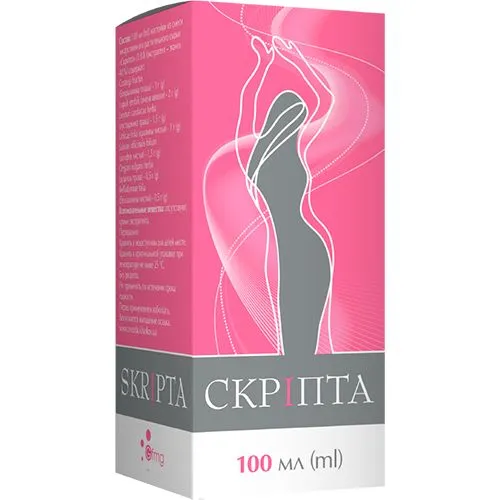
Table of Contents
INSTRUCTION FOR MEDICAL USE OF THE MEDICINAL PRODUCT SKRIPTA (SKRIPTA)
Composition:
Active substances: 100 ml of tincture from a mixture of medicinal plant raw materials "Skripta" (1:10) (extractant – 40% ethanol) contains: Crataegi fructus (hawthorn fruits) – 3 g; Lupuli strobili (hop cones) – 2 g; Leonuri cardiacae herba (motherwort herb) – 1.5 g; Urticae folia (nettle leaves) – 1 g; Salviae officinalis folium (sage leaves) – 1.5 g; Origani vulgaris herba (oregano herb) – 0.5 g; Belladonnae folia (belladonna leaves) – 0.5 g;
Excipients: none, except the extractant.
Pharmaceutical form. Tincture.
Main physicochemical properties: red-brown liquid with a pleasant specific odor. Sediment formation is permissible.
Pharmacotherapeutic group.
Sedatives and hypnotics.
ATC code N05CM.
Pharmacological Properties
The therapeutic effect of the medicinal product is due to the synergistic action of its components. Scutellaria exerts a pronounced sedative, antiseptic, and antimicrobial effect, improves cerebral and coronary circulation, reduces perspiration, increases uterine tone, blood coagulation, and secretory activity of the gastrointestinal tract. It produces a pronounced hypotensive effect, reduces manifestations of vegetative disorders, has immunostimulatory and stress-protective effects, and mildly stimulates the function of the sex glands.
Hawthorn fruits, which contain biologically active substances, enhance circulation in the coronary vessels and cerebral vessels, reduce excitability and increase contractility of the myocardium, restore electrolyte balance in the blood and components of the coagulation and anticoagulation systems, reduce excitability of the central nervous system, and exhibit a hypotensive effect.
Hops cones have a moderately expressed calming effect. The main biologically active substance responsible for the sedative and hypnotic action is essential oil. Bitter compounds enhance gastric secretion and stimulate appetite.
Herb of dog nettle (Urtica dioica) contains steroid and flavonoid glycosides, essential oil, alkaloids, saponins, and tannins, which reduce excitation processes in the central nervous system, promote normalization of arterial pressure and onset of physiological sleep, and also enhance the effects of other sedative and hypnotic agents.
Nettle leaves contain vitamins, organic acids, carotenoids, and tannins. They exert immunostimulatory and tonic effects, enhance metabolism, increase uterine and intestinal tone, and improve cardiovascular function.
Sage leaves have anti-inflammatory properties associated with the presence of tannins, flavonoid compounds, and vitamin P, which strengthen epithelial tissues and reduce permeability of cellular membranes and walls of blood and lymphatic vessels. The antiseptic properties of sage leaves are due to the plant antibiotic salvine. Bitter compounds and essential oils of sage enhance secretory activity of the gastrointestinal tract, exert mild spasmolytic and bactericidal effects, and inhibit perspiration.
Motherwort herb contains coumarins, vitamins, saponins, organic acids, and trace elements (titanium, copper, zinc, manganese). It exerts sedative, hemostatic, antiseptic, and immunostimulatory effects. It stimulates microcirculation, normalizes arterial pressure, relieves algodysmenorrhea, normalizes hormonal balance, and alleviates menopausal symptoms.
Belladonna leaves contain biologically active triterpenoid alkaloids that exert sedative, analgesic, and spasmolytic effects, reduce excitability of central and peripheral adrenergic and cholinergic systems, and reduce manifestations of vegetative disorders.
Pharmacokinetics
Not studied.
Clinical characteristics.
Indications.
Used as part of complex therapy for: mild to moderate climacteric syndrome associated with increased anxiety levels; premenopausal and menopausal periods with hot flushes and sweating; vegetative-vascular dystonia of hypertensive type, for regulation of cardiac activity in stage I hypertensive disease; mild to moderate non-organic insomnia in individuals of different ages; astheno-neurotic syndrome or neurocirculatory dystonia; regulation of neuropsychiatric status under psychoemotional stress.
Contraindications.
Hypersensitivity to any biologically active components of the drug. Glaucoma or suspicion of glaucoma, prostate adenoma, increased blood coagulation, chronic liver and kidney diseases. Severe arterial hypotension, bradycardia; bleeding caused by cysts, polyps, and other tumors of the uterus and its appendages; arterial hypertension; increased gastrointestinal secretion; organic lesions of the heart and blood vessels.
Interaction with other medicinal products and other forms of interactions.
The drug enhances the effects of sedatives and antihypertensive agents.
Ethanol may slightly increase the body's sensitivity to clonidine and neuroleptics, and reduce thiamine activity.
The drug enhances the effects of cardiac glycosides and hypnotics; concomitant use with alkaloid salts is not recommended due to the possibility of forming negative complexes; the drug should not be used together with cisapride.
The medicinal product may potentiate the pharmacological effects of analgesics and also enhance the effect of alcohol.
The drug enhances the effects of tranquilizers on the central nervous system and of cardiotonics.
If simultaneous use with any other medicinal products is required, medical advice should be sought.
Special precautions.
Prior to using the medication, it is mandatory to consult a physician.
Do not use doses exceeding the recommended ones.
The medication should be administered with caution to patients with increased gastric acidity and epilepsy.
The medicinal product is not recommended to be taken during meals to avoid interaction with food components.
The drug should be prescribed with caution to elderly patients due to the presence of atropine-group alkaloids.
Use during pregnancy or breastfeeding.
Should not be used.
Ability to affect reaction rate when driving or operating machinery.
During the use of the tincture, patients should refrain from driving vehicles and operating potentially hazardous machinery or devices requiring heightened attention and rapid motor responses.
Dosage and Administration.
Shake before use.
Administer the medicinal product orally, 30 minutes before meals.
Recommended therapeutic doses for treatment: from 20 drops (½ teaspoon) to 40 drops (1 teaspoon) per dose, diluted in a small amount of water, 3 times daily (morning, afternoon, evening).
The treatment course usually lasts from 10 to 21 days. The duration of treatment depends on the indications, the course of the disease, and is determined individually by the physician.
Children.
Should not be used in children.
Overdose.
Symptoms: nausea, vomiting, headache, palpitations, allergic reactions, drowsiness, bradycardia, decreased arterial pressure; dry mouth, accommodation disturbances, dilated pupils, dizziness, general weakness, tachycardia.
Treatment: discontinue the drug, symptomatic therapy.
Adverse reactions.
Possible adverse reactions typical of the drug components:
Central nervous system: headache, dizziness, nervousness, excitement, drowsiness, reduced mental and physical performance, fatigue, general weakness;
Gastrointestinal tract: dry mouth, constipation, nausea, heartburn, epigastric pain, vomiting, diarrhea, sensation of thirst;
Kidneys and urinary tract: urinary retention;
Visual organs: pupil dilation, visual disturbances, accommodation disorders;
Cardiovascular system: tachycardia (rapid heartbeat), significant reduction in blood pressure;
Immune system: allergic reactions, including skin rashes, hyperemia, itching, urticaria, skin swelling.
If any adverse reactions occur, discontinue use of the drug immediately and consult a physician without delay.
Shelf life. 2 years.
Do not use after the expiry date stated on the packaging.
Storage conditions.
Store in the original packaging at a temperature not exceeding 25 °C.
Keep out of reach of children.
Packaging.
100 ml in a glass or polymer bottle; 1 bottle per cardboard box;
100 ml in a jar; 1 jar per cardboard box.
Supply category.
Over-the-counter (without prescription).
Manufacturer.
PJSC "CHEMICAL PHARMACEUTICAL PLANT "CHERVONA ZIRKA"".
Manufacturer's address and place of business.
1, Gordienkivska Street, Kharkiv, Kharkiv Oblast, 61010, Ukraine.