Scandonest 3 % simple
Ukraine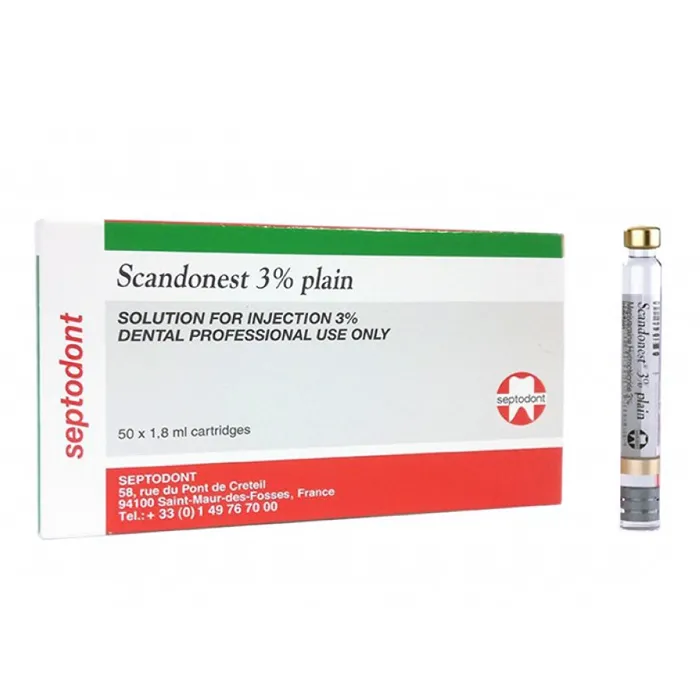
Table of Contents
INSTRUCTIONS FOR MEDICAL USE OF THE MEDICINAL PRODUCT SCANDONEST 3% PLAIN (SCANDONEST 3% PLAIN)
Composition:
Active substance: mepivacaine;
1.7 ml of solution (1 cartridge) contains mepivacaine hydrochloride 51 mg;
Excipients: sodium chloride, sodium hydroxide, water for injections.
Pharmaceutical form. Injection solution.
Main physicochemical properties: clear, colorless liquid, practically free from particles.
Pharmacotherapeutic group. Agents acting on the nervous system. Anesthetics. Local anesthetic agents. Amides. Mepivacaine. ATC code N01BB03.
Pharmacological properties.
Pharmacodynamics.
Mepivacaine is an amide-type local anesthetic.
Mepivacaine reversibly inhibits the conduction of nerve impulses by reducing or blocking the influx of sodium ions (Na+) during the propagation of the nerve action potential. As anesthesia spreads along the nerve, the threshold of electrical excitability gradually increases, while the rate of rise of the action potential and the propagation of the nerve impulse decrease. Mepivacaine has a short onset time, produces pronounced analgesic effect, and demonstrates low toxicity.
Mepivacaine exhibits mild vasoconstrictive properties, resulting in a longer duration of action compared to other local anesthetics when used without added vasoconstrictors. The vasoconstrictive properties of mepivacaine, demonstrated in several studies, may be beneficial when the use of vasoconstrictors is contraindicated. The onset and duration of local anesthesia may be influenced by several factors, such as tissue pH, the acid dissociation constant (pKa), lipid solubility, concentration of the local anesthetic, and diffusion of the local anesthetic through the nerve.
Onset of action
With peripheral nerve block, the effect of mepivacaine may begin rapidly (usually within 3 to 5 minutes).
Duration of analgesia
Pulp anesthesia typically lasts 25 minutes after maxillary infiltration anesthesia and approximately 40 minutes after inferior alveolar nerve block, whereas soft tissue anesthesia persists for approximately 90 minutes after maxillary infiltration anesthesia and approximately 165 minutes after inferior alveolar nerve block.
Bioavailability
Bioavailability at the site of action is 100%.
Pharmacokinetics.
Absorption
Maximum plasma concentrations have been determined in various clinical studies following peroral injections of a 30 mg/mL solution of mepivacaine during routine dental and oral procedures. Peak plasma concentrations of mepivacaine are reached approximately 30–60 minutes after administration. Approximately 30 minutes after intraoral injection, maximum mepivacaine concentrations were recorded in the range of 0.4 to 1.2 µg/mL following administration of one cartridge and 0.95 to 1.70 µg/mL following administration of two cartridges. The ratio of mean plasma concentrations after injection of the drug from one and two cartridges was approximately 50%, indicating dose-proportional kinetics. These plasma concentrations are significantly lower than the levels associated with CNS and cardiovascular toxicity—approximately 10 to 25 times lower, respectively.
Distribution
Mepivacaine is distributed to all tissues. The highest concentrations are found in well-vascularized tissues such as the liver, lungs, heart, and brain. Plasma protein binding of mepivacaine is approximately 75%. The drug can cross the placental barrier via simple diffusion.
Metabolism
All amide-type local anesthetics are metabolized primarily in the liver by microsomal enzymes (cytochrome P450 1A2 (CYP1A2)). Therefore, inhibitors of cytochrome P450 isoenzymes may slow metabolism and increase the risk of adverse effects (see section "Interaction with other medicinal products and other forms of interaction"). More than 50% of the dose is excreted in the bile as metabolites, but these are likely subject to enterohepatic recirculation, as only a small amount is found in feces.
Elimination
The elimination half-life in adults is 2 hours. Elimination of amides depends on hepatic vascularization. The plasma half-life is prolonged in patients with hepatic or renal impairment. The duration of local anesthesia is not related to the elimination half-life, as its effect ceases once the drug dissociates from the receptor. Less than 10% of unchanged mepivacaine is excreted in urine; the remainder is excreted as metabolites.
Elimination can be accelerated by acidification of urine (see section "Overdose").
Clinical characteristics.
Indications.
Scandonest 3 % simple is indicated for local and local-regional anesthesia in dental procedures in adults and children aged 4 years and older (whose body weight is 20 kg or more).
Contraindications.
- Hypersensitivity to the active substance (or to any amide-type local anesthetics) or to any component of the medicinal product listed in the section "Composition";
- Children under 4 years of age (body weight less than 20 kg);
- Severe atrioventricular conduction impairment not compensated by a cardiac pacemaker;
- Uncontrolled epilepsy.
Interaction with other medicinal products and other forms of interaction.
Additive interactions with other local anesthetics
The toxicity of local anesthetics is additive.
The total dose of mepivacaine must not exceed the maximum recommended dose.
H2-antihistamines (cimetidine). Increased serum levels of amide-type anesthetics have been reported after concomitant administration with cimetidine. Cimetidine reduces the clearance of mepivacaine.
Sedative agents (central nervous system depressants). If a patient is receiving sedative agents to reduce anxiety, the dose of anesthetic should be reduced, since the local anesthetic, like sedative agents, depresses the central nervous system, and their combination may have an additive effect.
Antiarrhythmic agents.
In patients receiving antiarrhythmic agents (such as Class I agents, e.g., lidocaine), the adverse effects of mepivacaine may be potentiated due to structural similarities.
CYP1A2 inhibitors
Mepivacaine is primarily metabolized by the enzyme CYP1A2. Cytochrome inhibitors (e.g., ciprofloxacin, enoxacin, fluvoxamine) may slow its metabolism, increase the risk of adverse effects, and lead to high or toxic blood levels. Increased serum levels of amide-type anesthetics have also been reported after concomitant use with cimetidine, likely due to cimetidine's inhibitory effect on CYP1A2. Caution is recommended when combining mepivacaine with these medicinal products, as dizziness may last longer (see section "Ability to influence reaction speed when driving or operating machinery").
Propranolol
The clearance of mepivacaine may be reduced when used in combination with propranolol, and serum concentrations of the anesthetic may be higher. Caution should be exercised when administering mepivacaine concomitantly with propranolol.
Special precautions for use.
Special warnings
If there is any risk of an allergic reaction, another anesthetic should be selected (see section "Contraindications").
Mepivacaine should be used safely and effectively taking into account the following:
- The effects of local anesthesia may be reduced when injections of Scandonest 3% plain are administered into inflamed or infected areas;
- There is a risk of injury due to biting, especially in children (lips, cheeks, mucous membranes, and tongue); patients should be warned not to chew gum or eat until sensation has returned.
The medicinal product should be used with caution in patients with cardiovascular disorders such as:
- Peripheral vascular diseases;
- Arrhythmias, primarily of ventricular origin;
- Atrioventricular conduction disorders;
- Heart failure;
- Arterial hypotension.
The drug should be used cautiously in patients with heart disease, as they may lack the ability to compensate for functional changes associated with prolonged atrioventricular conduction.
Patients with epilepsy
All local anesthetics should be used with caution due to the possibility of seizures.
The drug is contraindicated in uncontrolled epilepsy (see section "Contraindications").
Patients with liver disease
The lowest effective dose providing adequate anesthesia should be used.
Patients with kidney disease
The lowest effective dose providing adequate anesthesia should be used.
Patients with porphyria
Scandonest 3% plain should be administered to patients with acute porphyria only when no safer alternative treatment is available. All patients with porphyria should be treated cautiously, as this medicinal product may provoke an acute attack of porphyria.
Patients with acidosis
This medicinal product should be used with caution in cases of acidosis, as well as in cases of worsening renal function or uncontrolled type 1 diabetes mellitus.
Elderly patients
Lower doses of the drug should be administered to elderly patients (due to insufficient clinical data).
Mepivacaine should be used with caution in patients receiving antiplatelet/anticoagulant drugs or in those with coagulation disorders due to an increased risk of bleeding. The increased risk of bleeding is more related to the procedure itself than to the medicinal product.
Precautionary measures
Local anesthetics should be administered only by healthcare professionals who are well trained in the diagnosis and treatment of dose-dependent toxicity and other emergencies arising from nerve block. Immediate access to oxygen, other resuscitation equipment and devices for cardiopulmonary resuscitation, as well as availability of qualified personnel, must be ensured for effective management of toxic reactions and emergencies (see section "Dosage and method of administration"). Delay in appropriate treatment of dose-dependent toxicity, hypoventilation from any cause, and/or altered sensitivity may lead to the development of acidosis, cardiac arrest, and even fatal outcomes.
Hypoxemia and metabolic acidosis may enhance cardiovascular toxicity. Early control of seizures and intensive oxygen therapy to treat hypoxemia and acidosis may prevent cardiac arrest.
Concomitant use of other medicinal products may require careful monitoring (see section "Interaction with other medicinal products and other forms of interaction").
Excipients with known effects
1 ml of solution contains 0.11 mmol of sodium (2.467 mg/ml).
This medicinal product contains 24.67 mg of sodium in 10 ml of solution (maximum recommended dose), equivalent to 1.23% of the WHO recommended maximum daily intake of 2 g sodium for an adult.
Special precautions for disposal and other handling of the medicinal product
Cartridges are intended for single use only. Injection should be performed immediately after opening the cartridge.
As with any cartridges, the rubber stopper with aluminum cap should be disinfected immediately before use. It should be thoroughly wiped with either 70% ethyl alcohol or 90% purified isopropyl alcohol for pharmaceutical use.
Under no circumstances should cartridges be immersed in any solution.
Any unused medicinal product or waste material should be disposed of in accordance with current requirements.
Use during pregnancy or breastfeeding.
Pregnancy
There are no clinical studies on the use of this drug during pregnancy, and there is no information in the scientific literature regarding treatment of pregnant women with 30 mg/ml mepivacaine hydrochloride solution. Animal studies have not revealed direct or indirect toxic effects on reproductive function.
As a precautionary measure, it is advisable to avoid the use of mepivacaine during pregnancy unless clearly necessary.
Period of breastfeeding
Clinical studies of Scandonest 3% plain did not include breastfeeding women. However, due to the lack of data on mepivacaine, a risk to newborns/infants cannot be excluded. Therefore, mothers are advised to avoid breastfeeding for 10 hours after anesthesia with Scandonest 3% plain.
Fertility
Animal studies did not reveal any toxic effect of mepivacaine on fertility.
Human data are lacking.
Ability to influence reaction speed when driving or operating machinery.
Scandonest 3% plain may have a minor influence on the ability to drive or operate machinery. Dizziness (including vertigo, visual disturbances, and fatigue) may occur after administration of the drug (see section "Adverse reactions"). Patients should remain in the dentist's office until their ability to drive or operate machinery has returned (usually within 30 minutes) after the dental procedure.
Method of Administration and Dosage
The medicinal product should be administered only by dentists, stomatologists, or other physicians adequately trained and experienced in the diagnosis and treatment of systemic toxicity, or under their supervision. Prior to initiating regional anesthesia with local anesthetics, it is recommended to ensure the availability of appropriate resuscitation equipment and medicinal products, as well as properly trained personnel, to provide immediate management of any emergency conditions affecting the respiratory or cardiovascular systems. The patient's level of consciousness should be monitored after each injection of a local anesthetic.
Dosage
Since pain relief is related to individual patient sensitivity, the lowest effective dose of anesthetic should be used. For more extensive procedures, it may be necessary to use one or several cartridges, without exceeding the maximum recommended dose.
For adults, the maximum recommended dose is 4.4 mg/kg of body weight, with an absolute maximum recommended dose of 300 mg for individuals with a body weight exceeding 70 kg, corresponding to 10 mL of solution.
Note: When determining the maximum dose, the patient's body weight must be taken into account. Since each patient has a different body weight, the maximum tolerated dose of mepivacaine will vary for each individual. Furthermore, there are important individual differences regarding the onset and duration of the drug's effect.
Table 1 provides the maximum allowable doses for adults when using the most common anesthesia techniques, along with the equivalent number of cartridges.
Table 1
| Body weight (kg) |
Dose of mepivacaine hydrochloride (mg) |
Volume (ml) |
Equivalent number* of cartridges (1.7 ml) |
| 50 |
220 |
7.3 |
4.0 |
| 60 |
264 |
8.8 |
5.0 |
| ≥ 70 |
300 |
10.0 |
5.5 |
* Rounded to the number approximately equivalent to a multiple of half the cartridge volume.
Children
Scandonest 3% plain should not be used in children under 4 years of age (body weight less than 20 kg) (see section "Contraindications").
Recommended therapeutic dose
The amount of drug to be administered depends on the child's age and body weight, as well as the type of procedure to be performed. The average calculated dose is 0.75 mg/kg, which corresponds to 0.025 mL of mepivacaine solution per 1 kg of body weight, i.e. approximately ¼ cartridge (15 mg mepivacaine hydrochloride) for a child weighing 20 kg.
Maximum recommended dose
The maximum recommended dose in children is 3 mg of mepivacaine/kg (0.1 mL of mepivacaine/kg).
Table 2 shows the maximum allowable doses for children and the equivalent number of cartridges.
Table 2
| Body weight (kg) |
Mepivacaine hydrochloride dose (mg) |
Volume (ml) |
Equivalent number* of cartridges (1.7 ml) |
| 20 |
60 |
2 |
1.2 |
| 35 |
105 |
3.5 |
2.0 |
| 45 |
135 |
4.5 |
2.5 |
* Rounded to the nearest number approximately equivalent to half the cartridge volume.
Special patient groups
In the absence of clinical data, special precautions should be taken, using the lowest effective dose required for adequate anesthesia, in the following patient groups:
- elderly patients,
- patients with renal or hepatic impairment.
Mepivacaine is metabolized in the liver, and plasma levels may increase in patients with liver disease, particularly following repeated administration. If repeated injections are necessary, patients should be monitored for signs of relative overdose.
Concomitant use of sedatives to reduce patient anxiety
When sedative drugs are used, the maximum recommended dose of mepivacaine should be reduced due to the additive central nervous system (CNS) depressant effects of this combination (see section "Interaction with other medicinal products and other forms of interaction").
Method of administration
Infiltration and perineural administration.
For single use only.
Precautions prior to handling or administering the medicinal product
The medicinal product should not be used if the solution is cloudy or has changed color.
The injection rate should not exceed 1 mL per minute.
Local anesthetics should be administered with caution in the presence of inflammation and/or infection at the injection site. The injection rate should be very slow (1 mL/min).
Risk associated with accidental intravascular injection
Accidental intravascular injection (e.g., unintentional intravenous injection into the systemic circulation, unintentional intra-arterial or intravenous injection in the head and neck region) may lead to serious adverse effects such as seizures followed by depression of the central nervous system, cardiovascular and respiratory systems, and progression to coma, potentially resulting in respiratory arrest due to a sudden increase in systemic mepivacaine levels.
Therefore, to ensure that the needle has not entered a blood vessel during injection, an aspiration test should be performed before administering the local anesthetic. However, the absence of blood in the syringe does not guarantee that intravascular injection has been avoided.
Risk associated with intraneural injection
Accidental intraneural injection may cause retrograde flow of the medicinal product along the nerve. To avoid intraneural injection and nerve damage associated with nerve block, the needle should be carefully withdrawn if the patient experiences an electric shock sensation or if the injection is particularly painful. If nerve trauma occurs, the neurotoxic effect may be exacerbated by the potential chemical neurotoxicity of mepivacaine, as this may impair perineural blood supply and hinder local elimination of mepivacaine.
Children.
Can be used in children aged 4 years and older.
Overdose.
Types of overdose
Overdose with local anesthetics may be:
- absolute – due to administration of excessive doses, or
- relative – due to injection of a normally non-toxic dose under certain conditions, such as accidental injection into a blood vessel, abnormally rapid absorption into systemic circulation, or delayed metabolism and elimination of the drug.
Symptoms
In cases of relative overdose, symptoms in patients usually appear within 1–3 minutes. In cases of absolute overdose, signs of toxicity may appear 20–30 minutes after injection, depending on the injection site.
These toxic effects are dose-dependent and progressively manifest as increasingly severe neurological symptoms, followed by cardiovascular, respiratory, and ultimately cardiac toxic effects, such as arterial hypotension, bradycardia, arrhythmia, and cardiac arrest.
CNS toxicity develops progressively with increasing severity of symptoms and reactions. Initial symptoms include restlessness, feelings of intoxication, numbness of lips and tongue, perioral paresthesia, dizziness, visual and auditory disturbances, and tinnitus. The presence of these symptoms during injection is a warning sign, and the injection should be immediately discontinued.
Cardiovascular symptoms occur at plasma levels higher than those causing neurological symptoms, which typically precede them unless the patient is under general anesthesia or sedation (i.e., under the influence of benzodiazepines or barbiturates). Prodromal symptoms such as muscle and joint stiffness or tremor may precede loss of consciousness and the onset of generalized seizures. Seizures may last from several seconds to several minutes and rapidly lead to hypoxia and hypercapnia due to increased muscular activity and inadequate ventilation. In the most severe cases, respiratory arrest may occur.
Adverse effects may occur at plasma concentrations exceeding 5 mg/L, and seizures may occur at concentrations of 10 mg/L or higher. Data on overdose are limited.
Acidosis enhances the toxic effects of local anesthetics.
With rapid intravascular injection, high blood levels of mepivacaine in the coronary arteries may lead to cardiac failure, possibly followed by cardiac arrest before CNS involvement. Available data remain controversial (see sections "Pharmacodynamics" and "Special precautions for use").
Treatment
If signs of acute toxicity develop during administration of this local anesthetic, the injection should be immediately discontinued.
CNS symptoms (seizures, depression) must be treated promptly with adequate ventilation and administration of anticonvulsant drugs.
Optimal oxygenation and ventilation, circulatory support, and correction of acidosis are essential.
In case of cardiovascular depression (arterial hypotension, bradycardia), administration of intravenous fluids, vasoconstrictors, and/or inotropic agents may be required. Children should receive doses appropriate to their age and body weight.
In the event of cardiac arrest, resuscitation may require prolonged efforts.
Dialysis is not effective in treating mepivacaine overdose. Elimination can be accelerated by acidifying the urine.
Adverse reactions.
Summary of safety profile
Adverse reactions following administration of Scandonest 3% plain are similar to those of other amide-type local anaesthetics.
These adverse effects are mainly dose-dependent and occur as a result of high plasma levels arising from excessive dosage, rapid absorption, or accidental intravascular injection. They may also occur due to hypersensitivity, idiosyncrasy, or reduced tolerance.
Serious adverse reactions are usually of systemic nature.
Tabulated list of adverse reactions
Information on reported adverse effects has been obtained from spontaneous reports and publications.
The frequency classification corresponds to the following categories: very common (≥ 1/10); common (≥ 1/100 – < 1/10); uncommon (≥ 1/1,000 – < 1/100); rare (≥ 1/10,000 – < 1/1,000); very rare (< 1/10,000); frequency not known (cannot be estimated from the available data).
Table 3
| MedDRA system organ class |
Frequency |
Adverse reactions |
| Immune system disorders |
Uncommon |
Hypersensitivity Anaphylactic shock / anaphylactoid reactions Angioedema (face/tongue/lips/throat/larynx1/periorbital swelling) Bronchospasm/asthma2 Urticaria |
| Psychiatric disorders |
Unknown |
Euphoria Anxiety/nervousness3 |
| Nervous system disorders |
Common |
Headache |
| Uncommon |
Neuropathy4 Neuralgia (neuropathic pain) Paresthesia (local sensation of burning, tingling, itching, warmth or cold without visible physical cause) of oral and perioral structures Hypoesthesia/numbness (oral and perioral) Dysesthesia (oral and perioral), including dysgeusia (metallic taste, taste disturbances) and ageusia Vertigo (dizziness) Tremor3 Severe CNS depression:
|
|
| Unknown |
Nystagmus |
|
| Eye disorders |
Uncommon |
Visual acuity disturbances Blurred vision Accommodation disorders |
| Unknown |
Horne syndrome Blepharoptosis Enophthalmos Diplopia (paralysis of eye muscles) Amaurosis (blindness) Mydriasis Miosis |
|
| Ear and labyrinth disorders |
Uncommon |
Vertigo |
| Unknown |
Ear discomfort Tinnitus Hyperacusis |
|
| Cardiac disorders |
Uncommon |
Cardiac arrest Bradyarrhythmia Bradycardia Tachyarrhythmia (including ventricular extrasystoles and ventricular fibrillation)5 Angina pectoris6 Conduction disorders (atrioventricular block) Tachycardia Palpitations |
| Unknown |
Myocardial depression |
|
| Vascular disorders |
Uncommon |
Arterial hypotension (with possible circulatory collapse) |
| Very rare |
Arterial hypertension |
|
| Unknown |
Vasodilation Local/regional hyperemia |
|
| Respiratory, thoracic and mediastinal disorders |
Uncommon |
Respiratory depression Bradypnea Apnea (respiratory arrest) Yawning Dyspnea2 Tachypnea |
| Unknown |
Hypoxia7 (including cerebral) Hypercapnia7 Dysphonia (hoarseness1) |
|
| Gastrointestinal disorders |
Uncommon |
Nausea Vomiting Ulceration/exfoliation (desquamation) of gingival/oral mucosa Swelling of tongue8, lips, gums |
| Unknown |
Stomatitis, glossitis, gingivitis Hypersalivation |
|
| Skin and subcutaneous tissue disorders |
Uncommon |
Rash Erythema Pruritus Facial swelling Hyperhidrosis (sweating) |
| Musculoskeletal and connective tissue disorders |
Uncommon |
Muscle twitching Trembling |
| General disorders and administration site conditions |
Uncommon |
Localized swelling Injection site swelling |
| Unknown |
Chest pain Malaise, asthenia (weakness) Feeling of warmth Injection site pain |
|
| Injury, poisoning and procedural complications |
Unknown |
Nerve injury |
1 Laryngeal and pharyngeal edema may be characterized by hoarseness and/or dysphagia.
2 Bronchospasm (bronchial narrowing) may be characterized by dyspnea.
3 Certain adverse reactions such as agitation, anxiety/nervousness, tremor, and speech disorders may be warning signs of CNS depression. If such signs occur, the patient should be advised to breathe deeply, and close monitoring of the patient's condition should be initiated (see section "Overdose").
4 Neurological disorders may manifest as various symptoms of sensory disturbances (i.e., paresthesia, hypoesthesia, dysesthesia, hyperesthesia, etc.) of the lips, tongue, and oral tissues. These data were obtained from post-marketing reports, predominantly following inferior alveolar nerve blocks involving various branches of the trigeminal nerve.
5 This phenomenon occurs primarily in patients with pre-existing heart disease or patients taking certain medications.
6 This phenomenon occurs primarily in patients who have risk factors for ischemic heart disease.
7 Hypoxia and hypercapnia are secondary to respiratory depression and/or epileptic seizures and prolonged muscle contractions.
8 This phenomenon results from accidental biting or chewing of the lips or tongue while anesthesia persists.
Reporting of suspected adverse reactions
Reporting of adverse reactions after drug registration is important. It allows continued monitoring of the benefit-risk balance of the drug. Healthcare and pharmaceutical professionals, as well as patients or their legal representatives, should report all suspected adverse reactions and lack of efficacy via the Automated Pharmacovigilance Information System at: https://aisf.dec.gov.ua.
Shelf life. 3 years.
Storage conditions.
Store at a temperature not exceeding 25 °C in the original packaging.
Do not freeze.
Keep out of reach of children.
Incompatibilities.
In the absence of compatibility studies, the product should not be mixed with other medicinal products.
Packaging.
1.7 ml colorless glass cartridges, sealed at one end with a rubber stopper and aluminum cap, and fitted at the other end with a rubber plunger stopper.
Cardboard box containing:
50 cartridges (5 blisters of 10 cartridges) of 1.7 ml solution or 10 cartridges (1 blister of 10 cartridges) of 1.7 ml solution.
Prescription status. Prescription only.
Manufacturer.
SEPTODONT.
Manufacturer's address and place of business.
58, Rue du Pont de Créteil, 94100 Saint-Maur-des-Fossés, France.