Simbrinza
Ukraine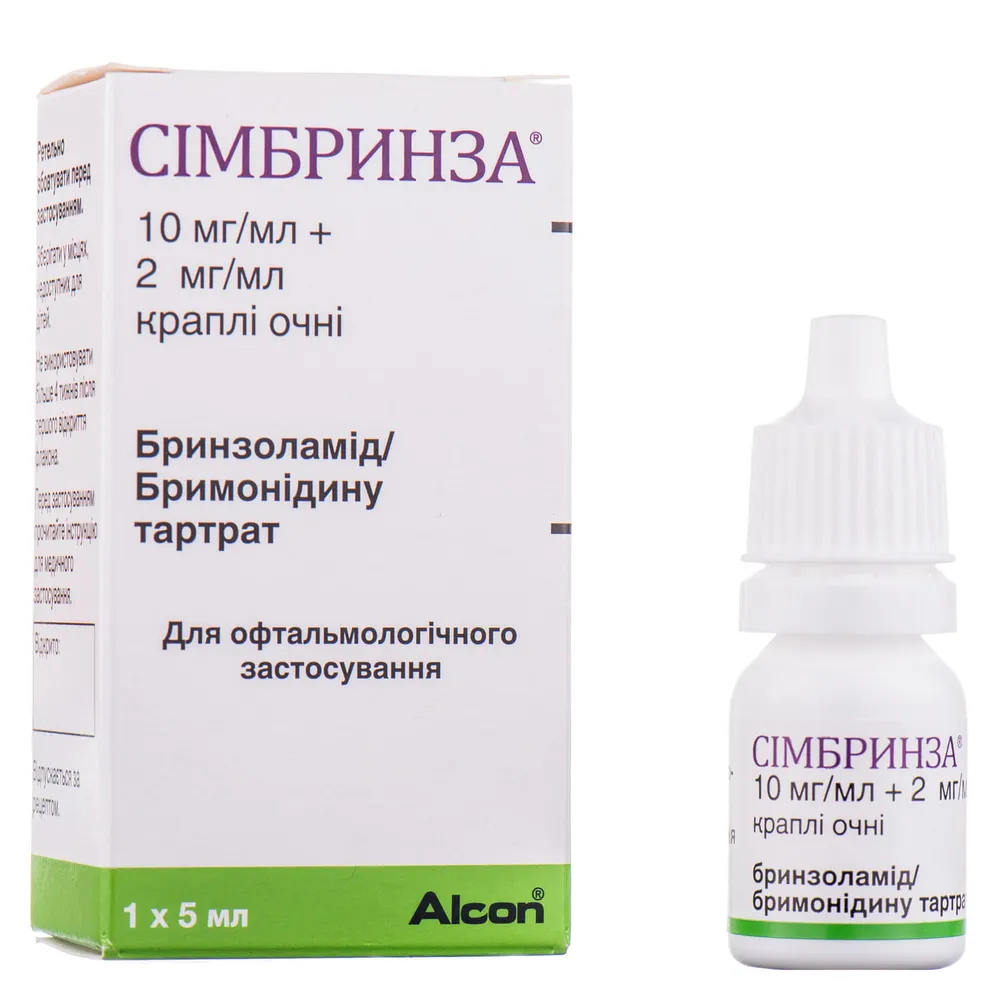
Table of Contents
INSTRUCTIONS FOR MEDICAL USE OF THE MEDICINAL PRODUCT SİMBRİNZA® (SIMBRINZA®)
Composition:
Active substances: 1 ml of suspension contains brinzolamide 10 mg and brimonidine tartrate 2 mg;
Excipients: benzalkonium chloride, propylene glycol, carbomer 974P, boric acid, mannitol (E 421), sodium chloride, tyloxapol, hydrochloric acid and/or sodium hydroxide (for pH adjustment), purified water.
Pharmaceutical form. Eye drops.
Main physicochemical properties: a homogeneous white or almost white suspension, pH 6.5 (approximately).
Pharmacotherapeutic group. Agents used in ophthalmology. Antiglaucoma preparations and miotics. Carbonic anhydrase inhibitors.
ATC code: S01E C54.
Pharmacological properties.
Pharmacodynamics.
Mechanism of action
The medicinal product Simbrinza® contains two active components: brinzolamide and brimonidine tartrate. These two components reduce intraocular pressure (IOP) in patients with open-angle glaucoma (OAG) and ocular hypertension (OHT) by suppressing the production of aqueous humor, although their mechanisms of action differ.
Brinzolamide acts by inhibiting the enzyme carbonic anhydrase (CA-II) in the ciliary body of the eye, thereby reducing the formation of bicarbonate ions, which subsequently decreases the transport of sodium and fluid across the ciliary body, resulting in reduced production of aqueous humor. Brimonidine, an alpha-2 adrenergic agonist, inhibits adenylate cyclase activity and cyclic adenosine monophosphate (cAMP)-mediated aqueous humor production. In addition, brimonidine use leads to improved uveoscleral outflow of aqueous humor.
Pharmacodynamic effects
Clinical efficacy and safety
Mean diurnal reductions in IOP with Simbrinza® administered twice daily were 8 mm Hg in a 6-month controlled clinical trial evaluating the component mechanism of action, which included 560 patients with open-angle glaucoma (including pseudoexfoliative or pigment dispersion syndrome) and/or ocular hypertension, whose IOP was considered insufficiently controlled on monotherapy or multiple IOP-lowering medications, and who had mean diurnal baseline IOP of 26 mm Hg. At all study visits, patients receiving Simbrinza® showed statistically greater reductions in mean diurnal IOP compared to those receiving either brinzolamide 10 mg/mL or brimonidine 2 mg/mL twice daily (see figure below).
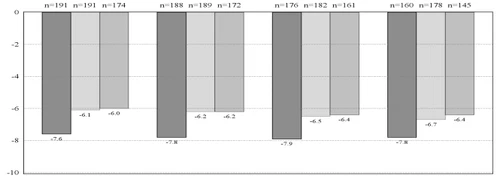
Change in mean diurnal IOP from baseline (09:00, +2 hours, +7 hours) (mm Hg) – component mechanism of action study
a Least squares means derived from a statistical model including study center, baseline IOP at 09:00, and correlated IOP measurements within a patient.
All treatment differences (Simbrinza® versus individual components) were statistically significant with p = 0.0001 or less.
Mean reductions in IOP from baseline at each study visit in patients receiving Simbrinza® were higher (6–9 mm Hg) than with monotherapy using brinzolamide (5–7 mm Hg) or brimonidine (4–7 mm Hg). Mean percentage reductions in IOP with Simbrinza® ranged from 23% to 34%. The proportion of patients achieving IOP < 18 mm Hg was greater in the Simbrinza® group compared to the brinzolamide group at 11 out of 12 study visits over 6 months, and greater than the brimonidine group at all 12 study visits during the 6-month period. At month 3, the proportion of patients with IOP < 18 mm Hg was 68.8% in the Simbrinza® group, 42.3% in the brinzolamide group, and 44.0% in the brimonidine group at the +2-hour time point (corresponding to peak morning efficacy) at the primary efficacy assessment.
In a 6-month controlled clinical efficacy trial involving 890 patients with open-angle glaucoma (including pseudoexfoliative or pigment dispersion syndrome) and/or ocular hypertension, whose IOP was considered insufficiently controlled on monotherapy or multiple IOP-lowering medications, and who had mean diurnal baseline IOP of 26–27 mm Hg, Simbrinza® demonstrated comparable efficacy to the concomitant administration of brinzolamide 10 mg/mL + brimonidine 2 mg/mL (Table 1).
Table 1
Comparison of change in mean diurnal IOP (mm Hg) from baseline – efficacy comparison study
| Control visit |
Symprovis®, mean valuea |
Brinzolamide + brimonidine, mean valuea |
Difference, mean valuea (95 % CI) |
| Week 2 |
-8.4 (n = 394) |
-8.4 (n = 384) |
-0.0 (-0.4, 0.3) |
| Week 6 |
-8.5 (n = 384) |
-8.4 (n = 377) |
-0.1 (-0.4, 0.2) |
| Month 3 |
-8.5 (n = 384) |
-8.3 (n = 373) |
-0.1 (-0.5, 0.2) |
| Month 6 |
-8.1 (n = 346) |
-8.2 (n = 330) |
0.1 (-0.3, 0.4) |
and the root mean square values derived from a statistical model including the study clinic, baseline IOP at 9:00 a.m., and correlated IOP measurements within a single patient.
At each follow-up examination in patients treated with Simbrinza® or its individual components used concomitantly, the mean reductions in IOP from baseline values were similar (7–10 mmHg). Mean IOP reductions with Simbrinza® ranged from 25% to 37%. Throughout the study and at all follow-up visits, the percentage of patients achieving IOP below 18 mmHg was similar in the Simbrinza® group and in those treated with brimonidine and brinzolamide at the same time points over the 6-month study period. At month 3 of the study, the percentage of patients with IOP below 18 mmHg was 71.6% in both groups at the +2 hour time point (corresponding to peak morning efficacy) at the primary efficacy assessment.
Pediatric use
The European Medicines Agency has waived the obligation to submit results of studies with Simbrinza® in all pediatric subgroups for the treatment of glaucoma and ocular hypertension (see section "Dosage and administration" for information on pediatric use).
Pharmacokinetics.
Absorption
Following topical ocular administration, brinzolamide is absorbed through the cornea. It is also absorbed into the systemic circulation, where it binds strongly to carbonic anhydrase in erythrocytes. The plasma concentration of this component is very low. The elimination half-life in humans is prolonged (more than 100 days) due to binding to carbonic anhydrase in erythrocytes.
Brimonidine is rapidly absorbed into the eye following topical administration. In rabbits, maximum drug concentration in the eye was generally achieved within less than 1 hour after administration. The maximum plasma concentration in humans is < 1 ng/mL and is reached within < 1 hour. Plasma levels decline with an elimination half-life of approximately 2–3 hours. With chronic administration, the substance does not accumulate in the body.
In a clinical study comparing systemic pharmacokinetic effects of Simbrinza® administered 2 or 3 times daily versus individual brinzolamide or brimonidine administered at the same dosing regimen, steady-state brinzolamide concentrations in whole blood and the pharmacokinetics of N-desethylbrinzolamide were similar following administration of the combination product and brinzolamide alone. Similarly, the steady-state plasma pharmacokinetics of brimonidine following administration of the combination product were similar to those observed with brimonidine administered alone, except in the group receiving Simbrinza® twice daily, where AUC0–12 hours was approximately 25% lower than with brimonidine administered twice daily alone.
Distribution
Studies in rabbits showed that after topical administration, the highest concentrations of brinzolamide in the eye were found in the anterior segment tissues such as cornea, conjunctiva, aqueous humor, iris, and ciliary body. The retention of the substance in ocular tissues is prolonged due to binding to carbonic anhydrase. Brinzolamide is moderately bound to human plasma proteins (approximately 60%).
Brimonidine shows affinity for pigmented structures of the eye, particularly the iris and ciliary body, due to its known ability to bind melanin. However, clinical and preclinical safety data have confirmed that brimonidine is well tolerated and safe with long-term use.
Biotransformation
Brinzolamide is metabolized in the liver by cytochrome P450 isoenzymes, particularly CYP3A4, CYP2A6, CYP2B6, CYP2C8, and CYP2C9. The primary metabolite is N-desethylbrinzolamide, with subsequent metabolites including N-desmethoxypropyl, O-desmethyl, and an N-propionic acid analog formed by oxidation of the N-propyl side chain of O-desmethylbrinzolamide. Brinzolamide and N-desethylbrinzolamide, at concentrations 100 times higher than maximum systemic levels, do not inhibit cytochrome P450 isoenzymes.
Brimonidine is actively metabolized by aldehyde oxidase to form 2-oxobrimonidine, 3-oxobrimonidine, and 2,3-dioxobrimonidine (major metabolites). Oxidative cleavage of the imidazole ring also occurs, forming 5-bromo-6-guanidino-quinoxaline.
Elimination
Brinzolamide is primarily excreted unchanged in urine. In humans, the amount of brinzolamide and N-desethylbrinzolamide excreted in urine accounts for 60% and 6% of the dose, respectively. Studies in rats also show that a small amount (approximately 30%) is excreted in bile, primarily as metabolites.
Brimonidine is primarily excreted in urine as metabolites. In rats and monkeys, 60–75% of the dose administered orally or intravenously is excreted in urine as metabolites.
Linearity/Non-linearity
The pharmacokinetics of brinzolamide are non-linear due to saturable binding to carbonic anhydrase in blood and various tissues. Steady-state concentrations do not increase proportionally with dose increases. In contrast, brimonidine exhibits linear pharmacokinetics within the therapeutic dose range.
Pharmacokinetic/Pharmacodynamic relationship
Simbrinza® is intended for topical ocular administration. Assessing its effect on the human eye at effective doses is not feasible. The pharmacokinetic/pharmacodynamic relationship in humans with regard to IOP reduction has not been established.
Use in specific patient populations
Studies on the effect of Simbrinza® according to age, race, or in patients with renal or hepatic impairment have not been conducted. Studies comparing brinzolamide in Japanese patients versus other ethnic groups demonstrated similar pharmacokinetic profiles in both patient groups. Studies with brinzolamide in patients with renal impairment showed 1.6–2.8-fold higher systemic exposure to brinzolamide and N-desethylbrinzolamide in patients with moderate renal impairment compared to those with normal renal function. However, this increased steady-state concentration of brinzolamide-related substances in erythrocytes did not inhibit carbonic anhydrase activity in erythrocytes to levels associated with systemic adverse effects. Nevertheless, the combination product is not recommended for patients with severe renal impairment (creatinine clearance < 30 mL/min).
Cmax, AUC, and elimination half-life of brimonidine are similar in elderly (>65 years) and younger patients. The effect of renal or hepatic impairment on the systemic pharmacokinetic properties of brimonidine has not been evaluated. Given the low systemic exposure to brimonidine after topical ocular administration, plasma concentration changes are not expected to be clinically significant.
Pediatric use
The systemic pharmacokinetic properties of brinzolamide and brimonidine in children, either administered separately or in combination, have not been studied.
Clinical characteristics.
Indications.
Reduction of elevated intraocular pressure (IOP) in adult patients with open-angle glaucoma or ocular hypertension, in whom monotherapy has not provided sufficient reduction of intraocular pressure.
Contraindications.
Hypersensitivity to the active substances or to any of the excipients of the medicinal product.
Hypersensitivity to sulfonamides (see section "Special precautions for use").
Concomitant use of monoamine oxidase inhibitors (MAOIs) (see section "Interaction with other medicinal products and other types of interactions").
Concomitant use of antidepressants affecting noradrenergic transmission (e.g., tricyclic antidepressants and mianserin) (see section "Interaction with other medicinal products and other types of interactions").
Severe renal impairment (see section "Special precautions for use").
Hyperchloremic acidosis.
Children under 2 years of age (see section "Special precautions for use").
Interaction with other medicinal products and other types of interactions.
No specific studies on interactions between Simbrinza® and other medicinal products have been conducted.
Simbrinza® is contraindicated in patients receiving monoamine oxidase inhibitors (MAOIs) and antidepressants affecting noradrenergic transmission (e.g., tricyclic antidepressants and mianserin) (see section "Contraindications"). Tricyclic antidepressants may reduce the intraocular pressure-lowering effect of Simbrinza®.
Caution should be exercised when administering Simbrinza® concomitantly with agents that depress the central nervous system (such as alcohol, barbiturates, opiates, sedatives, anesthetics), due to the potential for additive or enhanced effects.
Data on circulating catecholamine levels after administration of Simbrinza® are lacking. However, Simbrinza® should be used with caution in patients receiving medicinal products that may affect the metabolism and accumulation of amines in the vascular system (e.g., chlorpromazine, methylphenidate, reserpine, serotonin-norepinephrine reuptake inhibitors).
Alpha-adrenergic agonists (e.g., brimonidine tartrate) may reduce heart rate and blood pressure. After administration of Simbrinza®, slight decreases in blood pressure have been observed in some patients. Caution is advised when Simbrinza® is used concomitantly with medicinal products that lower blood pressure and/or cardiac glycosides.
Care should be taken when prescribing or adjusting the dose of other systemically acting medicinal products (regardless of dosage form) that may interact with alpha-adrenergic agonists or affect their function, i.e., agonists or antagonists of adrenergic receptors (such as isoprenaline, prazosin), during concomitant use of Simbrinza®.
Brinzolamide is a carbonic anhydrase inhibitor and, despite topical administration, is absorbed into the systemic circulation. With oral administration of carbonic anhydrase inhibitors, cases of acid-base imbalance have been reported. Potential drug interactions should be considered when prescribing Simbrinza® to patients.
In patients receiving oral carbonic anhydrase inhibitors and topical brinzolamide, there is a likelihood of enhanced systemic effects of carbonic anhydrase inhibitors. Therefore, concomitant use of oral carbonic anhydrase inhibitors and Simbrinza® is not recommended.
Cytochrome P450 isoenzymes responsible for brinzolamide metabolism include CYP3A4 (major), CYP2A6, CYP2B6, CYP2C8, and CYP2C9. Inhibitors of CYP3A4 such as ketoconazole, itraconazole, clotrimazole, ritonavir, and troleandomycin are expected to inhibit brinzolamide metabolism via CYP3A4. Caution should be exercised when co-administering CYP3A4 inhibitors. However, accumulation of brinzolamide in the body is unlikely, as it is primarily excreted by the kidneys. Brinzolamide is not an inhibitor of cytochrome P450 isoenzymes.
Special precautions for use.
This medicinal product is not intended for parenteral administration. Patients should be warned that Simbrinza® must not be taken orally.
Ophthalmic effects
Simbrinza® has not been studied in patients with closed-angle glaucoma and therefore is not recommended for use in this patient group.
The potential effect of brinzolamide on endothelial function in patients with corneal disorders (e.g., patients with low endothelial cell count) has not been studied. Direct studies on the effect of the drug in patients wearing contact lenses have not been conducted; therefore, careful monitoring is recommended when using brinzolamide in such patients, as carbonic anhydrase inhibitors may affect corneal hydration and wearing contact lenses during treatment may increase the risk of corneal damage (further instructions regarding contact lens use are provided below in the section "Benzalkonium chloride"). Close monitoring is recommended in patients with corneal function disorders, such as those with diabetes mellitus or corneal dystrophy.
Brimonidine tartrate may cause ocular allergic reactions. If such reactions occur, treatment with the drug should be discontinued. Delayed-type hypersensitivity reactions in the eye have been reported with brimonidine tartrate, some of which were associated with elevated IOP.
Studies on possible adverse reactions upon discontinuation of Simbrinza® have not been conducted. Although the duration of IOP reduction after stopping Simbrinza® has not been studied, a reduction in IOP following brinzolamide use is expected to last 5–7 days. The IOP-lowering effect of brimonidine may persist longer.
Systemic effects
Simbrinza® contains brinzolamide, a sulfonamide-class carbonic anhydrase inhibitor. Although the drug is applied locally, it is absorbed into the systemic circulation. When used topically, the same types of adverse reactions associated with systemic sulfonamides may occur, including Stevens-Johnson syndrome (SJS) and toxic epidermal necrolysis (TEN). Patients being treated with Simbrinza® eye drops should be informed about the signs and symptoms of adverse reactions and the need for careful monitoring of skin reactions. The drug should be discontinued immediately if signs of serious adverse reactions or hypersensitivity appear.
Cardiac disorders
A slight decrease in blood pressure has been observed in some patients after administration of Simbrinza®. Caution should be exercised when Simbrinza® is used concomitantly with antihypertensive agents and/or cardiac glycosides, and in patients with severe or unstable and uncontrolled cardiovascular disorders (see section "Interaction with other medicinal products and other forms of interaction").
Simbrinza® should be prescribed with caution in patients with depression, as well as in patients with cerebral or cardiac insufficiency, Raynaud's phenomenon, orthostatic hypotension, or occlusive thromboangiitis.
Acid-base balance disorders
Cases of acid-base imbalance have been reported with oral administration of carbonic anhydrase inhibitors. Simbrinza® contains brinzolamide, a carbonic anhydrase inhibitor that, despite topical application, is absorbed into the systemic circulation. Adverse reactions typical of oral carbonic anhydrase inhibitors may occur with topical use of the drug (see section "Interaction with other medicinal products and other forms of interaction").
Since there is a risk of metabolic acidosis, the drug should be used with caution in patients at risk of renal impairment. Simbrinza® is contraindicated in patients with severe renal impairment (see section "Contraindications").
Hepatic function disorders
Simbrinza® has not been studied in patients with hepatic impairment; therefore, caution is advised when administering the drug to this patient group (see section "Dosage and administration").
Concentration and attention
Oral administration of carbonic anhydrase inhibitors may impair the ability to perform tasks requiring mental alertness and/or physical coordination in elderly patients. Since the components of Simbrinza® are absorbed into the systemic circulation, such effects are possible with topical administration as well (see section "Effect on ability to drive and use machines").
Benzalkonium chloride
Simbrinza® eye drops contain benzalkonium chloride, which may cause ocular irritation and is known to discolor soft contact lenses. Contact with soft contact lenses should be avoided. Therefore, patients should be advised to remove contact lenses before instilling Simbrinza® eye drops and to wait 15 minutes after instillation before reinserting the lenses.
Benzalkonium chloride has been reported to cause ocular irritation and symptoms of dry eye, and may affect the tear film and corneal surface. It should be used with caution in patients with dry eye syndrome and in patients with potentially damaged corneas. Patients should be monitored during prolonged use.
Use in children
The safety and efficacy of Simbrinza® in children aged 2 to 18 years have not been established. Cases of brimonidine overdose symptoms (including loss of consciousness, hypotension, hypotonia, bradycardia, hypothermia, cyanosis, and apnea) have been reported in neonates and young children treated with brimonidine eye drops for congenital glaucoma. Therefore, Simbrinza® is contraindicated in children under 2 years of age (see section "Contraindications").
Use of the drug in children aged 2 years and older (especially those aged 2–7 years and/or with body weight < 20 kg) is not recommended due to the risk of central nervous system adverse reactions (see section "Overdose").
Use during pregnancy or breastfeeding.
Pregnancy
Data on the use of Simbrinza® in pregnant women are lacking or limited. Systemic administration studies in rats and rabbits showed no teratogenic effects of brinzolamide. Animal studies with oral administration of brimonidine did not reveal any direct adverse effects on reproductive function. Animal studies have demonstrated that brimonidine crosses the placenta and reaches the fetal circulation in limited amounts. Therefore, the drug is not recommended for use in pregnant women or in women of reproductive potential who are not using contraception.
Breastfeeding
It is unknown whether Simbrinza® is excreted in human breast milk following topical administration. Available data on the pharmacodynamic properties and results of toxicological studies in animals indicate that a minimal amount of brinzolamide may pass into breast milk after oral administration. Brimonidine is excreted in breast milk after oral administration. Simbrinza® is not recommended for use in women who are breastfeeding.
Reproductive function
No effects of brinzolamide or brimonidine on reproductive function were observed in preclinical studies. Data on the effect of Simbrinza® on human reproductive function following topical administration are lacking.
Effect on ability to drive and use machines.
Simbrinza® has a moderate effect on the ability to drive and operate machinery.
Simbrinza® may cause dizziness, fatigue, and/or somnolence, which may affect the ability to drive and operate machinery.
Transient blurred vision or other visual disturbances may impair the ability to drive or operate machinery. If blurred vision occurs after instillation, patients should wait until vision clears before driving or operating machinery.
Oral carbonic anhydrase inhibitors may impair the ability to perform activities requiring mental concentration and/or physical coordination in elderly individuals (see section "Special precautions for use").
Dosage and Administration
Dosage
Use in adults, including elderly patients
The recommended dose is one drop of Simbrinza® in the affected eye(s) twice daily.
Use in patients with hepatic and/or renal impairment
The use of Simbrinza® in patients with hepatic impairment has not been studied; therefore, caution is recommended when administering this medicinal product to such patients (see section "Special precautions for use").
The use of Simbrinza® in patients with severe renal impairment (creatinine clearance < 30 mL/min) or in patients with hyperchloremic acidosis has not been studied. Since brinzolamide, a component of Simbrinza®, and its metabolites are primarily excreted by the kidneys, the use of Simbrinza® is contraindicated in these patient populations (see section "Contraindications").
Use in children
The safety and efficacy of Simbrinza® in children aged 2 to 18 years have not been established. There are no data available on the use of this medicinal product in pediatric patients. Simbrinza® is not recommended for use in children (see section "Special precautions for use").
For safety reasons, Simbrinza® is contraindicated for treatment of newborns and infants under 2 years of age (see section "Contraindications").
Administration method
For ophthalmic use.
Patients should be advised to shake the bottle well before use.
Systemic absorption can be minimized by applying digital pressure over the nasolacrimal punctum or by closing the eyelid for 2 minutes. This reduces systemic side effects and increases local activity (see section "Special precautions for use").
To prevent contamination of the dropper tip and the bottle contents, care should be taken not to touch the eyelids, surrounding areas, or other surfaces with the tip of the dropper bottle.
Patients should be advised to close the bottle tightly after each use.
Simbrinza® may be used concomitantly with other topical ophthalmic agents intended to reduce intraocular pressure. If more than one topical ophthalmic medicinal product is being used, the agents should be administered at least 5 minutes apart.
If a dose is missed, treatment should be continued with the next dose as scheduled. The dose should not exceed one drop in the affected eye(s) twice daily.
Children.
The safety and efficacy of Simbrinza® in children aged 2 to 18 years have not been established. There are no data available on the use of this medicinal product in pediatric patients. Simbrinza® is not recommended for use in children (see section "Special precautions for use").
Overdose.
In case of Simbrinza® overdose, treatment should be symptomatic and supportive. Maintenance of a patent airway should be ensured.
Due to the presence of brinzolamide in Simbrinza®, disturbances in electrolyte balance, acidosis, and nervous system disorders may occur. In such cases, serum electrolyte levels (especially potassium) and blood pH should be monitored.
There is very limited information on the consequences of accidental ingestion of brimonidine, a component of Simbrinza®, in adults. To date, the only reported adverse reaction has been hypotension. A rebound effect in the form of hypertension following an episode of hypotension has also been reported.
Oral overdose of other alpha-2 agonists has been associated with symptoms such as arterial hypotension, asthenia, vomiting, lethargy, sedation, bradycardia, arrhythmia, miosis, apnea, hypotonia, hypothermia, respiratory depression, and seizures.
Use in children
Serious adverse effects have been reported in children following accidental ingestion of brimonidine, a component of Simbrinza®. Symptoms observed in patients included central nervous system (CNS) depression, reversible coma or depressed level of consciousness, lethargy, somnolence, hypotonia, bradycardia, hypothermia, pallor, respiratory depression, and apnea, which required intensive therapy including intubation if necessary. Full recovery within 6–24 hours has generally been reported in all patients.
Adverse reactions
During clinical studies of Simbrinza® administered twice daily, the most common adverse reactions were ocular hyperemia and allergic-type reactions of the eye, occurring in approximately 6–7% of patients, and dysgeusia (bitter or unusual taste in the mouth after instillation of the medication), observed in 3% of patients. The safety profile of Simbrinza® was similar to the safety profiles of its individual components (brinzolamide, 10 mg/mL, and brimonidine, 2 mg/mL).
During clinical studies of Simbrinza® administered twice daily, as well as during clinical studies and post-marketing experience with the individual components of the medicinal product—brinzolamide and brimonidine—the following adverse reactions have been reported. They are classified according to the frequency of occurrence: very common (≥ 1/10), common (≥ 1/100 to < 1/10), uncommon (≥ 1/1000 to < 1/100), rare (≥ 1/10000 to < 1/1000), and very rare (< 1/10000), or frequency not known. Within each frequency group, adverse reactions are listed in order of decreasing severity.
Table 2
| System organ classes |
Adverse reactions |
| Infections and infestations |
Uncommon: nasopharyngitis2, pharyngitis2, sinusitis2 Frequency not known: rhinitis2 |
| Blood and lymphatic system disorders |
Uncommon: decreased red blood cell count2, increased blood chloride levels2 |
| Immune system disorders |
Uncommon: hypersensitivity3 |
| Psychiatric disorders |
Uncommon: apathy2, depression2,3, mood depression2, insomnia1, decreased libido2, nightmares2, nervousness2 |
| Nervous system disorders |
Common: somnolence1, dizziness3, dysgeusia1 Uncommon: headache1, impaired motor coordination2, amnesia2, memory impairment2, paraesthesia2 Very rare: loss of consciousness3 Frequency not known: tremor2, hypoaesthesia2, ageusia2 |
| Eye disorders |
Common: allergic eye reactions1, keratitis1, eye pain1, eye discomfort1, blurred vision1, visual disturbance3, ocular hyperemia1, conjunctival pallor3 Uncommon: corneal erosion1, corneal edema2, blepharitis1, corneal precipitates1, conjunctival disorders (papillary)1, photophobia1, photopsia2, eye swelling2, eyelid edema1, conjunctival edema1, dry eye1, eye discharge1, decreased visual acuity2, increased lacrimation1, pterygium2, eyelid redness1, meibomitis2, diplopia2, increased sensitivity to bright light2, hypesthesia2, scleral pigmentation2, subconjunctival cyst2, abnormal eye sensitivity1, asthenopia1 Very rare: uveitis3, miosis3 Frequency not known: visual disturbance2, madarosis2 |
| Ear and labyrinth disorders |
Uncommon: vertigo1, tinnitus2 |
| Cardiac disorders |
Uncommon: cardio-respiratory distress2, angina pectoris2, arrhythmia3, palpitations2,3, cardiac rhythm disturbances2, bradycardia2,3, tachycardia3, hypotension1 |
| Vascular disorders |
Uncommon: hypotension1 Very rare: hypertension3 |
| Respiratory, thoracic and mediastinal disorders |
Uncommon: dyspnea2, bronchial hyperreactivity2, throat and larynx pain2, dry throat1, cough2, epistaxis2, congestion in upper respiratory tract2, nasal congestion1, rhinorrhea2, throat irritation2, dry nose1, excessive nasopharyngeal mucus secretion1, sneezing2 Frequency not known: asthma2 |
| Gastrointestinal disorders |
Common: dry mouth1 Uncommon: dyspepsia1, esophagitis2, stomach discomfort1, diarrhea, vomiting2, nausea2, increased intestinal peristalsis2, flatulence2, decreased sensitivity of oral mucosa2, paraesthesia of oral mucosa1 |
| Hepatobiliary disorders |
Frequency not known: abnormal liver function test results2 |
| Skin and subcutaneous tissue disorders |
Uncommon: contact dermatitis1, urticaria2, rash2, maculopapular rash2, generalized pruritus2, alopecia2, skin induration2 Frequency not known: Stevens-Johnson syndrome1, toxic epidermal necrolysis1, facial swelling3, dermatitis2,3, erythema2,3 |
| Musculoskeletal and connective tissue disorders |
Uncommon: back pain2, muscle spasms2, myalgia2 Frequency not known: arthralgia2, limb pain2 |
| Renal and urinary disorders |
Uncommon: kidney pain2 Frequency not known: pollakiuria2 |
| Reproductive system and breast disorders |
Uncommon: erectile dysfunction2 |
| General disorders and administration site conditions |
Uncommon: pain2, chest discomfort2, discomfort2, feeling of anxiety2, irritability2, residual drug substance1 Frequency not known: chest pain2, peripheral edema2,3 |
1 Adverse reactions observed after the use of Simbrinza®.
2 Additional adverse reactions observed during brinzolamide monotherapy.
3 Additional adverse reactions observed during brimonidine monotherapy.
Description of some adverse reactions
The most common systemic adverse reaction following the use of Simbrinza® was dysgeusia (3.4%). It was likely caused by the entry of eye drops into the nasopharynx via the nasolacrimal duct. This adverse reaction is typically associated with brinzolamide, a component of Simbrinza®. Careful closure of the eyelids or gentle pressure applied at the nasolacrimal duct area can help reduce the frequency of this adverse effect (see section "Dosage and administration").
Simbrinza® contains brinzolamide, a sulfonamide carbonic anhydrase inhibitor that is absorbed into the systemic circulation. Adverse reactions affecting the gastrointestinal and nervous systems, as well as hematological, renal, and metabolic disturbances, are generally observed with systemic administration of carbonic anhydrase inhibitors. Similar types of adverse reactions associated with orally administered carbonic anhydrase inhibitors may also occur with their topical use.
Adverse reactions typically associated with brimonidine, a component of Simbrinza®, include ocular allergic reactions, fatigue and/or somnolence, and dry mouth. Use of brimonidine has been accompanied by minimal lowering of blood pressure. In some patients using Simbrinza®, a reduction in blood pressure was observed, similar to that seen with brimonidine monotherapy.
Reporting of suspected adverse reactions
After marketing authorization of a medicinal product, it is important to report suspected adverse reactions. This enables continuous monitoring of the benefit-risk balance of the medicinal product. Healthcare professionals are asked to report any suspected adverse reactions.
Shelf life.
2 years.
Shelf life after first opening of the container: 4 weeks.
Storage conditions.
No special storage conditions required.
Packaging.
5 ml in dropper bottles. 1 or 3 dropper bottles per cardboard box.
Prescription status.
Prescription only.
Manufacturer.
Novartis Manufacturing NV / Novartis Manufacturing NV.
Manufacturer's address and location of its operations.
Rijksweg 14, Puurs-Sint-Amands, 2870, Belgium / Rijksweg 14, Puurs-Sint-Amands, 2870, Belgium.