Sibrava
Ukraine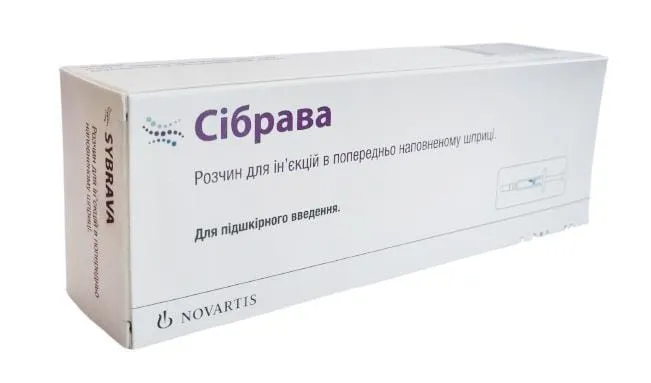
Table of Contents
INSTRUCTIONS FOR MEDICAL USE OF THE MEDICINAL PRODUCT SIBRAVA (SYBRAVA)
Composition:
Active substance: inclisiran;
One pre-filled syringe contains sodium inclisiran in an amount equivalent to 284 mg of inclisiran in 1.5 mL of solution;
1 mL of solution contains sodium inclisiran in an amount equivalent to 189 mg of inclisiran;
Excipients: water for injections, sodium hydroxide, phosphoric acid concentrated.
Pharmaceutical form. Solution for injection in a pre-filled syringe.
Main physicochemical characteristics: clear solution, colorless or pale yellow, practically free from particles.
Pharmacotherapeutic group.
Agents affecting the cardiovascular system. Hypolipidemic agents. Hypolipidemic monocomponent preparations. Other hypolipidemic agents.
ATC code C10A X16.
Pharmacological Properties
Mechanism of Action
Inclisiran is a double-stranded small interfering ribonucleic acid (siRNA) that lowers cholesterol, conjugated on the coding strand with a triantennary N-acetylgalactosamine (GalNAc) to facilitate hepatocyte uptake. In hepatocytes, inclisiran utilizes the RNA interference mechanism to direct catalytic degradation of proprotein convertase subtilisin/kexin type 9 (PCSK9) mRNA. This increases recycling and expression of low-density lipoprotein cholesterol (LDL-C) receptors on the surface of hepatocytes, enhancing LDL-C clearance and reducing circulating LDL-C levels.
Pharmacodynamics
After a single subcutaneous dose of 284 mg inclisiran, reduction in LDL-C was evident within 14 days. An average LDL-C reduction of 48–51% was observed between 30 and 60 days after administration. At day 180, LDL-C levels remained reduced by approximately 53%.
Clinical Efficacy and Safety
In clinical studies and certain publications, the 284 mg dose of inclisiran is equivalent to and referred to as 300 mg of inclisiran sodium salt.
The efficacy of inclisiran was evaluated in three phase III trials in patients with atherosclerotic cardiovascular disease (ASCVD) (ischemic heart disease, cerebrovascular disease, or peripheral artery disease), ASCVD risk equivalents (type 2 diabetes, familial hypercholesterolemia, or 10-year cardiovascular risk of 20% or higher as assessed by the Framingham Risk Score or equivalent), and/or familial hypercholesterolemia (FH). Patients were on the maximum tolerated dose of statins, with or without other lipid-modifying therapies, and required additional LDL-C lowering (patients who had not achieved treatment goals). Approximately 17% of patients had statin intolerance. Patients received subcutaneous injections of 284 mg inclisiran or placebo on days 1, 90, 270, and 450. Patients were followed up to day 540.
The effect of inclisiran on cardiovascular morbidity and mortality has not been determined.
In a pooled phase III analysis, subcutaneously administered inclisiran reduced LDL-C by 50–55% as early as day 90 (Fig. 1), and this effect was maintained during long-term therapy. Maximum LDL-C reduction was achieved by day 150 after the second dose. Small but statistically significant increases in LDL-C reduction up to 65% were associated with lower baseline LDL-C levels (approximately < 2 mmol/L [77 mg/dL]), higher baseline PCSK9 levels, higher statin doses, and greater statin intensity.
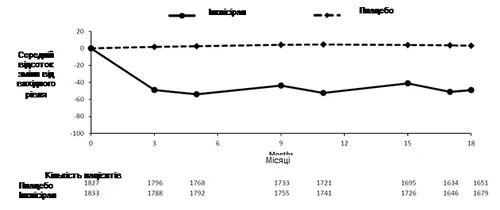
Fig. 1. Mean percentage change from baseline in LDL-C in patients with primary hypercholesterolemia and mixed dyslipidemia receiving inclisiran compared to those receiving placebo (pooled analysis).
ASCVD and ASCVD Risk Equivalents
Two studies were conducted in patients with ASCVD and ASCVD risk equivalents (ORION-10 and ORION-11). Patients were on the maximum tolerated dose of statins, with or without other lipid-modifying therapies (e.g., ezetimibe), and required additional LDL-C lowering. Since LDL-C reduction is expected to improve cardiovascular outcomes, the coprimary endpoints in each study were the percentage change in LDL-C from baseline to day 510 compared to placebo and the time-adjusted percentage change in LDL-C from baseline after day 90 through day 540 to assess the cumulative effect on LDL-C over time.
ORION-10 was a multicenter, double-blind, randomized, placebo-controlled 18-month study involving 1561 patients with ASCVD.
The mean age at baseline was 66 years (range 35 to 90 years); 60% of patients were aged ≥65 years, 31% were women, 86% were White, 13% were Black, 1% were Asian, and 14% were of Hispanic or Latino origin. The mean baseline LDL-C level was 2.7 mmol/L (105 mg/dL). 69% of patients received high-intensity statins, 19% received moderate-intensity statins, 1% received low-intensity statins, and 11% did not receive statins. The most commonly used statins were atorvastatin and rosuvastatin.
Inclisiran significantly reduced the mean percentage change in LDL-C from baseline to day 510 compared to placebo by 52% (95% CI: -56%, -49%; p < 0.0001) (Table 2).
Inclisiran also significantly reduced the time-adjusted percentage change in LDL-C from baseline between day 90 and day 540 by 54% compared to placebo (95% CI: -56%, -51%; p < 0.0001). Additional results are shown in Table 1.
Table 1
Mean percentage change from baseline and placebo-adjusted difference in lipid parameters at day 510 in the ORION-10 study
| Treatment group |
Non-HDL-C |
Total cholesterol |
Non-HDL-C |
Apo-B |
Lp(a)* |
| Mean baseline value, mg/dL** |
105 |
181 |
134 |
94 |
122 |
| Day 510 (mean percent change from baseline) |
|||||
| Placebo (n = 780) |
1 |
0 |
0 |
-2 |
4 |
| Inclisiran (n = 781) |
-51 |
-34 |
-47 |
-45 |
-22 |
| Difference vs placebo (least squares mean) (95% CI) |
-52 (-56, -49) |
-33 (-35, -31) |
-47 (-50, -44) |
-43 (-46, -41) |
-26 (-29, -22) |
| * At day 540; median percent change in Lp(a) values. ** Mean baseline Lp(a) value, nmol/L. |
|||||
By day 510, the target LDL-C level of <1.8 mmol/L (70 mg/dL) was achieved in 84% of patients with ASCVD in the inclisiran group compared to 18% of patients in the placebo group.
A consistent and statistically significant (p < 0.0001) reduction in the percentage change in LDL-C from baseline to day 510 and in the time-adjusted percentage change in LDL-C from baseline between day 90 and day 540 was observed across all subgroups, regardless of baseline demographic characteristics, baseline disease characteristics (including sex, age, body mass index, patient's race, and use of statins), concomitant medical conditions, or geographic region.
ORION-11 was an international, multicenter, double-blind, placebo-controlled, 18-month study involving 1617 patients with ASCVD or ASCVD risk equivalents. More than 75% of patients received background therapy with high-intensity statins, 87% had ASCVD, and 13% had ASCVD risk equivalents.
The mean age of patients at baseline was 65 years (range 20 to 88 years); 55% of patients were aged ≥65 years, 28% were women, 98% were White, 1% were Black, 1% were Asian, and 1% were of Hispanic or Latino origin. The mean baseline LDL-C level was 2.7 mmol/L (105 mg/dL). A total of 78% of patients received high-intensity statins, 16% received moderate-intensity statins, 0.4% received low-intensity statins, and 5% did not receive statins. The most commonly used statins were atorvastatin and rosuvastatin.
Inclisiran significantly reduced the mean percentage change in LDL-C from baseline to day 510 compared to placebo by 50% (95% CI: -53%, -47%; p < 0.0001) (Table 3).
Inclisiran also significantly reduced the time-adjusted percentage change in LDL-C from baseline between day 90 and day 540 by 49% compared to placebo (95% CI: -52%, -48%; p < 0.0001). Additional results are presented in Table 2.
Table 2
Mean percentage change from baseline and difference vs. placebo in lipid parameters at day 510 in the ORION-11 study
| Treatment group |
LDL-C |
Total cholesterol |
Non-HDL-C |
Apo-B |
Lp(a)* |
| Mean baseline value, mg/dL** |
105 |
185 |
136 |
96 |
107 |
| Day 510 (mean percent change from baseline) |
|||||
| Placebo (n = 807) |
4 |
2 |
2 |
1 |
0 |
| Inclisiran (n = 810) |
-46 |
-28 |
-41 |
-38 |
-19 |
| Difference vs placebo (LS mean) (95% CI) |
-50 (-53, -47) |
-30 (-32, -28) |
-43 (-46, -41) |
-39 (-41, -37) |
-19 (-21, -16) |
| * At day 540; median percent change in Lp(a) values. ** Mean baseline Lp(a) value, nmol/L. |
|||||
On day 510, the target LDL-C level < 1.8 mmol/L (70 mg/dL) was achieved in 82% of patients with ASCVD in the inclisiran group compared to 16% of patients in the placebo group. In patients with ASCVD risk equivalent, the target LDL-C level < 2.6 mmol/L (100 mg/dL) was achieved in 78% of patients in the inclisiran group compared to 31% of patients in the placebo group.
Consistent and statistically significant (p < 0.05) reductions in the percentage change in LDL-C from baseline to day 510 and in the time-corrected percentage change in LDL-C from baseline after day 90 through day 540 were observed across all subgroups, regardless of baseline demographic characteristics, baseline disease characteristics (including patient sex, age, body mass index, race, and statin use), concomitant diseases, and geographic region.
Heterozygous familial hypercholesterolemia
ORION-9 was an international, multicenter, double-blind, placebo-controlled 18-month study involving 482 patients with heterozygous familial hypercholesterolemia (HeFH). All patients were on the highest tolerated dose of a statin, with or without additional lipid-modifying therapy (e.g., ezetimibe), and required further LDL-C reduction. The diagnosis of HeFH was established either by genotyping or clinical criteria ("definite FH") using either Simon Broome criteria or WHO/Dutch Lipid Network criteria.
Co-primary endpoints were the percentage change in LDL-C from baseline to day 510 compared to placebo and the time-corrected percentage change in LDL-C from baseline after day 90 through day 540, to assess the cumulative effect on LDL-C over time. Key secondary endpoints included absolute change in LDL-C from baseline to day 510, time-corrected absolute change in LDL-C from baseline after day 90 through day 540, and percentage changes in PCSK9, total cholesterol, Apo-B, and non-HDL-C from baseline to day 510. Additional secondary endpoints included individual response to inclisiran and the proportion of patients achieving overall lipid targets based on their ASCVD risk level.
The mean age of patients at baseline was 55 years (range 21 to 80 years); 22% of patients were aged ≥ 65 years, 53% were women, 94% were White, 3% were Black, 3% were Asian, and 3% were of Hispanic or Latino origin. The mean baseline LDL-C level was 4.0 mmol/L (153 mg/dL). A total of 74% of patients were on high-intensity statins, 15% on moderate-intensity statins, and 10% were not taking statins. Fifty-two percent of patients were receiving ezetimibe. The most commonly used statins were atorvastatin and rosuvastatin.
Inclisiran significantly reduced the mean percentage change in LDL-C from baseline to day 510 compared to placebo by 48% (95% CI: -54%, -42%; p < 0.0001) (Table 4).
Inclisiran also significantly reduced the time-corrected percentage change in LDL-C from baseline after day 90 through day 540 by 44% compared to placebo (95% CI: -48%, -40%; p < 0.0001). Additional results are shown in Table 3.
Table 3
Mean percentage change from baseline and difference vs. placebo in lipid parameters on day 510 in the ORION-9 study
| Therapeutic group |
LDL-C |
Total cholesterol |
Non-HDL-C |
Apo-B |
Lp(a)* |
|
| Mean baseline value, mg/dL** |
153 |
231 |
180 |
124 |
121 |
|
| Day 510 (mean percent change from baseline) |
||||||
| Placebo (n = 240) |
8 |
7 |
7 |
3 |
4 |
|
| Inclisiran (n = 242) |
-40 |
-25 |
-35 |
-33 |
-13 |
|
| Difference vs placebo (LS mean) (95% CI) |
-48 (-54, -42) |
-32 (-36, -28) |
-42 (-47, -37) |
-36 (-40, -32) |
-17 (-22, -12) |
|
| * At day 540; median percent change in Lp(a) values. ** Mean baseline value of Lp(a), nmol/L. |
||||||
On day 510, the target LDL-C level of < 1.8 mmol/L (70 mg/dL) was achieved in 52.5% of patients with ASCVD in the inclisiran group compared to 1.4% of patients with ASCVD in the placebo group, whereas in the population with equivalent ASCVD risk, the target LDL-C level of < 2.6 mmol/L (100 mg/dL) was achieved in 66.9% of patients in the inclisiran group compared to 8.9% of patients in the placebo group.
Consistent and statistically significant (p < 0.05) reductions in the percentage change in LDL-C from baseline to day 510 and in the time-corrected percentage change in LDL-C from baseline between day 90 and day 540 were observed across all subgroups, regardless of baseline demographic characteristics, baseline disease characteristics (including sex, age, body mass index, race, and statin use), concomitant diseases, or geographic region.
Paediatric population
The European Medicines Agency has granted a waiver from the obligation to submit results of inclisiran studies in one or more paediatric subgroups for the treatment of elevated cholesterol levels (for information on use in children, see section "Posology and method of administration").
Pharmacokinetics
Absorption
After a single subcutaneous administration, systemic exposure to inclisiran increased approximately dose-proportionally over the dose range of 24 mg to 756 mg. At the recommended dose regimen of 284 mg, plasma concentration reached peak levels approximately 4 hours after administration, with a mean Cmax of 509 ng/mL. Concentrations declined to below the lower limit of quantification within 48 hours after administration. The mean plasma concentration-time AUC extrapolated to infinity was 7980 ng*h/mL. Pharmacokinetic profiles after multiple subcutaneous administrations of inclisiran were similar to those after a single dose.
Distribution
Inclisiran is 87% bound to plasma proteins in vitro at clinically relevant plasma concentrations. After a single 284 mg subcutaneous dose of inclisiran in healthy adults, the apparent volume of distribution is approximately 500 L. Based on non-clinical data, inclisiran is well absorbed and shows high selectivity for the liver—the target organ for cholesterol reduction.
Biotransformation
Inclisiran is primarily metabolized by nucleases into shorter, inactive nucleotides of varying lengths. Inclisiran is not a substrate for common drug transporters and, although in vitro studies have not been conducted, is not expected to be a substrate of cytochrome P450 enzymes.
Elimination
The terminal half-life of inclisiran is approximately 9 hours; no accumulation occurs with repeated dosing. Approximately 16% of the dose is excreted in urine.
Linearity/Non-linearity
In a phase I clinical study, approximately dose-proportional increases in systemic exposure to inclisiran were observed after subcutaneous administration over the dose range of 24 mg to 756 mg. With repeated subcutaneous administration of inclisiran, no accumulation or time-dependent changes were observed.
Pharmacokinetic/Pharmacodynamic relationship
In a phase I clinical study, no relationship was observed between the pharmacokinetic parameters of inclisiran and its pharmacodynamic effect on LDL-C. The selective delivery of inclisiran to hepatocytes, where it enters the RNA-induced silencing complex (RISC), results in a prolonged duration of action exceeding what would be expected based on the 9-hour plasma half-life. The maximum reduction in LDL-C was observed with the 284 mg dose, and higher doses did not result in greater effect.
Special patient groups
Renal impairment
In a dedicated renal impairment pharmacokinetic study, Cmax of inclisiran was reported to increase by approximately 2.3-, 2.0-, and 3.3-fold, and AUC by approximately 1.6-, 1.8-, and 2.3-fold in patients with mild (creatinine clearance [CrCL] 60–89 mL/min), moderate (CrCL 30–59 mL/min), and severe (CrCL 15–29 mL/min) renal impairment, respectively, compared to patients with normal renal function. Despite higher transient plasma exposure over 48 hours, LDL-C reduction was similar across all renal function groups. Based on population pharmacodynamic modelling, dose adjustment in patients with end-stage renal disease is not recommended. Given the pharmacokinetic and pharmacodynamic properties and safety assessment, dose adjustment is not required for patients with mild, moderate, or severe renal impairment. The effect of haemodialysis on the pharmacokinetics of inclisiran has not been studied. Since inclisiran is eliminated via the kidneys, haemodialysis should not be performed within at least 72 hours after administration of inclisiran.
Hepatic impairment
In a dedicated hepatic impairment pharmacokinetic study, Cmax of inclisiran was reported to increase by approximately 1.1- and 2.1-fold, and AUC by approximately 1.3- and 2.0-fold, respectively, in patients with mild (Child-Pugh class A) and moderate (Child-Pugh class B) hepatic impairment compared to patients with normal hepatic function. Despite higher transient plasma exposure over 48 hours, LDL-C reduction was similar in patients with normal liver function and those with mild hepatic impairment receiving inclisiran. In patients with moderate hepatic impairment, baseline PCSK9 levels were notably lower, and LDL-C reduction was less pronounced compared to patients with normal liver function. Dose adjustment is not required for patients with mild or moderate hepatic impairment (Child-Pugh class A and B). The use of inclisiran in patients with severe hepatic impairment (Child-Pugh class C) has not been studied.
Other special categories
A population pharmacokinetic/pharmacodynamic analysis was conducted based on data from 4328 patients. Age, body weight, sex, race, and creatinine clearance were found not to have a clinically significant effect on the pharmacodynamics of inclisiran. Dose adjustment based on these demographic characteristics is not recommended.
Clinical characteristics.
Indications.
The medicinal product Sibraava is indicated for the treatment of adult patients with primary hypercholesterolemia (heterozygous familial and non-familial) or mixed dyslipidemia as an adjunct to diet:
- in combination with a statin or statin and other lipid-lowering agents when the target LDL-C level cannot be achieved with the maximum tolerated dose of a statin, or
- as monotherapy or in combination with other lipid-lowering therapies in patients with intolerance or contraindications to statins.
Contraindications.
Hypersensitivity to the active substance or to any of the excipients.
Interaction with other medicinal products and other forms of interaction.
Inclisiran is not a substrate of common drug transporters and, although in vitro studies have not been conducted, it is not expected to be a substrate of cytochrome P450. Inclisiran is neither an inhibitor nor an inducer of cytochrome P450 enzymes or common drug transporters. Therefore, clinically significant interactions between inclisiran and other medicinal products are not expected. Due to limited data, clinically significant interactions with atorvastatin, rosuvastatin, or other statins are not expected.
Special precautions for use.
Hemodialysis
The effect of hemodialysis on the pharmacokinetics of inclisiran has not been studied. Given that inclisiran is eliminated via the kidneys, hemodialysis should not be performed for at least 72 hours after administration of inclisiran.
Sodium content
This medicinal product contains less than 1 mmol sodium (23 mg) per dose, i.e. essentially "sodium-free".
Use during pregnancy or breastfeeding.
Pregnancy
Data on the use of inclisiran in pregnant women are lacking or limited. Animal studies do not indicate direct or indirect harmful effects with regard to reproductive toxicity. As a precautionary measure, it is advisable to avoid use of inclisiran during pregnancy.
Breastfeeding
It is unknown whether inclisiran is excreted in human breast milk. Available pharmacodynamic/toxicological animal data have shown excretion of inclisiran into milk. The risk to newborns or infants cannot be excluded.
A decision on whether to discontinue breastfeeding or to discontinue/abstain from inclisiran therapy should be made taking into account the benefit of breastfeeding for the child and the benefit of therapy for the woman.
Fertility
There are no data on the effect of inclisiran on human fertility. Animal studies showed no effect on fertility.
Ability to influence the speed of reaction when driving or operating machinery.
Inclisiran has no or negligible influence on the ability to drive or operate machinery.
Administration and Dosage
Dosage
The recommended dose is 284 mg of inclisiran administered as a single subcutaneous injection at the start of treatment, then again after 3 months, followed by every 6 months thereafter.
Missed Dose
If a dose is missed and less than 3 months have passed since the scheduled date, inclisiran should be administered as soon as possible, and the patient should continue treatment according to the original schedule.
If more than 3 months have passed since the scheduled administration date, a new treatment schedule should be initiated: inclisiran should be administered at the start, then again after 3 months, followed by every 6 months thereafter.
Transition from treatment with monoclonal antibodies PCSK9 inhibitors
Inclisiran may be administered immediately after the last dose of a monoclonal antibody PCSK9 inhibitor. To maintain LDL-C reduction, it is recommended to administer inclisiran within 2 weeks after the last dose of a monoclonal antibody PCSK9 inhibitor.
Special patient populations
Elderly patients (≥ 65 years of age)
No dose adjustment is required for elderly patients.
Hepatic impairment
No dose adjustment is required for patients with mild (Child-Pugh class A) or moderate (Child-Pugh class B) hepatic impairment. Data in patients with severe hepatic impairment (Child-Pugh class C) are lacking. Inclisiran should be used with caution in patients with severe hepatic impairment.
Renal impairment
No dose adjustment is required for patients with mild, moderate, or severe renal impairment or those with end-stage renal disease. Experience with inclisiran in patients with severe renal impairment is limited. Inclisiran should be used with caution in such patients. For information on precautions related to hemodialysis, see section "Special Warnings and Precautions for Use".
Administration method
The medicinal product is intended for subcutaneous administration.
Inclisiran is administered subcutaneously in the abdominal area; alternative injection sites are the upper arm or thigh. Injections should not be administered into areas of skin disease or injury such as sunburn, rashes, inflammation, or skin infections.
Each 284 mg dose is administered using one pre-filled syringe. Each pre-filled syringe is intended for single use only.
Inclisiran should be administered by a healthcare professional.
Children
The safety and efficacy of inclisiran in children (under 18 years of age) have not been established.
Data are lacking.
Overdose
No clinically significant adverse reactions were observed in healthy volunteers who received inclisiran at doses exceeding the therapeutic dose. There is no specific antidote for inclisiran overdose. In case of overdose, symptomatic treatment should be administered and supportive measures applied as necessary.
Adverse reactions
Summary of safety profile
The only adverse reactions associated with the use of inclisiran are injection site reactions (8.2%).
List of adverse reactions
Adverse reactions are listed by primary system organ classes (Table 4). Frequency is defined as follows: very common (≥ 1/10); common (≥ 1/100 to < 1/10); uncommon (≥ 1/1000 to < 1/100); rare (≥ 1/10,000 to < 1/1000); very rare (< 1/10,000); not known (cannot be estimated from available data).
Table 4
Adverse reactions observed in patients receiving inclisiran
| System organ class |
Adverse reaction |
Frequency category |
|
| General disorders and administration site reactions |
Reactions at injection site1 |
Common |
|
| 1 See section "Description of selected adverse reactions" |
|||
Description of some adverse reactions
Injection site reactions
During the pivotal studies, injection site reactions occurred in 8.2% and 1.8% of patients in the inclisiran and placebo groups, respectively. The proportion of patients in each group who discontinued treatment due to injection site reactions was 0.2% and 0.0%, respectively. All these adverse reactions were mild or moderate in severity, transient, and resolved without sequelae. The most common injection site reactions in patients receiving inclisiran were injection site reaction (3.1%), injection site pain (2.2%), injection site erythema (1.6%), and injection site rash (0.7%).
Special patient categories
Elderly patients
Of the 1833 patients who received inclisiran during the pivotal studies, 981 (54%) were aged 65 years and older, and 239 (13%) were aged 75 years and older. No overall differences in safety were observed between these patients and younger patients.
Immunogenicity
During the studies, 1830 patients were tested for antibodies to the drug. Confirmed positive results were detected in 1.8% (33/1830) of patients prior to dose administration and in 4.9% (90/1830) of patients during 18 months of treatment with inclisiran. No clinically significant differences in clinical efficacy, safety, and pharmacodynamic profiles of inclisiran were observed between patients who tested positive for anti-inclisiran antibodies and those who did not.
Laboratory parameters
During Phase III clinical studies, increased serum levels of liver transaminases from >1 × upper limit of normal (ULN) to ≤3 × ULN were more frequently observed in patients receiving inclisiran (ALT 19.7%; AST 17.2%) compared to those receiving placebo (ALT 13.6%; AST 11.1%). These increases did not exceed the clinically significant threshold of 3 × ULN, were asymptomatic, and were not associated with adverse reactions or other signs of liver dysfunction.
Reporting suspected adverse reactions
Reporting suspected adverse reactions following marketing authorization is important. It allows continuous monitoring of the benefit-risk balance of the medicinal product. Healthcare and pharmaceutical professionals, as well as patients or their legal representatives, should report all suspected adverse reactions and lack of efficacy through the automated pharmacovigilance information system at the following link: https://aisf.dec.gov.ua/
Shelf life.
3 years.
Storage conditions.
The medicinal product does not require special storage conditions. Do not freeze. Keep out of the reach of children.
Packaging.
1.5 ml solution in a pre-filled syringe; 1 pre-filled syringe in a blister; 1 blister in a cardboard box.
Prescription status.
Prescription only.
Manufacturer.
Novartis Pharma GmbH, Austria.
Manufacturer's location and address of the place of business.
Biochemiestrasse 10, Langkampfen, 6336, Austria.