Certican
Ukraine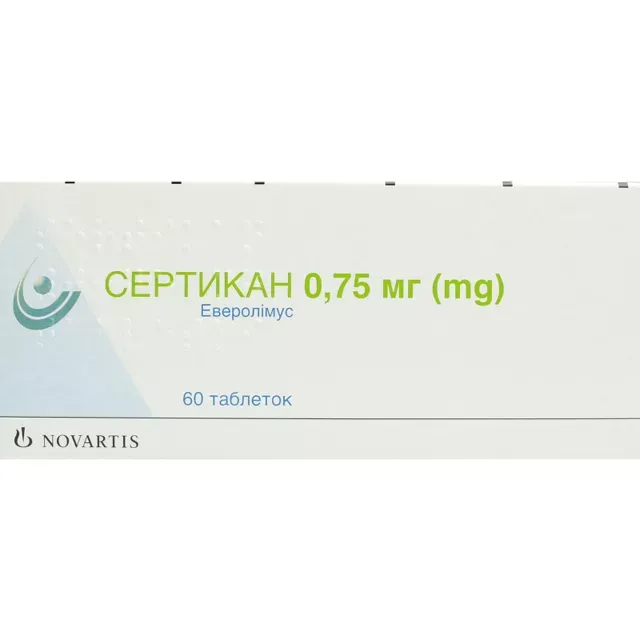
Table of Contents
INSTRUCTIONS FOR MEDICAL USE OF THE MEDICINAL PRODUCT SERTICAN (CERTICAN®)
Composition:
Active substance: everolimus;
1 tablet contains 0.75 mg of everolimus;
Excipients: butylhydroxytoluene (E 321), magnesium stearate, lactose monohydrate, hypromellose, crospovidone, anhydrous lactose.
Medicinal form. Tablets.
Main physicochemical characteristics: tablets from white to yellowish in color, with specks, round, flat, with beveled edges; engraved «CL» on one side and «NVR» on the other.
Pharmacotherapeutic group. Antineoplastic and immunomodulating agents. Immunosuppressants. Selective immunosuppressants. ATC code L04A A18.
Pharmacological Properties.
Pharmacodynamics.
Everolimus, a proliferation signal inhibitor, exerts immunosuppressive effects by inhibiting antigen-activated T-cell proliferation and, consequently, interleukin-driven clonal expansion of specific T-cells, such as interleukin-2 and interleukin-15. Everolimus inhibits intracellular signal transduction normally leading to cell proliferation upon binding of these T-cell growth factors to their receptors. Blockade of this signal by everolimus results in cell cycle arrest at the G1 phase.
At the molecular level, everolimus forms a complex with the cytoplasmic protein FKBP-12. In the presence of everolimus, growth factor-stimulated phosphorylation of p70 S6 kinase is suppressed. Since phosphorylation of p70 S6 kinase is regulated by FRAP (also known as mTOR), it is believed that the everolimus-FKBP-12 complex binds to and thereby affects FRAP function. FRAP is a key regulatory protein controlling cellular metabolism, growth, and proliferation; thus, disruption of FRAP function leads to cell cycle inhibition induced by everolimus.
Therefore, everolimus differs from cyclosporine in its mechanism of action. In preclinical models of allotransplantation, the combination of everolimus and cyclosporine was more effective than either compound alone.
The action of everolimus is not limited to T-cells. Everolimus completely inhibits growth factor-stimulated proliferation of both hematopoietic and non-hematopoietic cells, such as vascular smooth muscle cells. Growth factor-stimulated proliferation of vascular smooth muscle cells, triggered by endothelial cell injury, leads to neointima formation, which plays a major role in the pathogenesis of chronic rejection. Preclinical studies of everolimus demonstrated inhibition of neointima formation in a rat aortic allograft model.
Pharmacokinetics.
Absorption. Peak concentrations of everolimus were reached within 1–2 hours after oral administration. Blood concentrations of everolimus in transplant patients were proportional to doses ranging from 0.25 to 15 mg. The relative bioavailability of the dispersible tablet compared to the conventional tablet is 0.90 (90% CI 0.76–1.07), based on AUC ratio.
Effect of food. Cmax and AUC of everolimus decreased by 60% and 16%, respectively, when tablets were taken with a high-fat meal. To minimize variability, Certican should be taken either consistently with food or consistently in the fasting state.
Distribution. The blood-to-plasma concentration ratio of everolimus ranges from 5 to 5000 ng/mL and varies between 17% and 73%. Plasma protein binding is approximately 74% in healthy volunteers and in patients with moderate hepatic impairment. The volume of distribution related to the terminal phase (Vz/F) in kidney transplant patients is 342 ± 107 L.
Metabolism. Everolimus is a substrate for CYP3A4 and P-glycoprotein. After oral administration, it is the primary circulating component in blood. Six major metabolites of everolimus have been identified in human blood, including three monohydroxylated metabolites, two metabolites with an opened hydrolytic ring, and a phosphatidylcholine conjugate of everolimus. These metabolites were also detected in animals in toxicity studies and exhibited approximately 100-fold lower activity than everolimus itself. Therefore, the majority of the overall pharmacological activity of everolimus is attributed to the parent compound.
Elimination. After a single dose of radiolabeled everolimus in transplant patients receiving cyclosporine, most of the radioactivity (80%) was recovered in feces, while only a minor portion (5%) was excreted in urine. No unchanged drug was detected in either urine or feces.
Steady-state pharmacokinetics. Pharmacokinetic parameters following twice-daily administration of everolimus and cyclosporine as a microemulsion were comparable in kidney and heart transplant patients. Steady state was achieved by day 4, with 2–3-fold accumulation in blood compared to levels after the first dose. Tmax was reached within 1–2 hours after dosing. With a dose of 0.75 mg twice daily, mean Cmax was 11.1 + 4.6 ng/mL, and mean AUC was 75 + 31 ng·h/mL. At a dose of 0.75 mg twice daily, trough blood levels (Cmin) prior to the next dose averaged 4.1 + 2.1 ng/mL. The effect of everolimus remained stable during the first year after transplantation. Cmin correlated significantly with AUC, with a correlation coefficient of 0.86–0.94. Based on pharmacokinetic analysis in patients after oral administration, drug clearance (CL/F) was 8.8 L/h (inter-patient variability 27%), and central volume of distribution (Vc/F) was 110 L (inter-patient variability 36%). Residual variability in blood drug concentrations was 31%. Elimination half-life is 28 ± 7 hours.
Pharmacokinetics in Special Patient Populations
Hepatic impairment. In 6 patients with mild hepatic impairment (Child-Pugh class A), mean AUC of everolimus was 1.6 times higher than in patients with normal liver function. In two separate studies involving 8 and 9 patients with moderate hepatic impairment (Child-Pugh class B), mean AUC was 2.1 and 3.3 times higher, respectively. In 6 patients with severe hepatic impairment (Child-Pugh class C), mean AUC was 3.6 times higher. Mean elimination half-lives in mild, moderate, and severe hepatic impairment were 52, 59, and 78 hours, respectively.
Renal impairment. Renal function impairment in transplant patients (creatinine clearance range 11–107 mL/min) did not affect the pharmacokinetic parameters of everolimus.
Use in Pediatrics. CL/F of everolimus increased linearly with patient age (1–16 years), body surface area (0.49–1.92 m²), and body weight (11–77 kg). Steady-state CL/F was 10.2 ± 3.0 L/h/m², and elimination half-life was 30 ± 11 hours. Nineteen pediatric patients (1–16 years) with de novo kidney transplants received Certican dispersible tablets at a dose of 0.8 mg/m² (maximum 1.5 mg) twice daily in combination with cyclosporine microemulsion. In this patient group, AUC of everolimus reached 87 ± 27 ng·h/mL, similar to that observed in adults receiving 0.75 mg twice daily. Steady-state trough levels (C0) were 4.4 ± 1.7 ng/mL.
Elderly patients. A marginal decrease in oral clearance (CL) of everolimus of 0.33% per year was estimated in adults (age range studied: 16–70 years). Dose adjustment is not required.
Ethnicity. According to population pharmacokinetic analysis, oral drug clearance (CL/F) was (on average) 20% higher in non-black transplant patients.
Exposure–response relationship. Mean trough concentration of everolimus (C0) during the first 6 months post-transplantation correlated with the incidence of biopsy-confirmed acute rejection and thrombocytopenia in kidney and heart transplant recipients (see Table 1).
No clear relationship between everolimus trough concentrations and clinical outcomes was observed in liver transplant recipients.
Table 1
| Kidney transplantation |
|||||
| Minimum level (C0) (ng/mL) |
≤ 3.4 |
3.5–4.5 |
4.6–5.7 |
5.8–7.7 |
7.8–15.0 |
| Freedom from rejection |
68 % |
81 % |
86 % |
81 % |
91 % |
| Thrombocytopenia (< 100 × 109/L) |
10 % |
9 % |
7 % |
14 % |
17 % |
| Heart transplantation |
|||||
| Minimum level (C0) (ng/mL) |
≤ 3.5 |
3.6–5.3 |
5.4–7.3 |
7.4–10.2 |
10.3–21.8 |
| Freedom from rejection |
65 % |
69 % |
80 % |
85 % |
85 % |
| Thrombocytopenia (< 75 × 109/L) |
5 % |
5 % |
6 % |
8 % |
9 % |
Clinical characteristics.
Indications.
Renal and heart transplantation
Prevention of transplant rejection in adult patients with low to moderate immunological risk following allogeneic kidney or heart transplantation. Certican should be used in combination with cyclosporine microemulsion and corticosteroids. Continuous therapeutic monitoring with measurement of everolimus and cyclosporine blood levels is required.
Contraindications.
Certican is contraindicated in patients with known hypersensitivity to everolimus, sirolimus, or any of the excipients. Anti-T-lymphocyte immunoglobulin induction is contraindicated when the drug is indicated for heart transplantation.
Interaction with other medicinal products and other types of interactions.
Everolimus is metabolized primarily in the liver and to some extent in the intestinal wall by the CYP3A4 isoenzyme. It is also a substrate for the drug efflux system, P-glycoprotein (P-gp). Therefore, medicinal products that affect CYP3A4 and/or P-gp may influence the absorption and subsequent elimination of everolimus.
Concomitant use of strong CYP3A4 inhibitors and/or inducers is not recommended. P-gp inhibitors may reduce the efflux of everolimus from intestinal cells and increase everolimus blood concentrations. In vitro, everolimus has been shown to be a competitive inhibitor of CYP3A4 and CYP2D6, potentially increasing the concentrations of drugs metabolized by these enzymes. Therefore, caution should be exercised when using everolimus concomitantly with CYP3A4 and CYP2D6 substrates that have a narrow therapeutic index. All in vivo interaction studies were conducted without concomitant administration of cyclosporine.
Observed interactions, due to which concomitant use is not recommended
Rifampicin (CYP3A4 inducer). Prior administration of multiple doses of rifampicin to healthy volunteers resulted in approximately a threefold increase in everolimus clearance and a 58% reduction in Cmax and a 63% reduction in AUC after a single dose of Certican (see "Special precautions for use").
Ketoconazole (CYP3A4 inhibitor). Prior administration of multiple doses of ketoconazole to healthy volunteers resulted in a 3.9-fold increase in everolimus Cmax and a 15-fold increase in AUC after a single dose of Certican (see "Special precautions for use").
Expected interactions, due to which concomitant use is not recommended
Strong CYP3A4 inhibitors/inducers. Concomitant use of Certican with strong CYP3A4 inhibitors and/or inducers (such as itraconazole, voriconazole, clarithromycin, telithromycin, ritonavir, and/or rifampicin, rifabutin) (see "Special precautions for use").
Observed interactions that should be taken into account
Interactions affecting the use of Certican
Cyclosporine (CYP3A4/P-gp inhibitor). The bioavailability of everolimus was significantly increased when co-administered with cyclosporine. In a single-dose study administered to healthy volunteers, cyclosporine microemulsion (Sandimmun Neoral®) increased the AUC of everolimus by 168% (range 46–365%) and Cmax by 82% (range 25–158%) compared to administration of everolimus alone. Dose adjustment of everolimus may be required if the cyclosporine dose is changed.
Erythromycin (CYP3A4 inhibitor). Prior administration of multiple doses of erythromycin to healthy volunteers increased the Cmax of everolimus by 2-fold and AUC by 4.4-fold after a single dose of Certican.
Verapamil (CYP3A4 inhibitor). Prior administration of multiple doses of verapamil to healthy volunteers increased the Cmax of everolimus by 2.3-fold and AUC by 3.5-fold.
Interactions affecting the use of other drugs
Cyclosporine (CYP3A4/P-gp inhibitor). When cyclosporine microemulsion is used concomitantly with Certican, a slight reduction in cyclosporine dose (9–20%) may be necessary to achieve recommended minimum cyclosporine levels (C0).
Octreotide. Concomitant administration of everolimus with depot octreotide increased octreotide Cmin, with a geometric mean ratio of everolimus/placebo of 1.47-fold.
Atorvastatin (CYP3A4 substrate) and pravastatin (P-gp substrate). Single-dose administration of Certican to healthy volunteers concomitantly with atorvastatin or pravastatin did not clinically significantly affect the pharmacokinetics of atorvastatin, pravastatin, or everolimus, nor the overall plasma HMG-CoA reductase inhibitory activity. However, these results cannot be extrapolated to other HMG-CoA reductase inhibitors.
Patients receiving HMG-CoA reductase inhibitors and/or fibrates should be monitored, as there is a risk of developing rhabdomyolysis and other adverse effects.
Midazolam (CYP3A4 substrate). In a two-period crossover drug interaction study, 25 healthy volunteers received a single oral dose of 4 mg midazolam in period 1. In period 2, they received everolimus 10 mg once daily for 5 days and a single 4 mg dose of midazolam with the last dose of everolimus. Cmax of midazolam increased by 1.25-fold (90% CI, 1.14–1.37) and AUC∞ increased by 1.30-fold (1.22–1.39). The elimination half-life of midazolam remained unchanged. This study demonstrated that everolimus is a weak inhibitor of CYP3A4.
Other possible interactions.
Moderate CYP3A4 inducers. CYP3A4 inducers (e.g., St. John’s wort, anticonvulsants, carbamazepine, phenobarbital, phenytoin, anti-HIV agents: efavirenz, nevirapine) may increase the metabolism of everolimus and reduce everolimus blood levels.
Moderate CYP3A4 and P-gp inhibitors (e.g., antifungal agents (fluconazole), macrolide antibiotics (erythromycin), calcium channel blockers (verapamil, nicardipine, diltiazem); protease inhibitors (nelfinavir, indinavir, amprenavir)) may increase everolimus blood levels.
P-gp inhibitors. P-gp inhibitors may reduce the efflux of everolimus from gastrointestinal tract (GI) cells and increase its blood levels.
CYP3A4 and CYP2D6 substrates. In vitro, everolimus was shown to be a competitive inhibitor of CYP3A4 and CYP2D6, potentially increasing the concentrations of drugs metabolized by these enzymes. Therefore, caution should be exercised when using everolimus concomitantly with CYP3A4 and CYP2D6 substrates that have a narrow therapeutic index. All in vivo interaction studies were conducted without concomitant administration of cyclosporine.
ACE inhibitors. Concomitant use of Certican and ACE inhibitors may increase the risk of angioedema.
Interaction with food and beverages. Grapefruit and grapefruit juice affect the activity of cytochrome P450 and P-gp; therefore, their consumption should be avoided.
Vaccination. Immunosuppressants may affect the appropriate immune response to vaccination; therefore, vaccination during treatment with Certican may be less effective. Live vaccines should be avoided.
Special precautions for use.
Immunosuppression
There are limited data on the use of Certican without a calcineurin inhibitor (CNI), such as cyclosporine or tacrolimus. An increased risk of acute rejection has been observed in patients who discontinued CNI compared to those who continued CNI therapy.
In clinical trials, Certican was administered concomitantly with cyclosporine microemulsion or tacrolimus, basiliximab, and corticosteroids. Adequate studies of Certican in combination with other immunosuppressants, apart from those mentioned, have not been conducted.
Adequate studies of Certican use in patients with high immunological risk have not been conducted.
Kidney transplant recipients with cold ischemia time > 40 hours or positive T-cell cross-match with donor-specific transfusion were excluded from clinical trials. In clinical trials of heart transplantation, patients with panel-reactive antibody (PRA) > 20% were not included. For both indications, patients were excluded if they had received multiple solid organ transplants (including more than one kidney), had undergone prior organ transplantation, or were recipients of ABO-incompatible organs. The immunological risk in patients not excluded according to the above criteria was considered low.
Heart transplantation: Contraindication of induction with anti-T-lymphocyte immunoglobulin
Induction with anti-T-lymphocyte immunoglobulin in combination with Certican/cyclosporine/steroids is contraindicated. In a clinical study involving heart transplant recipients (Study A2310), significantly higher mortality and serious infection rates were observed during the first three months post-transplantation in the subgroup receiving induction therapy with anti-T-lymphocyte immunoglobulin and everolimus (EVRL), compared to the active control group receiving mycophenolate mofetil (MMF). The increase in mortality was particularly pronounced in patients hospitalized prior to transplantation and requiring ventricular assist device (VAD) support (mortality with EVRL: 5/9 (55.6%) vs. MMF: 1/14 (7.1%)). Regardless of renal function, mortality was significantly higher with everolimus compared to mycophenolate in the anti-T-lymphocyte immunoglobulin subgroup. However, in patients with impaired renal function (GFR < 40 mL/min), the mortality rate was especially high—nearly 30% (mortality with EVRL: 6/21 (28.6%) vs. MMF: 2/20 (10%)).
Serious and opportunistic infections
Patients receiving immunosuppressants, including Certican, are at increased risk of opportunistic infections (bacterial, fungal, viral, and protozoal). Fatal infections and sepsis have been reported in patients receiving Certican.
Opportunistic infections that may occur in patients receiving immunosuppressants include polyomavirus infections such as BK virus-associated nephropathy, which may lead to loss of the kidney allograft, and JC virus-associated progressive multifocal leukoencephalopathy (PML), which may be fatal. These infections are often associated with high overall immunosuppressive burden, which physicians should consider when differentially diagnosing immunocompromised patients presenting with worsening renal function or neurological symptoms.
In clinical trials of Certican, antimicrobial prophylaxis against Pneumocystis jirovecii (carinii) pneumonia and cytomegalovirus (CMV) was recommended post-transplantation, especially for patients at increased risk of opportunistic infections.
Hepatic impairment
In patients with hepatic impairment, close monitoring of everolimus trough blood levels (C0) is required, and dose adjustment of everolimus is recommended (see "Dosage and administration").
Interaction with strong CYP3A4 inhibitors and inducers
Concomitant use of Certican with strong CYP3A4 inhibitors (e.g., ketoconazole, itraconazole, voriconazole, clarithromycin, telithromycin, ritonavir) or CYP3A4 inducers (e.g., rifampicin, rifabutin) is not recommended unless the benefit outweighs the risk.
Monitoring of everolimus trough levels in whole blood (C0) is recommended during concomitant use of CYP3A4 inducers or inhibitors, as well as after discontinuation of such agents (see "Interaction with other medicinal products and other types of interactions").
Lymphomas and other malignancies
Patients receiving immunosuppressants, including Certican, may have an increased risk of developing lymphomas or other malignancies, particularly of the skin (see "Adverse reactions"). The absolute risk is believed to be more related to the duration and intensity of immunosuppression rather than to the use of a specific drug. Patients should undergo regular skin examinations for malignancies; exposure to sunlight and ultraviolet radiation should be limited, and appropriate sunscreen should be used.
Hyperlipidemia
Concomitant use of Certican and cyclosporine microemulsion in transplant recipients has been associated with increased serum cholesterol and triglyceride levels, which may require appropriate treatment. Lipid levels should be monitored in patients receiving Certican, and lipid-lowering therapy and appropriate dietary measures should be initiated if necessary (see "Interaction with other medicinal products and other types of interactions").
For patients with pre-existing hyperlipidemia, the potential benefit of treatment with Certican versus the possible risk should be carefully considered before initiating immunosuppressive therapy. Similarly, the benefit-risk balance should be re-evaluated for continuing Certican therapy in patients with severe persistent hyperlipidemia.
In patients receiving Certican in combination with an HMG-CoA reductase inhibitor and/or a fibrate, monitoring for possible development of rhabdomyolysis and other adverse effects, as described in the respective product information for these drugs, is recommended (see "Interaction with other medicinal products and other types of interactions").
Angioedema
Concomitant use of Certican and ACE inhibitors has frequently led to the occurrence of angioedema (see "Interaction with other medicinal products and other types of interactions" and "Adverse reactions").
Nephrotoxicity
Use of the drug with high-dose cyclosporine increases the risk of renal function impairment; therefore, cyclosporine dosage must be reduced when used in combination with Certican to prevent renal dysfunction.
Regular monitoring of renal function is recommended for all patients. It should be noted that patients with elevated serum creatinine levels may require appropriate modification of the immunosuppressive regimen. Caution is advised when co-administering other drugs that negatively affect renal function.
Proteinuria
Use of Certican with a calcineurin inhibitor (CNI) in de novo kidney transplant recipients may be associated with increased proteinuria. The risk increases with higher blood levels of everolimus. In kidney transplant recipients with mild proteinuria during maintenance immunosuppressive therapy including CNI, increased proteinuria has been reported when CNI was replaced with Certican. Reversal of proteinuria has been observed upon discontinuation of Certican and resumption of CNI therapy. Proteinuria should be monitored in patients receiving Certican.
Renal allograft thrombosis
There have been reports of increased risk of arterial and venous thrombosis of the transplanted kidney, leading to graft rejection. This phenomenon most commonly occurred within the first 30 days after transplantation.
Wound healing complications
Certican, like other mTOR inhibitors, may impair wound healing and lead to post-transplant complications such as wound dehiscence, fluid accumulation, and wound infection, which may require additional surgical intervention.
Lymphocele has been most frequently reported in kidney transplant recipients, with a tendency to occur more often in patients with higher body mass index.
Pericardial and pleural effusion
The incidence of pericardial and pleural effusion is increased in heart transplant recipients; these events mostly occur within 30 days (in more than 75% of cases).
Male infertility
Reversible azoospermia and oligospermia have been reported in the medical literature in patients receiving mTOR inhibitors. Preclinical toxicological studies have shown that everolimus may reduce spermatogenesis. Male infertility should be considered a potential risk during long-term therapy with Certican.
Thrombotic microangiopathy
Concomitant use of Certican and calcineurin inhibitors (CNI) may increase the risk of CNI-induced hemolytic uremic syndrome / thrombotic thrombocytopenic purpura / thrombotic microangiopathy.
Metabolic disorders / intolerance to excipients
Patients with rare hereditary conditions such as galactose intolerance, lactase deficiency, or glucose-galactose malabsorption should not take this medication.
This medicinal product contains lactose; therefore, if you have been diagnosed with an intolerance to certain sugars, consult your doctor before taking this medicine.
Interstitial lung disease
Cases of interstitial lung disease, i.e., intraparenchymal lung inflammation (pneumonitis) and/or fibrosis of non-infectious etiology, some with fatal outcome, have been observed in patients receiving rapamycin or its derivatives, including Certican. The diagnosis of interstitial lung disease (ILD) should be considered in patients with symptoms of infectious pneumonia unresponsive to antibiotic therapy, after excluding infectious, neoplastic, and other non-drug-related causes through appropriate investigations. Patients' condition generally improved after discontinuation of Certican and/or initiation of glucocorticoid therapy. However, fatal cases have also been reported.
New-onset diabetes
An increased risk of post-transplantation diabetes has been observed with the use of Certican. Therefore, blood glucose concentrations should be monitored in patients receiving Certican.
Vaccination
Immunosuppressants may affect the appropriate immune response to vaccination; therefore, vaccination during treatment with Certican may be less effective. Live vaccines should be avoided.
Use during pregnancy or breastfeeding
There are no adequate data on the use of Certican during pregnancy. Animal studies have demonstrated reproductive toxicity, including embryotoxicity and fetotoxicity. The potential risk to humans is not established. Certican should not be administered during pregnancy unless the potential benefit to the mother outweighs the potential risk to the fetus. Women of childbearing potential should be advised to use effective contraception during therapy with Certican and for 8 weeks after discontinuation of treatment.
It is unknown whether everolimus passes into human breast milk, but in animal studies, everolimus and/or its metabolites readily passed into the milk of rats. Therefore, breastfeeding should be discontinued during treatment with this medicinal product.
Ability to affect reaction speed when driving or operating machinery
Studies on the influence of the medicinal product on the ability to drive or operate machinery have not been conducted.
Method of Administration and Dosage
Treatment with Certican must be initiated and supervised only by a physician experienced in immunosuppressive therapy and in the management of transplant patients, and who has access to monitoring of everolimus blood levels. This should be conducted in a hospital setting.
Adults. The daily dose of Certican should be administered orally in two divided doses (twice daily). Certican should be taken either with food or between meals, at the same time as cyclosporine (in the form of microemulsion) or tacrolimus.
Certican is intended for oral use only.
Certican tablets should be swallowed whole with a glass of water and must not be crushed or chewed prior to administration.
Dose adjustments may be necessary for patients receiving Certican, depending on achieved everolimus blood levels, tolerability, individual response, changes in concomitant therapy, and clinical status. Dose adjustments may be made at intervals of 4–5 days (see "Therapeutic Concentration Monitoring").
The 3 mg dose is contraindicated, as various studies have shown increased mortality with its use.
Renal and Heart Transplantation. The recommended initial dose is 0.75 mg twice daily, which should be initiated as soon as possible after transplantation. The target trough blood concentration range is 3–8 ng/mL.
Patients of non-Caucasian race. The incidence of biopsy-proven acute rejection episodes was significantly higher in non-Caucasian patients compared to other racial groups. Data on the efficacy and safety of the drug in non-Caucasian patients are currently limited, and therefore no specific recommendations can be made regarding everolimus treatment in this population.
Children. There are insufficient data on the use of Certican in children to support its use in this age group. However, limited information is available regarding kidney transplantation in pediatric patients (see "Pharmacological Properties").
Elderly patients (≥ 65 years of age). Clinical experience with the use of Certican in patients over 65 years of age is limited. However, there are no apparent differences in the pharmacokinetics of everolimus in patients aged 65–70 years and older compared to younger patients (see "Pharmacological Properties").
Patients with renal impairment. No dose adjustment is required (see "Pharmacological Properties").
Patients with hepatic impairment. Patients with impaired liver function require careful monitoring of everolimus trough blood levels (C0). In patients with mild to moderate hepatic impairment (Child-Pugh class A), the dose should be reduced to approximately two-thirds of the standard dose. In patients with moderate to severe hepatic impairment (Child-Pugh class B or C), the dose should be reduced to approximately half of the standard dose. Further dose titration should be based on therapeutic drug monitoring.
Therapeutic Concentration Monitoring. Monitoring of everolimus trough blood levels in whole blood is recommended. According to exposure-efficacy and exposure-safety analyses, patients achieving a trough blood concentration (C0) of everolimus > 3 ng/mL had a lower incidence of biopsy-proven acute rejection of both kidney and heart allografts. The recommended upper limit of the therapeutic range should not exceed 8 ng/mL. Doses resulting in concentrations above 12 ng/mL have not been studied. The recommended everolimus ranges described above are based on data obtained using liquid chromatography with tandem mass spectrometry (LC-MS/MS).
It is particularly important to monitor everolimus blood concentrations in patients with hepatic impairment; when co-administered with strong inducers or inhibitors of CYP3A4 and P-glycoprotein, and after discontinuation of such agents; and when cyclosporine dosage is significantly reduced or discontinued (see "Interaction with Other Medicinal Products and Other Forms of Interaction").
Ideally, dose adjustments of Certican should be based on more than one measurement of the trough concentration (C0), performed no sooner than 4–5 days after the last dose change. In patients with hepatic impairment, dose adjustments should be based on two consecutive trough level measurements, considering the prolonged elimination half-life of everolimus. Since cyclosporine interacts with everolimus, everolimus blood levels may decrease when cyclosporine dosage is reduced (i.e., trough concentration (C0) < 50 ng/mL) (see "Interaction with Other Medicinal Products and Other Forms of Interaction").
Recommended Cyclosporine Doses in Kidney Transplantation. Certican should not be used concomitantly with high-dose cyclosporine for prolonged periods. In kidney transplant recipients receiving Certican, reduction of cyclosporine dosage improves renal function. Therapy with Certican, along with reduction of cyclosporine and corticosteroid doses, should be initiated immediately after kidney transplantation. Certican should not be used concomitantly with high-dose cyclosporine. In study A2309, the mean initial cyclosporine dose was 5.21 ± 2.72 mg/kg/day. Subsequently, the dose was adjusted to achieve the recommended target cyclosporine blood levels (see Table 2), with gradual reduction to a mean dose of 1.49 ± 0.68 mg/kg/day and a mean cyclosporine trough blood level of 55 ± 38 ng/mL by month 12.
Table 2
Recommended trough blood concentration range of cyclosporine in patients receiving Certican
| Drug |
1st month |
2–3rd months |
4–5th months |
6–12th months |
| Cyclosporine C0 (ng/mL) |
100–200 |
75–150 |
50–100 |
25–50 |
If reduction of cyclosporine exposure leads to signs of transplant rejection, the continued use of Certican should be re-evaluated.
Prior to reducing the cyclosporine dose, it is necessary to ensure that the steady-state trough concentration of everolimus in whole blood (C0) is ≥ 3 ng/mL.
For long-term therapy (beyond 12 months), there is limited information regarding Certican dosing with cyclosporine trough levels (C0) below 50 ng/mL or C2 levels below 350 ng/mL.
Recommended cyclosporine doses in heart transplantation. Heart transplant recipients during the maintenance phase of treatment should receive reduced doses of cyclosporine as an acceptable dose to improve renal function (see Table 3). In heart transplant recipients, cyclosporine dosing may be based on the target cyclosporine blood trough levels indicated in Table 3.
Table 3
Heart transplantation: Recommended cyclosporine trough levels in patients receiving Certican
| Drug |
1st month |
2nd month |
3–4 months |
5–6 months |
7–12 months |
| Cyclosporine C0 (ng/ml) |
200–350 |
150–250 |
100–200 |
75–150 |
50–100 |
It is recommended to maintain reduced minimum cyclosporine levels (C0) of 50–100 ng/mL when used in combination with Certican throughout the 12-month treatment period. However, data in heart transplant patients continuing this regimen beyond 12 months are currently limited.
Cyclosporine levels should be closely monitored to ensure they remain within the recommended range to reduce the risk of nephrotoxicity (see "Special precautions").
Patients in whom a persistent risk of graft rejection prevents dose titration to a lower cyclosporine blood level have an increased risk of nephrotoxicity. In such cases, the continued use of Certican should be re-evaluated considering alternative therapies.
Cyclosporine dose reduction should only be initiated after confirming that the steady-state trough blood level of everolimus (C0) is ≥ 3 ng/mL.
Children. Sufficient data on the use of Certican for treatment in children are lacking (see "Dosage and administration").
Overdose.
Data on overdose are very limited. One case of accidental administration of 1.5 mg everolimus to a 2-year-old child has been reported, with no adverse effects observed. Single doses up to 25 mg administered to transplant patients were well tolerated.
General supportive measures should be undertaken in all cases of overdose.
Adverse Reactions
Certican in combination with cyclosporine was studied in five trials in kidney transplant recipients, involving a total of 2,497 patients (including two studies without a Certican-controlled group), and in three trials in heart transplant recipients, involving a total of 1,531 patients (the "all patients who started treatment" population).
Additionally, Certican in combination with tacrolimus was studied in one trial involving 719 liver transplant recipients (the "all patients who started treatment" population).
The frequency of adverse reactions listed below was determined from an analysis of cases observed during 12 months in multicenter, randomized, controlled trials evaluating the use of Certican in combination with calcineurin inhibitors and corticosteroids in transplant recipients. All studies included a non-Certican treatment group based on standard CNI therapy.
Below are adverse reactions possibly or probably related to Certican, observed in Phase III clinical trials. Unless otherwise specified, these disorders were reported with increased frequency in Phase III trials comparing Certican with standard non-Certican regimens, or with similar frequency when the effect was a known adverse effect of the comparator drug (mycophenolic acid) in kidney and heart transplant studies. The adverse reaction profile is relatively consistent across all post-transplant indications. It is organized according to MedDRA organ system classes.
Adverse drug reactions observed in clinical trials are listed by MedDRA system organ classes. Within each system organ class, adverse reactions are presented in order of decreasing frequency. In addition, the corresponding frequency category for each adverse reaction is based on the following classification (CIOMS III): very common > 1/10, common > 1/100 and < 1/10, uncommon > 1/1,000 and < 1/100, rare > 1/10,000 and < 1/1,000, very rare < 1/10,000, and not known.
Infections and infestations.
Very common: viral, bacterial, and fungal infections (63.1%), upper respiratory tract infections (24.8%), urinary tract infections (24.8%; common in heart transplantation), lower respiratory tract infections, including pneumonia (12.9%; common in kidney transplantation).
Common: sepsis, wound infection.
Benign, malignant and unspecified neoplasms (including cysts and polyps).
Common: malignant or unspecified tumors, skin tumors.
Uncommon: lymphomas, lymphoproliferative disorders.
Blood and lymphatic system disorders.
Very common: anemia/erythropenia (41.9%), leukopenia (15.8%), thrombocytopenia (11.1%).
Common: pancytopenia, thrombotic microangiopathies (thrombotic thrombocytopenic purpura, hemolytic uremic syndrome, thrombotic microangiopathies).
Endocrine disorders.
Uncommon: hypogonadism in males (decreased testosterone levels, increased levels of follicle-stimulating and luteinizing hormones).
Metabolism and nutrition disorders.
Very common: hyperlipidemia (cholesterol and triglycerides) (52.2%), newly diagnosed diabetes mellitus (21.2%), hypokalemia (12.9%).
Psychiatric disorders.
Very common: insomnia (26.9%), anxiety (15.1%).
Nervous system disorders.
Very common: headache (28.0%).
Cardiac disorders.
Very common: pericardial effusion (in heart transplantation) (39.8%).
Common: tachycardia.
Vascular disorders.
Very common: arterial hypertension (46.2%), venous thromboembolism (12.2%).
Common: lymphocele (in kidney and heart transplantation), epistaxis, renal transplant thrombosis.
Rare: leukocytoclastic vasculitis*.
Not known: lymphedema.
Respiratory, thoracic and mediastinal disorders.
Very common: pleural effusion (25.4%; common in kidney transplantation), cough (20.4%; common in kidney transplantation), dyspnea (16.8%; common in kidney transplantation).
Common: pneumonia.
Uncommon: interstitial lung disease.
Rare: pulmonary alveolar proteinosis*.
Gastrointestinal disorders.
Very common: constipation, abdominal pain (18.4%), diarrhea (19.2%), nausea (29.6%), vomiting (14.6%).
Common: oropharyngeal pain, pancreatitis, stomatitis/oral ulcers.
Hepatobiliary disorders.
Uncommon: non-infectious hepatitis, jaundice.
Skin and subcutaneous tissue disorders.
Common: acne, rash.
Rare: erythroderma*.
Immune system disorders: hypersensitivity reactions possible.
Musculoskeletal and connective tissue disorders.
Common: arthralgia, myalgia.
Renal and urinary disorders.
Common: proteinuria, renal tubular necrosis (in kidney transplantation), renal failure, mainly when used with full-dose calcineurin inhibitor – cyclosporine.
Reproductive system and breast disorders.
Common: erectile dysfunction, ovarian cyst*.
General disorders and administration site conditions.
Very common: peripheral edema (44.9%), impaired wound healing (32.5%), pyrexia (18.6%), pain (15.4%).
Common: angioedema, predominantly of the tongue and pharynx, mainly when used with ACE inhibitors, postoperative scar hernia.
Investigations.
Common: abnormalities detected in liver function tests (elevated levels of gamma-GT, AST, ALT).
*Post-marketing studies.
In controlled clinical trials where 3,256 patients received Certican in combination with other immunosuppressants and were observed for at least 1 year, 3.1% of patients developed malignant neoplasms (1.0% – malignant skin diseases; 0.6% – lymphomas or lymphoproliferative disorders). The occurrence of adverse effects may depend on the intensity and duration of immunosuppressive regimens. In pivotal studies, an increase in serum creatinine levels was observed more frequently in patients receiving Certican in combination with full-dose cyclosporine microemulsion than in patients in the control group. The overall incidence of adverse effects was lower when the cyclosporine dose (microemulsion) was reduced.
In clinical trials, the currently recommended regimen of cyclosporine used with low-dose Certican has resulted in improved renal function compared to previous studies where Certican was administered concurrently with full doses of cyclosporine. The adverse event profile described above was generally similar regardless of whether full-dose or reduced-dose cyclosporine regimens were used.
Shelf life. 3 years.
Storage conditions.
Store at temperatures not exceeding 30 °C, protected from light and moisture. Keep out of the reach of children.
Packaging.
10 tablets in a blister; 6 blisters in a cardboard carton.
Prescription category. Prescription only.
Manufacturer.
- Novartis Pharma Stein AG / Novartis Pharma Stein AG
- Sandoz S.R.L. / Sandoz S.R.L.
Manufacturer's address and place of business.
- Schaffhauserstrasse, 4332 Stein, Switzerland
- Str. Livezeni nr. 7A, 540472, Targu Mures, Jud. Mures, Romania