Sellscept®
Ukraine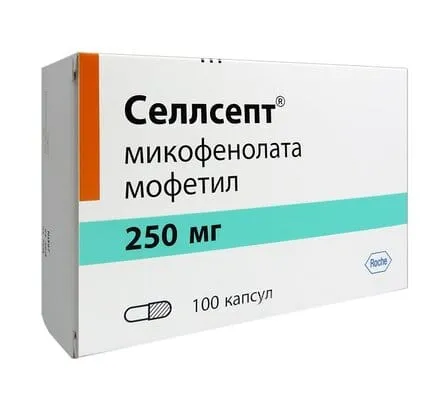
Table of Contents
INSTRUCTIONS FOR MEDICAL USE OF THE MEDICINAL PRODUCT Selsept® (Cellcept®)
Composition:
Active substance: mycophenolic acid;
1 capsule contains mycophenolate mofetil 250 mg;
Excipients: pregelatinized starch; sodium croscarmellose; povidone (K90); magnesium stearate; capsule shell: titanium dioxide (E 171); iron oxide yellow (E 172); iron oxide red (E 172); indigocarmine FD&C Blue No. 2 (E 132); gelatin; printing ink.
Medicinal form. Capsules.
Main physicochemical properties: hard gelatin capsules, body – opaque, brown-colored; cap – opaque, blue-colored; black printing: "CellCept 250" on the cap and "Roche" on the body; capsule contents – fine granular powder, partially aggregated, white to almost white in color.
Pharmacotherapeutic group. Selective immunosuppressive agents. Mycophenolic acid.
ATC code L04A A06.
Pharmacological Properties.
Pharmacodynamics.
Mechanism of action
Mycophenolate mofetil is the 2-morpholinoethyl ester of mycophenolic acid (MPA). The 2-morpholinoethyl ester of mycophenolic acid is a selective, non-competitive, and reversible inhibitor of inosine monophosphate dehydrogenase (IMPDH), which suppresses de novo synthesis of guanosine nucleotides without incorporation into DNA. The 2-morpholinoethyl ester of mycophenolic acid exerts a more pronounced cytostatic effect on lymphocytes than on other cells, since proliferation of T- and B-lymphocytes is highly dependent on de novo purine synthesis, whereas cells of other types can utilize salvage pathways of metabolism.
In addition to inhibition of IMPDH and the associated lymphocyte deprivation, MPA also affects cellular checkpoints responsible for metabolic programming of lymphocytes. In studies using human CD4+ T-cells, MPA has been shown to shift transcriptional activity in lymphocytes from processes of proliferation to catabolic processes important for metabolism and survival, leading to a state of T-cell anergy, whereby the cells cease to respond to their specific antigen.
Pharmacokinetics.
Absorption
After oral administration, mycophenolate mofetil is rapidly and completely absorbed and undergoes complete presystemic metabolism to form the active metabolite mycophenolic acid (MPA). Based on the suppression of acute kidney transplant rejection, the immunosuppressive activity of Sellept® correlates with mycophenolic acid concentration. The mean bioavailability of mycophenolate mofetil following oral administration, based on MPA AUC (area under the concentration-time curve), is 94% relative to intravenous administration. Food intake does not affect the extent of mycophenolate mofetil absorption (MPA AUC) when administered at a dose of 1.5 g twice daily in kidney transplant patients. However, the maximum concentration of mycophenolic acid is reduced by 40% when the drug is taken with food. After oral administration, plasma concentrations of mycophenolate mofetil are not detectable.
Distribution
Due to enterohepatic recirculation of the drug, a secondary increase in plasma concentration of mycophenolic acid is typically observed approximately 6–12 hours after drug administration. When administered concomitantly with cholestyramine (4 g three times daily), MPA AUC is reduced by approximately 40%, indicating significant enterohepatic recirculation.
At clinically relevant concentrations, mycophenolic acid is 97% bound to plasma albumin.
In the early post-transplant period (< 40 days after transplantation), in patients receiving kidney, heart, or liver transplants, the mean MPA AUC was approximately 30% lower and Cmax approximately 40% lower compared to values in the late post-transplant period (3–6 months after transplantation).
Metabolism
Mycophenolic acid is primarily metabolized by glucuronosyltransferase (isoform UGT1A9) to form the inactive phenolic glucuronide of mycophenolic acid. In vivo, the phenolic glucuronide of mycophenolic acid is converted back to free mycophenolic acid via enterohepatic recirculation. A minor acyl glucuronide (AcMPAG) is also formed, which is pharmacologically active and may contribute to some adverse effects of mycophenolate mofetil (e.g., diarrhea, leukopenia).
Excretion
Minimal amounts of the drug (< 1% of dose) are excreted in urine as mycophenolic acid. After oral administration of radiolabeled mycophenolate mofetil, 93% of the administered dose is recovered in urine and 6% in feces. A substantial portion (approximately 87%) of the administered dose is excreted in urine as the phenolic glucuronide of mycophenolic acid.
Mycophenolic acid and the phenolic glucuronide of mycophenolic acid are not significantly removed by hemodialysis at clinically relevant concentrations. However, at higher concentrations of the phenolic glucuronide of mycophenolic acid (> 100 µg/mL), a small amount may be removed.
Bile acid sequestrants such as cholestyramine disrupt the enterohepatic recirculation of Sellept® and reduce MPA AUC (see section "Overdose").
Pharmacokinetics (all phases except absorption) of mycophenolic acid depend on several transporters. Organic anion transporting polypeptide and multidrug resistance-associated protein 2 are involved in the pharmacokinetics (all phases except absorption) of mycophenolic acid; isoforms of organic anion transporting polypeptide, multidrug resistance-associated protein 2, and breast cancer resistance protein are transporters associated with biliary excretion of glucuronides. Multidrug resistance protein 1 may also transport mycophenolic acid, but its contribution appears limited to the absorption process. In the kidneys, mycophenolic acid and its metabolites strongly interact with renal organic anion transporters.
Enterohepatic recirculation hinders precise determination of pharmacokinetic parameters (except absorption); only observed values can be provided. In healthy volunteers and patients with autoimmune diseases, approximate clearance values were 10.6 L/hour and 8.27 L/hour, respectively, and elimination half-life values were approximately 17 hours. In transplant patients, mean clearance values were higher (range 11.9–34.9 L/hour), and mean elimination half-life values were shorter (5–11 hours), with minor differences among kidney, liver, and heart transplant patients. In individual patients, these elimination parameters vary depending on concomitant immunosuppressive therapy, time after transplantation, plasma albumin concentration, and renal function. These factors explain the reduced exposure when Sellept® is co-administered with cyclosporine (see section "Interaction with other medicinal products and other forms of interaction") and why plasma concentrations tend to increase over time compared to levels immediately after transplantation.
Special patient groups.
Patients with renal impairment
In a single-dose study (6 patients per group), mean plasma MPA AUC was 28–75% higher in patients with severe chronic renal impairment (glomerular filtration rate < 25 mL/min/1.73 m²) than in healthy volunteers and patients with less severe renal impairment. However, after a single dose, mean AUC of the phenolic glucuronide of mycophenolic acid was 3–6 times higher in patients with severe renal impairment than in patients with mild renal impairment and healthy volunteers, consistent with known data on renal excretion of the phenolic glucuronide of mycophenolic acid. Multiple-dose studies of mycophenolate mofetil in severe renal impairment have not been conducted. There are no data in patients with severe chronic renal impairment after heart or liver transplantation.
Delayed graft function
In patients with delayed renal graft function after transplantation, the mean AUC0–12 for mycophenolic acid was comparable to that in patients whose grafts functioned immediately after transplantation. The mean AUC0–12 for the phenolic glucuronide of mycophenolic acid in plasma was 2–3 times higher than in patients whose grafts functioned immediately after transplantation. A transient increase in free fraction and plasma concentration of mycophenolic acid may occur in patients with delayed graft function. Dose adjustment of Sellept® is not required in such cases.
Patients with hepatic impairment
In volunteers with alcoholic liver cirrhosis, parenchymal liver damage was found to have a relatively minor effect on the glucuronidation of mycophenolic acid. The impact of liver disease on these processes depends on the specific condition. In liver diseases with predominant biliary tract involvement (e.g., primary biliary cirrhosis), the effect may differ.
Children
Pharmacokinetic parameters were studied in 49 children after kidney transplantation (aged 2 to 18 years) who received mycophenolate mofetil at a dose of 600 mg/m² orally twice daily. At this dose, MPA AUC was similar to that in adult kidney transplant patients receiving Sellept® at a dose of 1 g twice daily in both early and late post-transplant periods. MPA AUC values across different age groups were comparable in both early and late post-transplant periods.
Elderly patients
No significant changes in the pharmacokinetics of mycophenolate mofetil and its metabolites have been observed in elderly patients (≥ 65 years) compared to younger patients after transplantation.
Patients taking oral contraceptives
Mycophenolate mofetil does not affect the pharmacokinetics of oral contraceptives (see section "Interaction with other medicinal products and other forms of interaction").
In a study involving 18 post-transplant women not receiving other immunosuppressants, concomitant administration of Sellept® (1 g twice daily) with combined oral contraceptives containing ethinylestradiol (0.02–0.04 mg) and levonorgestrel (0.05–0.20 mg), desogestrel (0.15 mg), or gestodene (0.05–0.1 mg) did not show a clinically significant effect on the ovulation suppression by oral contraceptives. Levels of progesterone, luteinizing hormone, and follicle-stimulating hormone did not change significantly. Concomitant use of Sellept® had no clinically significant effect on the pharmacokinetics of oral contraceptives (see section "Interaction with other medicinal products and other forms of interaction").
Clinical characteristics.
Indications.
Prevention of acute organ rejection in patients following allogeneic kidney, heart, or liver transplantation as part of a combined therapy regimen with cyclosporine and corticosteroids.
Contraindications.
Cellcept® should not be administered to patients with hypersensitivity to mycophenolate mofetil, mycophenolic acid, or any other component of the drug. Hypersensitivity reactions have been observed during the use of Cellcept® (see section "Adverse reactions").
Cellcept® should not be administered to women of childbearing potential who are not using highly effective contraception (see section "Use in pregnancy or lactation").
Treatment with Cellcept® should not be initiated in women of childbearing potential without first obtaining a negative pregnancy test to exclude inadvertent use during pregnancy (see section "Use in pregnancy or lactation").
Cellcept® should not be administered to pregnant women, except when no suitable alternative treatment is available to prevent transplant rejection (see section "Use in pregnancy or lactation").
Cellcept® should not be administered to women who are breastfeeding (see section "Use in pregnancy or lactation").
Special precautions.
Since mycophenolate mofetil has demonstrated teratogenic effects in animal studies, Cellcept® capsules should not be opened or crushed. Inhalation of the powder contained in Cellcept® capsules or direct contact with the skin or mucous membranes should be avoided. If such exposure occurs, the affected area should be thoroughly washed with soap and water, and eyes should be rinsed with water only.
Interaction with other medicinal products and other forms of interaction.
Acyclovir.
Higher plasma concentrations of acyclovir have been observed when mycophenolate mofetil is administered concomitantly with acyclovir compared to acyclovir alone. Changes in the pharmacokinetics of the phenolic glucuronide of mycophenolic acid (an 8% increase in phenolic glucuronide of mycophenolic acid) were minimal and not considered clinically significant. Since plasma concentrations of the phenolic glucuronide of mycophenolic acid, as well as acyclovir, increase in renal impairment, it is likely that mycophenolate mofetil and acyclovir or its prodrugs, such as valacyclovir, compete for tubular secretion, further increasing plasma concentrations of both drugs.
Antacids and proton pump inhibitors.
Co-administration of Cellcept® with antacids (aluminum and magnesium hydroxide) and proton pump inhibitors, including lansoprazole and pantoprazole, resulted in reduced exposure to mycophenolic acid. No significant difference in transplant rejection rates was observed between patients receiving Cellcept® with proton pump inhibitors and those receiving Cellcept® without proton pump inhibitors. This result allows extrapolation of these data to all antacids, as the reduction in exposure when Cellcept® is co-administered with aluminum and magnesium hydroxides was considerably smaller than when co-administered with proton pump inhibitors.
Medicinal products affecting enterohepatic recirculation (e.g., cholestyramine, cyclosporine A, antibiotics).
Caution is required when administering mycophenolate mofetil concomitantly with drugs affecting enterohepatic recirculation, as they may reduce the efficacy of Cellcept®.
Cholestyramine.
Following a single 1.5 g dose of mycophenolate mofetil in healthy volunteers previously treated with 4 g cholestyramine three times daily for 4 days, a 40% reduction in MPA AUC was observed (see sections "Special instructions for use", "Pharmacokinetics"). Concomitant administration of mycophenolate mofetil and cholestyramine should be approached with caution due to the potential for reduced efficacy of Cellcept®.
Cyclosporine A.
Mycophenolate mofetil does not affect the pharmacokinetics of cyclosporine A. However, if concomitant cyclosporine therapy is discontinued, an approximately 30% increase in the area under the concentration-time curve may be expected. Cyclosporine A affects enterohepatic recirculation, resulting in a 30–50% reduction in mycophenolic acid exposure in kidney transplant patients receiving Cellcept® and cyclosporine A compared to patients receiving sirolimus or belatacept with similar doses of Cellcept® (see sections "Special instructions for use"). Conversely, changes in mycophenolic acid exposure should be anticipated when switching patients from cyclosporine A to an immunosuppressant that does not affect enterohepatic circulation.
Antibiotics that reduce the number of β-glucuronidase-producing bacteria in the gut (e.g., aminoglycosides, cephalosporins, fluoroquinolones, and penicillins) may affect the enterohepatic circulation of MPAG (mycophenolic acid glucuronide)/MPA, potentially leading to reduced systemic exposure to MPA. Available information regarding the following antibiotics:
Ciprofloxacin or amoxicillin with clavulanic acid.
For several days immediately following oral administration of ciprofloxacin or amoxicillin with clavulanic acid in kidney transplant patients, a reduction of approximately 50% in the pre-dose (trough) concentration of mycophenolic acid was observed. With continued antibiotic therapy, this effect tended to diminish and disappeared after discontinuation of antibiotics. Changes in pre-dose levels of mycophenolic acid may not accurately reflect changes in total mycophenolic acid exposure. Therefore, dose adjustment of Cellcept® is generally not necessary due to the lack of clinical data on transplant dysfunction. However, careful clinical monitoring is required during combination therapy and immediately after completion of antibiotic treatment.
Norfloxacin and metronidazole.
No significant interaction was observed in healthy volunteers when Cellcept® was co-administered with either of these antibacterial agents. However, concomitant administration of Cellcept® with norfloxacin and metronidazole reduced mycophenolic acid exposure by approximately 30% after a single dose of Cellcept®.
Trimethoprim/sulfamethoxazole.
No effect on the bioavailability of mycophenolic acid was observed.
Medicinal products affecting glucuronidation (e.g., isavuconazole, telmisartan).
Concomitant administration of drugs affecting glucuronidation of MPA may alter MPA exposure. Therefore, caution is recommended when using these drugs concomitantly with Cellcept®.
Isavuconazole.
An increase in MPA exposure (AUC0–∞) by 35% was observed during concomitant administration with isavuconazole.
Telmisartan.
Concomitant administration of telmisartan and Cellcept® resulted in approximately a 30% reduction in mycophenolic acid concentration. Telmisartan alters the elimination of mycophenolic acid by enhancing the expression of peroxisome proliferator-activated receptor gamma (PPAR gamma), which in turn increases the expression and activity of the UGT1A9 isoenzyme. When comparing transplant rejection rates or adverse reaction profiles in patients receiving Cellcept® with or without concomitant telmisartan, no clinical consequences of the pharmacokinetic interaction between these drugs were observed.
Ganciclovir.
Based on a study involving single oral doses of recommended doses of mycophenolate mofetil and intravenous administration of ganciclovir, and considering the known impact of renal impairment on the pharmacokinetics of Cellcept® (see section "Dosage and administration") and ganciclovir, it can be assumed that concomitant use of these drugs (which compete for tubular secretion mechanisms) will lead to increased plasma concentrations of the phenolic glucuronide of mycophenolic acid and ganciclovir. No significant change in the pharmacokinetics of mycophenolic acid is expected; therefore, dose adjustment of Cellcept® is not required. However, if Cellcept® and ganciclovir or its prodrugs (e.g., valganciclovir) are administered concomitantly to patients with renal impairment, the recommended dosing regimen for ganciclovir should be followed, and patients should be closely monitored.
Oral contraceptives.
Cellcept® has no clinically significant effect on the pharmacodynamics or pharmacokinetics of oral contraceptives when used concomitantly (see section "Pharmacokinetics").
Rifampicin.
In patients not receiving cyclosporine, concomitant administration of Cellcept® and rifampicin was associated with a reduction in mycophenolic acid exposure ranging from 18% to 70% (AUC0–12 hours). Monitoring of mycophenolic acid exposure and dose adjustment of Cellcept® are recommended to maintain clinical efficacy when used concomitantly.
Sevelamer.
A 30% and 25% reduction in Cmax and AUC(0–12 hours) of mycophenolic acid, respectively, was observed when Cellcept® was administered concomitantly with sevelamer, without any clinical consequences (i.e., no transplant rejection). However, to minimize the impact of sevelamer on mycophenolic acid absorption, it is recommended to administer Cellcept® at least 1 hour before or 3 hours after sevelamer. There are no data on the use of Cellcept® with other phosphate-binding agents besides sevelamer.
Tacrolimus.
No significant effect on AUC and Cmax of mycophenolic acid, the active metabolite of Cellcept®, was observed when tacrolimus and Cellcept® were administered concomitantly in liver transplant patients. In patients with liver transplants, AUC of tacrolimus increased by approximately 20% after multiple doses of Cellcept® 1.5 g twice daily. However, in kidney transplant patients, Cellcept® administration did not affect tacrolimus concentrations (see section "Special instructions for use").
Live vaccines.
Live vaccines should not be administered to patients with impaired immune responsiveness. Antibody response to other vaccines may be reduced (see section "Special instructions for use").
Children.
Interaction studies have been conducted in adults only.
Potential interactions.
Concomitant administration of probenecid and mycophenolate mofetil in monkeys resulted in a threefold increase in plasma AUC of the phenolic glucuronide of mycophenolic acid. Therefore, other drugs undergoing tubular secretion in the kidneys may compete with the phenolic glucuronide of mycophenolic acid, leading to increased plasma concentrations of either the phenolic glucuronide of mycophenolic acid or the other drug undergoing tubular secretion.
Special precautions for use.
Neoplasms
In patients receiving immunosuppressive therapy, including combination therapy containing the drug Sellscept®, an increased risk of developing lymphomas and other malignant neoplasms, particularly of the skin, has been observed (see section "Adverse reactions"). This risk is evidently not associated with the use of any particular drug per se, but rather with the intensity and duration of immunosuppression. To minimize the risk of skin cancer, exposure to sunlight and ultraviolet radiation should be limited by wearing appropriate protective clothing and using sunscreens with a high protection factor.
Infections
In patients receiving immunosuppressive therapy, including the drug Sellscept®, an increased risk of opportunistic infections (bacterial, fungal, viral, and protozoal), life-threatening infections, and sepsis has been observed (see section "Adverse reactions"). These infections include reactivation of latent viral infections such as hepatitis B reactivation or hepatitis C reactivation, and infections caused by polyomaviruses (BK virus-associated nephropathy, progressive multifocal leukoencephalopathy associated with JC virus). Cases of hepatitis B or hepatitis C reactivation have been reported in carrier patients who received immunosuppressive therapy. These infections are often associated with high overall immunosuppressive burden and may lead to serious or fatal outcomes, which physicians should consider when making differential diagnoses in immunosuppressed patients with impaired renal function or neurological symptoms.
Mycophenolic acid exerts a cytostatic effect on B- and T-lymphocytes, and therefore an increased severity of COVID-19 may occur; thus, appropriate clinical measures should be considered.
Cases of hypogammaglobulinemia associated with recurrent infections have been reported in patients receiving Sellscept® in combination with other immunosuppressants. In some of these cases, switching patients from Sellscept® to an alternative immunosuppressant was associated with normalization of serum IgG levels. Patients receiving Sellscept® who develop recurrent infections should have their serum immunoglobulin levels measured. In cases of persistent, clinically significant hypogammaglobulinemia, appropriate clinical measures should be considered, taking into account the potential cytostatic effects of mycophenolic acid on T- and B-lymphocytes.
Cases of bronchiectasis in adults and children receiving Sellscept® in combination with other immunosuppressants have been reported. In some of these cases, switching patients from Sellscept® to another immunosuppressant resulted in improvement of respiratory symptoms. The risk of bronchiectasis may be related to hypogammaglobulinemia or direct lung effects. There have also been isolated reports of interstitial lung disease and pulmonary fibrosis, some of which were fatal (see section "Adverse reactions"). Patients who develop persistent pulmonary symptoms such as cough and dyspnea should be evaluated.
Blood and lymphatic system
Patients receiving Sellscept® should be monitored for neutropenia, which may be related to Sellscept® therapy itself, concomitant use of other medicinal products, viral infections, or a combination of these factors. Complete blood counts should be performed weekly during the first month of treatment, twice monthly during the second and third months, and monthly thereafter during the first year. If neutropenia develops (absolute neutrophil count < 1300 per 1 µL), treatment with Sellscept® should be interrupted or discontinued.
Cases of pure red cell aplasia have been reported in patients receiving Sellscept® in combination with other immunosuppressants. The mechanism of pure red cell aplasia with mycophenolate mofetil is unknown. Pure red cell aplasia may be reversible with dose reduction or discontinuation of Sellscept®. Changes in Sellscept® therapy should be made only with appropriate post-transplant monitoring to minimize the risk of transplant rejection (see section "Adverse reactions").
Patients taking Sellscept® should be informed of the necessity to immediately report to their physician any signs of infection, bleeding (bruising), hemorrhage, or other signs of bone marrow insufficiency.
Patients should be informed that vaccination may be less effective during treatment with Sellscept® and that live attenuated vaccines should be avoided (see section "Interaction with other medicinal products and other forms of interaction"). Physicians should follow national recommendations for influenza vaccination.
Gastrointestinal tract
Since the use of Sellscept® has been associated with an increased risk of gastrointestinal adverse reactions, including rare cases of gastrointestinal ulceration, gastrointestinal bleeding, and gastrointestinal perforation, Sellscept® should be used with caution in patients with active serious gastrointestinal diseases.
Sellscept® is an inhibitor of inosine monophosphate dehydrogenase. Therefore, Sellscept® should be avoided in patients with rare inherited deficiency of hypoxanthine-guanine phosphoribosyltransferase, such as Lesch-Nyhan and Kelley-Seymour syndromes.
Interactions
Caution is required when switching patients from combination therapy containing immunosuppressants that affect enterohepatic recirculation of mycophenolic acid (e.g., cyclosporine) to those that do not (e.g., tacrolimus, sirolimus, belatacept), or vice versa, as this may lead to changes in mycophenolic acid exposure. Medicinal products that affect enterohepatic recirculation of mycophenolic acid (e.g., cholestyramine, antibiotics) should be used with caution due to their potential to reduce plasma levels and the efficacy of Sellscept® (see section "Interaction with other medicinal products and other forms of interaction"). Therapeutic monitoring of mycophenolic acid may be advisable when changing combination therapy (e.g., from cyclosporine to tacrolimus or vice versa) or to ensure adequate immunosuppression in patients at high immunological risk (e.g., rejection risk, antibiotic treatment, addition or removal of interacting drugs).
Concomitant administration of Sellscept® with azathioprine is not recommended, as their combined use has not been studied.
The risk-benefit ratio of using mycophenolate mofetil in combination with sirolimus has not been established (see section "Interaction with other medicinal products and other forms of interaction").
Special patient groups
In elderly patients, an increased risk of adverse events, including certain infections (including invasive tissue cytomegalovirus infection), and possibly gastrointestinal bleeding and pulmonary edema, may occur compared to younger patients (see section "Adverse effects").
Teratogenic effects
Mycophenolate is a potent human teratogen. Spontaneous abortion (with a frequency of 45–49%) and congenital malformations (with an estimated frequency of 23–27%) have been reported following exposure to mycophenolate mofetil during pregnancy. Therefore, Sellscept® is contraindicated during pregnancy except when no suitable alternative treatment is available to prevent transplant rejection. Women and men of reproductive potential should be informed about the risks and the need to follow the recommendations specified in the section "Use during pregnancy or breastfeeding" (e.g., contraceptive methods, pregnancy tests) before, during, and after treatment with Sellscept®. Physicians should ensure that women and men taking mycophenolate understand the risk of harm to the fetus, the necessity of effective contraception, and the need for immediate consultation with a physician if pregnancy is suspected.
Contraception (see section "Use during pregnancy or breastfeeding")
Clear clinical evidence indicates a high risk of miscarriage and congenital malformations with the use of mycophenolate mofetil during pregnancy; therefore, all measures should be taken to avoid pregnancy during treatment with Sellscept®. Women of reproductive potential should use at least one reliable method of contraception, or preferably two reliable methods of contraception, before starting treatment with Sellscept®, during treatment, and for six weeks after discontinuation of treatment, if abstinence is not the chosen method of contraception. To minimize the likelihood of contraceptive failure and unintended pregnancy, simultaneous use of two complementary methods of contraception is preferred.
Educational materials
To help patients avoid fetal exposure to mycophenolate and to provide additional important safety information, the marketing authorization holder will provide educational materials for healthcare professionals. These materials will reinforce warnings about the teratogenicity of mycophenolate, provide advice on contraception before starting therapy, and give instructions regarding the need for pregnancy testing. Physicians should provide full information about the teratogenic risk and pregnancy prevention measures to women of childbearing potential and, where appropriate, to male patients.
Additional precautions
Patients should not donate blood during therapy and for at least 6 weeks after discontinuation of mycophenolate. Men should not donate sperm during therapy and for 90 days after discontinuation of mycophenolate.
Sodium content. The product contains less than 1 mmol (23 mg) of sodium per 1 capsule and is therefore considered sodium-free.
Use during pregnancy or breastfeeding
Women of reproductive potential
Pregnancy should be avoided during treatment with mycophenolate mofetil. Therefore, women of reproductive potential should use at least one reliable method of contraception before starting treatment with Sellscept®, during treatment, and for six weeks after discontinuation of treatment, if abstinence is not the chosen method of contraception. Simultaneous use of two complementary methods of contraception is preferred.
Pregnancy
The use of Sellscept® is contraindicated during pregnancy, except when no suitable alternative treatment is available to prevent transplant rejection.
Treatment should not be initiated in women of reproductive potential without a negative pregnancy test to exclude inadvertent use during pregnancy.
Women and men of reproductive potential should be informed at the start of treatment about the increased risk of pregnancy loss and congenital malformations, and should be counselled on pregnancy prevention and planning.
Before initiating treatment with Sellscept®, two negative urine or serum pregnancy tests with a sensitivity of at least 25 mIU/mL should be performed in women of reproductive potential to exclude inadvertent fetal exposure to mycophenolate mofetil. Two serum or urine pregnancy tests with a sensitivity of at least 25 mIU/mL are recommended; the second test should be performed 8–10 days after the first test and immediately before starting mycophenolate mofetil. In deceased donor transplants, if it is not possible to perform two tests 8–10 days apart before treatment initiation (due to uncertainty about the timing of organ availability), a pregnancy test should be performed immediately before starting treatment, and a second test 8–10 days later.
Pregnancy tests should be repeated when clinically indicated (e.g., after reporting a contraceptive failure). The results of all pregnancy tests should be discussed with the patient. Patients should be instructed to consult their physician immediately if pregnancy occurs.
Mycophenolate is a potent human teratogen and is associated with an increased risk of spontaneous abortion and congenital malformations following exposure during pregnancy:
- Spontaneous abortions occurred in 45–49% of pregnant women receiving mycophenolate mofetil, compared with a reported frequency of 12–33% in patients after solid organ transplantation receiving other immunosuppressants.
- According to scientific literature, congenital malformations occurred in 23–27% of live-born children whose mothers received mycophenolate mofetil during pregnancy (compared with 2–3% of live-born children in the general population and approximately 4–5% of live-born children whose mothers received other immunosuppressants after solid organ transplantation).
Congenital malformations, including reports of multiple congenital malformations, have been observed in the post-marketing period in children of patients who received Sellscept® in combination with other immunosuppressants during pregnancy. The most frequently reported congenital malformations include:
- Ear abnormalities (e.g., abnormally formed or absent external/middle ear), atresia of the external auditory canal;
- Congenital heart defects, e.g., atrial septal defects and ventricular septal defects;
- Facial malformations, e.g., cleft lip, cleft palate, micrognathia, and hypertelorism of orbits;
- Eye abnormalities (e.g., coloboma);
- Congenital hand and foot defects (e.g., polydactyly, syndactyly);
- Tracheo-esophageal malformations (e.g., esophageal atresia);
- Congenital nervous system defects, such as failure of vertebral arch fusion;
- Kidney abnormalities.
Additionally, isolated reports have been received of the following congenital malformations:
- Microphthalmia;
- Congenital choroid plexus cyst;
- Agenesis of the septum pellucidum;
- Agenesis of the olfactory nerve.
Animal studies have demonstrated reproductive toxicity.
Breastfeeding
Limited data indicate that mycophenolic acid passes into human breast milk. Due to the potential for serious adverse reactions in breastfed infants, Sellscept® is contraindicated during breastfeeding (see section "Contraindications").
Men
Available limited clinical data do not indicate an increased risk of congenital malformations or miscarriage if the father was exposed to mycophenolate mofetil.
MMP is a potent teratogen. It is unknown whether MMP is present in semen. Calculations based on animal study data suggest that the maximum amount of MMP potentially transferred to a woman is so small that an effect is unlikely. Animal studies have shown that mycophenolate mofetil is genotoxic at concentrations slightly exceeding human therapeutic exposures; therefore, a genotoxic effect on sperm cells cannot be completely ruled out.
Therefore, the following precautions are recommended: sexually active male patients or their partners should use a reliable method of contraception during treatment of the male patient and for at least 90 days after discontinuation of mycophenolate mofetil. A qualified healthcare professional should inform and discuss with male patients of reproductive potential the possible risks associated with conception.
Fertility
Mycophenolate mofetil did not affect fertility in male rats at oral doses up to 20 mg/kg/day. Systemic exposure at this dose was 2–3 times higher than clinical exposure at the recommended clinical dose of 2 g/day in kidney transplant patients and 1.3–2 times higher than clinical exposure at the recommended clinical dose of 3 g/day in heart transplant patients. In a fertility and reproductive function study in female rats, oral doses of 4.5 mg/kg/day caused congenital malformations (including anophthalmia, agnathia, and hydrocephalus) in first-generation offspring, with no observed toxic effect on the maternal organism. Systemic exposure at this dose was approximately half the clinical exposure at the recommended clinical dose of 2 g/day in kidney transplant patients and approximately one-third of the clinical exposure at the recommended clinical dose of 3 g/day in heart transplant patients. No effects on fertility or reproductive function were observed in female rats or their offspring.
Ability to affect reaction speed when driving or operating machinery.
Sellscept® has a moderate effect on the ability to drive and operate machinery.
Sellscept® may cause somnolence, confusion, dizziness, tremor, or arterial hypotension; therefore, patients are advised to exercise caution when driving or operating machinery.
Administration and Dosage
Treatment must be initiated and monitored by a transplant specialist with appropriate qualifications.
Dosage
Use in Kidney Transplantation
Adults
Treatment should be initiated within 72 hours after transplantation. For patients receiving kidney transplants, the recommended dose is 1 g twice daily (total daily dose 2 g).
Children aged 2 to 18 years
The recommended dose of mycophenolate mofetil is 600 mg/m² orally twice daily (up to a maximum daily dose of 2 g). Capsules should only be administered to patients with a body surface area of at least 1.25 m². For patients with a body surface area between 1.25 and 1.5 m², mycophenolate mofetil capsules may be administered at a dose of 750 mg twice daily (total daily dose 1.5 g). For patients with a body surface area greater than 1.5 m², mycophenolate mofetil capsules may be administered at a dose of 1 g twice daily (total daily dose 2 g). Since some adverse reactions occur more frequently in children and adolescents than in adults (see section "Adverse Reactions"), temporary dose reduction or discontinuation of treatment may be necessary. Important clinical factors, including the severity of the reaction, should be considered.
Children under 2 years of age
Limited data are available on the safety and efficacy of the drug in children under 2 years of age. Therefore, there are insufficient data to recommend dosing, and the use of Sellept® in children under 2 years of age is not recommended.
Use in Heart Transplantation
Adults
Oral administration should begin within 5 days after transplantation. For patients receiving heart transplants, the recommended dose is 1.5 g twice daily (total daily dose 3 g).
Children
There are no data on safety and efficacy in children following heart transplantation.
Use in Liver Transplantation
Adults
Sellept® should be administered orally as soon as possible, depending on the patient's ability to tolerate the drug. The recommended dosage regimen is 1.5 g twice daily (total daily dose 3 g).
Children
There are no data on safety and efficacy in children following liver transplantation.
Special Patient Groups
Elderly Patients
For elderly patients (≥ 65 years) after kidney transplantation, the recommended dose is 1 g twice daily; after heart or liver transplantation, the recommended dose is 1.5 g twice daily.
Patients with Renal Impairment
Patients with severe chronic renal impairment (glomerular filtration rate < 25 mL/min/1.73 m²), outside the immediate post-transplantation period, should avoid doses exceeding 1 g twice daily. These patients require close monitoring. Dose adjustment is not required in patients experiencing delayed graft function after surgery (see section "Pharmacokinetics"). There are no data in patients with severe renal impairment who have undergone heart or liver transplantation.
Patients with Hepatic Impairment
Dose adjustment is not required in kidney transplant patients with severe hepatic parenchymal damage. There are no data in patients with severe hepatic parenchymal damage who have undergone heart transplantation.
Treatment During Episodes of Rejection
Mycophenolic acid (MPA) is the active metabolite of mycophenolate mofetil. Kidney transplant rejection does not alter the pharmacokinetics of mycophenolic acid. In such cases, discontinuation of Sellept® or dose reduction is not required. There is no justification for dose adjustment during heart transplant rejection. There are no data on the pharmacokinetics of mycophenolic acid during liver transplant rejection.
Children
There are no data on the treatment of first episodes or refractory rejection after transplantation in children.
Administration Method
Oral Use
Precautions to be Taken Before Administration of This Medicinal Product
Since mycophenolate mofetil has demonstrated teratogenic effects in rats and rabbits, Sellept® capsules should not be opened or crushed to avoid inhalation of the powder contained in the capsules or direct contact with skin or mucous membranes. If such exposure occurs, the affected skin area should be thoroughly washed with water and soap, and eyes should be rinsed with running water only.
Any unused medicinal product or waste material should be disposed of in accordance with local requirements.
Children
There are no data on the safety and efficacy of Sellept® in children following liver or heart transplantation. Limited data exist on the safety and efficacy of the drug in children under 2 years of age after kidney transplantation.
There are no data on the treatment of first episodes or refractory rejection after transplantation in children.
Overdose
Data on mycophenolate mofetil overdose were obtained from clinical trials and post-marketing experience. In many of these cases, no adverse reactions were reported. The adverse reactions observed in cases of overdose were consistent with the known safety profile of the drug.
Overdose with mycophenolate mofetil is expected to result in excessive immunosuppression and increased susceptibility to infections, as well as bone marrow suppression (see section "Special Warnings and Precautions for Use"). If neutropenia develops, administration of Sellept® should be discontinued or the dose reduced (see section "Special Warnings and Precautions for Use").
Hemodialysis is not expected to remove a clinically significant amount of mycophenolic acid or its 2-morpholinoethyl glucuronide metabolite from the body. Bile acid-binding agents such as cholestyramine may enhance elimination of mycophenolic acid by interrupting its enterohepatic recirculation (see section "Pharmacokinetics").
Adverse reactions.
Summary of safety profile
The most common and/or serious adverse reactions associated with the use of Sellscept® in combination with cyclosporine and corticosteroids were diarrhea (up to 52.6%), leukopenia (up to 45.8%), bacterial infections (up to 39.9%), and vomiting (up to 39.1%). There is also evidence of an increased incidence of certain types of infections (see section "Special precautions").
The table below lists adverse reactions observed in clinical studies and during post-marketing use, classified by MedDRA system organ classes and frequency. The corresponding frequency category for each adverse reaction is based on the following criteria: very common (≥ 1/10), common (≥ 1/100 to < 1/10), uncommon (≥ 1/1,000 to < 1/100), rare (≥ 1/10,000 to < 1/1,000), and very rare (< 1/10,000). Due to significant differences observed in the frequency of certain adverse reactions among different transplant indications, frequencies are listed separately for kidney, liver, and heart transplant patients.
Adverse reactions(MedDRA) System organ class |
Kidney transplantation |
Liver transplantation |
Heart transplantation |
| Frequency |
Frequency |
Frequency |
|
| Infections and infestations |
|||
| Bacterial infections |
Very common |
Very common |
Very common |
| Fungal infections |
Common |
Very common |
Very common |
| Protozoal infections |
Uncommon |
Uncommon |
Uncommon |
| Viral infections |
Very common |
Very common |
Very common |
| Benign, malignant and unspecified neoplasms (including cysts and polyps) |
|||
| Benign skin neoplasm |
Common |
Common |
Common |
| Lymphoma |
Uncommon |
Uncommon |
Uncommon |
| Lymphoproliferative disorder |
Uncommon |
Uncommon |
Uncommon |
| Neoplasm |
Common |
Common |
Common |
| Skin cancer |
Common |
Uncommon |
Common |
| Blood and lymphatic system disorders |
|||
| Anaemia |
Very common |
Very common |
Very common |
| True red cell aplasia |
Uncommon |
Uncommon |
Uncommon |
| Bone marrow failure |
Uncommon |
Uncommon |
Uncommon |
| Ecchymosis |
Common |
Common |
Very common |
| Leukocytosis |
Common |
Very common |
Very common |
| Leukopenia |
Very common |
Very common |
Very common |
| Pancytopenia |
Common |
Common |
Uncommon |
| Pseudolymphoma |
Uncommon |
Uncommon |
Common |
| Thrombocytopenia |
Common |
Very common |
Very common |
| Metabolism and nutrition disorders |
|||
| Acidosis |
Common |
Common |
Very common |
| Hypercholesterolaemia |
Very common |
Common |
Very common |
| Hyperglycaemia |
Common |
Very common |
Very common |
| Hyperkalaemia |
Common |
Very common |
Very common |
| Hyperlipidaemia |
Common |
Common |
Very common |
| Hypocalcaemia |
Common |
Very common |
Common |
| Hypokalaemia |
Common |
Very common |
Very common |
| Hypomagnesaemia |
Common |
Very common |
Very common |
| Hypophosphataemia |
Very common |
Very common |
Common |
| Hyperuricaemia |
Common |
Common |
Very common |
| Gout |
Common |
Common |
Very common |
| Weight decreased |
Common |
Common |
Common |
| Psychiatric disorders |
|||
| Confusional state |
Common |
Very common |
Very common |
| Depression |
Common |
Very common |
Very common |
| Insomnia |
Common |
Very common |
Very common |
| Agitation |
Uncommon |
Common |
Very common |
| Anxiety |
Common |
Very common |
Very common |
| Thinking abnormal |
Uncommon |
Common |
Common |
| Nervous system disorders |
|||
| Dizziness |
Common |
Very common |
Very common |
| Headache |
Very common |
Very common |
Very common |
| Hypertonia |
Common |
Common |
Very common |
| Paraesthesia |
Common |
Very common |
Very common |
| Somnolence |
Common |
Common |
Very common |
| Tremor |
Common |
Very common |
Very common |
| Seizures |
Common |
Common |
Common |
| Taste altered |
Uncommon |
Uncommon |
Common |
| Cardiac disorders |
|||
| Tachycardia |
Common |
Very common |
Very common |
| Vascular disorders |
|||
| Arterial hypertension |
Very common |
Very common |
Very common |
| Arterial hypotension |
Common |
Very common |
Very common |
| Lymphocele |
Uncommon |
Uncommon |
Uncommon |
| Venous thrombosis |
Common |
Common |
Common |
| Vasodilatation |
Common |
Common |
Very common |
| Respiratory, thoracic and mediastinal disorders |
|||
| Bronchiectasis |
Uncommon |
Uncommon |
Uncommon |
| Cough |
Very common |
Very common |
Very common |
| Dyspnoea |
Very common |
Very common |
Very common |
| Interstitial lung disease |
Uncommon |
Very rare |
Very rare |
| Pleural effusion |
Common |
Very common |
Very common |
| Lung fibrosis |
Very rare |
Uncommon |
Uncommon |
| Gastrointestinal disorders |
|||
| Abdominal distension |
Common |
Very common |
Common |
| Abdominal pain |
Very common |
Very common |
Very common |
| Colitis |
Common |
Common |
Common |
| Constipation |
Very common |
Very common |
Very common |
| Appetite decreased |
Common |
Very common |
Very common |
| Diarrhoea |
Very common |
Very common |
Very common |
| Dyspepsia |
Very common |
Very common |
Very common |
| Oesophagitis |
Common |
Common |
Common |
| Belching |
Uncommon |
Uncommon |
Common |
| Flatulence |
Common |
Very common |
Very common |
| Gastritis |
Common |
Common |
Common |
| Gastrointestinal haemorrhage |
Common |
Common |
Common |
| Gastrointestinal ulcer |
Common |
Common |
Common |
| Gingival hyperplasia |
Common |
Common |
Common |
| Intestinal obstruction |
Common |
Common |
Common |
| Oral ulceration |
Common |
Common |
Common |
| Nausea |
Very common |
Very common |
Very common |
| Pancreatitis |
Uncommon |
Common |
Uncommon |
| Stomatitis |
Common |
Common |
Common |
| Vomiting |
Very common |
Very common |
Very common |
| Immune system disorders |
|||
| Hypersensitivity |
Uncommon |
Common |
Common |
| Hypogammaglobulinaemia |
Uncommon |
Very rare |
Very rare |
| Hepatobiliary disorders |
|||
| Increased blood alkaline phosphatase |
Common |
Common |
Common |
| Increased blood lactate dehydrogenase |
Common |
Uncommon |
Very common |
| Increased liver enzyme levels |
Common |
Very common |
Very common |
| Hepatitis |
Common |
Very common |
Uncommon |
| Hyperbilirubinaemia |
Common |
Very common |
Very common |
| Jaundice |
Uncommon |
Common |
Common |
| Skin and subcutaneous tissue disorders |
|||
| Acne |
Common |
Common |
Very common |
| Alopecia |
Common |
Common |
Common |
| Rash |
Common |
Very common |
Very common |
| Skin hyperplasia |
Common |
Common |
Very common |
| Musculoskeletal and connective tissue disorders |
|||
| Arthralgia |
Common |
Common |
Very common |
| Muscle weakness |
Common |
Common |
Very common |
| Renal and urinary disorders |
|||
| Increased blood creatinine |
Common |
Very common |
Very common |
| Increased blood urea |
Uncommon |
Very common |
Very common |
| Haematuria |
Very common |
Common |
Common |
| Renal function impairment |
Common |
Very common |
Very common |
| General disorders and administration site conditions |
|||
| Asthenia |
Very common |
Very common |
Very common |
| Chills |
Common |
Very common |
Very common |
| Swelling |
Very common |
Very common |
Very common |
| Hernia |
Common |
Very common |
Very common |
| Malaise |
Common |
Common |
Common |
| Pain |
Common |
Very common |
Very common |
| Increased body temperature |
Very common |
Very common |
Very common |
| Acute inflammatory syndrome associated with inhibitors of de novo purine synthesis |
Uncommon |
Uncommon |
Uncommon |
Description of individual adverse reactions
Malignant neoplasms
Patients receiving immunosuppressive regimens, including combinations of drugs containing Sellscept®, have an increased risk of developing lymphomas and other malignant neoplasms, including those of the skin (see section "Special precautions for use"). Three-year safety data in patients after kidney or heart transplantation show no unexpected changes in the incidence of malignancies compared to one-year data. Liver transplant recipients were followed for at least 1 year but less than 3 years.
Infections
All patients receiving immunosuppressive therapy, including immunosuppressants such as Sellscept®, are at increased risk of bacterial, viral, and fungal infections (some of which may be fatal), including those caused by opportunistic pathogens, as well as reactivation of latent viral infections. This risk increases with greater overall immunosuppressive burden (see section "Special precautions for use"). The most serious infections reported include sepsis, peritonitis, meningitis, endocarditis, tuberculosis, and atypical mycobacterial infection. The most common opportunistic infections in kidney, heart, and liver transplant recipients receiving Sellscept® (2 g or 3 g daily) in combination with other immunosuppressants in controlled clinical trials, with at least 1 year of follow-up, were cutaneous and mucosal candidiasis, CMV viremia/syndrome, and herpes simplex. The incidence of CMV viremia/syndrome was 13.5%. Cases of BK virus-associated nephropathy and JC virus-associated progressive multifocal leukoencephalopathy have been reported in patients receiving immunosuppressive therapy, including Sellscept®.
Blood and lymphatic system disorders
Cytopenias, including leukopenia, anemia, thrombocytopenia, and pancytopenia, are known risks associated with mycophenolate mofetil use and may lead to or contribute to infections and hemorrhage (see section "Special precautions for use"). Agranulocytosis and neutropenia have been reported; therefore, regular monitoring of patients receiving Sellscept® is recommended (see section "Special precautions for use"). Cases of anemia and bone marrow failure have been reported in patients receiving Sellscept®, some of which were fatal.
Cases of pure red cell aplasia have been reported in patients receiving Sellscept® (see section "Special precautions for use").
Isolated cases of neutrophil morphological abnormalities, including Pelger-Huët anomaly, have been reported in patients receiving Sellscept®. These changes are not associated with impaired neutrophil function and may reflect a left shift in neutrophil maturation on blood smear, which may be misinterpreted as a sign of infection in immunosuppressed patients, including those receiving Sellscept®.
Gastrointestinal disorders
The most serious gastrointestinal adverse events were ulceration and gastrointestinal bleeding, which are known risks associated with mycophenolate mofetil use. In pivotal clinical trials, ulcers of the oral mucosa, esophagus, stomach, duodenum, and intestine were commonly reported, often complicated by hemorrhage, as well as hematemesis, melena, and hemorrhagic forms of gastritis and colitis. However, the most frequently reported gastrointestinal adverse events were diarrhea, nausea, and vomiting. Endoscopic evaluation of patients with Sellscept®-associated diarrhea revealed isolated cases of intestinal villous atrophy (see section "Special precautions for use").
Hypersensitivity
Hypersensitivity reactions, including angioedema and anaphylactic reactions, have been reported.
Pregnancy, puerperium, and perinatal conditions
Spontaneous abortions have been observed in patients receiving mycophenolate mofetil, predominantly during the first trimester (see section "Use in pregnancy or lactation").
Congenital disorders
Congenital malformations have been observed post-marketing in children whose mothers received Sellscept® in combination with other immunosuppressants during pregnancy (see section "Use in pregnancy or lactation").
Respiratory, thoracic, and mediastinal disorders
Isolated cases of interstitial lung disease and pulmonary fibrosis, some fatal, have been reported in patients receiving Sellscept® in combination with other immunosuppressants. Bronchiectasis has also been reported in both children and adults.
Immune system disorders
Hypogammaglobulinemia has been reported in patients receiving Sellscept® in combination with other immunosuppressants.
General disorders and administration site conditions
In pivotal studies, edema—including peripheral, facial, and scrotal edema—was reported very commonly. Musculoskeletal pain, such as myalgia, as well as neck and back pain, were also very commonly reported.
An acute inflammatory syndrome associated with de novo purine synthesis inhibitors has been described post-marketing as a paradoxical pro-inflammatory reaction related to mycophenolate mofetil and mycophenolic acid use, characterized by fever, arthralgia, arthritis, myalgia, and elevated inflammatory markers. Published case reports indicate rapid improvement after discontinuation of the drug.
Special patient populations
Children
The type and frequency of adverse reactions observed in a clinical trial involving 92 children aged 2 to 18 years receiving mycophenolate mofetil at a dose of 600 mg/m² orally twice daily were generally similar to those observed in adults receiving Sellscept® 1 g twice daily. However, treatment-related adverse events such as diarrhea, sepsis, leukopenia, anemia, and infections were more frequently observed in children, particularly in those under 6 years of age, compared to adults.
Elderly patients
Elderly patients may generally have an increased risk of adverse reactions due to immunosuppression. In elderly patients treated with Sellscept® as part of combination immunosuppressive therapy, the risk of certain infections (including tissue-invasive forms of cytomegalovirus infection), and possibly gastrointestinal bleeding and pulmonary edema, may be higher than in younger patients.
Reporting suspected adverse reactions after drug authorization is important. It allows continued monitoring of the benefit-risk balance of the medicinal product. Healthcare professionals and patients, or their legal representatives, should report all suspected adverse reactions and lack of efficacy through the national reporting system (https://aisf.dec.gov.ua).
Shelf life. 3 years.
Storage conditions.
Keep out of reach of children. Store in a place protected from light and moisture at a temperature not exceeding 25°C.
Packaging.
10 capsules per blister, 10 blisters per cardboard box.
Prescription status.
Prescription only.
Manufacturer.
F. Hoffmann-La Roche Ltd
Manufacturer's address and location of operations.
Wurmisweg, 4303 Kaiseraugst, Switzerland
Grenzacherstrasse 124, 4058 Basel, Switzerland