Sedavit®
Ukraine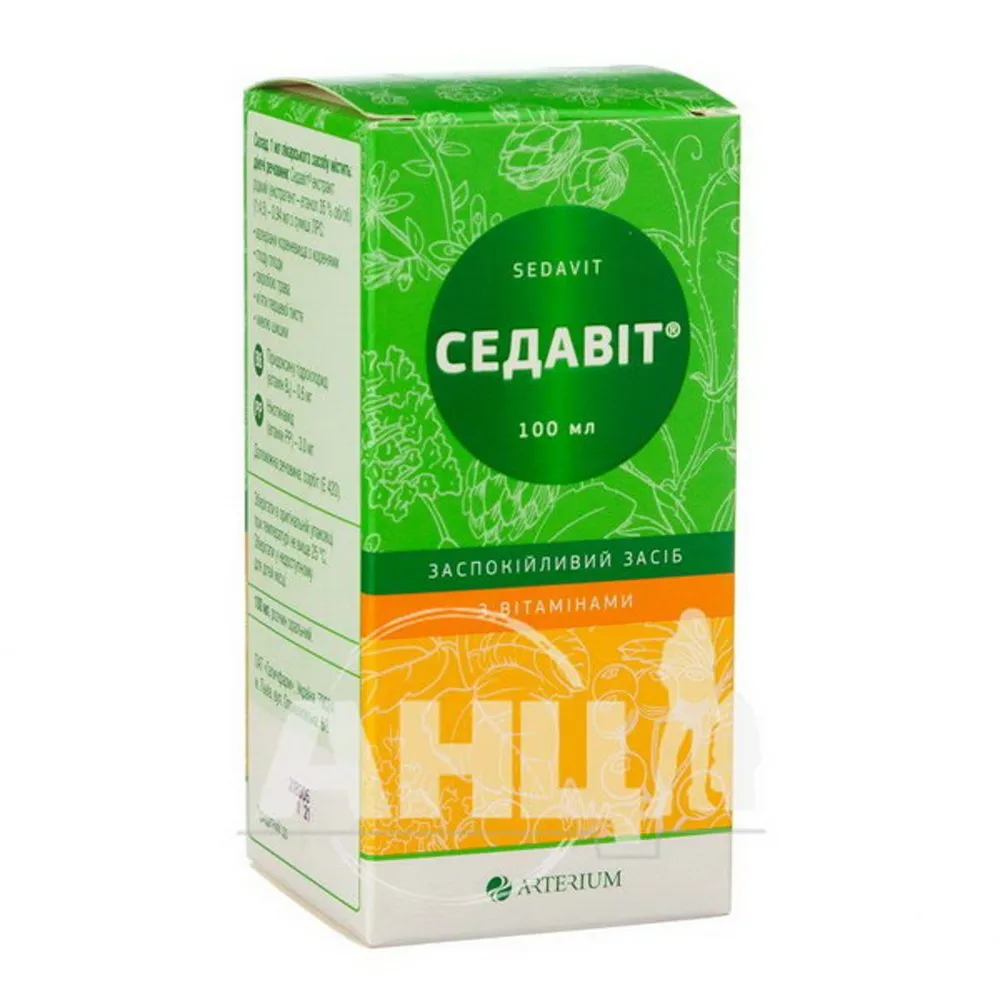
Table of Contents
INSTRUCTIONS FOR MEDICAL USE OF THE MEDICINAL PRODUCT SEDAVIT® (SEDAVIT)
Composition:
1 ml of the medicinal product contains:
Active substances: SEDAVIT® liquid extract (Extractum sedaviti fluidum) (extraction solvent – ethanol 35% v/v) (1:4.5) – 0.94 ml from a mixture of herbal raw materials: valerian rhizomes with roots (Valerianae Rhizoma cum Radicibus), hawthorn fruits (Crataegi fructus), St. John's wort herb (Hyperici herba), peppermint leaves (Menthae piperitae folium), hop cones (Lupuli flos); pyridoxine hydrochloride (vitamin B6) – 0.6 mg; nicotinamide (vitamin PP) – 3.0 mg;
Excipient: sorbitol (E 420).
Pharmaceutical form. Oral solution.
Main physicochemical properties: liquid ranging from light brown to brown in color. A slight sediment may form during storage.
Pharmacotherapeutic group. Hypnotics and sedatives.
ATC code N05CM.
Pharmacological properties.
Pharmacodynamics.
The effect of the drug is determined by the properties of the components included in its composition. Biologically active substances of plant extracts positively affect the functioning of the nervous system and have predominantly sedative and anxiolytic effects, eliminating feelings of fear and tension.
Pharmacokinetics.
Data are lacking.
Clinical characteristics.
Indications.
Chronic mental stress (manager’s syndrome); neurasthenia and neurasthenic reactions accompanied by irritability, anxiety, fear, fatigue, inattention, memory impairment, mental exhaustion; neurocirculatory dystonia of the hypertensive and cardiac type; asthenic syndrome (hypersthenic form); stage I arterial hypertension; insomnia (mild forms); pruritic dermatoses (eczema, urticaria); headache due to nervous strain; migraine. Used as a symptomatic agent in climacteric syndrome and mild forms of dysmenorrhea.
Contraindications.
Hypersensitivity to the components of the drug, depression and conditions accompanied by suppression of central nervous system activity, bronchial asthma, spasmophilia, pronounced arterial hypotension, bradycardia, myasthenia, peptic ulcer of the stomach and duodenum, ischemic heart disease, liver diseases, hyperuricemia, gout, decompensated diabetes mellitus, urolithiasis.
Interaction with other medicinal products and other types of interactions.
The medicinal product enhances the effect of substances exerting a sedative effect on the central nervous system, as well as alcohol. Mutual weakening of the effects of levodopa and pyridoxine hydrochloride is possible.
Concomitant use of cycloserine, hydralazine, isoniazid, penicillamine, and oral contraceptives increases the requirement for pyridoxine.
Hypericum perforatum may induce isoforms 3A4, 1A2, and 2C9 of cytochrome P450, which may reduce the effect of other drugs metabolized by these isoforms. Therefore, concomitant use of the drug is not recommended with:
- indinavir or other antiretroviral drugs;
- cyclosporine, digoxin, theophylline, irinotecan, tacrolimus, lipid-lowering agents (simvastatin), fexofenadine, tricyclic antidepressants (amitriptyline, nortriptyline), antiepileptic agents (carbamazepine, phenobarbital, phenytoin), selective serotonin reuptake inhibitors (citalopram, fluvoxamine, sertraline, paroxetine), buspirone, as well as triptans (sumatriptan, naratriptan, zolmitriptan) and antihypertensive agents (calcium channel blockers);
- warfarin and other anticoagulants – coumarin derivatives;
- oral contraceptives (due to reduced efficacy of contraceptive agents, irregular bleeding may occur, and unintended pregnancy cannot be excluded).
Concomitant use with cardiac glycosides is not recommended.
Diuretics – when used in combination with pyridoxine, the effect of diuretics is enhanced.
Hypnotics and sedatives – when used in combination with pyridoxine, the hypnotic effect is reduced.
Antiparkinsonian agents – when used in combination with pyridoxine, the efficacy of agents used to treat Parkinson's disease is reduced.
Corticosteroids – when used in combination with pyridoxine, the amount of vitamin B6 in the body is reduced.
Concomitant use of nicotinic acid with antithrombotic agents or acetylsalicylic acid may lead to bleeding.
Use with antihypertensive agents leads to enhanced arterial hypotension.
Use with lipid-lowering agents increases the risk of developing toxic effects of the drug; use with spasmolytics enhances the effect of spasmolytics.
Concomitant use with methyldopa leads to a significant reduction in blood pressure; with probenecid – to reduced probenecid effect.
Possible enhancement of the photosensitizing effect of other medicinal products that have a photosensitizing effect (e.g., sulfonamides, tetracycline antibiotics, and fluoroquinolones).
Special precautions for use
The drug contains sorbitol. This medicinal product should not be used in patients with rare hereditary fructose intolerance or glucose-galactose malabsorption.
During treatment with this medicinal product, patients, especially those with fair skin, should avoid prolonged exposure to ultraviolet radiation (sunbathing, solarium, diathermy).
In patients with gastroesophageal reflux (heartburn), heartburn symptoms may be intensified.
Use with caution in patients with fluctuating blood pressure or diabetes mellitus. Blood pressure and blood glucose levels should be monitored.
Do not use with alcohol.
Use during pregnancy or breastfeeding
This medicinal product should not be used during pregnancy or breastfeeding.
Ability to affect reaction speed when driving or operating machinery
When using this medicinal product, patients should refrain from driving or operating potentially dangerous machinery.
Method of Administration and Dosage
For adults and children aged 12 years and older, the recommended dose is 5 mL three times daily. If necessary, the single dose may be increased to 10 mL. In case of adverse reactions from the nervous system (drowsiness, dizziness), administer 2.5 mL in the morning and during the day, and 5 mL at night. The interval between doses should be 8 hours. The drug may also be used as a single dose of 5–10 mL taken 20–30 minutes before anticipated emotional stress. The preparation should be taken undiluted or mixed with beverages (tea, juice). If nausea occurs, the drug should be taken during meals.
The duration of treatment depends on the form and severity of the disease symptoms, concomitant therapy, and the therapeutic effect achieved, and is determined by the physician.
Children. The safety and efficacy of Sedavit® in children under 12 years of age have not been established; therefore, the drug is recommended for use only in children aged 12 years and older.
Overdose.
Symptoms: intensification of adverse effects; feelings of depression and drowsiness. Later, these symptoms may be accompanied by nausea, muscle weakness, numbness, joint pain, and a sensation of heaviness in the stomach, as well as paresthesia. Symptoms of nicotinamide overdose may also occur (tachycardia, headache, dizziness, seizures, tremor, nausea, vomiting, diarrhea, sweating, cough, skin rashes, arterial hypotension).
Treatment: discontinue the drug. Symptomatic therapy as determined by the physician.
Adverse reactions.
In individual cases, the following undesirable effects may occur.
Allergic reactions, including hyperemia, rash, itching, swelling, urticaria, anaphylactic reactions, including anaphylactic shock.
Central and peripheral nervous system disorders: drowsiness, fatigue, dizziness, depressed mood, excitement, headache, paresthesia, weakness, reduced work capacity.
Gastrointestinal disorders: nausea, abdominal pain and cramps, vomiting, heartburn, increased gastric secretion, intestinal dysfunction (diarrhea, constipation).
Cardiovascular system disorders: bradycardia, decreased arterial pressure, tachycardia, arrhythmia.
Skin disorders: photosensitization in sensitive individuals, dermatitis, dry skin.
Musculoskeletal system disorders: numbness of limbs, muscle weakness.
Metabolic disorders: with prolonged use at high doses – decreased glucose tolerance.
Biochemical parameter deviations from normal: increased levels of aspartate aminotransferase (AST), lactate dehydrogenase (LDH), alkaline phosphatase, blood glucose, hyperuricemia.
Shelf life. 2 years.
Storage conditions.
Store in original packaging at a temperature not exceeding 25 °C.
Keep out of reach of children.
Packaging.
100 ml in a bottle or jar; 1 bottle or jar per carton; 200 ml in a bottle, 1 bottle per carton.
Prescription status. Over-the-counter.
Manufacturer. JSC "Halychpharm".
Manufacturer's address and location of business activity.
6/8 Opryshkovska St., Lviv, 79024, Ukraine.
INSTRUCTION
on medical use of medicinal product
SEDAVIT
(SEDAVIT)
Composition:
1 ml of medicinal product contains:
Active ingredients: Sedavit liquid extract (Extractum sedaviti fluidum) (extractant – ethanol 35% v/v) (1:4.5) – 0.94 ml from a mixture of herbal raw materials: Valerianae Rhizoma cum Radicibus (valerian rhizomes with roots), Crataegi fructus (hawthorn fruits), Hyperici herba (St. John's wort herb), Menthae piperitae folium (peppermint leaves), Lupuli flos (hops cones); pyridoxine hydrochloride (vitamin B6) – 0.6 mg; nicotinamide (vitamin PP) – 3.0 mg.
Excipient: sorbitol (E 420).
Pharmaceutical form. Oral solution.
Main physicochemical properties: a liquid ranging from light brown to brown. A slight sediment may form during storage.
Pharmacotherapeutic group. Hypnotics and sedatives.
ATC code N05CM.
Pharmacological properties.
Pharmacodynamics.
The effect of the drug is determined by the properties of its components. Biologically active substances in plant extracts positively affect nervous system function and have predominantly sedative and anxiolytic effects, relieving feelings of fear and tension.
Pharmacokinetics.
No data available.
Clinical characteristics.
Indications.
Persistent mental stress (manager syndrome); neurasthenia and neurasthenic reactions accompanied by irritability, anxiety, fear, fatigue, distractibility, memory impairment, mental exhaustion; neurocirculatory dystonia of hypertensive and cardiac types; asthenic syndrome (hypersthenic form); stage I arterial hypertension; insomnia (mild forms); pruritic dermatoses (eczema, urticaria); headache due to nervous tension; migraine. Used as a symptomatic agent in climacteric syndrome and mild forms of dysmenorrhea.
Contraindications.
Hypersensitivity to the components of the drug, depression and conditions associated with central nervous system depression, bronchial asthma, spasmophilia, severe arterial hypotension, bradycardia, myasthenia, peptic ulcer of the stomach and duodenum, ischemic heart disease, liver diseases, hyperuricemia, gout, decompensated diabetes mellitus, urolithiasis.
Interaction with other medicinal products and other types of interactions.
The drug enhances the effect of substances that exert sedative effects on the central nervous system, as well as alcohol. Possible mutual weakening of the effects of levodopa and pyridoxine hydrochloride.
Concomitant use of cycloserine, hydralazine, isoniazid, penicillamine, and oral contraceptives increases the requirement for pyridoxine.
Hypericum perforatum (St. John's wort) may induce isoforms 3A4, 1A2, and 2C9 of cytochrome P450, which may reduce the efficacy of other drugs metabolized by these isoforms. Therefore, concomitant use of the drug is not recommended with:
- indinavir or other antiretroviral drugs;
- cyclosporine, digoxin, theophylline, irinotecan, tacrolimus, lipid-lowering agents (simvastatin), fexofenadine, tricyclic antidepressants (amitriptyline, nortriptyline), antiepileptic drugs (carbamazepine, phenobarbital, phenytoin), selective serotonin reuptake inhibitors (citalopram, fluvoxamine, sertraline, paroxetine), buspirone, as well as triptans (sumatriptan, naratriptan, zolmitriptan) and antihypertensive drugs (calcium channel blockers);
- warfarin and other coumarin-derived anticoagulants;
- oral contraceptives (due to reduced contraceptive efficacy and risk of irregular bleeding, unintended pregnancy cannot be excluded).
Concomitant use with cardiac glycosides is not recommended.
Diuretics – when used concomitantly with pyridoxine, the diuretic effect is enhanced.
Hypnotics and sedatives – when used concomitantly with pyridoxine, the hypnotic effect is reduced.
Antiparkinsonian agents – when used concomitantly with pyridoxine, the efficacy of Parkinson's disease treatments is reduced.
Corticosteroids – when used concomitantly with pyridoxine, the body's vitamin B6 levels are reduced.
Concomitant use of nicotinic acid with antithrombotic agents or acetylsalicylic acid may lead to bleeding.
Concomitant use with antihypertensive agents leads to enhanced hypotension. Concomitant use with lipid-lowering agents increases the risk of toxic effects of the drug; concomitant use with spasmolytics enhances their effect.
Concomitant use with methyldopa leads to a significant decrease in blood pressure; with probenecid – reduced probenecid efficacy.
Possible enhancement of photosensitizing effects of other medicinal products that have photosensitizing properties (e.g., sulfonamides, tetracycline antibiotics, fluoroquinolones).
Special precautions.
The drug contains sorbitol. Patients with rare hereditary fructose intolerance or glucose-galactose malabsorption should not take this drug.
Patients taking the drug, especially those with fair skin, should avoid prolonged exposure to ultraviolet radiation (sunbathing, solarium, diathermy).
In patients with gastroesophageal reflux (heartburn), heartburn may worsen.
Use with caution in patients with fluctuating blood pressure and diabetes mellitus. Blood pressure and blood glucose levels should be monitored.
Do not take with alcohol.
Use during pregnancy or breastfeeding.
The drug should not be used during pregnancy or breastfeeding.
Ability to influence reaction rate when driving or operating machinery.
When using the drug, patients should refrain from driving vehicles or operating potentially hazardous machinery.
Method of administration and dosage.
For adults and children aged 12 years and older, the drug is administered orally, 5 ml three times daily. If necessary, the single dose may be increased to 10 ml. If adverse reactions of the nervous system (drowsiness, dizziness) occur, administer 2.5 ml in the morning and at noon, and 5 ml at bedtime. The interval between doses should be 8 hours. The drug may also be taken once at 5–10 ml, 20–30 minutes before anticipated emotional stress. The drug may be taken undiluted or mixed with beverages (tea, juice). If nausea occurs, the drug should be taken with food.
The duration of treatment depends on the form and severity of symptoms, concomitant therapy, and the therapeutic effect achieved, and is determined by the physician.
Children. The safety and efficacy of SEDAVIT in children under 12 years of age have not been established; therefore, the drug may be used in children from 12 years of age.
Overdose.
Symptoms: intensification of adverse effects; feelings of depression and drowsiness. Later, these symptoms may be accompanied by nausea, muscle weakness, numbness, joint pain, heaviness in the stomach, paresthesia. Symptoms of nicotinamide overdose may also occur (tachycardia, headache, dizziness, seizures, tremor, nausea, vomiting, diarrhea, excessive sweating, cough, skin rash, arterial hypotension).
Treatment: discontinue the drug. Symptomatic therapy as determined by the physician.
Adverse reactions.
In individual cases, the following undesirable effects may occur.
Allergic reactions, including hyperemia, rash, itching, swelling, urticaria, anaphylactic reactions, including anaphylactic shock.
Central and peripheral nervous system disorders: drowsiness, fatigue, dizziness, depressed mood, excitement, headache, paresthesia, weakness, reduced work capacity.
Gastrointestinal disorders: nausea, abdominal pain and cramps, vomiting, heartburn, increased gastric secretion, intestinal dysfunction (diarrhea, constipation).
Cardiovascular disorders: bradycardia, decreased arterial pressure, tachycardia, arrhythmia.
Skin disorders: photosensitization in sensitive individuals, dermatitis, dry skin.
Musculoskeletal disorders: numbness of limbs, muscle weakness.
Metabolic disorders: with prolonged use at high doses – decreased glucose tolerance.
Biochemical parameter deviations from normal: increased levels of aspartate aminotransferase (AST), lactate dehydrogenase (LDH), alkaline phosphatase, blood glucose, hyperuricemia.
Shelf life. 2 years.
Storage conditions.
Store in original packaging at a temperature not exceeding 25 °C.
Keep out of reach of children.
Packaging.
100 ml in a bottle or jar; 1 bottle or jar per carton; 200 ml in a bottle, 1 bottle per carton.
Prescription status. Over-the-counter.
Manufacturer. JSC "Halychpharm".
Manufacturer's address and location of business activity.
6/8 Opryshkovska St., Lviv, 79024, Ukraine.