Sedalgin plus
Ukraine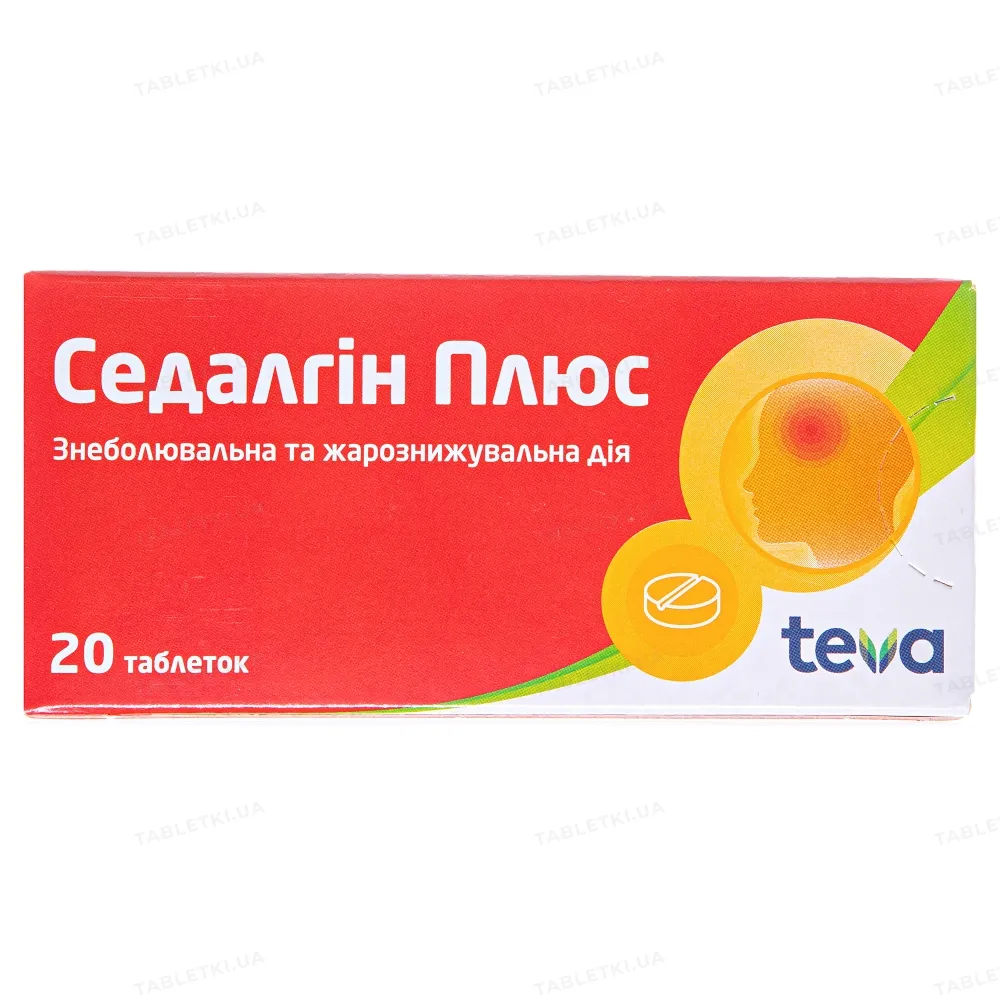
Table of Contents
INSTRUCTIONS FOR MEDICAL USE OF THE MEDICINAL PRODUCT Sedalgin Plus (Sedalgin Plus)
Composition:
Active substances: metamizole sodium, caffeine, thiamine hydrochloride;
1 tablet contains 500 mg of sodium metamizole, 50 mg of caffeine, and 38.75 mg of thiamine hydrochloride;
Excipients: microcrystalline cellulose, wheat starch, gelatin, colloidal anhydrous silicon dioxide, talc, magnesium stearate.
Pharmaceutical form. Tablets.
Main physicochemical properties: round, flat tablets of white or almost white color, with a bevel and a notch on one side, 13 mm in diameter.
Pharmacotherapeutic group. Agents acting on the central nervous system. Other analgesics and antipyretics. ATC code N02B B52.
Pharmacological Properties
Pharmacodynamics
Metamizole sodium is a pyrazolone derivative belonging to the group of non-narcotic analgesics. It has pronounced analgesic and antipyretic effects. It does not produce sedative effects, does not suppress the respiratory center, and does not cause euphoria or habituation. Metamizole exerts analgesic action both peripherally, by inhibiting the synthesis of endogenous algogens, and centrally, by suppressing the activity of nociceptive neurons in the posterior roots of the spinal cord. An important role in the pharmacological effects of metamizole is played by its ability to inhibit the activity of cyclooxygenase-1 and, in particular, cyclooxygenase-2, thereby reducing the synthesis of prostaglandins. Metamizole also exhibits membrane-stabilizing action.
Caffeine has mild stimulatory activity on the central nervous system (CNS). The primary effect of caffeine is vasoconstriction, which influences certain types of headache and hypotension. It is believed that under certain pathological conditions, caffeine exerts a direct analgesic effect. Caffeine potentiates the action of metamizole by promoting its penetration into brain tissue. When combined with analgesics, caffeine produces a synergistic effect.
Thiamine hydrochloride (vitamin B1) has diverse functions in the body's metabolism. It is a component of several enzymes and forms the essential part of the cocarboxylase molecule, which catalyzes the oxidation of pyruvic acid and facilitates carbohydrate breakdown. Through phosphorylation, thiamine is converted into its active form—thiamine pyrophosphate—which acts as a coenzyme in the pentose phosphate pathway, decarboxylation of alpha-keto acids, and formation of acetyl-coenzyme A in the Krebs cycle. In the nervous system, approximately 90% of thiamine is located in axonal mitochondria, while 10% is incorporated into axonal membranes. By promoting the decarboxylation of pyruvic acid, it positively influences the resolution of inflammatory processes in the nervous system. Thiamine facilitates the synthesis of the neurotransmitter acetylcholine and inhibits the enzyme that degrades it—cholinesterase—thus improving nerve impulse conduction. When administered in high doses, it exhibits some analgesic activity.
Due to the presence of metamizole, which affects enzymes responsible for drug metabolism, the pharmacokinetics of individual components used in combination differs to some extent from the pharmacokinetics of the drugs when administered separately.
Pharmacokinetics
The combined medicinal product Sedalgin Plus is rapidly absorbed, and its therapeutic effect manifests within 1 hour.
Clinical characteristics.
Indications.
Symptomatic treatment of pain syndromes associated with:
- migraine, tension headache;
- inflammatory and degenerative disorders of the musculoskeletal system;
- postoperative conditions;
- diseases of the peripheral nervous system (radiculitis, plexitis, neuritis, neuralgia, polyneuritis, polyneuropathies);
- dysmenorrhea.
Contraindications.
Hypersensitivity to the active substances or to any of the excipients contained in the medicinal product; hypersensitivity to pyrazolone or pyrazolidine derivatives (phenylbutazone, tribenzone, antipyrine) or xanthine; children under 12 years of age; elderly age; pregnancy or breastfeeding period; bronchial asthma; leukopenia; anemia; thrombocytopenia; cytotoxic or infectious neutropenia, agranulocytosis, history of agranulocytosis induced by metamizole, other pyrazolones or pyrazolidines, bone marrow dysfunction or disorders of the hematopoietic system; hepatic porphyria; congenital deficiency of glucose-6-phosphate dehydrogenase; marked increase in blood pressure, organic cardiovascular disorders, including severe atherosclerosis, severe arterial hypertension, acute myocardial infarction; uncompensated heart failure, paroxysmal tachycardia; glaucoma; severe renal and hepatic insufficiency; increased excitability, insomnia; suspicion of acute surgical pathology; allergic diseases, idiosyncrasy. Do not use concomitantly with monoamine oxidase inhibitors (MAOIs) or within 2 weeks after discontinuation of MAOIs.
Interaction with other medicinal products and other forms of interactions.
Ethanol enhances the analgesic effect of the medicinal product, while caffeine reduces the central nervous system (CNS) depressant effect. Concomitant use of other hepatotoxic drugs and agents that suppress hematopoiesis should be avoided. Due to induction of liver enzymes, the activity of coumarin anticoagulants is reduced. Temazepam enhances and prolongs its action. The therapeutic effect is enhanced by tricyclic antidepressants, oral contraceptives, and allopurinol, due to enzyme inhibition and slowing of the biotransformation of the medicinal product. It does not affect the efficacy of uterokinetic and uterotonic agents. When used concomitantly with nonsteroidal anti-inflammatory agents, their gastrointestinal and hematopoietic toxicity and effects are potentiated.
Combining the medicinal product Sedalgin Plus with other medicinal products requires special attention, as metamizole, one of its components, is an enzyme inducer. Metamizole may induce enzymes involved in drug metabolism, including CYP2B6 and CYP3A4. Concomitant use of metamizole with bupropion, efavirenz, methadone, valproate, cyclosporine, tacrolimus, or sertraline may lead to decreased plasma concentrations of these drugs, potentially reducing their clinical efficacy. Therefore, when using metamizole concomitantly, caution is recommended, and clinical response and/or drug levels should be monitored if necessary.
The concomitant use of metamizole with other antipyretic, analgesic, and anti-inflammatory agents increases the risk of allergic reactions and adverse effects.
Metamizole may reduce the antithrombotic effect of low-dose acetylsalicylic acid when used concomitantly. Therefore, metamizole should be used with caution in patients taking low-dose acetylsalicylic acid for cardioprotection.
Concomitant use of Sedalgin Plus and agents that suppress bone marrow function (gold salts, antineoplastic agents, chloramphenicol, etc.) may result in leukocyte damage.
Neuroleptics and tranquilizers potentiate the analgesic effect of Sedalgin Plus. Concomitant use with chlorpromazine may lead to hypothermia.
Certain antidepressants, oral contraceptives, and allopurinol slow down the metabolism of metamizole and thereby may increase the toxicity of Sedalgin Plus.
Concomitant use with sympathomimetics may lead to central nervous system (CNS) stimulation.
Caffeine may enhance the effect of ergotamine; reduce the effect of opioid analgesics, anxiolytics, hypnotics, and sedatives. Caffeine is an antagonist of anesthetic agents and other drugs that depress the CNS, and a competitive antagonist of adenosine preparations. It enhances the absorption, action, and toxicity of cardiac glycosides. When used with xanthine derivatives and psychostimulants, it potentiates their effects. Increased thyroid effect may occur when caffeine is used concomitantly with thyroid-stimulating agents. Cimetidine and isoniazid enhance the effect of caffeine. Caffeine reduces lithium concentration in blood.
Special precautions for use.
Agranulocytosis. The use of metamizole may cause agranulocytosis, which can be fatal (see section "Side effects"). Agranulocytosis may occur even after previous use of metamizole without complications.
Metamizole-induced agranulocytosis is an idiosyncratic, dose-independent adverse reaction that may occur at any time during treatment and even shortly after discontinuation.
Patients should be informed about the necessity to discontinue treatment and immediately seek medical attention if any symptoms suggestive of agranulocytosis occur (e.g., fever, chills, sore throat, and painful mucosal changes, particularly in the mouth, nose, and throat, as well as in genital or anal areas).
If metamizole is taken during fever, some symptoms of developing agranulocytosis may remain unnoticed. Similarly, symptoms may be masked in patients receiving antibiotic therapy.
In case of signs or symptoms suggestive of agranulocytosis, a complete blood count (including differential blood count) should be performed immediately, and treatment should be discontinued pending test results. If agranulocytosis is confirmed, treatment must not be resumed (see section "Contraindications").
Do not exceed the recommended doses of the medicinal product.
The drug should be used with caution in patients with impaired renal and/or hepatic function; in the presence of active peptic ulcer disease of the stomach and duodenum; in stomach disorders (achalasia, gastroesophageal reflux, pyloric stenosis), inflammatory bowel diseases including ulcerative colitis and Crohn’s disease; in benign prostatic hyperplasia; in chronic bronchitis and bronchospasm associated with hyperthyroidism; in severe food or drug allergy and other atopic disorders; in cardiac arrhythmias, ischemic heart disease, severe arterial hypotension, cardiovascular insufficiency, severe headache of unknown etiology, and in patients with a prolonged history of alcohol use.
Do not use the drug to relieve acute abdominal pain (before identifying the cause). Since sodium metamizole has anti-inflammatory and analgesic properties, it may mask signs of infection, symptoms of non-infectious diseases, and complications associated with pain syndrome, which may complicate their diagnosis.
The drug may affect the psychophysical state of patients when used concomitantly with alcohol and medications that depress the central nervous system. Therefore, consumption of alcoholic beverages should be avoided during treatment.
The drug may affect the central nervous system, manifesting either as excitation or inhibition of neural activity, as well as affect blood pressure and stimulate or suppress cardiac activity.
Do not use simultaneously with other non-steroidal anti-inflammatory drugs (NSAIDs) and metamizole.
When analgesics are used on alternate days or more frequently, headache may develop or worsen after prolonged analgesic use (more than 3 months). Headache caused by excessive analgesic use should not be treated by increasing the dose. In such cases, treatment should be discontinued after consultation with a physician.
When using the drug, excessive consumption of coffee, strong tea, other stimulant beverages, and medicinal products containing caffeine should be avoided. This may cause sleep disturbances, tremor, tension, irritability, and palpitations.
When used in children, continuous medical supervision is required. The qualitative and quantitative composition of peripheral blood should be monitored.
Regular long-term use of the drug is not recommended due to the myelotoxicity of sodium metamizole.
When prescribing a longer treatment course (more than 7 days), renal and hepatic function should be monitored.
Patients should be warned before starting treatment that the drug should be immediately discontinued in case of unexplained chills, fever, sore throat, difficulty swallowing, bleeding gums, pallor of the skin, asthenia, or development of vaginitis or proctitis. Also, the use of the drug should be stopped if skin rashes or mucosal lesions appear. In case of these symptoms, patients should immediately consult a physician.
Drug-induced liver injury. Cases of acute hepatitis, predominantly hepatocellular type, have been reported in patients receiving metamizole, occurring from several days to several months after initiation of treatment. Signs and symptoms included elevated serum liver enzymes, with or without jaundice, often associated with other drug hypersensitivity reactions (e.g., skin rash, blood dyscrasia, fever, eosinophilia) or signs of autoimmune hepatitis. Most patients recovered after discontinuation of metamizole; however, in isolated cases, progression to acute liver failure requiring liver transplantation has been reported. The mechanism of liver injury caused by metamizole is not fully understood, but data suggest an immune-allergic nature. Patients should consult their physician if symptoms of liver injury occur. In such patients, metamizole should be discontinued and liver function should be evaluated. If there is a history of liver injury during treatment with metamizole, in which no other causes of liver injury were identified, re-administration of metamizole is not recommended.
Severe skin reactions. Severe cutaneous adverse reactions have been reported during treatment with metamizole, including Stevens–Johnson syndrome, toxic epidermal necrolysis, and drug reaction with eosinophilia and systemic symptoms (DRESS syndrome), which may be life-threatening or fatal.
Patients should be informed about the signs and symptoms and closely monitored for skin reactions. If signs or symptoms suggestive of these reactions occur, metamizole should be immediately discontinued, and re-initiation of treatment with metamizole is contraindicated.
Excipients. The medicinal product contains wheat starch. This medicinal product can be used in patients with celiac disease. Patients with wheat allergy (other than celiac disease) should not use this medicinal product.
Effect on laboratory tests. Metabolites of sodium metamizole may change the color of urine to red, which has no clinical significance.
Caffeine may interfere with test results using adenosine or dipyridamole. Therefore, Sedalgin Plus should not be used for at least 12 hours prior to such tests.
Caffeine may cause falsely elevated plasma uric acid levels when measured by the Bittner method.
Caffeine may lead to slight increases in urinary concentrations of 5-hydroxyindoleacetic acid, vanillylmandelic acid, and catecholamines, which may result in false-positive diagnosis of pheochromocytoma and neuroblastoma.
Use during pregnancy or breastfeeding.
The drug is contraindicated during pregnancy because its components may adversely affect the fetus (e.g., cause impaired renal function and constriction of the arterial duct).
The drug is contraindicated during breastfeeding because its components pass into breast milk.
Ability to affect reaction speed when driving or operating machinery.
During treatment, caution should be exercised when driving vehicles or operating complex machinery due to the possibility of adverse reactions affecting the nervous system.
Method of Administration and Dosage
Sedalgin Plus tablets should be taken orally after meals, with water.
Recommended dose for adults and children aged 16 years and older:
1 tablet 3 times daily.
Maximum dose should not exceed 6 tablets per day.
Recommended dose for children aged 12 to 16 years:
½–1 tablet 3 times daily.
Maximum dose should not exceed 4 tablets per day.
The treatment course with Sedalgin Plus should not exceed 3 days.
Elderly patients, debilitated patients, and patients with reduced creatinine clearance.
Dosage should be reduced in elderly patients, debilitated patients, and patients with reduced creatinine clearance, as elimination of metamizole metabolites may be prolonged.
Patients with hepatic or renal impairment.
Since the elimination rate of metamizole is reduced in patients with impaired renal or hepatic function, repeated high doses of metamizole should be avoided. Dose reduction is not required during short-term use. Currently, there is insufficient experience regarding prolonged use of metamizole in patients with severe hepatic or renal insufficiency.
Children. Not recommended for children under 12 years of age.
Overdose.
In case of accidental ingestion of a large quantity of tablets, the following clinical symptoms may occur: bullous-urticarial and petechial, sometimes measles-like or typhoid-type rash; in some cases, anaphylactic shock may develop; hallucinations, tremor, Menière-like symptoms, coma and tonic-clonic seizures, nausea, vomiting, agitation, insomnia, headache, dizziness, tinnitus, palpitations, weakness, melena and hematemesis; in more severe cases – oliguria progressing to anuria, epileptiform seizures, agranulocytosis, aplastic or hemolytic anemia, hemorrhagic diathesis.
Overdose with metamizole may also cause hypothermia, marked decrease in arterial blood pressure, dysphagia, dyspnea, gastralgia/gastritis, weakness, somnolence, delirium, hemorrhagic syndrome, acute renal and hepatic failure, respiratory muscle paralysis.
Large doses of caffeine may cause epigastric pain, diuretic effects, increased respiratory rate, extrasystoles, tachycardia or cardiac arrhythmia, and effects on the central nervous system (dizziness, insomnia, nervous excitation, irritability, emotional lability, anxiety, tremor, seizures).
Treatment. General measures to reduce absorption: administration of emetics, gastric lavage, activated charcoal, and laxatives. Symptomatic treatment should be administered. There is no specific antidote.
Side effects
Serious skin reactions have been reported with metamizole treatment, including Stevens-Johnson syndrome, toxic epidermal necrolysis, and drug reaction with eosinophilia and systemic symptoms (DRESS syndrome) (see section "Special precautions").
The following adverse reactions may occur:
Central nervous system: insomnia, dizziness, increased excitability, anxiety, restlessness, mild tremor, visual disturbances, headache, seizures, increased reflexes, tachypnea. With prolonged uncontrolled use of high doses – dependence (reduced analgesic effect), addiction; upon abrupt discontinuation after long-term use – enhanced effects on the central nervous system, increased fatigue, somnolence, muscle tension, depression.
Immune system: hypersensitivity reactions, including skin and mucous membrane rashes; conjunctivitis, pruritus, erythema, urticaria, angioneurotic edema, bronchospasm, anaphylactic shock, Lyell’s syndrome, Stevens-Johnson syndrome, drug reaction with eosinophilia and systemic symptoms (DRESS syndrome), other allergic reactions.
Cardiovascular system: chest tightness, arrhythmias, tachycardia, palpitations (pounding), increased/decreased blood pressure.
Hematopoietic system: transient leukopenia; granulocytopenia, agranulocytosis, hemolytic and aplastic anemia, purpura, thrombocytopenia.
Gastrointestinal tract: loss of appetite, nausea, gastrointestinal discomfort, vomiting, diarrhea, exacerbation of gastritis and peptic ulcer disease.
Hepatobiliary system: cholestasis, jaundice, drug-induced liver injury (including acute hepatitis, jaundice, and elevated liver enzymes in serum) (see section "Special precautions").
Urinary system: development of acute renal failure, interstitial nephritis, oliguria, anuria, enhanced diuresis/increased frequency of urination, increased creatinine clearance, increased excretion of sodium and calcium, proteinuria, red discoloration of urine.
Other: nasal congestion.
Effect on laboratory test results: hypo- or hyperglycemia; effects on laboratory tests (see section "Special precautions").
Reporting suspected adverse reactions
Reporting suspected adverse reactions after marketing authorization is important. It allows continued monitoring of the benefit-risk balance of the medicinal product. Healthcare professionals should report suspected adverse reactions via national reporting systems.
Shelf life. 2 years.
Storage conditions.
Store in the original packaging at a temperature not exceeding 25 °C, in places inaccessible to children.
Packaging.
10 tablets in a blister; 1, 2, or 5 blisters per cardboard box.
20 tablets in a blister; 1 blister per cardboard box.
Supply category. Over-the-counter.
Manufacturer. Balkanpharma-Dupnitsa AD.
Manufacturer's address and place of business.
3 Samokovsko Shose Str., Dupnitsa, 2600, Bulgaria.