Saxenda
Ukraine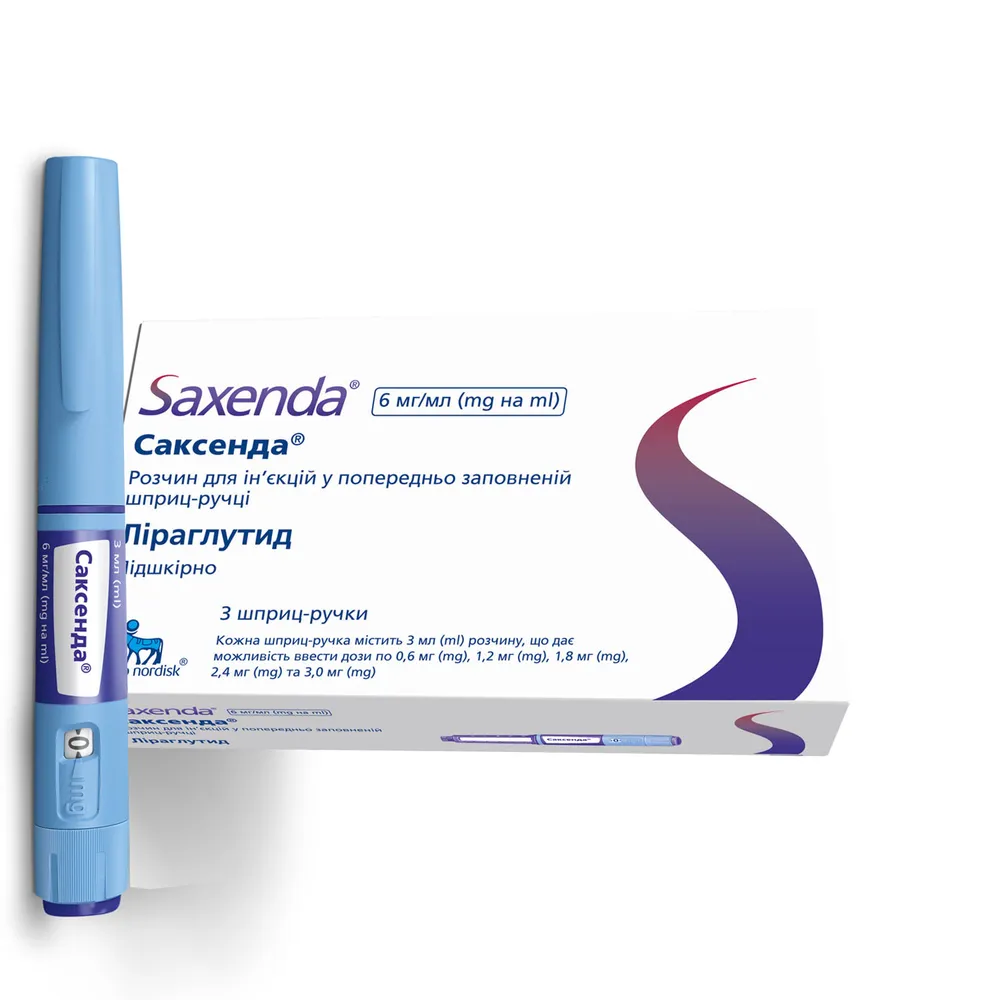
Table of Contents
INSTRUCTIONS FOR MEDICAL USE OF THE MEDICINAL PRODUCT SAXENDA® (SAxENDA®)
Composition:
Active substance: liraglutide;
1 ml of solution contains 6 mg of liraglutide – a glucagon-like peptide-1 (GLP-1) analogue, produced by recombinant DNA technology in Saccharomyces cerevisiae;
one pre-filled pen contains 18 mg of liraglutide in 3 ml;
Excipients: sodium dihydrogen phosphate dihydrate; propylene glycol; phenol; hydrochloric acid (for pH adjustment); sodium hydroxide (for pH adjustment); water for injections.
Pharmaceutical form. Solution for injection.
Main physicochemical properties: clear, colorless or almost colorless isotonic solution; pH 8.15.
Pharmacotherapeutic group. Antidiabetic drugs, glucagon-like peptide-1 (GLP-1) analogues. ATC code A10BJ02.
Pharmacological Properties
Pharmacodynamics
Mechanism of Action
Liraglutide is an acylated analogue of GLP-1 with an amino acid sequence 97% homologous to endogenous human GLP-1. Liraglutide binds to GLP-1 receptors and activates them.
GLP-1 is a physiological regulator of appetite and food intake, although the exact mechanism of action is not fully established. In animal studies, peripheral administration of liraglutide resulted in its accumulation in specific brain areas responsible for appetite regulation. In these regions, liraglutide enhanced satiety signals and reduced hunger signals via specific activation of GLP-1 receptors, thereby promoting weight loss.
GLP-1 receptors are also expressed in certain areas of the heart, blood vessels, immune system, and kidneys. In mouse models of atherosclerosis, liraglutide prevented the progression of aortic atherosclerotic plaques and reduced plaque inflammation. Furthermore, liraglutide had beneficial effects on plasma lipids. However, liraglutide did not reduce the size of already established atherosclerotic plaques.
Pharmacodynamic Effects
Liraglutide reduces body weight in humans primarily by reducing fat mass, with a preferential reduction in visceral fat compared to subcutaneous fat. Liraglutide regulates appetite by enhancing feelings of satiety and gastric fullness while reducing hunger sensations, leading to decreased food intake. Liraglutide does not increase energy expenditure compared to placebo.
Liraglutide stimulates insulin secretion and reduces abnormally high glucagon secretion in a glucose-dependent manner, resulting in reduced fasting and postprandial glucose levels.
The glucose-lowering effect of liraglutide is more pronounced in patients with prediabetes and type 2 diabetes compared to those with normoglycemia. Clinical trials indicate that liraglutide improves and maintains beta-cell function as assessed by HOMA-B and proinsulin/insulin ratio.
Clinical Efficacy and Safety
The clinical efficacy and safety of liraglutide for weight reduction as an adjunct to a reduced-calorie diet and increased physical activity were evaluated in four randomized, double-blind, placebo-controlled phase 3 trials involving 5358 patients.
Study 1 (SCALE Obesity and Prediabetes – 1839)
A total of 3731 patients with obesity (body mass index [BMI] ≥ 30 kg/m²) or overweight (BMI ≥ 27 kg/m²) and dyslipidemia and/or arterial hypertension were stratified by screening according to prediabetes status and baseline BMI (≥ 30 kg/m² or < 30 kg/m²). All patients (3731) were randomized to treatment for 56 weeks, and 2254 patients with prediabetes at screening were randomized to treatment for 160 weeks. Both treatment periods were followed by a 12-week observation period for the drug/placebo groups. Lifestyle modification through a reduced-calorie diet and increased physical activity was the background therapy for all patients.
In the 56-week Study 1, weight reduction was evaluated in all 3731 randomized patients (2590 patients completed the treatment period).
In the 160-week Study 1, time to development of type 2 diabetes was evaluated in 2254 randomized patients with prediabetes (1128 patients completed the treatment period).
Study 2 (SCALE Diabetes – 1922)
A 56-week study evaluating weight reduction in 846 randomized patients with obesity and overweight (628 patients completed the treatment period) who had inadequately controlled type 2 diabetes (HbA1c between 7–10%). The primary treatment at study initiation was either diet, increased physical activity, or use of individual antidiabetic agents such as metformin, sulfonylureas, or glitazones, or their combinations.
Study 3 (SCALE Sleep Apnea – 3970)
A 32-week study evaluating the severity of sleep apnea and weight reduction in 359 randomized patients (276 patients completed the treatment period) with obesity and moderate to severe obstructive sleep apnea.
Study 4 (SCALE Maintenance – 1923)
A 56-week study evaluating weight maintenance after achieving ≥ 5% weight reduction through a reduced-calorie diet in 422 randomized patients with obesity and overweight (305 patients completed the treatment period) and arterial hypertension or dyslipidemia.
Body Weight
Liraglutide resulted in greater weight reduction compared to placebo in patients with obesity and overweight across all studied populations. In all study populations, a higher proportion of patients achieved weight reductions of ≥ 5% and > 10% with liraglutide compared to placebo (Tables 1–3). In the 160-week part of Study 1, weight reduction occurred predominantly during the first year of therapy and was maintained throughout the 160 weeks.
- In Study 4, more patients maintained the weight reduction achieved prior to treatment initiation with liraglutide compared to placebo (81.4% vs. 48.9%, respectively). Specific data from Studies 1–4 on weight reduction, treatment duration, and cumulative distribution of body weight change (%) are presented in Tables 1–5 and Figures 1, 2, and 3.
Body Weight Reduction after 12 Weeks of Liraglutide Treatment (3.0 mg)
Patients considered early responders were those who achieved ≥ 5% weight reduction after 12 weeks of therapeutic dose liraglutide (4 weeks of dose escalation and 12 weeks at maintenance dose). In the 56-week Study 1, 67.5% of patients achieved ≥ 5% weight reduction after 12 weeks. In Study 2, 50.4% of patients achieved ≥ 5% weight reduction after 12 weeks. With continued treatment, it is projected that 86.2% of patients will achieve ≥ 5% weight reduction and 51% will achieve ≥ 10% after one year of liraglutide treatment. The mean weight reduction in patients treated with liraglutide for one year was 11.2% of their initial body weight (9.7% for men and 11.6% for women). Among patients who achieved < 5% weight reduction after 12 weeks of therapy, 93.4% did not achieve ≥ 10% weight reduction after one year of liraglutide treatment.
Glucose Control
Liraglutide treatment significantly improved glycemic parameters in patients with normoglycemia, prediabetes, and type 2 diabetes. In the 56-week part of Study 1, fewer patients receiving liraglutide developed type 2 diabetes compared to those receiving placebo (0.2% vs. 1.1%, respectively). In most patients with prediabetes at baseline, reversal of prediabetes was observed with liraglutide compared to placebo (69.2% vs. 32.7%, respectively). The primary efficacy endpoint in the 160-week part of Study 1 was the proportion of patients who developed type 2 diabetes, assessed as time to onset of type 2 diabetes. At week 160 of the study, type 2 diabetes was diagnosed in 3% of patients receiving Saxenda® and in 11% of patients receiving placebo. The estimated time to onset of type 2 diabetes was 2.7 times longer (95% CI [1.9; 3.9]) in patients receiving liraglutide 3 mg, and the risk ratio for developing type 2 diabetes was 0.2 for liraglutide compared to placebo.
Cardiometabolic Risk Factors
Liraglutide treatment significantly improved systolic blood pressure and waist circumference compared to placebo (Tables 1, 2, and 3).
Apnea-Hypopnea Index (AHI)
Significant reduction in the severity of obstructive sleep apnea was observed with liraglutide compared to placebo, as assessed by reduction in AHI compared to placebo (Table 4).
Table 1
Study 1: Changes in body weight, glycemia, and cardiometabolic parameters at week 56 compared to baseline values
| Body weight |
Saxenda® (N = 2437) |
Placebo (N = 1225) |
Saxenda® compared to placebo |
|||
| Baseline body weight at inclusion visit, kg (SD) |
106.3 (21.2) |
106.3 (21.7) |
- |
|||
| Mean change at week 56, % (95% CI) |
|
|
|
|||
| Mean change at week 56, kg (95% CI) |
|
|
|
|||
| Percentage of patients with body weight reduction ≥ 5% at week 56, % (95% CI) |
63.5 |
26.6 |
4.8** (4.1; 5.6) |
|||
| Percentage of patients with body weight reduction > 10% at week 56, % (95% CI) |
32.8 |
10.1 |
4.3** (3.5; 5.3) |
|||
| Glycemia and cardiometabolic factors |
Baseline value at inclusion visit |
Change |
Baseline value at inclusion visit |
Change |
||
| HbA1c, % |
5.6 |
|
5.6 |
|
(–0.25; –0.21) |
|
| FPG, mmol/L |
5.3 |
|
5.3 |
|
(–0.42; –0.35) |
|
| Systolic blood pressure, mmHg |
123.0 |
|
123.3 |
|
|
|
| Diastolic blood pressure, mmHg |
78.7 |
|
78.9 |
|
|
|
| Waist circumference, cm |
115.0 |
|
114.5 |
|
|
|
Full analysis set. For body weight, HbA1c, FPG, blood pressure, and waist circumference, mean values are shown; changes at Week 56 compared to baseline are least squares mean values, and treatment group contrasts at Week 56 are calculated least squares mean differences between treatment arms. For the percentage of patients with body weight reduction ≥ 5% / > 10%, calculated odds ratios are presented. Missing values after baseline were imputed using last observation carried forward.
* p < 0.05.
** p < 0.0001.
CI — confidence interval.
FPG — fasting plasma glucose.
SD — standard deviation.
Table 2
Study 1: Changes in body weight, glycemic parameters, and cardiometabolic parameters at Week 160 compared to baseline values
| Body weight |
Saxenda® (N = 1472) |
Placebo (N = 738) |
Saxenda® compared to placebo |
||
| Baseline body weight at inclusion visit, kg (SD) |
107.6 (21.6) |
108.0 (21.8) |
|||
| Mean change at week 160, % (95% CI) |
|
|
(–4.9; –3.7) |
||
| Mean change at week 160, kg (95% CI) |
|
|
(–5.3; –3.9) |
||
| Percentage of patients with body weight reduction ≥ 5% at week 160, % (95% CI) |
49.6 |
23.4 |
3.2** (2.6; 3.9) |
||
| Percentage of patients with body weight reduction > 10% at week 160, % (95% CI) |
24.4 |
9.5 |
3.1** (2.3; 4.1) |
||
| Glycemia and cardiometabolic factors |
Baseline value at inclusion visit |
Change |
Baseline value at inclusion visit |
Change |
|
| HbA1c, % |
5.8 |
|
5.7 |
|
(–0.24; –0.18) |
| FPG, mmol/L |
5.5 |
|
5.5 |
0.04 |
(–0.5; –0.4) |
| Systolic blood pressure, mm Hg |
124.8 |
|
125.0 |
|
(–3.8; –1.8) |
| Diastolic blood pressure, mm Hg |
79.4 |
|
79.8 |
|
|
| Waist circumference, cm |
116.6 |
|
116.7 |
|
(–4.2; –2.8) |
Complete patient population. For body weight, HbA1c, FPG, blood pressure, and waist circumference, mean values are presented; changes at Week 160 compared to baseline are least-squares mean values, and treatment group contrasts at Week 160 are calculated differences between treatment methods. For the percentage of patients with body weight reduction of ≥ 5% and > 10%, calculated odds ratios are provided. Missing values after baseline were handled using last observation carried forward.
** p < 0.0001.
CI — confidence interval.
FPG — fasting plasma glucose.
SD — standard deviation.
Figure 1. Change in body weight (%) from baseline over time in Study 1 (0–56 weeks)
Figure 2. Cumulative distribution of change in body weight (%) after 56 weeks of treatment in Study 1
Table 3
Study 2: Changes in body weight, glycemic, and cardiometabolic parameters at Week 56 compared to baseline values
| Body weight |
Saxenda® (N = 412) |
Placebo (N = 211) |
Saxenda® compared to placebo |
||
| Baseline body weight at inclusion visit, kg (SD) |
105.6 (21.9) |
106.7 (21.2) |
- |
||
| Mean change at week 56, % (95% CI) |
|
|
|
||
| Mean change at week 56, kg (95% CI) |
|
|
|
||
| Percentage of patients with body weight reduction ≥ 5% at week 56, % (95% CI) |
49.8 |
13.5 |
6.4** (4.1; 10.0) |
||
| Percentage of patients with body weight reduction > 10% at week 56, % (95% CI) |
22.9 |
4.2 |
6.8** (3.4; 13.8) |
||
| Glycemia and cardiometabolic factors |
Baseline value at inclusion visit |
Change |
Baseline value at inclusion visit |
Change |
|
| HbA1c, % |
7.9 |
|
7.9 |
|
|
| FPG, mmol/L |
8.8 |
|
8.6 |
|
|
| Systolic blood pressure, mm Hg |
128.9 |
|
129.2 |
|
|
| Diastolic blood pressure, mm Hg |
79.0 |
|
79.3 |
|
|
| Waist circumference, cm |
118.1 |
|
117.3 |
|
|
Full patient population. For body weight, HbA1c, FPG, blood pressure, and waist circumference, mean values are shown; changes at Week 56 compared to baseline are least squares mean values, and treatment group comparisons at Week 56 are calculated differences between treatment methods. For the percentage of patients whose body weight decreased by ≥ 5% or > 10%, calculated odds ratios are provided. Missing values after baseline were imputed using the last observation carried forward method.
* p < 0.05.
** p < 0.0001.
CI — confidence interval.
FPG — fasting plasma glucose.
SD — standard deviation.
Table 4
Study 3: Changes in body weight and apnea-hypopnea index at Week 32 compared to baseline values
| Body weight |
Saxenda® (N = 180) |
Placebo (N = 179) |
Saxenda® compared to placebo |
||
| Baseline body weight at inclusion visit, kg (SD) |
116.5 (23.0) |
118.7 (25.4) |
- |
||
| Mean change at Week 32, % (95% CI) |
|
|
|
||
| Mean change at Week 32, kg (95% CI) |
|
|
|
||
| Percentage of patients with body weight reduction ≥ 5% at Week 32, % (95% CI) |
46.4 |
18.1 |
3.9** (2.4; 6.4) |
||
| Percentage of patients with body weight reduction > 10% at Week 32, % (95% CI) |
22.4 |
1.5 |
19.0** (5.7; 63.1) |
||
| Baseline value at inclusion visit |
Change |
Baseline value at inclusion visit |
Change |
||
| Apnea-hypopnea index, episodes/hour |
49.0 |
|
49.3 |
|
|
Full analysis set. Baseline values are presented as means; changes at Week 56 compared to baseline are least-squares mean values, and treatment group contrasts at Week 56 are calculated differences between treatment groups (95% CI). For the percentage of patients with body weight reduction ≥ 5% / > 10%, the calculated odds ratio is provided. Missing values after baseline were handled by carrying the last observation forward.
* p < 0.05.
** p < 0.0001.
CI — confidence interval.
SD — standard deviation.
Table 5
Study 4: Change in body weight at Week 56 compared to baseline
| Body weight |
Saxenda® (N = 207) |
Placebo (N = 206) |
Saxenda® compared to placebo |
| Baseline body weight at inclusion visit, kg (SD) |
100.7 (20.8) |
98.9 (21.2) |
- |
| Mean change at week 56, % (95% CI) |
|
|
|
| Mean change at week 56, kg (95% CI) |
|
|
|
| Percentage of patients with body weight reduction ≥ 5% at week 56, % (95% CI) |
50.7 |
21.3 |
3.8** (2.4; 6.0) |
| Percentage of patients with body weight reduction > 10% at week 56, % (95% CI) |
27.4 |
6.8 |
5.1** (2.7; 9.7) |
Full patient population. Baseline values are presented as means; changes at week 56 compared to baseline are least-squares mean estimates, and treatment contrasts at week 56 are calculated differences between treatment methods. For the percentage of patients with body weight reduction of ≥ 5% or > 10%, the estimated odds ratio is provided. Missing values after baseline were imputed using the last observation carried forward method.
** p < 0.0001.
CI – confidence interval.
SD – standard deviation.
Figure 3. Change in body weight (%) from randomization (week 0) over time in Study 4
Prior to week 0, patients were treated with diet and exercise only. At week 0, patients were randomized to receive either Saxenda® or placebo.
Immunogenicity
Due to the potential immunogenic properties of medicinal products containing proteins or peptides, it is expected that patients may develop antibodies to liraglutide after administration of Saxenda®. During clinical trials, anti-liraglutide antibodies developed in 2.5% of patients receiving liraglutide. The formation of antibodies did not lead to a reduction in the efficacy of liraglutide.
Cardiovascular effects
Major adverse cardiovascular events (MACE), as defined by an independent external adjudication committee: non-fatal myocardial infarction, non-fatal stroke, and cardiovascular death. Across all long-term clinical trials of Saxenda®, 6 MACE were reported in patients receiving liraglutide and 10 MACE in patients receiving placebo. The risk ratio and 95% CI for Saxenda® versus placebo was 0.33 [0.12; 0.90].
In phase 3 clinical trials, an increase in heart rate from baseline of 2.5 beats per minute on average (ranging from 1.6 to 3.6 beats per minute across individual studies) was observed. The maximum increase in heart rate occurred approximately after 6 weeks of therapy. The long-term clinical impact of increased heart rate has not been established. This effect was reversible and resolved after discontinuation of liraglutide therapy (see section "Special warnings and precautions for use").
The LEADER® trial included 9340 patients with inadequately controlled type 2 diabetes, most of whom had established cardiovascular disease. Patients were randomized to receive either liraglutide at a daily dose of up to 1.8 mg (n = 4668) or placebo (n = 4672) in addition to standard care.
Treatment duration ranged from 3.5 to 5 years. The mean age of patients was 64 years, and mean BMI was 32.5 kg/m². Mean baseline HbA1c was 8.7%, which improved by 1.2% after 3 years in patients assigned to liraglutide and by 0.8% in those assigned to placebo. The primary efficacy endpoint was time from randomization to first occurrence of any major MACE: non-fatal myocardial infarction, non-fatal stroke, or cardiovascular death. Liraglutide significantly reduced the incidence of major adverse cardiovascular events (primary endpoint events, MACE) compared to placebo (3.41 vs. 3.90 per 100 patient-years in the liraglutide and placebo groups, respectively), reducing risk by 13% (hazard ratio [HR] 0.87, [95% CI 0.78; 0.97]; p = 0.005) (see Figure 4).
Figure 4. Kaplan–Meier curve: time to first MACE event – FAS population
Children
A double-blind study evaluating the efficacy and safety of Saxenda® versus placebo for weight reduction in pediatric patients aged 12 years and older with obesity demonstrated that Saxenda® was more effective than placebo in reducing body weight (assessed by BMI standard deviation score) over 56 weeks of treatment (Table 6).
A higher percentage of patients receiving liraglutide achieved reductions in BMI of ≥ 5% and ≥ 10% compared to those receiving placebo. Mean reductions in BMI and body weight were also greater in the liraglutide group (Table 6). After a 26-week post-treatment observational period without study drug, weight regain was observed in patients who had received liraglutide compared to those who had received placebo (Table 6).
Table 6
Study 4180: Changes from baseline in body weight and BMI at week 56 and change in BMI standard deviation score (BMI SDS) from week 56 to week 82
| Saxenda® (N = 125) |
Placebo (N = 126) |
Saxenda® compared to placebo |
|
| BMI SDS |
|||
| Baseline BMI SDS (SD) |
3.14 (0.65) |
3.20 (0.77) |
|
| Mean change at Week 56 (95 % CI) |
-0.23 |
-0.00 |
-0.22* (-0.37; -0.08) |
| Week 56, BMI SDS (SD) |
2.88 (0.94) |
3.14 (0.98) |
|
| Mean change from Week 56 to Week 82, BMI SDS (95 % CI) |
0.22 |
0.07 |
0.15** (0.07; 0.23) |
| Body weight |
|||
| Baseline, kg (SD) |
99.3 (19.7) |
102.2 (21.6) |
- |
| Mean change at Week 56, % (95 % CI) |
-2.65 |
2.37 |
-5.01** (-7.63; -2.39) |
| Mean change at Week 56, kg (95 % CI) |
-2.26 |
2.25 |
-4.50** (-7.17; -1.84) |
| BMI |
|||
| Baseline, kg/m² (SD) |
35.3 (5.1) |
35.8 (5.7) |
- |
| Mean change at Week 56, kg/m² (95 % CI) |
-1.39 |
0.19 |
-1.58** (-2.47; -0.69) |
| Percentage of patients with reduction ≥ 5 % from baseline BMI at Week 56, % (95 % CI) |
43.25 |
18.73 |
3.31** (1.78; 6.16) |
| Percentage of patients with reduction ≥ 10 % from baseline BMI at Week 56, % (95 % CI) |
26.08 |
8.11 |
4.00** (1.81; 8.83) |
Complete patient population. For BMI SDS, body weight, and BMI, baseline values are means, changes from baseline at week 56 are calculated means (least squares method), and treatment differences at week 56 are calculated differences between treatment methods. For BMI SDS, values at week 56 are means, changes from week 56 to week 82 are calculated values (least squares method), and treatment differences at week 82 are calculated differences between treatment methods. For the proportion of patients who lost ≥ 5% / ≥ 10% of baseline body weight, calculated odds ratios are also provided. Missing observations were imputed from the placebo group based on transition to a reference-based multiple (x100) imputation approach.
* p < 0.01, ** p < 0.001. CI – confidence interval. SD – standard deviation.
Regarding tolerability of the medicinal product, 103 patients (82.4%) increased the dose to 3.0 mg and continued treatment at this dose, 11 patients (8.8%) increased the dose to 2.4 mg and remained on this dose, 4 patients (3.2%) increased the dose to 1.8 mg and continued treatment at this dose, 4 patients (3.2%) increased the dose to 1.2 mg and remained on this dose, and 3 patients (2.4%) received the 0.6 mg dose.
After 56 weeks of treatment, no impact on growth or sexual maturation of patients was observed.
A study with a 16-week double-blind period and a 36-week open-label period was conducted to evaluate the efficacy and safety of Saxenda® in pediatric patients with Prader-Willi syndrome and obesity. The study included 32 patients aged 12 to 18 years (Part A) and 24 patients aged 6 to 12 years (Part B). Patients were randomized in a 2:1 ratio to receive either Saxenda® or placebo. Patients with body weight less than 45 kg started dose escalation at a lower increment (0.3 mg instead of 0.6 mg) and were titrated up to a maximum dose of 2.4 mg.
The calculated treatment difference in mean BMI SDS at week 16 (Part A: -0.20 vs. -0.13, Part B: -0.50 vs. -0.44) and at week 52 (Part A: -0.31 vs. -0.17, Part B: -0.73 vs. -0.67) was similar between Saxenda® and placebo.
No additional safety concerns were observed during the study.
The European Medicines Agency has deferred the obligation to submit results of studies on the use of Saxenda® in one or more subsets of pediatric patients for the treatment of obesity and for the treatment of Prader-Willi syndrome (see section "Dosage and administration").
Pharmacokinetics
Absorption
Absorption of liraglutide after subcutaneous administration is slow, with maximum concentration reached approximately 11 hours after injection. In obese patients (BMI 30–40 kg/m²), following administration of 3 mg liraglutide, the mean steady-state concentration (AUCt/24) reached approximately 31 nmol/L. Liraglutide exposure increased proportionally with dose. Absolute bioavailability of liraglutide after subcutaneous administration is approximately 55%.
Distribution
The mean apparent volume of distribution after subcutaneous administration is 20–25 L (for a person weighing approximately 100 kg). Liraglutide is highly bound to plasma proteins (> 98%).
Metabolism
Within 24 hours after administration of a single dose of [3H]-liraglutide to healthy volunteers, the main component in plasma was unchanged liraglutide. Two metabolites were detected in plasma in negligible amounts (≤ 9% and ≤ 5% of total radioactivity in plasma).
Elimination
Liraglutide is eliminated endogenously, like all large proteins, without a specific organ as the primary route of elimination. After administration of [3H]-liraglutide, unchanged liraglutide was not detected in urine or feces. Only a small fraction of the administered radioactivity was excreted in urine and feces as liraglutide metabolites (6% and 5%, respectively). Radioactive substances were primarily excreted via kidneys or the gastrointestinal tract within the first 6–8 days as three metabolites.
After single subcutaneous administration of liraglutide, mean clearance is approximately 0.9–1.4 L/hour, and elimination half-life is approximately 13 hours.
Special patient populations
Elderly patients
Based on pharmacokinetic data analysis in patients aged 18 to 82 years with overweight or obesity, age has no clinically significant effect on liraglutide pharmacokinetics. Therefore, dose adjustment based on patient age is not necessary.
Gender
Pharmacokinetic data analysis showed that clearance of liraglutide in women is 24% lower than in men. Based on these data, dose adjustment according to patient gender is not required.
Ethnic origin
Based on pharmacokinetic data analysis in patient groups of Caucasian, Mongoloid, and Negroid races and Latin Americans with overweight or obesity, patient ethnic origin has no significant clinical impact on liraglutide pharmacokinetics.
Body weight
Liraglutide exposure decreases with increasing baseline body weight. Studies have shown that a daily dose of liraglutide 3.0 mg provides normal systemic exposure in patients with body weight ranging from 60 to 234 kg. Liraglutide exposure in patients with body weight above 234 kg has not been studied.
Hepatic impairment
Liraglutide pharmacokinetics were studied in patients with varying degrees of hepatic impairment following a single dose (0.75 mg). Exposure to liraglutide was reduced by 13–23% in patients with mild and moderate hepatic impairment compared to healthy volunteers. In patients with severe hepatic impairment (> 9 points according to Child-Pugh classification), exposure was significantly lower (by 44%).
Renal impairment
Liraglutide exposure was reduced in patients with renal impairment compared to individuals with normal renal function in a study using a single dose (0.75 mg). In patients with mild impairment (creatinine clearance 50–80 mL/min), exposure was reduced by 33%; with moderate impairment (creatinine clearance 30–50 mL/min), by 14%; with severe impairment (creatinine clearance < 30 mL/min), by 27%; and in end-stage renal disease requiring dialysis, by 26%.
Children
Pharmacokinetic properties of liraglutide at a dose of 3.0 mg were evaluated in clinical trials involving pediatric patients aged ≥ 12 years with obesity (134 patients with body weight 62–178 kg).
Liraglutide exposure in children aged ≥ 12 years was similar to that in obese adults.
Pharmacokinetic properties were also evaluated in a clinical pharmacology study involving pediatric patients aged 7–11 years with obesity (13 patients, body weight 54–87 kg).
Comparable exposure was observed after administration of 3.0 mg liraglutide in adults, children aged ≥ 12 years, and children aged 7–11 years after correction for body weight.
Preclinical safety data
Preclinical data based on studies of pharmacological safety, repeated-dose toxicity, and genotoxicity revealed no risk for humans.
In two-year carcinogenicity studies in rats and mice, non-lethal C-cell tumors of the thyroid gland were observed. A no-toxic-effect dose was not established in rats. Such tumors were not observed in monkeys treated for 20 months. Tumors in rodents are attributed to a non-genotoxic, species-specific GLP-1 receptor-mediated mechanism, to which rodents are partially sensitive. The relevance of this mechanism to humans is considered low but cannot be entirely excluded. No other tumor development was observed. Animal studies revealed no direct adverse effect on fertility; however, slight increases in early embryonic lethality were observed at the highest doses. Administration of liraglutide during mid-pregnancy resulted in reduced body weight in dams, delayed fetal growth, and unclarified effects on rib development in rats and skeletal development in rabbits. Administration of liraglutide resulted in delayed growth in newborn rats, persisting through the weaning period in the high-dose group. It is unknown whether this growth delay in newborn rats is due to reduced milk intake caused by direct GLP-1 effects or reduced milk supply due to decreased caloric intake in the mother.
In juvenile rats, liraglutide administration caused delayed sexual maturation in both males and females at clinically relevant plasma drug concentrations. Such delays did not affect fertility or reproductive capacity in males and females or the ability of females to carry pregnancy to term.
Clinical Characteristics
Indications
Adults
The medicinal product Saxenda® is indicated for weight management as an adjunct to a reduced-calorie diet and increased physical activity in adult patients with an initial body mass index (BMI) greater than 30 kg/m² (obesity) or from 27 to 30 kg/m² (overweight) in the presence of at least one weight-related comorbidity such as dysglycemia (prediabetes or type 2 diabetes), hypertension, dyslipidemia, or obstructive sleep apnea.
If, after 12 weeks of treatment with the daily dose of 3.0 mg, the patient has not lost at least 5% of initial body weight, treatment with Saxenda® should be discontinued.
Children aged ≥12 years
Saxenda® may be used as an adjunct to healthy eating and increased physical activity for weight management in children aged 12 years and older with:
- obesity (BMI corresponding to ≥30 kg/m² for adults according to international cutoff values)*, and
- body weight exceeding 60 kg.
Treatment with Saxenda® should be discontinued and reassessed if the patient has not lost at least 4% of their BMI or BMI Z-score after 12 weeks of treatment at a dose of 3.0 mg/day or the maximum tolerated dose.
* BMI cutoff values established by the International Obesity Task Force (IOTF) for patients aged 12–18 years with obesity, according to patient sex (see Table 7).
Table 7
BMI cutoff values established by the International Obesity Task Force (IOTF) for patients aged 12–18 years with obesity according to patient sex
| Age (years) |
BMI corresponding to 30 kg/m2 for adult patients according to international cutoff values |
|
| Boys |
Girls |
|
| 12 |
26.02 |
26.67 |
| 12.5 |
26.43 |
27.24 |
| 13 |
26.84 |
27.76 |
| 13.5 |
27.25 |
28.20 |
| 14 |
27.63 |
28.57 |
| 14.5 |
27.98 |
28.87 |
| 15 |
28.30 |
29.11 |
| 15.5 |
28.60 |
29.29 |
| 16 |
28.88 |
29.43 |
| 16.5 |
29.14 |
29.56 |
| 17 |
29.41 |
29.69 |
| 17.5 |
29.70 |
29.84 |
| 18 |
30.00 |
30.00 |
Contraindications
Hypersensitivity to the active substance or to any of the excipients of the medicinal product.
Interaction with other medicinal products and other forms of interaction
In vitro, liraglutide has demonstrated very low potential to affect the pharmacokinetics of other active substances metabolized by cytochrome P450 or their plasma protein binding.
Liraglutide causes a slight delay in gastric emptying, which may affect the absorption of concomitantly administered oral medications. Interaction studies have not shown any clinically significant delay in absorption; therefore, dose adjustment is not required.
Interaction studies were conducted using liraglutide at a dose of 1.8 mg. The effect on gastric emptying rate was equivalent between liraglutide 1.8 mg and 3.0 mg (paracetamol AUC0-300 min). At least one episode of acute diarrhea has been reported in some patients receiving Saxenda®. Diarrhea may interfere with the absorption of concomitantly administered oral medicinal products.
Warfarin and other coumarin derivatives
No drug interaction studies have been conducted. A clinically significant interaction with an active substance having low solubility or a narrow therapeutic index, such as warfarin, cannot be excluded. At the initiation of liraglutide treatment in patients receiving warfarin or other coumarin derivatives, more frequent monitoring of the international normalized ratio (INR) is recommended.
Paracetamol
Liraglutide did not alter the overall exposure to paracetamol after a single 1000 mg dose. The maximum concentration of paracetamol (Cmax) was reduced by 31%, and the median time to reach maximum concentration (tmax) increased by 15 minutes. Dose adjustment is not required when paracetamol is administered concomitantly with liraglutide.
Atorvastatin
Liraglutide did not alter the overall exposure to atorvastatin to a clinically significant extent after a single 40 mg dose. Therefore, dose adjustment of atorvastatin is not required when co-administered with liraglutide. When administered concomitantly with liraglutide, the Cmax of atorvastatin decreased by 38%, and the median tmax increased from 1 hour to 3 hours.
Griseofulvin
Liraglutide did not alter the overall exposure to griseofulvin after a single 500 mg dose. The Cmax of griseofulvin increased by 37%, while the median tmax remained unchanged. Dose adjustment of griseofulvin and other low-solubility compounds with high permeability is not required.
Digoxin
After a single 1 mg dose of digoxin administered in combination with liraglutide, a 16% reduction in the area under the concentration-time curve (AUC) of digoxin was observed; Cmax decreased by 31%, and the median tmax increased from 1 hour to 1.5 hours. Based on these results, dose adjustment of digoxin is not required.
Lisinopril
After a single 20 mg dose of lisinopril administered with liraglutide, a 15% reduction in lisinopril AUC was observed, Cmax decreased by 27%, and the median tmax increased from 6 to 8 hours. Based on these results, dose adjustment of lisinopril is not required.
Oral contraceptives
When a single dose of oral contraceptives was administered concomitantly with liraglutide, Cmax of ethinylestradiol and levonorgestrel decreased by 12% and 13%, respectively, and tmax increased by 1.5 hours. This had no clinically significant effect on the overall exposure to ethinylestradiol or levonorgestrel, indicating that concomitant administration with liraglutide is unlikely to affect the contraceptive efficacy of ethinylestradiol and levonorgestrel.
Children
Drug interaction studies have been conducted only in adult patients.
Special precautions for use
Traceability
In order to improve traceability of biological medicinal products, the name and batch number of the administered product should be clearly recorded in the patient's medical records.
Aspiration in combination with general anaesthesia or deep sedation
Cases of pulmonary aspiration have been observed in patients receiving GLP-1 receptor agonists while under general anaesthesia or deep sedation. Therefore, before performing procedures involving general anaesthesia or deep sedation, the increased risk of residual gastric content due to delayed gastric emptying should be considered (see section "Undesirable effects").
Heart failure
There is no clinical experience in treating patients with NYHA class IV congestive heart failure. Therefore, liraglutide is not recommended for use in these patients.
Special patient groups
The safety and efficacy of liraglutide for weight management have not been established in patients:
- aged ≥ 75 years;
- using other weight-management medicinal products;
- with secondary obesity caused by endocrine disorders, eating disorders, or by medicinal products that may cause weight gain;
- with severe renal impairment;
- with severe hepatic impairment.
The use of Saxenda® is not recommended in these patient groups (see section "Dosage and administration").
As there are no studies on the use of liraglutide for weight management in patients with mild or moderate hepatic impairment, the product should be used with caution in such patients (see sections "Pharmacokinetics" and "Dosage and administration").
Experience with liraglutide use in patients with inflammatory bowel disease and diabetic gastroparesis is limited. The use of liraglutide in these patients is not recommended, as it is associated with transient gastrointestinal adverse reactions, including nausea, vomiting, and diarrhoea.
Pancreatitis
Cases of acute pancreatitis have been observed during treatment with GLP-1 receptor agonists.
Patients should be informed about the typical symptoms of acute pancreatitis. If pancreatitis is suspected, liraglutide should be discontinued. Reinitiation of liraglutide treatment is not recommended if acute pancreatitis is confirmed.
Cholelithiasis and cholecystitis
In clinical trials, patients treated with liraglutide for weight reduction showed a higher incidence of cholelithiasis and cholecystitis compared to those receiving placebo. The fact that rapid weight loss may increase the risk of cholelithiasis, and consequently cholecystitis, only partially explains the higher frequency of these conditions with liraglutide. Cholelithiasis and cholecystitis may lead to hospitalisation and cholecystectomy. Patients should be informed about the typical symptoms of cholelithiasis and cholecystitis.
Thyroid gland disorders
During clinical trials in type 2 diabetes, adverse reactions related to the thyroid gland, such as goitre, were observed, particularly in patients with pre-existing thyroid disorders. Therefore, liraglutide should be used with caution in such patients.
Heart rate
During clinical trials with liraglutide, an increase in heart rate was observed (see section "Pharmacodynamics"). Heart rate should be monitored at regular intervals according to standard clinical practice. Patients should be informed about symptoms of increased heart rate (palpitations or awareness of heartbeat at rest). Treatment with liraglutide should be discontinued in patients who experience clinically significant, persistent increases in resting heart rate.
Dehydration
Symptoms of dehydration, including renal dysfunction and acute renal failure, have been observed in patients treated with GLP-1 receptor agonists. Patients receiving liraglutide should be informed about the risk of dehydration due to gastrointestinal disorders and the need to take preventive measures against dehydration.
Hypoglycaemia in patients with type 2 diabetes
In patients with type 2 diabetes receiving liraglutide in combination with insulin and/or sulphonylureas, the risk of hypoglycaemia may be increased. This risk can be reduced by lowering the dose of insulin and/or sulphonylurea.
Children
Episodes of clinically significant hypoglycaemia have been reported in children aged ≥ 12 years treated with liraglutide. Patients should be informed about the typical symptoms of hypoglycaemia and appropriate management measures.
Hyperglycaemia in patients with type 2 diabetes receiving insulin
Saxenda® must not be used as a substitute for insulin in patients with type 2 diabetes. Cases of diabetic ketoacidosis have been reported in insulin-dependent patients following rapid discontinuation or dose reduction of insulin (see section "Dosage and administration").
Excipients
Saxenda® contains less than 1 mmol of sodium (23 mg) and can therefore be considered essentially "sodium-free".
Use during pregnancy or breastfeeding
Pregnancy
Adequate data on the use of liraglutide in pregnant women are lacking. Animal studies have shown reproductive toxicity (see section "Pharmacological properties", subsection "Non-clinical safety data"). The potential risk in humans is unknown.
Liraglutide should not be used during pregnancy. If a patient wishes to become pregnant or becomes pregnant, liraglutide treatment should be discontinued.
Breastfeeding
It is unknown whether liraglutide is excreted in human breast milk. Animal studies have shown that a small amount of liraglutide and its closely related structural metabolites are excreted in milk. Non-clinical studies have shown a treatment-related reduction in growth rates of newborn rat pups (see section "Pharmacological properties", subsection "Non-clinical safety data"). Due to insufficient experience with the use of the product during breastfeeding, it should not be used during this period.
Fertility
Apart from a slight reduction in the number of live implanted embryos, animal studies did not reveal any adverse effects of the drug on fertility (see section "Pharmacological properties", subsection "Non-clinical safety data").
Ability to influence the speed of reaction while driving or operating machinery
Saxenda® has no or negligible influence on the ability to drive and use machines. However, dizziness may occur, mostly during the first 3 months of treatment with Saxenda®. Caution should be exercised when driving or operating machinery if dizziness occurs.
Method of Administration and Dosage
Dosage
Adults
The initial dose is 0.6 mg once daily. To improve gastrointestinal tolerability, the dose should be increased weekly by 0.6 mg until reaching the target daily dose of 3.0 mg (see Table 8).
If the next increased dose is poorly tolerated for two consecutive weeks, consider discontinuing treatment. A daily dose higher than 3.0 mg is not recommended.
Table 8
Dose escalation schedule
| Dose, mg |
Weeks |
|
| Dose escalation over 4 weeks |
0.6 |
1 |
| 1.2 |
1 |
|
| 1.8 |
1 |
|
| 2.4 |
1 |
|
| Maintenance dose |
3.0 mg |
|
Children aged ≥ 12 years
For children aged 12 years and older, the same dose-escalation regimen should be used as in adults (see Table 8). The dose should be increased up to 3.0 mg (maintenance dose) or the maximum tolerated dose. Daily doses above 3.0 mg are not recommended.
Missed dose
If less than 12 hours have passed since the usual injection time, the patient should take the missed dose as soon as possible. If less than 12 hours remain before the next scheduled dose, the patient should not take the missed dose but should continue with the once-daily regimen by taking the next scheduled dose. An additional or increased dose should not be administered to compensate for a missed injection.
Patients with type 2 diabetes
Saxenda® must not be used in combination with other GLP-1 receptor agonists. To reduce the risk of hypoglycemia at the initiation of Saxenda®, consideration should be given to reducing the dose of concomitantly administered insulin or insulin secretagogues (e.g., sulfonylureas). Self-monitoring of blood glucose is required for adjusting the dose of insulin or insulin secretagogues (see section "Special precautions").
Special patient populations
Elderly patients (≥ 65 years)
Dose adjustment based on age is not required. Experience with the use of the product in patients aged ≥75 years is limited; therefore, use in this patient population is not recommended (see sections "Pharmacokinetics" and "Special precautions").
Patients with renal impairment
Dose adjustment is not required in patients with mild or moderate renal impairment (creatinine clearance ≥ 30 mL/min). Saxenda® is not recommended in patients with severe renal impairment (creatinine clearance < 30 mL/min), including those with end-stage renal disease (see sections "Pharmacokinetics", "Special precautions", and "Adverse reactions").
Patients with hepatic impairment
Dose adjustment is not recommended in patients with mild or moderate hepatic impairment. Saxenda® is not recommended in patients with severe hepatic impairment. The product should be used with caution in patients with mild or moderate hepatic impairment (see sections "Pharmacokinetics" and "Special precautions").
Administration method
Saxenda® is intended for subcutaneous administration only and must not be administered intravenously or intramuscularly.
The product is administered subcutaneously once daily at any time, independent of meals. It can be injected subcutaneously into the abdominal area, thigh, or upper arm. The injection site and time may be changed without dose adjustment; however, it is preferable to administer it at approximately the same time each day.
The following instructions describe the use of the Saxenda® pen injector.
To reduce the risk of amyloid deposits at the injection site, the injection site must always be rotated (see section "Adverse reactions").
Instructions for using the Saxenda® pen injector
Before using the Saxenda® pen injector, this instruction must be read carefully.
For detailed information, refer to the medical instructions for use. Do not use the pen injector without first receiving proper training on its use from a physician or nurse.
Before starting treatment, inspect the pen injector to ensure it contains the correct medicinal product, Saxenda®, 6 mg/mL. Then refer to the illustrations below for information on the different parts of the pen injector and the needle.
Visually impaired or blind patients must not use the pen injector without assistance from another person. Assistance must be provided by a person with adequate vision who can clearly see the dose counter on the Saxenda® pen injector and who is trained in its use.
Injectable solution in a prefilled pen injector. The Saxenda® pen injector is prefilled and contains 18 mg of liraglutide, allowing for administration of doses of 0.6 mg, 1.2 mg, 1.8 mg, 2.4 mg, and 3.0 mg. The pen injector is designed to be used with NovoFine® or NovoTwist® disposable needles up to 8 mm in length and 32G in thickness. Needles are not included in the package.

Important information
Special attention must be paid to this marking, as it is essential for the safe use of the pen injector.
Saxenda® pen injector and needle (example)
|
|
|
|
|
|
|
|
|
Do not attach a new needle until you are ready to inject. Always use a new needle for each injection. This reduces the risk of needle blockage, contamination, infection, and incorrect dosing. Never use a needle if it is bent or damaged. |
|
( ) immediately after "0". Ensure the flow check symbol aligns with the dose indicator. |
|
Press and hold the dose button until the dose counter returns to "0". The "0" mark must align with the dose indicator. A drop of solution should appear at the needle tip. A small drop may remain at the needle tip, but it will not be injected. If no drop appears, repeat steps in section 2 "Check solution flow from a new pen" up to 6 times. If there is still no drop, replace the needle and repeat the steps in section 2 "Check solution flow from a new pen" again. If no drop appears after this, dispose of the pen and use a new one. You must always confirm a drop appears at the needle tip before first use of a new pen. This ensures the solution will be delivered. If no drop appears, do not use the pen, even if the dose counter changes. This may indicate a blocked or damaged needle. If you do not check flow before the first injection with a new pen, you may not receive the required dose, and Saxenda® may not provide the desired therapeutic effect. |
|
If you select the wrong dose, you can turn the dose selector forward or backward to the correct dose. The pen holds a maximum of 3.0 mg of medication. The dose selector allows dose adjustment. Only the dose counter and dose indicator show the number of milligrams selected for injection. You can select up to 3.0 mg per dose. If the pen contains less than 3.0 mg, the dose counter will stop before reaching 3.0 mg. You may hear different clicking sounds when turning the dose selector forward, backward, or when setting the remaining solution. Do not count the clicks. Always use the dose counter and dose indicator to verify the number of milligrams selected before injecting this medication. Do not count the number of clicks from the pen. Do not use the cartridge scale. It shows an approximate amount of solution remaining in the pen. Only the following doses should be set using the dose selector: 0.6 mg, 1.2 mg, 1.8 mg, 2.4 mg or 3.0 mg. The numbers on the display must exactly align with the dose indicator to ensure correct dosing. |
|
| Remaining solution in the pen
|
|
Turn the dose selector to the left until the dose counter stops. If it shows 3.0, there is at least 3.0 mg remaining in the pen. If the dose counter stops below 3.0 mg, there is not enough solution left for a full 3.0 mg dose. If you need a higher dose than what remains in your pen. You may split your dose between your current pen and a new pen only if instructed by your doctor or nurse. Use a calculator to plan doses according to your doctor’s or nurse’s instructions. Be very careful to calculate the dose correctly. Be very careful when calculating the dose. If you are unsure whether you can split the dose using two pens, select and inject the required dose using a new pen. |
|
|
|
"0" must align with the dose indicator. You may then hear or feel a click.
|
|
|
|
If a drop of blood appears at the injection site, press gently on the area. You may see a drop of solution at the needle tip after injection. This is normal and does not affect the volume of the injected dose. Always look at the dose indicator to see how many milligrams of solution you have injected. Keep holding the injection button until the dose indicator shows "0" again. How to identify a blocked or damaged needle?
What to do with a blocked needle? Remove the needle as described in section 5 "After injection" and repeat all steps starting from section 1 "Preparing the pen with a new needle for use". Never touch the dose counter during medication administration. This may interrupt the injection. |
|
|
|
|
|
When the pen is empty, dispose of it without the needle, following instructions from your doctor, nurse, pharmacist, or local regulations. Never attempt to reattach the inner needle cap to the needle. You may injure yourself with the needle. Always remove the needle from the pen after each injection. This helps prevent needle blockage, contamination, infection, leakage of solution, and inaccurate dosing. |
|
| Important information
|
|
| Caring for your pen
|
Children
Dose adjustment is not required for children aged 12 years and older. The safety and efficacy of Saxenda® in children under 12 years of age have not been established (see section "Pharmacodynamics").
Overdose
Cases of overdose up to 72 mg (24 times the recommended maintenance dose) have been reported in clinical trials and during post-marketing use of Saxenda®. Reported events included severe nausea, severe vomiting, and severe hypoglycemia.
In case of overdose, supportive treatment should be initiated according to the clinical signs and symptoms present in the patient. The patient should be monitored for clinical signs of dehydration, and blood glucose levels should be closely controlled.
Side effects
Summary of safety profile
The safety of Saxenda® has been evaluated in 5 double-blind, placebo-controlled clinical trials involving 5813 adult patients with obesity or overweight with at least one weight-related comorbid condition. Overall, the most common adverse reactions were gastrointestinal disorders (67.9%) (see section "Description of selected adverse reactions").
List of adverse reactions
The adverse reactions listed below were reported in adults. Adverse reactions are classified by system organ class and frequency of occurrence. Frequency was assessed according to the following scale: very common (≥ 1/10), common (≥ 1/100 to < 1/10), uncommon (≥ 1/1000 to < 1/100), rare (≥ 1/10000 to < 1/1000), very rare (< 1/10000), and not known (cannot be estimated from available data). Within each group, adverse reactions are listed in order of decreasing severity.
Immune system disorders: rare – anaphylactic reactions.
Metabolism and nutrition disorders: common – hypoglycaemia*; uncommon – dehydration.
Psychiatric disorders: common – insomnia**.
Nervous system disorders: very common – headache; common – dizziness, dysgeusia.
Cardiac disorders: uncommon – tachycardia.
Gastrointestinal disorders: very common – nausea, vomiting, diarrhoea, constipation; common – dry mouth, dyspepsia, gastritis, gastroesophageal reflux disease, upper abdominal pain, flatulence, eructation, abdominal distension; uncommon – pancreatitis***, delayed gastric emptying****; frequency not known – intestinal obstruction†.
Hepatobiliary disorders: common – cholelithiasis***; uncommon – cholecystitis***.
Skin and subcutaneous tissue disorders: common – rash; uncommon – urticaria; not known – cutaneous amyloidosis.
Renal and urinary disorders: rare – acute renal failure, renal impairment.
General disorders and administration site conditions: common – injection site reactions, asthenia, fatigue; uncommon – malaise.
Investigations: common – increased lipase levels, increased amylase levels.
* Hypoglycaemia (based on symptoms reported by patients and not confirmed by blood glucose measurements) occurred in patients without type 2 diabetes who were treated with Saxenda® in combination with diet and physical activity. For additional information, see section "Description of selected adverse reactions".
** Insomnia was mainly observed during the first 3 months of treatment.
*** See section "Interaction with other medicinal products and other forms of interaction".
**** From controlled phase 2, 3a, and 3b clinical trials.
† Adverse reactions known from post-marketing experience.
Description of selected adverse reactions
Hypoglycaemia in patients without type 2 diabetes
During clinical trials, no severe episodes of hypoglycaemia (requiring third-party assistance) were recorded in patients with overweight or obesity without type 2 diabetes who were treated with Saxenda® in combination with diet and physical activity. Hypoglycaemic symptoms were reported by 1.6% of patients receiving Saxenda® and 1.1% of patients receiving placebo. However, these cases were not confirmed by blood glucose measurements. Most cases were mild.
Hypoglycaemia in patients with type 2 diabetes
In a clinical study, cases of severe hypoglycaemia were reported in 0.7% of patients with overweight or obesity and type 2 diabetes treated with Saxenda® in combination with diet and physical activity and who were also taking sulfonylureas. Hypoglycaemic symptoms occurred in 43.6% of patients receiving Saxenda® and in 27.3% of patients receiving placebo. Among patients not taking sulfonylureas, symptomatic hypoglycaemia (defined as plasma glucose concentration ≤ 3.9 mmol/L) occurred in 15.7% of patients receiving Saxenda® and in 7.6% of patients receiving placebo.
Hypoglycaemia in patients with type 2 diabetes receiving insulin
In a clinical study, cases of severe hypoglycaemia (requiring third-party assistance) were reported in 1.5% of patients with overweight or obesity and type 2 diabetes who were treated with insulin and liraglutide 3.0 mg/day in combination with diet, physical activity, and up to 2 oral antidiabetic agents. In this study, symptomatic hypoglycaemia (defined as plasma glucose ≤ 3.9 mmol/L accompanied by symptoms) occurred in 47.2% of patients receiving liraglutide 3.0 mg/day and in 51.8% of patients receiving placebo. In the sulfonylurea group, symptomatic hypoglycaemia was reported in 60.9% of patients receiving liraglutide 3.0 mg/day and in 60.0% of patients receiving placebo.
Gastrointestinal disorders
Most gastrointestinal adverse reactions were mild or moderate in severity and did not lead to discontinuation of therapy. These reactions typically occurred during the first weeks of treatment and diminished over several days or weeks with continued treatment.
In patients aged 65 years and older, gastrointestinal disorders occurred more frequently during treatment with Saxenda®.
In patients with mild or moderate renal impairment (creatinine clearance ≥ 30 mL/min), gastrointestinal disorders may occur more frequently during treatment with Saxenda®.
Acute renal failure
Cases of acute renal failure have been reported in patients treated with GLP-1 receptor agonists. Most reported cases occurred in patients who experienced nausea, vomiting, and diarrhoea, leading to fluid loss (see section "Special precautions for use").
Allergic reactions
There have been reports of several cases of anaphylactic reactions following administration of liraglutide, accompanied by symptoms such as hypotension, tachycardia, respiratory distress, and angioedema. Anaphylactic reactions can be life-threatening. Therefore, if an anaphylactic reaction is suspected, liraglutide should be discontinued (see section "Contraindications").
Injection site reactions
Injection site reactions have been reported with Saxenda®. These reactions were generally mild and most resolved during continued treatment.
Tachycardia
During clinical trials, tachycardia was reported in 0.6% of patients receiving Saxenda® and in 0.1% of patients receiving placebo. Most cases were mild or moderate in severity. The events were isolated and most resolved during continued treatment.
Cutaneous amyloidosis
Cutaneous amyloidosis may occur at the injection site (see section "Method of administration and dosage").
Paediatric population
In a clinical trial involving children aged 12 years and older with obesity, 125 patients received Saxenda® for 56 weeks.
Overall, the frequency, type, and severity of adverse reactions in children aged ≥ 12 years with obesity were comparable to those observed in adult patients. However, vomiting occurred twice as frequently in children aged 12 years and older compared to adults.
The percentage of patients reporting at least one episode of clinically significant hypoglycaemia was higher in the liraglutide group (1.6%) than in the placebo group (0.8%). No episodes of severe hypoglycaemia were recorded during the study.
Reporting of suspected adverse reactions and lack of therapeutic efficacy
Reporting suspected adverse reactions after authorisation of the medicinal product is important. It allows continued monitoring of the benefit-risk balance of the medicinal product. Healthcare professionals, pharmacists, patients, and their legal representatives are encouraged to report all suspected adverse reactions and lack of therapeutic efficacy via the Automated Information System of Pharmacovigilance at https://aisf.dec.gov.ua.
Shelf life: 30 months.
The expiry date is indicated on the syringe pen label and the cardboard packaging after the words "Exp".
After first use – 1 month.
Storage conditions
Keep out of the reach and sight of children.
Store in a refrigerator (2–8 °C), away from the freezer compartment.
After first use, store at room temperature below 30 °C or in the refrigerator (2–8 °C). Do not freeze.
To protect from light, keep the pen in its cap.
Incompatibilities
Adding any substance to Saxenda® may result in degradation of liraglutide. Since compatibility studies have not been conducted, this medicinal product must not be mixed with other medicinal products.
Packaging
Pre-filled multi-dose disposable pen made of polypropylene, polyoxymethylene, polycarbonate, and acrylonitrile butadiene styrene, containing a cartridge (Type I glass) with a plunger (bromobutyl) and laminated rubber seal (bromobutyl/polyisoprene).
Each pen contains 3 mL of solution, allowing administration of doses of 0.6 mg, 1.2 mg, 1.8 mg, 2.4 mg, and 3.0 mg.
Packaging contains 1, 3, or 5 pre-filled pens in a cardboard box.
Prescription status: Prescription only.
Marketing Authorisation Holder/Manufacturer
Novo Nordisk A/S.
Address of the Marketing Authorisation Holder/Manufacturer and location of its operations
Novo Allé
Bagsværd, 2880
Denmark.