Sagrada
Ukraine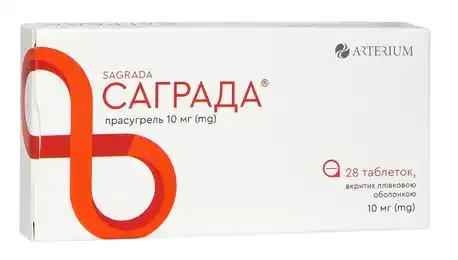
Table of Contents
INSTRUCTIONS FOR MEDICAL USE OF THE MEDICINAL PRODUCT SAGRADA® (SAGRADA)
Composition:
Active substance: prasugrel;
1 tablet contains prasugrel 10 mg;
Excipients: crospovidone (type A); lactose monohydrate; sodium croscarmellose; microcrystalline cellulose (E 460); sucrose stearate.
Coating mixture: Opadry II 32K230012 Orange*.
* Dry coating mixture contains: hypromellose (E 464) (hydroxypropylmethylcellulose); lactose monohydrate; titanium dioxide (E 171); triacetin (E 1518); talc; yellow iron oxide (E 172); red iron oxide (E 172).
Pharmaceutical form. Film-coated tablets.
Main physicochemical properties: film-coated tablets, oval-shaped with a biconvex surface, marked with "F2" on one side.
Pharmacotherapeutic group. Antithrombotic agents. Antiplatelet agents, excluding heparin. Prasugrel.
ATC code B01AC22.
Pharmacological properties.
Pharmacodynamics.
Mechanism of action
Prasugrel is an inhibitor of platelet activation and aggregation through the irreversible binding of its active metabolite to P2Y12 class ADP receptors on platelets. Since platelets are involved in the occurrence and/or progression of thrombotic complications of atherosclerotic disease, inhibition of platelet function may reduce the incidence of cardiovascular events such as death, myocardial infarction, or stroke.
Following a 60 mg loading dose of prasugrel, inhibition of ADP-induced platelet aggregation occurs within 15 minutes with 5 µM ADP and within 30 minutes with 20 µM AD, respectively. Maximum inhibition of ADP-induced platelet aggregation by prasugrel is 83% with 5 µM ADP and 79% with 20 µM ADP. In both cases, at least 50% inhibition of platelet aggregation is achieved within 1 hour in 89% of healthy subjects and patients with stable atherosclerosis. Prasugrel-mediated inhibition of platelet aggregation demonstrates low inter-subject (9%) and intra-subject (12%) variability when using either 5 µM or 20 µM ADP. Mean steady-state inhibition of platelet aggregation was 74% and 69% for 5 µM ADP and 20 µM ADP, respectively, achieved within 3–5 days after administration of the 10 mg maintenance dose of prasugrel following a 60 mg loading dose. More than 98% of subjects had ≥20% inhibition of platelet aggregation during maintenance therapy.
Platelet aggregation gradually returns to baseline levels after discontinuation of prasugrel therapy: within 7–9 days after a single 60 mg loading dose and within 5 days after stopping maintenance dosing at steady state.
Switching from one agent to another
After receiving 75 mg clopidogrel once daily for 10 days, 40 healthy volunteers were switched to prasugrel 10 mg once daily, with or without a 60 mg loading dose. Similar or greater inhibition of platelet aggregation was observed with prasugrel. Switching with a 60 mg loading dose of prasugrel resulted in faster and stronger platelet inhibition. After administration of a 900 mg loading dose of clopidogrel (with acetylsalicylic acid), 56 patients with acute coronary syndrome (ACS) received either prasugrel 10 mg once daily or clopidogrel 150 mg once daily for 14 days, followed by clopidogrel 150 mg or prasugrel 10 mg for another 14 days. Stronger inhibition of platelet aggregation was observed in patients switched to prasugrel 10 mg compared to those receiving clopidogrel 150 mg. In a study involving 276 ACS patients undergoing percutaneous coronary intervention (PCI), switching from an initial 600 mg loading dose of clopidogrel or placebo administered upon hospital admission before coronary angiography to a 60 mg loading dose of prasugrel administered during PCI resulted in a similar increase in inhibition of platelet aggregation over the 72-hour study period.
Clinical efficacy and safety
Acute coronary syndrome (ACS)
In the phase 3 TRITON trial, prasugrel was compared with clopidogrel, both administered with acetylsalicylic acid (ASA) and other medications according to standard treatment guidelines. TRITON was a multicenter, international, randomized, double-blind, parallel-group study involving 13,608 patients with ACS at moderate or high risk of developing unstable angina (UA)/non-ST-elevation myocardial infarction (NSTEMI) or ST-elevation myocardial infarction (STEMI), who underwent PCI.
Patients with UA/NSTEMI were enrolled within 72 hours of symptom onset or STEMI within 12 hours to 14 days of symptom onset, following blinded assessment of coronary anatomy. Patients with STEMI within 12 hours of symptom onset who were scheduled for primary PCI could be enrolled without prior coronary angiography. All patients received the loading dose at any time between randomization and within 1 hour after leaving the catheterization laboratory.
Patients were randomized to receive prasugrel (60 mg loading dose, then 10 mg once daily) or clopidogrel (300 mg loading dose, then 75 mg once daily) for a mean duration of 14.5 months (maximum 15 months, minimum 6 months). All patients also received ASA (75–325 mg once daily). Exclusion criteria included use of any thienopyridine within 5 days prior to study entry. Other therapies such as heparin and GPIIb/IIIa inhibitors were administered at the physician’s discretion. Approximately 40% of patients (in each treatment group) received GPIIb/IIIa inhibitors during PCI (no information on the specific type of GPIIb/IIIa inhibitor used). Approximately 98% of patients (in each treatment group) received antithrombotics (heparin, low-molecular-weight heparin, bivalirudin, or other agents) during PCI.
The primary efficacy endpoint was time to first occurrence of non-fatal myocardial infarction (MI), non-fatal stroke, or cardiovascular death. Analysis of the composite endpoint in the overall ACS patient population (combined UA/NSTEMI and STEMI) showed a statistically significant advantage of prasugrel over clopidogrel in the UA/NSTEMI subgroup (p < 0.05).
Overall ACS population
Prasugrel demonstrated greater efficacy than clopidogrel in reducing the rate of the primary composite endpoint, as well as secondary endpoints, including stent thrombosis (see Table 1). The benefit with prasugrel was evident within the first 3 days and persisted throughout the study. Higher efficacy was associated with an increased risk of major bleeding (see sections “Special precautions”, “Adverse reactions”). The study population consisted of 92% Caucasian patients, 26% women, and 39% patients aged ≥65 years. The efficacy of prasugrel was independent of concomitant therapy, including heparin/low-molecular-weight heparins, bivalirudin, intravenous GPIIb/IIIa inhibitors, lipid-lowering agents, beta-blockers, and angiotensin-converting enzyme inhibitors. Efficacy of prasugrel was also independent of ASA dose (75–325 mg once daily). Use of oral anticoagulants, investigational antiplatelet agents, and nonsteroidal anti-inflammatory drugs (long-term use) was not permitted in TRITON. In the overall ACS population, prasugrel was associated with a lower incidence of cardiovascular death, non-fatal MI, or non-fatal stroke compared to clopidogrel, regardless of baseline characteristics such as age, sex, body weight, geographic region, use of GPIIb/IIIa inhibitors, or stent type.
The benefit was primarily due to a significant reduction in non-fatal MI events (see Table 1). Patients with diabetes also showed a significant reduction in the rate of the primary and all secondary composite endpoints.
The benefits of prasugrel therapy were less pronounced in patients aged ≥75 years compared to those aged <75 years. Patients aged ≥75 years had an increased risk of bleeding, including fatal bleeding (see sections “Dosage and administration”, “Special precautions”, and “Adverse reactions”).
For patients aged ≥75 years with diabetes, STEMI, high risk of stent thrombosis, or recurrent disease, the benefit of prasugrel use was more evident.
No reduction in the primary composite endpoint was observed in patients with a history of transient ischemic attack or ischemic stroke more than 3 months prior to initiation of prasugrel therapy.
Table 1
Patients with outcomes in the primary analysis of TRITON
| Outcomes |
Prasugrel + ASA |
Clopidogrel + ASA |
Hazard Ratio (HR) (95% confidence interval [CI]) |
p-value |
| All MACE |
(N = 6813) % |
(N = 6795) % |
0.812 (0.732, 0.902) |
< 0.001 |
| Primary composite outcomes Cardiovascular death, non-fatal MI, or non-fatal stroke |
9.4 |
11.5 |
||
| Primary individual outcomes |
||||
| Cardiovascular death |
2.0 |
2.2 |
0.886 (0.701, 1.118) |
0.307 |
| Non-fatal MI |
7.0 |
9.1 |
0.757 (0.672, 0.853) |
< 0.001 |
| Non-fatal stroke |
0.9 |
0.9 |
1.016 (0.712, 1.451) |
0.930 |
| UA/NSTEMI Primary composite outcomes |
(N = 5044) % |
(N = 5030) % |
||
| Cardiovascular death, non-fatal MI, or non-fatal stroke |
9.3 |
11.2 |
0.820 (0.726, 0.927) |
0.002 |
| Cardiovascular death |
1.8 |
1.8 |
0.979 (0.732, 1.309) |
0.885 |
| Non-fatal MI |
7.1 |
9.2 |
0.761 (0.663, 0.873) |
< 0.001 |
| Non-fatal stroke |
0.8 |
0.8 |
0.979 (0.633, 1.513) |
0.922 |
| STEMI Primary composite outcomes |
(N = 1769) % |
(N = 1765) % |
||
| Cardiovascular death, non-fatal MI, or non-fatal stroke |
9.8 |
12.2 |
0.793 (0.649, 0.968) |
0.019 |
| Cardiovascular death |
2.4 |
3.3 |
0.738 (0.497, 1.094) |
0.129 |
| Non-fatal MI |
6.7 |
8.8 |
0.746 (0.588, 0.948) |
0.016 |
| Non-fatal stroke |
1.2 |
1.1 |
1.097 (0.590, 2.040) |
0.770 |
In the overall ACS population, analysis of each secondary endpoint showed significant benefits (p < 0.001) of prasugrel compared to clopidogrel. These included the incidence of definite or probable stent thrombosis at the end of the study (0.9% vs 1.8%, respectively; hazard ratio 0.498; 95% CI 0.364, 0.683); cardiovascular death, non-fatal MI, or the need for urgent target vessel revascularization within 30 days (5.9% vs 7.4%, respectively; HR 0.784; 95% CI 0.688, 0.894); all-cause death, non-fatal MI, or non-fatal stroke at study end (10.2% vs 12.1%, respectively; RR [risk ratio] 0.831; 95% CI 0.751, 0.919); cardiovascular death, non-fatal MI, non-fatal stroke, or recurrent hospitalization for ischemic cardiac event at study end (11.7% vs 13.8%, respectively; RR 0.838; 95% CI 0.762, 0.921). Analysis of all-cause mortality showed no significant differences between prasugrel and clopidogrel in the overall ACS patient population (2.76% vs 2.90%, respectively), in the population of patients with NSTEMI/UA (2.58% vs 2.41%, respectively), or in the population of patients with STEMI (3.28% vs 4.31%, respectively).
Prasugrel treatment was associated with a 50% reduction in the risk of stent thrombosis over a 15-month observation period. The reduction in stent thrombosis risk with prasugrel was observed both within the first 30 days and beyond, for both bare-metal and drug-eluting stents.
In patients who experienced ischemic events, prasugrel treatment was associated with a reduced frequency of subsequent primary endpoints (7.8% for prasugrel vs 11.9% for clopidogrel).
Although bleeding events increased with prasugrel use, analysis of the composite endpoint of death from any cause, non-fatal MI, non-fatal stroke, and non-CABG-related major bleeding (as defined by TIMI [Thrombolysis in Myocardial Infarction]) demonstrated an advantage for prasugrel over clopidogrel (risk ratio 0.87, 95% CI 0.79–0.95, p = 0.004).
In the TRITON trial, for every 1000 patients treated with prasugrel, there were 22 fewer patients with myocardial infarction and 5 more with major TIMI bleeding (non-CABG-related) compared to patients treated with clopidogrel.
Results from a pharmacodynamic/pharmacogenomic study involving 720 Asian patients with ACS demonstrated that prasugrel achieves higher levels of platelet inhibition compared to clopidogrel, and that a loading dose of 60 mg followed by a maintenance dose of 10 mg is an appropriate dosing regimen for Asian subjects weighing less than 60 kg and aged less than 75 years (see section "Dosage and Administration").
In a 30-month study (TRILOGY-ACS) involving 9326 patients with NSTEMI/UA managed medically without revascularization (an unapproved indication), prasugrel did not significantly reduce the rate of the composite endpoint of cardiovascular death, MI, or stroke compared to clopidogrel. The rate of major TIMI bleeding (including life-threatening, fatal, and intracranial bleeding) was similar in patients receiving prasugrel and clopidogrel. In this study, a blinded randomization was performed for patients aged over 75 years or with body weight less than 60 kg (N = 3022), who received 5 mg prasugrel. As in patients aged < 75 years and weighing ≥ 60 kg receiving 10 mg prasugrel, there was no difference in cardiovascular event rates between patients receiving 5 mg prasugrel and those receiving 75 mg clopidogrel. The rate of major bleeding was similar between patients receiving 5 mg prasugrel and those receiving 75 mg clopidogrel. Prasugrel 5 mg provided greater antiplatelet effect than clopidogrel 75 mg. Prasugrel should be used with caution in patients aged over 75 years and in patients with body weight less than 60 kg (see sections "Dosage and Administration", "Special Warnings and Precautions", and "Adverse Reactions").
In a 30-day study (ACCOAST) involving 4033 patients with NSTEMI/UA with elevated troponin levels who were scheduled for coronary angiography followed by PCI within 2–48 hours after randomization, subjects who received prasugrel with a 30 mg loading dose approximately 4 hours before angiography followed by a second 30 mg loading dose at the time of PCI (n = 2037) had an increased risk of post-procedural non-CABG-related bleeding and no additional benefit compared to patients who received a 60 mg loading dose at the time of PCI (n = 1996). Specifically, prasugrel did not significantly reduce the rate of the composite endpoint of cardiovascular death (CV), myocardial infarction (MI), stroke, urgent revascularization, or treatment with GP IIb/IIIa inhibitors within 7 days after randomization in subjects receiving prasugrel before angiography compared to those receiving full loading dose prasugrel at the time of PCI. The rate of the primary safety endpoint—major bleeding as defined by TIMI (CABG-related and non-CABG-related)—within 7 days after randomization among all treated patients was significantly higher in subjects receiving prasugrel before angiography compared to those receiving full loading dose prasugrel at the time of PCI. Therefore, in patients with NSTEMI/UA undergoing coronary angiography within 48 hours of hospitalization, the loading dose should be administered at the time of PCI (see sections "Dosage and Administration", "Special Warnings and Precautions", and "Adverse Reactions").
Pediatric population
A phase III study evaluated the use of prasugrel (n = 171) versus placebo (n = 170) in patients aged 2 to 18 years with sickle cell anemia to reduce vaso-occlusive crises. The study did not meet either primary or secondary endpoints. Overall, no new safety data on prasugrel (as monotherapy) were obtained in this patient group.
Pharmacokinetics
Prasugrel is a prodrug and is rapidly metabolized in vivo into active and inactive metabolites. The area under the plasma concentration-time curve (AUC) of the active metabolite shows low to moderate inter-individual (27%) and intra-individual (19%) variability. Pharmacokinetic parameters of prasugrel are similar in healthy volunteers, patients with stable atherosclerotic disease, and patients undergoing PCI.
Absorption
After oral administration, prasugrel is rapidly absorbed and metabolized. The time to reach peak concentration (Tmax) of the active metabolite in plasma is approximately 0.5 hours after dosing. The AUC of the active metabolite increases proportionally with the therapeutic dose.
In healthy volunteers, a high-fat, high-calorie meal does not affect the AUC of the active metabolite, but reduces Cmax by 49% and increases Tmax from 0.5 to 1.5 hours. In the TRITON study, prasugrel was administered without regard to food intake. Thus, prasugrel can be taken regardless of food intake; however, administration of the loading dose on an empty stomach may provide a faster onset of action (see section "Dosage and Administration").
Distribution
The active metabolite of prasugrel is 98% bound to human serum albumin.
Metabolism
Prasugrel is not detectable in plasma after oral administration. It is rapidly hydrolyzed in the intestine to a thiolactone intermediate, which is then converted to the active metabolite primarily by cytochrome P450 isoenzymes, including CYP3A4 and CYP2B6, and to a lesser extent by CYP2C9 and CYP2C19. The active metabolite is further converted to two inactive metabolites via S-methylation or cysteine conjugation.
In healthy volunteers, patients with stable atherosclerotic disease, and ACS patients receiving prasugrel, no effect of genetic variations in CYP2B6, CYP2C9, CYP2C19, or CYP3A5 on the pharmacokinetics of prasugrel or platelet aggregation inhibition was observed.
Elimination
Approximately 68% of prasugrel is excreted in urine and about 27% in feces as inactive metabolites. The elimination half-life (T1/2) of the active metabolite is approximately 7.4 hours (range 2 to 15 hours).
Special patient populations
Elderly patients. Studies in healthy volunteers aged 20 to 80 years indicate that the pharmacokinetics of prasugrel or platelet aggregation inhibition are not age-dependent. The AUC of the active metabolite is 19% higher in elderly patients (aged ≥75 years) compared to those under 75 years. Prasugrel should be used with caution in patients aged 75 years and older due to the potential risk of bleeding in this population (see sections "Special Warnings and Precautions" and "Dosage and Administration"). In a study of patients with stable atherosclerosis, the AUC of the active metabolite in patients aged ≥75 years receiving 5 mg prasugrel was approximately half that in patients aged ≥65 years receiving 10 mg prasugrel, and the antiplatelet effect was reduced in patients receiving 5 mg prasugrel.
Hepatic impairment. Dose adjustment is not required for patients with mild to moderate hepatic impairment (Child-Pugh class A and B). The pharmacokinetics and antiplatelet effects of prasugrel are similar in patients with mild to moderate hepatic impairment and healthy volunteers. The pharmacokinetics and pharmacodynamics of prasugrel have not been studied in patients with severe hepatic impairment (Child-Pugh class C). Prasugrel is contraindicated in these patients (see section "Contraindications").
Renal impairment. Dose adjustment is not required for patients with renal impairment, including those with end-stage renal disease (ESRD). The pharmacokinetics and antiplatelet effects of prasugrel are similar in patients with moderate renal impairment (glomerular filtration rate 30–50 mL/min/1.73 m² body surface area) and healthy volunteers. Platelet aggregation inhibition by prasugrel was comparable in ESRD patients requiring hemodialysis and healthy volunteers, despite a 51% and 42% reduction in Cmax and AUC of the active metabolite, respectively, in ESRD patients.
Body weight. The AUC of the active metabolite of prasugrel is approximately 30–40% higher in healthy volunteers and patients with body weight < 60 kg compared to those with body weight ≥ 60 kg. Prasugrel should be used with caution in patients with body weight < 60 kg due to the potential risk of bleeding (see section "Special Warnings and Precautions"). In a study of patients with stable atherosclerosis, the mean AUC of the active metabolite in patients with body weight < 60 kg receiving 5 mg prasugrel was 38% lower than in patients with body weight ≥ 60 kg receiving 10 mg prasugrel, but the antiplatelet effect at 5 mg prasugrel was comparable to that at 10 mg prasugrel.
Ethnicity. In clinical pharmacology studies, the AUC of the active metabolite (adjusted for body weight) was approximately 19% higher in Mongoloid race individuals compared to Caucasians. No differences were observed between Chinese, Japanese, and Korean ethnic groups. Exposure in individuals of Negroid race and Latin American origin was comparable to that in Caucasians. No dose adjustment based on ethnicity is required.
Gender. Pharmacokinetic parameters of prasugrel do not differ between men and women in healthy volunteers and patients.
Children and adolescents under 18 years of age. The pharmacokinetics and pharmacodynamics of prasugrel have not been studied in children and adolescents (see section "Dosage and Administration").
Clinical characteristics.
Indications.
Prasugrel in combination with acetylsalicylic acid (ASA) is indicated for the prevention of atherothrombotic complications in adult patients with acute coronary syndrome [i.e. unstable angina (UA), ST-segment elevation myocardial infarction (STEMI), or non-ST-segment elevation myocardial infarction (NSTEMI)] undergoing primary or delayed percutaneous coronary intervention (PCI).
The medicinal product Sagrada® 10 mg is used in adults with body weight above 60 kg and age under 75 years.
For additional information, see section "Pharmacological properties".
Contraindications.
Hypersensitivity to the active substance or to any of the excipients of the medicinal product.
Active bleeding.
History of stroke or transient ischemic attack (TIA).
Severe hepatic impairment (Child-Pugh class C).
Interaction with other medicinal products and other types of interactions.
Warfarin. Concomitant use of prasugrel with coumarin derivatives other than warfarin has not been studied. Warfarin (or other coumarin derivatives) and prasugrel should be prescribed with caution due to the potentially increased risk of bleeding (see section "Special precautions for use").
Non-steroidal anti-inflammatory drugs (NSAIDs). Interaction with NSAIDs (long-term use) has not been studied. NSAIDs (long-term use), including COX-2 inhibitors, and prasugrel should be prescribed with caution due to the potentially increased risk of bleeding (see section "Special precautions for use").
Prasugrel may be used concomitantly with medicinal products metabolized by cytochrome P450 enzymes (including statins), or with medicinal products that are inducers or inhibitors of P450 enzymes. Prasugrel may also be used concomitantly with ASA, heparin, digoxin, and medicinal products that increase gastric pH, including proton pump inhibitors and H2-receptor blockers. Although prasugrel has not been studied in specific interaction trials, during phase 3 clinical trials it was administered concomitantly with low-molecular-weight heparins, bivalirudin, and GP IIb/IIIa inhibitors (information on the type of GP IIb/IIIa inhibitor used is lacking) without evidence of clinically significant adverse interactions.
Effect of other medicinal products on prasugrel
ASA. Prasugrel should be taken concomitantly with ASA. Although pharmacodynamic interaction with ASA may increase the risk of bleeding, the efficacy and safety of prasugrel have been demonstrated in patients taking prasugrel concomitantly with ASA.
Heparin. A single intravenous bolus dose of unfractionated heparin (100 IU/kg) does not significantly alter prasugrel-mediated inhibition of platelet aggregation. Prasugrel also does not significantly affect the anticoagulant effect of heparin. Therefore, both medicinal products may be used concomitantly. However, an increased risk of bleeding may occur with concomitant use of prasugrel and heparin.
Statins. Atorvastatin (80 mg/day) did not alter the pharmacokinetics of prasugrel or prasugrel-mediated inhibition of platelet aggregation. Therefore, statins that are substrates of CYP3A are not expected to affect the pharmacokinetics of prasugrel or prasugrel-mediated inhibition of platelet aggregation.
MEDICINAL PRODUCTS THAT INCREASE GASTRIC pH. Daily concomitant administration of ranitidine (H2-receptor blocker) or lansoprazole (proton pump inhibitor) did not alter the AUC and Tmax of the active metabolite of prasugrel, but reduced Cmax by 14% and 29%, respectively. In phase 3 clinical trials, prasugrel was administered regardless of concomitant administration of a proton pump inhibitor or H2-receptor blocker. Administration of a 60 mg loading dose of prasugrel without concomitant use of proton pump inhibitors may ensure the fastest onset of action.
CYP3A inhibitors. Ketoconazole (400 mg/day), a selective and potent inhibitor of CYP3A4 and CYP3A5, did not affect prasugrel-mediated inhibition of platelet aggregation or the AUC and Tmax of the active metabolite of prasugrel, but reduced Cmax by 34% to 46%. Therefore, CYP3A inhibitors such as antifungal azole derivatives, HIV protease inhibitors, clarithromycin, telithromycin, verapamil, diltiazem, indinavir, ciprofloxacin, and grapefruit juice are not expected to have a significant effect on the pharmacokinetics of the active metabolite.
Cytochrome P450 inducers. Rifampicin (600 mg/day), a potent inducer of CYP3A and CYP2B6 and an inducer of CYP2C9, CYP2C19, and CYP2C8, does not significantly alter the pharmacokinetics of prasugrel. Therefore, known CYP3A inducers such as rifampicin, carbamazepine, and other cytochrome P450 inducers are not expected to significantly affect the pharmacokinetics of the active metabolite.
Morphine and other opioids. Delayed and reduced effect of oral P2Y12 inhibitors, including prasugrel and its active metabolite, has been observed in patients with ACS who received morphine. This interaction may be related to decreased gastrointestinal motility and may also apply to other opioids. The clinical significance is unknown, but available data suggest a possible reduction in prasugrel efficacy when used concomitantly with morphine. In patients with ACS who require morphine and in whom rapid P2Y12 inhibition is considered critical, parenteral P2Y12 inhibitors should be considered.
Effect of prasugrel on other medicinal products
Digoxin. Prasugrel has no clinically significant effect on the pharmacokinetics of digoxin.
MEDICINAL PRODUCTS METABOLIZED BY CYP2C9. Prasugrel does not inhibit CYP2C9, as it did not affect the pharmacokinetics of S-warfarin. However, warfarin and prasugrel should be prescribed with caution due to the potentially increased risk of bleeding (see section "Special precautions for use").
MEDICINAL PRODUCTS METABOLIZED BY CYP2B6. Prasugrel is a weak inhibitor of CYP2B6. In healthy volunteers, prasugrel reduced the effect of hydroxybupropion, a CYP2B6-mediated metabolite of bupropion, by 23%. This effect is likely to be clinically relevant only when prasugrel is used concomitantly with medicinal products for which CYP2B6 is the sole metabolic pathway and which have a narrow therapeutic window (e.g., cyclophosphamide, efavirenz).
Special precautions for use.
Risk of bleeding
In the phase 3 clinical trials (TRITON), key exclusion criteria included an increased risk of bleeding; anemia; thrombocytopenia; history of intracranial pathology. Patients with ACS who underwent PCI and received prasugrel and aspirin had an increased risk of major and minor bleeding according to TIMI classification. Therefore, prasugrel should be considered for patients with an increased risk of bleeding only when the benefit of preventing ischemic events outweighs the risk of serious bleeding. This applies to the following patient groups:
- aged 75 years or older (see below);
- with a predisposition to bleeding (e.g., due to recent trauma, recent surgery, recent or recurrent gastrointestinal bleeding, or active peptic ulcer disease);
- with body weight < 60 kg (see sections "Dosage and administration" and "Side effects"). For these patients, a maintenance dose of 10 mg is not recommended — a maintenance dose of 5 mg should be used;
- who are concurrently taking medicinal products that increase the risk of bleeding, including oral anticoagulants, clopidogrel, NSAIDs, and fibrinolytics.
For patients with active bleeding who require reversal of the pharmacological effect of prasugrel, platelet transfusion may be considered appropriate.
Prasugrel is generally not recommended for patients aged 75 years or older and should be used with caution and only after careful individual benefit/risk assessment by the physician, demonstrating that the benefits of preventing ischemic events outweigh the risk of serious bleeding. In phase 3 clinical trials, this patient group had a higher risk of bleeding, including fatal bleeding, compared to patients under 75 years of age. If necessary, a lower maintenance dose (5 mg) should be used — a maintenance dose of 10 mg is not recommended (see sections "Dosage and administration" and "Side effects").
Therapeutic experience with prasugrel in patients with renal impairment, including those on dialysis, and in patients with moderate hepatic impairment is limited. These patients may have an increased risk of bleeding. Therefore, prasugrel should be used with caution in such patients.
Patients should be informed that it may take longer than usual to stop bleeding while taking prasugrel (in combination with aspirin) and that they should report any unusual bleeding (in terms of site or duration) to their physician.
Risk of bleeding associated with timing of loading dose in patients with STEMI
In a clinical trial of patients with STEMI (ACCOAST study), where patients were scheduled to undergo coronary angiography within 2–48 hours after randomization, a loading dose of prasugrel administered on average 4 hours before coronary angiography increased the risk of major and minor periprocedural bleeding compared to a loading dose given at the time of PCI. Therefore, in patients with NSTE-ACS/STEMI in whom coronary angiography is performed within 48 hours of admission, the loading dose should be administered at the time of PCI (see sections "Pharmacodynamics", "Dosage and administration", and "Side effects").
Surgery
Patients should inform their physician, including their dentist, about taking prasugrel when planning surgical procedures or when new medications are prescribed.
If a patient requires elective surgery and antiplatelet effect is undesirable, prasugrel should be discontinued 7 days prior to the surgical procedure. In patients undergoing CABG, an increased frequency (3-fold) and severity of bleeding may occur within 7 days after discontinuation of prasugrel.
The benefit and risk of prasugrel use should be carefully evaluated in patients in whom coronary anatomy has not been defined and in whom emergency CABG may be required.
Hypersensitivity, including angioedema
Cases of hypersensitivity, including angioedema, have been reported in patients receiving prasugrel, including patients with a history of hypersensitivity reactions to other thienopyridines.
Thrombotic thrombocytopenic purpura (TTP)
Cases of TTP have been reported during treatment with prasugrel. TTP is a serious condition that can be fatal and requires urgent treatment.
Lactose
If a patient has been diagnosed with intolerance to certain sugars, consultation with a physician is required before taking this medicinal product.
Morphine and other opioids
Reduced efficacy of prasugrel has been observed in patients who received prasugrel concomitantly with morphine (see section "Interaction with other medicinal products and other forms of interaction").
Use during pregnancy or breastfeeding.
Clinical studies involving pregnant women or women who are breastfeeding have not been conducted.
Pregnancy. Animal studies have not shown any direct adverse effects on pregnancy, embryonic, or postnatal development. Prasugrel may be prescribed during pregnancy only if the potential benefit to the mother justifies the potential risk to the fetus.
Breastfeeding period. It is unknown whether prasugrel is excreted in human breast milk. Animal studies have shown excretion of prasugrel into breast milk. Prasugrel is not recommended during breastfeeding.
Fertility. Prasugrel had no effect on fertility in male and female rats following oral administration at doses up to 240 times the recommended daily maintenance dose for humans (on a mg/m² basis).
Ability to affect reaction speed when driving or operating machinery.
The effect of prasugrel on the ability to drive vehicles and operate machinery has not been established.
Method of Administration and Dosage
Adults
Treatment with prasugrel should be initiated with a single 60 mg loading dose, followed by a daily maintenance dose of 10 mg. Patients with NSTE-ACS or STEMI undergoing coronary angiography within 48 hours of hospitalization should receive the loading dose only at the time of PCI. Patients receiving prasugrel should also take daily aspirin (75–325 mg/day).
In patients with ACS who have undergone PCI, premature discontinuation of any antiplatelet therapy, including prasugrel, may increase the risk of stent thrombosis, myocardial infarction, or death due to the underlying disease. Treatment should be continued for up to 12 months unless there are reasons for discontinuation (see sections "Pharmacodynamics" and "Special Warnings").
The medicinal product at this dosage is not recommended for patients aged 75 years and older.
The medicinal product at this dosage is not recommended for patients with body weight less than 60 kg.
Renal Impairment
Dose adjustment is not required in patients with renal impairment, including those with end-stage renal disease. However, experience with prasugrel in patients with renal impairment is limited.
Hepatic Impairment
Dose adjustment is not required in patients with mild to moderate hepatic impairment (Child-Pugh class A and B). Experience with prasugrel in patients with mild to moderate hepatic dysfunction is limited (see section "Special Warnings"). Prasugrel is contraindicated in patients with severe hepatic impairment (Child-Pugh class C).
Method of Administration
The medicinal product should be taken orally, independent of food intake. It is not recommended to break the tablet before administration. Administration of the 60 mg loading dose of prasugrel on an empty stomach may provide the fastest onset of action.
Pediatric Population
The safety and efficacy of prasugrel in children (under 18 years of age) have not been established.
Overdose
Symptoms: prolonged bleeding time and related complications are possible.
Treatment: there is no specific antidote to reverse the pharmacological effect of prasugrel. However, if urgent reversal of bleeding time is required, transfusion of platelet concentrates and/or other blood products may be considered.
Adverse reactions
The safety in patients with acute coronary syndrome who underwent PCI was evaluated in one clopidogrel-controlled study (TRITON), in which 6741 patients received prasugrel (60 mg loading dose and 10 mg once daily maintenance dose) for a mean duration of 14.5 months (5802 patients were treated for more than 6 months, 4136 patients for more than 1 year). The rate of study drug discontinuation due to adverse events was 7.2% for prasugrel and 6.3% for clopidogrel. Bleeding was the most common adverse reaction leading to discontinuation of treatment (2.5% for prasugrel and 1.4% for clopidogrel).
Bleeding
Bleeding not related to CABG
The incidence of bleeding not related to CABG is shown in the TRITON study (Table 2). The incidence of TIMI-defined major bleeding not related to CABG, including life-threatening and fatal bleeds, as well as TIMI minor bleeding, was significantly higher in patients treated with prasugrel compared to clopidogrel in patients with NSTE-ACS and in the overall ACS population. No significant difference was observed in the STEMI patient population. The most common spontaneous bleeds were gastrointestinal (1.7% in the prasugrel group and 1.3% in the clopidogrel group); the most frequent site of procedural bleeding was the arterial puncture site (1.3% in the prasugrel group and 1.2% in the clopidogrel group).
Table 2
Incidence of complications and bleeding not related to CABG (% of patients)
| Adverse reaction |
All ACS |
NSTEMI/UA |
STEMI |
|||
| Prasugrel + ASA (N = 6741) |
Clopidogrel + ASA (N = 6716) |
Prasugrel + ASA (N = 5001) |
Clopidogrel + ASA (N = 4980) |
Prasugrel + ASA (N = 1740) |
Clopidogrel + ASA (N = 1736) |
|
| Major TIMI-defined bleeds |
2.2 |
1.7 |
2.2 |
1.6 |
2.2 |
2.0 |
| Life-threatening bleeds |
1.3 |
0.8 |
1.3 |
0.8 |
1.2 |
1.0 |
| Fatal |
0.3 |
0.1 |
0.3 |
0.1 |
0.4 |
0.1 |
| Symptomatic intracranial hemorrhaged |
0.3 |
0.3 |
0.3 |
0.3 |
|
0.2 |
| Bleeds requiring inotropes |
0.3 |
0.1 |
0.3 |
0.1 |
0.3 |
0.2 |
| Bleeds requiring surgical intervention |
0.3 |
0.3 |
0.3 |
0.3 |
0.1 |
0.2 |
| Bleeds requiring transfusion (≥ 4 units) |
0.7 |
0.5 |
0.6 |
0.3 |
0.8 |
0.8 |
| Minor TIMI-defined bleeds |
2.4 |
1.9 |
2.3 |
1.6 |
2.7 |
2.6 |
a – Cases observed according to the criteria of the TIMI (Thrombolysis In Myocardial Infarction) trial group.
b – Other standard therapies were used as needed. In phase 3 clinical trials, all patients also received aspirin (ASA) according to protocol.
c – Any intracranial hemorrhage or bleeding with clinical manifestations associated with a hemoglobin decrease ≥ 5 g/dL.
d – Life-threatening bleeding—subgroup of major bleeding according to TIMI classification, including the types of bleeding listed below. Patients could be counted in more than one category.
e – Intracranial hemorrhage (ICH).
f – Bleeding with clinical manifestations associated with a hemoglobin decrease of ≥ 3 g/dL but < 5 g/dL.
In patients over 75 years of age, the incidence of major and minor bleeding according to TIMI classification, unrelated to CABG, was as follows:
Table 3
| Age |
Prasugrel 10 mg |
Clopidogrel 75 mg |
| ≥ 75 years (N = 1785) * |
9.0% (1.0% fatal) |
6.9% (0.1% fatal) |
| < 75 years (N = 11672) * |
3.8% (0.2% fatal) |
2.9% (0.1% fatal) |
| < 75 years (N = 7180) ** |
2.0% (0.1% fatal) a |
1.3% (0.1% fatal) |
| Prasugrel 5 mg |
Clopidogrel 75 mg |
|
| ≥ 75 years (N = 2060) ** |
2.6% (0.3% fatal) |
3.0% (0.5% fatal) |
- TRITON trial in ACS patients who underwent PCI.
** TRILOGY-ACS trial in patients who did not undergo PCI.
a 10 mg prasugrel; 5 mg prasugrel if body weight <60 kg.
Table 4
Patients <60 kg. Frequency of major and minor TIMI-defined bleeding events unrelated to CABG surgery
| Body weight |
Prasugrel 10 mg |
Clopidogrel 75 mg |
| <60 kg (N=664) * |
10.1% (0% fatal) |
6.5% (0.3% fatal) |
| ≥ 60 kg (N=12672) * |
4.2% (0.3% fatal) |
3.3% (0.1% fatal) |
| ≥60 kg (N=7845) ** |
2.2% (0.2% fatal) a |
1.6% (0.2% fatal) |
| Prasugrel 5 mg |
Clopidogrel 75 mg |
|
| <60 kg (N=1391) ** |
1.4% (0.1% fatal) |
2.2% (0.3% fatal) |
* TRITON trial in ACS patients who underwent PCI.
** TRILOGY-ACS trial in patients who did not undergo PCI.
a 10 mg prasugrel; 5 mg prasugrel if ≥75 years of age.
Patients with body weight ≥60 kg and age over 75 years
In patients ≥60 kg and under 75 years of age, the incidence of major or minor bleeding events related to CABG, according to TIMI classification, was 3.6% with prasugrel and 2.8% with clopidogrel; the rate of fatal bleeding was 0.2% in the prasugrel group and 0.1% in the clopidogrel group.
Bleeding events related to CABG
In phase 3 clinical trials, CABG was performed in 437 patients. The incidence of CABG-related major or minor bleeding events, according to TIMI classification, was 14.1% in the prasugrel group and 4.5% in the clopidogrel group. The increased risk of bleeding in patients receiving prasugrel persisted up to 7 days after the last dose of the investigational drug. In patients who received thienopyridines within 3 days prior to CABG, the incidence of major or minor bleeding according to TIMI classification was 26.7% (12 out of 45 patients) in the prasugrel group, compared with 5.0% (3 out of 60 patients) in the clopidogrel group. In patients who received the last dose of thienopyridine 4–7 days before CABG, the incidence decreased to 11.3% (9 out of 80 patients) in the prasugrel group and 3.4% (3 out of 89 patients) in the clopidogrel group.
In patients who received the last dose of thienopyridine more than 7 days before CABG, the incidence of CABG-related bleeding was similar between treatment groups.
Bleeding events related to timing of loading dose in patients with STEMI
In a clinical trial of patients with STEMI (ACCOAST trial), where patients underwent coronary angiography within 2–48 hours after randomization, a loading dose of 30 mg was administered on average 4 hours before coronary angiography, followed by an additional 30 mg loading dose during PCI. This dosing regimen was associated with an increased risk of periprocedural bleeding (not related to CABG) and provided no additional benefit compared to patients who received a 60 mg loading dose during PCI (see sections "Special precautions" and "Dosage and administration").
The incidence of bleeding events not related to CABG at 7 days in patients was as follows:
Table 5
Adverse reactions |
Prasugrel prior to coronary angiography a (N = 2037), % |
Prasugrel at the time of PCI a (N = 1996), % |
| Major bleeding b according to TIMI classification |
1.3 |
0.5 |
| Life-threatening bleeding c |
0.8 |
0.2 |
| Fatal |
0.1 |
0.0 |
| Symptomatic intracranial hemorrhage d |
0.0 |
0.0 |
| Bleeding requiring inotropic support |
0.3 |
0.2 |
| Bleeding requiring surgical intervention |
0.4 |
0.1 |
| Bleeding requiring transfusion (≥ 4 units) |
0.3 |
0.1 |
| Minor bleeding d according to TIMI classification |
1.7 |
0.6 |
a Other standard therapies were used as needed. In the phase 3 clinical studies, all patients received aspirin (ASA) according to protocol.
b Any intracranial hemorrhage or any clinically evident bleeding associated with a hemoglobin drop ≥ 5 g/dL.
c Life-threatening bleeding—subgroup of major bleeding according to TIMI classification, including the types of bleeding listed below. Patients could be included in more than one category.
d ICH—intracranial hemorrhage.
e Bleeding with clinical manifestations accompanied by a hemoglobin decrease of ≥ 3 g/dL but < 5 g/dL.
Summary table of adverse reactions
Table 6 presents information on hemorrhagic and non-hemorrhagic adverse reactions (from the TRITON study) or those reported spontaneously, classified by frequency and organ system class. Frequency is defined as follows: very common (≥ 1/10); common (≥ 1/100 to < 1/10); uncommon (≥ 1/1000 to < 1/100); rare (≥ 1/10,000 to < 1/1000); very rare (< 1/10,000); frequency not known (cannot be estimated from available data).
Table 6
Hemorrhagic and non-hemorrhagic adverse reactions
| Body systems |
Common |
Uncommon |
Rare |
Frequency not known |
| Blood and lymphatic system disorders |
anemia |
thrombocytopenia |
thrombotic thrombocytopenic purpura (TTP) — see section "Special warnings and precautions for use" |
|
| Immune system disorders |
hypersensitivity, including angioedema |
|||
| Eye disorders |
ocular hemorrhage |
|||
| Vascular disorders |
hematoma |
|||
| Respiratory, thoracic and mediastinal disorders |
epistaxis |
hemoptysis |
||
| Gastrointestinal disorders |
gastrointestinal hemorrhage |
retroperitoneal hemorrhage, rectal hemorrhage, presence of unchanged blood in stool, gingival hemorrhage |
||
| Skin and subcutaneous tissue disorders |
rash, ecchymosis |
|||
| Renal and urinary disorders |
hematuria |
|||
| General disorders and administration site conditions |
hematoma at vascular puncture site, hemorrhage at puncture site |
|||
| Injury, poisoning and procedural complications |
contusion |
postprocedural hemorrhage |
subcutaneous hematoma |
In patients with a history of TIA or stroke, as well as in those without such history, the incidence of stroke during phase 3 of the clinical trial was as follows (see section "Special Instructions"):
| History of TIA or stroke |
Prasugrel |
Clopidogrel |
| Yes (N = 518) |
6.5% (2.3% BAR*) |
1.2% (0% BAR*) |
| No (N = 13090) |
0.9% (0.2% BAR*) |
1.0% (0.3% BAR*) |
*ICH — intracranial hemorrhage.
Reporting of adverse reactions
Reporting adverse reactions following registration of the medicinal product is of great importance. It enables ongoing monitoring of the benefit-risk balance of the use of this medicinal product. Medical and pharmaceutical professionals, as well as patients or their legal representatives, should report all suspected adverse reactions and lack of efficacy of the medicinal product via the Automated Information System for Pharmacovigilance at the following link: https://aisf.dec.gov.ua/.
Shelf life. 3 years from the date of manufacture in bulk.
Storage conditions. Store in the original packaging at a temperature not exceeding 25 °C.
Keep out of reach of children.
Packaging. 14 tablets per blister, 2 blisters per carton.
Prescription status.
Prescription only.
Manufacturer.
JSC "Kyivmedpreparat".
Address of manufacturer and location of its business activity.
139 Saksaganskogo Street, Kyiv, 01032, Ukraine.