Rizostin
Ukraine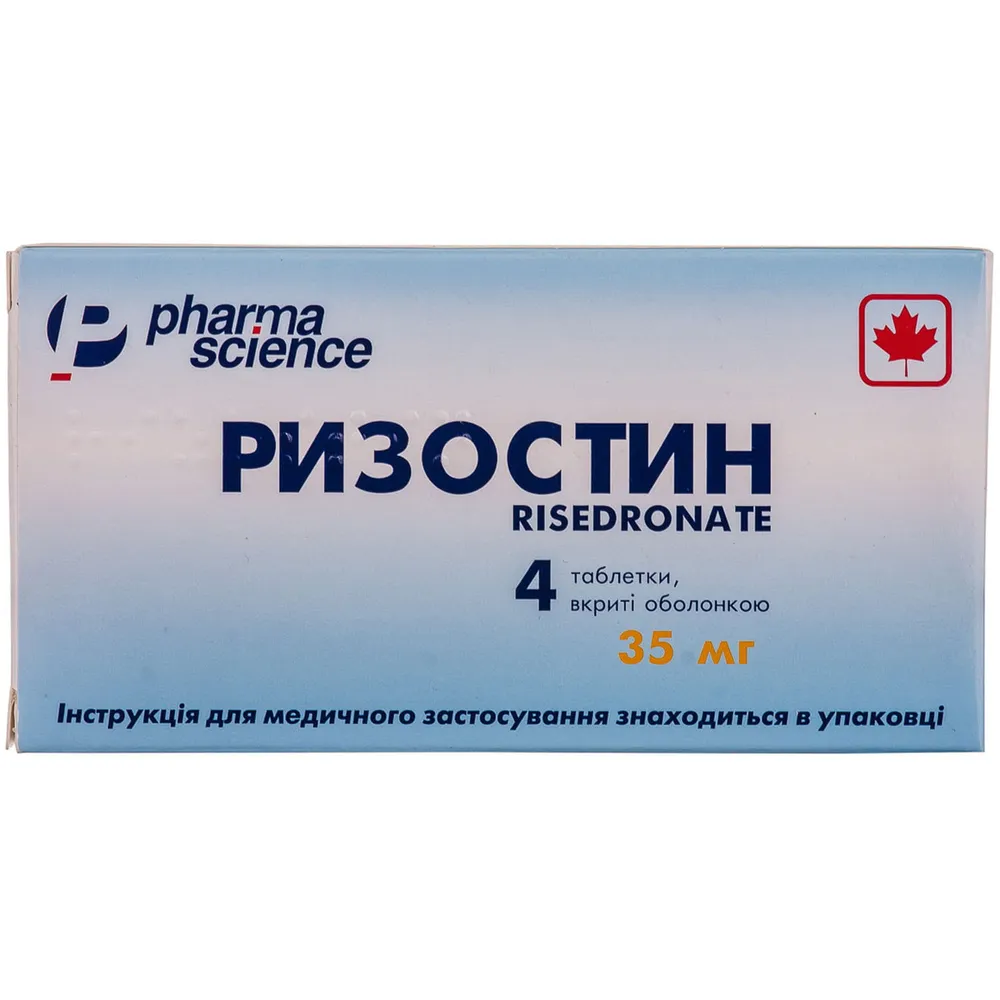
Table of Contents
INSTRUCTIONS FOR MEDICAL USE OF THE MEDICINAL PRODUCT RISOSTIN (RISOSTIN)
Composition:
Active substance: risedronate sodium;
1 tablet contains 35 mg of risedronate sodium in the form of risedronate sodium hemipentahydrate;
Excipients: colloidal anhydrous silicon dioxide, maltodextrin, mannitol (E 421), povidone, pregelatinized starch, sodium starch glycolate (type A), sodium stearyl fumarate, anhydrous ethanol;
Tablet coating: sucrose, triethyl citrate, titanium dioxide (E 171), yellow iron oxide (E 172), red iron oxide (E 172), talc, anhydrous ethanol, polyvinyl alcohol – polyethylene glycol grafted copolymer.
Pharmaceutical form. Film-coated tablets.
Main physicochemical properties:
modified capsule-shaped film-coated tablets of orange color, with the imprint «RS» on one side and «35» on the other side.
Pharmacotherapeutic group. Drugs affecting bone structure and mineralization. Bisphosphonates. ATC code M05B A07.
Pharmacological Properties.
Pharmacodynamics.
Sodium risedronate is an inhibitor of bone resorption. It has a high affinity for bone hydroxyapatite crystals and exerts a pronounced antiresorptive effect. At the cellular level, the drug inhibits osteoclast activity. Histomorphometric data indicate that sodium risedronate reduces the frequency of formation of remodeling sites and the level of bone resorption at these sites.
Osteoporosis is a degenerative process in bone tissue leading to decreased bone mass and increased risk of fractures of the spine, hip, and wrist. The diagnosis of osteoporosis is confirmed by detecting reduced bone mass, radiographically evident fractures, history of fractures, or presence of kyphosis indicating vertebral fractures. Osteoporosis occurs in both women and men, although it is more common in postmenopausal women.
Normally, bone formation and resorption are closely linked: old bone tissue undergoes resorption and is replaced by newly formed bone. In postmenopausal osteoporosis, bone resorption proceeds more intensively than bone formation, resulting in decreased bone mass and increased risk of fractures, particularly of the spine and hip. Approximately 40% of women aged 50 years and older have a significant risk of such fractures. After the first osteoporosis-related fracture, the risk of subsequent fractures increases approximately fivefold. Approximately one in five men aged 50 years and older also experiences a fracture due to osteoporosis.
Daily administration of sodium risedronate at a dose of 5 mg in postmenopausal women rapidly reduces the rate of bone resorption without significantly suppressing bone formation. Bone remodeling levels decrease within two weeks, and maximum reduction is achieved by six months. At this point, a balance between bone formation and resorption is restored, approaching the normal premenopausal equilibrium.
Administration of risedronate at a dose of 5 mg daily for 3 years increased bone mineral density (BMD) at the lumbar spine, femoral neck, trochanter, and wrist bones, and maintained unchanged bone density at the mid-radius compared to the control group.
The effect of sodium risedronate on bone tissue (increase in BMD and reduction in bone remodeling markers) was similar in men and women.
Pharmacokinetics.
After oral administration, the drug is rapidly absorbed (Tmax ~ 1 hour) in the upper gastrointestinal tract, and the extent of absorption is independent of dose. Mean bioavailability, whether administered as tablets or in solution, is 0.63%. Absorption is 55% lower when the drug is taken 30 minutes after a meal compared to administration on an empty stomach. Absorption is equivalent when the drug is taken 30 minutes before a meal or 2 hours after a meal. Drug bioavailability is similar in men and women.
Sodium risedronate is not systemically metabolized, does not affect cytochrome P450 enzymes, and binds weakly to plasma proteins (approximately 24%). Approximately half of the administered dose is excreted unchanged in urine within 24 hours.
Following absorption, the risedronate concentration-time profile is multiphasic: the initial elimination half-life is approximately 1.5 hours, while in the terminal exponential phase it is 480 hours. Although the rate of bisphosphonate elimination from bone tissue is unknown, the 480-hour half-life in the terminal phase likely reflects the dissociation of risedronate from bone surfaces.
Renal clearance is independent of concentration and shows a linear relationship between drug renal clearance and creatinine clearance. Unabsorbed sodium risedronate is excreted unchanged in feces.
Clinical characteristics.
Indications.
- Treatment of postmenopausal osteoporosis: to reduce the risk of vertebral fractures.
- Treatment of confirmed postmenopausal osteoporosis: to reduce the risk of hip fractures.
- Treatment of osteoporosis in men at high risk of fractures.
Contraindications.
- Hypersensitivity to any component of the drug.
- Hypocalcemia.
- Severe renal impairment (creatinine clearance < 30 mL/min).
Interaction with other medicinal products and other forms of interaction.
No clinically significant interactions have been observed with the following agents: nonsteroidal anti-inflammatory drugs (NSAIDs), H2-blockers, proton pump inhibitors, calcium channel blockers, beta-blockers, thiazides, glucocorticoids, anticoagulants, anticonvulsants, cardiac glycosides, estrogen-containing products.
Antacids/supplements containing polyvalent cations (calcium, magnesium, aluminum, iron).
May impair absorption of risedronate.
Interaction with food.
Food, beverages (except plain water), and medicinal products containing polyvalent cations (such as calcium, magnesium, iron, and aluminum) may affect risedronate absorption and therefore should not be taken at the same time as Rizostin. To achieve the intended therapeutic effect, it is essential to strictly follow the dosing recommendations (see section "Dosage and administration").
Risedronate is not subject to systemic metabolism, does not induce cytochrome P450 enzymes, and binds only minimally to plasma proteins.
In phase III studies evaluating the use of sodium risedronate in osteoporosis, where the drug was administered daily, acetylsalicylic acid or NSAIDs were taken by 33% and 45% of patients, respectively. In phase III studies where the drug was administered daily or once weekly in postmenopausal women, acetylsalicylic acid or NSAIDs were taken by 57% and 40% of patients, respectively. Among patients who concurrently used acetylsalicylic acid or NSAIDs regularly (3 or more days per week), the incidence of adverse events related to the upper gastrointestinal tract in the sodium risedronate group was similar to that in the control group.
Sodium risedronate may be used concomitantly with estrogen-containing products if such combination is considered appropriate.
Special precautions for use.
Food, beverages (other than plain water), and medicinal products containing polyvalent cations (such as calcium, magnesium, iron, and aluminum) affect the absorption of bisphosphonates; therefore, they should not be taken simultaneously with the drug.
To achieve the intended therapeutic efficacy, it is essential to strictly follow the recommended dosing instructions.
The efficacy of bisphosphonates in the treatment of postmenopausal osteoporosis has been established in patients with low bone mineral density and/or a history of frequent fractures. Advanced age or the presence of clinical risk factors for fracture alone are not sufficient reasons to initiate bisphosphonate therapy for osteoporosis. Evidence supporting the efficacy of bisphosphonates, including risedronate, in elderly patients (over 80 years of age) is currently limited.
The use of certain bisphosphonates has been associated with the development of esophagitis, gastritis, gastrointestinal ulcers, and esophageal ulcers. Therefore, patients must pay particular attention to the dosing instructions (see section "Dosage and administration").
Special caution is required when treating patients in the following cases:
- Patients with a history of esophageal disorders that delay the passage or emptying of food from the esophagus, such as stricture or achalasia;
- Patients unable to remain in an upright position for at least 30 minutes after taking the tablet;
- Patients with active or recently healed esophageal or upper gastrointestinal tract lesions when using risedronate.
The prescribing physician must emphasize to patients the importance of strictly following the dosing instructions and monitoring for any signs or symptoms of possible esophageal reactions. Patients should be instructed to seek medical attention promptly if symptoms of esophageal irritation develop, such as dysphagia, pain on swallowing, retrosternal pain, or onset/worsening of heartburn.
Adequate intake of calcium and vitamin D through diet is necessary during risedronate therapy, especially
in Paget’s disease, where bone remodeling activity is significantly increased.
Hypocalcemia must be corrected prior to initiating therapy. Other bone and mineral metabolism disorders (e.g., parathyroid dysfunction, vitamin D deficiency) should be treated concomitantly with the start of treatment.
Osteonecrosis of the jaw has been reported in cancer patients receiving treatment regimens that included primarily intravenous bisphosphonates, usually associated with tooth extraction and/or local infection (including osteomyelitis). Many of these patients were also receiving chemotherapy and corticosteroids. Cases of osteonecrosis of the jaw have also been reported in osteoporosis patients receiving oral bisphosphonates.
Prior to initiating bisphosphonate therapy, patients with concomitant risk factors (e.g., malignancy, chemotherapy, head and neck radiation therapy, poor oral hygiene) should undergo a dental examination and preventive dental treatment. Invasive dental procedures should be avoided, if possible, during treatment in such patients.
Osteonecrosis of the external auditory canal
Cases of osteonecrosis of the external auditory canal have been reported during bisphosphonate therapy, primarily with long-term treatment. Possible risk factors for developing osteonecrosis of the external auditory canal include steroid use, chemotherapy, and/or local risk factors such as infection or trauma. The possibility of osteonecrosis of the external auditory canal should be considered in patients receiving bisphosphonates who develop ear-related symptoms, including chronic ear infections.
Atypical femoral fractures
Atypical subtrochanteric and diaphyseal femoral fractures may occur during bisphosphonate therapy, particularly in patients receiving long-term treatment for osteoporosis. These transverse or short oblique fractures may occur anywhere along the femur, from just below the lesser trochanter to just above the supracondylar region. Such fractures typically occur after minimal trauma or even in the absence of trauma. Some patients may experience thigh or groin pain, often associated with imaging findings indicative of stress fractures, which may be evident several weeks or months before a complete femoral fracture occurs. These fractures are often bilateral; therefore, in patients receiving bisphosphonates who experience a femoral shaft fracture, the contralateral femur should also be examined. Poor healing of these fractures has also been reported. The benefit-risk ratio should be carefully considered in individual patients, and discontinuation of bisphosphonate therapy should be evaluated in patients suspected of having an atypical femoral fracture.
Patients receiving bisphosphonate therapy should be advised to report any new thigh or groin pain, and such patients should be evaluated for an incomplete femoral fracture.
Use during pregnancy or breastfeeding.
The potential risk to humans is unknown.
Sodium risedronate should not be used during pregnancy or breastfeeding.
Effects on the ability to drive vehicles or operate machinery.
No effect on the ability to drive vehicles or operate machinery has been observed. However, it should be noted that adverse reactions affecting the visual system, including blurred vision and photophobia, may occur during treatment.
Method of Administration and Dosage
The recommended dose is 35 mg once weekly, orally.
To achieve the desired effect, it is essential to strictly follow the instructions for taking the medication. The tablet should be taken on an empty stomach, at least 30 minutes before consuming food, beverages (except plain water), or other medicinal products. The tablet should be taken while standing, swallowed whole without chewing, and washed down with a sufficient amount of water (at least 120 mL) to ensure it reaches the stomach.
For at least 30 minutes after taking the tablet, the patient should remain in an upright position.
If a dose is missed, the tablet should be taken on the day it is remembered. Afterwards, the patient should continue taking one tablet weekly on the day they usually take it. Two tablets must not be taken on the same day.
The need for additional calcium and vitamin D supplementation should be considered if dietary intake of these nutrients is inadequate.
Elderly patients.
No differences in efficacy or safety of sodium risedronate have been observed based on patient age. Therefore, elderly patients do not require dose adjustment. The same applies to patients aged 75 years and older.
Patients with renal impairment.
Dose adjustment is not required for patients with mild to moderate renal impairment. The use of the drug is contraindicated in patients with severe renal impairment (creatinine clearance below 30 mL/min) (see section "Contraindications").
The optimal duration of bisphosphonate treatment for osteoporosis has not yet been established. The need for continued treatment with Rizostin should be periodically reassessed, considering the benefits and potential risks of such therapy for the individual patient, especially after 5 years or more of treatment.
Patients taking acetylsalicylic acid/NSAIDs.
Among patients who regularly took acetylsalicylic acid or NSAIDs (3 or more days per week), the frequency of adverse events in the upper gastrointestinal tract in the sodium risedronate group was similar to that in the control group (see section "Interaction with other medicinal products and other forms of interaction").
Children.
Since data on the safety and efficacy of sodium risedronate in children (under 18 years of age) are insufficient, the drug is not administered to this patient group.
Overdose.
There is currently no information on any specific treatment for acute overdose of sodium risedronate.
Significant overdose may lead to decreased serum calcium levels and the development of symptoms of hypocalcemia.
Treatment. Milk or antacids containing magnesium, calcium, or aluminum should be given to the patient to bind sodium risedronate and reduce its absorption.
In cases of significant overdose (if less than 30 minutes have passed since drug intake), gastric lavage may be recommended. Standard supportive measures for managing symptoms of hypocalcemia, including intravenous administration of calcium preparations, may also be used.
Side effects.
Most adverse reactions during clinical trials were mild or moderate and did not require discontinuation of the drug.
Central nervous system: headache.
Gastrointestinal disorders: dyspepsia, nausea, constipation, diarrhea, abdominal pain, duodenitis, esophagitis, gastritis, dysphagia, esophageal ulcers, glossitis, esophageal stricture.
Musculoskeletal and connective tissue disorders: pain in muscles, joints, and bones.
Laboratory findings: rarely – changes in liver function tests.
In some patients, early, transient, asymptomatic, mild decreases in serum calcium and phosphate levels were observed.
Eye disorders: uveitis, conjunctivitis, episcleritis, iritis, scleritis, inflammation of the iris.
Musculoskeletal and connective tissue disorders: atypical subtrochanteric and diaphyseal femoral fractures, osteonecrosis of the jaw.
Skin and subcutaneous tissue disorders: hypersensitivity reactions and skin reactions, including angioedema, generalized rash, urticaria, as well as bullous skin reactions and leukocytoclastic vasculitis (severe reactions have been observed occasionally, including isolated cases of Stevens–Johnson syndrome and toxic epidermal necrolysis); hair loss.
Immune system disorders: anaphylactic reaction.
Hepatobiliary disorders: serious liver disorders. In most reported cases, patients were also receiving treatment with other medicinal products known to have the potential to cause liver disorders.
Very rare: osteonecrosis of the external auditory canal (a class effect of bisphosphonates).
Shelf life. 5 years.
Storage conditions.
Store at temperatures not exceeding 30 °C, in a place inaccessible to children.
Packaging. 4 tablets per blister, 1 blister per cardboard box.
Prescription status. Prescription only.
Manufacturer. Pharmascience Inc.
Manufacturer's address and location of operations.
6111 Royalmount Avenue, 100, Montreal, Quebec H4P 2T4, Canada.
6111 Royalmount Avenue, 100, Montreal, Quebec H4P 2T4, Canada.