Rosamax®
Ukraine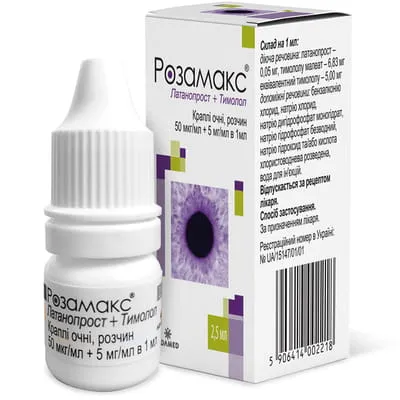
Table of Contents
I N S T R U C T I O N for medical use of the medicinal product R O Z A M A X ® (ROZAMAX)
Composition:
active substances: latanoprost; timolol;
1 ml of solution contains latanoprost – 0.05 mg and timolol maleate – 6.83 mg, equivalent to timolol – 5.00 mg;
excipients: benzalkonium chloride, sodium chloride, sodium dihydrogen phosphate monohydrate, sodium hydrogen phosphate anhydrous, sodium hydroxide and/or hydrochloric acid diluted, water for injections.
Pharmaceutical form. Eye drops, solution.
Main physicochemical properties: clear, colorless aqueous solution.
Pharmacotherapeutic group. Antiglaucoma preparations and miotics.
ATC code S01E D51.
Pharmacological Properties.
Pharmacodynamics.
Rozamax® contains latanoprost and timolol maleate. They reduce intraocular pressure through different mechanisms of action, and their combined use lowers intraocular pressure more effectively than either agent alone. Latanoprost is a prostaglandin F2α analog and a selective prostaglandin FP receptor agonist that reduces intraocular pressure by increasing the outflow of aqueous humor. The primary mechanism of action is increased uveoscleral outflow; however, in humans, there is also some observed improvement in outflow (reduced resistance to outflow through the trabecular meshwork). Latanoprost does not significantly affect aqueous humor production, the blood–aqueous barrier, or intraocular blood circulation. During short-term treatment of pseudophakic patients, latanoprost did not cause fluorescein leakage into the posterior segment of the eye.
Timolol is a non-selective beta-adrenergic blocking agent affecting both β1 and β2 adrenergic receptors, with no intrinsic sympathomimetic activity and no membrane-stabilizing effect. It does not directly inhibit myocardial function. Timolol reduces elevated intraocular pressure by decreasing aqueous humor production in the ciliary epithelium. Its mechanism of action is not fully defined, but it likely exerts an inhibitory effect on excessive endogenous beta-adrenergic stimulation-induced cyclic adenosine monophosphate (cAMP) production. There is no evidence of a significant effect of timolol on the permeability of the blood–aqueous barrier in plasma proteins.
In clinical studies, the use of the combination product containing latanoprost and timolol resulted in a greater reduction in mean 24-hour intraocular pressure compared to monotherapy with either timolol or latanoprost administered once daily. Evening administration of the product leads to a greater reduction in intraocular pressure compared to morning administration.
When prescribing the medication in the morning or evening, the patient’s lifestyle and likelihood of adherence to recommendations should be considered.
If the combined product is insufficiently effective, separate administration of the individual components—timolol and latanoprost—once daily may be effective.
The effect of Rozamax® begins within one hour after administration, and peak concentration is reached within 6–8 hours. With repeated dosing, a reduction in intraocular pressure is maintained for 24 hours after administration.
Pharmacokinetics.
Latanoprost is an isopropyl ester of latanoprost acid, which becomes biologically active after hydrolysis to latanoprost acid, a process occurring in the cornea with the participation of esterases. The inactive prodrug is well absorbed through the cornea and is completely hydrolyzed during penetration. Studies in humans have shown that maximum drug concentration in aqueous humor (15–30 ng/mL) is achieved approximately 2 hours after topical administration of latanoprost alone. The plasma clearance of latanoprost is 0.40 L/h/kg body weight, while the volume of distribution is low (0.16 L/kg), and it has a short plasma half-life of 17 minutes. After topical administration, the systemic bioavailability of latanoprost acid is 45%. Latanoprost acid is 87% bound to plasma proteins and is practically not metabolized within the eye. Metabolism occurs primarily in the liver. Animal studies have shown that the main metabolites—1,2-dinor and 1,2,3,4-tetranor—have either no or weak biological activity and are excreted primarily in urine.
Timolol—maximum concentration of timolol in aqueous humor is reached approximately 1 hour after topical administration. A portion of the dose penetrates into the systemic circulation, and maximum plasma concentration of about 1 ng/mL is achieved within 10–20 minutes after topical administration of 1 drop in each eye once daily (300 μg/day). The plasma half-life of timolol is approximately 6 hours. Metabolism of timolol occurs primarily in the liver. Timolol metabolites are excreted in urine along with unchanged timolol.
Rozamax (latanoprost and timolol)—no pharmacokinetic interactions between latanoprost and timolol have been observed, although the concentration of latanoprost acid in aqueous humor 1–4 hours after administration of Rozamax® was twice as high compared to monotherapy.
Clinical characteristics.
Indications.
Reduction of intraocular pressure in patients with open-angle glaucoma and elevated intraocular pressure who do not respond adequately to topical beta-adrenergic blockers or topical prostaglandin analogs.
Contraindications.
The drug is contraindicated in patients with:
- conditions associated with increased airway reactivity, including bronchial asthma (including in medical history) and severe chronic obstructive pulmonary disease;
- sinus bradycardia, sinoatrial block due to sick sinus syndrome, second- or third-degree atrioventricular block not controlled by a pacemaker, overt heart failure, cardiogenic shock;
- hypersensitivity to any of the active or excipient ingredients.
Interaction with other medicinal products and other forms of interaction. No detailed studies on the interaction of Rosamaks® with other drugs have been conducted. Paradoxical increase in intraocular pressure has been reported after concomitant use of two prostaglandin analogs; therefore, the use of two or more prostaglandins, prostaglandin analogs, or prostaglandin derivatives is not recommended. When used concomitantly with oral beta-adrenergic blockers, Rosamaks® may enhance the reduction of intraocular pressure or block beta-adrenergic receptors. Therefore, concomitant use of two or more topical beta-adrenergic blocking agents is not recommended. Cases of pupillary dilation have been reported after concomitant use of timolol and epinephrine. Specific interaction studies with timolol have not been conducted. An additive effect leading to hypotension and/or marked bradycardia may occur during concomitant use of ophthalmic solutions containing beta-adrenergic blockers and oral calcium channel blockers, antiarrhythmic beta-adrenergic blockers (including amiodarone), digitalis glycosides, parasympathomimetics, or guanethidine. The increase in blood pressure following abrupt withdrawal of clonidine may be potentiated by beta-adrenergic blockers. Beta-adrenergic blocking agents may enhance the hypoglycemic effect of antidiabetic drugs. They may also mask subjective and objective symptoms of hypoglycemia. Enhanced systemic beta-adrenergic blocking effects (bradycardia, depression) have been reported when timolol is used concomitantly with cytochrome CYP2D6 inhibitors (quinidine, fluoxetine, paroxetine).
Caution! In vitro studies have shown that precipitation occurs when latanoprost is mixed with ophthalmic solutions containing thimerosal. When administering such products together with Rosamaks®, an interval of at least five minutes should be maintained between instillations.
Special precautions for use
General effects
Like other topical ophthalmic agents, timolol is absorbed into the systemic circulation. The beta-adrenergic blocking agent timolol may cause the same types of cardiovascular disorders, respiratory disturbances, and other adverse effects as systemically administered beta-blockers. Adverse effects following topical administration occur less frequently than with systemic administration.
Cardiac disorders
Patients with cardiovascular diseases (ischemic heart disease, Prinzmetal's angina, heart failure) and hypotension require careful assessment of the necessity for treatment with beta-adrenergic blocking agents; alternative therapies should be considered. Patients with cardiac disease must be monitored for possible adverse reactions. Due to the negative effect on conduction time, beta-adrenergic blockers should be used with particular caution in patients with first-degree heart block.
Vascular disorders
Patients with severe disorders/peripheral circulatory diseases (severe forms of Raynaud's disease or Raynaud's syndrome) require special caution.
Respiratory disorders
Following administration of certain beta-adrenergic blocking agents, cases of respiratory disturbances have occurred, including fatal outcomes due to sudden bronchospasm in patients with asthma. Rozamaks® should be used with caution in patients with mild to moderate chronic obstructive pulmonary disease (COPD) and only when the potential benefit outweighs the possible risk.
Hypoglycemia/diabetes
Beta-adrenergic blockers should be used cautiously in patients at risk of spontaneous hypoglycemia or in patients with unstable diabetes, as beta-blockers may mask the symptoms of acute hypoglycemia. Beta-adrenergic blockers may also mask the symptoms of hyperthyroidism.
Corneal disorders
Beta-adrenergic blockers administered ophthalmically may cause dry eyes. Patients with corneal disorders should be treated with caution.
Other beta-adrenergic blocking agents
When used concomitantly with another systemically acting beta-adrenergic blocker, timolol may enhance intraocular pressure reduction or beta-adrenergic receptor blockade. The patient's response to such treatment should be closely monitored. Concomitant use of two topically acting beta-adrenergic blockers is not recommended.
Hypersensitivity reactions
In patients with a history of atopy or severe anaphylactic reactions to multiple allergens, beta-blockers may increase sensitivity upon repeated allergen exposure or may prevent response to usual doses of adrenaline used in treating anaphylactic reactions.
Choroidal detachment
Cases of choroidal detachment have occurred during treatment with agents that inhibit aqueous humor production (e.g., timolol, acetazolamide) following filtration procedures.
Anesthesia during surgical procedures
Ophthalmic beta-adrenergic blockers in the form of eye drops may block systemic beta-agonist effects, such as those of adrenaline. The anesthesiologist must be aware that the patient is receiving timolol.
Combination therapy
Timolol may interact with other medicinal products.
Ocular effects
Latanoprost may gradually change eye color due to increased brown pigment in the iris stroma. As with other latanoprost-containing products, approximately 16–20% of patients treated with a combination product containing latanoprost and timolol for about one year experienced increased iris pigmentation. This effect has been observed in patients with mixed iris color and is associated with melanin content in melanocytes of the iris stroma. In patients with uniformly blue, gray, green, or brown iris color, such changes were observed only in a few cases during two years of clinical observation with latanoprost treatment. Changes in iris color occur very slowly and may remain unnoticed for many months or even years. These changes are not associated with any other adverse symptoms or pathological alterations. After discontinuation of treatment, further progression of brown iris pigmentation does not occur, but the color change during treatment may be long-lasting. Pre-existing nevi or freckles on the iris do not change during therapy. Clinical studies have not reported pigment deposition in the retina, collagen fibers in the filtration angle, or other areas of the anterior chamber of the eye; however, patients should be examined regularly, and discontinuation of treatment may be advisable if increased iris pigmentation is observed, depending on the patient's condition. Patients should be informed before initiating treatment about the potential for iris color change. Treatment of one eye may lead to irreversible heterochromia. There is no documented experience regarding the use of latanoprost in inflammatory, neovascular, chronic angle-closure, or congenital glaucoma, open-angle glaucoma in pseudophakic patients, or pigmentary glaucone. Latanoprost has no or minimal effect on the pupil, but there are no documented studies on its use during acute attacks of open-angle glaucoma. Caution should be exercised when using Rozamaks® in such patients until complete data are available. Caution is required when using latanoprost in patients with a history of herpetic keratitis; the drug should be avoided in patients with active herpetic keratitis or recurrent keratitis, particularly associated with prostaglandin analogs. Macular edema, including cystoid macular edema, has been observed during latanoprost treatment. This symptom occurred primarily in aphakic patients, pseudophakic patients with ruptured posterior lens capsule, and patients at risk for macular edema. Caution is required when using Rozamaks® in such patients.
Changes in eyelids and eyelashes
Skin darkening of the eyelids, which may be reversible, has been reported with latanoprost use.
Latanoprost may gradually change the eyelashes and vellus hair around the treated eye and adjacent areas. These changes include increased length, thickness, pigmentation, and number of eyelashes or vellus hairs, as well as misdirected growth of eyelashes. Changes in eyelashes are reversible and resolve after discontinuation of the drug.
Antidoping tests: use of Rozamaks® may result in positive antidoping test results.
This product contains 0.2 mg of benzalkonium chloride per mL of solution. Benzalkonium chloride may be absorbed by soft contact lenses and may alter the color of contact lenses. The patient should remove contact lenses before using this product and reinsert them 15 minutes after administration. Due to limited available data, there is no difference in the adverse effect profile between children and adults. However, children's eyes generally show a stronger reaction to irritants than adult eyes. Irritation may affect children's adherence to treatment. Benzalkonium chloride has been reported to cause eye irritation, symptoms of dry eye, and may affect the tear film and corneal surface. It should be used with caution in patients with dry eye or in patients with potentially damaged cornea. Patients should be monitored during prolonged use.
Use during pregnancy or breastfeeding
Pregnancy
Latanoprost: There are no adequate data on the use of latanoprost in pregnant women. The potential risk to humans is unknown.
No effects on fertility in male and female rats or teratogenic potential in rats and rabbits have been established for latanoprost. No embryotoxicity was observed in rats after intravenous doses up to 250 micrograms/kg/day. However, latanoprost caused embryofetal toxicity characterized by increased frequency of late resorption and abortions and reduced fetal weight in rabbits at intravenous doses of 5 micrograms/kg/day (approximately 100 times the clinical dose) and higher.
Timolol: There is insufficient data on the use of timolol in pregnant women. Timolol should not be used during pregnancy except when clearly necessary. Epidemiological studies on orally administered beta-adrenergic blocking agents have not shown an increased risk of congenital malformations, but intrauterine growth retardation has been observed. In addition, symptoms of beta-blockade (bradycardia, hypotension, respiratory depression, hypoglycemia) have been observed in newborns whose mothers received beta-adrenergic blockers during pregnancy. If Rozamaks® is used during pregnancy, the newborn should be closely monitored during the first days of life. Rozamaks® should not be used during pregnancy.
Lactation
Latanoprost and its metabolites may pass into breast milk. After administration of Rozamaks® at therapeutic doses, it is unlikely that sufficient amounts of the drug will reach breast milk to cause beta-blockade in the newborn. Rozamaks® should not be used in breastfeeding women.
Effect on ability to drive and use machines
Rozamaks® has a significant effect on the ability to drive and operate machinery. Blurred vision may occur temporarily after administration. Patients should not drive or operate machinery until these symptoms have resolved.
Method of Administration and Dosage
Adults
The recommended dosage for adult patients (including elderly patients) is 1 drop in the affected eye once daily. If a dose is missed, treatment should be continued with the next scheduled dose. The medication should not be used more frequently than 1 drop in the affected eye once daily. Contact lenses should be removed prior to instillation of eye drops and may be reinserted after 15 minutes (see "Special Warnings and Precautions for Use").
If more than one ophthalmic medicinal product for topical use is being used, the products should be administered with an interval of at least 5 minutes between applications. Blocking the nasolacrimal duct or closing the eyelids for 2 minutes after instillation reduces systemic absorption and enhances local activity of the medication.
Children and Adolescents. There is a lack of data regarding the safety and efficacy of Rozamaks® in children and adolescents.
Children.
There are no data on the safety and efficacy of Rozamaks® in children. The use of this medication in children is not recommended.
Overdose
There are no data on overdose of Rozamaks® in humans. Systemic symptoms of timolol overdose include bradycardia, decreased blood pressure, bronchospasm, and cardiac arrest. If such symptoms occur, symptomatic and supportive therapy should be administered. Timolol is not effectively removed from the body by dialysis.
Apart from irritation and conjunctival hyperemia, no other ocular or systemic overdose symptoms of latanoprost have been observed. In case of accidental oral ingestion of latanoprost, gastric lavage should be performed if necessary, followed by symptomatic treatment. Latanoprost is extensively metabolized during first-pass liver metabolism. Intravenous infusion of 3 mcg/kg in healthy volunteers did not cause any symptoms, whereas doses of 5.5–10 mcg/kg body weight caused nausea, abdominal pain, dizziness, fatigue, sudden warmth, and sweating. These symptoms were mild to moderate in severity and resolved spontaneously within 4 hours after the end of infusion.
Adverse Reactions
The frequency of occurrence is defined as follows: very common (≥1/10), common (≥1/100 to <1/10), uncommon (≥1/1000 to <1/100), rare (≥1/10,000 to <1/1000), very rare (<1/10,000), frequency not known. Adverse effects on the eye were most frequently observed. With timolol use, systemic adverse effects were most commonly observed, namely: bradycardia, cardiac arrhythmia, congestive heart failure, bronchospasm, and allergic reactions. Like other ophthalmic medications, Rozamaks® is systemically absorbed. This may lead to adverse effects similar to those observed with systemic beta-adrenergic blockers. The frequency of adverse effects following local administration is lower than with systemic administration. Some adverse effects are associated with the entire class of beta-adrenergic blockers. The adverse effects listed below were observed in clinical trials of latanoprost and timolol.
Nervous system disorders:
Uncommon: headache.
Eye disorders:
Very common: increased pigmentation of the iris;
Common: eye irritation (including stinging, burning, itching, foreign body sensation), eye pain;
Uncommon: ocular hemorrhage, conjunctivitis, blurred vision, increased lacrimation, blepharitis, corneal disorder.
Skin and subcutaneous tissue disorders:
Uncommon: skin rash, pruritus.
Adverse reactions related to individual components of the medicinal product
Latanoprost:
Infections including parasitic:
herpetic keratitis.
Nervous system disorders:
dizziness.
Eye disorders:
changes in eyelash appearance (darkening, increased volume, number, length), punctate epithelial erosions, periorbital edema, inflammation of the iris or uvea, macular edema (in aphakic patients, pseudophakic patients with ruptured posterior lens capsule, or patients at risk of macular edema), dry eyes, keratitis, corneal edema and erosion, changes in eyelash growth direction which may lead to eye irritation, iris cyst.
Cardiac disorders:
worsening of angina in patients with angina, tachycardia.
Respiratory, thoracic and mediastinal disorders:
asthma, exacerbation of asthma, dyspnea.
Skin and subcutaneous tissue disorders:
increased pigmentation of eyelid skin.
Musculoskeletal and connective tissue disorders:
arthralgia, myalgia.
General disorders:
chest pain.
Gastrointestinal disorders:
Uncommon: nausea, vomiting.
Timolol
Immune system disorders:
systemic allergic reactions, including angioneurotic edema, urticaria, local and general rashes, pruritus, anaphylactic reaction.
Metabolism and nutrition disorders:
hypoglycemia.
Psychiatric disorders:
insomnia, depression, nightmares, memory loss, hallucinations.
Nervous system disorders:
loss of consciousness, cerebral ischemia, stroke, worsening of objective and subjective symptoms of myasthenia, dizziness, paresthesia, headache.
Eye disorders:
increased objective and subjective symptoms of eye irritation (burning, stinging, itching, lacrimation, redness), blepharitis and keratitis, visual disturbances, and choroidal detachment following surgical filtration procedures, decreased corneal sensitivity, dry eyes, corneal erosion, ptosis, diplopia.
Aural and labyrinth disorders:
tinnitus.
Cardiac disorders:
bradycardia, chest pain, tachycardia, edema, arrhythmia, congestive heart failure, cardiac arrest, atrioventricular block, heart failure.
Vascular disorders:
hypotension, Raynaud's phenomenon, cold hands and feet.
Respiratory, thoracic and mediastinal disorders:
bronchospasm (particularly in patients with previously diagnosed bronchial spasms), dyspnea, cough.
Gastrointestinal disorders:
taste disturbances, nausea, dyspepsia, diarrhea, dry mouth, abdominal pain, vomiting.
Skin and subcutaneous tissue disorders:
alopecia, psoriasiform rash or exacerbation of psoriasis, skin rash.
Musculoskeletal and connective tissue disorders:
myalgia.
Reproductive system disorders:
sexual dysfunction, decreased libido.
General disorders:
asthenia/fatigue.
Very rare cases of corneal calcification have been reported in association with the use of phosphate-containing ophthalmic solutions in some patients with significantly damaged corneas.
Shelf life. 2 years.
Shelf life after first opening: 4 weeks.
Storage conditions. Store in the original packaging to protect from light, in a refrigerator (2–8°C). After first opening, store in the original packaging to protect from light, at a temperature below 25°C. Keep out of reach of children. Do not use after the expiry date stated on the packaging.
Packaging. 2.5 mL solution in LDPE (low-density polyethylene) bottles and 5 mL with dropper in LDPE bottles with white HDPE (high-density polyethylene) cap, in a cardboard box with the instruction for medical use.
Prescription category. Prescription only.
Manufacturer. Adamed Pharma S.A., Poland.
Manufacturer's address and place of business.
5 J. Pilsudskiego Street, 95-200 Pabianice, Poland.