Ropivacaine-vista
Ukraine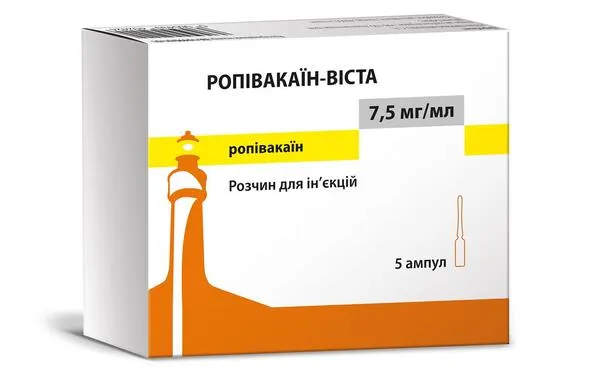
Table of Contents
INSTRUCTIONS FOR MEDICAL USE OF THE MEDICINAL PRODUCT ROPIVACAINE-VISTA (ROPIVACAINE-VISTA)
Composition:
active substance: ropivacaine;
1 ml of solution contains ropivacaine hydrochloride (as ropivacaine hydrochloride monohydrate) 7.5 mg;
excipients: sodium chloride, hydrochloric acid, sodium hydroxide, water for injections.
Pharmaceutical form. Injection solution.
Main physicochemical properties: clear, colorless solution.
Pharmacotherapeutic group. Local anesthetics. Amides. ATC code N01B B09.
Pharmacological Properties
Pharmacodynamics
Mechanism of Action
Ropivacaine-Vista contains ropivacaine, a pure enantiomer, which is an amide-type local anaesthetic. Ropivacaine reversibly blocks impulse conduction along nerve fibres by inhibiting sodium ion transport across nerve membranes. Similar effects may also occur at excitable membranes of the brain and myocardium.
Ropivacaine has anaesthetic and analgesic effects. When high doses are used, surgical anaesthesia is achieved, whereas lower doses result in sensory blockade (analgesia) accompanied by limited and non-progressive motor blockade. The duration and intensity of blockade with ropivacaine are not enhanced by the addition of adrenaline.
Pharmacodynamic Effects
In vitro, ropivacaine demonstrated a lower negative inotropic effect than levobupivacaine and bupivacaine.
Assessments of cardiac effects conducted in vivo in several animal studies showed that ropivacaine has lower cardiotoxicity than bupivacaine. This difference was both qualitative and quantitative.
Ropivacaine causes less QRS complex widening than bupivacaine, and changes occur at higher doses of ropivacaine and levobupivacaine than of bupivacaine. Direct cardiovascular effects of local anaesthetics include slowed conduction, negative inotropy, and ultimately arrhythmia and cardiac arrest.
In a study in dogs in which drugs were administered intravenously until cardiovascular collapse occurred, resuscitation was easier and more successful after ropivacaine than after levobupivacaine and bupivacaine, despite higher free plasma concentrations of ropivacaine. This indicates a wider safety margin for ropivacaine in cases of accidental intravascular injection or overdose.
Sensitivity to systemic toxic effects of ropivacaine in pregnant sheep was not higher than in non-pregnant animals.
Healthy volunteers receiving intravenous infusions demonstrated significantly lower potential for central nervous system (CNS) toxicity and cardiovascular toxicity with ropivacaine than with bupivacaine. CNS symptoms are similar with these drugs, but with bupivacaine they occur at lower doses and plasma concentrations and have a longer duration.
Indirect cardiovascular effects (arterial hypotension, bradycardia) may develop after epidural blockade, depending on the degree of associated sympathetic blockade, although this is less pronounced in children.
Rapid onset of symptoms in the central nervous and cardiovascular systems occurs when a large amount of the drug enters the bloodstream (see section "Overdose").
Pharmacokinetics
Ropivacaine has a chiral centre and is available as the pure S-(-)-enantiomer. Ropivacaine is a highly lipid-soluble compound. The pKa of ropivacaine is 8.1, and the partition coefficient is 141 (25 °C n-octanol/phosphate buffer at pH 7.4). All metabolites have local anaesthetic activity but exhibit significantly lower potency and shorter duration of action than ropivacaine.
Absorption
Plasma concentration of ropivacaine depends on the dose, type of blockade, and vascularity at the injection site. Ropivacaine demonstrates linear pharmacokinetics, i.e., maximum plasma concentration is proportional to the dose.
Ropivacaine shows complete and biphasic absorption from the epidural space; half-life values for the two phases are approximately 14 minutes and 4 hours, respectively. Slow absorption is the rate-limiting factor in elimination and explains why the terminal half-life after epidural administration is longer than after intravenous administration.
Distribution
Ropivacaine is primarily bound to plasma α1-acid glycoprotein; the unbound fraction is approximately 6%. After intravenous administration, the steady-state volume of distribution of ropivacaine is 47 litres. During prolonged epidural infusion, increases in total plasma concentrations of ropivacaine and PPX (pipecoloxylidide) were observed, dependent on postoperative increases in α1-acid glycoprotein levels. The increase in concentration of unbound, pharmacologically active ropivacaine in plasma was considerably smaller than the increase in total ropivacaine concentration. The mean unbound PPX concentration was approximately 7–9 times higher than the mean unbound ropivacaine concentration after prolonged epidural infusion lasting up to 72 hours.
Ropivacaine crosses the placenta and equilibrium is reached between the mother and fetus with respect to unbound ropivacaine. Protein binding in the fetus is lower than in the mother, resulting in lower total drug concentration in fetal plasma.
Metabolism
Ropivacaine is metabolized in the liver primarily via aromatic hydroxylation to 3-hydroxy-ropivacaine (catalyzed by cytochrome CYP1A2) and via N-dealkylation to PPX (catalyzed by cytochrome CYP3A4). PPX is an active metabolite. The threshold for CNS toxic plasma concentrations of unbound PPX in rats is approximately 12 times higher than that for unbound ropivacaine. PPX is a metabolite of minor importance after single doses but becomes the main metabolite after prolonged epidural infusion.
Excretion
Metabolites are excreted in urine. Only about 1% of a single dose of ropivacaine is excreted unchanged. Mean total plasma clearance of ropivacaine is approximately 440 ml/min, unbound ropivacaine clearance is 8 l/min, and renal clearance is 1 ml/min. Terminal half-life is 1.8 hours after intravenous administration, and the intermediate hepatic extraction ratio is approximately 0.4.
Impaired renal function has minimal or no effect on the pharmacokinetics of ropivacaine. Renal clearance of PPX is significantly correlated with creatinine clearance. The lack of correlation between exposure (AUC) of total compound and its unbound fraction and creatinine clearance suggests that total PPX clearance includes non-renal elimination in addition to renal excretion. Some patients with impaired renal function may exhibit increased PPX exposure due to low non-renal clearance. Since CNS toxicity of PPX is lower than that of ropivacaine, the clinical consequences of this effect during short-term treatment are considered negligible.
Use in Paediatric Practice
The pharmacokinetics of ropivacaine are based on analysis of pooled data from six studies involving 192 children aged 0 to 12 years.
In early life, clearance of unbound ropivacaine and PPX depends on body weight and age. The age effect is interpreted in terms of maturation of liver function; clearance normalized to body weight reaches a maximum at approximately 1–3 years. Clearance of unbound ropivacaine increases from 2.4 l/h/kg in neonates and 3.6 l/h/kg in one-month-old infants to approximately 8–16 l/h/kg in children aged 6 months.
Additionally, the volume of distribution of unbound ropivacaine, normalized to body weight, increases with age and reaches a maximum at 2 years. The volume of distribution of unbound ropivacaine increases from 22 l/kg in neonates and 26 l/kg in one-month-old infants to 42–66 l/kg in infants aged 6 months.
The half-life of ropivacaine is longer: 5–6 hours in neonates and one-month-old infants compared to 3 hours in older children.
The half-life of PPX is even longer: about 43 hours in neonates and 26 hours in one-month-old infants compared to 15 hours in older children.
Due to immature liver function, systemic exposure is higher in neonates and slightly higher in infants aged 1–6 months compared to older children. Dose recommendations for prolonged epidural infusion partially compensate for this difference.
Clinical characteristics.
Indications.
For adults and children aged 12 years and older for anesthesia during surgical procedures:
- Epidural anesthesia for surgical procedures, including cesarean section;
- Major nerve block;
- Peripheral nerve block.
Contraindications.
- Hypersensitivity to ropivacaine or to any of the excipients.
- Hypersensitivity to amide-type local anesthetics.
- General contraindications associated with epidural or regional anesthesia, regardless of which local anesthetic is used.
- Intravenous regional anesthesia.
- Paracervical anesthesia in obstetrics.
- Epidural anesthesia in patients with hypovolemia.
Interaction with other medicinal products and other forms of interaction.
Ropivacaine should be used with caution in combination with medicinal products structurally related to local anesthetics, i.e. class IB antiarrhythmics such as lidocaine and mexiletine, since their toxic effects are additive. Concomitant use of the medicinal product Ropivacaine-Vista with general anesthetics or opioids may potentiate adverse effects of both agents.
Specific interaction studies between local anesthetics and class III antiarrhythmics (e.g. amiodarone) have not been conducted; however, caution is recommended when used concomitantly (see also section "Special precautions for use").
Cytochrome P450 (CYP) 1A2 is involved in the formation of 3-hydroxy-ropivacaine, the main metabolite. In vivo, plasma clearance of ropivacaine was reduced by up to 77% when administered concomitantly with fluvoxamine, a selective and potent inhibitor of CYP1A2. Therefore, concomitant administration of potent inhibitors of CYP1A2, such as fluvoxamine and enoxacin, with this medicinal product may result in a metabolic interaction leading to increased plasma concentrations of ropivacaine. Thus, prolonged administration of ropivacaine should be avoided in patients who are concurrently treated with potent inhibitors of CYP1A2 (see also section "Special precautions for use").
In vivo, plasma clearance of ropivacaine was reduced by 15% when administered concomitantly with ketoconazole, a selective and potent inhibitor of CYP3A4. However, inhibition of this isoenzyme is unlikely to be of clinical significance.
In vitro, ropivacaine is a competitive inhibitor of CYP2D6, but it is unlikely to inhibit this isoenzyme when the medicinal product is used at concentrations achieved in plasma under clinical conditions.
Special precautions for use.
Regional anaesthesia should always be performed by experienced personnel in properly equipped premises. Equipment and medicinal products necessary for monitoring and emergency resuscitation must be immediately available.
Patients undergoing brachial plexus nerve blocks should be in optimal condition; an intravenous catheter should be placed prior to performing the block. The responsible physician must take necessary precautions to avoid intravascular injection of the drug (see section "Method of administration and dosage"), and must have adequate training and be familiar with the diagnosis and treatment of adverse effects/overdose, systemic toxicity, and other complications (see sections "Side effects" and "Overdose"). One such complication is accidental injection of the drug into the subarachnoid space, which may lead to a high degree of spinal block with apnoea and arterial hypotension. Seizures most commonly occur after brachial plexus block or epidural block, which may result either from accidental intravascular injection or from rapid absorption from the injection site.
Administration of an excessive dose into the subarachnoid space may lead to total spinal block (see section "Overdose"). Caution is required to prevent injection of the drug into inflamed areas. When administering ropivacaine via intra-articular injection, caution is advised in cases of suspected recent extensive intra-articular trauma or in the presence of extensive open surfaces within the joint created during surgical procedures, as this may accelerate absorption and lead to increased plasma concentrations of the drug.
Effects on the cardiovascular system.
Epidural anaesthesia may lead to arterial hypotension and bradycardia. The risk of these effects can be reduced, for example, by administration of vasoconstrictors. Arterial hypotension should be treated promptly with intravenous sympathomimetics, repeated as necessary.
Patients receiving Class III antiarrhythmic drugs (e.g., amiodarone) should be under close surveillance. Additionally, ECG monitoring should be considered for such patients due to the potential for additive cardiac effects.
Rare cases of cardiac arrest have been reported during administration of Ropivacaine-Vista for epidural anaesthesia or peripheral nerve blocks, particularly following unintentional accidental intravascular injection in elderly patients and patients with concomitant heart disease. In some cases, resuscitation was complicated. In the event of cardiac arrest, prolonged resuscitation measures may be required to achieve a positive outcome.
Head and neck blocks.
Certain procedures involving local anaesthetics, such as injections in the head and neck area, may be associated with an increased frequency of serious adverse reactions, regardless of the type of local anaesthetic used.
Large peripheral nerve blocks.
Large peripheral nerve blocks may require the use of large volumes of local anaesthetic in highly vascularized areas, which often conceal major blood vessels, where there is an increased risk of intravascular injection and/or rapid systemic absorption, potentially leading to high plasma concentrations.
Increased sensitivity.
Cross-sensitivity with other amide-type local anaesthetics should be considered when using this medicinal product (see section "Contraindications").
Hypovolemia.
In patients with hypovolemia undergoing epidural anaesthesia, sudden and severe arterial hypotension may develop regardless of the type of local anaesthetic used and for any reason (see section "Contraindications").
Patients with compromised general health status.
Patients with compromised general health due to advanced age or the presence of compromising factors such as second- or third-degree atrioventricular block, progressive liver disease, or severe renal impairment require special attention, although regional anaesthesia is often indicated in such patients.
Patients with hepatic or renal impairment.
Ropivacaine is metabolized in the liver; therefore, the drug should be used with caution in patients with severe liver disease. Due to slowed elimination, repeated doses may need to be reduced. Dose adjustment is generally not required in patients with renal impairment when the drug is used for single administration or short-term treatment.
Acidosis and reduced plasma protein concentrations, commonly observed in patients with chronic renal failure, may increase the risk of systemic toxicity.
This risk should also be considered in malnourished patients and in patients treated for hypovolemic shock.
Acute porphyria.
The solution for injection Ropivacaine-Vista may provoke an attack of porphyria and should be administered to patients with acute porphyria only if no safe alternative is available. Appropriate preventive measures should be taken for susceptible patients.
Chondrolysis.
Since the marketing of ropivacaine, reports of chondrolysis have emerged in patients who received prolonged infusion of the drug during intra-articular local anaesthesia. In most cases, chondrolysis involved the shoulder joint. Due to the presence of several contributing factors and conflicting scientific data on the mechanism of action of ropivacaine, a causal relationship has not been established. Prolonged intra-articular infusion is not an approved method of administration for Ropivacaine-Vista. Long-term use of the drug.
Long-term use of ropivacaine should be avoided in patients treated with potent CYP1A2 inhibitors such as fluvoxamine and enoxacin (see section "Interaction with other medicinal products and other forms of interaction").
Children.
Due to organ and functional immaturity, neonates may require special attention. Wide fluctuations in plasma concentrations of ropivacaine observed during clinical trials in neonates suggest a potentially increased risk of systemic toxicity, especially during prolonged epidural infusion. Dosage recommendations for neonates are based on limited clinical data. In neonates, due to slowed elimination of the drug, regular monitoring is necessary for possible systemic toxicity (e.g., by monitoring signs of CNS toxicity, ECG parameters, peripheral oxygen saturation) and local neurotoxicity (e.g., prolonged recovery period), which should continue after the end of infusion.
Instances of using higher concentrations (above 5 mg/mL) of the drug in children have not been documented.
The safety and efficacy of using ropivacaine at a dose of 7.5 mg/mL in children under 12 years of age have not been established.
Important information about excipients.
This medicinal product contains no more than 3.7 mg of sodium per 1 mL. This should be taken into account for patients on a sodium-controlled diet.
Use during pregnancy or breastfeeding.
Pregnancy.
Apart from data on epidural administration of the drug in obstetric practice, sufficient data on use in pregnant women are lacking. Data from animal studies do not indicate direct or indirect harmful effects on pregnancy, embryonic/foetal development, labour, or postnatal development. Spinal administration of the drug during caesarean section has not been reported.
Breastfeeding. It is currently unknown whether ropivacaine passes into breast milk.
Ability to influence reaction speed when driving or operating machinery.
No data are available. Depending on the dose, local anaesthetics in addition to their direct anaesthetic effect may have a minor effect on mental function and coordination, even in the absence of overt CNS toxicity, and may temporarily impair motor activity and alertness.
Method of Administration and Dosage
Ropivacaine-Vista should be administered only by physicians experienced in performing regional anesthesia, or under their supervision. To achieve an adequate level of anesthesia, the lowest possible effective doses of the drug should be used.
Adults and children aged 12 years and older
The recommended doses of the drug are listed below; dosage should be adjusted according to the required extent of block and the patient's overall condition.
Anesthesia for surgical procedures generally requires higher doses and higher concentrations than analgesia for acute pain relief, for which a concentration of 2 mg/mL is usually recommended. However, for intra-articular injections, a concentration of 7.5 mg/mL is recommended.
Adults and children aged 12 years and older
Table 1
| Indications |
Concentration (mg/mL) |
Volume (mL) |
Dose (mg) |
Onset of action (min) |
Duration of action (hr) |
| ANESTHESIA FOR SURGICAL PROCEDURES |
|||||
| Lumbar epidural injection for surgical intervention |
7.5 mg/mL |
15–25 mL |
113–188 mg |
10–20 min |
3–5 hr |
| Lumbar epidural injection for cesarean section |
7.5 mg/mL |
15–20 mL |
113–150 mg(1) |
10–20 min |
3–5 hr |
| Thoracic epidural injection for postoperative analgesic block |
7.5 mg/mL |
5–15 mL depending on injection level |
38–113 mg |
10–20 min |
not applicable(2) |
| Brachial plexus block |
7.5 mg/mL |
30–40 mL |
225–300(3) mg |
10–25 min |
6–10 hr |
| Blockade of small and medium-sized nerves and infiltration anesthesia |
7.5 mg/mL |
1–30 mL |
7.5–225 mg |
1–15 min |
2–6 hr |
| ACUTE PAIN MANAGEMENT |
|||||
| Intra-articular injection (e.g., single dose in knee arthroscopy). |
7.5 mg/mL |
20 mL |
150 mg |
- |
2–6 hr |
The doses listed in Table 1 are required to achieve clinically acceptable blockade; they should be considered as recommended doses for adults.
There are significant individual variations in the onset time and duration of effect.
1 Stepwise dosing should be used, with an initial dose of approximately 100 mg (97.55 mg = 13 mL, 105 mg = 14 mL) administered over 3–5 minutes. Two additional doses, totaling an additional 50 mg, may be given if needed.
2 Not applicable.
- The dose for nerve plexus blockade should be adjusted depending on the site of drug administration and the patient's condition. There may be an increased frequency of serious adverse reactions with intercostal and supraclavicular brachial plexus blocks, regardless of the type of local anesthetic used (see also section "Special Precautions").
Prolonged intra-articular infusion is not an approved route of administration for this medicinal product. Extreme caution must be exercised to prevent accidental intravascular injections. Aspiration tests should be carefully performed before and during injection of the total dose. The total dose should be administered slowly at a rate of 25–50 mg/min or in divided doses, with continuous monitoring of the patient's condition.
For epidural administration, it is recommended to administer a test dose of 3–5 mL of Xylocaine with adrenaline. Accidental intravascular injection may cause, for example, a transient increase in heart rate, while accidental intrathecal injection may lead to signs of spinal blockade. If symptoms of intoxication occur, administration of the drug should be immediately discontinued. During epidural blockade for surgical procedures, single doses of up to 250 mg of ropivacaine are well tolerated.
With brachial plexus blockade by administration of 40 mL of Ropivacaine-Vista at a concentration of 7.5 mg/mL, maximum plasma concentrations of ropivacaine in some patients may approach levels at which mild symptoms of central nervous system (CNS) toxicity have been reported. Therefore, doses exceeding 40 mL of Ropivacaine-Vista at a concentration of 7.5 mg/mL (300 mg ropivacaine) are not recommended. When performing prolonged infusions or repeated bolus injections, the risk of achieving toxic plasma concentrations or local nerve injury should be considered. Total doses of up to 675 mg of ropivacaine administered within 24 hours have been well tolerated in adult patients during anesthesia for surgical procedures and for postoperative pain management. Good tolerability has also been observed in adults receiving prolonged epidural infusions after surgery for up to 72 hours at infusion rates of up to 28 mg/hour. In a limited number of patients, administration of higher drug doses (up to 800 mg/day) was associated with a relatively low incidence of adverse reactions.
Postoperative pain management. Blockade should be performed before surgery by administration of Ropivacaine-Vista 10 mg/mL or 7.5 mg/mL, or after surgery by epidural bolus administration of Ropivacaine-Vista 7.5 mg/mL. Analgesia should be maintained by epidural infusion of ropivacaine 2 mg/mL. Clinical studies have shown that an infusion rate of 6–14 mL (12–28 mg) per hour generally provides adequate analgesia for moderate to severe postoperative pain, with only mild and non-progressive motor block observed in most cases. The maximum duration of epidural blockade is 3 days. However, careful monitoring of analgesic effect should be performed so that the catheter can be removed as soon as the pain condition allows. This technique allows a significant reduction in the need for additional opioid analgesics.
For cesarean section, epidural use of ropivacaine at concentrations exceeding 7.5 mg/mL or spinal administration has not been documented.
When performing prolonged peripheral nerve blockade via continuous infusion or repeated injections, the risk of achieving toxic drug concentrations in plasma or causing local neurological injury should be considered. In clinical studies, femoral nerve blockade prior to surgery was achieved by administering 300 mg of ropivacaine at a concentration of 7.5 mg/mL, and intercostal blockade by administering 225 mg of ropivacaine at a concentration of 7.5 mg/mL. Subsequently, analgesia was maintained by administering ropivacaine at a dose of 2 mg/mL. Infusion rates or intermittent injections of 10–20 mg per hour over 48 hours provided adequate analgesia and were well tolerated.
Children.
The medicinal product can be used in pediatric practice.
Overdose.
Toxicity.
Seizures have been observed following accidental intravascular injections during brachial plexus blockade and other peripheral blocks. Systemic toxicity is not expected after spinal administration, as a low dose of the drug is required in this case. Intrathecal administration of a very high dose of ropivacaine may lead to total spinal blockade, resulting in severe cardiovascular depression and respiratory failure.
Symptoms.
Systemic toxic reactions primarily affect the central nervous system (CNS) and cardiovascular system. These reactions are caused by high blood concentrations of local anesthetics, which may result from accidental intravascular injection, overdose, or exceptionally rapid absorption from highly vascularized areas (see also section "Special Precautions"). CNS symptoms are similar for all amide-type local anesthetics, whereas cardiac symptoms depend more on the type of drug, both quantitatively and qualitatively. Accidental intravascular injections of local anesthetics may cause immediate (within seconds to minutes) systemic toxic reactions. In cases of overdose, systemic toxicity manifests later (15–60 minutes after injection) due to a slower increase in local anesthetic blood concentration.
Treatment.
If signs of acute systemic toxicity occur, administration of local anesthetics should be immediately discontinued, and treatment should focus on rapidly controlling CNS symptoms (seizures and CNS depression) to maintain adequate ventilation, oxygenation, and circulation. Oxygen should always be provided, and mechanical ventilation should be performed if necessary. If seizures do not stop spontaneously within 15–20 seconds, intravenous thiopental sodium at a dose of 1–3 mg/kg should be administered to ensure adequate lung ventilation, or intravenous diazepam at 0.1 mg/kg (which acts more slowly) should be given. Prolonged seizures threaten the patient's breathing and oxygenation. Injection of a muscle relaxant (e.g., succinylcholine at 1 mg/kg) creates favorable conditions for ensuring patient lung ventilation and oxygenation but requires experience in endotracheal intubation and mechanical ventilation. In case of circulatory arrest, cardiopulmonary resuscitation should be initiated immediately. Maintaining adequate oxygenation, lung ventilation, circulation, and treating acidosis are crucial.
In case of cardiac depression (hypotension/bradycardia), appropriate treatment with intravenous fluids, vasopressors (e.g., intravenous ephedrine 5–10 mg, which may be repeated after 2–3 minutes), and/or inotropes should be considered. Cardiac arrest may require prolonged resuscitation efforts to achieve a positive outcome.
When treating symptoms of toxicity in children, doses appropriate to the child's age and body weight should be used.
Adverse reactions.
The adverse effect profile of ropivacaine is similar to that of other long-acting amide-type local anesthetics. Adverse effects caused by administration of the drug are difficult to distinguish from the physiological effects resulting from nerve blockade (e.g., decreased blood pressure, bradycardia) during spinal/epidural anesthesia.
Adverse reactions are listed in Table 2.
Adverse reactions are presented by organ system and categorized according to the following frequency: very common (≥ 1/10); common (≥ 1/100 to < 1/10); uncommon (≥ 1/1000 to < 1/100); rare (≥ 1/10000 to < 1/1000); very rare (< 1/10000); and not known (cannot be estimated based on available data).
Adverse reactions during perineural and epidural
administration of the medicinal product
Table 2
| System organ |
Frequency |
Adverse effect |
| Immune system disorders |
Rare |
Allergic reactions (anaphylactic reactions, anaphylactic shock, angioedema, urticaria) |
| Psychiatric disorders |
Uncommon |
Anxiety |
| Nervous system disorders |
Common |
Paresthesia, dizziness, headache |
| Uncommon |
Symptoms of toxic effect on CNS (seizures, grand mal seizure, mild dizziness, perioral paresthesia, tongue numbness, hyperacusis, tinnitus, visual disturbances, dysarthria, muscle twitching, tremor*, hypoesthesia) |
|
| Not known |
Dyskinesia, Horner's syndrome |
|
| Cardiac and vascular system disorders |
Common |
Bradycardia, tachycardia, arterial hypertension |
| Rare |
Cardiac arrest, arrhythmias |
|
| Very common |
Arterial hypotensiona |
|
| Uncommon |
Syncope |
|
| Respiratory, thoracic and mediastinal disorders |
Uncommon |
Dyspnea |
| Gastrointestinal disorders |
Very common |
Nausea |
| Common |
Vomitingb |
|
| Musculoskeletal and connective tissue disorders |
Common |
Back pain |
| Renal and urinary disorders |
Common |
Urinary retention |
| General disorders and administration site reactions |
Common |
Increased temperature, chills |
| Uncommon |
Hypothermia |
*These symptoms usually occur as a result of accidental intravascular administration of ropivacaine, overdose, or rapid absorption (see also section "Overdose").
aArterial hypotension is less common in children (> 1/100).
bVomiting is very common in children (> 1/10).
Adverse drug reactions associated with the class of ropivacaine.
The adverse reactions listed below include complications related to the technique of anesthesia regardless of the type of local anesthetic used.
Neurological complications.
Neuropathy and spinal cord dysfunction (e.g., anterior spinal artery syndrome, arachnoiditis, cauda equina syndrome), which may rarely lead to irreversible outcomes, have been associated with spinal and epidural anesthesia regardless of the type of local anesthetic used. Cranial spread of local anesthetic after epidural administration, particularly in pregnant women, may occasionally lead to Horner’s syndrome. The syndrome includes symptoms of miosis, ptosis, and anhidrosis. Symptoms resolve after discontinuation of treatment.
Total spinal block.
Total spinal block may develop following accidental intrathecal administration of an epidural dose or the use of a very high spinal dose of the drug. Effects of systemic overdose and accidental intravascular injections may be serious (see section "Overdose").
Acute systemic toxicity.
Systemic toxic reactions primarily involve the central nervous system and cardiovascular system. These reactions are caused by high blood concentrations of local anesthetics, which may result from accidental intravascular injection, overdose, or exceptionally rapid absorption from highly vascularized areas (see also section "Special precautions for use"). Central nervous system symptoms are similar for all amide-type local anesthetics, whereas cardiac symptoms depend more on the type of drug both quantitatively and qualitatively.
Toxic effects on the central nervous system.
Toxic effects on the CNS represent a stepwise reaction with symptoms and signs progressing in severity. Initial symptoms include mild dizziness, perioral paresthesia, tongue numbness, hyperacusis, tinnitus, and visual disturbances. Dysarthria, muscle rigidity, and muscle twitching are more serious symptoms and may herald generalized seizures. These signs should not be mistaken for neurotic behavior. This may be followed by loss of consciousness and generalized tonic-clonic seizures, which may last from several seconds to several minutes. During seizures, hypoxia and hypercapnia develop rapidly due to increased muscular activity, inadequate ventilation, and possible worsening of respiratory function. In severe cases, respiratory arrest may even occur. Development of acidosis, hyperkalemia, hypocalcemia, and oxygen deficiency increases and prolongs the toxic effects of local anesthetics.
Recovery depends on the metabolism of the local anesthetic and its distribution outside the central nervous system. This occurs rapidly, except in cases where the drug was administered in very large quantities.
Toxic effects on the cardiovascular system.
Toxic effects on the cardiovascular system usually lead to more serious situations. High systemic concentrations of local anesthetics may result in arterial hypotension, bradycardia, arrhythmia, and even cardiac arrest. In volunteers, intravenous infusion of ropivacaine resulted in signs of conduction depression and contractility reduction.
Signs of toxic effects of the drug on the central nervous system are usually precursors to cardiovascular toxicity of ropivacaine. Prodromal CNS symptoms may not occur in patients receiving the drug under general anesthesia or under the influence of potent sedative drugs such as benzodiazepines or barbiturates.
Children.
The frequency, type, and severity of adverse effects in children are expected to be similar to those in adults, except for arterial hypotension, which occurs less frequently in children (< 1/10), and vomiting, which occurs more frequently in children (> 1/10).
Early signs of toxicity from local anesthetics are usually difficult to detect in children, as they are unable to describe these symptoms (see also section "Special precautions for use").
In children, blocks are frequently performed under general anesthesia; therefore, careful monitoring for early signs of toxicity is necessary in this patient group.
Treatment of acute systemic toxicity.
See section "Overdose".
Reporting of suspected adverse reactions.
Reporting of suspected adverse reactions after drug authorization is an important procedure. It allows continued monitoring of the benefit-risk balance of the medicinal product. Healthcare professionals are required to report any suspected adverse reactions through the national reporting system.
Shelf life. 3 years.
Storage conditions. Store at a temperature not exceeding 25 °C. Keep out of the reach of children.
Incompatibilities.
Alkalinization of the solution may cause precipitation, as ropivacaine is poorly soluble at pH above 6.0.
Packaging.
10 ml solution in an ampoule; 5 ampoules in a cardboard box.
Prescription category. Prescription only.
Manufacturer.
ALTA PHARMACEUTICALS, S.A.
Manufacturer's address and place of business.
Avda. de la Constitucion, 198-199, Poligono Industrial Monte Boyal,
Cazarrubios del Monte, Toledo, 45950, Spain.