Rofitis®
Ukraine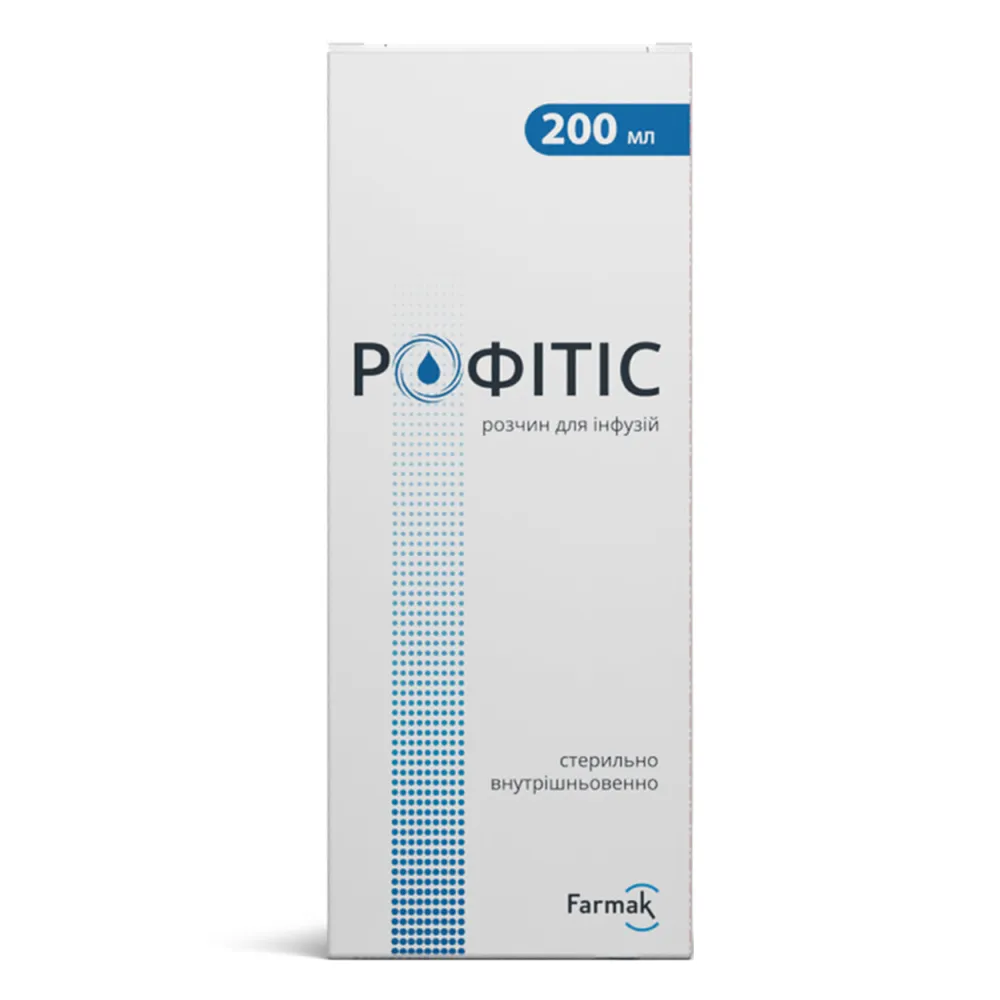
Table of Contents
INSTRUCTIONS FOR MEDICAL USE OF THE MEDICINAL PRODUCT ROFITIS® (ROFITIS)
Composition:
Active substances: sorbitol, sodium acetate trihydrate, sodium chloride, potassium chloride, magnesium chloride hexahydrate, calcium chloride dihydrate;
1 ml of infusion solution contains sorbitol 50 mg, sodium acetate trihydrate 5.171 mg, sodium chloride 3.623 mg, potassium chloride 1.342 mg, magnesium chloride hexahydrate 0.61 mg, calcium chloride dihydrate 0.294 mg;
Excipient: water for injections.
Pharmaceutical form. Infusion solution.
Main physicochemical properties: clear, colorless liquid.
Pharmacotherapeutic group. Solutions affecting electrolyte balance. Electrolytes in combination with other agents. ATC code B05B B04.
Pharmacological Properties
Pharmacodynamics. Rohtis® is an electrolyte solution with a total cation content of 123 mmol/L, the composition of which is adapted to the altered mineral metabolism under stress conditions. In this context, the proportion of sodium is reduced compared to electrolyte solutions adjusted to plasma, in order to counteract the existing tendency toward sodium retention and, consequently, fluid accumulation in such metabolic conditions. However, the sodium content is sufficiently high to prevent hyperaldosteronism.
In contrast to plasma-adapted electrolyte solutions, the significantly increased potassium content corresponds to the elevated potassium requirements associated with adequate administration of replacement fluids under stress conditions.
The electrolytes Na+, K+, Ca2+, Mg2+, and Cl– serve to maintain or correct water-electrolyte homeostasis (including blood volume, osmotic balance, acid-base equilibrium, and the effects of individual ions).
Acetate is oxidized and, in balance, acts as an alkalizing agent.
The isotonic sorbitol solution has a disaggregating effect and thus improves microcirculation and tissue perfusion.
Pharmacokinetics. Bioavailability of the administered fluid following intravenous infusion is 100%.
Sorbitol is rapidly incorporated into general metabolism; 80–90% is utilized in the liver and stored as glycogen, 5% is deposited in brain tissue, cardiac muscle, and skeletal muscle, and 6–12% is excreted in urine.
Acetate is oxidized to bicarbonate and CO2 and, in balance, acts as an alkalizing agent. The anion composition, combining non-metabolizable (chloride) and metabolizable (acetate) anions, represents a balanced combination that counteracts the organism's tendency toward increased metabolic acidosis. Plasma concentrations of bicarbonate and acetate are regulated by the kidneys, while plasma CO2 concentration is regulated by the lungs.
Sodium is the main cation in the extracellular fluid space and, together with various anions, regulates its volume. Sodium and potassium are the primary carriers involved in bioelectrical processes in the body.
Total body sodium content is approximately 80 mmol/kg, of which about 97% is located extracellularly and approximately 3% intracellularly. Daily requirement is about 100–180 mmol (equivalent to 1.5–2.5 mmol/kg body weight).
The kidneys are the main regulators of water-sodium balance. Through interaction with hormonal regulatory mechanisms (renin-angiotensin-aldosterone system, antidiuretic hormone), as well as atrial natriuretic factor, they are primarily responsible for maintaining constant volume and composition of the extracellular fluid.
Chloride exchanges with bicarbonate in the tubular system and thus participates in the regulation of acid-base balance.
Potassium is the most important intracellular cation. 98% of the body's total potassium is located intracellularly. Intracellular potassium concentration is approximately 140–150 mmol/L, while the normal plasma level ranges from 3.5 to 5 mmol/L.
Plasma potassium levels are closely related to acid-base balance. Alkalosis is often accompanied by hypokalemia, while acidosis is associated with hyperkalemia.
In the presence of existing acidosis, a plasma potassium level within the normal range indicates potassium deficiency.
During glycogen and protein synthesis, potassium is taken up into cells and released during glycogen and protein breakdown (approximately 0.4–1 mmol potassium per 1 g of glycogen, and approximately 2–3 mmol potassium per 1 g of nitrogen loss).
The kidneys are the main regulators of water balance. Sodium, potassium, and magnesium are primarily excreted via the kidneys. About 90% of potassium is excreted in urine and approximately 10% through the gastrointestinal tract.
Clinical characteristics.
Indications.
The medicinal product is indicated for:
- pre-, intra-, and postoperative fluid balance maintenance;
- partial coverage of carbohydrate requirements;
- hypovolemia and isotonic dehydration.
Use as a solvent for electrolyte concentrates and compatible medicinal products.
Contraindications.
Hypervolemia, hypernatremia (particularly due to corticosteroid use), hyperkalemia, hypermagnesemia, hyperchloremia, hypercalcemia, extracellular hyperhydration, hypotonic dehydration, alkalosis, lactic acidosis, arterial hypertension, cardiovascular and/or renal insufficiency (particularly acute renal failure), conditions associated with increased blood coagulation, thromboembolism, decompensated heart defects, oliguria and anuria, cerebral edema, intracranial hemorrhage, sorbitol intolerance, hypersensitivity to the active substances.
Interaction with other medicinal products and other types of interactions.
Ceftriaxone
Concomitant administration of ceftriaxone and the medicinal product Roefitish® is contraindicated in neonates (age ≤ 28 days), even when separate infusion systems are used (life-threatening risk of precipitation of calcium ceftriaxone salt in the neonate's bloodstream).
In patients aged 28 days and older (including adults), ceftriaxone must not be administered simultaneously through the same intravenous line (e.g., Y-type tubing) with solutions containing calcium, including the medicinal product Roefitish®.
If increased electrolyte concentrations are observed, compatibility with the following substances should be considered:
Sodium
Caution should be exercised when administering Roefitish® to patients receiving medications that increase the risk of sodium and fluid retention, such as corticosteroids and carbenoxolone, which may lead to edema and hypertension.
Potassium
Due to its potassium content, Roefitish® should be administered with caution to patients receiving substances or medications that increase the risk of hyperkalemia, such as potassium-sparing diuretics (amiloride, spironolactone, triamterene, alone or in combination products), ACE inhibitors [angiotensin-converting enzyme inhibitors], angiotensin II receptor antagonists, succinylcholine, or immunosuppressants tacrolimus and cyclosporine. Concomitant use of potassium with these agents may result in severe and potentially fatal hyperkalemia, especially in patients with severe renal insufficiency.
Calcium
Calcium administration may potentiate the effects of cardiac glycosides and thereby lead to serious or life-threatening cardiac arrhythmias. Therefore, caution is advised when administering larger infusion volumes or faster infusions to patients receiving cardiac glycoside therapy. Roefitish® should be prescribed cautiously to patients taking thiazide diuretics or vitamin D, as these agents increase the risk of hypercalcemia.
Special precautions.
Rofitis® should be used with caution in patients with hypochloremic hypokalemic alkalosis (e.g., due to persistent vomiting, pyloric stenosis, or continuous transnasal suctioning).
Although the potassium concentration in Rofitis® is similar to the potassium concentration in blood plasma, it does not provide sufficient therapeutic effect in severe potassium deficiency. Therefore, the medicinal product should not be used to correct acute potassium deficiency.
Rofitis® is not indicated as first-line treatment for severe metabolic acidosis.
Rofitis® is not indicated for the treatment of hypomagnesemia.
Rofitis® is not indicated for the treatment of hypocalcemia.
Allergic reactions
Allergic reactions / infusion reactions, including anaphylactic/anaphylactoid reactions, have been observed with the use of other electrolyte-containing preparations.
Infusion should be stopped immediately if signs and symptoms of an allergic reaction occur. Appropriate therapeutic measures should be initiated when clinically indicated.
Risk of fluid and/or solute overload and electrolyte imbalance
Depending on the volume and rate of infusion, intravenous administration of Rofitis® may lead to:
- fluid overload, which may result in hyperhydration/hypervolemia and, for example, congestive conditions, including pulmonary congestion and edema;
- clinically significant electrolyte disturbances and acid-base imbalance.
In general, the risk of developing decreased urine specific gravity is inversely proportional to the electrolyte concentration in Rofitis®. The risk of solute overload, which may lead to congestion, is directly proportional to the electrolyte concentration in Rofitis®.
When treatment is prolonged or when the patient's condition or infusion rate requires it, clinical monitoring and periodic laboratory tests are necessary to monitor changes in fluid balance, electrolyte concentrations, and acid-base balance.
Use in patients with mild to moderate cardiac or respiratory insufficiency
Large volumes of solution should be administered to patients with mild to moderate cardiac or respiratory insufficiency only under close supervision.
Rofitis® should be used with caution in patients with:
- hyponatremia;
- renal insufficiency with a tendency towards hyperkalemia.
Use in patients with hypermagnesemia or at risk of developing hypermagnesemia
Magnesium-containing solutions should be used with caution in patients with:
- hypermagnesemia or conditions that may lead to hypermagnesemia, such as severe renal insufficiency or magnesium therapy in eclampsia;
- myasthenia.
Use in patients with alkalosis or at risk of developing alkalosis
Rofitis® should be used with particular caution in patients with alkalosis or at risk of developing alkalosis. Excessive administration of Rofitis® may lead to metabolic alkalosis.
Use in patients with conditions that may lead to sodium retention and edema
Rofitis® should be used with particular caution in patients with conditions that may lead to sodium retention, fluid overload, and edema. This particularly applies to patients with primary hyperaldosteronism, secondary hyperaldosteronism (e.g., associated with arterial hypertension, congestive heart failure, renal artery stenosis, or nephrosclerosis), or pre-eclampsia.
Use in patients with hyperkalemia or at risk of hyperkalemia
Rofitis® should be used with particular caution in patients with hyperkalemia or conditions that may lead to hyperkalemia (such as severe renal insufficiency or adrenal insufficiency, acute dehydration, or extensive tissue destruction or burns), as well as in patients with heart disease.
Use in patients with severe renal insufficiency
Rofitis® should be used with particular caution in patients with severe renal insufficiency. In these patients, administration of the medicinal product may lead to retention of sodium and/or potassium or magnesium.
Required monitoring
Monitoring of the patient depends on the clinical situation and examination results and includes assessment of fluid and electrolyte balance, serum osmolality, acid-base balance, blood glucose levels, as well as liver and kidney function.
Use of citrated blood / stored blood
Due to the risk of thrombus formation caused by calcium content, Rofitis® must not be added to citrated blood / stored blood or administered simultaneously with citrated blood / stored blood through the same infusion line.
Rofitis® should not be administered simultaneously with blood products through the same infusion system, as pseudoagglutination or hemolysis may occur.
Risk of air embolism
- Do not connect flexible plastic containers in series to avoid air embolism due to possible residual air in the first container.
- If the flexible plastic container with the intravenous solution is compressed to increase flow rate, there is a risk of air embolism if air has not been completely removed from the container before use.
- Connecting a vented infusion set in the open position may lead to air embolism. Vented infusion sets in the open position must not be connected to flexible plastic containers.
Osmolality
Rofitis® is a hypertonic solution with an osmolality of 500 mOsmol/L. Normal physiological serum osmolality is approximately 280 to 310 mOsmol/L.
Administration of hypertonic solutions may cause venous irritation, including phlebitis.
Hypertonic solutions should be used with caution in patients with hyperosmolar states.
Risk of extravasation
Due to its calcium content, Rofitis® should be administered with caution to avoid extravasation of the solution during infusion.
Use in patients with hypercalcemia or at risk of hypercalcemia
Calcium-containing solutions should be used with caution in patients with:
- hypercalcemia or conditions that may lead to hypercalcemia, such as severe renal dysfunction and granulomatous diseases (due to increased calcitriol synthesis), e.g., sarcoidosis;
- calcium kidney stones or history of nephrolithiasis.
Additional warnings
Solutions containing sodium at a concentration of at least 70 mmol/L should be used to treat hypertonic dehydration. Depending on the cause and nature of dehydration, rehydration should be performed as follows:
- slowly over at least 48 hours — in cases of prolonged development (e.g., dehydrated elderly patients);
- rapidly — in cases of acute onset (e.g., dehydration associated with heat stress, such as in athletes).
Use in elderly patients
When selecting the infusion solution, infusion volume, and infusion rate, it should be considered that elderly patients more frequently have cardiac, renal, hepatic, and other diseases and are often receiving concomitant medications.
A reduced dose may be required in elderly patients due to fluid load.
This medicinal product should not be administered to patients with hereditary fructose intolerance except in cases of acute necessity. A thorough history regarding symptoms of hereditary fructose intolerance should be obtained from each patient before prescribing this medicinal product.
Use during pregnancy or breastfeeding
There are insufficient data on the use of Rofitis® in women during pregnancy and breastfeeding.
Ability to influence the speed of reactions when driving or operating machinery
Rofitis® does not affect the ability to drive or operate machinery.
Method of Administration and Dosage
The dosage, infusion rate, and duration of administration are determined individually for each patient by a specialist physician and depend on the indication, age, body weight, clinical and laboratory parameters, metabolic status, concomitant therapy, and the clinical response to treatment.
Depending on the type of application, the following dosing is recommended:
Single and Daily Doses
In physiological metabolism, unless otherwise prescribed by the physician:
30 mL/kg/day (accounting for sorbitol content of 1.5 g/kg/day)
≤ 0.54–0.72 mmol K⁺ / kg body weight, daily
≤ 3–4 mmol Na⁺ / kg body weight, daily
≤ 2100–2800 mL/day for a body weight of 70 kg
Maximum Infusion Rate
5 mL / kg body weight per hour
≤ 0.09 mmol K⁺ / kg body weight per hour
≤ 0.5 mmol Na⁺ / kg body weight per hour
≤ 350 mL/hour (approximately 117 drops/min) for a body weight of 70 kg
General principles for carbohydrate administration and fluid intake recommendations should be followed.
Method of Administration
Rofytis® should be administered as prescribed by a physician to correct disturbances in water-electrolyte balance.
Rofytis® is intended for intravenous infusion. The infusion rate should be adjusted according to the patient's metabolic status.
Due to the non-physiological electrolyte content, prolonged use may lead to electrolyte imbalance. Appropriate correction of electrolyte levels is required.
Parenteral medicinal products should be inspected visually for particulate matter and discoloration prior to administration, whenever solution and container permit. Use only clear solutions in undamaged containers.
When adding other substances to Rofytis® medicinal product, aseptic techniques must be followed. The solution should be thoroughly mixed after addition of other substances. Do not store solutions containing added substances (see section "Incompatibilities").
Children
The safety and efficacy of the electrolyte solution in children have not been established by adequate and well-controlled studies.
Overdose.
Symptoms
Excessive administration of Rofytis® may lead to metabolic alkalosis, which may be associated with hypokalemia and decreased serum levels of ionized calcium and magnesium.
Excessive volume of Rofytis® may cause fluid overload and, consequently, edema (peripheral and/or pulmonary), particularly in patients with impaired renal sodium excretion.
Excessive potassium administration may lead to hyperkalemia, especially in patients with severe renal impairment.
Excessive calcium administration may lead to hypercalcemia.
Excessive magnesium administration may lead to hypermagnesemia.
Treatment
When assessing overdose, possible additives present in the solution should be considered.
Consequences of overdose require immediate medical monitoring and treatment.
Therapeutic measures include immediate discontinuation of infusion, enhanced renal excretion, appropriate electrolyte balance correction, and, if necessary, insulin administration.
If oliguria or anuria occurs, fluid removal via hemodialysis or peritoneal dialysis may be required.
In case of hyperkalemia, infusion of 200–500 mL of 10–25% glucose solution with the addition of 1–3 IU of short-acting insulin / 3–5 g glucose is recommended.
If this is ineffective, administration of a potassium-binding cation-exchange resin is indicated. In life-threatening cases, dialysis cannot be avoided.
Adverse Reactions
Adverse reactions may occur as symptoms of overdose — see section "Overdose".
When used as directed, no adverse effects have been observed.
However, as with all intravenous medicinal products, local reactions related to the route of administration cannot be excluded, although their exact frequency cannot be determined from available data. Such reactions may include fever, local pain or reaction, infection at the injection site, venous irritation, venous thrombosis, phlebitis at the injection site, extravasation, and hypervolemia.
The adverse reactions listed below have been reported during the post-marketing period with other solutions of similar composition.
Adverse reactions are listed by organ system according to the Medical Dictionary for Regulatory Activities (MedDRA). The frequency of these adverse reactions is unknown (cannot be estimated from available data).
Immune system disorders: anaphylactoid reaction*, urticaria*, angioneurotic edema.
Metabolism and nutrition disorders: hyperkalemia.
Cardiac disorders: tachycardia*, palpitations*.
Nervous system disorders: headache.
Vascular disorders: hypotension*, hypertension, hyperemia*.
Respiratory, thoracic and mediastinal disorders: dyspnea*, wheezing*.
Skin and subcutaneous tissue disorders: piloerection*, cold sweat*.
General disorders and administration site conditions: hyperthermia, infusion site pain, burning sensation**, peripheral edema*, chest pain*, chest discomfort*, fever*, chills*, asthenia*, worsening of general condition*, facial flushing*.
Investigations: increased respiratory rate*.
* Signs of an allergic reaction / infusion reaction.
** May occur during drug administration.
Reporting of adverse reactions
Reporting of adverse reactions after medicinal product authorization is highly important. It allows continuous monitoring of the benefit-risk balance of the medicinal product. Healthcare professionals, pharmacists, patients, and their legal representatives should report all suspected adverse reactions and lack of efficacy via the automated pharmacovigilance information system at: https://aisf.dec.gov.ua.
Incompatibility.
Ceftriaxone
Like other infusion solutions containing calcium, ceftriaxone must not be administered simultaneously with the medicinal product Roftis® in neonates (age ≤ 28 days), even if separate infusion systems are used (life-threatening risk of precipitation of calcium ceftriaxone salt in the neonate’s bloodstream).
In patients aged 28 days and older (including adults), ceftriaxone must not be administered simultaneously through the same intravenous line (e.g., via a Y-type tubing) with solutions containing calcium, including the medicinal product Roftis®. If the same tubing is used for sequential administration, it must be thoroughly flushed with a compatible fluid between infusions.
Ceftriaxone must not be mixed with solutions containing calcium, including the medicinal product Roftis® (see section "Interaction with other medicinal products and other forms of interaction").
Use as a diluent
When mixing with other medicinal products, it should be noted that Roftis® has an alkaline pH (7.2), which may lead to precipitation in the mixture.
Some drugs may be incompatible with the medicinal product Roftis®.
As with all parenteral solutions, compatibility of medicinal products with the solution must be verified prior to addition. Before adding any substance or drug, it must be confirmed that the substance or drug is water-soluble and stable at the pH of Roftis®. After addition, the solution should be inspected for possible changes in color and/or for the presence of precipitate, insoluble complexes, or crystals.
When adding medicinal substances to Roftis®, aseptic techniques must be followed. The solution must be thoroughly mixed when using Roftis® as a diluent. Solutions containing added substances must not be stored.
For incompatibility with blood products, see section "Special precautions for use".
The medicinal product contains Ca²⁺ ions. Addition of inorganic phosphate, bicarbonate/carbonate, or oxalate may lead to precipitation.
Shelf life. 2 years.
Do not use the medicinal product after the expiry date stated on the packaging.
Storage conditions. No special storage conditions required. Keep out of reach of children.
Packaging. 100 ml, 200 ml, 400 ml, or 500 ml in a vial. 1 vial per carton.
Prescription status. Prescription only.
Manufacturer. JSC "Farmak".
Manufacturer's address and place of business.
74 Kyrylivska Street, Kyiv, 04080, Ukraine.