Renalgan
Ukraine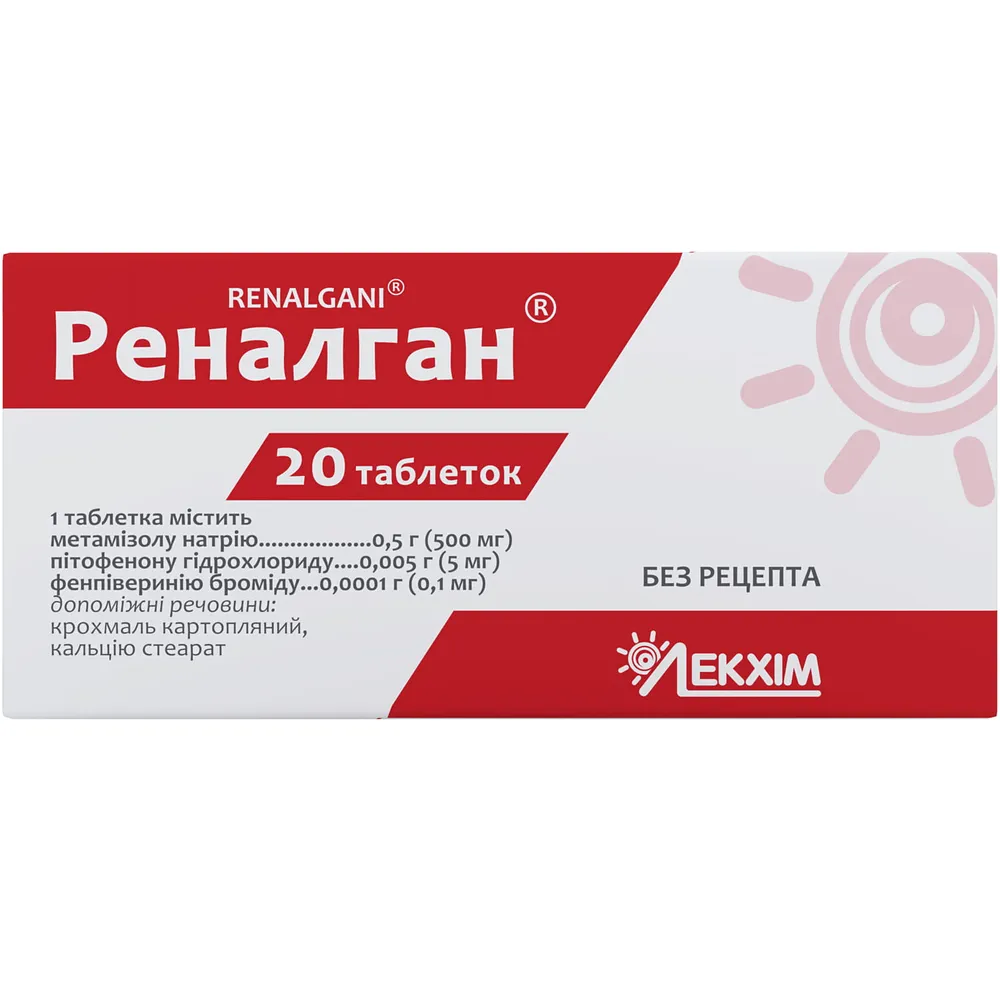
Table of Contents
INSTRUCTIONS FOR MEDICAL USE OF THE MEDICINAL PRODUCT RENALGAN® (RENALGANI®)
Composition:
Active substances: metamizole sodium, fenpiverinium bromide, pitoheptine hydrochloride;
One tablet contains: sodium metamizole 0.5 g (500 mg), pitoheptine hydrochloride 0.005 g (5 mg), fenpiverinium bromide 0.0001 g (0.1 mg);
Excipients: potato starch, calcium stearate.
Pharmaceutical form. Tablets.
Main physicochemical properties: tablets white or white with a yellowish tint, with a flat surface, a score line and bevelled edges.
Pharmacotherapeutic group. Spasmolytic agents in combination with analgesics. Synthetic anticholinergic agents in combination with analgesics. Pitoheptine and analgesics. ATC code A03D A02.
Pharmacological properties.
Pharmacodynamics.
Renalgan® combines analgesic, spasmolytic (papaverine-like), anticholinergic (atropine-like), and some anti-inflammatory activities.
Metamizole exerts a pronounced analgesic and antipyretic effect, along with a less pronounced anti-inflammatory and spasmolytic activity. Its effects result from inhibition of prostaglandin and endogenous algogen synthesis, increased excitation threshold in the thalamus, and modulation of pain-related exteroceptive and interoceptive impulse transmission in the central nervous system. It also affects the hypothalamus and the formation of endogenous pyrogens.
Phenpyverine exerts moderate ganglion-blocking and parasympatholytic effects, reducing the tone and motility of the smooth musculature of the stomach, intestines, biliary, and urinary tracts.
Pitofenone exerts a papaverine-like effect on vascular and non-vascular smooth musculature, with a pronounced spasmolytic character.
Pharmacokinetics.
Metamizole is rapidly and completely absorbed. Within 30 minutes after oral administration, serum levels reach 5% of the maximum plasma concentration. It is partially bound to plasma proteins. The drug undergoes extensive biotransformation in the body, with its main metabolites being pharmacologically active. It is eliminated in the urine in the form of metabolites. Only 3% of the excreted amount consists of unchanged metamizole. The extent of biotransformation is also influenced by the genetically determined acetylation type. Some components are excreted into breast milk.
Clinical characteristics.
Indications.
Symptomatic treatment of mild to moderate pain syndrome associated with spasms of smooth muscles of internal organs:
- renal colic and inflammatory diseases of the urinary tract accompanied by pain and dysuric disorders;
- spasms of the stomach and intestines, hepatic colic, biliary tract dyskinesia;
- spasmodic dysmenorrhea.
Contraindications.
Hypersensitivity to metamizole, pyrazolone derivatives, other nonsteroidal anti-inflammatory drugs (NSAIDs), and/or to any component of the medicinal product. Gastrointestinal obstruction and megacolon; bladder or gallbladder atony; severe impairment of kidney or liver function; changes in peripheral blood composition (agranulocytosis, leukopenia); blood disorders (anemia of any etiology, cytostatic or infectious neutropenia); glucose-6-phosphate dehydrogenase deficiency; hepatic porphyria; closed-angle glaucoma; suspected acute surgical pathology; bronchial asthma; collapse states; tachyarrhythmia; prostatic hyperplasia with tendency to urinary retention.
Interaction with other medicinal products and other types of interactions.
Metamizole increases plasma concentrations of chloroquine and reduces plasma concentrations and effects of coumarin anticoagulants and cyclosporine.
It enhances the hematotoxic effect of myelotoxic medicinal products and chloramphenicol.
Neuroleptics, sedatives, and tranquilizers enhance the analgesic effect of metamizole.
Temperidone and tricyclic antidepressants, oral contraceptives, and allopurinol interfere with metamizole metabolism and increase its toxicity.
Barbiturates, phenylbutazone, and other inducers of hepatic microsomal enzymes may reduce the effect of metamizole.
Concomitant use of Renalgan® with other analgesics and nonsteroidal anti-inflammatory drugs increases the risk of developing toxic effects.
Metamizole reduces plasma concentrations of cyclosporine A, and its concomitant use may be risky in cases of existing tissue transplantation.
Combining Renalgan® with other medicinal products requires special caution due to the presence of metamizole, which is an enzyme inducer.
Metamizole can induce metabolic enzymes, including CYP2B6 and CYP3A4.
Concomitant use of metamizole with bupropion, efavirenz, methadone, valproate, tacrolimus, or sertraline may lead to decreased plasma concentrations of these drugs, potentially reducing their clinical efficacy. Therefore, concomitant use of these agents with metamizole is recommended with caution; monitoring of clinical response and/or drug levels may be necessary.
Special precautions for use
The drug should be used with caution:
- in patients with moderate renal and/or hepatic impairment;
- in gastrointestinal disorders (achalasia, gastroesophageal reflux, pyloric stenosis);
- in patients predisposed to arterial hypotension and orthostatic reactions;
- in chronic bronchitis and bronchospasm (Renalgan® increases the viscosity of bronchial secretions);
- in patients with hyperthyroidism;
- in cardiac rhythm disorders (in tachyarrhythmia – see section "Contraindications"), ischemic heart disease (especially during acute myocardial infarction), and chronic congestive heart failure;
- in patients with a history of hypersensitivity to non-narcotic analgesics or other allergic manifestations (allergic rhinitis).
Severe skin reactions
Severe skin reactions, including Stevens-Johnson syndrome, toxic epidermal necrolysis, and drug reaction with eosinophilia and systemic symptoms (DRESS syndrome), which may be life-threatening or fatal, have been reported during treatment with metamizole.
Patients should be informed about the signs and symptoms of skin reactions and closely monitored.
If symptoms suggesting these reactions occur, treatment with metamizole must be discontinued and must never be restarted (see section "Contraindications").
Hepatic drug injury
In patients treated with metamizole, cases of hepatitis, mainly of hepatocellular type, have been observed, occurring from several days to several months after initiation of treatment. Signs and symptoms include elevated serum liver enzymes, with or without jaundice, often associated with hypersensitivity reactions to other drugs (e.g., skin rash, blood dyscrasia, fever, and eosinophilia), or features suggestive of autoimmune hepatitis. In most patients, recovery occurred after discontinuation of metamizole therapy; however, isolated cases of progression to acute liver failure requiring liver transplantation have been reported.
The mechanism of liver injury caused by metamizole is not fully understood, although available data suggest an immune-allergic mechanism.
Patients should be informed about the need to consult a physician if symptoms suggestive of liver injury occur. In such cases, metamizole should be discontinued and liver function tests should be performed.
If symptoms such as nausea (nausea and vomiting), fever, fatigue, loss of appetite, dark-colored urine, pale-colored stools, jaundice of the skin or sclera, pruritus, rash, or upper abdominal pain occur, Renalgan® should be discontinued and medical advice must be sought immediately.
If the patient previously experienced liver problems while taking any medicinal product containing metamizole, the use of Renalgan® is not recommended.
During prolonged treatment with Renalgan®, peripheral blood counts and liver function should be monitored regularly.
The drug may affect the psychophysical performance of patients when used concomitantly with alcohol or central nervous system depressants.
The drug contains the active substance sodium metamizole. Sodium metamizole may cause agranulocytosis and thrombocytopenia. Agranulocytosis is not dose-dependent and cannot be predicted; it may occur after the first dose or after repeated administration. Typical symptoms of agranulocytosis include fever, sore throat, painful swallowing, and inflammation of the mucous membranes of the mouth, nose, pharynx, anorectal, and genital areas. If a sudden deterioration in general condition and signs of agranulocytosis occur, treatment with metamizole should be stopped immediately and a complete blood count should be performed.
Concomitant use of other medicinal products containing metamizole with Renalgan® is not recommended.
Metabolites of sodium metamizole may turn urine red, which is clinically insignificant.
Headache may occur or worsen after prolonged analgesic treatment (>3 months) when analgesics are used daily or more frequently. Analgesic-overuse headache should not be treated by increasing the dose of analgesics. In such cases, analgesic treatment should be discontinued after consultation with a physician.
Use during pregnancy or breastfeeding
Do not use during pregnancy or breastfeeding.
Ability to affect reaction speed when driving or operating machinery
During treatment with Renalgan®, caution should be exercised when driving or operating machinery, as the cholinolytic effect of prolonged drug use may lead to dizziness and accommodation disorders.
Dosage and Administration.
Renalgan® tablets should be taken orally after meals with water.
The recommended daily dose for adults and children aged 15 years and older is 1–2 tablets per day. The maximum daily dose is 2 tablets.
The duration of Renalgan® treatment should not exceed 3 days.
Children.
The drug is contraindicated for children under 15 years of age.
Overdose.
Symptoms. In overdose, symptoms of intoxication with metamizole in combination with anticholinergic effects predominate, including liver and kidney dysfunction and respiratory paralysis. Toxic-allergic syndrome is most commonly observed, along with symptoms of hematopoietic system impairment, gastrointestinal disturbances, and, in severe cases, symptoms of brain involvement.
Treatment. In case of suspected overdose, discontinue the drug immediately and take measures to rapidly eliminate it from the body (induce vomiting, perform gastric lavage, increase urine output). Administer symptomatic treatment. There is no specific antidote.
Side effects.
Immune system side effects: allergic reactions (or hypersensitivity reactions), including urticaria, skin rash, pruritus, bronchospasm, conjunctivitis, angioneurotic edema, anaphylactic shock, toxic epidermal necrolysis, Stevens-Johnson syndrome.
Gastrointestinal side effects: discomfort, dry mouth, constipation, exacerbation of gastritis and peptic ulcer of the stomach and duodenum.
Cardiovascular side effects: palpitations, decreased blood pressure, tachycardia, cardiac arrhythmias.
Hematological side effects: granulocytopenia, anemia, agranulocytosis, thrombocytopenia, leukopenia.
Urinary system side effects: oliguria, anuria, proteinuria, red discoloration of urine, development of acute renal failure, and interstitial nephritis.
Skin and subcutaneous tissue side effects: drug reaction with eosinophilia and systemic symptoms (DRESS), Stevens-Johnson syndrome.
Hepatobiliary side effects: drug-induced liver injury, including hepatitis, jaundice, elevated liver enzymes. Symptoms of liver injury include nausea (nausea and vomiting), fever, fatigue, loss of appetite, dark-colored urine, pale-colored stools, yellowing of the skin or eye whites, pruritus, rash, or upper abdominal pain.
Other side effects: visual disturbances, decreased sweating, dizziness.
With prolonged use of high doses, reduced kidney function is possible (especially in patients with a history of kidney disease; in some cases, papillary necrosis may occur).
Reporting suspected side effects.
Reporting of suspected adverse reactions after drug registration is important. It allows continuous monitoring of the benefit-risk balance of the medicinal product. Medical and pharmaceutical professionals, as well as patients or their legal representatives, are encouraged to report all suspected adverse reactions and lack of drug efficacy via the Automated Pharmacovigilance Information System at the following link: https://aisf.dec.gov.ua/.
Shelf life. 2 years.
Storage conditions. Store in the original packaging, out of reach of children, at a temperature not exceeding 25 °C.
Packaging. 10 tablets per blister; 1 or 2 blisters per carton.
Supply category. Over-the-counter.
Manufacturer. Private Joint-Stock Company "Lekhim-Kharkiv". PJSC "Tekhnolohiya".
Manufacturer's address and location of business activity.
36 Severina Pototskoho Street, Kharkiv, Kharkiv Oblast, 61115, Ukraine.
8 Stara Prorizna Street, Uman, Cherkasy Oblast, 20300, Ukraine.