Remestip
Ukraine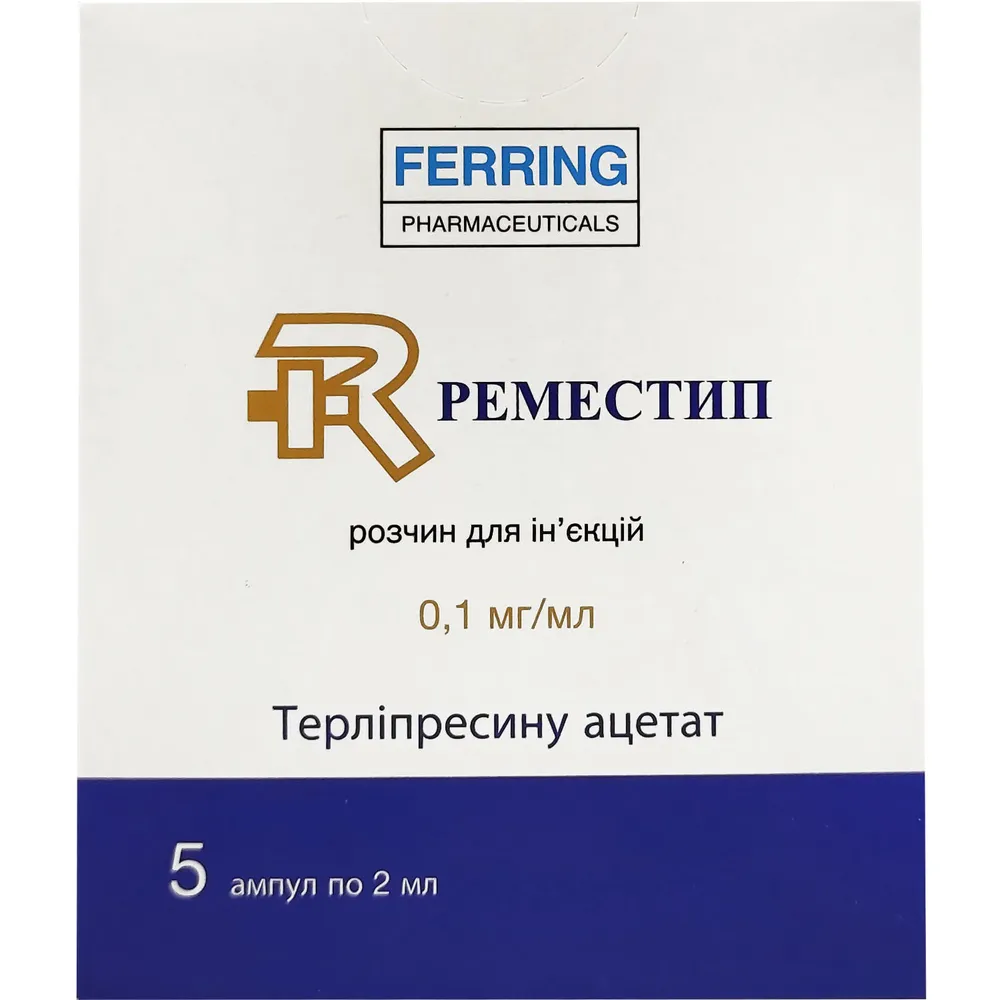
Table of Contents
INSTRUCTIONS FOR MEDICAL USE OF THE MEDICINAL PRODUCT REMESTYP (REMESTYP)
Composition:
Active substance: terlipressin acetate;
1 ml of solution contains 0.1 mg of terlipressin in the form of terlipressin acetate;
Excipients: sodium chloride; acetic acid; sodium acetate, trihydrate; water for injections.
Pharmaceutical form. Solution for injection.
Main physicochemical properties: clear, colorless solution free from mechanical particles.
Pharmacotherapeutic group.
Posterior pituitary hormones. Vasopressin and analogues.
ATC code H01B A04.
Pharmacological Properties
Pharmacodynamics
Terlipressin (N-triglycyl-8-lysine vasopressin) is a synthetic analogue of vasopressin, a natural hormone of the posterior pituitary gland, differing from vasopressin by substitution of arginine with lysine at position 8, and by the addition of three glycine residues to the terminal amino group of cysteine. The pharmacological action of terlipressin results from the combined effects of substances formed through its enzymatic cleavage. The most prominent effects of terlipressin are pronounced vasoconstrictive and antihemorrhagic actions. The most notable effect in this regard is the reduction of blood flow in the parenchyma of internal organs, leading to decreased hepatic blood flow and reduced portal venous pressure.
Pharmacodynamic studies have shown that, similar to related peptides, terlipressin causes spasm of arterioles, veins, and venules predominantly in the parenchyma of internal organs, contraction of smooth muscle in the esophageal wall, and increased intestinal tone and peristalsis overall.
In addition to its effects on vascular smooth muscle, terlipressin stimulates uterine smooth muscle, including in the absence of pregnancy.
Studies of the drug's effects in animals and humans have shown maximum activity in internal organs and skin.
No clinical manifestations of antidiuretic effect of terlipressin have been observed.
Pharmacokinetics
Terlipressin itself is inactive on smooth muscle but serves as a chemical depot for pharmacologically active substances formed as a result of enzymatic cleavage. This effect develops more slowly than that of lysine vasopressin but lasts significantly longer.
Lysine vasopressin is typically subjected to biotransformation in the liver, kidneys, and other tissues.
The pharmacokinetic profile after intravenous administration is best described by a two-compartment model. The elimination half-life is approximately 40 minutes, metabolic clearance is about 9 mL/kg/min, and the volume of distribution is approximately 0.5 L/kg. The expected concentration of lysine vasopressin in plasma becomes detectable about 30 minutes after administration of terlipressin. Maximum concentration is reached between 60 and 120 minutes.
Clinical characteristics.
Indications.
Gastrointestinal and urogenital tract bleeding, such as bleeding from esophageal varices, gastric and duodenal ulcers; uterine bleeding caused by functional disorders or other reasons, childbirth, abortion, etc.; bleeding associated with surgical interventions, particularly in abdominal organs and pelvic cavity.
Locally – during gynecological procedures on the cervix.
Contraindications.
Hypersensitivity to the active substance or to any of the excipients. Septic shock in patients with low cardiac output. Pregnancy.
Interaction with other medicinal products and other forms of interaction.
Terlipressin potentiates the effect of non-selective beta-blockers in reducing portal hypertension.
Concomitant use with drugs that cause bradycardia (such as propofol, sufentanil) may lead to decreased heart rate and cardiac output. These effects are due to reflex inhibition of cardiac activity via the vagus nerve and increased blood pressure.
Special precautions for use.
When treating with Remestip, arterial pressure, pulse rate, and fluid balance should be monitored. To avoid local necrosis at the injection site, the drug must be administered intravenously. Remestip should be used with caution in patients with arterial hypertension and cardiovascular diseases. Remestip is contraindicated in patients with septic shock and low cardiac output.
Extreme caution should be exercised when treating elderly patients, as experience with this patient population is limited, and dosing recommendations for this group are not available.
Remestip is not a blood substitute for patients with circulating blood volume deficiency.
Since focal necrosis has been occasionally observed after administration of terlipressin, intramuscular injection should be avoided, and the undiluted drug should be administered only intravenously at doses of 0.5 mg or higher.
This medicinal product contains sodium.
The amount of sodium depends on the administered dose.
1 ml of solution contains 3.65 mg of sodium, which is less than 1 mmol of sodium (23 mg) per dose,
therefore, this medicinal product is practically sodium-free.
If more than 1 mmol of sodium is administered in a single dose, this should be taken into account for patients on a low-sodium diet.
Use during pregnancy or breastfeeding.
The use of Remestip during pregnancy is contraindicated (see section "Contraindications"). Remestip has been shown to cause uterine contractions and increased intrauterine pressure in early pregnancy and may reduce uterine blood flow. The use of Remestip may have harmful effects on pregnancy and the fetus. In rabbits, spontaneous abortions and developmental abnormalities were observed.
It is unknown whether the drug is excreted in breast milk. There are insufficient data on the excretion of terlipressin in human milk. Risk to breastfed infants cannot be excluded. A decision on whether to continue/cease breastfeeding or continue/cease therapy with Remestip should be made, taking into account the benefit of breastfeeding for the child and the benefit of terlipressin therapy for the woman.
Ability to affect reaction speed when driving or operating machinery.
No studies on the effect of terlipressin on the ability to drive or operate machinery have been conducted.
Administration and Dosage
Adults
Initially, administer 2 mg of terlipressin intravenously every 4 hours. Treatment should continue until 24 hours have passed since bleeding has stopped, but not longer than 48 hours. After the initial dose, the dose may be adjusted to 1 mg intravenously every 4 hours in patients with body weight < 50 kg or in case of adverse reactions.
Esophageal variceal bleeding in adults: 1 mg (1000 mcg) every 4–6 hours for 3–5 days. To prevent rebleeding, treatment should be continued for 24–48 hours after bleeding has ceased. The drug should be administered intravenously as a bolus or as a short-term infusion. The medicinal product may be used undiluted or diluted with 0.9% sodium chloride solution.
Other gastrointestinal bleeding in adults: 1 mg (1000 mcg) every 4–6 hours. The drug may also be used as first-line therapy regardless of surgical intervention if upper gastrointestinal bleeding is suspected.
Internal organ bleeding in children: usually administered at a dose of 8 to 20 mcg/kg body weight every 4–8 hours. The drug should be administered throughout the entire bleeding period; a general recommendation is to continue administration to prevent rebleeding, as in adults. In cases of sclerosed esophageal varices, a single bolus dose of 20 mcg/kg body weight is recommended.
Urogenital tract bleeding: due to differences in endopeptidase activity in blood plasma and tissues, the dosage range is sufficiently wide – from 0.2 to 1 mg administered every 4–6 hours.
For juvenile uterine bleeding, recommended doses are 5 to 20 mcg/kg body weight. The drug should be administered intravenously.
Local use in gynecological procedures on the cervix: 0.4 mg (400 mcg) diluted with 0.9% sodium chloride solution to a volume of 10 mL, administered intra- and/or paracervically. In this case, the effect of the drug develops within 5–10 minutes. If necessary, the dose may be increased or repeated.
Children. The drug is used for treatment of children according to the recommended regimen.
Overdose.
The recommended dose (2 mg over 4 hours) should not be exceeded due to the dose-dependent risk of developing severe cardiovascular adverse effects.
To control arterial hypertension that may develop during treatment with Remestyp, 150 mg of clonidine may be administered intravenously.
Atropine should be administered to manage bradycardia.
Side effects
The most commonly observed adverse reactions during clinical trials (frequency 1–10%) were pallor, increased blood pressure, abdominal pain, nausea, diarrhea, and headache.
The antidiuretic effect of Remestyp may lead to hyponatremia if fluid balance is not controlled.
The frequency of adverse reactions is classified by MedDRA system organ classes as follows: common (≥ 1/100 to < 1/10); uncommon (≥ 1/1,000 to < 1/100); rare (≥ 1/10,000 to < 1/1,000).
Cardiac disorders: common – bradycardia; uncommon – atrial fibrillation, ventricular extrasystoles, tachycardia, chest pain, myocardial infarction, fluid overload with pulmonary edema, torsade de pointes, heart failure.
Vascular disorders: common – peripheral vasoconstriction, peripheral ischemia, facial pallor, arterial hypertension; uncommon – intestinal ischemia, peripheral cyanosis, hot flushes.
Respiratory, thoracic and mediastinal disorders: uncommon – respiratory distress, respiratory failure; rare – dyspnea.
Gastrointestinal disorders: common – transient diarrhea, transient spasmodic abdominal pain; uncommon – transient nausea, transient vomiting.
Nervous system disorders: common – headache.
Metabolism and nutrition disorders: uncommon – hyponatremia, if fluid balance is not controlled.
Skin and subcutaneous tissue disorders: uncommon – local skin necrosis.
Pregnancy, puerperium and perinatal conditions: uncommon – impaired uterine contractility, decreased uterine blood flow.
General disorders and administration site conditions: uncommon – injection site necrosis.
Reporting of suspected adverse reactions
Reporting suspected adverse reactions after medicine authorization is important. It allows continued monitoring of the benefit/risk balance of the medicine. Healthcare professionals are asked to report any suspected adverse reactions through the national reporting system.
Shelf life. 2 years.
Storage conditions.
Store in a refrigerator (at +2 to +8 °C) in the original packaging.
Do not freeze.
The medicine may be stored for up to 1 month at temperatures up to 25 °C (e.g., in an ambulance).
Keep out of reach of children.
Incompatibilities.
The medicine must not be mixed with other medicinal products.
Only use recommended diluents (see section "Instructions for use, handling and disposal").
Packaging.
2 ml or 10 ml in a vial; 5 vials in a cardboard pack.
Prescription category. Prescription only.
Manufacturer.
Ferring-Lekiva a.s.
Manufacturer's address and place of business.
K Rybníku 475, 252 42 Jesenice, Prague, Czech Republic.