Rekol
Ukraine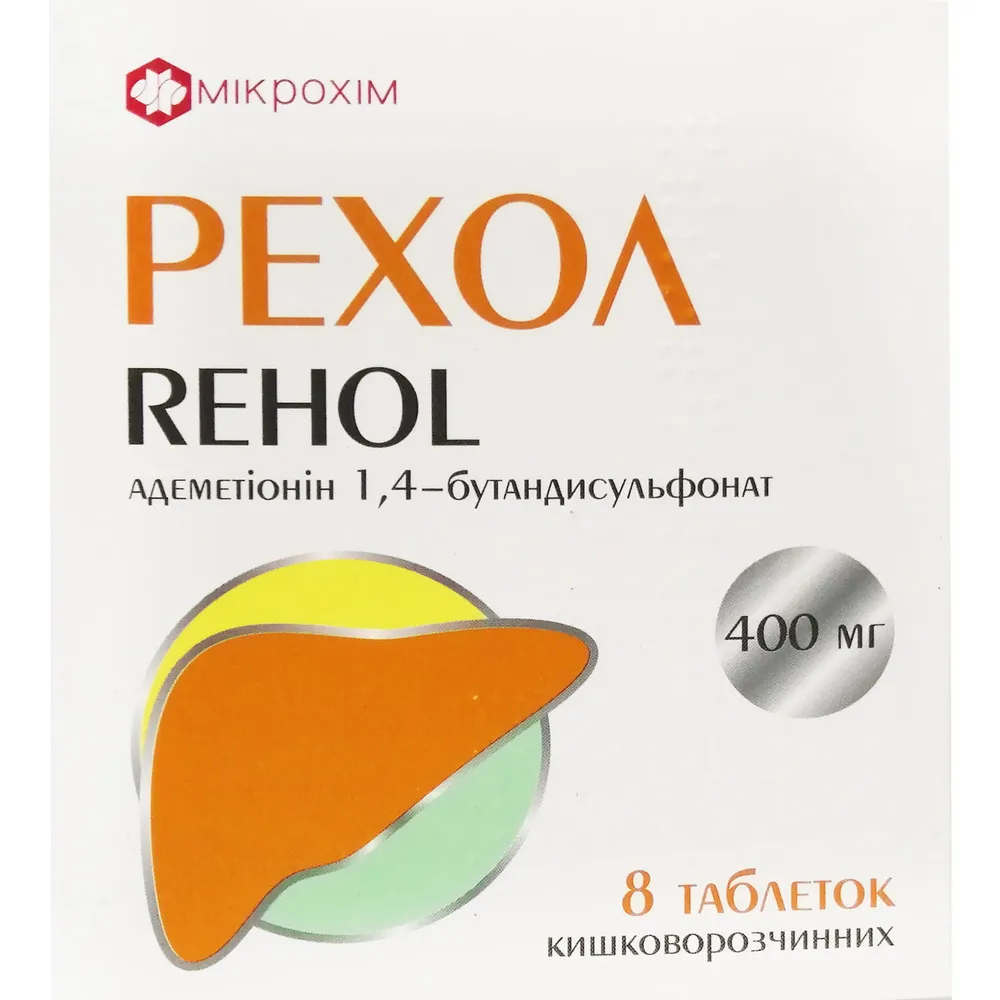
Table of Contents
- INSTRUCTIONS FOR MEDICAL USE OF THE MEDICINAL PRODUCT REHOL (REHOL)
- Composition:
- Pharmacological Properties.
- Clinical characteristics.
- Special precautions for use.
- Dosage and Administration
- Adverse Reactions
- Composition:
- Pharmacological Properties
- Clinical characteristics.
- Special precautions for use
- Dosage and Administration.
- Adverse Reactions
INSTRUCTIONS FOR MEDICAL USE OF THE MEDICINAL PRODUCT REHOL (REHOL)
Composition:
Active substance: ademetionine;
1 tablet contains 760 mg of ademetionine 1,4-butandisulfonate, equivalent to 400 mg of ademetionine;
Excipients: microcrystalline cellulose; crospovidone; colloidal anhydrous silicon dioxide; magnesium stearate; methacrylic acid copolymer (type A); polyethylene glycol (macrogol) 6000; titanium dioxide (E 171); yellow iron oxide (E 172); talc.
Pharmaceutical form. Enteric-coated tablets.
Main physicochemical properties: oval-shaped, biconvex tablets with a film coating, yellowish-brown in color, with a smooth or slightly rough surface.
Pharmacotherapeutic group. Agents affecting the digestive system and metabolic processes. Amino acids and their derivatives. Ademetionine. ATC code A16AA02.
Pharmacological Properties.
Pharmacodynamics.
S-adenosyl-L-methionine (adenosylmethionine) is a natural amino acid present in almost all tissues and body fluids. Adenosylmethionine acts primarily as a coenzyme and methyl group donor in transmethylation reactions, which are essential metabolic processes in humans and animals. The transfer of methyl groups (transmethylation) is also a necessary metabolic process in the formation of the bilayer phospholipid membrane in cell membranes and contributes to membrane fluidity. Adenosylmethionine is able to cross the blood-brain barrier. The transmethylation process involving adenosylmethionine is key in the formation of central nervous system neurotransmitters, including catecholamines (dopamine, norepinephrine, epinephrine), serotonin, melatonin, and histamine.
Adenosylmethionine is also a precursor in the formation of physiological sulfur-containing compounds (cysteine, taurine, glutathione, coenzyme A, and others) in transsulfuration reactions. Glutathione, the most potent antioxidant in the liver, plays an important role in hepatic detoxification. Adenosylmethionine increases hepatic glutathione levels in patients with liver damage of both alcoholic and non-alcoholic origin. Folic acid (folates) and vitamin B12 are essential cofactors in the metabolism and regeneration processes of adenosylmethionine.
Pharmacokinetics.
Absorption. In humans, after intravenous administration, the pharmacokinetic profile of adenosylmethionine is biexponential and consists of a rapid distribution phase into tissues and a terminal elimination phase with a half-life of approximately 1.5 hours. Absorption after intramuscular administration is nearly complete (96%), with maximum plasma concentration reached approximately 45 minutes after administration. After oral administration of enteric-coated tablets of adenosylmethionine, maximum plasma concentration is dose-dependent, ranging from 0.5–1 mg/L, and is achieved 3–5 hours after a single dose of 400 mg to 1000 mg. Plasma concentration decreases to baseline levels within 24 hours. Bioavailability after oral administration increases when adenosylmethionine is administered between meals.
Distribution. The volume of distribution is 0.41 L/kg and 0.44 L/kg for doses of adenosylmethionine of 100 mg and 500 mg, respectively. Plasma protein binding is negligible, at ≤ 5%.
Metabolism. The reactions by which adenosylmethionine is produced, utilized, and regenerated are known as the adenosylmethionine cycle. In the first step of this cycle, adenosylmethionine-dependent methyltransferase uses adenosylmethionine as a substrate to produce S-adenosylhomocysteine, which is then hydrolyzed to homocysteine and adenosine by S-adenosylhomocysteine hydrolase. Homocysteine, in turn, undergoes remethylation to methionine via transfer of a methyl group from 5-methyltetrahydrofolate. Ultimately, methionine can be converted back into adenosylmethionine, completing the cycle.
Elimination. In radiolabeled studies, after oral administration of radiolabeled (methyl-14C) adenosylmethionine in healthy volunteers, urinary excretion of radioactivity was 15.5 ± 1.5% within 48 hours, fecal excretion was 23.5 ± 3.5% within 72 hours, while approximately 60% of the substance remained incorporated into stable pools.
Clinical characteristics.
Indications.
- Intrahepatic cholestasis in adults, including patients with chronic hepatitis of various etiologies and liver cirrhosis;
- intrahepatic cholestasis in pregnant women;
- depressive syndromes.
Contraindications.
Hypersensitivity to the active substance or to any of the excipients of the medicinal product (see section "Composition").
Genetic defects affecting the methionine cycle and/or causing homocystinuria and/or hyperhomocysteinemia (e.g., cystathionine-beta-synthase deficiency, vitamin B12 metabolism defect).
Interaction with other medicinal products and other forms of interaction.
Cases of serotonin syndrome have been reported in a patient who was receiving ademetionine concurrently with clomipramine. Therefore, although the possibility of interaction is theoretically assumed, ademetionine should be used with caution when administered concomitantly with selective serotonin reuptake inhibitors, tricyclic antidepressants (such as clomipramine), and medicinal products or herbal remedies containing tryptophan (see section "Special precautions for use").
Special precautions for use.
The level of ammonia should be monitored in patients with pre-cirrhotic or cirrhotic stage of hyperammonemia who are taking ademetionine tablets.
Since vitamin B12 and folic acid (folates) deficiency may lead to decreased concentration of ademetionine, patients at risk (anemia, liver disease, pregnancy, or potential vitamin deficiency due to other diseases or dietary habits such as vegetarianism) should undergo regular blood tests to check plasma levels of these substances. If deficiency is detected, treatment with vitamin B12 and/or folic acid (folates) is recommended prior to or during ademetionine therapy. In cases where these tests cannot be performed, patients at risk should be given vitamin B12 and/or folic acid (folates) according to the instructions for medical use of these medicinal products (see section "Pharmacological properties. Metabolism").
Ademetionine is not recommended for use in patients with bipolar disorders. There have been reports of patients switching from depression to hypomania or mania during treatment with ademetionine.
One published case reported development of serotonin syndrome in a patient taking ademetionine concomitantly with clomipramine. Although such interaction is theoretically possible, ademetionine should be used with caution when administered concomitantly with selective serotonin reuptake inhibitors, tricyclic antidepressants (such as clomipramine), and drugs or herbal products containing tryptophan (see section "Interaction with other medicinal products and other forms of interaction").
The efficacy of ademetionine in the treatment of depression has been demonstrated in short-term clinical trials (3–6 weeks). The efficacy of ademetionine treatment lasting longer than 6 weeks for depression is unknown. Since there are many treatment options for depression, patients should consult their physician to determine optimal therapy. Patients should be advised to inform their physician if symptoms of their condition (depression) do not improve or worsen during ademetionine therapy.
Patients with depression are generally at increased risk of suicide or other dangerous behaviors and therefore require careful monitoring and ongoing psychiatric support during ademetionine treatment to assess treatment response for depressive symptoms.
There have been reports of transient onset or worsening of anxiety in patients taking ademetionine. In most cases, discontinuation of therapy was not necessary. Anxiety often resolved after dose reduction or discontinuation of treatment.
Impact on immunoassay of homocysteine.
Ademetionine affects the immunoassay measurement of homocysteine, which may falsely indicate elevated plasma homocysteine levels in patients taking ademetionine. Therefore, non-immunological methods for determining plasma homocysteine levels are recommended for such patients.
Hepatic impairment.
Pharmacokinetic characteristics do not differ between healthy volunteers and patients with chronic liver disease.
Renal impairment.
Limited clinical data are available regarding the use of ademetionine in patients with renal impairment. Ademetionine should be used with caution in such patients.
Suicide / suicidal thoughts.
Depression is associated with an increased risk of suicidal thoughts, suicidal behavior, and suicide (suicidal events). This risk persists until remission occurs during treatment of depression. Significant improvement may not occur during the first weeks of treatment or several weeks after initiation of therapy; therefore, close monitoring of patients with depression is required until improvement occurs.
Other psychiatric disorders for which this medicinal product is indicated may also be associated with an increased risk of suicidal behavior. Moreover, these disorders may be associated with major depressive disorder. Particular caution should be exercised when treating patients with major depressive disorder, and the same safety measures should be applied as in the treatment of patients with other psychiatric disorders.
Use during pregnancy or breastfeeding.
In clinical studies involving women treated with ademetionine during the third trimester of pregnancy, no adverse reactions were observed.
Ademetionine should be used during the first and second trimesters of pregnancy only after careful evaluation by a physician of the benefit-risk ratio for the pregnant woman and fetus.
During breastfeeding, ademetionine may be used only when the potential benefit justifies the potential risk to the infant.
Ability to affect reaction speed when driving vehicles or operating machinery.
Dizziness may occur in some patients during ademetionine therapy. In such cases, patients should refrain from driving vehicles or operating machinery until symptoms that may affect reaction speed have completely resolved.
Dosage and Administration
Initial Therapy
The recommended oral dose is 10–25 mg/kg body weight per day. The usual initial dose is 800 mg/day (2 tablets); the total daily dose should not exceed 1600 mg (4 tablets). The daily dose may be divided into 2–3 administrations.
Maintenance Therapy
Oral administration of 2–4 tablets daily (800–1600 mg/day).
The duration of therapy depends on the severity and course of the disease and is determined individually by the physician.
Tablets should be swallowed whole without chewing. REKHO tablets are coated with a special enteric coating that dissolves only in the intestine, allowing ademetionine to be released in the duodenum. To ensure optimal absorption of the active ingredient and achieve full therapeutic effect, the tablets should be taken between meals.
Elderly Patients
Clinical studies with ademetionine have not included sufficient numbers of elderly patients (i.e., aged 65 years and older) to determine whether they respond differently from younger patients. However, based on available clinical experience, no differences in responses between elderly and younger patients have been observed. In general, dose selection for elderly patients should be cautious, usually starting with the lowest recommended dose, considering the increased likelihood of impaired hepatic, renal, or cardiac function, presence of concomitant diseases, and use of other medications.
Children
The safety and efficacy of ademetionine in children have not been established.
Overdose
Cases of ademetionine overdose have been rarely reported. In case of overdose, physicians should contact local toxicology centers. In general, patient monitoring and supportive treatment are recommended.
Adverse Reactions
Ademetionine has been administered to more than 2000 patients in clinical trials. The most commonly reported adverse reactions during treatment with ademetionine were headache, diarrhea, and nausea.
The adverse reactions listed below have been reported with the specified frequency during clinical trials of ademetionine (n = 1922) and in spontaneous reports. Adverse reactions are classified by system organ class (according to MedDRA) and by frequency: very common (≥ 1/10), common (≥ 1/100, < 1/10), uncommon (≥ 1/1000, < 1/100), rare (≥ 1/10,000, < 1/1000), very rare (< 1/10,000).
Gastrointestinal disorders:
Common — abdominal pain, diarrhea, nausea;
Uncommon — dry mouth, dyspepsia, flatulence, gastrointestinal pain, gastrointestinal hemorrhage, gastrointestinal disorders, vomiting, esophagitis;
Rare — abdominal distension.
General disorders:
Common — asthenia;
Uncommon — edema, hyperthermia, chills;
Rare — malaise.
Immune system disorders:
Uncommon — hypersensitivity, anaphylactoid or anaphylactic reactions, such as erythema, dyspnea, bronchospasm, back pain, chest discomfort, changes in blood pressure (hypotension, hypertension), or changes in pulse rate (tachycardia, bradycardia).
Infections and infestations:
Uncommon — urinary tract infections.
Musculoskeletal and connective tissue disorders:
Uncommon — arthralgia, muscle cramps.
Nervous system disorders:
Common — headache;
Uncommon — dizziness, paresthesia, dysgeusia.
Psychiatric disorders:
Common — anxiety, insomnia;
Uncommon — agitation, confusion.
Respiratory, thoracic and mediastinal disorders:
Uncommon — laryngeal edema.
Skin and subcutaneous tissue disorders:
Common — pruritus;
Uncommon — hyperhidrosis, angioneurotic edema, allergic skin reactions (e.g., rash, pruritus, urticaria, erythema).
Vascular disorders:
Uncommon — flushing, hypotension, phlebitis.
Rare cases of suicidal thoughts/behaviour have been reported in patients with depressive syndromes (see section "Special Warnings and Precautions for Use").
Reporting suspected adverse reactions after marketing authorization is important. It allows continued monitoring of the benefit-risk balance of the medicinal product. Healthcare professionals and patients are encouraged to report any suspected adverse reactions and lack of efficacy via the Automated Pharmacovigilance Information System at: https://aisf.dec.gov.ua
Shelf life. 3 years.
Storage conditions.
Store at temperatures not exceeding 25 °C in the original packaging.
Keep out of reach of children.
Packaging.
8 tablets in a blister, 1 blister per cardboard pack.
Or 10 tablets in a blister, 2 blisters per cardboard pack.
Or 8 tablets in a blister, 3 blisters per cardboard pack.
Prescription status. Prescription only.
Manufacturer. Microkhim LLC.
Address of manufacturer and location of manufacturing activities. 5 Budynstrij, Kyiv, 01013, Ukraine (responsible for batch release, excluding batch control/testing).
Marketing authorization holder. Microkhim LLC.
You can report adverse events associated with this medicinal product via the pharmacovigilance system of Microkhim LLC at the following phone number: +38(050) 309-83-54 (24/7) or via the link: https://microkhim.com.ua/farmakonaglyad/
Address of marketing authorization holder. 5 Budynstrij, Kyiv, 01013, Ukraine.
INSTRUCTION
for medical use of the medicinal product
REHOL
(REHOL)
Composition:
Active substance: ademetionine;
1 tablet contains 760 mg of ademetionine 1,4-butanedisulfonate in a dose equivalent to 400 mg of ademetionine;
Excipients: microcrystalline cellulose; crospovidone; colloidal anhydrous silicon dioxide; magnesium stearate; methacrylic acid copolymer (type A); polyethylene glycol (macrogol) 6000; titanium dioxide (E 171); yellow iron oxide (E 172); talc.
Pharmaceutical form. Enteric-coated tablets.
Main physicochemical properties: oval-shaped, biconvex tablets coated with a film coating, yellowish-brown in color, with a smooth or slightly rough surface.
Pharmacotherapeutic group. Drugs affecting the digestive system and metabolic processes. Amino acids and their derivatives. Ademetionine. ATC code A16A A02.
Pharmacological Properties
Pharmacodynamics
S-adenosyl-L-methionine (adenosine methionine) is a natural amino acid present in nearly all tissues and body fluids of the organism. Adenosine methionine acts primarily as a coenzyme and methyl group donor in transmethylation reactions, which are essential metabolic processes in humans and animals. Transfer of methyl groups (transmethylation) is also a necessary metabolic process in the formation of the bilayer phospholipid membrane in cell membranes, promoting membrane fluidity. Adenosine methionine is able to cross the blood-brain barrier. Transmethylation processes involving adenosine methionine are key in the formation of central nervous system neurotransmitters, including catecholamines (dopamine, noradrenaline, adrenaline), serotonin, melatonin, and histamine.
Adenosine methionine is also a precursor in the formation of physiological sulfur-containing compounds (cysteine, taurine, glutathione, coenzyme A, and others) in transsulfuration reactions. Glutathione, the most potent antioxidant in the liver, plays an important role in hepatic detoxification. Adenosine methionine increases hepatic glutathione levels in patients with liver damage of both alcoholic and non-alcoholic origin. Folic acid (folates) and vitamin B12 are essential cofactors in the metabolism and regeneration processes of adenosine methionine.
Pharmacokinetics
Absorption. In humans, after intravenous administration, the pharmacokinetic profile of adenosine methionine is biexponential and consists of a rapid distribution phase into tissues and a terminal elimination phase with a half-life of approximately 1.5 hours. Absorption after intramuscular administration is nearly complete (96%), with maximum plasma concentration reached approximately 45 minutes after administration. After oral administration of enteric-coated tablets of adenosine methionine, maximum plasma concentration is dose-dependent, ranging from 0.5–1 mg/L, and is achieved 3–5 hours after a single dose of 400 mg to 1000 mg. Plasma concentration decreases to baseline levels within 24 hours. Bioavailability after oral administration increases when adenosine methionine is administered between meals.
Distribution. Volume of distribution is 0.41 L/kg and 0.44 L/kg for doses of adenosine methionine 100 mg and 500 mg, respectively. Plasma protein binding is negligible, at ≤ 5%.
Metabolism. The reactions by which adenosine methionine is produced, utilized, and regenerated are known as the adenosine methionine cycle. In the first step of this cycle, adenosine methionine-dependent methyltransferase uses adenosine methionine as a substrate to produce S-adenosylhomocysteine, which is then hydrolyzed to homocysteine and adenosine by S-adenosylhomocysteine hydrolase. Homocysteine, in turn, undergoes reverse transformation to methionine via transfer of a methyl group from 5-methyltetrahydrofolate. Ultimately, methionine can be converted back into adenosine methionine, thus completing the cycle.
Excretion. In radiolabeled studies, after oral administration of radiolabeled (methyl-14C) adenosine methionine in healthy volunteers, urinary excretion of radioactivity was 15.5 ± 1.5% within 48 hours, fecal excretion was 23.5 ± 3.5% within 72 hours, with approximately 60% of the substance incorporated into stable pools.
Clinical characteristics.
Indications.
- Intrahepatic cholestasis in adults, including patients with chronic hepatitis of various etiologies and liver cirrhosis;
- intrahepatic cholestasis in pregnant women;
- depressive syndromes.
Contraindications.
Hypersensitivity to the active substance or to any of the excipients of the medicinal product (see section "Composition").
Genetic defects affecting the methionine cycle and/or causing homocystinuria and/or hyperhomocysteinemia (e.g., cystathionine-beta-synthase deficiency, vitamin B12 metabolism defects).
Interaction with other medicinal products and other forms of interaction.
Cases of serotonin syndrome have been reported in a patient taking ademetionine concomitantly with clomipramine. Therefore, although the possibility of interaction is theoretically assumed, ademetionine should be used with caution when administered simultaneously with selective serotonin reuptake inhibitors, tricyclic antidepressants (such as clomipramine), and medicinal products or herbal remedies containing tryptophan (see section "Special warnings and precautions for use").
Special precautions for use
The level of ammonia should be monitored in patients with pre-cirrhotic or cirrhotic stage hyperammonemia who are receiving ademetionine tablets.
Since vitamin B12 and folic acid (folates) deficiency may lead to decreased concentrations of ademetionine, patients at risk (e.g. anaemia, liver disease, pregnancy, or potential vitamin deficiency due to other diseases or dietary habits such as vegetarianism) should undergo regular blood tests to check plasma levels of these substances. If deficiency is detected, treatment with vitamin B12 and/or folic acid (folates) is recommended prior to or during ademetionine therapy. In cases where these tests cannot be performed, patients at risk should be advised to take vitamin B12 and/or folic acid (folates) according to the instructions for medical use of these medicinal products (see section "Pharmacological properties. Metabolism").
Ademetionine is not recommended for use in patients with bipolar disorders. Cases of transition from depression to hypomania or mania during treatment with ademetionine have been reported.
One published case reported the development of serotonin syndrome in a patient taking ademetionine concomitantly with clomipramine. Although such interaction is theoretically possible, ademetionine should be used with caution when administered concomitantly with selective serotonin reuptake inhibitors, tricyclic antidepressants (such as clomipramine), and medicinal products or herbal preparations containing tryptophan (see section "Interaction with other medicinal products and other forms of interaction").
The efficacy of ademetionine in the treatment of depression has been demonstrated in short-term clinical studies (3–6 weeks). The efficacy of ademetionine treatment lasting longer than 6 weeks for depression is unknown. As there are many treatment options for depression, patients should consult their physician to determine optimal therapy. Patients should be advised to inform their physician if symptoms of their condition (depression) do not improve or worsen during ademetionine therapy.
Patients with depression are generally at increased risk of suicide or other dangerous behaviors and therefore require careful monitoring and ongoing psychiatric support during ademetionine treatment to assess treatment efficacy for depressive symptoms.
There have been reports of transient onset or worsening of anxiety in patients taking ademetionine. In most cases, discontinuation of therapy was not required. In some cases, anxiety resolved after dose reduction or discontinuation of treatment.
Effect on immunoassay of homocysteine.
Ademetionine affects the immunoassay measurement of homocysteine, potentially leading to falsely elevated plasma homocysteine levels in patients taking ademetionine. Therefore, non-immunoassay methods are recommended for determining plasma homocysteine levels in such patients.
Hepatic impairment.
Pharmacokinetic characteristics do not differ between healthy volunteers and patients with chronic liver disease.
Renal impairment.
Limited clinical data are available on the use of ademetionine in patients with renal impairment. Ademetionine should be used with caution in these patients.
Suicide / suicidal thoughts.
Depression is associated with an increased risk of suicidal thoughts, suicidal behavior, and suicide (suicidal events). This risk persists until remission occurs during treatment of depression. Significant improvement may not occur during the first weeks of treatment or several weeks after initiation of therapy; therefore, close monitoring of patients with depression is necessary until their condition improves.
Other psychiatric disorders for which this medicinal product is indicated may also be associated with an increased risk of suicidal behavior. Moreover, these disorders may be associated with major depressive disorder. When treating patients with major depressive disorder, particular caution should be exercised, and the same safety measures should be applied as for patients with other psychiatric disorders.
Use during pregnancy or breastfeeding.
No adverse reactions were observed in clinical studies involving women treated with ademetionine during the third trimester of pregnancy.
Ademetionine should be used during the first and second trimesters of pregnancy only after careful physician assessment of the benefit-risk ratio for the pregnant woman and fetus.
During breastfeeding, ademetionine may be used only when the potential benefit justifies the potential risk to the infant.
Ability to affect reaction speed when driving or operating machinery.
Dizziness may occur in some patients during ademetionine therapy. In such cases, patients should refrain from driving or operating machinery until symptoms that may affect reaction speed have completely resolved.
Dosage and Administration.
Initial therapy.
The recommended oral dose is 10–25 mg/kg body weight per day. The usual initial dose is 800 mg/day (2 tablets); the total daily dose should not exceed 1600 mg (4 tablets). The daily dose may be divided into 2–3 doses.
Maintenance therapy.
Take orally 2–4 tablets daily (800–1600 mg/day).
The duration of therapy depends on the severity and course of the disease and is determined individually by the physician.
Tablets should be swallowed whole without chewing. REKOL tablets are coated with a special enteric coating that dissolves only in the intestine, allowing ademetionine to be released in the duodenum. For optimal absorption of the active substance and to achieve full therapeutic effect, the tablets should be taken between meals.
Elderly patients.
Clinical studies with ademetionine have not included sufficient numbers of elderly patients (i.e., patients aged 65 years and older) to determine whether they respond differently from younger patients. However, based on available clinical experience, no significant differences in responses to treatment have been observed between elderly and younger patients. In general, dose selection for elderly patients should be cautious, usually starting with the lowest recommended dose, considering the increased likelihood of impaired hepatic, renal, or cardiac function, the presence of concomitant diseases, and the use of other medicinal products.
Children.
The safety and efficacy of ademetionine in children have not been established.
Overdose.
Cases of ademetionine overdose have been rarely reported. In case of overdose, physicians should contact local toxicological centers. Generally, patient monitoring and supportive treatment are recommended.
Adverse Reactions
Ademetionine has been administered to more than 2000 patients in clinical trials. The most commonly reported adverse reactions during treatment with ademetionine were headache, diarrhea, and nausea.
The adverse reactions listed below have been reported at the specified frequencies during clinical trials of ademetionine (n = 1922) and in spontaneous reports. Adverse reactions are classified by organ systems (according to MedDRA) and by frequency of occurrence: very common (≥ 1/10), common (≥ 1/100, < 1/10), uncommon (≥ 1/1000, < 1/100), rare (≥ 1/10,000, < 1/1000), very rare (< 1/10,000).
Gastrointestinal disorders:
Common — abdominal pain, diarrhea, nausea;
Uncommon — dry mouth, dyspepsia, flatulence, gastrointestinal pain, gastrointestinal hemorrhage, gastrointestinal disorders, vomiting, esophagitis;
Rare — abdominal distension.
General disorders:
Common — asthenia;
Uncommon — edema, hyperthermia, chills;
Rare — malaise.
Immune system disorders:
Uncommon — hypersensitivity, anaphylactoid or anaphylactic reactions, for example: erythema, dyspnea, bronchospasm, back pain, chest discomfort, changes in blood pressure (hypotension, hypertension) or pulse rate (tachycardia, bradycardia).
Infections and infestations:
Uncommon — urinary tract infections.
Musculoskeletal and connective tissue disorders:
Uncommon — arthralgia, muscle cramps.
Nervous system disorders:
Common — headache;
Uncommon — dizziness, paresthesia, dysgeusia.
Psychiatric disorders:
Common — anxiety, insomnia;
Uncommon — agitation, confusion.
Respiratory, thoracic and mediastinal disorders:
Uncommon — laryngeal edema.
Skin and subcutaneous tissue disorders:
Common — pruritus;
Uncommon — hyperhidrosis, angioneurotic edema, allergic skin reactions (e.g., rash, pruritus, urticaria, erythema).
Vascular disorders:
Uncommon — flushing, hypotension, phlebitis.
Rare cases of suicidal thoughts/behaviour have been reported in patients with depressive syndromes (see section "Special Warnings and Precautions for Use").
Reporting of suspected adverse reactions after marketing authorization is important. It allows continued monitoring of the benefit-risk balance of the medicinal product. Healthcare and pharmaceutical professionals, as well as patients or their legal representatives, are encouraged to report all suspected adverse reactions and lack of efficacy via the Automated Pharmacovigilance Information System at: https://aisf.dec.gov.ua
Shelf life. 3 years.
Storage conditions.
Store at temperatures not exceeding 25 °C in the original packaging.
Keep out of reach and sight of children.
Packaging.
8 tablets in a blister, 1 blister per cardboard pack.
Or 10 tablets in a blister, 2 blisters per cardboard pack.
Or 8 tablets in a blister, 3 blisters per cardboard pack.
Prescription category. Prescription only.
Manufacturer. Microkhim LLC.
Address of manufacturer and location of manufacturing site. 24-v Promyslova Street, Severodonetsk, Luhansk Oblast, 93400, Ukraine (Production unit (all stages of manufacturing process)).
Marketing authorization holder. Microkhim LLC.
You can report adverse events associated with the use of this medicinal product to the pharmacovigilance system of Microkhim LLC by calling +38 (050) 309-83-54 (24/7) or via https://microkhim.com.ua/farmakonaglyad/
Address of marketing authorization holder. 5 Budynstustriyi Street, Kyiv, 01013, Ukraine.