Ranitidine
Ukraine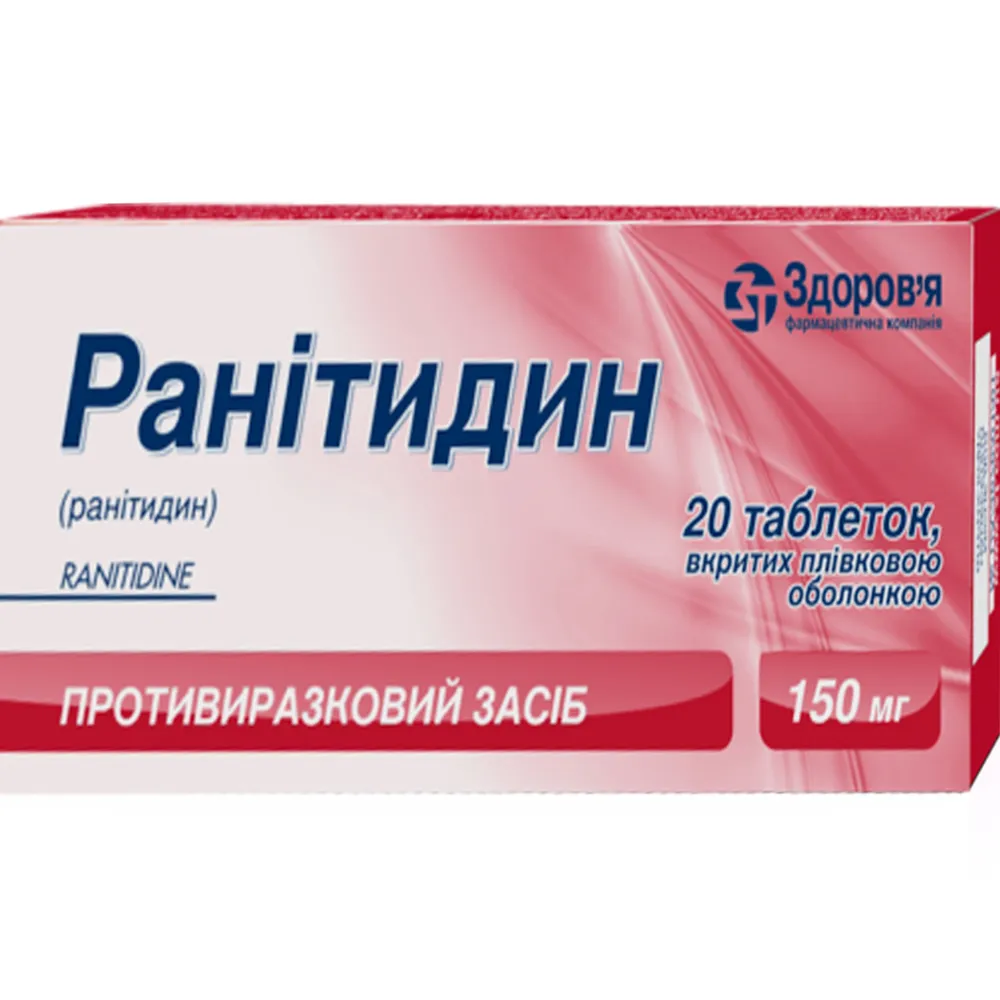
Table of Contents
INSTRUCTIONS FOR MEDICAL USE OF THE MEDICINAL PRODUCT RANITIDINE (RANITIDINE)
Composition:
Active ingredient: ranitidine;
One tablet contains ranitidine hydrochloride equivalent to 150 mg of ranitidine;
Excipients: microcrystalline cellulose, sodium croscarmellose, magnesium stearate, Opadry II 85G53691 orange coating: polyvinyl alcohol, lecithin, polyethylene glycol, talc, titanium dioxide (E 171), Ponceau 4R (E 124), Brilliant Yellow FCF (E 110), indigo carmine (E 132).
Pharmaceutical form. Film-coated tablets.
Main physico-chemical properties: round, biconvex, film-coated tablets of orange color.
Pharmacotherapeutic group.
Drugs for treatment of peptic ulcer and gastroesophageal reflux disease. H2-histamine receptor antagonists. ATC code A02B A02.
Pharmacological Properties.
Pharmacodynamics.
Ranitidine is an H2-histamine receptor antagonist. Its mechanism of action is due to competitive inhibition of H2-histamine receptors on parietal cells of the gastric mucosa. It suppresses basal and stimulated secretion of hydrochloric acid and reduces pepsin activity, increasing the pH of gastric contents. It reduces gastric juice volume induced by stimulation of baroreceptors (gastric distension), food intake, and the action of hormones and biogenic stimulants (gastrin, histamine, pentagastrin, caffeine). The duration of action after a single dose is approximately 12 hours.
Pharmacokinetics.
Ranitidine is rapidly absorbed after oral administration. Absorption is independent of food intake. Peak plasma concentrations within the range of 300–500 mcg/mL are reached within 1–3 hours after oral administration of a 150 mg dose. The bioavailability of ranitidine is 50%. Plasma concentrations of ranitidine are proportional to the administered dose. Plasma protein binding is 15%. Ranitidine is partially metabolized in the liver.
Elimination of the drug occurs primarily via the kidneys (60–70% of the oral dose), with 26% excreted in feces. The elimination half-life is 2–3 hours. Approximately 30% of the oral dose is excreted unchanged.
Clinical characteristics.
Indications.
- Gastric and duodenal peptic ulcer not associated with Helicobacter pylori (in the acute phase), including ulcers associated with the use of nonsteroidal anti-inflammatory drugs (NSAIDs).
- Functional dyspepsia.
- Chronic gastritis with increased gastric acid secretion in the acute phase.
- Gastroesophageal reflux disease (for symptom relief) or reflux esophagitis.
Contraindications.
- Hypersensitivity to ranitidine or to any other component of the medicinal product.
- Malignant diseases of the stomach.
- Liver cirrhosis with a history of portosystemic encephalopathy, hepatic insufficiency.
- Severe renal insufficiency.
Interaction with other medicinal products and other forms of interaction.
Ranitidine may affect the absorption, metabolism, and renal excretion of other medicinal products.
Changes in pharmacokinetics may require dose adjustment of the affected drug or discontinuation of treatment.
Interactions occur via several mechanisms:
- Inhibition of the mixed-function oxygenase system of cytochrome P450
Ranitidine, at usual therapeutic doses, does not alter the activity of the cytochrome P450 enzyme system and does not potentiate the effects of drugs inactivated by this system (e.g., diazepam, lidocaine, phenytoin, propranolol, theophylline).
Altered prothrombin time has been reported when ranitidine is used concomitantly with coumarin anticoagulants (e.g., warfarin). Due to the narrow therapeutic range, careful monitoring of increases or decreases in prothrombin time is recommended during concomitant therapy with ranitidine.
- Competition for renal tubular secretion
Since ranitidine is partially eliminated via the cationic pathway, it may affect the clearance of other drugs eliminated by this route. High doses of ranitidine (e.g., those used in the treatment of Zollinger-Ellison syndrome) may slow the excretion of procainamide and N-acetylprocainamide, leading to increased plasma levels.
- Change in gastric juice pH
The bioavailability of certain medicinal products may be altered. This may either increase absorption (e.g., triazolam, midazolam, glipizide) or decrease absorption (e.g., ketoconazole, atazanavir, delavirdine, gefitinib).
Concomitant administration of 300 mg ranitidine and erlotinib reduced erlotinib plasma concentrations [AUC] and maximum concentrations [Cmax] by 33% and 54%, respectively. However, when erlotinib was administered 2 hours before or 10 hours after 150 mg ranitidine twice daily, erlotinib plasma concentrations [AUC] and maximum concentrations [Cmax] decreased by only 15% and 17%, respectively.
Data on interactions between ranitidine and amoxicillin or metronidazole are lacking.
If high doses (2 g) of sucralfate are taken concomitantly with ranitidine, the absorption of sucralfate may be reduced. This effect is not observed if sucralfate is administered with a 2-hour interval.
Special precautions for use
Malignant tumors
Prior to initiating therapy, the presence of malignant tumors should be ruled out in patients with gastric ulcer or in middle-aged or older individuals who have recently developed new or changed dyspeptic symptoms, as treatment with ranitidine may mask symptoms of gastric carcinoma.
Kidney disease
Ranitidine is eliminated by the kidneys; therefore, in patients with severe renal impairment, plasma levels of ranitidine increase. The dose of ranitidine should be adjusted as described in the section "Administration and dosage".
Porphyria
Rare clinical reports suggest that ranitidine may trigger acute attacks of porphyria. Therefore, ranitidine should be avoided in patients with a history of acute porphyria or phenylketonuria.
An increased susceptibility to community-acquired pneumonia has been observed in elderly patients, individuals with chronic lung diseases, diabetes mellitus, or those with compromised immune systems. Data indicate an increased risk of community-acquired pneumonia in patients taking ranitidine compared to those who discontinued this therapy. Post-marketing surveillance data report reversible confusion, depression, and hallucinations, most commonly observed in severely ill and elderly patients (see section "Adverse reactions").
The medicinal product contains the colorant "Yellow Sunset FCF" (E 110) and the colorant "Ponceau 4R" (E 124), which may cause allergic reactions.
Use during pregnancy or breastfeeding
The medicinal product is contraindicated during pregnancy.
If it is necessary to use the drug during treatment, breastfeeding should be discontinued.
Ability to influence reaction speed when driving or operating machinery
Given that adverse reactions (dizziness, hallucinations, accommodation disorders) may occur in sensitive patients during treatment, patients should refrain from driving or operating machinery while taking this medication.
Dosage and Administration.
For use in adults and children aged 12 years and older. Take orally, without chewing, with a small amount of water, regardless of food intake.
Peptic ulcer of the stomach and duodenum not associated with Helicobacter pylori (in the acute phase). Administer 150 mg (1 tablet) twice daily in the morning and evening, or 300 mg (2 tablets) once daily at bedtime for 4 weeks. For non-healing ulcers, continue treatment for another 4 weeks.
Prophylaxis of peptic ulcer of the stomach and duodenum associated with nonsteroidal anti-inflammatory drugs (NSAIDs). Administer 150 mg (1 tablet) twice daily in the morning and evening during the entire period of NSAID therapy.
Functional dyspepsia. Administer 150 mg (1 tablet) twice daily in the morning and evening for 2–3 weeks.
Chronic gastritis with increased gastric acid secretion in the acute phase. Administer 150 mg (1 tablet) twice daily in the morning and evening for 2–4 weeks.
Gastroesophageal reflux disease (GERD). For symptom relief, administer 150 mg (1 tablet) twice daily in the morning and evening for 2 weeks; if necessary, continue treatment course.
For long-term treatment and during exacerbations of gastroesophageal reflux disease, administer 150 mg (1 tablet) twice daily in the morning and evening, or 300 mg (2 tablets) once daily at bedtime for 8 weeks; if necessary, extend treatment up to 12 weeks.
Patients with severe renal impairment (creatinine clearance < 50 ml/min). The daily dose of the drug for this patient group is 1 tablet (150 mg ranitidine).
Children.
The use of the drug in children aged 12 years and older is indicated for shortening the duration of treatment of peptic ulcer of the stomach and duodenum, for the treatment of gastroesophageal reflux disease including reflux esophagitis, and for relief of symptoms of gastroesophageal reflux disease.
Overdose.
Symptoms: possible intensification of adverse reactions.
Treatment: if necessary, provide appropriate symptomatic and supportive therapy. Ranitidine can be removed from blood plasma by hemodialysis.
Adverse reactions.
Blood system disorders: reversible leukopenia, reversible thrombocytopenia, agranulocytosis or pancytopenia, sometimes with hypoplasia or aplasia of the bone marrow, neutropenia, immune hemolytic and aplastic anemia (usually reversible).
Immune system disorders: hypersensitivity reactions, including urticaria, angioedema, fever, anaphylactic shock, bronchospasm, erythema multiforme, exfoliative dermatitis, Stevens-Johnson syndrome, Lyell's syndrome, hyperthermia, hypotension, chest pain, dyspnea.
Psychiatric disorders: increased fatigue, reversible confusion, drowsiness, excitement, insomnia, emotional lability, restlessness, anxiety, depression, nervousness, hallucinations, tinnitus, irritability, disorientation, disoriented state. These manifestations are mainly observed in severely ill patients, nephrological patients, or elderly patients.
Nervous system disorders: headache, dizziness, and reversible involuntary movement disorders.
Eye disorders: visual disturbances, reversible blurred vision, accommodation disorders.
Cardiovascular system disorders: decreased arterial pressure, bradycardia, tachycardia, asystole, atrioventricular block, vasculitis, chest pain, arrhythmia, extrasystole.
Gastrointestinal disorders: dry mouth, nausea, vomiting, constipation, diarrhea, abdominal pain, flatulence, acute pancreatitis, decreased appetite.
Hepatobiliary disorders: transient and reversible changes in liver function parameters (transaminases, gamma-glutamyl transferase, alkaline phosphatase, bilirubin); hepatocellular, cholestatic, or mixed hepatitis with or without jaundice (usually reversible).
Skin and subcutaneous tissue disorders: hyperemia, pruritus, skin rashes, erythema multiforme, alopecia, dry skin.
Musculoskeletal system disorders: arthralgia, myalgia.
Renal and urinary system disorders: renal function impairment, acute interstitial nephritis.
Increased plasma creatinine levels (usually mild, normalizing with continued treatment).
Reproductive system disorders: hyperprolactinemia, galactorrhea, gynecomastia, amenorrhea, decreased potency (reversible) and/or libido.
Children
The safety of ranitidine has been evaluated in children aged 0 to 16 years with acid-related disorders. The drug was generally well tolerated, and the adverse reaction profile was similar to that in adults. Long-term safety data, particularly regarding growth and development, are limited.
Shelf life.
3 years.
Storage conditions.
Store at temperatures not exceeding 25 °C in the original packaging.
Keep out of reach of children.
Packaging.
10 tablets per strip. 2 or 10 strips per cardboard package.
Prescription category.
Prescription only.
Manufacturer.
LLC "KUSUM PHARM".
Manufacturer's address and place of business.
54 Skryabina Street, Sumy, Sumy Region, 40020, Ukraine.