Rabelok
Ukraine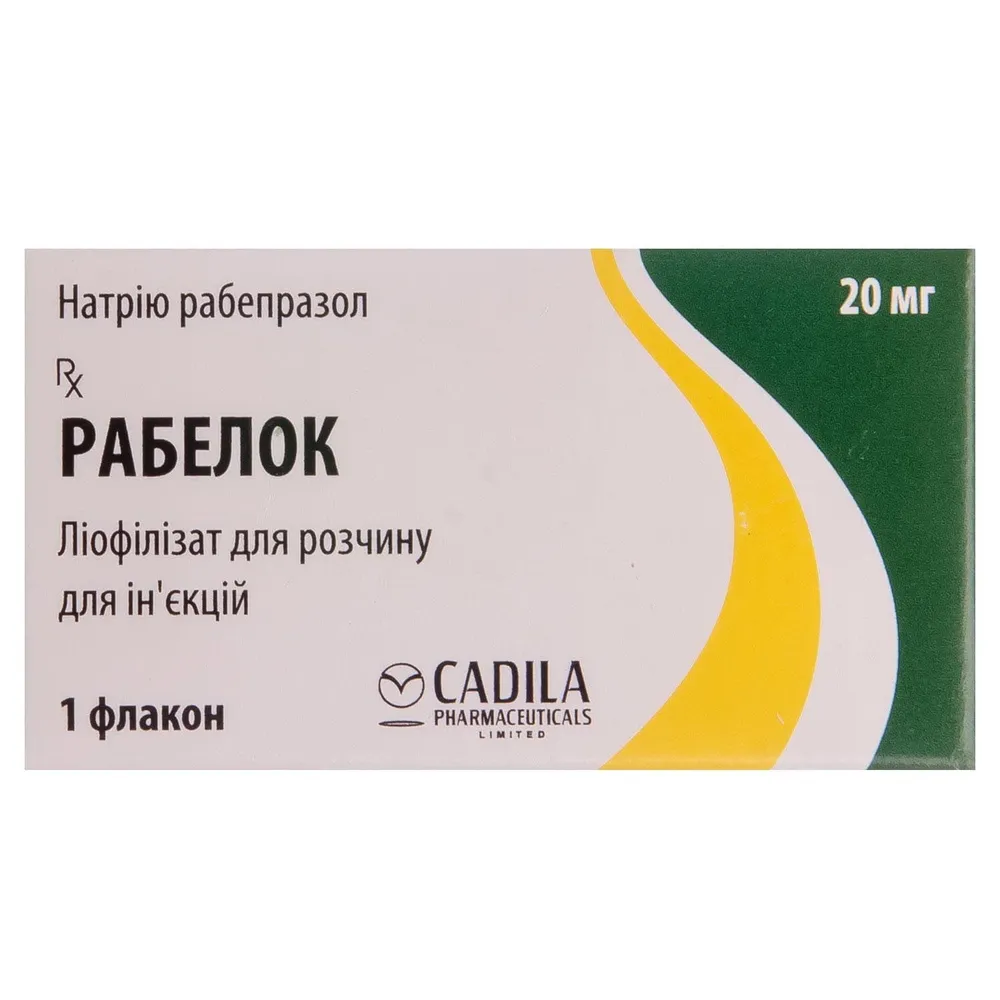
Table of Contents
INSTRUCTIONS FOR MEDICAL USE OF THE MEDICINAL PRODUCT RABELOC (RABELOC)
Composition:
Active substance: rabeprazole sodium;
1 vial contains rabeprazole sodium 20 mg;
Excipients: mannite (E 421), water for injections, sodium hydroxide.
Pharmaceutical form. Lyophilisate for solution for injection.
Main physicochemical characteristics: white or yellowish-white lyophilisate.
Pharmacotherapeutic group.
Proton pump inhibitors. Rabeprazole.
ATC code A02BC04.
Pharmacological Properties
Pharmacodynamics
Sodium rabeprazole is a proton pump inhibitor. By inhibiting the enzyme H+/K+-ATPase in gastric parietal cells, it blocks the final step of hydrochloric acid production. This effect is dose-dependent and results in suppression of both basal and stimulated gastric acid secretion, regardless of the stimulating agent. Rabeprazole binds covalently to the proton pump of parietal cells, leading to irreversible reduction of hydrochloric acid secretion. Acid secretion can only occur via newly synthesized proton pumps. Therefore, the plasma kinetics of rabeprazole are not decisive for its antisecretory effect: the biological activity of rabeprazole significantly exceeds its plasma half-life. More clinically relevant is the half-life of proton pump regeneration (20–24 hours), rather than the half-life of rabeprazole itself.
Maximum inhibition of acid secretion occurs when rabeprazole reaches the parietal cell at the moment of its activation. This can be achieved by intravenous infusion of rabeprazole. As a result, the proton pump, activated either by circadian rhythms (acetylcholine) or by food intake (histamine and gastrin), immediately binds to rabeprazole molecules, thereby halting hydrochloric acid production.
The active substance, rabeprazole, rapidly accumulates in the acidic environment of gastric parietal cells, where it is converted into its active form through the addition of a sulfenamide group.
After intravenous administration, the effect of rabeprazole develops within 1 hour and reaches its maximum within 2–4 hours. The mean clearance following intravenous administration of a 20 mg dose is 283 ± 98 mL/min. The half-life of a 20 mg intravenous dose is 1.02 ± 0.63 hours. After discontinuation of the drug, acid secretion returns to normal within 2–3 days.
Administration of the drug at a dose of 20 mg daily for 2 weeks does not affect thyroid function, carbohydrate metabolism, or blood concentrations of parathyroid hormone, cortisol, estrogen, testosterone, prolactin, cholecystokinin, secretin, glucagon, FSH, LH, GH, renin, or aldosterone.
Pharmacokinetics
Absolute bioavailability following intravenous administration of a 20 mg dose is approximately 100%, meaning all rabeprazole molecules reach the parietal cells. The bioavailability of rabeprazole is not altered by repeated administration. Plasma protein binding is 97%. With repeated dosing, rabeprazole exhibits linear pharmacokinetics; thus, the half-life, clearance, and volume of distribution of rabeprazole are dose-independent. Rabeprazole is metabolized in the liver. Sodium rabeprazole undergoes biotransformation to form the primary metabolites thioether and carbonic acid. Other metabolites—sulfone, dimethylthioether, and mercapturic acid conjugate—are present in low concentrations. The half-life in blood serum is approximately 1 hour. About 90% of the administered dose is excreted in the urine, primarily as two metabolites: mercapturic acid conjugate and carbonic acid. A small portion of metabolites is excreted in feces. In elderly patients, elimination of rabeprazole is slightly delayed. No accumulation of rabeprazole has been observed.
Clinical characteristics.
Indications.
Rabeprazole in the form of a lyophilized powder for preparation of injection solution is indicated in cases where oral administration is not possible, namely:
- Acute phase of gastric or duodenal peptic ulcer with bleeding and severe erosions;
- Short-term treatment of erosive and ulcerative gastroesophageal reflux disease;
- Prevention of aspiration of acidic gastric contents;
- Zollinger-Ellison syndrome.
Contraindications.
Hypersensitivity to rabeprazole, to other benzimidazoles, or to any of the excipients of the drug. Hepatic, renal, or respiratory insufficiency. Rabeprazole is contraindicated in pregnant women, breastfeeding women, and children.
Interaction with other medicinal products and other types of interactions.
CYP-450 system
Sodium rabeprazole is metabolized by the hepatic enzyme system CYP-450, specifically CYP2C19 and CYP3A4.
Sodium rabeprazole has no pharmacokinetic or clinically significant interactions with warfarin, phenytoin, theophylline, or diazepam, each of which is metabolized by CYP-450.
Interactions caused by inhibition of gastric acid secretion
Sodium rabeprazole causes strong and prolonged reduction in gastric acid production. Therefore, rabeprazole may interact with drugs whose absorption depends on the pH of gastric contents. Concomitant administration of sodium rabeprazole and ketoconazole or itraconazole may lead to decreased plasma concentrations of the latter, while co-administration with digoxin may lead to increased digoxin concentrations. Therefore, patients receiving these medications together with rabeprazole should be monitored to determine the need for dose adjustment.
Antacids
No interaction between rabeprazole and antacids such as aluminum or magnesium hydroxide has been observed.
Atazanavir
Concomitant administration of atazanavir 300 mg/ritonavir 100 mg with omeprazole (40 mg once daily) or atazanavir 400 mg with lansoprazole (60 mg once daily) results in a significant reduction in atazanavir exposure. Atazanavir absorption is pH-dependent. Similar results are expected with other proton pump inhibitors. Proton pump inhibitors, including rabeprazole, are contraindicated for use in combination with atazanavir (see sections "Contraindications", "Special precautions").
Metotrexate
Case reports of adverse reactions, published data from population pharmacokinetic studies, and retrospective analyses suggest that concomitant use of methotrexate and proton pump inhibitors (particularly at high doses) may lead to increased serum levels of methotrexate and/or its metabolite hydroxymethotrexate. However, no formal studies have been conducted.
Clopidogrel
Concomitant administration of clopidogrel and rabeprazole in healthy volunteers had no clinically relevant effect on concentrations of the active metabolite of clopidogrel. Dose adjustment is not required.
Food
Consumption of a low-fat meal does not affect the absorption of sodium rabeprazole. Administration of sodium rabeprazole with a high-fat meal may delay absorption by 4 hours or more, but maximum concentration and extent of absorption remain unchanged.
Cyclosporine
In vitro, sodium rabeprazole inhibits cyclosporine metabolism. This level of inhibition is comparable to that of omeprazole.
Medicinal products contraindicated for concomitant use with rabeprazole
| Medicinal product |
Symptoms |
Mechanism and risk factors |
| Atazanavir sulfate |
The therapeutic effect of atazanavir may be reduced |
Due to its anti-secretory effect, rabeprazole increases gastric pH, reduces the solubility of atazanavir sulfate, and thereby decreases its plasma concentration. |
Medicinal products that should be prescribed with caution
| Medicinal product |
Symptoms |
Mechanism and risk factors |
| Digoxin |
Blood concentration levels of digoxin and methyl digoxin may increase |
Due to its antisecretory effect, rabeprozole may increase gastric pH, leading to enhanced absorption of digoxin and methyl digoxin |
| Itraconazole Gefitinib |
Blood concentration levels of itraconazole and gefitinib may decrease |
Due to its antisecretory effect, rabeprozole may increase gastric pH, resulting in inhibited absorption of itraconazole and gefitinib |
| Antacids containing aluminium hydroxide / magnesium hydroxide |
Rabeprazole concentration may decrease when used concomitantly with antacids. |
|
Special precautions for use.
Caution should be exercised when prescribing rabeprozole to patients with hypersensitivity to drugs. There is a risk of cross-hypersensitivity with other proton pump inhibitors (PPIs) or substituted benzimidazoles.
When prescribing the drug to elderly patients, it should be remembered that rabeprozole is metabolized exclusively in the liver. Since physiological liver function may decline with age, adverse reactions may occur in elderly patients. Therefore, elderly patients should be monitored closely and dosing and treatment duration recommendations should be strictly followed.
Before initiating treatment with Rabelok, malignant tumors of the stomach and esophagus must be ruled out, as administration of the drug may mask symptoms and delay tumor detection.
Patients undergoing long-term treatment with rabeprozole (especially those treated for more than 1 year) should be regularly examined.
There is a risk of cross-hypersensitivity with other proton pump inhibitors or substituted benzimidazoles.
Hematological abnormalities (thrombocytopenia and neutropenia) have been reported during treatment with rabeprozole. In most cases, no other etiology was identified; the events were uncomplicated and resolved after discontinuation of rabeprozole.
During treatment with rabeprozole, periodic hematological and biochemical testing is recommended.
When proton pump inhibitors are used for three months or longer, patients may develop hypomagnesemia (symptomatic and asymptomatic), which may manifest as arrhythmia, muscle spasms, or tetany. In most patients, treatment of hypomagnesemia required discontinuation of proton pump inhibitors and initiation of replacement therapy with magnesium supplements. Patients who are likely to receive long-term treatment (e.g., digoxin) or drugs that may cause hypomagnesemia (e.g., diuretics) should have serum magnesium levels monitored before and during treatment.
Elevations in liver enzymes have been observed. In most cases, no other etiology was identified; the abnormalities were uncomplicated and resolved after discontinuation of rabeprozole.
In patients with mild or moderate hepatic impairment, there was no significant difference in the frequency of adverse effects compared to the control group of similar age and gender. Studies in patients with severe hepatic impairment have not been conducted; therefore, rabeprozole should be used with caution in patients with severe liver dysfunction. The dose should be reduced in hepatic impairment.
Due to insufficient clinical data on intravenous administration of rabeprozole in patients with significant hepatic dysfunction, rabeprozole should be administered only in cases of extreme necessity at half the dose (10 mg) under medical supervision.
There are no clinical data on the use of rabeprozole in patients with severe renal impairment; therefore, Rabelok is not recommended for patients with severe renal failure.
Thyroid function
Thyroid function should be monitored during treatment with rabeprozole.
Special considerations for breath tests
Results of C-urea breath tests may be falsely negative during concomitant use of proton pump inhibitors such as rabeprozole and antibiotics such as amoxicillin, clarithromycin, and metronidazole. Therefore, breath tests to detect Helicobacter pylori should be performed no earlier than 4 weeks after discontinuation of these drugs.
Treatment of non-erosive reflux disease is indicated in patients with recurrent symptoms, particularly heartburn and acid regurgitation (approximately twice a week). The use of rabeprozole may mask symptoms of malignancy (e.g., gastric or intestinal cancer) and other gastrointestinal disorders. Therefore, these conditions should be ruled out before prescribing rabeprozole.
When prescribing rabeprozole to a patient with reflux disease without erosions, the physician should assess treatment efficacy after 2 weeks of therapy. If symptoms persist, it is likely that reflux disease is not the cause. In such cases, the physician should consider alternative treatment approaches.
If rabeprozole is prescribed for Helicobacter pylori eradication, attention must be paid to contraindications, special precautions, clinically significant adverse reactions, and other warnings stated in the instructions for medical use of other drugs used for eradication.
According to scientific literature, concomitant use of proton pump inhibitors and methotrexate (particularly at high doses) may increase serum levels of methotrexate and/or its metabolites, potentially leading to toxicity. When high-dose methotrexate is required, discontinuation of proton pump inhibitor therapy should be considered.
Use of the drug carries a risk of fractures. According to some observational studies, proton pump inhibitors increase the risk of osteoporosis-related fractures of the hip, wrist, and spine. The risk of fractures increases in patients receiving high doses of PPIs for prolonged periods (more than 1 year).
The drug should be used with caution in patients with respiratory insufficiency.
Concomitant use of atazanavir and rabeprozole is contraindicated (see section "Interaction with other medicinal products and other forms of interaction").
Treatment with proton pump inhibitors, including rabeprozole, increases the risk of gastrointestinal infections caused by pathogens such as Salmonella, Campylobacter, and Clostridium difficile.
Renal function impairment
Acute tubulointerstitial nephritis (ATIN) has been observed in patients taking rabeprozole and may occur at any time during therapy (see section "Adverse reactions"). Acute tubulointerstitial nephritis may progress to renal failure.
If ATIN is suspected, rabeprozole should be discontinued immediately and appropriate treatment initiated without delay.
Use during pregnancy or breastfeeding.
Pregnancy
There are no data on the safety of rabeprozole use during pregnancy.
Rabeprozole is contraindicated during pregnancy.
Breastfeeding
It is unknown whether sodium rabeprozole passes into breast milk. Appropriate studies have not been conducted.
Rabeprozole should not be administered to women during breastfeeding.
Ability to affect reaction speed when driving or operating machinery.
During treatment, it is recommended to refrain from driving or operating complex machinery, as headache, drowsiness, dizziness, or visual disturbances may occur.
Method of Administration and Dosage
Intravenous administration of rabeprazole is recommended only when oral administration is not possible. As soon as oral administration of rabeprazole becomes feasible, intravenous administration should be discontinued.
The recommended dose is 20 mg of rabeprazole once daily.
The prepared solution should be administered intravenously only.
For injection: the contents of one ampoule are dissolved in 5 mL of sterile water for injections and administered slowly over 5–15 minutes.
For infusion: the contents of one ampoule are first dissolved in 5 mL of sterile water for injections, then added to 100 mL of infusion solution (0.9% sodium chloride solution) and administered over 15–30 minutes.
Before administration, the solution should be visually inspected to ensure complete dissolution and to exclude any change in color, presence of precipitate, or change in clarity. The solution should be used within 4 hours after preparation. Any unused solution should be discarded.
Renal and hepatic impairment. Dose adjustment is not required in patients with renal or hepatic impairment. For use in patients with severe hepatic impairment, see section "Special Warnings and Precautions for Use".
Children.
Rabeprazole is not recommended for use in children, as there is insufficient experience regarding its use in this age group.
Overdose.
There are no reports of rabeprazole overdose. Overdose may result in an intensification of adverse effects. The maximum single dose should not exceed 120 mg, and the maximum daily dose should not exceed 160 mg.
Treatment: in case of accidental ingestion of high doses, symptomatic and supportive therapy should be administered. There is no specific antidote. Sodium rabeprazole is highly protein-bound in plasma and therefore is poorly removed by dialysis.
Adverse Reactions
Adverse effects of rabeprazole are mostly mild, moderate, and transient.
Infections and infestations: infections, interstitial pneumonia.
Blood and lymphatic system disorders: anemia, erythrocytopenia, pancytopenia, leukopenia, agranulocytosis, eosinophilia, lymphopenia, neutropenia, thrombocytopenia, leukocytosis, hemolytic anemia.
Immune system disorders: rash and dry mouth, hypersensitivity reactions including shock, anaphylactoid reactions, urticaria, facial swelling, hypotension, and dyspnea; acute systemic allergic reactions, which usually resolve after discontinuation of treatment.
Metabolism and nutrition disorders: anorexia, hypomagnesemia, hyponatremia.
Psychiatric disorders: insomnia, somnolence, excitement, nervousness, depression, confusion, delirium, coma.
Nervous system disorders: headache, dizziness, weakness in limbs, numbness of limbs, paresthesia, asthenia, decreased grip strength, speech disturbance, disorientation.
Eye disorders: visual disturbances, increased intraocular pressure.
Vascular disorders: peripheral edema, hypertension, palpitations.
Respiratory system disorders: cough, pharyngitis, rhinitis, bronchitis, sinusitis, glossitis, angioneurotic edema, bronchospasm.
Gastrointestinal disorders: diarrhea, vomiting, nausea, abdominal pain, constipation, flatulence, dyspepsia, rash and dry mouth, belching, gastritis, stomatitis, taste disturbances, feeling of fullness and heaviness in the stomach, candidiasis, enteritis, esophagitis, cheilitis, heartburn, flatulence, hemorrhoids.
Hepatobiliary and biliary tract disorders: hepatitis, fulminant hepatitis, liver function abnormalities, jaundice, hepatic encephalopathy (in isolated cases, hepatic encephalopathy was observed in patients with liver cirrhosis).
Skin and subcutaneous tissue disorders: rash, erythema, bullous reactions, acute systemic allergic reactions, pruritus, sweating, toxic epidermal necrolysis (TEN), Stevens-Johnson syndrome.
Musculoskeletal and connective tissue disorders: non-specific pain/back pain, myalgia, leg cramps, arthralgia, rhabdomyolysis, fracture of the femoral neck, wrist, or spine.
Renal and urinary disorders: acute renal failure, urinary tract infections, interstitial nephritis, rarely tubulointerstitial nephritis (with possible progression to renal failure).
Reproductive system disorders: gynecomastia, increased erection.
General disorders and administration site conditions: asthenia/weakness, influenza-like syndrome, malaise, chest pain, back pain, fever, chills, hot flushes, thirst, alopecia, increased sweating, injection site reactions.
Investigations: increased levels of liver enzymes (alanine aminotransferase, aspartate aminotransferase), lactate dehydrogenase, gamma-glutamyl transferase, alkaline phosphatase, total bilirubin; weight gain; proteinuria; increased levels of total cholesterol, triglycerides, blood urea nitrogen; elevated thyroxine-binding globulin, creatine phosphokinase, uric acid; increased glucose in urine, hyperammonemia.
Adverse reactions of clinical significance:
- Shock and anaphylactic reactions.
- Pancytopenia, leukopenia, agranulocytosis, and hemolytic anemia.
- Fulminant hepatitis, liver function abnormalities, jaundice.
- Interstitial pneumonia.
- Toxic epidermal necrolysis, Stevens-Johnson syndrome, erythema multiforme.
- Acute renal failure, interstitial nephritis.
- Hyponatremia.
- Rhabdomyolysis.
Adverse reactions of clinical significance specific to proton pump inhibitors:
- Visual disturbances.
- Angioneurotic edema, bronchospasm.
- Confusion.
If any of the above adverse reactions occur, rabeprazole should be discontinued.
Caution is advised when prescribing rabeprazole to patients with severe hepatic impairment.
Shelf life.
2 years.
Storage conditions.
Store in a light-protected and child-inaccessible place at a temperature not exceeding 25°C. The prepared solution may be stored for up to 4 hours at room temperature (up to 25°C) and for up to 24 hours in the refrigerator.
Incompatibility.
Rabeprazole may be diluted only in sterile water for injection or in physiological saline (0.9% sodium chloride solution). Do not mix with other medicinal products.
Packaging.
1 vial per cardboard box.
Prescription status. Prescription only.
Manufacturer.
Cadila Pharmaceuticals Limited.
Manufacturer's address and location of business operations.
Plot No. 1389, Trasad Road, Dholka, Dist: Ahmedabad, India.