Puregon
Ukraine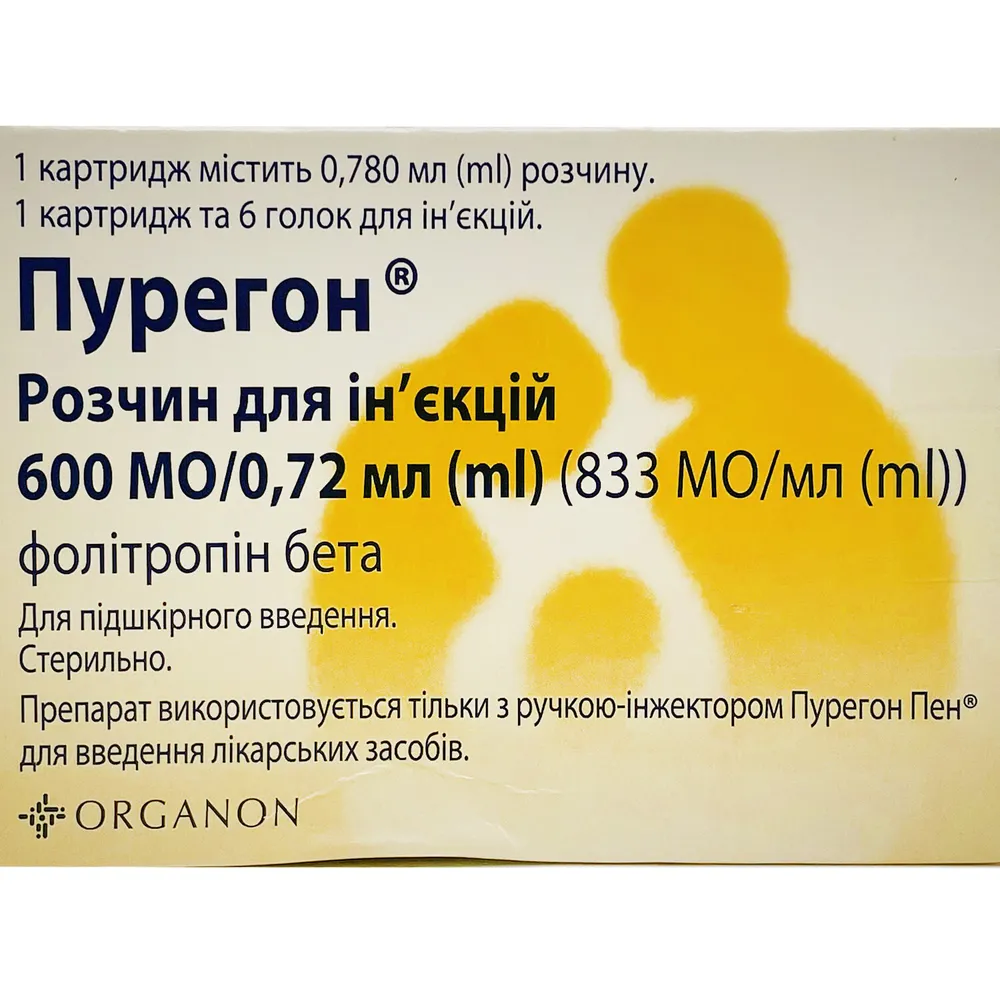
Table of Contents
INSTRUCTIONS FOR MEDICAL USE OF THE MEDICINAL PRODUCT PUREGON® (PUREGON®)
Composition:
Active substance: follitropin beta;
1 ml contains 833 IU of follitropin beta (1 cartridge contains 300 IU of follitropin beta/0.36 ml or 600 IU of follitropin beta/0.72 ml);
Excipients: sucrose, sodium citrate, polysorbate 20, L-methionine, benzyl alcohol, 0.1 N hydrochloric acid and/or 0.1 N sodium hydroxide, water for injections.
Pharmaceutical form. Solution for injection.
Main physicochemical properties: clear, colorless aqueous solution.
Pharmacotherapeutic group.
Gonadotrophins and other ovulation stimulants. Follitropin beta. ATC code G03GA06.
Pharmacological properties.
Pharmacodynamics.
Pergoveris® contains recombinant follicle-stimulating hormone (FSH). It is produced by recombinant DNA technology using a cell line derived from Chinese hamster ovaries, into which the genes encoding the human FSH subunits have been introduced. The primary amino acid sequence of the recombinant FSH is identical to that of naturally occurring human FSH. Minor differences in the carbohydrate chain structure are known to exist.
Mechanism of action
FSH is essential for normal growth and maturation of follicles and for the synthesis of sex steroid hormones. In women, FSH levels are critical for the initiation and duration of follicular development, and thus determine the timing and number of follicles reaching maturity.
Therefore, Pergoveris® can be used to stimulate follicular development and steroid synthesis in certain ovarian dysfunctions. Additionally, Pergoveris® can be used to induce multiple follicular development in assisted reproductive technologies, such as in vitro fertilization/embryo transfer (IVF/ET), gamete intrafallopian transfer, and intracytoplasmic sperm injection. Following treatment with Pergoveris®, human chorionic gonadotropin (hCG) is usually administered to stimulate the final phase of follicular development, completion of meiosis, and follicular rupture.
Pharmacokinetics.
Absorption
After subcutaneous administration of Pergoveris®, maximum plasma concentration of FSH is reached approximately 12 hours after injection. Due to the gradual release of the drug from the injection site and its long elimination half-life — approximately 40 hours (ranging from 12 to 70 hours) — FSH levels remain elevated for 24–48 hours. As a result, repeated administration of the same FSH dose leads to a further increase in plasma FSH concentration by 1.5–2.5 times compared to the first dose. This allows achievement of a therapeutic FSH concentration.
Pharmacokinetic parameters after intramuscular and subcutaneous administration of Pergoveris® do not differ significantly. Absolute bioavailability following both routes of administration is approximately 77%.
Distribution, biotransformation, and elimination
Recombinant FSH is biochemically similar to urinary-derived human FSH and is distributed, metabolized, and eliminated in the same manner.
Clinical characteristics.
Indications.
In adult women – treatment of female infertility in the following clinical cases:
- anovulation (including polycystic ovary syndrome (PCOS)) in women who do not respond to clomiphene citrate treatment;
- control of ovarian hyperstimulation during induction of multifollicular development in assisted reproductive technologies (ART) (e.g., in vitro fertilization/embryo transfer (IVF/ET), gamete intrafallopian transfer (GIFT), and intracytoplasmic sperm injection (ICSI)).
In adult men – impaired spermatogenesis due to hypogonadotropic hypogonadism.
Contraindications.
For both men and women:
- hypersensitivity to the active substance or to any of the excipients of the medicinal product;
- tumors of the ovaries, breasts, uterus, testes, pituitary gland, or hypothalamus;
- primary gonadal failure.
Additional contraindications for women:
- pregnancy;
- vaginal bleeding of unknown etiology;
- ovarian cysts or ovarian enlargement not related to polycystic ovary syndrome;
- anatomical abnormalities of the reproductive organs incompatible with pregnancy;
- uterine fibroids incompatible with pregnancy.
Interaction with other medicinal products and other forms of interaction.
Concomitant use of Purégon® and clomiphene citrate may enhance ovarian response.
Following pituitary desensitization with gonadotropin-releasing hormone analogs, a higher dose of Purégon® may be required to achieve adequate ovarian response.
Special precautions for use.
Traceability
To improve the traceability of biological medicinal products, it is necessary to clearly record the name and batch number of the administered medicinal product.
Hypersensitivity reactions to antibiotics
The product may contain residual amounts of streptomycin and/or neomycin. These antibiotics may cause hypersensitivity reactions in patients.
Diagnosis of infertility prior to treatment initiation
Before starting treatment, the cause of infertility in both partners should be investigated. In particular, patients should be evaluated for hypothyroidism, adrenal insufficiency, hyperprolactinemia, and pituitary or hypothalamic tumors, and appropriate treatment should be initiated if necessary.
Women.
Ovarian hyperstimulation syndrome (OHSS)
Ovarian hyperstimulation syndrome (OHSS) is a medical condition distinct from uncomplicated ovarian enlargement. Clinical signs and symptoms of mild to moderate OHSS include: abdominal pain, nausea, diarrhea, mild to moderate ovarian enlargement, and ovarian cysts. Severe OHSS may be a life-threatening condition. Clinical signs and symptoms of severe OHSS include: large ovarian cysts, acute abdominal pain, ascites, pleural effusion, hydrothorax, dyspnea, oliguria, abnormal blood test results, and weight gain. In some cases, venous and arterial thromboembolism may develop as a consequence of OHSS. OHSS has also been associated with transient abnormal liver function tests, with or without morphological changes on liver biopsy.
OHSS may occur following administration of human chorionic gonadotropin (hCG), as well as during pregnancy (endogenous hCG). Early OHSS typically develops within 10 days after hCG administration and may be related to an excessive ovarian response to gonadotropin stimulation. Late OHSS develops more than 10 days after hCG administration as a result of hormonal changes associated with pregnancy. Because of the risk of OHSS, patients should be monitored for at least two weeks after hCG administration.
Women with known risk factors for an excessive ovarian response may be particularly susceptible to developing OHSS during or after treatment with Puragon®. Careful monitoring for early signs and symptoms of OHSS is recommended in women with known risk factors undergoing their first cycle of ovarian stimulation.
Current clinical practices aimed at reducing the risk of OHSS should be followed when using assisted reproductive technologies (ART). Adherence to the recommended dose and treatment regimen of Puragon®, along with careful monitoring of ovarian response, is important to minimize the risk of OHSS.
To monitor for OHSS development, ultrasound examination should be performed before treatment initiation and regularly during treatment to assess follicular development; concomitant measurement of serum estradiol levels may also be useful. When using ART, the risk of OHSS is increased when 18 or more follicles with a diameter of 11 mm or greater are present.
If OHSS occurs, standard appropriate treatment should be initiated.
Multiples pregnancy
Multiple pregnancies and multiple births have been reported with all gonadotropins, including Puragon®. Multiple pregnancy, especially at later gestational stages, increases the risk of complications during the obstetric (pregnancy and delivery complications) and perinatal periods (low birth weight). In women with anovulation undergoing ovulation induction therapy, monitoring of follicular development (via transvaginal ultrasound) is essential to minimize the risk of multiple pregnancy. Concomitant measurement of serum estradiol levels may also be beneficial. Patients should be informed about the potential risk of multiple pregnancy before starting treatment.
In women undergoing ART, the risk of multiple pregnancy primarily depends on the number of embryos transferred. When the product is used in an ovulation stimulation cycle, appropriate adjustment of FSH dosage helps prevent the development of multiple follicles.
Ectopic pregnancy
The incidence of ectopic pregnancy is increased in infertile women undergoing ART. Early ultrasound examination during pregnancy is essential to confirm intrauterine pregnancy.
Spontaneous abortion
The risk of pregnancy loss is higher in women undergoing assisted fertilization compared to natural conception.
Vascular complications
Thromboembolic events (with or without OHSS) have been reported after treatment with gonadotropins, including Puragon®. Intravascular thrombosis of both venous and arterial vessels may impair blood flow to vital organs or limbs. Women with recognized risk factors for thromboembolic events (such as personal or family history, severe obesity, thrombophilia) may have an increased risk when treated with gonadotropins, including Puragon®. The benefits and risks of gonadotropin therapy, including Puragon®, should be carefully weighed in such patients. It should be noted that pregnancy itself increases the risk of thrombosis.
Congenital anomalies
The rate of congenital malformations following ART is slightly higher than after spontaneous conception. This is attributed to parental characteristics (such as maternal age, sperm characteristics) and the higher incidence of multiple pregnancies after ART. There is no evidence that the use of gonadotropins during ART is associated with an increased risk of congenital malformations.
Ovarian torsion
Ovarian torsion has been reported after treatment with gonadotropins, including Puragon®. Ovarian torsion may be associated with other conditions such as OHSS, pregnancy, abdominal surgery, previous history of ovarian torsion, or presence of ovarian cysts and polycystic ovaries. Ovarian damage due to compromised blood flow can be prevented if the diagnosis is made promptly and torsion is immediately corrected.
Ovarian and other reproductive organ neoplasms
Cases of benign and malignant tumors of the ovaries and other reproductive organs have been reported in women who have received various infertility treatments. It is not established whether gonadotropin therapy increases the risk of such tumors in infertile women.
Other medical conditions
Prior to initiating treatment with Puragon®, the presence of medical conditions contraindicating pregnancy should be evaluated in the patient.
Men.
Primary testicular failure
Elevated endogenous FSH levels in men indicate primary testicular failure. Treatment with Puragon®/hCG is not effective in such patients.
Benzyl alcohol
Benzyl alcohol may cause anaphylactoid reactions. Large amounts of benzyl alcohol may lead to metabolic acidosis. Special precautions should be taken when administering Puragon® to pregnant women, breastfeeding women, and patients with hepatic or renal impairment.
Sodium
This medicinal product contains less than 1 mmol (23 mg) of sodium per injection, i.e., essentially "sodium-free".
Use during pregnancy or breastfeeding.
Pregnancy. Administration of Puragon® during pregnancy is contraindicated. In case of inadvertent use during pregnancy, clinical data are insufficient to exclude a teratogenic effect of recombinant FSH.
Breastfeeding. There are no clinical or animal studies on the excretion of follitropin beta in breast milk. It is unlikely that follitropin beta passes into breast milk due to its high molecular weight. If it were excreted into breast milk, it would be degraded in the infant's gastrointestinal tract. Follitropin beta may affect breast milk production.
Fertility. Puragon® is indicated for the treatment of women undergoing ovarian stimulation or controlled ovarian hyperstimulation as part of an ART program. In men, Puragon® is indicated for the treatment of spermatogenesis deficiency due to hypogonadotropic hypogonadism. Dosage and route of administration are specified in the section "Administration and dosage".
Ability to affect reaction speed when driving vehicles or operating machinery.
Puragon® has no effect or has a negligible effect on the ability to drive vehicles or operate machinery.
Administration and Dosage
Treatment with Puregon® should be initiated under the supervision of a physician experienced in infertility management.
The first injection of the medication should be administered under direct medical supervision.
When using the injection pen (Puregon Pen®), it should be noted that the pen is a precision device which accurately delivers the set dose. It has been demonstrated that approximately 18% more FSH is delivered when using the pen compared to a syringe. This may be significant, particularly when switching between the pen and syringe within the same treatment cycle. Dose adjustment may be especially necessary when switching from a syringe to the pen to avoid unintentional overdosing.
Dosage for Women
There are marked inter- and intra-individual variations in ovarian response to exogenous gonadotropins, making it impossible to apply a uniform dosing regimen. Therefore, the dose should be individualized according to ovarian response. Follicular development should be monitored by ultrasound; simultaneous measurement of serum estradiol levels may also be useful.
Based on results from comparative clinical studies, it is considered appropriate to use a lower total dose of Puregon® over a shorter treatment period than typically required for urinary FSH, not only to optimize follicular development but also to reduce the risk of ovarian hyperstimulation.
Clinical experience with Puregon® is based on up to three treatment cycles for both indications. Overall experience in infertility treatment via in vitro fertilization indicates that treatment success is most likely during the first four treatment cycles, with a gradual decline thereafter.
Anovulation
A stepwise treatment regimen is recommended. Treatment usually begins with a daily dose of 50 IU of Puregon® for 7 days. If there is no ovarian response, the daily dose should be gradually increased until follicular growth and/or plasma estradiol levels indicate adequate ovarian response. An optimal daily increase in plasma estradiol concentration is considered to be 40–100%. The dose thus achieved should be maintained until the preovulatory stage is reached. The preovulatory stage is defined as the presence of a dominant follicle with a diameter of 18 mm (by ultrasound) and/or a plasma estradiol concentration of 300–900 pg/mL (1000–3000 pmol/L). This stage is usually achieved within 7–14 days of treatment. After this, Puregon® administration should be discontinued and ovulation induced by administration of hCG.
If the number of responding follicles is too high or if estradiol levels rise too rapidly (i.e., more than doubling within 24 hours over 2–3 consecutive days), the daily dose should be reduced. Since each follicle with a diameter exceeding 14 mm may lead to pregnancy, the presence of multiple preovulatory follicles with diameters greater than 14 mm increases the risk of multiple pregnancy. In such cases, hCG should not be administered, and measures should be taken to prevent multiple pregnancy.
Controlled ovarian stimulation in ART programs
Various stimulation regimens are used. A daily dose of 100–225 IU of Puregon® is recommended for at least the first 4 days. Thereafter, the dose should be individualized based on ovarian response. Clinical studies have shown that a maintenance dose of 75–375 IU for 6–12 days is usually sufficient, although longer treatment durations may be required in some cases.
Puregon® may be used alone or in combination with a gonadotropin-releasing hormone (GnRH) agonist or antagonist to prevent premature luteinization. When using a GnRH agonist, higher doses of Puregon® may be required to achieve adequate follicular growth.
Ovarian response should be monitored by ultrasound. Measurement of serum estradiol levels may also be useful. Final follicular maturation is induced by administration of hCG when at least 3 follicles with diameters of 16–20 mm are present (by ultrasound) and there is an adequate estradiol response (plasma estradiol concentrations of 300–400 pg/mL (1000–1300 pmol/L) per follicle exceeding 18 mm in diameter). Oocyte retrieval is performed 34–35 hours after hCG administration.
Dosage for Men
Puregon® should be administered at a dose of 450 IU per week, preferably divided into three doses of 150 IU each, in combination with hCG. Treatment with Puregon® and hCG should be continued for at least 3–4 months, during which time improvement in spermatogenesis is expected. Semen analysis is recommended 4–6 months after initiation of treatment to assess efficacy. If no improvement is observed, combined treatment may be continued; clinical experience suggests that a treatment duration of 18 months or longer may be required to restore spermatogenesis.
Administration
Puregon®, solution for injection in cartridges, is administered subcutaneously using the injection pen (Puregon Pen®). The injection site should be rotated with each administration to prevent lipodystrophy.
When using the injection pen, the patient or another person may self-administer Puregon® after receiving appropriate instructions from a physician. Self-injection should only be performed by highly motivated, well-prepared patients who have access to professional advice.
Instructions for Administration
The optimal site for subcutaneous injection is the abdominal area around the navel, where the skin is mobile and there is a layer of subcutaneous fat. The injection site should be changed with each injection. The solution may also be administered in other body areas.
Slight stimulation of the skin area selected for injection can activate nerve endings and reduce discomfort during needle insertion. Hands should be washed, and the injection site should be cleaned with a disinfectant solution (e.g., 0.5% chlorhexidine) to remove surface bacteria. The area approximately 5 cm around the intended injection site should be cleaned, and the disinfectant should be allowed to dry for at least one minute.
Gently pinch the skin to form a skin fold at the injection site. Administer the injection using the Puregon Pen® injection pen, inserting the needle fully into the skin. Press the pen’s injection button fully to deliver the entire required volume of solution. Wait 5 seconds before removing the needle from the skin. Immediately after needle withdrawal, firmly press the injection site with a disinfectant-soaked swab. Gentle massage of the injection site while maintaining pressure helps ensure even distribution of Puregon® solution and reduces discomfort.
Children
The medication is intended for use in adult patients only.
Overdose
Data on acute toxicity of Puregon® are lacking, but studies in animals have shown that the acute toxicity of Puregon® and urinary-derived gonadotropins is very low. Excessive FSH dosage may lead to ovarian hyperstimulation (see section "Special Warnings and Precautions"). In such cases, administration of Puregon® should be discontinued immediately, and symptomatic treatment should be initiated if necessary.
Adverse Reactions
Administration of Pregnyl® intramuscularly or subcutaneously may be accompanied by local reactions at the injection site (in 3% of all patients who received treatment). Most of these local reactions were mild and transient. Generalized hypersensitivity reactions were observed infrequently (approximately 0.2% of all patients treated with follitropin beta).
Women
In clinical studies, signs and symptoms associated with ovarian hyperstimulation syndrome (OHSS) were reported in approximately 4% of women treated with follitropin beta (see section "Special Warnings and Precautions for Use"). Adverse reactions related to this syndrome include: pelvic pain and/or congestion, abdominal pain and/or bloating, breast symptoms, and ovarian enlargement.
Table 1 lists adverse reactions observed during clinical studies and post-marketing surveillance with follitropin beta in women, categorized by system organ class and frequency: common (≥ 1/100 to < 1/10), uncommon (≥ 1/1,000 to < 1/100), and unknown (cannot be estimated from available data).
Table 1
| System organ class |
Frequency |
Adverse reaction |
| Immune system disorders |
Unknown |
Anaphylactic reactions4 |
| Nervous system disorders |
Common |
Headache |
| Gastrointestinal disorders |
Common |
Abdominal distension Abdominal pain |
| Uncommon |
Abdominal discomfort Constipation Diarrhea Nausea |
|
| Reproductive system and breast disorders |
Common |
Ovarian hyperstimulation syndrome (OHSS) Pelvic pain |
| Uncommon |
Breast symptoms1 Metrorrhagia Ovarian cyst Ovarian enlargement Ovarian torsion Uterine enlargement Vaginal bleeding |
|
| General disorders and administration site conditions |
Common |
Injection site reaction2 |
| Uncommon |
Generalized hypersensitivity reactions3 |
1Breast symptoms include breast tension, breast pain and/or swelling, and nipple pain.
2Injection site reactions include bruising, pain, redness, swelling, and itching.
3Generalized hypersensitivity reactions include erythema, urticaria, rash, and pruritus.
4Adverse reactions were identified during post-marketing surveillance.
Additionally, ectopic pregnancies, miscarriages, and multiple pregnancies have been reported, which are considered related to assisted reproductive technology procedures or subsequent pregnancies.
In rare cases, thromboembolism has been associated with follitropin beta/lhCG therapy, as with other gonadotropins.
Men
Table 2 lists adverse reactions reported during clinical trials with follitropin beta in men (30 patient-doses) and during post-marketing surveillance, classified by system organ class and frequency: common (≥ 1/100 to < 1/10), and unknown (cannot be estimated from available data).
Table 2
| System organ class |
Frequency1 |
Adverse reaction |
| Immune system disorders |
Not known |
Anaphylactic reactions3 |
| Nervous system disorders |
Common |
Headache |
| Skin and subcutaneous tissue disorders |
Common |
Acne Rash |
| Reproductive system and breast disorders |
Common |
Epididymal cyst Gynaecomastia |
| General disorders and administration site conditions |
Common |
Injection site reaction2 |
1Adverse reactions reported only once are classified as "frequent" because a single report exceeded a frequency of 1%.
2Local reactions at the injection site include induration and pain.
3Adverse reactions were identified during post-marketing surveillance in women.
Reporting suspected adverse reactions
Reporting suspected adverse reactions after a medicinal product is authorized is important. It allows continued monitoring of the benefit-risk balance of the medicinal product. Healthcare professionals and patients, as well as their legal representatives, should report any suspected adverse reactions and lack of efficacy through the Automated Pharmacovigilance Information System at https://aisf.dec.gov.ua.
Shelf life.
3 years.
Storage conditions.
Store in the original packaging at a temperature of 2 to 8 °C. Do not freeze. Keep out of the reach and sight of children.
For patient convenience, the medicinal product may be stored at a temperature not exceeding 25 °C for a single period of up to 3 months or until the expiry date, whichever comes first.
The medicinal product is intended for use only with the Pregnyl Pen® injection pen device. After piercing the cartridge rubber closure with a needle, the product may be stored for up to 28 days.
Incompatibilities.
In the absence of compatibility studies, this medicinal product must not be mixed with any other medicinal product.
Packaging.
0.420 ml (300 IU/0.36 ml) or 0.780 ml (600 IU/0.72 ml) in a cartridge; 1 cartridge in an open plastic tray, supplied with needles, 2 needle sets – 2 cardboard boxes (each set containing 3 needles, each needle in an individual plastic container) in a cardboard carton.
Prescription status.
Prescription only.
Manufacturer.
N.V. Organon, the Netherlands.
Manufacturer's address and location of operations / applicant's and/or applicant's representative's address.
Kloosterstraat 6, 5349 AB Oss, the Netherlands (legal address).
Molenstraat 110, 5342 CC Oss, the Netherlands (location of operations).
Contact details of the applicant's representative.
Organon Ukraine complaints handling unit responsible for quality complaints and adverse events: email address [email protected], telephone +38 044 392 21 44, +38 050 692 21 44.