Prismasol 4
UkraineTable of Contents
- INSTRUCTIONS FOR MEDICAL USE OF THE MEDICINAL PRODUCT PRISMASOL 4
- Composition:
- Pharmacological properties.
- Clinical characteristics.
- Special precautions for use.
- Method of Administration and Dosage
- Adverse reactions.
- Composition:
- Pharmacological properties.
- Clinical characteristics.
- Special precautions for use.
- Method of Administration and Dosage.
- Adverse reactions.
- Composition:
- Pharmacological properties.
- Clinical characteristics.
- Special precautions for use.
- Method of Administration and Dosage.
- Adverse Reactions
INSTRUCTIONS FOR MEDICAL USE OF THE MEDICINAL PRODUCT PRISMASOL 4
Composition:
Before mixing:
Electrolyte solution (small compartment A):
active substances: calcium chloride dihydrate, magnesium chloride hexahydrate, anhydrous glucose, (S)-lactic acid;
1000 ml of electrolyte solution contain: calcium chloride dihydrate – 5.145 g, magnesium chloride hexahydrate – 2.033 g, anhydrous glucose – 22.0 g, (S)-lactic acid – 5.4 g;
excipient: water for injections.
Buffer solution (large compartment B):
active substances: sodium chloride, potassium chloride, sodium bicarbonate;
1000 ml of buffer solution contain: sodium chloride – 6.45 g, potassium chloride – 0.314 g, sodium bicarbonate – 3.09 g;
excipients: carbon dioxide, water for injections.
After mixing:
Solution from compartment A (250 ml) and solution from compartment B (4750 ml) are mixed to obtain a mixed solution (5000 ml).
Ionic composition after mixing: 1000 ml of mixed solution contain
| mmol/L |
mEq/L |
||
| calcium |
Ca2+ |
1.75 |
3.50 |
| magnesium |
Mg2+ |
0.5 |
1.0 |
| sodium |
Na+ |
140 |
140 |
| chlorides |
Cl- |
113.5 |
113.5 |
| lactates |
3 |
3 |
|
| hydrogen carbonates |
HCO3- |
32 |
32 |
| potassium |
K+ |
4 |
4 |
| glucose |
6.1 |
Theoretical osmolarity: 301 mOsm/L;
pH of the mixed solution: 7.0 – 8.5.
Pharmaceutical form. Solution for haemofiltration and haemodialysis.
Basic physical and chemical properties: the solution should be clear and not more intensely colored than Y7.
Pharmacotherapeutic group.
Plasma substitutes and perfusion solutions. Agents for haemodialysis and haemofiltration.
ATC code B05ZB.
Pharmacological properties.
Pharmacodynamics.
Prismasol 4, a solution for hemofiltration and hemodialysis, is pharmacologically inactive. It contains sodium, calcium, magnesium, potassium, chloride ions, and glucose at concentrations corresponding to physiological plasma concentrations. This solution is used to replace water and electrolytes lost during hemofiltration and hemodiafiltration. It also serves as a replacement fluid during prolonged hemodiafiltration or prolonged hemodialysis.
Bicarbonates are used as a buffering alkalizing agent.
Pharmacokinetics.
Not applicable.
The active ingredients of the drug are pharmacologically inactive and are present in concentrations similar to the physiological composition of blood plasma.
Clinical characteristics.
Indications.
- Treatment of renal failure – as a replacement solution in hemofiltration and hemodiafiltration, and as a dialysis solution in prolonged hemodialysis and prolonged hemodiafiltration;
- drug intoxication with substances that are filtered and dialyzed;
- normokalemia.
Contraindications.
Hypersensitivity to the active substances or to any of the excipients. Contraindications for the use of the solution:
- hyperkalemia;
- metabolic alkalosis.
Contraindications for hemofiltration/hemodialysis:
- severe renal failure associated with increased hypercatabolism, when uremic symptoms cannot be corrected by hemofiltration;
- low blood pressure;
- systemic coagulation disorders (high risk of hemorrhage).
Interaction with other medicinal products and other types of interactions.
During therapy, the blood concentration of substances that are filtered and dialyzed may decrease. If necessary, appropriate replacement therapy should be administered to compensate for losses and achieve the desired blood concentration of drugs removed during treatment. Interactions with other medicinal products can be avoided by precise dosing of hemofiltration and hemodialysis solutions and careful monitoring. However, the following interactions are possible:
- in hypokalemia, the risk of digoxin-induced cardiac arrhythmia is increased;
- vitamin D and its analogs, as well as calcium-containing medicinal products (e.g., calcium chloride or calcium gluconate used to maintain calcium homeostasis in patients undergoing continuous renal replacement therapy (CRRT) who receive citrate anticoagulants, and calcium carbonate as a phosphate binder), may increase the risk of hypercalcemia;
- additional intake of sodium bicarbonate (or another buffer source) contained in fluids for prolonged renal replacement therapy or other fluids administered during treatment may increase the risk of metabolic alkalosis;
- when citrate is used as an anticoagulant, it contributes to the total buffer load and may reduce plasma calcium levels.
Special precautions for use.
This solution should be administered either by a physician experienced in the treatment of renal failure using hemofiltration, hemodiafiltration, and prolonged hemodialysis techniques, or under his/her direct supervision.
Warning
To obtain a ready-to-use solution suitable for hemofiltration (hemodiafiltration, prolonged hemodialysis), the electrolyte solution must be mixed with the buffer solution immediately before administration.
The medicinal product should only be used when appropriate equipment for extracorporeal procedures is available.
This solution contains potassium. The solution should not be administered to patients with hyperkalemia. Serum potassium concentration should be monitored before and during hemofiltration and/or hemodialysis.
If hyperkalemia develops after initiation of treatment, additional sources of potassium affecting its blood concentration should be evaluated. When the solution is used as a replacement fluid, the infusion rate should be reduced and it should be ensured that the desired potassium concentration is achieved. If hyperkalemia persists, infusion should be stopped immediately.
If hyperkalemia develops when the solution is used as a dialysate, a potassium-free dialysate may be required to increase the rate of potassium removal.
Despite the absence of severe hypersensitivity reactions to corn during the use of Prismasol 4, solutions containing glucose derived from hydrolyzed corn starch should not be administered to patients with a history of allergy to corn and corn products.
Administration should be stopped immediately if signs of hypersensitivity reactions occur. Appropriate therapeutic measures should be taken as clinically indicated.
Since the solution contains glucose and lactate, hyperglycemia may develop, particularly in patients with diabetes mellitus. Blood glucose levels should be monitored regularly. If hyperglycemia develops, administration of a glucose-free replacement solution/dialysate may be required. Other corrective measures may also be needed to maintain desired glycemic control.
Prismasol 4 contains bicarbonate and lactate (a precursor of bicarbonate), which may affect the patient's acid-base balance. If metabolic alkalosis develops or worsens during therapy with this solution, reduction or discontinuation of the infusion rate may be necessary.
Administration of a contaminated solution for hemofiltration and hemodialysis may lead to sepsis, shock, and death.
Special precautions for use
Prismasol 4 may be warmed to 37°C to increase patient comfort during administration. Warming of the solution prior to use should be performed prior to reconstitution using dry heat only. Solutions should not be heated in water or in a microwave oven. The solution should be visually inspected for the presence of particulate matter and discoloration before administration, whenever the solution and container permit such inspection. Do not use if the solution is cloudy or if the port between the two compartments of the bag is damaged.
Electrolyte and acid-base balance should be carefully monitored before and during treatment throughout the entire procedure.
Up to 1.2 mmol/L of phosphate may be added to the solution. When adding phosphate to the bag, sodium phosphate is used. In cases of hypophosphatemia, inorganic phosphate should be added.
The patient's hemodynamic status and fluid balance should be monitored throughout the procedure and adjusted as necessary.
Children
There are no specific warnings or precautions when using this product in children.
Use during pregnancy or breastfeeding.
Pregnancy and breastfeeding
There are insufficient data on the use of Prismasol 4 in pregnant or breastfeeding women. Before prescribing Prismasol 4 to pregnant women or women who are breastfeeding, the physician must carefully assess the benefit-risk ratio.
Fertility
Data on the effect on fertility are lacking.
Ability to affect the speed of reactions when driving or operating machinery.
No effect.
Method of Administration and Dosage
Dosing
The infusion rate of Prismsol 4 depends on the patient's serum electrolyte concentrations, acid-base balance, fluid balance, and overall clinical condition. The volume of replacement solution and/or dialysate administered also depends on the desired intensity (dose) of treatment. The solution must be prescribed and administered (dose, infusion rate, and total volume) only by a physician experienced in managing critically ill patients (resuscitation) and in performing continuous renal replacement therapy (CRRT).
The flow rate when using the drug as a replacement solution in hemofiltration and hemodiafiltration in adults is 500–3000 mL/hour.
The flow rate for dialysate solution (dialysate) in prolonged hemodialysis and prolonged hemodiafiltration in adults is 500–2500 mL/hour.
Typically, the flow rate for adult patients is approximately 2000–2500 mL/hour, corresponding to a daily volume of 48–60 L.
Special Populations
Elderly Patients
Clinical study results and usage experience indicate that use in elderly patients is not associated with differences in safety and efficacy.
Children
The flow rate when using the drug as a replacement solution in hemofiltration and hemodiafiltration, as well as a dialysate solution (dialysate) in prolonged hemodialysis in children (from newborns to adolescents up to 18 years of age) is 1000–2000 mL/hour/1.73 m².
A flow rate of up to 4000 mL/hour/1.73 m² may be required, especially when used in younger children (body weight ≤ 10 kg). The absolute flow rate (mL/hour) in the pediatric population should generally not exceed the maximum flow rate for adults.
Method of Administration
Administered intravenously and for hemodialysis.
When used as a replacement solution, Prismsol 4 is administered into the bloodstream either before the hemofilter (predilution) or after the hemofilter or hemodiafilter (postdilution).
Prismsol 4 is packaged in a dual-chamber bag: a small chamber A containing the electrolyte solution and a large chamber B containing the buffer solution. Immediately before use, the electrolyte solution (small chamber A) is mixed with the buffer solution (large chamber B) by breaking the frangible spike between the chambers.
Strict aseptic conditions must be observed. The bag should be removed from the outer wrapper only when fully ready for the procedure.
Use only if the outer wrapper and all seals are intact, the frangible spike is not broken, and the solution is clear. To detect leakage, firmly squeeze the bag. If leakage is detected, discard the solution immediately, as sterility can no longer be guaranteed.
The large chamber B has an injection port allowing the addition of necessary medications after mixing the solutions. After checking the solution for possible color change and/or presence of precipitate, insoluble components, or crystals, the physician, under their own responsibility, determines the compatibility or incompatibility of additional medications with Prismsol 4 solution. Always refer to the instructions for use of the medications intended for addition.
Before adding any medication, ensure that it is water-soluble and stable at the pH value characteristic of Prismsol 4 (the pH of the prepared solution ranges from 7.0 to 8.5). Added medications may be incompatible.
Medications are added to the solution as follows: remove any liquid from the injection port, hold the bag upside down, inject the medication through the injection port, and thoroughly mix with the solution. Administration and mixing with other medicinal products must always be performed before connecting the solution bag to the extracorporeal circuit. The solution must be used immediately.
If the two chambers of the bag are separated by a frangible spike and the Luer connector contains a valve, follow these instructions:
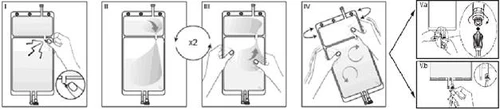
- Immediately before use, remove the bag from the outer wrapper and any other packaging material. Break the frangible spike on the partition separating the chambers. Leave the broken spike remnants inside the bag (see Fig. I).
- Ensure that all liquid from the small chamber A completely flows into the large chamber B (see Fig. II).
- Twice, rinse the small chamber A by moving the mixed solution into the small chamber A and returning it to the large chamber B (see Fig. III).
- After completely emptying chamber A, thoroughly mix the solution in chamber B to ensure complete mixing. The solution is now ready for use and may be hung on the equipment (see Fig. IV).
- The dialysate or replacement solution line can be connected to either of the two available inlets.
5a. If using a Luer port, unscrew and pull off the cap, then connect by unscrewing and pulling the corresponding (male) Luer lock of the dialysate or replacement solution line to the corresponding (female) Luer connector on the bag. Ensure the connection is fully seated and tighten. The connector is now open. Check that fluid flows freely and without obstruction (see Fig. V.a).
When the dialysate or replacement solution line is disconnected from the Luer connector, the connector will close automatically, and the solution flow will stop. The Luer port is a needleless port and does not require the use of a needle.
5b. If using an injection port, first remove the broken cap. The injection port can be disinfected. Then insert the needle through the rubber membrane. Check that fluid flows freely and without obstruction (see Fig. V.b).
The solution should be used immediately after mixing. If delayed, the solution must be used within 24 hours of adding the electrolyte solution to the buffer solution, including the duration of therapy.
The mixed solution should be used only once.
The drug must not be used if the bag is damaged or if the solution is cloudy.
Any unused medicinal product or waste material should be disposed of in accordance with local requirements.
Children.
The medicinal product Prismsol 4 is administered to children according to the information provided in the section "Method of Administration and Dosage."
Overdose.
Provided the procedure is correctly performed and fluid balance, as well as electrolyte and acid-base balance, are carefully monitored, overdose of Prismsol 4 is unlikely.
However, overdose may lead to serious consequences such as congestive heart failure and disturbances in electrolyte or acid-base balance.
Hypervolemia or hypovolemia, if they occur, should be corrected immediately.
If disturbances in electrolyte and acid-base balance (e.g., metabolic alkalosis, hypophosphatemia, hypokalemia, etc.) are observed, administration should be stopped immediately. There is no specific antidote for overdose. The risk can be minimized by careful monitoring of electrolyte and acid-base balance and appropriate correction during treatment (see section "Special Precautions").
Adverse reactions.
The adverse effects listed below have been reported during post-marketing use. Adverse reactions are presented by MedDRA system organ classes and preferred terms; frequency is unknown (cannot be estimated from available data).
Metabolism and nutrition disorders – electrolyte imbalance (e.g. hypophosphatemia, hypokalemia), acid-base imbalance (e.g. metabolic alkalosis), fluid imbalance (e.g. fluid retention, dehydration), hyperglycemia.
Cardiac disorders – hypotension.
Gastrointestinal disorders – nausea, vomiting.
Musculoskeletal and connective tissue disorders – muscle cramps.
Reporting of suspected adverse reactions.
Reporting suspected adverse reactions after authorization of the medicinal product is important. This allows continued monitoring of the benefit-risk balance. Healthcare professionals are requested to report any suspected adverse reactions via the national reporting system.
Shelf life.
For dual-chamber bags made of polyvinyl chloride – 1 year.
After mixing, the solution is stable for 24 hours.
Storage conditions.
Store out of reach and sight of children, at a temperature between 4 °C and 30 °C.
Incompatibilities.
Due to lack of scientific data on compatibility, this medicinal product should not be mixed with other medicinal products. After visually inspecting the solution for possible changes in color and/or the presence of precipitate, insoluble complexes, or crystals, the physician decides, under his or her own responsibility, on the compatibility or incompatibility of additional medications with Prismsol 4 solution. It is necessary to consult the package leaflet of any medicinal products intended for addition.
Before adding any drug, ensure that it is water-soluble and stable at the pH value characteristic of Prismsol 4 (the pH of the prepared solution ranges from 7.0 to 8.5). Compatible drugs may then be added to the prepared solution. The solution should be used immediately after preparation.
Packaging.
Inner packaging.
Dual-chamber bag made of polyvinyl chloride with a total volume of 5000 ml (small chamber 250 ml and large chamber 4750 ml, separated by a frangible stem, with a Luer connector valve).
Outer packaging.
Transparent multilayer film. Two bags per cardboard box.
Prescription status.
Prescription only.
Manufacturer.
B. BRAUN MEDICAL S.P.A.
Manufacturer's address and place of business.
VIA STELVIO, 94 - 23035 SONDRIO (SO), ITALY.
INSTRUCTIONS FOR USE
MEDICINAL PRODUCT
PRISMSOL 4
Composition:
Before mixing:
Electrolyte solution (small compartment A):
Active substances: calcium chloride dihydrate, magnesium chloride hexahydrate, anhydrous glucose, (S)-lactic acid;
1000 ml of electrolyte solution contain: calcium chloride dihydrate – 5.145 g, magnesium chloride hexahydrate – 2.033 g, anhydrous glucose – 22.0 g, (S)-lactic acid – 5.4 g;
Excipient: water for injections.
Buffer solution (large compartment B):
Active substances: sodium chloride, potassium chloride, sodium bicarbonate;
1000 ml of buffer solution contain: sodium chloride – 6.45 g, potassium chloride – 0.314 g, sodium bicarbonate – 3.09 g;
Excipients: carbon dioxide, water for injections.
After mixing:
The solution from compartment A (250 ml) and the solution from compartment B (4750 ml) are mixed to obtain a mixed solution (5000 ml).
Ion composition after mixing: 1000 ml of the mixed solution contain
| mmol/L |
mEq/L |
||
| calcium |
Ca2+ |
1.75 |
3.50 |
| magnesium |
Mg2+ |
0.5 |
1.0 |
| sodium |
Na+ |
140 |
140 |
| chlorides |
Cl- |
113.5 |
113.5 |
| lactates |
3 |
3 |
|
| hydrogen carbonates |
HCO3- |
32 |
32 |
| potassium |
K+ |
4 |
4 |
| glucose |
6.1 |
Theoretical osmolarity: 301 mOsm/L;
pH of the mixed solution: 7.0 – 8.5.
Pharmaceutical form. Solution for hemofiltration and hemodialysis.
Basic physicochemical properties: the solution should be clear and not more intensely colored than Y7.
Pharmacotherapeutic group.
Plasma substitutes and perfusion solutions. Agents for hemodialysis and hemofiltration.
ATC code B05ZB.
Pharmacological properties.
Pharmacodynamics.
Prismasol 4, solution for hemofiltration and hemodialysis, is pharmacologically inactive. It contains sodium, calcium, magnesium, potassium, chloride ions, and glucose at concentrations corresponding to physiological plasma concentrations. This solution is used to replace water and electrolytes removed during hemofiltration and hemodiafiltration. It also serves as a replacement fluid during prolonged hemodiafiltration or prolonged hemodialysis.
Bicarbonates are used as a buffering agent to correct acidosis.
Pharmacokinetics.
Not applicable.
The active ingredients of the drug are pharmacologically inactive and present in concentrations similar to the physiological composition of blood plasma.
Clinical characteristics.
Indications.
- Treatment of renal failure – as a replacement solution in hemofiltration and hemodiafiltration, as well as a dialysis solution in prolonged hemodialysis and prolonged hemodiafiltration;
- drug intoxications with substances that are filterable and dialyzable;
- normokalemia.
Contraindications.
Hypersensitivity to the active substances or to any of the excipients. Contraindications for the use of the solution:
- hyperkalemia;
- metabolic alkalosis.
Contraindications for performing hemofiltration/hemodialysis:
- severe renal failure associated with increased hypercatabolism, when uremic symptoms cannot be corrected by hemofiltration;
- low arterial pressure;
- systemic coagulation disorders (high risk of hemorrhage).
Interaction with other medicinal products and other types of interactions.
During therapy, the blood concentration of substances that are filtered and dialyzed may decrease. If necessary, appropriate replacement therapy should be administered to compensate for losses and achieve the desired blood concentration of drugs removed during treatment. Interactions with other medicinal products can be avoided by precise dosing of hemofiltration and hemodialysis solutions and careful monitoring. However, the following interactions are possible:
- in hypokalemia, the risk of digoxin-induced cardiac arrhythmia is increased;
- vitamin D and its analogs, as well as calcium-containing medicinal products (e.g., calcium chloride or calcium gluconate used to maintain calcium homeostasis in patients undergoing continuous renal replacement therapy (CRRT) who receive citrate anticoagulants, and calcium carbonate used as a phosphate binder), may increase the risk of hypercalcemia;
- additional administration of sodium bicarbonate (or another buffer source) contained in fluids for continuous renal replacement therapy or other fluids administered during therapy may increase the risk of metabolic alkalosis;
- when citrate is used as an anticoagulant, it contributes to the total buffer load and may reduce plasma calcium levels.
Special precautions for use.
This solution should be administered either by a physician experienced in the treatment of renal failure using hemofiltration, hemodiafiltration, and prolonged hemodialysis methods, or under his/her direct supervision.
Warning
To obtain a ready-to-use solution suitable for hemofiltration (hemodiafiltration, prolonged hemodialysis), the electrolyte solution must be mixed with a buffer solution immediately before use.
The drug should only be used when appropriate equipment for extracorporeal procedures is available.
This solution contains potassium. The solution should not be administered to patients with hyperkalemia. Serum potassium concentration should be monitored before and during hemofiltration and/or hemodialysis.
If hyperkalemia develops after initiation of treatment, additional sources of potassium affecting its blood concentration should be evaluated. When the solution is used as a replacement fluid, the infusion rate should be reduced and it should be ensured that the desired potassium concentration is achieved. If hyperkalemia persists, infusion should be stopped immediately.
If hyperkalemia develops when the solution is used as a dialysate, a potassium-free dialysate may be required to increase the rate of potassium removal.
Despite the absence of severe hypersensitivity reactions to corn during the use of Prismasol 4, solutions containing glucose derived from hydrolyzed cornstarch should not be administered to patients with a history of allergy to corn and corn products.
Administration should be stopped immediately if signs of hypersensitivity reactions occur. Appropriate therapeutic measures should be taken as clinically indicated.
Since the solution contains glucose and lactate, hyperglycemia may develop, especially in patients with diabetes mellitus. Blood glucose levels should be monitored regularly. If hyperglycemia develops, administration of a glucose-free replacement solution/dialysate may be required. Other corrective measures may be necessary to maintain desired glycemic control.
Prismasol 4 contains bicarbonate and lactate (a precursor of bicarbonate), which may affect the acid-base balance in the patient. If metabolic alkalosis develops or worsens during therapy with this solution, the infusion rate may need to be reduced or infusion discontinued.
Administration of a contaminated solution for hemofiltration and hemodialysis may lead to sepsis, shock, and death.
Special precautions for use
Prismasol 4 may be warmed to 37°C to increase patient comfort during administration. Warming of the solution prior to use should be performed before reconstitution using dry heat only. Solutions should not be heated in water or in a microwave oven. The solution should be visually inspected for the presence of particulate matter and discoloration prior to administration, whenever solution and container permit such examination. Do not use if the solution is cloudy or if the port between the two compartments of the bag is damaged.
Electrolyte and acid-base balance should be carefully monitored before and during treatment throughout the entire procedure.
Up to 1.2 mmol/L of phosphate may be added to the solution. When adding phosphate to the bag, sodium phosphate should be used. Inorganic phosphate should be added in cases of hypophosphatemia.
The patient's hemodynamic status and fluid balance should be monitored throughout the procedure and adjusted as necessary.
Children
There are no specific warnings or precautions when using this product in children.
Use during pregnancy or breastfeeding.
Pregnancy and breastfeeding
There are insufficient data on the use of Prismasol 4 in pregnant or breastfeeding women. Before prescribing Prismasol 4 to pregnant women or mothers who are breastfeeding, the physician must carefully assess the benefit-risk ratio.
Fertility
Data on the effect on fertility are lacking.
Ability to affect reaction speed when driving or operating machinery.
No effect.
Method of Administration and Dosage.
Dosing
The infusion rate of PrismaSOL 4 depends on the patient's serum electrolyte concentrations, acid-base balance, fluid balance, and overall clinical condition. The volume of replacement solution and/or dialysate administered also depends on the desired intensity (dose) of treatment. The solution must be prescribed and administered (dose, infusion rate, and total volume) only by a physician experienced in the management of critical conditions (resuscitation) and in performing prolonged renal replacement therapy (CRRT).
The flow rate when using the drug as a replacement solution in hemofiltration and hemodiafiltration in adults is 500–3000 mL/h.
The flow rate for dialysate solution (dialysate) in prolonged hemodialysis and prolonged hemodiafiltration in adults is 500–2500 mL/h.
Typically, the flow rate for adult patients is approximately 2000–2500 mL/h, corresponding to a daily volume of 48–60 L.
Special Populations
Elderly Patients
Clinical study results and clinical experience indicate that use in elderly patients is not associated with differences in safety and efficacy.
Children
The flow rate when using the drug as a replacement solution in hemofiltration and hemodiafiltration, as well as a dialysate solution in prolonged hemodialysis in children (from newborns to adolescents up to 18 years of age), is 1000 to 2000 mL/h/1.73 m².
A flow rate of up to 4000 mL/h/1.73 m² may be required, especially when used in younger children (body weight ≤ 10 kg). The absolute flow rate (mL/h) in the pediatric population should generally not exceed the maximum flow rate for adults.
Method of Administration
Administer intravenously and for hemodialysis.
When used as a replacement solution, PrismaSOL 4 is administered into the bloodstream before the hemofilter (predilution) or after the hemofilter or hemodiafilter (postdilution).
PrismaSOL 4 is packaged in a dual-chamber bag: a small chamber A containing the electrolyte solution and a large chamber B containing the buffer solution. Immediately before use, the electrolyte solution (chamber A) is mixed with the buffer solution (chamber B) by breaking the frangible spike between the chambers.
Strict aseptic conditions must be maintained. The bag should be removed from the outer wrapper only when fully ready for the procedure.
Use only if the outer wrapper and all seals are intact, the frangible spike is not broken, and the solution is clear. To detect leakage, firmly squeeze the bag. If leakage is detected, immediately discard the solution, as sterility can no longer be ensured.
Chamber B has an injection port allowing the addition of necessary medications after mixing the solutions. After checking the solution for possible color change and/or presence of precipitate, insoluble components, or crystals, the physician, under his or her own responsibility, determines the compatibility or incompatibility of additional medications with PrismaSOL 4 solution. Always refer to the instructions for use of the medications intended for addition.
Before adding any medication, ensure that it is water-soluble and stable at the pH of PrismaSOL 4 (the pH of the prepared solution ranges from 7.0 to 8.5). Added medications may be incompatible.
Medications are added to the solution as follows: remove any liquid from the injection port, hold the bag upside down, inject the medication through the injection port, and mix thoroughly with the solution. Administration and mixing with other medicinal products must always be performed before connecting the solution bag to the extracorporeal circuit. The solution must be used immediately.
If the two chambers of the bag are separated by a frangible spike and the luer connector contains a frangible spike, follow these instructions:
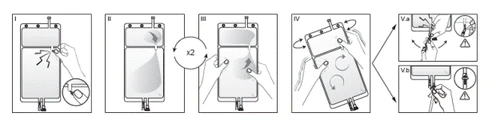
- Remove the bag from the outer wrapper and any other packaging material and remove the insert. Break the frangible spike on the partition separating the chambers. Leave the spike remnants inside the bag (see Fig. I).
- Ensure that all liquid from the small chamber A has completely flowed into the large chamber B (see Fig. II).
- Twice rinse chamber A by moving the mixed solution into chamber A and returning it to chamber B (see Fig. III).
- After completely emptying chamber A, thoroughly mix the solution in chamber B to ensure complete mixing. The solution is now ready for use and can be hung on the equipment (see Fig. IV).
- The dialysate or replacement solution line can be connected to either of the two available inlets.
5a. If using the luer port, remove the cap and connect the corresponding (male) luer lock of the dialysate line or replacement solution line to the corresponding (female) luer connector on the bag, then tighten. Using the thumb and other fingers, break the blue brittle pin near the base and move it backward and outward. Do not use auxiliary tools (instruments, etc.). Check that the pin is completely detached and that the liquid flows freely and without obstruction. The pin will remain in the luer port during the treatment procedure (see Fig. V.a).
5b. If using the injection port, first remove the broken cap. The injection port can be disinfected. Then insert the tip through the rubber membrane. Check that the liquid flows freely and without obstruction (see Fig. V.b).
The solution should be used immediately after mixing. In case of delay, this solution must be used within 24 hours from the moment the electrolyte solution is added to the buffer solution, including the duration of therapy.
The mixed solution is for single use only.
The drug must not be used if the bag integrity is compromised or if the solution is cloudy.
Any unused medicinal product or waste material should be disposed of in accordance with local requirements.
Children.
The medicinal product PrismaSOL 4 is administered to children according to the information provided in the section "Method of Administration and Dosage."
Overdose.
Under conditions of proper procedure performance and careful monitoring of fluid balance, as well as electrolyte and acid-base balance, overdose of PrismaSOL 4 is unlikely.
However, overdose may lead to serious consequences such as congestive heart failure and disturbances in electrolyte or acid-base balance.
Hypervolemia or hypovolemia, if they occur, should be corrected immediately.
If disturbances in electrolyte and acid-base balance are observed (e.g., metabolic alkalosis, hypophosphatemia, hypokalemia, etc.), administration should be stopped immediately. There is no specific antidote for overdose. The risk can be minimized by careful monitoring of electrolyte and acid-base balance and appropriate correction during treatment (see section "Special Warnings and Precautions for Use").
Adverse reactions.
The following adverse effects have been reported during post-marketing use. Adverse reactions are listed by MedDRA system organ class and preferred terms; frequency is unknown (cannot be estimated from available data).
Metabolism and nutrition disorders – electrolyte imbalance (e.g., hypophosphatemia, hypokalemia), acid-base imbalance (e.g., metabolic alkalosis), fluid imbalance (e.g., fluid retention, dehydration), hyperglycemia.
Cardiovascular system disorders – hypotension.
Gastrointestinal disorders – nausea, vomiting.
Musculoskeletal and connective tissue disorders – muscle cramps.
Reporting of suspected adverse reactions.
Reporting suspected adverse reactions after medicine authorization is important. It allows continued monitoring of the benefit-risk balance of the medicine. Healthcare professionals are encouraged to report suspected adverse reactions through the national reporting system.
Shelf life.
For dual-chamber bags made of polyvinyl chloride – 1 year.
After mixing, the solution is stable for 24 hours.
Storage conditions.
Store out of reach of children, at a temperature between 4 °C and 30 °C.
Incompatibilities.
Due to the lack of scientific data on compatibility, this medicinal product must not be mixed with other medicinal products. After checking the solution for possible changes in color and/or the presence of precipitate, insoluble complexes, or crystals, the physician decides, under his or her own responsibility, on the compatibility or incompatibility of additional medications with PrismaSol 4 solution. Reference must be made to the package leaflets of the medicinal products intended for addition.
Before adding any medicinal product, ensure that it is water-soluble and stable at the pH value characteristic of PrismaSol 4 (the pH of the prepared solution ranges from 7.0 to 8.5). After such verification, a compatible medicinal product may be added to the prepared solution. The solution must be used immediately.
Packaging.
Inner packaging.
Dual-chamber bag made of polyvinyl chloride with a total volume of 5000 ml (small chamber 250 ml and large chamber 4750 ml, separated by a frangible stem; a frangible stem is also present in the Luer connector).
Outer packaging.
Transparent multilayer film. Two bags per cardboard box.
Prescription status.
Prescription only.
Manufacturer.
B. BRAUN MEDICAL S.P.A.
Manufacturer's address and location of operations.
VIA STELVIO, 94 - 23035 SONDRIO (SO), ITALY.
INSTRUCTION
for medical use of the medicinal product
PRISMASOL 4
Composition:
Before mixing:
Electrolyte solution (small compartment A):
Active substances: calcium chloride dihydrate, magnesium chloride hexahydrate, anhydrous glucose, (S)-lactic acid;
1000 ml of electrolyte solution contain: calcium chloride dihydrate – 5.145 g, magnesium chloride hexahydrate – 2.033 g, anhydrous glucose – 22.0 g, (S)-lactic acid – 5.4 g;
Excipient: water for injections.
Buffer solution (large compartment B):
Active substances: sodium chloride, potassium chloride, sodium bicarbonate;
1000 ml of buffer solution contain: sodium chloride – 6.45 g, potassium chloride – 0.314 g, sodium bicarbonate – 3.09 g;
Excipients: carbon dioxide, water for injections.
After mixing:
The solution from compartment A (250 ml) and the solution from compartment B (4750 ml) are mixed to obtain a mixed solution (5000 ml).
Ion composition after mixing: 1000 ml of the mixed solution contain
| mmol/L |
mEq/L |
||
| calcium |
Ca2+ |
1.75 |
3.50 |
| magnesium |
Mg2+ |
0.5 |
1.0 |
| sodium |
Na+ |
140 |
140 |
| chlorides |
Cl- |
113.5 |
113.5 |
| lactates |
3 |
3 |
|
| hydrocarbonates |
HCO3- |
32 |
32 |
| potassium |
K+ |
4 |
4 |
| glucose |
6.1 |
Theoretical osmolarity: 301 mOsm/L;
pH of the mixed solution: 7.0 – 8.5.
Pharmaceutical form. Solution for hemofiltration and hemodialysis.
Main physicochemical properties: the solution should be clear and not more intense than Y7.
Pharmacotherapeutic group.
Plasma substitutes and perfusion solutions. Agents for hemodialysis and hemofiltration.
ATC code B05ZB.
Pharmacological properties.
Pharmacodynamics.
Prismasol 4, solution for hemofiltration and hemodialysis, is pharmacologically inactive. It contains sodium, calcium, magnesium, potassium, chloride ions, and glucose at concentrations corresponding to physiological plasma concentrations. This solution is used to replace water and electrolytes lost during hemofiltration and hemodiafiltration. It also serves as a replacement fluid during prolonged hemodiafiltration or prolonged hemodialysis.
Hydrogen carbonates are used as a buffering alkalizing agent.
Pharmacokinetics.
Not applicable.
The active ingredients of the drug are pharmacologically inactive and are present in concentrations similar to the physiological composition of blood plasma.
Clinical characteristics.
Indications.
- Treatment of renal failure – as a replacement solution in hemofiltration and hemodiafiltration, as well as a dialysis solution in prolonged hemodialysis and prolonged hemodiafiltration;
- drug intoxication with substances that are filtered and dialyzed;
- normokalemia.
Contraindications.
Hypersensitivity to the active substances or to any of the excipients. Contraindications for the use of the solution:
- hyperkalemia;
- metabolic alkalosis.
Contraindications for performing hemofiltration/hemodialysis:
- severe renal failure associated with increased hypercatabolism, when uremic symptoms cannot be corrected by hemofiltration;
- low blood pressure;
- systemic coagulation disorders (high risk of hemorrhage).
Interaction with other medicinal products and other types of interactions.
During therapy, the blood concentration of substances that are filtered and dialyzed may decrease. If necessary, appropriate replacement therapy should be administered to compensate for losses and achieve the desired blood concentration of drugs removed during treatment. Interactions with other medicinal products can be avoided by precise dosing of hemofiltration and hemodialysis solutions and careful monitoring. However, the following interactions are possible:
- in hypokalemia, the risk of digoxin-induced cardiac arrhythmia is increased;
- vitamin D and its analogs, as well as calcium-containing medicinal products (e.g., calcium chloride or calcium gluconate used to maintain calcium homeostasis in patients undergoing continuous renal replacement therapy (CRRT) who receive citrate anticoagulants, and calcium carbonate used as a phosphate binder), may increase the risk of hypercalcemia;
- additional administration of sodium bicarbonate (or another buffer source) contained in fluids for continuous renal replacement therapy or other fluids administered during treatment may increase the risk of metabolic alkalosis;
- when citrate is used as an anticoagulant, it contributes to the total buffer load and may reduce plasma calcium levels.
Special precautions for use.
This solution should be administered either by a physician experienced in the treatment of renal failure using hemofiltration, hemodiafiltration, and prolonged hemodialysis techniques, or under direct supervision of such a physician.
Warning
To obtain a ready-to-use solution suitable for hemofiltration (hemodiafiltration, prolonged hemodialysis), the electrolyte solution must be mixed with the buffer solution immediately before use.
The medicinal product should be used only when appropriate equipment for extracorporeal procedures is available.
This solution contains potassium. The solution should not be administered to patients with hyperkalemia. Serum potassium concentration should be monitored before and during hemofiltration and/or hemodialysis.
If hyperkalemia develops after initiation of treatment, additional sources of potassium affecting its blood concentration should be evaluated. When the solution is used as a replacement fluid, the infusion rate should be reduced and it should be ensured that the desired potassium concentration is achieved. If hyperkalemia persists, infusion should be stopped immediately.
If hyperkalemia develops when the solution is used as a dialysate, a potassium-free dialysate may be required to increase the rate of potassium removal.
Despite the absence of cases of severe hypersensitivity reactions to corn with the use of Prismasol 4, solutions containing glucose derived from hydrolyzed corn starch should not be administered to patients with a history of allergy to corn or corn products.
Administration should be stopped immediately if signs of hypersensitivity reactions occur. Appropriate therapeutic measures should be initiated as clinically indicated.
Since the solution contains glucose and lactate, hyperglycemia may develop, especially in patients with diabetes mellitus. Blood glucose levels should be monitored regularly. If hyperglycemia develops, administration of a glucose-free replacement solution/dialysate may be required. Other corrective measures may be necessary to maintain desired glycemic control.
Prismasol 4 contains bicarbonate and lactate (a precursor of bicarbonate), which may affect the patient's acid-base balance. If metabolic alkalosis develops or worsens during therapy with this solution, the infusion rate may need to be reduced or infusion discontinued.
Administration of a contaminated solution for hemofiltration and hemodialysis may lead to sepsis, shock, and death.
Special precautions for use
Prismasol 4 may be warmed to 37°C to increase patient comfort during administration. Warming of the solution prior to use should be performed prior to reconstitution using dry heat only. Solutions should not be heated in water or in a microwave oven. The solution should be visually inspected for the presence of particulate matter and discoloration before administration, whenever solution and container permit. Do not use if the solution is cloudy or if the seal between the two compartments of the bag is damaged.
Electrolyte and acid-base balance should be carefully monitored before and during treatment throughout the entire procedure.
Up to 1.2 mmol/L of phosphate may be added to the solution. Sodium phosphate is used when adding phosphate to the bag. Inorganic phosphate should be added in cases of hypophosphatemia.
The patient's hemodynamic status and fluid balance should be monitored throughout the procedure and adjusted as necessary.
Children
There are no specific warnings or precautions when using this product in children.
Use during pregnancy or breastfeeding.
Pregnancy and breastfeeding
There are insufficient data on the use of Prismasol 4 in pregnant or breastfeeding women. Before prescribing Prismasol 4 to pregnant women or mothers who are breastfeeding, the physician must carefully assess the benefit-risk ratio.
Fertility
Data on the effect on fertility are lacking.
Ability to affect reaction speed when driving or operating machinery.
No effect.
Method of Administration and Dosage.
Dosing
The infusion rate of PrismaSol 4 depends on the patient's serum electrolyte concentrations, acid-base balance, fluid balance, and overall clinical condition. The volume of replacement solution and/or dialysate administered also depends on the desired treatment intensity (dose). The solution must be prescribed and administered (dose, infusion rate, and total volume) only by a physician experienced in managing critical conditions (resuscitation) and in performing prolonged renal replacement therapy (CRRT).
The flow rate when using the solution as a replacement fluid during hemofiltration and hemodiafiltration in adults is 500–3000 mL/h.
The flow rate for dialysate during prolonged hemodialysis and prolonged hemodiafiltration in adults is 500–2500 mL/h.
Typically, the flow rate for adult patients is approximately 2000–2500 mL/h, corresponding to a daily volume of 48–60 L.
Special Populations
Elderly Patients
Clinical study results and clinical experience indicate that use in elderly patients is not associated with differences in safety and efficacy.
Pediatric Patients
The flow rate when using the solution as a replacement fluid during hemofiltration and hemodiafiltration, as well as a dialysate during prolonged hemodialysis in pediatric patients (from neonates to adolescents up to 18 years of age), is 1000–2000 mL/h/1.73 m².
A flow rate of up to 4000 mL/h/1.73 m² may be required, especially when used in younger children (body weight ≤ 10 kg). However, the absolute flow rate (mL/h) in the pediatric population should generally not exceed the maximum adult rate.
Method of Administration
Administer intravenously and for hemodialysis.
When used as a replacement fluid, PrismaSol 4 is administered into the bloodstream either before the hemofilter (predilution) or after the hemofilter or hemodiafilter (postdilution).
PrismaSol 4 is packaged in a dual-compartment bag: a small compartment A containing the electrolyte solution and a large compartment B containing the buffer solution. Immediately before use, the electrolyte solution (compartment A) is mixed with the buffer solution (compartment B) by breaking the seal between the compartments.
Strict aseptic techniques must be followed. The bag should be removed from the outer wrapper only immediately before use.
Use only if the outer wrapper and all seals are intact, the break seal is unbroken, and the solution is clear. To check for leakage, firmly squeeze the bag. If leakage is detected, discard the solution immediately, as sterility can no longer be assured.
Compartment B has an injection port allowing addition of necessary medications after the solutions have been mixed. After checking the solution for possible color change and/or presence of precipitate, insoluble components, or crystals, the physician, under personal responsibility, determines the compatibility or incompatibility of additional medications with PrismaSol 4. Compatibility information should be verified in the instructions for the medications intended for addition.
Before adding any medication, ensure that it is water-soluble and stable at the pH of PrismaSol 4 (the pH of the prepared solution ranges from 7.0 to 8.5). Added medications may be incompatible.
Medications are added to the solution as follows: remove any liquid from the injection port, hold the bag upside down, inject the medication through the injection port, and thoroughly mix with the solution. Administration and mixing with other medicinal products should always be performed before connecting the solution bag to the extracorporeal circuit. The solution should be used immediately.
If the two compartments of the bag are separated by a break seal and the Luer connector contains a valve, follow these instructions:
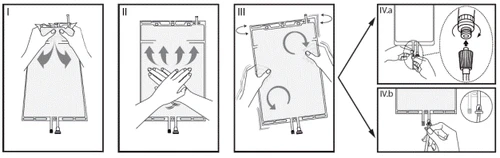
- Immediately before use, remove the bag from the outer wrapper and shake the solutions in both compartments. Squeeze the small compartment with both hands until an opening forms in the break seal between the two compartments (see Fig. I).
- Press both hands on the large compartment until the break seal between the two compartments opens completely (see Fig. II).
- Carefully complete mixing by gently agitating the bag contents. The solution is now ready for use and can be hung on the equipment (see Fig. III).
- The dialysate or replacement fluid line can be connected to either of the two available inlets.
4a. If using the Luer port, unscrew and pull off the cap, then unscrew and pull the corresponding (male) Luer lock of the dialysate or replacement fluid line and connect it to the corresponding (female) Luer connector on the bag. Ensure the connection is fully seated and tighten. The connector is now open. Check that fluid flows freely and without obstruction (see Fig. IV.a).
When the dialysate or replacement fluid line is disconnected from the Luer connector, the connector will close and the solution flow will stop. The Luer port is a self-sealing port and does not require a needle.
4b. If using the injection port, first remove the breakaway cap. The injection port can be disinfected. Then insert the tip through the rubber membrane. Check that fluid flows freely and without obstruction (see Fig. IV.b).
The solution should be used immediately after mixing. If there is a delay, the solution must be used within 24 hours of mixing the electrolyte solution with the buffer solution, including the duration of therapy.
The solution after mixing should be used only once.
The product must not be used if the bag integrity is compromised or if the solution is cloudy.
Any unused medicinal product or waste material should be disposed of according to local requirements.
Pediatric Patients.
The medicinal product PrismaSol 4 is administered to pediatric patients according to the information provided in the section "Method of Administration and Dosage."
Overdose.
Under conditions of proper procedure performance and careful monitoring of fluid, electrolyte, and acid-base balance, overdose of PrismaSol 4 is unlikely.
However, overdose may lead to serious consequences such as congestive heart failure and disturbances in electrolyte or acid-base balance.
Hypervolemia or hypovolemia, if they occur, should be corrected immediately.
If disturbances in electrolyte and acid-base balance (e.g., metabolic alkalosis, hypophosphatemia, hypokalemia, etc.) are observed, administration should be stopped immediately. There is no specific antidote for overdose. The risk can be minimized by careful monitoring of electrolyte and acid-base balance and appropriate corrective measures during treatment (see section "Special Precautions").
Adverse Reactions
The following adverse effects have been reported during post-marketing use. The adverse reactions are presented by MedDRA system organ classes and preferred terms; frequency is unknown (cannot be estimated from available data).
Metabolism and nutrition disorders – electrolyte imbalance (e.g. hypophosphatemia, hypokalemia), acid-base imbalance (e.g. metabolic alkalosis), fluid imbalance (e.g. fluid retention, dehydration), hyperglycemia.
Cardiac disorders – hypotension.
Gastrointestinal disorders – nausea, vomiting.
Musculoskeletal and connective tissue disorders – muscle cramps.
Reporting of suspected adverse reactions
Reporting suspected adverse reactions after authorization of the medicinal product is important. It allows continued monitoring of the benefit-risk balance. Healthcare professionals are encouraged to report suspected adverse reactions through the national reporting system.
Shelf life
For polyolefin dual-chamber bags – 1.5 years.
After mixing, the solution is stable for 24 hours.
Storage conditions
Keep out of the reach and sight of children. Store between 4 °C and 30 °C.
Incompatibilities
Due to lack of scientific data on compatibility, this medicinal product should not be mixed with other medicinal products. After visually inspecting the solution for possible changes in color and/or presence of precipitate, insoluble complexes, or crystals, the physician may, at his or her own discretion, determine compatibility or incompatibility of additional medications with PrismaSol 4 solution. Reference should be made to the package leaflets of the medications intended for addition.
Before adding any medicinal product, it must be ensured that it is water-soluble and stable at the pH value characteristic of PrismaSol 4 (the pH of the prepared solution ranges from 7.0 to 8.5). After such verification, a compatible medicinal product may be added to the prepared solution. The solution should be used immediately after preparation.
Packaging
Inner packaging
Dual-chamber polyolefin bag with a capacity of 5000 ml (small compartment 250 ml and large compartment 4750 ml, separated by a sealing partition, and featuring a Luer connector with a valve).
Outer packaging
Transparent multilayer film. Two bags per cardboard box.
Prescription status
Prescription only.
Manufacturer
B. BRAUN MEDEX S.P.A.
Address of the manufacturer and location of its operations
VIA STELVIO, 94 - 23035 SONDRIO (SO), ITALY