Procto-gливенол
Ukraine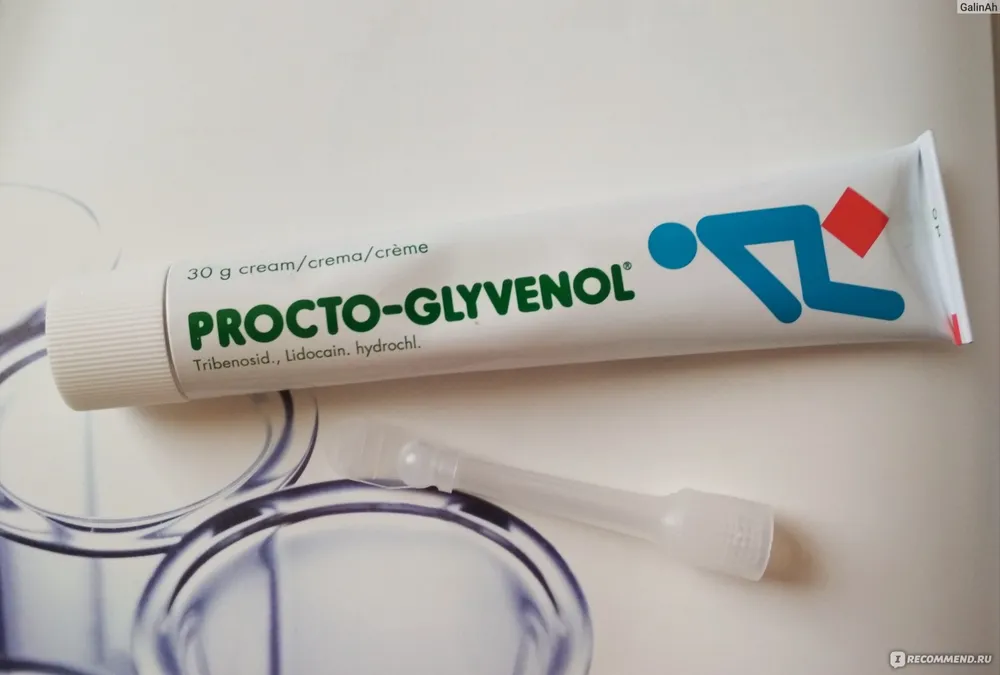
Table of Contents
- INSTRUCTIONS FOR MEDICAL USE OF THE MEDICINAL PRODUCT Procto-Glyvenol® (Procto-Glyvenol)
- Composition:
- Pharmacological properties.
- Clinical characteristics.
- Special precautions for use
- Method of Administration and Dosage
- Side effects.
- Composition:
- Pharmacological Properties.
- Clinical characteristics.
- Special precautions for use
- Method of Administration and Dosage
- Side effects
INSTRUCTIONS FOR MEDICAL USE OF THE MEDICINAL PRODUCT Procto-Glyvenol® (Procto-Glyvenol)
Composition:
Active substances: tribenoside, lidocaine hydrochloride;
100 g of cream contains 5 g of tribenoside and 2 g of lidocaine hydrochloride;
Excipients: polyethylene glycol cetylstearyl ether, cetyl alcohol, isopropyl palmitate, mineral oil, methylparahydroxybenzoate (E 218), propylparahydroxybenzoate (E 216), sorbitol solution (E 420), stearic acid, sorbitan stearate, purified water.
Pharmaceutical form. Rectal cream.
Main physicochemical properties: homogeneous white cream with a weak characteristic odor.
Pharmacotherapeutic group. Drugs for the treatment of haemorrhoids and anal fissures for topical use, combinations. ATC code C05AX03.
Pharmacological properties.
Pharmacodynamics.
Tribenoside belongs to agents for local treatment of hemorrhoids. Tribenoside reduces capillary permeability and increases vascular tone, and has anti-inflammatory properties. The antagonistic action of the drug is directed against certain endogenous substances that act as mediators in the development of inflammation and pain.
Lidocaine is a local anesthetic that relieves itching, burning, and pain caused by hemorrhoids.
Pharmacokinetics.
Absorption. Systemic bioavailability of tribenoside after rectal administration is only 30% of that which would be achieved with oral or intravenous administration of the substance. Approximately 2–20% of tribenoside contained in the rectal cream is absorbed through the skin. Maximum plasma concentration of tribenoside and its metabolites is reached 2 hours after rectal administration of 400 mg tribenoside and amounts to 1 μg/mL.
Lidocaine is rapidly absorbed from the mucous membrane, but poorly absorbed from intact skin. Bioavailability of lidocaine after rectal administration is approximately 50%. Maximum plasma concentration of lidocaine is reached 112 minutes after rectal administration of 300 mg lidocaine and amounts to 0.70 μg/mL.
Distribution. Lidocaine is significantly bound to alpha1-acid glycoprotein.
Metabolism. Tribenoside is actively metabolized in the body. Lidocaine is rapidly metabolized in the liver.
Excretion. Between 20% and 27% of the rectally administered dose of tribenoside is excreted in urine as metabolites.
Metabolites of lidocaine and less than 10% of unchanged lidocaine are excreted in urine.
Clinical characteristics.
Indications.
Local treatment of external and internal hemorrhoids.
Contraindications.
Hypersensitivity to any component of the medicinal product, including amide-type local anesthetics.
Interaction with other medicinal products and other forms of interaction.
Patients receiving Class 1 antiarrhythmic agents (e.g., tocainide, mexiletine) or other local anesthetics should use the medicinal product with caution due to the risk of cumulative systemic effects arising from the presence of lidocaine. Monoamine oxidase inhibitors enhance the local analgesic effect of lidocaine.
Special precautions for use
The medicinal product should be used with caution in patients with severe heart failure, renal impairment, and hepatic impairment.
Patients are advised to consult a physician if their condition does not improve within one week of treatment, or if any new symptoms not previously observed appear, in order to rule out other possible causes of these disorders.
In addition, when treating hemorrhoids with Procto-Gливенол (Procto-Gливенол), patients should follow recommendations regarding hygiene of the anal area, an active lifestyle, and a healthy diet to ensure soft bowel movements.
Procto-Gливенол rectal cream contains cetyl alcohol, which may cause local skin reactions (e.g., contact dermatitis), and methyl parahydroxybenzoate and propyl parahydroxybenzoate, which may induce allergic reactions (possibly delayed).
The medicinal product’s packaging includes an applicator made of latex for rectal administration of the cream. Latex may cause serious allergic reactions.
Contact of the medicinal product with the eyes should be avoided.
The cream must not be swallowed.
Use during pregnancy or breastfeeding
Pregnancy and breastfeeding
Controlled studies on the potential effects of tribenoside and lidocaine in pregnant or breastfeeding women have not been conducted. As a precaution, Procto-Gливенол rectal cream should not be used during the first trimester of pregnancy.
The medicinal product may be used from the fourth month of pregnancy and in breastfeeding women, following the recommended dosage, taking into account the potential risk for both mother and child.
Fertility
Studies indicate that lidocaine does not affect fertility.
There are no data on the potential effect of tribenoside on fertility.
Effect on ability to drive or operate machinery
The use of Procto-Gливенол does not affect, or has negligible influence on, the ability to drive or operate machinery.
Method of Administration and Dosage
Administer rectally to adults.
Apply rectal cream in the morning and evening until acute symptoms disappear. After that, the cream may be used once daily. The duration of treatment should be determined by a physician depending on the severity of the disease.
For internal hemorrhoidal nodes, apply the cream using the applicator provided separately in the package, which screws onto the tube. The applicator is covered with a protective cap that must be removed before each application.
30 g of cream (1 tube) is sufficient for approximately 20–30 applications.
Children
Do not use in children, as there are no data available on the use of this medicinal product in this age group.
Overdose
There are no reports of overdose with Procto-Gливенол. Overdose is not expected if the drug is used according to the recommended dosage regimen.
In animal studies, lidocaine overdose was associated with effects on the central nervous and cardiovascular systems.
In case of accidental oral ingestion, perform gastric lavage promptly and seek immediate medical attention. There is no specific antidote for lidocaine.
Side effects.
Rare side effects reported during treatment include local reactions such as burning, pain, rash, and itching, which may extend beyond the application site. In addition to these adverse effects, administration of Procto-Gливenol rectal cream may very rarely cause an anaphylactic reaction, including symptoms such as Quincke's edema and facial swelling.
List of side effects.
The side effects are listed below by system organ classes according to MedDRA. Frequency of occurrence: very common (≥ 1/10); common (≥ 1/100 to <1/10); uncommon (≥ 1/1000 to <1/100); rare (≥ 1/10000 to <1/1000); very rare (<1/10000); or not known (cannot be estimated from the available data). Within each frequency group, side effects are listed in order of decreasing severity.
| Immune system |
|
| Very rare |
Anaphylactic reactions |
| Cardiac |
|
| Very rare |
Cardiovascular disorders |
| Respiratory, thoracic and mediastinal |
|
| Very rare |
Bronchospasm |
| Skin and subcutaneous tissue |
|
| Rare |
Urticaria, contact dermatitis |
| Very rare |
Quincke's edema |
| General disorders and administration site reactions |
|
| Rare |
Sensation of discomfort, mild burning, itching, rash, pain at application site |
| Very rare |
Facial swelling, fever, hemorrhoidal hemorrhages |
Since lidocaine is rapidly absorbed from the mucous membrane, systemic effects are possible.
Shelf life.
3 years.
Storage conditions.
Keep out of reach of children.
Store at a temperature not exceeding 25 °C.
Packaging. 30 g of cream in a tube; 1 tube with an applicator in a cardboard box.
Pharmaceutical category. Over-the-counter (without prescription).
Manufacturer.
Recordati Industrie Chimiche e Farmaceutiche S.p.A.
Manufacturer's address and place of business.
Via M. Civitali 1, 20148, Milan, Italy.
INSTRUCTIONS
for medical use of medicinal product
Procto-Glyvenol
(Procto-Glyvenol®)
Composition:
Active substances: tribenoside, lidocaine hydrochloride;
100 g of cream contains 5 g of tribenoside and 2 g of lidocaine hydrochloride;
Excipients: polyethylene glycol cetyl stearyl ether, cetyl alcohol, isopropyl palmitate, mineral oil, methylparahydroxybenzoate (E 218), propylparahydroxybenzoate (E 216), sorbitol solution (E 420), stearic acid, sorbitan stearate, purified water.
Pharmaceutical form. Rectal cream.
Main physicochemical characteristics: homogeneous white cream with a faint characteristic odor.
Pharmacotherapeutic group. Drugs for the treatment of hemorrhoids and anal fissures for local use, combinations. ATC code C05AX03.
Pharmacological Properties.
Pharmacodynamics.
Tribenoside belongs to agents for local treatment of hemorrhoids. Tribenoside reduces capillary permeability and increases vascular tone, and has anti-inflammatory properties. The antagonistic action of the drug is directed against certain endogenous substances that act as mediators in the development of inflammation and pain.
Lidocaine is a local anesthetic that relieves itching, burning, and pain caused by hemorrhoids.
Pharmacokinetics.
Absorption. Systemic bioavailability of tribenoside after rectal administration is only 30% of that which would be achieved with oral or intravenous administration of the substance. Approximately 2–20% of the tribenoside contained in the rectal cream is absorbed through the skin. Maximum plasma concentration of tribenoside and its metabolites is reached 2 hours after rectal administration of 400 mg of tribenoside and amounts to 1 μg/mL.
Lidocaine is rapidly absorbed from the mucous membrane, but poorly absorbed from intact skin. Bioavailability of lidocaine after rectal administration is approximately 50%. Maximum plasma concentration of lidocaine is reached 112 minutes after rectal administration of 300 mg of lidocaine and amounts to 0.70 μg/mL.
Distribution. Lidocaine is significantly bound to alpha1-acid glycoprotein.
Metabolism. Tribenoside is actively metabolized in the body. Lidocaine is rapidly metabolized in the liver.
Excretion. Between 20% and 27% of the rectally administered dose of tribenoside is excreted in the urine as metabolites.
Metabolites of lidocaine and less than 10% of unchanged lidocaine are excreted in the urine.
Clinical characteristics.
Indications.
Local treatment of external and internal hemorrhoids.
Contraindications.
Hypersensitivity to any component of the medicinal product, including amide-type local anesthetics.
Interaction with other medicinal products and other forms of interaction.
Patients taking Class 1 antiarrhythmic agents (e.g., tocainide, mexiletine) or other local anesthetics should use the medicinal product with caution due to the risk of additive systemic effects arising from the presence of lidocaine. Monoamine oxidase inhibitors enhance the local analgesic effect of lidocaine.
Special precautions for use
The medicinal product should be used with caution in patients with severe heart failure, renal impairment, and hepatic impairment.
Patients are advised to consult a physician if their condition does not improve within one week of treatment or if any new symptoms develop that were not previously observed, in order to rule out other possible causes of these disorders.
Additionally, when treating hemorrhoids with Procto-Gливenol, it is recommended to follow hygiene recommendations for the anal area, maintain an active lifestyle, and adhere to a healthy diet to ensure soft bowel movements.
Procto-Gливenol rectal cream contains cetyl alcohol, which may cause local skin reactions (e.g., contact dermatitis), and methyl parahydroxybenzoate and propyl parahydroxybenzoate, which may cause allergic reactions (possibly delayed).
The medicinal product’s packaging includes an applicator made of latex for rectal administration of the cream. Latex may cause serious allergic reactions.
Contact of the medicinal product with the eyes should be avoided.
The cream must not be swallowed.
Use during pregnancy or breastfeeding
Pregnancy and breastfeeding
Controlled studies on the potential effects of tribenoside and lidocaine in pregnant or breastfeeding women have not been conducted. As a precaution, Procto-Gливenol rectal cream should not be used during the first trimester of pregnancy.
The medicinal product may be used from the fourth month of pregnancy and in breastfeeding women, following the recommended dosage, taking into account the potential risk for both mother and child.
Fertility
Studies indicate that lidocaine does not affect fertility.
There are no data available on the potential effect of tribenoside on fertility.
Ability to influence reaction speed when driving or operating machinery
The use of Procto-Gливenol does not affect or has a negligible effect on the ability to drive or operate machinery.
Method of Administration and Dosage
Administer rectally to adults.
Apply rectal cream in the morning and evening until acute symptoms disappear. After that, the cream may be used once daily. The duration of treatment should be determined by a physician depending on the severity of the disease.
For internal hemorrhoidal nodes, apply the cream using the applicator supplied separately in the package, which screws onto the tube. The applicator is covered with a protective cap that must be removed before each application of the cream.
30 g of cream (1 tube) is sufficient for approximately 20–30 applications.
Children
Do not use in children, as there are no data on the use of this medicinal product in this age group.
Overdose
There are no data on overdose with Procto-Gливенол. Overdose is not expected if the drug is used according to the recommended dosage regimen.
In animal studies, lidocaine overdose was associated with effects on the central nervous and cardiovascular systems.
In case of accidental oral ingestion of the drug, gastric lavage should be performed promptly and medical advice should be sought immediately. There is no specific antidote for lidocaine.
Side effects
Rare side effects reported during treatment include local reactions such as burning, pain, rash, and itching, which may extend beyond the application site. In addition to these adverse effects, rectal administration of Procto-Glyvenol cream may in very rare cases cause anaphylactic reactions, including symptoms such as angioedema and facial swelling.
List of side effects
Side effects are listed below by system organ classes according to MedDRA. Frequency of occurrence: very common (≥ 1/10); common (≥ 1/100 to <1/10); uncommon (≥ 1/1000 to <1/100); rare (≥ 1/10000 to <1/1000); very rare (<1/10000); or not known (cannot be estimated from available data). Within each frequency group, side effects are listed in order of decreasing severity.
| Immune system disorders |
|
| Very rare |
Anaphylactic reactions |
| Cardiac disorders |
|
| Very rare |
Cardiovascular disorders |
| Respiratory, thoracic and mediastinal disorders |
|
| Very rare |
Bronchospasm |
| Skin and subcutaneous tissue disorders |
|
| Rare |
Urticaria, contact dermatitis |
| Very rare |
Quincke's edema |
| General disorders and administration site reactions |
|
| Rare |
Sensation of discomfort, mild burning, itching, rash, pain at application site |
| Very rare |
Facial swelling, fever, hemorrhoidal hemorrhage |
Considering that lidocaine is rapidly absorbed from the mucous membrane, systemic effects are possible.
Shelf life.
3 years.
Storage conditions.
Keep out of reach of children.
Store at a temperature not exceeding 25 °C.
Packaging. 30 g of cream in a tube; 1 tube with an applicator in a cardboard box.
Classification. Over-the-counter.
Manufacturer.
VAMFARMA S.R.L., Italy.
Manufacturer's address.
VIA KENNEDY, 5, COMAZZO (LO), 26833, Italy.