Prosetin-darnitsa
Ukraine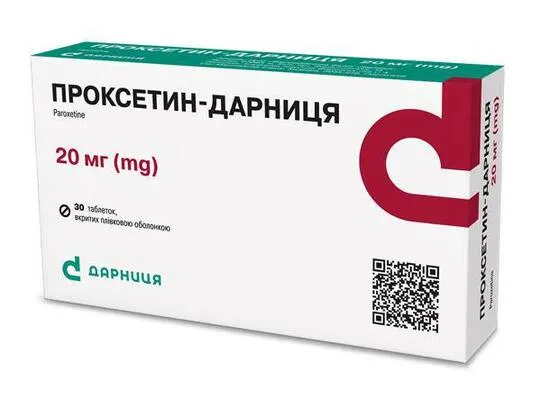
Table of Contents
INSTRUCTIONS FOR MEDICAL USE OF THE MEDICINAL PRODUCT PROKSETIN-DARNYTSIA
Composition:
Active substance: paroxetine;
One film-coated tablet contains paroxetine 20 mg (as paroxetine hydrochloride anhydrous 22.22 mg);
Excipients: magnesium stearate, sodium starch glycolate, mannitol, microcrystalline cellulose;
film coating: OPADRY® AMB White.
Pharmaceutical form. Film-coated tablets.
Main physicochemical properties: white or almost white, round, biconvex, film-coated tablets with a break line on one side.
Pharmacotherapeutic group. Antidepressants. Selective serotonin reuptake inhibitors. ATC code N06AB05.
Pharmacological Properties.
Pharmacodynamics.
Mechanism of action.
Paroxetine is a potent selective inhibitor of the reuptake of 5-hydroxytryptamine (5-HT, serotonin). Its antidepressant effect and efficacy in the treatment of obsessive-compulsive disorders, social phobias/social anxiety disorders, generalized anxiety disorders, post-traumatic stress disorders, and panic disorders are due to specific inhibition of neuronal 5-HT reuptake in the brain.
Chemically, paroxetine differs from tricyclic, tetracyclic, and other known antidepressants.
Paroxetine has low affinity for muscarinic cholinergic receptors, and animal studies have shown that it possesses only weak anticholinergic properties.
Consistent with its selective action, in vitro studies have demonstrated that, unlike tricyclic antidepressants, paroxetine has low affinity for α-1, α-2, and β-adrenergic receptors, as well as for dopaminergic (D2), 5-HT1-like, 5-HT2, and histaminergic (H1) receptors. The lack of interaction with postsynaptic receptors in vitro is confirmed by in vivo studies, which demonstrated no hypotensive effects or CNS depression.
Pharmacodynamic effects.
Paroxetine does not impair psychomotor function and does not potentiate the CNS depressant effects of ethanol.
Like other selective serotonin reuptake inhibitors (SSRIs), paroxetine causes symptoms of excessive 5-HT receptor stimulation in animals previously treated with monoamine oxidase inhibitors (MAOIs) or tryptophan.
Behavioral and EEG change studies have shown that paroxetine produces mild activating effects at doses exceeding those required for serotonin reuptake inhibition. However, its activating properties are not "amphetamine-like" in nature.
Animal studies have shown that paroxetine does not affect the cardiovascular system. In healthy individuals, paroxetine does not cause clinically significant changes in blood pressure, heart rate, or ECG.
Studies have shown that, unlike antidepressants which inhibit norepinephrine reuptake, paroxetine has much less potential to interfere with the antihypertensive effects of guanethidine.
In the treatment of depressive disorders, the efficacy of paroxetine is comparable to that of standard antidepressants.
There is evidence that paroxetine may have therapeutic value in patients who have not responded to standard antidepressant therapy.
Morning administration of paroxetine does not affect the quality or duration of sleep. Furthermore, as the therapeutic effect develops, sleep may improve.
Analysis of suicidality in adults.
An analysis of placebo-controlled trials in adults with psychiatric disorders indicates a higher incidence of suicidal behavior in younger patients (aged 18–24 years) receiving paroxetine compared to placebo (2.19% vs. 0.92%, respectively). No increase in suicidal behavior was observed in older age groups. In adults of all age groups with major depressive disorder, there was an increased incidence of suicidal behavior with paroxetine treatment compared to placebo (0.32% vs. 0.05%, respectively); suicidal attempts were always observed. However, most of these cases under paroxetine (8 out of 11) occurred in younger patients.
Dose-response effect.
In fixed-dose studies of paroxetine, the dose-response curve was shallow, indicating no advantage in efficacy with doses exceeding the recommended ones. However, available clinical data suggest that dose titration upward may be beneficial for some patients.
Long-term efficacy.
The long-term efficacy of paroxetine in the treatment of depression was demonstrated in a 52-week study using a maintenance dose to prevent relapse. Relapse occurred in 12% of patients receiving paroxetine (20–40 mg daily) compared to 28% of patients receiving placebo.
The long-term efficacy of paroxetine in the treatment of obsessive-compulsive disorder was evaluated in three 24-week studies using a maintenance dose to prevent relapse. In one of these studies, a statistically significant difference was observed in the proportion of patients experiencing relapse between those receiving paroxetine (38%) and those receiving placebo (59%).
The long-term efficacy of paroxetine in the treatment of panic disorder was demonstrated in a 24-week study using a maintenance dose to prevent relapse. Relapse occurred in 5% of patients receiving paroxetine (10–40 mg daily) compared to 30% of patients receiving placebo. These results were confirmed in a 36-week maintenance study. Long-term efficacy of paroxetine in the treatment of social anxiety disorder, generalized anxiety disorder, and post-traumatic stress disorder has not been sufficiently demonstrated.
Adverse reactions in pediatric clinical trials.
In short-term (up to 10–12 weeks duration) clinical trials of paroxetine in children and adolescents, the following adverse reactions were observed in at least 2% of patients and at a frequency at least twice that of placebo: increased intensity of suicidal behavior (including suicidal attempts and suicidal thoughts), self-harm, and increased hostility. Suicidal thoughts and suicidal attempts were primarily observed in clinical trials involving adolescents with major depressive disorder. Increased hostility was particularly noted in children with obsessive-compulsive disorder, especially in children under 12 years of age. Additional adverse reactions more frequently observed in the paroxetine group than in the placebo group included decreased appetite, tremor, sweating, hyperkinesia, agitation, and emotional lability (including tearfulness and mood swings).
In discontinuation trials, symptoms observed during dose reduction or after discontinuation in at least 2% of patients and at a frequency at least twice that of placebo included: emotional lability (including tearfulness, mood changes, self-harm, suicidal thoughts, and suicidal attempts), nervousness, dizziness, nausea, and abdominal pain.
In five parallel-group studies lasting from 8 weeks to 8 months, bleeding-related adverse events, primarily of the skin and mucous membranes, were observed in patients receiving paroxetine at a frequency of 1.74% compared to 0.74% in patients receiving placebo.
Pharmacokinetics.
Absorption.
After oral administration, paroxetine is well absorbed and undergoes first-pass metabolism.
Due to presystemic metabolism, less paroxetine reaches the systemic circulation than is absorbed from the gastrointestinal tract. As the amount of paroxetine in the body increases—either after single high doses or repeated dosing—there is partial saturation of the first-pass metabolic pathway, resulting in reduced plasma clearance of paroxetine. This leads to a disproportionate increase in plasma concentrations and instability of pharmacokinetic parameters, resulting in nonlinear kinetics. It should be noted, however, that nonlinearity is generally mild and observed only in patients who achieve low plasma levels of paroxetine at low doses.
Steady-state plasma concentrations are reached within 7–14 days after starting paroxetine treatment, and its pharmacokinetic parameters do not change during long-term therapy.
Distribution.
Paroxetine is widely distributed in tissues, and pharmacokinetic calculations indicate that only 1% of the total amount of paroxetine in the body remains in plasma. At therapeutic concentrations, approximately 95% of paroxetine in plasma is protein-bound.
No correlation has been found between plasma concentrations of paroxetine and its clinical effects (regarding both adverse reactions and efficacy).
Metabolism.
The main metabolites of paroxetine are polar and conjugated products of oxidation and methylation, which are readily eliminated from the body. Due to the relatively low pharmacological activity of these metabolites, it is highly unlikely that they influence the therapeutic effects of paroxetine.
Metabolism does not impair paroxetine's ability to selectively inhibit serotonin reuptake.
Elimination.
Less than 2% of the administered dose of paroxetine is excreted unchanged in urine, while metabolite excretion accounts for up to 64% of the dose. Approximately 36% of the dose is excreted in feces, possibly via bile; fecal excretion of unchanged paroxetine is less than 1% of the dose. Thus, paroxetine is almost entirely eliminated via metabolism.
Metabolite excretion follows a biphasic pattern: initially due to presystemic metabolism, followed by systemic elimination of paroxetine.
The half-life of paroxetine is variable but typically around 1 day.
Special patient groups.
Elderly patients and patients with renal/hepatic impairment.
In elderly patients, patients with severe renal impairment, and patients with hepatic impairment, plasma concentrations of paroxetine may be elevated; however, the range of plasma concentrations overlaps with that in healthy patients.
Clinical characteristics.
Indications.
Treatment of major depressive disorder.
Treatment of symptoms and prevention of relapse of obsessive-compulsive disorder.
Treatment of symptoms and prevention of relapse of panic disorder with or without agoraphobia.
Treatment of social phobias/social anxiety disorders.
Treatment of symptoms and prevention of relapse of generalized anxiety disorder.
Treatment of post-traumatic stress disorder.
Contraindications.
- Hypersensitivity to paroxetine or to any other component of the medicinal product.
- Combination of paroxetine with monoamine oxidase inhibitors (MAOIs). In exceptional cases, linezolid (an antibiotic which is a reversible non-selective MAO inhibitor) may be prescribed in combination with paroxetine provided that means for careful monitoring of symptoms of serotonin syndrome and blood pressure monitoring are available (see section "Interaction with other medicinal products and other types of interactions").
Paroxetine treatment may be initiated:
- two weeks after discontinuation of irreversible MAOIs, or
- at least 24 hours after discontinuation of reversible MAOIs, e.g., moclobemide, linezolid, methylene blue (methylthioninium chloride).
The interval between discontinuation of paroxetine and initiation of therapy with any MAOI should be at least one week.
- The medicinal product must not be used in combination with thioridazine, since, like other drugs that inhibit the hepatic enzyme CYP450 2D6, paroxetine may increase thioridazine levels (see section "Interaction with other medicinal products and other types of interactions"). Use of thioridazine may cause QT interval prolongation with associated severe ventricular arrhythmias (e.g., torsades de pointes) and sudden death.
- Paroxetine must not be prescribed in combination with pimozide (see section "Interaction with other medicinal products and other types of interactions").
Interaction with other medicinal products and other types of interactions.
Serotonergic agents.
As with other SSRIs, concomitant use with serotonergic agents may lead to a 5-HT-related effect (serotonin syndrome).
The medicinal product Proksetin-Darnytsia should be used with caution together with such serotonergic agents as L-tryptophan, triptans, buprenorphine, tramadol and pethidine, linezolid, methylene blue (methylthioninium chloride), other serotonin reuptake inhibitors, lithium, and St John's wort (Hypericum perforatum), with mandatory close monitoring of the patient's clinical condition. Fentanyl should be used with caution during general anesthesia or for treatment of chronic pain. Concomitant use of paroxetine and MAO inhibitors is contraindicated due to the risk of serotonin syndrome (see section "Contraindications").
Pimozide.
An increase in pimozide levels by an average of 2.5-fold was demonstrated in a study of single low-dose pimozide (2 mg) administered concomitantly with 60 mg paroxetine. This was explained by the known inhibitory properties of paroxetine on CYP2D6. Due to the narrow therapeutic index of pimozide and its ability to prolong the QT interval, concomitant use of pimozide and paroxetine is contraindicated (see section "Contraindications").
Drugs that prolong the QT interval.
When paroxetine is used concomitantly with drugs that prolong the QTc interval (e.g., certain antipsychotics), there is an increased risk of QTc prolongation and/or ventricular arrhythmias (e.g., TdP). Concomitant use of thioridazine and paroxetine is contraindicated, since paroxetine, like other drugs that inhibit the hepatic enzyme CYP450 2D6, may increase plasma levels of thioridazine, which may prolong the QT interval (see section "Special precautions for use").
Enzymes involved in drug metabolism.
The metabolism and pharmacokinetic parameters of paroxetine may be altered by induction or inhibition of enzymes involved in drug metabolism.
When paroxetine is used concomitantly with drugs that inhibit enzymes, the lowest effective doses are recommended. When used concomitantly with enzyme-inducing drugs (e.g., carbamazepine, rifampicin, phenobarbital, phenytoin) or fosamprenavir/ritonavir, no change in the initial dose of paroxetine is required. Dose adjustments during ongoing treatment should be made according to clinical response (tolerability and efficacy).
Muscle relaxants.
SSRIs may reduce plasma cholinesterase activity, leading to prolonged neuromuscular blocking effects of mivacurium and succinylcholine.
Fosamprenavir/ritonavir.
Concomitant administration of fosamprenavir/ritonavir 700 mg/100 mg twice daily with paroxetine 20 mg once daily for 10 days in healthy volunteers significantly reduced plasma paroxetine levels by approximately 55%. Plasma levels of fosamprenavir/ritonavir when administered concomitantly with paroxetine were similar to control values, indicating that paroxetine had no significant effect on fosamprenavir/ritonavir metabolism. There are no data on the effects of prolonged concomitant use of paroxetine and fosamprenavir/ritonavir beyond 10 days.
Procyclidine.
Daily administration of paroxetine significantly increases serum procyclidine levels. If anticholinergic effects occur, the dose of procyclidine should be reduced.
Anticonvulsants.
Carbamazepine, phenytoin, sodium valproate. When used concomitantly with these drugs, no effect on the pharmacokinetics/pharmacodynamics of the drug was observed in patients with epilepsy.
Paroxetine's ability to inhibit the CYP2D6 enzyme.
Paroxetine, like other antidepressants including other SSRIs, slows down the activity of the CYP2D6 enzyme of the cytochrome P450 system. Inhibition of CYP2D6 may lead to increased plasma concentrations of concurrently administered drugs metabolized by this enzyme. Such drugs include certain tricyclic antidepressants (e.g., clomipramine, amitriptyline, nortriptyline and desipramine), phenothiazine neuroleptics (e.g., perphenazine and thioridazine), risperidone, atomoxetine, certain class 1c antiarrhythmics (e.g., propafenone and flecainide), and metoprolol. Concomitant use of paroxetine with metoprolol is not recommended when treating heart failure due to the narrow therapeutic index of metoprolol for this indication.
Literature reports describe a pharmacokinetic interaction between CYP2D6 enzyme inhibitors and tamoxifen, manifested as a 65–75% reduction in plasma levels of one of tamoxifen's active metabolites—endoxifen. Reduced efficacy of tamoxifen has been observed with concomitant use of certain SSRIs. Since a reduction in tamoxifen's effect cannot be excluded, concomitant use with potent CYP2D6 inhibitors (including paroxetine) should be avoided when possible (see section "Special precautions for use").
Alcohol.
As with other psychotropic medicinal products, patients should be advised not to consume alcoholic beverages during treatment with paroxetine.
Oral anticoagulants.
Pharmacodynamic interaction may occur when oral anticoagulants are used concomitantly with paroxetine, potentially increasing anticoagulant activity and the risk of bleeding; therefore, paroxetine should be prescribed with caution in patients receiving oral anticoagulant therapy.
Non-steroidal anti-inflammatory drugs, acetylsalicylic acid, and antiplatelet agents.
Pharmacodynamic interaction may occur when non-steroidal anti-inflammatory drugs/acetylsalicylic acid are used concomitantly with paroxetine, potentially increasing the risk of bleeding.
Caution is recommended when SSRIs are used concomitantly with oral anticoagulants, drugs affecting platelet function or increasing the risk of bleeding (e.g., atypical antipsychotics such as clozapine, phenothiazines, most tricyclic antidepressants, acetylsalicylic acid, non-steroidal anti-inflammatory drugs, cyclooxygenase-2 inhibitors), and in patients with a history of bleeding or coagulation disorders, as this may lead to bleeding.
Pravastatin.
Observed interactions between paroxetine and pravastatin in studies indicate that concomitant use of paroxetine and pravastatin may lead to increased blood glucose levels. Diabetic patients receiving both paroxetine and pravastatin may require adjustment of the dosage of oral hypoglycemic agents and/or insulin (see section "Special precautions for use").
Special precautions for use.
Treatment with paroxetine should be initiated cautiously two weeks after discontinuation of irreversible monoamine oxidase inhibitors (MAOIs) or 24 hours after discontinuation of reversible MAOIs. Paroxetine dosage should be increased gradually until optimal response is achieved (see sections "Contraindications" and "Interaction with other medicinal products and other forms of interaction").
Children and adolescents.
The medicinal product Proksetin-Darnytsia is not recommended for use in children and adolescents under 18 years of age.
Suicide-related behaviors (suicide attempts and suicidal thoughts) and hostility (predominantly aggression, oppositional behavior, and anger) have been observed more frequently in clinical trials among children and adolescents receiving antidepressants compared to those receiving placebo (see section "Adverse reactions"). If, based on clinical need, a decision to treat is made, careful monitoring for emergence of suicidal symptoms is required. Additionally, long-term safety data on growth, sexual maturation, cognitive and behavioral development in children and adolescents are lacking.
Suicide/suicidal thoughts or clinical worsening.
Depression is associated with an increased risk of suicidal thoughts, self-harm, and suicide. This risk persists until significant remission occurs. Since improvement may not occur during the first weeks of treatment or even longer, careful monitoring should continue until the patient's condition improves. Based on available clinical experience, the risk of suicide may increase during the initial recovery phase.
Other psychiatric disorders for which paroxetine may be prescribed are also associated with an increased risk of suicidal phenomena. Moreover, these conditions may accompany major depressive disorder. Therefore, the same precautions should be observed during treatment of these disorders as with major depressive disorder.
Epidemiological observations indicate that the risk of suicidal thoughts or suicide attempts is increased in patients with such history or with pre-existing suicidal ideation; therefore, these patients should be closely monitored during treatment. According to data from meta-analyses of placebo-controlled clinical trials, the use of antidepressants in adult patients with psychiatric disorders may be associated with an increased risk of suicidal behavior compared to placebo in patients under 25 years of age (also see section "Pharmacodynamics").
Close monitoring of patients is necessary at the beginning of treatment and when dosage is changed, particularly in those at increased risk. Patients (and caregivers) should be warned to monitor for symptom progression, including clinical worsening, suicidal behavior or thoughts, unusual changes in behavior, and to seek immediate medical advice if such symptoms occur.
Akathisia/psychomotor agitation.
Use of paroxetine has been associated with the development of akathisia—a condition characterized by inner restlessness and psychomotor agitation, such as inability to sit or stand still, combined with subjective discomfort. The likelihood of this occurring is highest during the first weeks of treatment. Increasing the dose may be harmful in patients who develop such symptoms.
Serotonin syndrome/malignant neuroleptic syndrome.
In isolated cases, administration of paroxetine, particularly in combination with other serotonergic agents and/or neuroleptics or buprenorphine (as monotherapy or in combination with naloxone), may lead to serotonin syndrome or symptoms resembling malignant neuroleptic syndrome. Since these syndromes may result in potentially life-threatening conditions, paroxetine treatment should be discontinued if symptoms such as hyperthermia, muscle rigidity, myoclonus, autonomic instability with rapid fluctuations in vital signs, and changes in mental status (including confusion, agitation, extreme restlessness progressing to delirium and coma) occur, and supportive symptomatic therapy should be initiated.
Paroxetine should not be used in combination with serotonin precursors (e.g., L-tryptophan, oxitriptan) due to the risk of developing serotonergic syndrome (see sections "Contraindications" and "Interaction with other medicinal products and other forms of interactions").
Mania.
As with other antidepressants, the medicinal product Proksetin-Darnytsia should be used with caution in patients with a history of mania. Paroxetine should be discontinued if a patient enters a manic phase.
Renal/hepatic impairment.
Special caution is required when prescribing paroxetine to patients with renal or hepatic impairment.
Diabetes mellitus.
In patients with diabetes mellitus, treatment with SSRIs may alter glycaemic control, necessitating adjustment of insulin and/or oral hypoglycaemic agent doses. Additionally, clinical studies indicate that increased blood glucose levels may occur when paroxetine is used concomitantly with pravastatin.
Epilepsy.
The medicinal product Proksetin-Darnytsia, like other antidepressants, should be used with caution in patients with epilepsy.
Seizures.
Seizures occur in less than 0.1% of patients taking paroxetine. If seizures occur, paroxetine treatment should be discontinued.
Electroconvulsive therapy (ECT).
Experience with concomitant use of paroxetine and ECT is limited.
Glaucoma.
Paroxetine, like other SSRIs, may cause mydriasis; therefore, the drug should be used with caution in patients with current narrow-angle glaucoma or a history of glaucoma.
Cardiovascular diseases.
Standard precautions are required when treating patients with cardiovascular diseases.
QT interval prolongation.
Cases of QT interval prolongation have been reported during post-marketing use of paroxetine. Therefore, Proksetin-Darnytsia should be used with caution in patients with a family history of QT prolongation, concomitant use of antiarrhythmics or other medicinal products that may potentially prolong the QT interval, underlying cardiac conditions such as heart failure, ischemic heart disease, heart block, or ventricular arrhythmias, bradycardia, hypokalemia, or hypomagnesemia.
Hyponatremia.
Hyponatremia rarely occurs during paroxetine treatment, primarily in elderly patients. The drug should be prescribed with caution in patients at risk of hyponatremia, for example due to concomitant use of other medicinal products or in the presence of cirrhosis. Hyponatremia usually resolves after discontinuation of paroxetine.
Bleeding.
After paroxetine treatment, hemorrhages into the skin (ecchymoses and purpura) and mucous membranes (including gastrointestinal and gynecological bleeding) have been observed. SSRIs/SNRIs may increase the risk of postpartum hemorrhage (see sections "Use during pregnancy or breastfeeding" and "Adverse reactions"). Patients taking SSRIs concomitantly with oral anticoagulants, agents known to affect platelet function, or other drugs that may increase the risk of bleeding (e.g., atypical antipsychotics such as clozapine, phenothiazines, most tricyclic antidepressants (TCAs), acetylsalicylic acid, NSAIDs, COX-2 inhibitors), as well as patients with a history of frequent coagulopathies or conditions that may lead to bleeding, should be monitored carefully. Elderly patients may have an increased risk of non-menstrual bleeding.
Interaction with tamoxifen.
Paroxetine, a potent CYP2D6 inhibitor, may reduce the concentration of endoxifen, one of the most important active metabolites of tamoxifen. Therefore, the use of paroxetine should be avoided during tamoxifen treatment (see section "Interaction with other medicinal products and other forms of interaction").
Symptoms observed upon discontinuation of paroxetine.
Discontinuation symptoms upon stopping treatment are common, especially if the drug is stopped abruptly. Clinical trial data indicate that discontinuation adverse reactions occurred in 30% of adult patients treated with paroxetine compared to 20% of those receiving placebo. The emergence of symptoms after discontinuation is not equivalent to the situation of drug abuse or dependence.
The risk of developing discontinuation symptoms may depend on several factors, including duration of therapy, dose, and rate of dose reduction.
Symptoms reported include dizziness, sensory disturbances (including paresthesia, electric shock sensations, and tinnitus), sleep disturbances (including vivid dreams), agitation or anxiety, nausea, tremor, confusion, increased sweating, headache, diarrhea, palpitations, emotional instability, irritability, and visual disturbances. Generally, these symptoms are mild or moderate in severity, although in some patients they may be very intense. Symptoms usually occur within the first few days after discontinuation, although isolated cases have been reported in patients who accidentally missed a single dose. These symptoms usually resolve spontaneously within 2 weeks, although in some patients the process may be prolonged (up to 2–3 months). Therefore, it is recommended that paroxetine dosage be gradually reduced over several weeks or months, depending on individual patient characteristics (see section "Dosage and administration").
Sexual dysfunction.
SSRIs and serotonin-norepinephrine reuptake inhibitors (SNRIs) may cause symptoms of sexual dysfunction (see section "Adverse reactions"). Cases of persistent sexual dysfunction, where symptoms persist despite discontinuation of SSRIs/SNRIs, have been reported.
Important information about excipients.
Proksetin-Darnytsia contains less than 1 mmol (23 mg)/dose of sodium, i.e., practically sodium-free.
It should be noted that this medicinal product contains mannitol, which may have a mild laxative effect.
Use during pregnancy or breastfeeding.
Pregnancy.
Some epidemiological studies have shown an increased risk of congenital malformations, particularly cardiovascular malformations (e.g., ventricular and atrial septal defects), associated with paroxetine use during the first trimester of pregnancy. The mechanism is unknown. According to available data, the incidence of cardiovascular defects with paroxetine use during pregnancy is less than 2/100, whereas the expected incidence in the general population is approximately 1/100 live births.
Proksetin-Darnytsia should be used during pregnancy only if clearly indicated. Physicians should consider alternative treatments for pregnant women or women planning pregnancy. Abrupt discontinuation of paroxetine during pregnancy should be avoided.
Newborns should be monitored if the mother continued paroxetine use in late pregnancy, particularly during the third trimester.
Newborns exposed to paroxetine in late pregnancy may exhibit the following symptoms: respiratory distress syndrome, cyanosis, apnea, seizures, temperature instability, feeding difficulties, vomiting, hypoglycemia, hypertension, hypotension, hyperreflexia, tremor, lethargy, persistent crying, somnolence, and sleep disturbances. These symptoms may be due to serotonergic effects or may represent withdrawal symptoms. In most cases, these complications occur immediately after delivery or shortly thereafter (<24 hours).
Epidemiological studies indicate that the use of SSRIs during pregnancy, particularly in late pregnancy, is associated with an increased risk of persistent pulmonary hypertension in the newborn. The observed risk is approximately 5 cases per 1000 pregnancies. In the general population, the risk is 1–2 cases per 1000 pregnancies.
Animal studies have revealed reproductive toxicity of paroxetine but have not shown harmful effects on pregnancy, embryonic/fetal development, labor, or postnatal development.
Lactation period.
Small amounts of paroxetine pass into breast milk. In published studies, serum concentrations in breastfed infants were either undetectable (<2 ng/mL) or very low (<4 ng/mL), and no signs of drug effects were observed in these infants. Since adverse effects are not expected, breastfeeding may be considered.
Fertility.
Animal studies have shown that paroxetine may affect sperm quality. In vitro studies with human material suggest a potential effect on sperm quality; however, post-marketing reports following use of various SSRIs (including paroxetine) indicate that the effect on sperm quality is reversible.
No effect on human fertility has been observed to date.
Ability to affect reaction speed when driving or operating machinery.
Clinical experience with paroxetine indicates that the drug does not affect cognitive functions or psychomotor reactions.
However, as with other psychoactive drugs, patients should be warned about the possible impairment of ability to drive or operate machinery during treatment. Proksetin-Darnytsia does not enhance the impairment of mental and motor reactions caused by alcohol; however, concomitant use of paroxetine and alcohol is not recommended.
Method of Administration and Dosage
Method of Administration
The medicinal product Prosetin-Darnitsya is recommended to be taken once daily in the morning during a meal.
The tablet should be swallowed whole, without chewing.
Dosage
Major Depressive Disorder. The recommended daily dose is 20 mg. Improvement usually begins within one week, although sometimes improvement may only become apparent during the second week of treatment.
As with all other antidepressant agents, the dose should be carefully individualized during the first 3–4 weeks of treatment, and then adjusted according to clinical response.
For some patients who show an inadequate response to a 20 mg dose, dose escalation may be required. This should be done gradually, increasing the dose by 10 mg (up to a maximum of 50 mg daily) according to clinical efficacy. The treatment course for patients with depression should be sufficiently prolonged—at least 6 months—to ensure symptom remission.
Obsessive-Compulsive Disorder (OCD). The recommended daily dose is 40 mg. Treatment should be initiated at a dose of 20 mg daily, then gradually increased by 10 mg daily until the recommended dose is reached. In some patients, improvement may only occur after reaching the maximum dose of 60 mg daily. The treatment course for OCD should be sufficiently prolonged to ensure symptom remission. This period may last several months or longer.
Panic Disorder. The recommended dose is 40 mg daily. Treatment should be initiated at 10 mg daily, with gradual dose increases of 10 mg, based on the patient's clinical response. In some patients, improvement may only be observed after reaching the maximum dose of 60 mg daily.
To minimize the risk of symptom exacerbation, which is commonly observed at the beginning of treatment for panic disorder, it is recommended to initiate therapy with a low dose. The treatment course for panic disorder should be sufficiently prolonged to ensure symptom remission. This period may last several months.
Social Anxiety Disorders/Social Phobias. The recommended dose is 20 mg daily. For some patients, the dose may be gradually increased by 10 mg daily—depending on clinical response—up to a maximum of 50 mg daily. The interval between dose increases should be at least 1 week. Long-term use of the drug should be periodically reviewed.
Generalized Anxiety Disorder (GAD). The recommended dose is 20 mg daily. If insufficient efficacy is observed with 20 mg, the dose may be gradually increased by 10 mg daily, depending on clinical response, up to a maximum of 50 mg daily. Long-term use of the drug should be periodically reviewed.
Post-Traumatic Stress Disorder (PTSD). The recommended dose is 20 mg daily. If insufficient efficacy is observed with 20 mg, the dose may be gradually increased by 10 mg daily, depending on clinical response, up to a maximum of 50 mg daily. Long-term use of the drug should be periodically reviewed.
Discontinuation of Prosetin-Darnitsya
As with other psychotropic medications, abrupt discontinuation of the drug should be avoided. In clinical trials, a gradual dose reduction regimen was used, involving a decrease of 10 mg daily every week. After reaching a dose of 20 mg daily, patients continued to take the drug at this dose for one additional week before complete discontinuation. If severe symptoms occur during dose reduction or after discontinuation, consideration should be given to resuming treatment at the previous dose. Subsequently, the dose may be reduced again, but at a slower rate.
Special Patient Populations
Elderly Patients. Treatment should be initiated with the usual adult starting dose, which may then be gradually increased up to 40 mg daily. Increased plasma concentrations of paroxetine have been observed in elderly patients; however, the concentration range in this group overlaps with that observed in younger patients.
Renal and Hepatic Impairment. In patients with severe renal impairment (creatinine clearance <30 mL/min) or hepatic impairment, increased plasma concentrations of paroxetine are observed. Therefore, the dose should be reduced to the lower end of the recommended dosing range in these patients.
Children. Paroxetine is not indicated for the treatment of children.
Overdose
Symptoms. In cases of paroxetine overdose, in addition to the adverse reactions listed in the section "Adverse Reactions," symptoms such as elevated body temperature, changes in blood pressure, involuntary muscle contractions, agitation, and tachycardia have been observed. These effects generally resolve without serious consequences in most patients, even after ingestion of up to 2000 mg. Occasionally, coma or ECG changes have been reported; fatal outcomes are very rare and typically occur when paroxetine is taken concomitantly with other psychotropic agents or alcohol.
Treatment. Management of overdose should include general supportive and symptomatic measures, similar to those used for other antidepressants. Within several hours of overdose, administration of 20–30 g of activated charcoal may be considered to reduce absorption, if feasible. Supportive care with frequent monitoring of vital signs and close observation of the patient's condition is indicated. Treatment should be tailored according to the patient's clinical status.
There is no specific antidote.
Adverse Reactions
All adverse reactions are listed by system organ class and frequency: very common (≥ 1/10), common (≥ 1/100 to < 1/10), uncommon (≥ 1/1,000 to < 1/100), rare (≥ 1/10,000 to < 1/1,000), very rare (< 1/10,000), frequency not known (cannot be estimated from the available data).
Eye disorders:
Common: blurred vision.
Uncommon: mydriasis (see section "Special precautions and warnings").
Rare: acute glaucoma.
Ear and labyrinth disorders:
Frequency not known: tinnitus.
Respiratory, thoracic and mediastinal disorders:
Common: yawning.
Gastrointestinal disorders:
Very common: nausea.
Common: constipation, diarrhoea, vomiting, dry mouth.
Rare: gastrointestinal haemorrhage.
Frequency not known: microscopic colitis.
Hepatobiliary disorders:
Isolated cases: increased liver enzyme activity.
Rare: hepatic disorders (such as hepatitis, sometimes with jaundice and/or hepatic failure).
There have been reports of increased liver enzyme levels. Additionally, very rare post-marketing cases of hepatic adverse reactions (such as hepatitis, sometimes associated with jaundice and/or hepatic failure) have been reported. Consider the possibility of discontinuing paroxetine if elevated liver function tests persist.
Renal and urinary disorders:
Uncommon: urinary retention, urinary incontinence.
Endocrine disorders:
Rare: syndrome of inappropriate antidiuretic hormone secretion (SIADH).
Metabolism and nutrition disorders:
Common: increased cholesterol concentrations, decreased appetite.
Uncommon: impaired glycaemic control observed in patients with diabetes mellitus (see section "Special precautions and warnings").
Isolated cases: hyponatraemia.
Hyponatraemia has been mainly reported in elderly patients, sometimes due to SIADH.
Nervous system disorders:
Common: dizziness, tremor, headache, concentration impairment.
Uncommon: extrapyramidal disorders.
Isolated cases: convulsions, restless legs syndrome.
Rare: serotonin syndrome (possible symptoms: agitation, confusion, sweating, hallucinations, hyperreflexia, myoclonus, shivering, tachycardia, and tremor).
Extrapyramidal disorders, including orofacial dystonia, have been reported in patients with movement disorders or those taking neuroleptics.
Psychiatric disorders:
Common: somnolence, insomnia, agitation, abnormal dreams (including nightmares).
Uncommon: confusion, hallucinations.
Isolated cases: manic reactions, restlessness, depersonalization, panic attacks, akathisia (see section "Special precautions and warnings").
Frequency not known: suicidal thoughts, suicidal behaviour, aggression*, bruxism.
*Cases of aggression have been reported during the post-marketing period.
Cases of suicidal thoughts and suicidal behaviour have been reported during paroxetine therapy or shortly after discontinuation (see section "Special precautions and warnings").
These symptoms may also be related to the underlying disease.
Cardiac disorders:
Uncommon: sinus tachycardia, transient increases or decreases in blood pressure, postural hypotension.
Isolated cases: bradycardia.
Vascular disorders:
Uncommon: transient increases or decreases in blood pressure after paroxetine treatment, usually in patients with pre-existing hypertension or anxiety.
Blood and lymphatic system disorders:
Uncommon: leukopenia, abnormal bleeding, predominantly of the skin and subcutaneous tissues (including ecchymoses and gynaecological haemorrhages).
Rare: thrombocytopenia.
Immune system disorders:
Rare: severe and potentially life-threatening allergic reactions (including anaphylactoid reactions and angioedema).
Skin and subcutaneous tissue disorders:
Common: sweating.
Uncommon: skin rash, pruritus.
Rare: severe skin reactions (including erythema multiforme, Stevens-Johnson syndrome, and toxic epidermal necrolysis), urticaria, photosensitivity reactions.
Musculoskeletal and connective tissue disorders:
Isolated cases: arthralgia, myalgia.
Epidemiological studies, conducted primarily in patients aged 50 years and older, suggest an increased risk of bone fractures in patients receiving SSRIs and TCAs. The mechanism leading to this risk is unknown.
Reproductive system and breast disorders:
Very common: sexual dysfunction.
Isolated cases: hyperprolactinaemia/galactorrhoea, menstrual disorders (including menorrhagia, metrorrhagia, amenorrhoea, delayed and irregular menstruation).
Rare: priapism.
Frequency not known: postpartum haemorrhage. This effect has been reported for the therapeutic class of SSRIs/SNRIs (see sections "Special precautions and warnings", "Use during pregnancy or breastfeeding").
General disorders and administration site conditions:
Common: asthenia, weight gain.
Rare: peripheral oedema.
Withdrawal symptoms upon discontinuation of the medicinal product.
Common: dizziness, sensory disturbances, sleep disturbances, anxiety, headache.
Uncommon: agitation, nausea, tremor, confusion, sweating, emotional lability, visual disturbances, palpitations, diarrhoea, irritability.
As with other medicinal products used to treat psychiatric disorders, discontinuation of paroxetine (especially abrupt discontinuation) may lead to the emergence of symptoms such as dizziness, sensory disturbances (including paraesthesia, electric shock sensations, and tinnitus), sleep disturbances (including intense dreams), agitation or anxiety, nausea, tremor, confusion, sweating, headache, diarrhoea, palpitations, emotional instability, restlessness, and visual disturbances. In most patients, these symptoms are mild to moderate in severity and resolve without treatment; however, in some patients, they may be severe and/or prolonged. There is no specific risk group for the occurrence of these symptoms; therefore, if discontinuation of paroxetine therapy is necessary, the dose should be gradually reduced (see sections "Special precautions and warnings" and "Dosage and administration").
Adverse reactions observed in clinical trials in children.
Data have been obtained on the following adverse reactions: increased suicidal behaviour (including suicide attempts and suicidal ideation), self-harm, and increased hostility. Suicidal ideation and suicide attempts were observed primarily in clinical trials treating adolescents with major depressive disorder. Increased hostility was observed primarily in children with obsessive-compulsive disorder, especially in children under 12 years of age. Additional adverse reactions: decreased appetite, tremor, sweating, hyperkinesia, agitation, emotional lability (including crying and mood swings), bleeding, mostly on the skin and mucous membranes.
Upon dose reduction or discontinuation of the drug, the following symptoms were observed: emotional lability (including crying, mood swings, self-harm, suicidal ideation, and suicide attempts), nervousness, dizziness, nausea, and abdominal pain (see section "Special precautions and warnings").
Reporting suspected adverse reactions.
Reporting suspected adverse reactions after medicinal product registration is important. It allows continued monitoring of the benefit-risk balance of the medicinal product. Healthcare professionals, as well as patients or their legal representatives, should report all suspected adverse reactions and/or lack of efficacy via the Automated Pharmacovigilance Information System at the following link: https://aisf.dec.gov.ua.
Shelf life. 3 years.
Storage conditions.
Store in the original packaging at a temperature not exceeding 25 °C. Keep out of the reach of children.
Packaging.
10 tablets in a blister; 3 blisters in a carton.
Prescription status. Prescription only.
Manufacturer.
Bluepharma Industria Farmaceutica S.A.
Manufacturer's address and place of business.
São Martinho do Bispo, Coimbra, 3045-016, Portugal.
Marketing Authorisation Holder.
JSC "Pharmaceutical Company "Darnytsia".
Address of the Marketing Authorisation Holder.
13, Boryspilska Street, Kyiv, 02093, Ukraine.