Proginova
Ukraine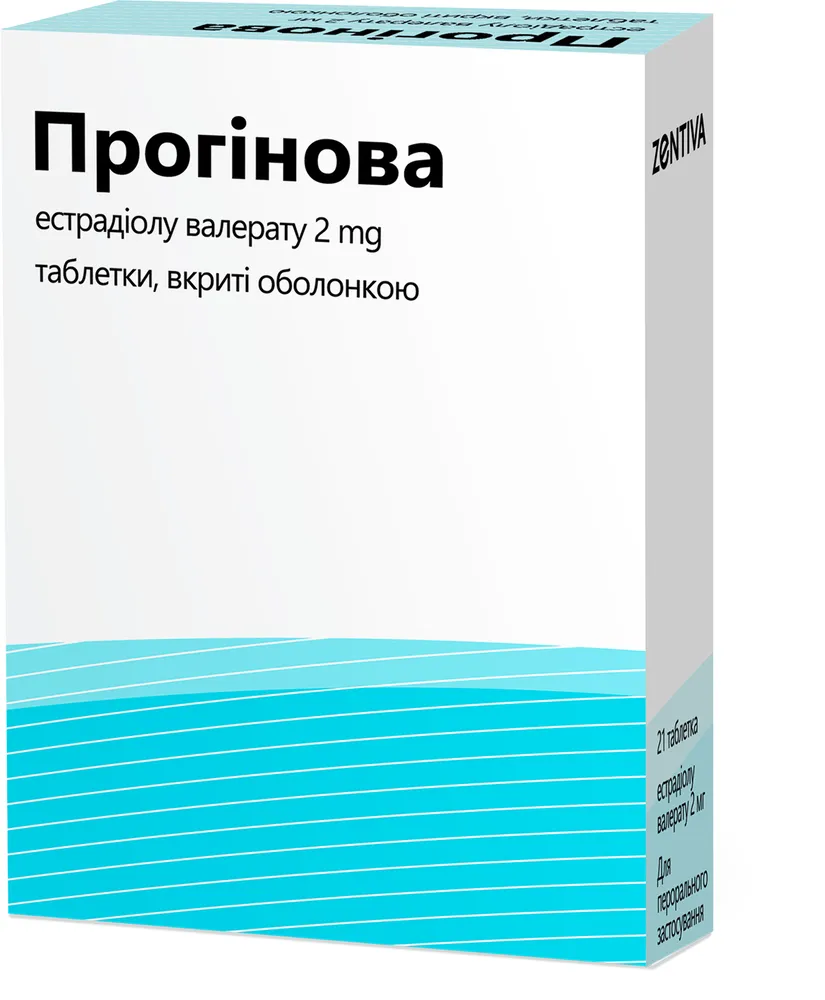
Table of Contents
INSTRUCTIONS FOR MEDICAL USE OF THE MEDICINAL PRODUCT PROGYNOVA (PROGYNOVA®)
Composition:
Active substance: estradiol valerate;
One coated tablet contains 2 mg of estradiol valerate;
Excipients: lactose monohydrate; corn starch; povidone K25; talc; magnesium stearate;
Tablet sugar coating: sucrose, povidone K90, macrogol 6000, calcium carbonate, talc, montan glycol wax.
Pharmaceutical form. Coated tablets.
Main physicochemical properties: coated tablets, white in color.
Pharmacotherapeutic group.
Sex hormones and drugs used in pathologies of the reproductive system. Estrogens. ATC code G03C A03.
Pharmacological properties.
Pharmacodynamics.
The active ingredient, synthetic estradiol (17β-synthesized estradiol), is chemically and biologically identical to endogenous human estradiol. The drug Progynova should be used for hormone replacement therapy (HRT). HRT minimizes symptoms of estrogen deficiency in women after the onset of menopause.
Pharmacokinetics.
Estradiol valerate
Absorption
After oral administration, estradiol valerate is completely absorbed. During absorption and first-pass metabolism in the liver, the steroid ester is cleaved into estradiol and valeric acid. Simultaneously, estradiol undergoes extensive metabolism, for example, to estrone, estriol, and estrone sulfate. Only about 3% of estradiol becomes bioavailable after oral administration of estradiol valerate. Food intake does not affect the bioavailability of estradiol.
Distribution
Maximum estradiol plasma concentration (approximately 30 pg/mL) is reached 4–9 hours after tablet ingestion. Over the course of the day following tablet intake, plasma estradiol levels decline to a concentration of about 15 pg/mL. Estradiol binds non-specifically to albumin and specifically to sex hormone-binding globulin (SHBG). Only 1–1.5% of estradiol circulates as free steroid, while 30–40% is bound to SHBG.
The apparent volume of distribution of estradiol after a single intravenous dose is approximately 1 L/kg.
Metabolism
After cleavage of the ester group from exogenously administered estradiol valerate, further metabolism proceeds according to the same biotransformation pathways as endogenous estradiol. Estradiol is primarily metabolized in the liver, but also extrahepatically, for example, in the intestine, kidneys, skeletal muscle, and target organs. Metabolic processes include the formation of estrone, estriol, catecholestrogens, and sulfates and glucuronides of these compounds, which are significantly less active or devoid of estrogenic activity.
Elimination
After a single intravenous dose, the total plasma clearance rate of estradiol is highly variable, ranging from 10 to 30 mL/min/kg. A certain portion of estradiol metabolites is excreted into bile and undergoes enterohepatic recirculation. Estradiol and its metabolites are excreted in urine as sulfates and glucuronides.
Steady-state concentration
With repeated administration, plasma estradiol levels are approximately twice as high compared to single-dose administration. The minimum estradiol concentration is 30 pg/mL, and the maximum is 60 pg/mL. Estrones, less estrogenic metabolites, reach plasma concentrations 8 times higher, while estrone sulfates reach concentrations 150 times higher. Two or three days after discontinuation of treatment, concentrations of estradiol and estrone return to baseline levels.
Clinical characteristics.
Indications.
Hormone replacement therapy for estrogen deficiency symptoms in postmenopausal women.
Contraindications.
Hypersensitivity to the active substance or to any of the excipients of the medicinal product.
Current diagnosis of, history of, or suspected breast cancer.
Malignant estrogen-dependent tumors or suspected presence thereof (e.g., endometrial cancer).
Genital bleeding of unknown etiology.
Untreated endometrial hyperplasia.
Current or past venous thromboembolic events (e.g., deep vein thrombosis, pulmonary embolism).
Current or past arterial thromboembolic events (e.g., angina pectoris, myocardial infarction).
Predisposition to thrombosis (e.g., protein C deficiency, protein S deficiency, or antithrombin deficiency).
High risk of venous or arterial thrombosis.
Acute liver disease or history thereof (until liver function tests return to normal).
Severe liver disease.
Porphyria.
Hepatic tumors (benign or malignant), current or past.
Severe hypertriglyceridemia.
Interaction with other medicinal products and other forms of interaction.
Interaction of the medicinal product with other medicinal products
The metabolism of estrogens may be enhanced by concomitant administration of substances that increase the activity of hepatic metabolizing enzymes (cytochrome P450). These substances include anticonvulsants (e.g., phenobarbital, phenytoin, carbamazepine, oxcarbazepine, topiramate, felbamate, primidone), antimicrobial agents (e.g., rifampicin, rifabutin, nevirapine, efavirenz), griseofulvin, meprobamate, and phenylbutazone preparations. Maximum enzyme induction may not occur until 2–3 weeks after initiation, but may then persist for at least 4 weeks after discontinuation of therapy.
Ritonavir and nelfinavir, when used concomitantly with steroid hormones, have enzyme-inducing properties, although they are known as potent enzyme inhibitors.
Herbal preparations containing St John's wort (Hypericum perforatum) may stimulate estrogen metabolism.
Clinically significant increased metabolism of estrogens may lead to reduced efficacy of these hormones and provoke changes in menstrual bleeding patterns.
Strong and moderate inhibitors of CYP3A4, such as azole antifungals (fluconazole, itraconazole, ketoconazole, voriconazole), verapamil, macrolides (clarithromycin, erythromycin), diltiazem, and grapefruit juice, may increase plasma concentrations of estrogens.
Estrogens may enhance the effects and side effects of imipramine.
When cyclosporine is used concomitantly, reduced hepatic clearance of cyclosporine may lead to increased plasma concentrations of cyclosporine, creatinine, and transaminases.
When sex hormones are used concomitantly, HIV protease inhibitors, non-nucleoside reverse transcriptase inhibitors, and hepatitis C virus (HCV) inhibitors may affect plasma concentrations of estrogens. In some cases, the combined effect of these changes may be clinically significant.
Therefore, when prescribing HIV/HCV medications concomitantly, it is necessary to review information on their use to avoid potential interactions.
Due to changes in gut microflora following concomitant administration of activated charcoal and/or antibiotics (e.g., ampicillin or tetracycline), reduced concentrations of the active substance, and hence reduced efficacy of Progynova, have been observed. More frequent intermenstrual bleeding has been reported.
Substances that extensively form conjugates during gastrointestinal passage (e.g., paracetamol) may increase the bioavailability of estradiol by competitively inhibiting conjugation systems during absorption.
In individual cases, the requirement for oral antidiabetic agents or insulin may change due to effects on glucose tolerance and insulin response.
Alcohol consumption during HRT may lead to increased estradiol levels.
Pharmacodynamic interactions
During clinical trials of hepatitis C (Hepacivirus C (HCV)) treatment regimens containing ombitasvir/paritaprevir/ritonavir and dasabuvir, with or without ribavirin, ALT levels more than 5 times the upper limit of normal (ULN) were observed significantly more frequently in women receiving medicinal products containing ethinylestradiol, such as combined hormonal contraceptives (CHCs).
Furthermore, increased ALT levels were also observed in women using ethinylestradiol-containing products, such as CHCs, during treatment with glecaprevir/pibrentasvir or sofosbuvir/velpatasvir/voxilaprevir combinations.
In women using estrogen-containing medicinal products other than ethinylestradiol, such as estradiol, in combination with ombitasvir/paritaprevir/ritonavir and dasabuvir, with or without ribavirin, the frequency of ALT elevation was similar to that in patients not receiving estrogens. However, due to the limited number of patients receiving other estrogens, caution should be exercised when co-administering with the following drug combinations:
- ombitasvir/paritaprevir/ritonavir and dasabuvir with or without ribavirin;
- glecaprevir/pibrentasvir;
- sofosbuvir/velpatasvir/voxilaprevir (see section "Special precautions").
Laboratory tests.
The use of sex steroids may affect the results of certain laboratory tests, including biochemical parameters of liver, thyroid, adrenal, and kidney function, levels of binding proteins (e.g., sex hormone-binding globulin), lipids/lipoprotein fractions, and coagulation and fibrinolysis parameters.
Special precautions for use.
HRT should only be used to treat postmenopausal symptoms that negatively affect quality of life. The benefit-risk ratio must be carefully evaluated for each individual case at least once a year. HRT should only be prescribed when benefits outweigh risks.
Data regarding risks associated with HRT in the treatment of premature menopause are limited. However, due to the low absolute risk level in younger women, the benefit-risk ratio in these women is more favorable than in older women.
Medical examination/consultation
Before initiating or resuming HRT, a detailed patient history (including family history) should be taken and a physical examination (including pelvic and breast examination) performed, considering contraindications and warnings, and repeated periodically. The frequency and nature of these examinations should follow established medical practice guidelines, taking into account individual patient characteristics, and should include, among other things, mammography. Women should be informed about the necessity of monitoring for possible changes in the breasts and promptly reporting any such changes to their physician.
If a patient suffers from prolactinoma, regular medical monitoring at short intervals (including periodic measurement of prolactin levels) is required.
Conditions requiring monitoring
Careful monitoring is necessary for patients with a history of or current presence of any of the following conditions, or if these conditions have previously occurred or worsened during pregnancy or prior hormonal therapy (including Progynova):
- Leiomyoma (uterine fibroids) or endometriosis;
- History of thromboembolism or presence of relevant risk factors (see below);
- Risk factors for estrogen-dependent tumors (e.g., first-degree relative with breast cancer);
- Arterial hypertension;
- Diabetes (diabetes mellitus) with or without vascular involvement;
- Gallstone disease;
- Liver disorders (including liver adenoma);
- Migraine or (severe) headache;
- Systemic lupus erythematosus;
- History of endometrial hyperplasia (see below);
- Fibrocystic mastopathy;
- Epilepsy;
- Asthma;
- Otosclerosis;
- Dubin-Johnson or Rotor syndrome;
- Sickle cell anemia;
- Cholestatic jaundice of pregnancy or severe pruritus of pregnancy in history;
- Severe obesity;
- Chorea minor;
- Hereditary angioedema.
Conditions requiring immediate discontinuation of treatment
Treatment must be discontinued if a contraindication develops, or in the following cases:
- Development of jaundice or liver failure;
- Recurrence of cholestatic jaundice or cholestatic pruritus previously observed during pregnancy or prior steroid hormone therapy;
- Significant increase in blood pressure;
- First occurrence of migraine-type headaches;
- Frequent and unusually severe headaches occurring for the first time, or other symptoms that may be prodromal signs of cerebrovascular disorders;
- Symptoms of thrombosis or suspicion thereof;
- Visual disturbances and similar disorders;
- Pregnancy.
A possible synergistic increase in thrombosis risk should be considered in women with multiple concurrent risk factors or one highly pronounced risk factor. In such cases, this elevated risk may be greater than with multiple risk factors alone. HRT should not be prescribed if the benefit-risk assessment is unfavorable.
Endometrial hyperplasia
The risk of endometrial hyperplasia and endometrial cancer is increased with prolonged estrogen monotherapy (see section "Adverse reactions"). To reduce this risk, estrogen therapy should be combined with progestogens in women who have not undergone hysterectomy (see also section "Dosage and administration").
During the first months of treatment, light bleeding or intermittent spotting may occur.
In cases of frequent, prolonged, or recurrent irregular bleeding:
- Bleeding occurring after a treatment course,
- Bleeding persisting after treatment cessation,
the cause should be investigated and an endometrial biopsy performed to exclude malignant transformation of the endometrium.
Unopposed estrogen stimulation may lead to premalignant or malignant transformation of residual endometriosis foci. If hysterectomy was performed for surgical treatment of endometriosis, progestogen administration is recommended as an adjunct to estrogen replacement therapy, especially if residual endometriosis is detected.
After discontinuation of treatment, the risk may remain elevated for at least 10 years.
Breast cancer
Overall data indicate an increased risk of breast cancer in women using combined estrogen-progestogen therapy or estrogen-only products, depending on the duration of HRT use.
The WHI study did not show an increased risk of breast cancer in women with hysterectomy who received estrogen-only HRT. Observational studies mainly report a slight increase in breast cancer diagnosis risk, lower than that observed with combined estrogen-progestogen therapy (see section "Adverse reactions").
Results from a large meta-analysis showed that after discontinuation of treatment, the excess risk decreases over time, and the time required to return to baseline depends on the prior duration of HRT use. If HRT was used for more than 5 years, the risk may persist for 10 or more years.
In the MWS study, the relative risk of breast cancer with HRT using conjugated equine estrogens or estradiol was higher when progestogens were added, with no dependence on progestogen type or HRT regimen (continuous or sequential progestogen administration). No differences in risk level were observed depending on different administration methods.
In the WHI study, breast tumors observed during continuous combined therapy with conjugated equine estrogens and medroxyprogesterone acetate were characterized by larger size and more frequent metastasis to regional lymph nodes compared to the placebo group.
HRT, particularly combined estrogen-progestogen therapy, increases mammographic density, which may in some cases negatively affect breast cancer diagnosis.
Venous thromboembolism
HRT is associated with a slight increase in relative risk of venous thromboembolism (VTE) (deep vein thrombosis or pulmonary embolism). Controlled randomized clinical and epidemiological studies have shown a 2- to 3-fold increased risk in treated women compared to untreated women. It is estimated that among 1000 women not receiving hormonal therapy, there are approximately 3 VTE cases over a 5-year period in the 50–59 age group and 8 cases in the 60–69 age group.
According to this estimate, among 1000 healthy women using an HRT medication for 5 years, there will be 2 to 6 additional VTE cases (optimal estimate = 4) in the 50–59 age group and 5 to 15 cases (optimal estimate = 9) in the 60–69 age group. VTE development is more likely during the first year of HRT than thereafter.
Known VTE risk factors include:
- Personal or family history of thrombosis;
- Obesity (BMI > 30 kg/m²);
- Systemic lupus erythematosus (SLE);
- Advanced age;
- Major surgery;
- Prolonged immobilization;
- Pregnancy/postpartum period;
- Cancer.
HRT is contraindicated if thrombophilic disorders are detected in family members and/or if disorders are severe (e.g., antithrombin, protein S or protein C deficiency, or a combination thereof). For women already on long-term anticoagulant therapy, the benefit-risk ratio of HRT use should be carefully evaluated.
Currently, there is no consensus on the potential role of varicose veins in VTE development.
Patients with a history of VTE or diagnosed thrombophilia (predisposition to thrombosis) have an increased risk of VTE. HRT may further increase this risk. A strong personal or family history of thromboembolism or recurrent spontaneous pregnancy loss should be assessed to exclude thrombophilia. HRT is contraindicated in such patients until a precise thrombophilia evaluation or initiation of anticoagulant therapy. For women already receiving anticoagulant treatment, the benefit-risk ratio of HRT must be carefully weighed.
The risk of VTE may temporarily increase due to prolonged immobilization, severe trauma, or major surgery. As with all postoperative patients, VTE prophylaxis should be carefully implemented. If prolonged immobilization is expected after surgery, particularly abdominal or orthopedic lower limb surgery, HRT should be temporarily discontinued 4–6 weeks before the planned procedure. HRT may be resumed only after full restoration of mobility.
If VTE develops after starting HRT, the medication should be discontinued. Patients should be informed about the necessity of immediately reporting suspected symptoms of thromboembolism (e.g., leg swelling with pain, sudden chest pain, dyspnea).
Ischemic heart disease
Results from one controlled randomized clinical trial did not show cardiovascular benefits with HRT using a combination of conjugated equine estrogens and MPA in continuous regimen. Results from two large clinical trials (WHI and HERS [Heart and Estrogen/Progestin Replacement Study]) indicate an increased risk of cardiovascular disease during the first year of treatment, with no overall health benefit observed in women.
There is limited data from controlled randomized trials on other HRT medications regarding their effects on cardiovascular disease or mortality.
Combined estrogen-progestogen therapy
The relative risk of ischemic heart disease (IHD) with combined estrogen-progestogen HRT is slightly increased. Since the baseline absolute risk of IHD strongly depends on age, the number of additional IHD cases due to estrogen and progestogen use is very low in healthy women near menopause but increases with age.
Estrogen monotherapy
Randomized controlled trial data do not show an increased risk of IHD in women after hysterectomy receiving estrogen monotherapy.
Acute cerebrovascular events
In a large-scale randomized clinical trial (WHI study), an increased risk of acute cerebrovascular events (as a secondary endpoint) was observed in healthy women receiving continuous combined HRT with conjugated equine estrogens and MPA.
It is estimated that among 1000 women not receiving HRT, approximately 3 cerebrovascular events occur over 5 years in the 50–59 age group and 11 events in the 60–69 age group. Among 1000 women taking conjugated equine estrogens and MPA for 5 years, the number of additional cerebrovascular events is: in the 50–59 age group — 0 to 3 cases (optimal estimate = 1), and in the 60–69 age group — 1 to 9 cases (optimal estimate = 4).
Ovarian cancer
Long-term use (at least 5–10 years) of estrogen-only HRT in women after hysterectomy is associated with an increased risk of ovarian cancer according to numerous epidemiological studies. It is currently unclear whether long-term use of combined estrogen-progestin HRT is associated with other risks.
Other conditions
Patients with rare hereditary fructose intolerance, glucose-galactose malabsorption, or sucrase-isomaltase deficiency should not take Progynova.
Estrogens may cause fluid retention. Careful monitoring is required in patients with functional cardiac or hepatic disorders. Patients with end-stage renal failure also require careful monitoring, as increased plasma concentrations of the active ingredient in Progynova are expected.
Women with a history of elevated plasma triglyceride levels require special monitoring during estrogen or estrogen-progestin HRT, as rare cases of significant increases in plasma triglyceride levels have been reported during estrogen therapy under these conditions, potentially triggering pancreatitis.
Estrogens increase thyroxine-binding globulin concentration. This leads to increased total thyroid hormone levels in plasma (measured by protein-bound iodine, T4 levels [chromatographic or radioimmunoassay], or T3 levels [radioimmunoassay]). T3 absorption is reduced, indicating increased thyroxine-binding globulin. Free T4 and T3 concentrations remain unchanged. Concentrations of other binding proteins may increase in plasma, such as corticosteroid-binding globulin and sex hormone-binding globulin, leading to increased circulating corticosteroid or sex hormone levels. Concentrations of other free and biologically active hormones remain unchanged. Levels of other plasma proteins (angiotensinogen/renin substrate, α1-antitrypsin, ceruloplasmin) may also increase.
There is no conclusive evidence that HRT improves cognitive function. The WHI study indicates an increased risk of dementia in women receiving continuous combined HRT with conjugated equine estrogens and MPA after age 65. It is unknown whether these risks also apply to younger women with postmenopausal syndrome or to other HRT medications.
In women with hereditary angioedema, estrogen administration may induce or worsen angioedema symptoms.
Progynova treatment does not provide contraceptive effect and does not protect against HIV.
Women with a tendency to chloasma or with a history of chloasma should minimize sun exposure or ultraviolet radiation.
Estrogens are known to promote gallstone formation. Some women may develop gallbladder disease during estrogen therapy.
Rarely, benign and, even more rarely, malignant liver tumors have been observed after administration of hormonal substances contained in Progynova. In individual cases, these tumors have led to life-threatening intra-abdominal hemorrhage.
No established link exists between HRT and development of arterial hypertension. Minor increases in blood pressure have been reported in women receiving HRT, but clinically significant elevations are rare. However, if persistently high blood pressure values are recorded during HRT, discontinuation of HRT should be considered.
Careful monitoring is necessary in patients with mild liver function disorders, including hyperbilirubinemia such as Dubin-Johnson or Rotor syndrome, and periodic liver function tests should be performed. HRT should be discontinued if liver function parameters worsen.
Although HRT may affect insulin peripheral resistance and glucose tolerance, overall, changes in therapy are generally not required for diabetic patients receiving HRT. However, careful monitoring of health status is necessary during HRT in women with diabetes.
Undesirable effects of estrogen stimulation, such as abnormal uterine bleeding, may occur in some patients during HRT. Frequent or persistent uterine bleeding during treatment indicates the need for comprehensive endometrial assessment.
Uterine fibroids (leiomyomas) may increase in size under estrogen influence. If this occurs, treatment should be discontinued.
If recurrent endometriosis develops during treatment, therapy should be discontinued.
Patients with prolactinoma require careful medical supervision (including periodic prolactin level determination).
Chloasma may rarely occur, particularly in women with a history of chloasma gravidarum. Women prone to chloasma should avoid sun exposure or ultraviolet radiation during HRT.
Elevated ALT levels
During clinical trials in patients receiving treatment for hepatitis C virus (HCV) with the combination of ombitasvir/paritaprevir/ritonavir and dasabuvir with or without ribavirin, ALT elevations >5 times the upper limit of normal (ULN) were observed significantly more frequently in women using medications containing ethinylestradiol, such as combined hormonal contraceptives (CHCs).
Additionally, ALT elevations have also been observed in women taking medications containing ethinylestradiol, such as CHCs, during treatment with glecaprevir/pibrentasvir or sofosbuvir/velpatasvir/voxilaprevir.
Women using medications containing estrogens other than ethinylestradiol, such as estradiol, in combination with ombitasvir/paritaprevir/ritonavir and dasabuvir with or without ribavirin, had a similar frequency of ALT elevation as women not taking any estrogens. However, due to the limited number of patients taking these other estrogens, caution is advised when co-administering with the following drug combinations: ombitasvir/paritaprevir/ritonavir and dasabuvir with or without ribavirin, glecaprevir/pibrentasvir, sofosbuvir/velpatasvir/voxilaprevir (see section "Interaction with other medicinal products and other forms of interaction").
Use during pregnancy or breastfeeding.
The medication is contraindicated during pregnancy or breastfeeding. If a patient becomes pregnant while taking Progynova, treatment should be discontinued immediately.
Most available epidemiological studies, including data on accidental fetal exposure to estrogens, have not shown teratogenic or toxic effects of these medications on the fetus.
Ability to influence reaction speed when driving or operating machinery.
No effect of the medication on reaction speed during driving or operating machinery has been observed.
Dosage and Administration
Initially, and for continued treatment of postmenopausal symptoms, the lowest effective dose should always be prescribed for the shortest possible duration (see section "Special Warnings and Precautions for Use").
In general, treatment should begin with one Proginova tablet daily.
After 3 weeks of treatment, a break of at least 1 week should be taken to prevent significant endometrial hyperplasia. The calendar blister pack of Proginova, containing 21 coated tablets of 2 mg each, facilitates the treatment regimen for patients. This type of blister pack helps ensure regular dosing and helps prevent overdose.
Treatment with Proginova in women after hysterectomy and in postmenopausal women can be initiated on any day.
In patients who have not undergone hysterectomy, treatment with Proginova should be combined with a progestogen appropriate for this clinical situation for at least 12–14 days per month or throughout a 28-day cycle. The dosage, type, and duration of progestogen treatment should be determined according to the route of administration of the progestogen (see section “Special Warnings and Precautions for Use”).
For women who have had a hysterectomy, the addition of a progestogen is not recommended, except in cases where endometriosis has been diagnosed.
If a tablet is missed, it should not be taken as an extra dose together with the next tablet. Missing a dose increases the likelihood of spotting or breakthrough bleeding.
Elderly patients
There are no data indicating the need for dose adjustment in elderly patients. For use in women aged 65 years and older, see section "Special Warnings and Precautions for Use".
Patients with hepatic impairment
The use of Proginova in patients with impaired liver function has not been specifically studied. Proginova is contraindicated in women with severe hepatic impairment (see section "Contraindications").
Patients with renal impairment
The use of Proginova in patients with impaired renal function has not been specifically studied. Available data do not indicate the need for dose adjustment.
Administration and duration of treatment
Tablets should be swallowed whole, without chewing, with sufficient liquid. It is advisable to take the medication at the same time each day.
The duration of treatment should be determined by the physician.
Children
The medication is not indicated for use in children and adolescents.
Overdose.
Symptoms: nausea, vomiting, chest tightness, vaginal bleeding may be signs of overdose.
Treatment: symptomatic therapy.
Adverse reactions.
Table 1 lists adverse reactions by MedDRA system organ classes reported during the use of HRT. MedDRA terms that best describe the corresponding adverse reactions are provided. Synonyms and related conditions are not listed but should nevertheless be considered.
The following categories have been defined to determine the frequency of ADRs: very common (≥ 1/10), common (≥ 1/100 to < 1/10), uncommon (≥ 1/1,000 to < 1/100), rare (≥ 1/10,000 to < 1/1,000), very rare (< 1/10,000), and not known (frequency cannot be estimated based on available data).
For additional information, see section: "Special precautions for use" and Table 1.
Table 1
| Organs and systems |
Common (≥ 1/100, < 1/10) |
Uncommon (≥ 1/1000, < 1/100) |
Rare (< 1/1000) |
| Immune system disorders |
Hypersensitivity reactions |
||
| Nervous system disorders |
Headache |
Dizziness, depressed mood |
Migraine, feeling of depression, change in libido |
| Eye disorders |
Visual disturbances |
Intolerance to contact lenses |
|
| Cardiovascular system disorders |
Palpitations |
||
| Gastrointestinal disorders |
Nausea, abdominal pain, |
Dyspeptic symptoms, increased appetite |
Flatulence, vomiting |
| Skin and subcutaneous tissue disorders |
Rash, itching |
Chloasma, erythema multiforme, erythema nodosum, vasculitis purpura, urticaria |
Hirsutism, acne, hair loss |
| Musculoskeletal system disorders |
Muscle cramps |
||
| Reproductive system and breast disorders |
Changes in menstrual bleeding pattern, increased or decreased bloody discharge, intermenstrual bleeding in the form of vaginal discharge or irregular bleeding (such irregular uterine bleeding usually ceases after prolonged treatment) |
Breast pain, feeling of breast tension |
Dysmenorrhea, change in vaginal discharge, premenstrual syndrome, breast enlargement |
| General disorders and administration site reactions |
Weight change |
Edema, fluid or salt retention |
Fatigue |
In women with hereditary predisposition to angioneurotic edema, exogenous estrogens may induce or exacerbate symptoms of angioneurotic edema (see section "Special precautions").
The following adverse reactions related to estrogen therapy have also been reported: changes in glucose tolerance, porphyria exacerbation, mood changes, chorea, stroke, arterial hypertension, myocardial infarction, eczema, hemorrhagic eruptions, chloasma (localized skin hyperpigmentation), onset or worsening of phlebitis, venous thromboembolism, muscle cramps, flatulence, diarrhea, liver function disorders, gallbladder disease (including cholestasis), cystitis-like symptoms, vaginal candidiasis, excessive cervical mucus secretion, ectropion, increased size of uterine leiomyomas, galactorrhea, breast cancer, endometrial cancer, epistaxis.
Breast cancer
According to several epidemiological studies and the randomized placebo-controlled Women's Health Initiative (WHI) study in women receiving or recently receiving HRT, the risk of detecting breast cancer significantly increases with longer duration of HRT.
A twofold increased risk of breast cancer diagnosis has been reported in women using combined estrogen-progestogen therapy for more than 5 years. Any increased risk in patients using estrogen-only therapy is considerably lower than in those using combined estrogen-progestogen therapy. The level of risk depends on the duration of treatment (see section "Special precautions"). Assessment of absolute risk is based on results from the largest randomized placebo-controlled trial (WHI study) and the largest meta-analysis of prospective epidemiological studies (MWS).
Largest meta-analysis of prospective epidemiological studies.
Projected additional risk of breast cancer after 5 years of use in women with BMI 27 (kg/m²).
| Age at start of HRT (years) |
Incidence per 1000 women not using HRT over a 5-year period (50-54 years) * |
Risk ratio |
Additional cases per 1000 women using HRT over 5 years |
| HRT with estrogen-only preparations |
|||
| 50 |
13.3 |
1.2 |
2.7 |
| HRT with combined estrogen-progestagen preparations |
|||
| 50 |
13.3 |
1.6 |
8.0 |
* Based on baseline incidence rates in England in 2015 for women with a BMI of 27 (kg/m²)
Note: Since the background incidence of breast cancer varies across EU countries, the number of additional breast cancer cases will also change proportionally.
Predicted additional risk of breast cancer after 10 years of use in women with a BMI of 27 (kg/m²)
| Age at start of HRT (years) |
Incidence per 1000 women not using HRT over a 10-year period (50-59 years) * |
Risk ratio |
Additional cases per 1000 women using HRT over 10 years |
| HRT with estrogen-only products |
|||
| 50 |
26.6 |
1.3 |
7.1 |
| HRT with combined estrogen-progestagen products |
|||
| 50 |
26.6 |
1.8 |
20.8 |
* Based on baseline incidence rates in England in 2015 for women with BMI 27 (kg/m²)
Note: Since the background incidence of breast cancer differs across EU countries, the number of additional breast cancer cases will also change proportionally.
WHI study in the US – additional risk of breast cancer after 5 years of use
| Age range (years) |
Incidence per 1000 women in the placebo group over 5 years |
Risk ratio |
Additional cases per 1000 women taking HRT over 5 years (95% CI) |
| HRT with estrogen-only preparations |
|||
| 50 |
21 |
0.8 (0.7 – 1.0) |
-4 (-6 – 0)* ± |
| HRT with combined estrogen-progestagen preparations |
|||
| 50 |
17 |
1.2 (1.0 – 1.5) |
+4 (0 – 9) |
* WHI study in women without a uterus, in which no increased risk of breast cancer was observed
± when the analysis was limited to women who had not used HRT prior to the start of the study, no increased risk was observed during the first 5 years of treatment; after 5 years, the risk was higher than in women who did not use HRT
Regarding estrogen-only HRT, estimates of relative risk (RR) (taken from a new analysis of data from 51 epidemiological studies, in which 80% of women received estrogen-only preparations) are similar to those in the MWS epidemiological study – 1.35 (95% CI 1.21–1.49) and 1.30 (95% CI 1.21–1.40).
The MWS study showed that in women who had never received HRT, taking various combinations of estrogens/progestins as HRT increases the risk of developing breast cancer (RR = 2.00; 95% CI 1.88–2.12) compared to estrogen-only therapy (RR = 1.30; 95% CI 1.21–1.40) or tibolone use (RR = 1.45; 95% CI 1.25–1.68).
In the WHI study, RR was determined as 1.24 (95% CI 1.01–1.54) after 5–6 years of HRT with a combination of conjugated equine estrogens and MPA (compared to placebo for all women participating in the study).
Absolute risks calculated based on the MWS study and the WHI study are presented below.
According to data from the MWS study and based on known average incidence rates of breast cancer in industrialized countries, the following figures were determined. Breast cancer is diagnosed in approximately 32 out of 1000 women who did not undergo HRT between the ages of 50 and 64. Among 1000 women who are currently receiving or have recently received HRT, the following additional cases were observed during the corresponding period:
with estrogen-only therapy
0–3 (optimal estimate = 1.5) with estrogen use for 5 years,
3–7 (optimal estimate = 5) with estrogen use for 10 years;
with combined estrogen/progestin HRT
5–7 (optimal estimate = 6) with combination use for 5 years,
18–20 (optimal estimate = 19) with combination use for 10 years.
According to WHI study estimates, among women aged 50 to 79, 8 additional cases of invasive breast cancer per 10,000 women are detected each year of HRT (conjugated equine estrogens/MPA), based on data analyzed after 5–6 years of therapy.
Calculations based on the study data showed: among 1000 women in the placebo group, approximately 16 cases of invasive breast cancer will be diagnosed over the next 5 years; among 1000 women who received combined estrogen/progestin HRT (conjugated equine estrogens/MPA), the number of additional cases will range from 0 to 9 (optimal estimate = 4) over a 5-year treatment period.
The number of additional cases of breast cancer in women receiving HRT is similar across all women in the HRT group, regardless of age at which replacement therapy was initiated (analyzed age range 45–65 years) (see section "Special Instructions").
Liver cancer
After administration of steroid hormones similar to those contained in the drug Proginova, benign liver tumors have been observed in isolated cases, and malignant tumors less frequently, which sometimes caused life-threatening intra-abdominal bleeding. In the presence of severe epigastric pain, hepatomegaly, or signs of intra-abdominal bleeding, the possibility of liver tumors should be considered in differential diagnosis.
Endometrial cancer
In women with an intact uterus, the risk of endometrial hyperplasia and endometrial cancer increases with prolonged duration of estrogen-only therapy. According to data from epidemiological studies, the optimal risk estimate suggests that 5 out of 1000 women who did not receive HRT will be diagnosed with endometrial cancer between the ages of 50 and 65. Depending on the duration of treatment and estrogen dose, an increased risk of endometrial cancer is observed in women who received only estrogens (2 to 12 cases) compared to women who did not undergo such treatment. The addition of progestins to estrogens substantially reduces this risk.
Other adverse reactions have been reported during estrogen/progestin therapy:
- estrogen-dependent benign and malignant neoplasms, e.g., endometrial cancer;
- venous thromboembolism (deep vein thrombosis of the lower limbs and pelvis, and pulmonary artery embolism), occurring more frequently in patients receiving HRT than in women not undergoing such treatment (see sections "Contraindications", "Special Instructions" for detailed information);
- myocardial infarction and acute cerebrovascular accident;
- gallbladder disease;
- probable dementia (see section "Special Instructions").
Ovarian cancer
The use of estrogen-only medications or combined estrogen and progestogen medications for HRT is associated with a slightly increased risk of ovarian carcinoma diagnosis (see section "Special Instructions"). According to results from a meta-analysis of 52 epidemiological studies, the risk of ovarian carcinoma is increased in women currently receiving HRT compared to women who have never used HRT (RR 1.43, 95% CI 1.31–1.56). Among women aged 50 to 54 years who received HRT for 5 years, one additional case was observed per 2000 patients. Among women aged 50 to 54 years who did not receive HRT, approximately 2 cases of ovarian carcinoma would be diagnosed per 2000 patients over a 5-year period.
Risk of venous thromboembolism
The risk of venous thromboembolism (VTE), such as deep vein thrombosis of the legs or pelvis or pulmonary embolism, increases 1.3–3 times with HRT use. The occurrence of such pathology is more likely during the first year of HRT than later (see section "Special Instructions"). Relevant results from the Women's Health Initiative (WHI) study are presented in Table 2.
Table 2
WHI study in the United States: additional risk of venous thromboembolism after 5 years of HRT
| Age group (years) |
Incidence rate per 1000 women in the placebo group over 5 years |
Relative risk, 95% CI |
Additional cases per 1000 women receiving ET |
|
| Oral estrogen-only therapy |
||||
| 50–59 |
7 |
1.2 (0.6–2.4) |
1 (-3–10) |
|
| Combined oral estrogen-progestogen therapy b |
||||
| 50–59 |
4 |
2.3 (1.2–4.3) |
5 (1–13) |
|
| a Study in women without a uterus. b When analysis was restricted to women who had not used ET prior to the study, no increased risk was observed during the first 5 years of treatment; after 5 years, the risk was higher than in untreated women. |
||||
Coronary heart disease risk
In women over 60 years of age receiving combined estrogen-progestogen HRT, the risk of coronary heart disease is slightly increased (see section "Special precautions").
Ischemic stroke risk
Combined estrogen-progestogen therapy and estrogen-only therapy are associated with a 1.5-fold increased risk of ischemic stroke. The risk of hemorrhagic stroke is not increased with HRT use.
This relative risk does not depend on patient age or duration of treatment. However, since the baseline risk is largely age-dependent, the overall risk in women using HRT increases with advancing age (see section "Special precautions").
Table 3
Combined WHI studies: additional risk of ischemic strokea after 5 years of HRT use.
| Age group (years) |
Incidence rate of new cases per 1000 women in the placebo group over 5 years |
Relative risk, 95% CI |
Additional cases per 1000 women, treated with HRT over 5 years |
| 50–59 |
8 |
1.3 (1.1–1.6) |
3 (1–5) |
The difference between ischemic and hemorrhagic strokes was not considered when assessing risks.
The following adverse effects have been reported with estrogen/progestogen treatment:
- gallbladder disease;
- skin and subcutaneous tissue disorders: chloasma, erythema multiforme, erythema nodosum, vasculitic purpura;
- probable dementia in women over 65 years of age (see section "Special precautions for use").
Other reported adverse reactions include: porphyria, decreased glucose tolerance, anxiety/depressive symptoms, chorea, cholelithiasis, eczema, muscle cramps, leg pain, cystitis-like symptoms, increased size of uterine fibroids, vaginal candidiasis, cervical erosions, irregular bleeding.
Reporting of suspected adverse reactions.
Reporting suspected adverse reactions after medicinal product authorization is important. It allows continuous monitoring of the benefit-risk balance of the medicinal product. Healthcare professionals are asked to report any suspected adverse reactions.
Shelf life. 5 years.
Storage conditions.
Store at temperatures not exceeding 30 ºC.
Keep out of reach of children.
Packaging.
21 film-coated tablets in a blister; 1 blister per cardboard pack.
Prescription status. Prescription only.
Manufacturer.
Delpharm Lille SAS.
Manufacturer's address and location of operations.
Parc des Activités Raubiqués-Est, 22 Rue de Taufflers CS 50070, LUS-LEZ-LANNOY, 59452, France.
In case of any adverse events, side effects, or lack of therapeutic effect, please report to Zentiva Ukraine LLC, 5B Brovarskyi Avenue, Kyiv, 02660, Ukraine; tel./fax +38 044 517-75-00; e-mail: [email protected].