Prednisolone-darnitsa
Ukraine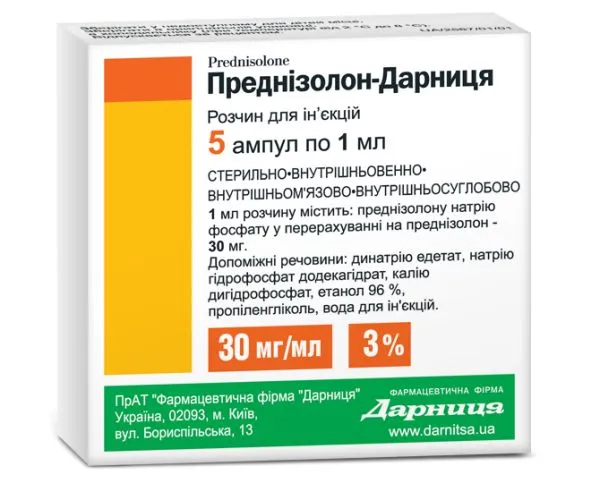
Table of Contents
INSTRUCTIONS FOR MEDICAL USE OF THE MEDICINAL PRODUCT PREDNISOLONE-DARNITSA (PREDNISOLONE-DARNITSA)
Composition:
Active substance: prednisolone;
1 ml of solution contains 30 mg of prednisolone sodium phosphate calculated as prednisolone;
Excipients: disodium edetate, disodium phosphate dodecahydrate, potassium dihydrogen phosphate, ethanol 96%, propylene glycol, water for injections.
Pharmaceutical form. Injection solution.
Main physico-chemical properties: clear, colorless or slightly colored liquid.
Pharmacotherapeutic group. Systemic corticosteroids. Glucocorticoids. Prednisolone. ATC code H02AB06.
Pharmacological properties.
Pharmacodynamics.
Exerts anti-inflammatory, anti-allergic, immunosuppressive, anti-shock, and antitoxic effects. In relatively high doses, it suppresses fibroblast activity, collagen synthesis, reticuloendothelial and connective tissue function (inhibition of the proliferative phase of inflammation), delays protein synthesis and accelerates protein catabolism in muscle tissue, but increases protein synthesis in the liver. The anti-allergic and immunosuppressive properties of the drug are due to inhibition of lymphoid tissue development with its involution during prolonged use, reduction in circulating T- and B-lymphocyte counts, inhibition of mast cell degranulation, and suppression of antibody production.
The anti-shock effect of the drug is attributed to increased vascular responsiveness to endogenous and exogenous vasoconstrictive substances, restoration of vascular receptor sensitivity to catecholamines, enhancement of their hypertensive effect, and retention of sodium and water in the body.
The antitoxic action of the drug is associated with stimulation of protein synthesis in the liver and accelerated inactivation of endogenous toxic metabolites and xenobiotics in the liver, as well as increased stability of cellular membranes, particularly hepatocytes.
Enhances glycogen deposition and glucose synthesis from protein metabolism products in the liver. Elevated blood glucose levels stimulate insulin secretion. It inhibits glucose uptake by adipocytes, leading to activation of lipolysis. However, due to increased insulin secretion, lipogenesis is stimulated, promoting fat accumulation. Reduces calcium absorption in the intestine, increases its excretion from bones, and enhances renal excretion. Suppresses pituitary release of adrenocorticotropic hormone and β-lipotropin, thereby potentially contributing to functional adrenal cortex insufficiency during prolonged use.
The main factors limiting long-term therapy with prednisolone are osteoporosis and Cushing's syndrome. Prednisolone suppresses secretion of thyroid-stimulating hormone and follicle-stimulating hormone.
In high doses, it may increase excitability of brain tissue and reduce the seizure threshold.
Stimulates excessive secretion of hydrochloric acid and pepsin in the stomach, thereby predisposing to development of peptic ulcer.
Pharmacokinetics.
After intramuscular administration, the drug is rapidly absorbed into the blood; however, the pharmacological effect is significantly delayed compared to peak plasma concentration and develops within 2–8 hours. In plasma, the majority of prednisolone is bound to transcortin (cortisol-binding globulin), and when this binding capacity is saturated, to albumin. Decreased protein synthesis leads to reduced albumin binding capacity, potentially increasing the free fraction of prednisolone and consequently causing toxic effects even at usual therapeutic doses. The elimination half-life in adults is 2–4 hours, and is shorter in children. Prednisolone is metabolized primarily in the liver via oxidation, as well as in the kidneys, small intestine, and bronchi. Oxidized metabolites are conjugated via glucuronidation or sulfation and excreted by the kidneys.
Approximately 20% of prednisolone is excreted unchanged by the kidneys, and a small portion is excreted in bile.
In liver disease, prednisolone metabolism is slowed and its plasma protein binding capacity is reduced, resulting in prolonged elimination half-life of the drug.
Clinical Characteristics.
Indications.
Intramuscular, intravenous administration:
- Systemic connective tissue diseases: systemic lupus erythematosus, dermatomyositis, scleroderma, polyarteritis nodosa, Bechterew's disease (ankylosing spondylitis);
- Hematological disorders: acute hemolytic anemia, lymphogranulomatosis (Hodgkin’s lymphoma), granulocytopenia, thrombocytopenic purpura, agranulocytosis, various forms of leukemia;
- Skin diseases: common eczema, erythema multiforme exudativum, pemphigus vulgaris, erythroderma, exfoliative dermatitis, seborrheic dermatitis, psoriasis, alopecia, adrenogenital syndrome;
- Replacement therapy: Addisonian crisis;
- Emergency conditions: severe forms of nonspecific ulcerative colitis and Crohn’s disease, shock (burn, traumatic, surgical, anaphylactic, toxic, transfusion), status asthmaticus, acute adrenal insufficiency, hepatic coma, severe allergic and anaphylactic reactions, hypoglycemic states.
Intra-articular administration:
- Chronic polyarthritis, osteoarthritis of large joints, rheumatoid arthritis, post-traumatic arthritis, arthroses.
Contraindications.
Hypersensitivity to components of the drug.
Parasitic and infectious diseases of viral, fungal, or bacterial etiology, either currently present or recently resolved: herpes simplex, herpes zoster (viremic phase), varicella, measles; amebiasis, strongyloidiasis (confirmed or suspected); systemic mycosis; active tuberculosis.
Post-vaccination period (duration of 10 weeks: 8 weeks before and 2 weeks after vaccination), lymphadenitis following BCG vaccination.
Immunodeficiency states caused by HIV infection.
Gastrointestinal disorders: peptic ulcer of the stomach and duodenum, esophagitis, gastritis, acute or latent peptic ulcer, recent intestinal anastomosis, ulcerative colitis with risk of perforation or abscess formation, diverticulitis.
Cardiovascular disorders: recent myocardial infarction, decompensated chronic heart failure, arterial hypertension, predisposition to thromboembolic disease.
Endocrine disorders: decompensated diabetes mellitus, thyrotoxicosis, hypothyroidism, Cushing's disease.
Severe chronic renal and/or hepatic insufficiency (except in emergency conditions such as hepatic coma), nephrolithiasis.
Hypoalbuminemia. Systemic osteoporosis. Myasthenia gravis. Severe myopathy. Productive psychiatric symptoms, psychoses. Obesity (grade III–IV). Poliomyelitis (except bulbar encephalitis form). Open- and closed-angle glaucoma, cataract.
For intra-articular, periarticular, and injections into tendon sheaths, when infection is present at the injection site or in surrounding tissues.
Injections directly into tendons.
Injections into spinal or other non-diartrodial joints.
Interaction with other medicinal products and other forms of interactions.
Concomitant use with CYP3A inhibitors, including products containing cobicistat, is expected to increase the risk of systemic adverse effects. Such combination should be avoided unless the benefit outweighs the increased risk of systemic corticosteroid side effects; in such cases, careful patient monitoring is required.
Possible reactions during concomitant use of prednisolone with other medicinal products:
With thyroid hormones, hepatic enzyme inducers, including barbiturates, phenytoin, pyrimethamine, carbamazepine, rifampicin – reduced efficacy of prednisolone due to increased systemic clearance;
With rifampicin, rifabutin, carbamazepine, phenobarbital, phenytoin, primidone, ephedrine, and aminoglutethimide – reduced therapeutic effect due to enhanced metabolism of corticosteroids;
With estrogens (including estrogen-containing oral contraceptives), cyclosporine, CYP3A4 inhibitors, including erythromycin, clarithromycin, ketoconazole, diltiazem, aprepitant, itraconazole, oleandomycin – enhanced therapeutic and toxic effects of prednisolone; dose adjustment may be necessary;
With etoposide – possible inhibition of metabolism by corticosteroids in vitro. This may lead to increased efficacy and toxicity of etoposide; monitoring is required;
With antacids – reduced absorption of prednisolone;
With salicylate derivatives and other nonsteroidal anti-inflammatory drugs (NSAIDs) – increased risk of gastrointestinal bleeding and mucosal ulcers. Prednisolone reduces serum levels of salicylates, increases their renal clearance, and steroid excretion may lead to salicylate intoxication. The drug increases the risk of hepatotoxic reactions to paracetamol due to induction of hepatic enzymes and formation of its toxic metabolite. Aspirin should be used cautiously in combination with glucocorticoids in patients with hypoprothrombinemia;
With coumarin anticoagulants and warfarin – their efficacy may be enhanced by concomitant corticosteroid therapy. To avoid spontaneous bleeding, careful monitoring of the international normalized ratio (INR) or prothrombin time is required;
With cardiac glycosides – increased toxicity of the latter, and due to induced hypokalemia – increased risk of arrhythmias;
With hypoglycemic agents – suppression of the hypoglycemic effect of oral antidiabetic drugs and insulin;
With antihypertensive drugs – reduced efficacy of the latter;
With tricyclic antidepressants – enhanced depressive symptoms caused by prednisolone and increased intraocular pressure;
With immunosuppressants – increased risk of infections and lymphoma or other Epstein-Barr virus-related lymphoproliferative disorders;
With diuretics (loop, thiazide, and acetazolamide), carbenoxolone, laxatives, and antifungal agents (amphotericin B) – increased risk of hypokalemia; concomitant use should be avoided. There is also an increased risk of hypokalemia with concomitant use of theophylline and with high doses of corticosteroids combined with high doses of bambuterol, fenoterol, formoterol, ritodrine, salbutamol, salmeterol, and terbutaline. Prednisolone enhances the risk of osteoporosis when used concomitantly with amphotericin B and carbonic anhydrase inhibitors;
With ketoconazole – reduced metabolic and renal clearance of methylprednisolone, which may also occur with prednisolone;
With mifepristone – possible reduction in corticosteroid effect for 3–4 days;
With methotrexate – possible increased risk of hematological toxicity;
With M-cholinoblockers, antihistamines, nitrates – increased intraocular pressure and reduced efficacy of antihistamines;
With neuroleptics, carbamazepine, azathioprine – increased risk of cataract development;
With estrogens, anabolic agents, oral contraceptives – manifestations of hirsutism and acne. Possible enhancement of glucocorticoid effects; dose adjustment may be necessary;
With live antiviral vaccines and during other types of immunization – increased risk of viral activation and infection development. High doses of corticosteroids impair immune response; therefore, live vaccines should be avoided (see section "Special precautions for use");
With muscle relaxants in the context of hypokalemia – increased intensity and duration of muscle blockade;
With anticholinesterase agents – development of muscle weakness in patients with myasthenia (especially in patients with myasthenia gravis) and reduced effect on cholecystographic contrast agents;
With mitotane and other adrenocortical function inhibitors – may necessitate increased dosage of the drug;
With antiemetic agents – enhanced antiemetic effect;
With isoniazid, mexiletine, praziquantel – reduced plasma concentrations;
With somatotropin (at high doses) – reduced effect of the latter;
With erythromycin – may inhibit metabolism of certain corticosteroids;
With fluoroquinolones – tendon damage;
With retinoids and tetracyclines – possible increased intracranial pressure;
With cyclosporine – increased plasma concentrations of prednisolone. A similar effect may occur with ritonavir. Seizures have been reported. Since concomitant administration of these drugs causes mutual inhibition of metabolism, it is likely that seizures and other adverse effects associated with each drug, both during monotherapy and combined use, may occur more frequently. Concomitant use may lead to increased plasma concentrations of other drugs.
With prolonged therapy, prednisolone increases serum folate levels.
The drug reduces the effect of vitamin D on intestinal Ca²⁺ absorption.
Special precautions for use.
Anti-inflammatory/immunosuppressive effects and infection.
Prescribe with special caution in immunodeficient conditions (including AIDS or HIV infection).
Treatment with the drug, even at low doses, may mask signs and symptoms of pre-existing infections or those developing during treatment (including opportunistic infections), and may complicate their diagnosis. Therefore, during treatment, contact with patients suffering from colds or other infections should be avoided.
Suppression of inflammatory response and immune function increases susceptibility to infections and severity of their course. New infections may develop during treatment. Acquired opportunistic infections may be fatal. The clinical picture is often atypical, and serious infections (such as sepsis and tuberculosis) may be masked and diagnosed only at an advanced stage.
In infectious diseases (not listed in the section "Contraindications") and latent forms of tuberculosis, the drug should be prescribed only in combination with antibiotics and antituberculosis agents.
Particular concern arises with varicella (chickenpox), as this seemingly mild disease may be fatal in immunosuppressed patients. Patients (or parents of children) who have not previously had chickenpox should be advised to avoid close personal contact with individuals suffering from varicella or herpes zoster. If exposure occurs, they should seek urgent medical help. Passive immunization with varicella-zoster immune globulin (VZIG) is necessary for patients without immunity who are receiving systemic corticosteroids or who have used them within the previous three months.
Patients who have been in contact with individuals suffering from measles or varicella during treatment should be given specific immunoglobulins as prophylaxis (within 10 days of exposure). Special care and urgent treatment are required if varicella is confirmed. Corticosteroids should not be discontinued, and the dose may be increased.
During treatment, live vaccines should not be administered to individuals with impaired immune systems. Inactivated (killed) vaccines or toxoids may be used, although their efficacy may be reduced.
During prolonged therapy, any intercurrent illness, trauma, or surgical procedure may require temporary dose increase. If corticosteroid therapy has been discontinued after long-term treatment, temporary re-initiation may be necessary. In intercurrent infections or septic conditions, antibiotic therapy should be administered concomitantly.
Use in severe infectious diseases (not listed in the section "Contraindications") is possible only in combination with specific antimicrobial therapy.
Chronic immunosuppression (e.g., in organ transplantation) has been associated with an increased risk of malignancy.
Discontinuation of treatment.
In patients who have received doses of prednisolone exceeding physiological levels (approximately 7.5 mg prednisolone or equivalent) for more than 3 weeks, prednisolone therapy should be discontinued gradually. Gradual discontinuation is recommended even if treatment duration was less than 3 weeks in the following patient groups:
- patients undergoing repeated courses of prednisolone therapy;
- patients who have received repeated courses within one year after prolonged treatment (months, years);
- patients receiving more than 40 mg/day of prednisolone or equivalent;
- patients with adrenal insufficiency not caused by exogenous corticosteroid intake;
- patients who have repeatedly taken corticosteroid doses in the evening.
After discontinuation, withdrawal syndrome, adrenal insufficiency, and exacerbation of the underlying disease for which prednisolone was prescribed may occur. If adrenal insufficiency is observed after stopping prednisolone, the drug should be immediately reinstated, and the dose reduced very slowly and cautiously (e.g., daily dose reduced by 2–3 mg over 7–10 days). After reaching a daily dose equivalent to 7.5 mg prednisolone, dose reduction should be even slower to allow recovery of the hypothalamic-pituitary-adrenal system.
Abrupt discontinuation of systemic corticosteroid therapy within 3 weeks is acceptable if disease relapse is not expected. Abrupt withdrawal of doses up to 40 mg daily prednisolone or equivalent within 3 weeks is unlikely to cause clinical suppression of the hypothalamic-pituitary-adrenal system in most patients.
Adrenal cortical atrophy develops during prolonged therapy and may persist for many years after treatment cessation.
Steroid-induced secondary adrenal insufficiency can be minimized by gradual dose reduction. This type of insufficiency may persist for several months after therapy ends; therefore, corticosteroid therapy should be reinstated during any stressful situation occurring during this period.
Sudden discontinuation, especially after prior use of high doses, may cause a withdrawal syndrome characterized by fever, decreased appetite, nausea, vomiting, diarrhea, lethargy, dizziness, generalized musculoskeletal pain, and asthenia.
Visual disturbances.
Visual disturbances may occur with systemic and local use of corticosteroids. If a patient experiences symptoms of visual deterioration or other visual disturbances, they should be referred to an ophthalmologist to evaluate possible causes, which may include cataract, glaucoma, or rare conditions such as central serous chorioretinopathy (CSCR), reported after systemic and topical corticosteroid use.
Scleroderma renal crisis.
Extreme caution is required in treating patients with systemic sclerosis due to increased frequency (possibly fatal) of renal crisis with hypertension and reduced urine output, observed at daily doses of 15 mg or more of prednisolone. Therefore, regular monitoring of blood pressure and kidney function (s-creatinine) is necessary. If renal crisis is suspected, blood pressure should be carefully monitored.
Elderly patients.
General adverse effects of systemic corticosteroids may have more serious consequences in the elderly, particularly osteoporosis, hypertension, hypokalemia, diabetes mellitus, susceptibility to infections, and skin thinning. To avoid life-threatening reactions, careful clinical monitoring is required (see section "Dosage and administration").
Pediatric population.
Since corticosteroids may cause growth retardation in children and adolescents, which may be irreversible, they should be used only for absolute indications and under particularly close medical supervision. Treatment should be limited to the minimum effective dose for the shortest possible duration to minimize suppression of the hypothalamic-pituitary-adrenal system and growth retardation (see section "Dosage and administration").
Other warnings.
Caution and regular monitoring are required during glucocorticoid therapy, including prednisolone, in patients with:
- diabetes mellitus or family history of diabetes;
- glaucoma or family history of glaucoma;
- hypertension or congestive heart failure;
- hepatic insufficiency;
- epilepsy;
- osteoporosis—particularly important in postmenopausal women;
- history of severe affective disorders, especially those with prior corticosteroid-induced psychosis;
- peptic ulcer disease;
- prior steroid myopathy;
- renal insufficiency;
- tuberculosis: active disease or radiological findings suggestive of tuberculosis. However, development of active tuberculosis may be prevented by prophylactic antituberculosis therapy;
- recent myocardial infarction (risk of rupture);
- hypothyroidism and existing chronic liver disease (with impaired function)—may potentiate corticosteroid effects;
- adrenal cortical atrophy, which develops during prolonged therapy and may persist for many years after treatment cessation.
The drug should be used cautiously in patients with impaired carbohydrate tolerance.
When prednisolone is used concomitantly with oral hypoglycemic agents or anticoagulants, dosage adjustments of the latter may be necessary.
In patients with thrombocytopenic purpura, the drug should be administered intravenously only.
Depending on duration and dose, the drug may have a negative impact on calcium metabolism. Osteoporosis prophylaxis is recommended, especially important in patients with risk factors (including family predisposition, advanced age, postmenopause, inadequate protein and calcium intake, excessive smoking, excessive alcohol consumption, and reduced physical activity). Prophylaxis includes adequate calcium and vitamin D intake, along with physical activity.
Appropriate dietary measures are justified to reduce adverse effects of prednisolone therapy.
Prolonged use of high doses of prednisolone (30 mg/day for at least 4 weeks) may cause reversible disturbances in spermatogenesis, which may persist for several months after discontinuation.
The drug should be used with special caution in hepatic and renal insufficiency.
Electrolyte balance should be carefully monitored when prednisolone is used concomitantly with diuretics. During prolonged prednisolone therapy, potassium supplements and an appropriate diet should be prescribed to prevent hypokalemia and due to possible increase in intraocular pressure and development of subcapsular cataract.
Due to the risk of hypercorticism, a new course of cortisone therapy after prior prolonged prednisolone treatment within several months should always start with low initial doses (except when used for life-threatening conditions).
In Addison's disease, barbiturates should be avoided due to the risk of acute adrenal insufficiency (Addisonian crisis).
Use with caution after recent myocardial infarction (in patients with acute or subacute myocardial infarction, there is a risk of necrosis extension, delayed scar formation, and cardiac muscle rupture).
Prednisolone should be used with special caution in high doses in patients with a history of psoriasis.
In patients with a history of seizures, prednisolone should be used only at minimal effective doses.
The drug should be used with special caution in migraine, and in patients with a history of certain parasitic diseases (especially amoebiasis).
Postmenopausal women should be examined for possible development of osteoporosis.
If unusual stressful situations occur during glucocorticoid therapy, an increase in the dose of fast-acting corticosteroids is recommended before, during, and after the stressful event.
Particular attention should be paid to the use of systemic corticosteroids in patients with existing or past history of severe affective disorders, including depression, manic-depressive psychosis, or prior steroid-induced psychosis.
Kaposi's sarcoma has been reported in patients receiving corticosteroid therapy. Discontinuation of corticosteroids may lead to clinical remission.
Patients and/or caregivers should be warned about the possibility of developing serious psychiatric side effects. Symptoms usually appear within days or weeks after starting treatment. The risk of such side effects is higher with high-dose therapy, although dose levels do not allow prediction of onset, type, severity, or duration of reactions. Most reactions resolve after dose reduction or discontinuation, although specific treatment may sometimes be required. If such symptoms develop (anxious psychological symptoms, especially if depressive mood or suicidal thoughts are suspected), medical advice should be sought. Psychiatric disorders may also occur during or immediately after discontinuation of glucocorticoids, although such reactions are infrequently reported.
Alcohol should not be consumed during prednisolone treatment.
Clinical examination should include evaluation of the cardiovascular system, chest X-ray, examination of the stomach and duodenum, urinary system, and visual organs. Laboratory tests should include: complete blood count, blood and urine glucose concentration, plasma electrolytes.
During prolonged glucocorticoid therapy, regular monitoring of blood pressure, urine and blood glucose levels, fecal occult blood test, coagulation parameters, spinal X-ray, and ophthalmological examination (once every 3 months) is recommended.
Important information on excipients.
This medicinal product contains sodium; therefore, patients on a sodium-restricted diet should use it with caution.
This medicinal product contains propylene glycol, which may cause symptoms similar to those of alcohol consumption.
Use during pregnancy or breastfeeding.
Pregnancy.
The ability of corticosteroids to cross the placenta varies between individual drugs. However, 88% of prednisolone is inactivated when passing through the transplacental placental barrier.
Administration of corticosteroids to pregnant animals may cause fetal developmental abnormalities, including cleft palate (hare lip), intrauterine growth retardation, and effects on brain growth and development. There is no evidence that corticosteroids increase the frequency of congenital anomalies such as cleft palate/lip in humans. However, prolonged or repeated use during pregnancy may increase the risk of intrauterine growth retardation. Hypoadrenalism may theoretically occur in newborns after prenatal exposure to corticosteroids, but it usually resolves spontaneously after birth and is rarely clinically significant. As with all medicines, corticosteroids should be prescribed only when benefit to mother and child outweighs the risks. However, when corticosteroid use is necessary, patients with normal pregnancies can be treated as if they were not pregnant.
Patients with preeclampsia or fluid retention require careful monitoring.
Hormone level depression during pregnancy has been described, but the significance of this finding is unclear.
Breastfeeding.
If use of the drug is necessary, breastfeeding should be discontinued.
Corticosteroids are excreted in small amounts in breast milk. However, doses up to 40 mg daily of prednisolone are unlikely to cause systemic effects in the infant. In infants of mothers taking higher doses, adrenal suppression is possible, but the benefits of breastfeeding may outweigh any theoretical risk. Monitoring of the infant for adrenal suppression is recommended.
Ability to affect reaction speed when driving or operating machinery.
This medicinal product has no or negligible effect on the nervous system; however, patients treated with prednisolone should refrain from potentially hazardous activities requiring increased attention and speed of mental and motor reactions.
Method of Administration and Dosage.
It is not allowed to mix or simultaneously administer prednisolone with other medicinal products in the same infusion system or syringe!
The medicinal product is intended for intravenous, intramuscular, or intra-articular administration. The dose of prednisolone depends on the severity of the disease.
For treatment of adults, the daily dose is 4–60 mg administered intravenously or intramuscularly.
In children, the medicinal product should be administered intramuscularly (deeply into the gluteal muscle) strictly according to indications and under physician supervision: for children aged 6–12 years – 25 mg/day; for children aged 12 years and older – 25–50 mg/day. The duration of treatment and the number of administrations are determined individually.
In Addison's disease, the daily dose for adults is 4–60 mg administered intravenously or intramuscularly.
In severe forms of non-specific ulcerative colitis – 8–12 mL/day (240–360 mg of prednisolone) for 5–6 days; in severe Crohn's disease – 10–13 mL/day (300–390 mg of prednisolone) for 5–7 days.
In emergency conditions, prednisolone should be administered intravenously slowly (approximately over 3 minutes) or by drip infusion, at a dose of 30–60 mg. If intravenous administration is difficult, the medicinal product should be administered deeply intramuscularly. With this route of administration, the effect develops more slowly. If necessary, the medicinal product may be re-administered intravenously or intramuscularly at a dose of 30–60 mg after 20–30 minutes.
At the physician’s discretion, the indicated dose may be individually increased in each specific case.
For adults, the dose of prednisolone for intra-articular administration is 30 mg for large joints, 10–25 mg for medium-sized joints, and 5–10 mg for small joints. The medicinal product should be administered every 3 days. The treatment course lasts up to 3 weeks.
Children.
The medicinal product may be used in children aged 6 years and older only under medical prescription and supervision. The physician determines the dosage and duration of therapy individually, depending on the child's age and severity of the disease. With prolonged use in children, growth retardation may occur; therefore, treatment should be limited to the minimum effective doses for the shortest possible duration according to defined indications. The benefit of treatment must outweigh the potential risk of adverse effects.
Overdose.
In case of overdose, nausea, vomiting, bradycardia, arrhythmia, exacerbation of heart failure symptoms, cardiac arrest, hypokalemia, increased blood pressure, muscle cramps, hyperglycemia, thromboembolism, acute psychosis, dizziness, headache, and development of symptoms of hypercorticism (weight gain, edema development, arterial hypertension, glucosuria, hypokalemia) may occur. In children, overdose may lead to suppression of the hypothalamic-pituitary-adrenal system, Cushing's syndrome, decreased growth hormone excretion, and increased intracranial pressure.
Treatment: discontinue the medicinal product, symptomatic therapy, and, if necessary, correction of electrolyte imbalance. There is no specific antidote.
Adverse Reactions.
The development of severe adverse reactions depends on the dose and duration of treatment. Adverse reactions usually occur during prolonged therapy; the risk of their occurrence is unlikely during short-term use.
The following adverse effects may be associated with long-term systemic use of corticosteroids, with the following frequency:
Frequency unknown (cannot be estimated from available data).
Eye disorders: increased intraocular pressure with possible optic nerve damage, glaucoma, papilledema, optic disc swelling, posterior subcapsular cataract, central serous chorioretinopathy, corneal and scleral thinning, corneal trophic changes, exacerbation of ocular viral and fungal infections, exophthalmos, blurred vision.
Gastrointestinal disorders: nausea, vomiting, flatulence, unpleasant taste in the mouth, dyspepsia, increased or decreased appetite, hiccups, epigastric pain, diarrhea, erosive esophagitis, peptic ulcers with perforation and hemorrhage, esophageal ulcer, esophageal candidiasis, pancreatitis, gallbladder perforation, gastrointestinal bleeding, localized ileitis, and ulcerative colitis.
Hepatobiliary disorders: during the period of drug administration, elevated levels of ALT, AST, and alkaline phosphatase may be observed, which are usually not clinically significant and reversible upon discontinuation of the drug.
Renal and urinary disorders: increased risk of urates and urolithiasis, increased number of leukocytes and erythrocytes in urine without evidence of kidney damage, leukocyturia, scleroderma renal crisis*.
Endocrine system disorders: reduced glucose tolerance, steroid-induced diabetes mellitus or manifestation of latent diabetes mellitus, increased need for insulin and oral hypoglycemic agents, hyperlipidemia, suppression of the hypothalamic-pituitary-adrenal (HPA) axis, growth retardation in children and adolescents, delayed sexual development in children, menstrual cycle disturbances, disturbances in sex hormone production (amenorrhea), postmenopausal bleeding, Cushing's syndrome (moon face, centripetal obesity, hirsutism, elevated blood pressure, dysmenorrhea, amenorrhea, myasthenia, striae).
Metabolism and nutritional disorders: negative nitrogen and calcium balance, disturbances in mineral and electrolyte balance, hypokalemia, hypokalemic alkalosis, increased appetite. Adverse effects due to glucocorticoid activity of prednisolone: fluid and sodium retention (peripheral edema), hypernatremia, hypokalemic syndrome – arrhythmia, myalgia or muscle cramps, unusual weakness and fatigue.
Nervous system disorders: peripheral neuropathies, paresthesia, dizziness, headache, autonomic disorders, increased intracranial pressure accompanied by vomiting, pseudotumor cerebri, seizures.
Psychiatric disorders**: irritability, delirium, disorientation, euphoria, hallucinations, depression, paranoia, nervousness, restlessness, anxiety, sleep disturbances, insomnia, euphoria, suicidal ideation, mood lability, increased concentration, psychological dependence, mania, manic-depressive psychosis, exacerbation of schizophrenia, dementia, psychosis, epileptic seizures, cognitive dysfunction (including amnesia and disturbances of consciousness).
Cardiovascular disorders: arterial hypotension or hypertension, bradycardia, arrhythmia, asystole (due to rapid administration of the drug), development or worsening of chronic heart failure, atherosclerosis, thrombosis, vasculitis, peripheral edema, ECG changes typical for hypokalemia. In patients with acute and subacute myocardial infarction – extension of the necrotic area, delayed scar formation, which may lead to myocardial rupture.
Blood and lymphatic system disorders: increased total leukocyte count with decreased eosinophils, monocytes, and lymphocytes. Lymphoid tissue mass decreases. Blood coagulation may increase, leading to hypercoagulability, thrombosis, and thromboembolism.
Immune system disorders: hypersensitivity reactions, including rash, skin itching, urticaria, hyperemia, angioedema, anaphylactic shock.
Skin and subcutaneous tissue disorders: delayed regeneration process, petechiae, bruises, hematomas, ecchymoses, striae, skin thinning, hyper- or hypopigmentation, acne, predisposition to pyoderma, skin atrophy, telangiectasia, hyperhidrosis, acne, hirsutism, purpura, post-steroid panniculitis characterized by the appearance of erythema, hot subcutaneous thickening within 2 weeks after drug discontinuation, Kaposi's sarcoma.
Musculoskeletal and connective tissue disorders: growth retardation and delayed ossification in children (premature closure of epiphyseal growth zones), proximal myopathy, osteoporosis, myalgia, tendon and muscle rupture, muscle weakness, increased or decreased muscle mass (atrophy), steroid myopathy, spinal and long bone fractures, avascular osteonecrosis, pathological bone fractures.
Infections and infestations: increased susceptibility and severity of infections with masking of clinical symptoms and signs of bacterial, viral, and fungal infections, opportunistic infections, tuberculosis relapse.
General disorders: malaise, persistent hiccups when the drug is used in high doses, adrenal insufficiency leading to arterial hypotension, hypoglycemia, and fatal outcomes under stressful conditions such as surgery, trauma, or infection if the prednisolone dose is not increased.
Injection site reactions: pain, burning, pigmentation changes (depigmentation, leukoderma), skin atrophy, sterile abscesses, rarely – lipoatrophy.
* Scleroderma renal crisis.
Scleroderma renal crisis occurs in various subpopulations. The highest risk is observed in patients with diffuse systemic sclerosis. The lowest risk is reported in patients with limited systemic sclerosis (2%) and juvenile systemic sclerosis (1%).
** These reactions are common and may occur in both adults and children. In adults, the frequency of severe reactions is estimated at 5–6%. Reports of psychological effects during corticosteroid withdrawal exist; frequency unknown.
Withdrawal symptoms.
Abrupt discontinuation of the drug may lead to withdrawal syndrome. The severity of symptoms depends on the degree of adrenal atrophy and may include headache, nausea, vomiting, abdominal pain, dizziness, anorexia, weakness, mood changes, lethargy, fever, myalgia, arthralgia, rhinitis, eczema, conjunctivitis, painful skin itching, weight loss. In more severe cases – severe psychiatric disturbances and hypotension, increased intracranial pressure, optic disc swelling due to cerebral edema, steroid-induced rheumatism in patients with rheumatic disease, and fatal outcomes.
In some cases, withdrawal symptoms may either occur or resemble a clinical relapse of the disease for which the patient is being treated.
Pediatric population.
Increased intracranial pressure with optic disc swelling in children (pseudotumor cerebri) – usually occurs after discontinuation of treatment. Growth retardation in children and adolescents.
Reporting of suspected adverse reactions.
Reporting suspected adverse reactions after drug registration is an important procedure. It allows continuous monitoring of the benefit-risk balance for the respective medicinal product. Healthcare professionals are required to report any suspected adverse reactions through the national reporting system.
Shelf life. 2 years.
Storage conditions.
Store in original packaging, in a refrigerator (at a temperature of 2 °C to 8 °C).
Keep out of reach of children.
Incompatibilities.
Prednisolone must not be mixed or administered simultaneously with other medicinal products in the same infusion system or syringe.
Mixing prednisolone solution with heparin results in precipitate formation.
Incompatible with aerosols of sympathomimetic agents used in the treatment of bronchial asthma in children (risk of respiratory paralysis).
Packaging.
1 ml in a vial; 3 or 5 vials in a blister pack; 1 blister pack in a carton.
Prescription status. Prescription only.
Manufacturer. JSC "Pharmaceutical Company "Darnitsya".
Manufacturer's address and location of its business activities.
13, Borispilska Street, Kyiv, 02093, Ukraine.