Posterisan forte
Ukraine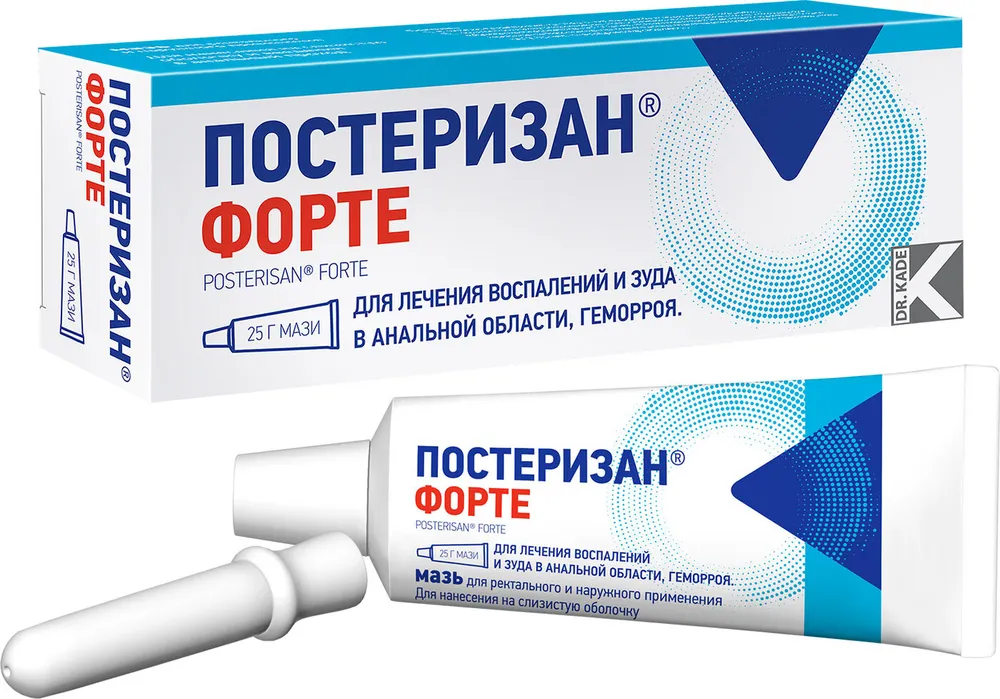
Instructions for Use
INSTRUCTIONS |
POSTERISAN FORTE |
Composition:Active ingredients: 1 g of ointment contains 166.70 mg of standardized bacterial culture suspension (containing 5.0 × 10⁸ E. coli, killed and preserved in 3.3 mg of liquid phenol), 2.50 mg of hydrocortisone; Excipients: lanolin, yellow soft paraffin. |
| Pharmaceutical form. Ointment. Main physicochemical characteristics: homogeneous ointment of white to beige color with a characteristic phenol odor. |
| Pharmacotherapeutic group. Agents for treatment of hemorrhoids and anal fissures for topical use. ATC code C05AA. |
Pharmacological properties.Pharmacodynamics. Active ingredients of the medicinal product are standardized bacterial culture suspension (SBC), derived from E. coli, and hydrocortisone. For SBC production, bacteria are inactivated with phenol. Then, the aqueous suspension is processed into a galenical form. Thus, the final product contains intact cells, cellular degradation products, and metabolites, but no live bacteria. After rectal administration (in rats and dwarf pigs), SBC is rapidly absorbed through the intestinal mucosa. When applied to the skin and mucous membranes, SBC stimulates non-specific and specific immune mechanisms. In vitro tests and animal models have shown that SBC induces proliferation of T-lymphocytes and production of immunoglobulins (IgA and IgG). Thus, a polyclonal stimulation of immune response is initiated, natural immune defense is enhanced, and susceptibility of affected tissues to infections is reduced. In in vitro models using human cell systems, lymphocyte proliferation is induced in an antigen-specific manner by Langerhans antigen-presenting cells. In vitro, SBC lyophilisates exert inhibitory effects on provoked histamine release from mast cells and basophilic granulocytes, demonstrating anti-inflammatory properties. Induction in vitro of various cytokines indicates possible involvement in tissue regeneration and, accordingly, promotes wound healing. Animal experiments and human studies also demonstrate immunogenic effects on inflammatory skin changes and wound-healing activity. Swelling decreases more rapidly when therapy includes SBC. Hydrocortisone is a natural adrenal hormone and precursor of synthetic glucocorticoids. Compared to synthetic glucocorticoids, hydrocortisone is classified as a low-potency glucocorticoid. When applied topically to the skin or mucous membranes, hydrocortisone exerts acute anti-inflammatory, antipruritic, anti-allergic, and immunosuppressive effects, although the latter is less pronounced. However, there is no antiproliferative effect. Hydrocortisone inhibits the release of lysosomal enzymes, migration of inflammatory cells, and synthesis of inflammatory mediators such as prostaglandins and leukotrienes. This leads to vasoconstriction and reduced vascular permeability in mesenchyme. Reactivity of connective tissue vessels is reduced, and inflammatory processes are suppressed. Hydrocortisone affects the immune system by reducing immunogenic activity of T-lymphocytes, Langerhans cells, and macrophages. Immediate antibody-related reactions are diminished. The action of hydrocortisone results from binding to cytosolic corticosteroid receptors, influencing ribonucleic acid and protein synthesis. The above-described effects of SBC and hydrocortisone complement each other in the medicinal product Postersan Forte. Experiments have shown that hydrocortisone does not abolish the immunopharmacological effects of SBC. Hydrocortisone does not impair the beneficial effect of SBC on wound healing. Anti-inflammatory and antipruritic effects of hydrocortisone support the enhanced immune defense mechanisms induced by SBC. Pharmacokinetics. Studies on absorption, systemic presence, and excretion are not feasible after topical application of SBC. However, penetration of immunogenic components of SBC has been demonstrated in immunohistological studies of the rectal mucosa in animals (rats and dwarf pigs). Topically applied hydrocortisone penetrates through the skin and accumulates in the epidermis and dermis. The extent of skin penetration varies depending on the site. Only a small amount of hydrocortisone enters the bloodstream from the dermis and therefore does not cause systemic side effects. After topical application, absorption of hydrocortisone through the rectal mucosa is significantly higher than through the skin. However, after therapeutic doses, the accompanying increase in blood concentration is short-lived, with peak levels reaching below physiological ranges. There are no systemic side effects or impact on hormonal regulation. Quantitative data on absorption and elimination of hydrocortisone are lacking. Hydrocortisone is hydrogenated in the liver in the ring system and ketone groups, thus rapidly inactivated. Elimination occurs primarily via the kidneys as glucuronides and sulfate esters. |
Clinical characteristics.Indications. Local treatment of symptoms of hemorrhoids, eczema, and anal fissures. |
| Contraindications. Increased sensitivity to the active substance or to any component of the preparation. Specific skin conditions (tuberculosis, syphilis, gonorrhea) in the application area, chickenpox, vaccination reaction, fungal infections, inflammatory skin diseases of the face (perioral dermatitis, rosacea), other bacterial, viral, parasitic infections at the site of application, ulcerative lesions and atrophic changes at the site of application, tumors of the anorectal zone. |
| Interaction with other medicinal products and other types of interactions. When Postersan Forte ointment is used concomitantly with other corticosteroid-containing preparations (in tablet, drop, or injectable form), an enhanced therapeutic and adverse effect of corticosteroids is possible. |
Special precautions.Treatment should continue until symptoms disappear, but not longer than 5–7 days. When using any topical steroids, systemic absorption should be considered possible. In case of fungal infections, a topical antifungal medicinal product should be used simultaneously. During treatment with Postersan Forte ointment, the tensile strength of condoms may be reduced due to the presence of yellow soft paraffin, which may negatively affect condom quality. Contains lanolin. May cause local skin reactions (e.g., contact dermatitis). |
| Use during pregnancy or breastfeeding. Pregnancy. There are no adequate data on the use of the medicinal product in pregnant women. Therefore, the medicinal product should be used during pregnancy only if clearly indicated and after careful assessment of the risk/benefit ratio. Breastfeeding. Hydrocortisone is excreted in breast milk. Breastfeeding should be avoided during continuous use or high-dose hydrocortisone therapy. Ability to influence reaction rate when driving or operating machinery. Data are lacking. |
Method of administration and dosage.Hygienic procedures of the anal area should be performed before application. For adults, apply the ointment to the affected skin and mucous membranes twice daily (morning and evening), preferably after defecation, and gently rub in with a finger. The applicator with side openings provided in the package can be used for inserting the ointment into the anal canal and rectum. The duration of treatment is determined by the physician depending on the nature and course of the disease. Usually, the treatment period is 5–7 days. Children. Do not use in children. |
| Overdose. No cases of overdose or intoxication have been reported. Overdose may cause suppression of the hypothalamic-pituitary-adrenal system. Accidental oral ingestion of the ointment (e.g., by children) may lead to gastrointestinal disturbances (abdominal pain, nausea). Long-term use in high doses increases absorption and raises the risk of systemic effects of hydrocortisone, such as menstrual cycle disturbances, increased blood pressure, delayed wound healing, muscle weakness, insomnia, and elevated blood glucose levels. If symptoms of hypercorticism occur, treatment should be discontinued. |
Adverse reactions.In individual cases, patients with hypersensitivity to the components of Posterisan forte ointment may experience hypersensitivity reactions, including itching and burning, depigmentation, hypertrichosis, and dry skin. May cause contact dermatitis (e.g., due to hypersensitivity to phenol). With prolonged use of the drug in high doses, the following dermatological reactions are possible: dermatitis, eczema, delayed healing of wounds and fissures, development of secondary infection, mucosal atrophy, skin atrophy, adrenocortical suppression, capillary dilation (telangiectasia), appearance of skin striae, and steroid acne. |
| Shelf life. 3 years. |
| Storage conditions. Store in the original packaging at a temperature not exceeding 25 °C, in a dry, light-protected place, out of reach of children. |
| Packaging. 25 g in an aluminum tube with an applicator. 1 tube in a cardboard box. |
| Supply category. Over-the-counter. |
| Manufacturer. Dr. Kade Pharmazeutische Fabrik GmbH. |
| Manufacturer's address and place of business. Riemsdorfer Strasse 2, 12277 Berlin, Germany. |
Frequently Asked Questions
What is Posterisan forte prescribed for?
The ointment is used for the local treatment of symptoms of hemorrhoids, eczema, and fissures in the anal area.
How should Posterisan forte be used correctly?
Adults should apply the ointment to the affected area of skin or mucous membranes 2 times a day (morning and evening), gently rubbing it in with a finger. A special applicator included in the kit may be used. Treatment usually lasts 5–7 days or until symptoms disappear.
Who should not use this drug?
The product must not be used by children. It is also contraindicated in people with hypersensitivity to the components of the ointment, the presence of infections (tuberculosis, syphilis, gonorrhea, fungal diseases, etc.), tumors of the anorectal zone, or ulcerative lesions at the application site.
What are the possible side effects of Posterisan forte?
Hypersensitivity reactions are possible: itching, burning, skin dryness, or depigmentation. Due to the phenol content, contact dermatitis may occur. With prolonged use in large doses, skin atrophy, the appearance of stretch marks, steroid acne, delayed wound healing, and other dermatological changes are possible.
Can the ointment be combined with other medicines?
If you are simultaneously using other medications containing corticosteroids (in the form of tablets, drops, or injections), the effect and side effects of the corticosteroids may be enhanced.
Does the drug affect the use of condoms?
Yes, due to the paraffin content, the burst strength of condoms may decrease, which affects their quality.
Can the drug be used during pregnancy or breastfeeding?
In pregnant women, the drug is prescribed only for strict indications after a risk assessment. During breastfeeding, prolonged use or the use of high doses should be avoided, as hydrocortisone is excreted in breast milk.
This page has been machine-translated and may contain inaccuracies. The original data is available in the manufacturing country's language.
Last data check: July 21, 2026 · Data source: Державний реєстр лікарських засобів України