Polytechne
UkraineTable of Contents
INSTRUCTIONS for medical use of the medicinal product Poltechnet (Poltechnet)
Composition:
Active substances: Sodium (99Mo)Molybdate, Sodium (99mTc)pertechnetate
Parent substance: sodium molybdate-99Mo 9.1–200 GBq;
Daughter substance: sodium pertechnetate-99mTc 8.0–175 GBq;
Excipients: sodium chloride, water for injections.
Pharmaceutical form. Radionuclide generator.
Sodium pertechnetate-99mTc solution is clear and colorless.
Main physicochemical properties: clear, colorless solution.
Pharmaco-therapeutic group.
Diagnostic radiopharmaceuticals. ATC code V09FX01.
Pharmacological Properties
Pharmacodynamics. Within the dosage range used for diagnostic purposes, no pharmacological activity has been observed.
Pharmacokinetics.
Distribution
Pertechnetate ions are distributed similarly to iodide and perchlorate ions, temporarily concentrating in the salivary glands, choroid plexus, stomach (mucosa), and thyroid gland, from which they are excreted unchanged.
Pertechnetate ions also tend to accumulate in areas with increased vascularity or pathological vascular permeability, especially when prior therapy with blocking agents suppresses uptake in glandular tissues. Provided the blood-brain barrier remains intact, sodium pertechnetate-99mTc does not penetrate into brain tissue.
Accumulation in Organs
In blood, 70–80% of intravenously administered sodium pertechnetate-99mTc binds to proteins, predominantly non-specifically to albumin. The unbound fraction (20–30%) is temporarily accumulated in the thyroid and salivary glands, mucous membranes of the stomach and nose, as well as in the choroid plexus.
However, unlike iodine, sodium pertechnetate-99mTc is not incorporated into thyroid hormone synthesis (i.e., not organified) and is not absorbed by the small intestine. In the thyroid gland, maximum accumulation—depending on functional status and iodine saturation (approximately 0.3–3% in euthyroidism, up to 25% in hyperthyroidism and iodine deficiency)—is reached about 20 minutes after injection, after which it rapidly declines. This also applies to parietal cells of the gastric mucosa and acinar cells of the salivary glands.
In contrast to the thyroid gland, which releases sodium pertechnetate-99mTc back into the bloodstream, pertechnetate-99mTc from the salivary glands and gastric secretions is excreted into saliva and gastric juice, respectively. Salivary gland uptake amounts to about 0.5% of the administered activity, with peak accumulation occurring approximately 20 minutes after injection. One hour after injection, the concentration in saliva is 10–30 times higher than in plasma. Excretion can be enhanced by lemon juice or stimulation of the parasympathetic nervous system, while uptake is reduced by perchlorate.
Elimination
The plasma half-life is approximately 3 hours. Sodium pertechnetate-99mTc is not metabolized in the body. One fraction is rapidly excreted by the kidneys, while the remainder is eliminated more slowly via feces, saliva, and tears. Elimination within the first 24 hours after administration occurs predominantly via urine (about 25%) and via feces over the subsequent 48 hours. Approximately 50% of the administered activity is excreted within the first 50 hours. When selective accumulation of sodium pertechnetate-99mTc in glandular tissues is suppressed by previously administered blocking agents, elimination follows the same routes, but a higher renal clearance is observed.
The above data do not apply when sodium pertechnetate-99mTc is used for labeling another radiopharmaceutical.
Sterile injectable solution with pH 5.5–7.5. 99mTc is a pure gamma emitter with a mean gamma photon energy of 0.141 MeV. It decays with a half-life of 6.01 hours to technetium-99, which can be considered stable.
Clinical characteristics.
Indications.
The medicinal product is intended solely for diagnostic use.
The eluate from the generator (sodium pertechnetate-99mTc solution) is used for:
- labeling kits for the preparation of radiopharmaceuticals used in diagnostic imaging, prepared according to the labeling procedure described in the instructions supplied with these kits;
- thyroid scintigraphy: direct imaging and determination of pertechnetate accumulation in the gland, providing information on the size, position, structure, and function of the thyroid gland in pathological conditions;
- salivary gland scintigraphy: diagnosis of chronic inflammation of the salivary glands (e.g., Sjögren's syndrome), as well as assessment of salivary gland function and ductal patency in salivary gland disorders and monitoring response to therapeutic interventions (particularly radioiodine therapy);
- localization of ectopic gastric mucosa (Meckel's diverticulum);
- lacrimal duct scintigraphy: for evaluation of functional disorders of tear drainage (after instillation of sterile sodium pertechnetate-99mTc solution into the eye) and monitoring response to therapeutic interventions.
Contraindications.
Hypersensitivity to the active substance or to any of the excipients. Pregnancy, breastfeeding.
Safety precautions.
When working with sodium pertechnetate-99mTc, as with other radioactive medicinal products, caution must be exercised and appropriate safety measures taken to minimize radiation exposure to clinical staff and patients to the lowest possible level.
Handling of radiopharmaceuticals may only be performed by personnel authorized to work with radiopharmaceuticals. Storage, administration, transportation, and disposal of radiopharmaceutical waste must be carried out in accordance with current legislation.
DOSEMetry
The data below are from ICRP 80 and are calculated based on the following assumptions: Table 1
Without prior administration of a blocking agent.
| Organ |
Absorbed dose per unit of administered activity (mGy/MBq) |
||||
| Adults |
15 years |
10 years |
5 years |
1 year |
|
| Adrenal glands |
0.0037 |
0.0047 |
0.0072 |
0.011 |
0.019 |
| Bladder wall |
0.018 |
0.023 |
0.030 |
0.033 |
0.060 |
| Bone surface |
0.0054 |
0.0066 |
0.0097 |
0.014 |
0.026 |
| Brain |
0.0020 |
0.0025 |
0.0041 |
0.0066 |
0.012 |
| Breast |
0.0018 |
0.0023 |
0.0034 |
0.0056 |
0.011 |
| Gallbladder |
0.0074 |
0.0099 |
0.0016 |
0.023 |
0.035 |
| Gastrointestinal tract
|
0.026 0.016 0.042 0.057 0.021 |
0.034 0.020 0.054 0.073 0.028 |
0.048 0.031 0.088 0.12 0.045 |
0.078 0.047 0.14 0.20 0.072 |
0.16 0.082 0.27 0.38 0.13 |
| Heart |
0.0031 |
0.0040 |
0.0061 |
0.0092 |
0.017 |
| Kidneys |
0.0050 |
0.0060 |
0.0087 |
0.013 |
0.021 |
| Liver |
0.0038 |
0.0048 |
0.0081 |
0.013 |
0.022 |
| Lungs |
0.0026 |
0.0034 |
0.0051 |
0.0079 |
0.014 |
| Muscles |
0.0032 |
0.0040 |
0.0060 |
0.0090 |
0.016 |
| Esophagus |
0.0024 |
0.0032 |
0.0047 |
0.0075 |
0.014 |
| Ovaries |
0.010 |
0.013 |
0.018 |
0.026 |
0.045 |
| Pancreas |
0.0056 |
0.0073 |
0.011 |
0.016 |
0.027 |
| Red bone marrow |
0.0036 |
0.0045 |
0.0066 |
0.0090 |
0.015 |
| Salivary glands |
0.0093 |
0.012 |
0.017 |
0.024 |
0.039 |
| Skin |
0.0018 |
0.0022 |
0.0035 |
0.0056 |
0.010 |
| Spleen |
0.0043 |
0.0054 |
0.0081 |
0.012 |
0.021 |
| Testes |
0.0028 |
0.0037 |
0.0058 |
0.0087 |
0.016 |
| Thymus |
0.0024 |
0.0032 |
0.0047 |
0.0075 |
0.014 |
| Thyroid gland |
0.022 |
0.036 |
0.055 |
0.12 |
0.22 |
| Uterus |
0.0081 |
0.010 |
0.015 |
0.022 |
0.037 |
| Other tissues |
0.0035 |
0.0043 |
0.0064 |
0.0096 |
0.017 |
| Effective dose (mSv/MBq) |
0.013 |
0.017 |
0.026 |
0.042 |
0.079 |
Table 2
With prior administration of a blocking agent.
| Organ |
Absorbed dose per unit of administered activity (mGy/MBq) with blocking agent |
||||
| Adults |
15 years |
10 years |
5 years |
1 year |
|
| Adrenal glands |
0.0029 |
0.0037 |
0.0056 |
0.0086 |
0.016 |
| Bladder wall |
0.030 |
0.038 |
0.048 |
0.050 |
0.091 |
| Bone surface |
0.0044 |
0.0054 |
0.0081 |
0.012 |
0.022 |
| Brain |
0.0020 |
0.0026 |
0.0042 |
0.0071 |
0.012 |
| Breast |
0.0017 |
0.0022 |
0.0032 |
0.0052 |
0.010 |
| Gallbladder |
0.0030 |
0.0042 |
0.0070 |
0.010 |
0.013 |
| Gastrointestinal tract
|
0.0027 0.0035 0.0036 0.0032 0.0042 |
0.0036 0.0044 0.0048 0.0043 0.0054 |
0.0059 0.0067 0.0071 0.0064 0.0081 |
0.0086 0.010 0.010 0.010 0.011 |
0.015 0.018 0.018 0.017 0.019 |
| Heart |
0.0027 |
0.0034 |
0.0052 |
0.0081 |
0.014 |
| Kidneys |
0.0044 |
0.0054 |
0.0077 |
0.011 |
0.019 |
| Liver |
0.0026 |
0.0034 |
0.0053 |
0.0082 |
0.015 |
| Lungs |
0.0023 |
0.0031 |
0.0046 |
0.0074 |
0.013 |
| Muscles |
0.0025 |
0.0031 |
0.0047 |
0.0072 |
0.013 |
| Esophagus |
0.0024 |
0.0031 |
0.0046 |
0.0075 |
0.014 |
| Ovaries |
0.0043 |
0.0054 |
0.0078 |
0.011 |
0.019 |
| Pancreas |
0.0030 |
0.0039 |
0.0059 |
0.0093 |
0.016 |
| Red bone marrow |
0.0025 |
0.0032 |
0.0049 |
0.0072 |
0.013 |
| Skin |
0.0016 |
0.0020 |
0.0032 |
0.0052 |
0.0097 |
| Spleen |
0.0026 |
0.0034 |
0.0054 |
0.0083 |
0.015 |
| Testes |
0.0030 |
0.0040 |
0.0060 |
0.0087 |
0.016 |
| Thymus |
0.0024 |
0.0031 |
0.0046 |
0.0075 |
0.014 |
| Thyroid gland |
0.0024 |
0.0031 |
0.0050 |
0.0084 |
0.015 |
| Uterus |
0.0060 |
0.0073 |
0.011 |
0.014 |
0.023 |
| Other tissues |
0.0025 |
0.0031 |
0.0048 |
0.0073 |
0.013 |
| Effective dose (mSv/MBq) |
0.0042 |
0.0054 |
0.0077 |
0.011 |
0.019 |
The effective dose following intravenous administration of 400 MBq of sodium pertechnetate-99mTc to an adult patient weighing 70 kg is approximately 5.2 mSv.
After prior administration of a blocking agent and injection of 400 MBq of sodium pertechnetate-99mTc to an adult patient weighing 70 kg, the effective dose is approximately 1.7 mSv.
The radiation dose absorbed by the lens of the eye following administration of sodium pertechnetate-99mTc for lacrimal duct scintigraphy is estimated at 0.038 mGy/MBq. As a result, the effective dose is less than 0.01 mSv when the administered activity is 4 MBq.
The stated radiation exposure is valid only under the condition that all organs accumulating sodium pertechnetate-99mTc are functioning normally. Increased or decreased activity, for example, in the thyroid gland, gastric mucosa, or kidneys, as well as prolonged processes affecting the blood-brain barrier or urinary excretion disorders, may lead to changes in radiation exposure, sometimes even to a significant increase.
Surface and accumulated dose levels depend on many factors. In general, monitoring of environmental radiation during operations is critically important and should be routinely practiced.
INSTRUCTIONS FOR THE PREPARATION OF THE RADIOACTIVE PHARMACEUTICAL
Elution of the generator must be performed in a facility complying with national regulations for the safe use of radioactive materials.
The eluted solution is a clear, colorless solution of sodium pertechnetate-99mTc with a pH between 5.5 and 7.5 and a radiochemical purity exceeding 98%.
The activity of Polytect generators corresponds to the declared activity. The nominal activity of the generator is defined at 12:00 CET on the calibration day.
To ensure safe use of the generator, the instructions provided in the manual must be strictly followed.
During handling and administration of the product, safety recommendations regarding ionizing radiation exposure must be strictly observed.
Mechanism of Action
WARNING! Due to radiation risk to personnel, it is recommended that generator elution and all other manipulations with the sodium pertechnetate-99mTc solution be performed using additional radiation shielding (e.g., a 50 mm Pb shield) and under sterile conditions. In addition, syringes used for the preparation of radiopharmaceuticals must be lead-shielded.
When working with the generator, follow this sequence:
- Cut the seals of the transport packaging;
- Remove the packaging lid;
- Remove the top plate;
- Remove the cardboard boxes containing elution kits;
- Remove the generator and place it at the working station.
PRECAUTIONS:
- Use only eluent vials manufactured by the same producer for generator elution.
- Do not wipe needles or vial stoppers with ethanol or soap solution, as this may affect the elution process.
- Do not leave the generator unused. The amount of 99mTc will continue to increase within the generator and will be released if the generator is not used daily. If the eluate is used after a period of non-use, 99mTc and 99Tc will react with the kit ligand, but 99Tc will not contribute to image clarity. This will adversely affect image quality.
Generator elution should be performed in the following sequence:
- Unscrew the generator cap;
- Position the generator so that the vials with bacteriostatic agent in the generator sockets are parallel to the operator and the eluate volume regulator setting is clearly visible;
- Remove the two vials with bacteriostatic agent from the needles;
- Set the regulator sleeve to the position corresponding to the desired eluate volume;
WARNING! Do not completely unscrew the sleeve from the socket. If the sleeve has been completely removed, it must be reinstalled. In this case, first align the lower edge of the sleeve arrow with the volume regulator arrow.
- Remove the center cap from the eluent vial and the vacuum vial;
- Place the vacuum vial into the eluate protection container;
- Mount the eluent vial onto the double needle in the generator regulator socket. Perform the puncture so that the vial touches the bottom of the socket;
- Place the vacuum vial into the lead container and position it onto the single needle. Gently press down on the vial to puncture it, ensuring the needle reaches the bottom of the vial;
- Elution now begins. The elution time depends on the eluate volume and takes approximately 2, 3, or 4 minutes to obtain 4, 6, or 8 mL of eluate, respectively;
- When elution is complete, remove the lead container with the eluate vial and measure the released 99mTc activity;
- Remove the empty eluent vial from the double needle;
Note: To facilitate removal of the eluent tube, rotate the regulator sleeve downward as deeply as possible (approximately 1.5 cm).
- Cover the generator needles with the bacteriostatic agent vials;
- Screw the generator cap back on.
Calculation of 99mTc Activity
The nominal activity of the 99Mo/99mTc radionuclide generator (MTcG-4) is expressed as the 99mTc activity at 12:00 on the calibration day (day zero, Table 3).
The activity of 99mTc eluted from the generator between 8:00 and 12:00 is practically constant and ranges from 96% to 100% of the nominal activity on the day of elution.
The highest activity level can be obtained if the interval between elutions is not less than 23–24 hours.
Table 3
Theoretical activity of 99mTc obtainable with daily elution.
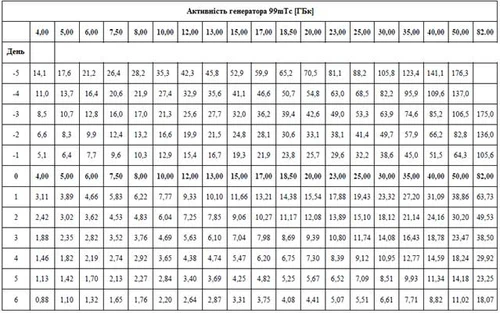
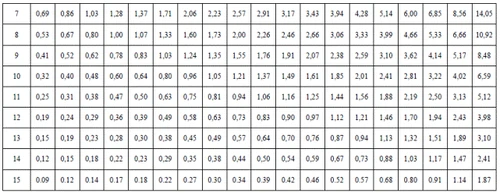
Eluate can be obtained at intervals shorter than 23 hours since the previous elution. In such cases, the 99mTc activity will be correspondingly lower. Table 4 provides correction factors that can be used to calculate the 99mTc activity based on the time elapsed since the previous elution.
Table 4
Values of correction factors enabling calculation of technetium-99m activity depending on the time elapsed since the previous elution.
| Time after previous elution [hours] |
0 |
2 |
4 |
6 |
8 |
10 |
12 |
14 |
16 |
18 |
20 |
23 |
| Decay coefficient of 99Mo |
1.0 |
0.979 |
0.960 |
0.940 |
0.919 |
0.900 |
0.881 |
0.863 |
0.845 |
0.828 |
0.811 |
0.785 |
| Growth coefficient of 99mTc |
0.0 |
0.21 |
0.39 |
0.51 |
0.62 |
0.71 |
0.79 |
0.85 |
0.89 |
0.93 |
0.96 |
1.0 |
Examples of calculations
- A generator with a nominal activity of 15 GBq performed elution on day "+2" at 9:00, and the next elution was carried out on the same day at 13:00, i.e. 4 hours after the previous elution.
The activity of the first elution was 9.06 GBq (see Table 3).
The activity of the second elution was 9.06 × 0.960 × 0.39 = 3.39 GBq (coefficient from Table 4 was applied).
- A generator with a nominal activity of 23 GBq performed elution on day "+4" at 8:00, and the next elution was carried out on the same day at 14:00, i.e. 6 hours after the previous elution.
The activity of the first elution was 8.39 GBq (see Table 3).
The activity of the second elution was 8.39 × 0.940 × 0.51 = 4.02 GBq (coefficient from Table 4 was applied).
Quality control
Solution clarity, pH, radioactivity, and molybdenum breakthrough (99Mo) must be checked before use.
The first eluate obtained from this generator may be used in the usual manner unless otherwise specified. The eluate may be used for kit labelling even if it is collected 24 hours after the last elution, except when the Instructions for Radiopharmaceutical Preparation (see above) of the respective kit specify that fresh eluate must be used.
Eluate properties from generator
Radioactivity/yield of elution 90–110 %
Radiochemical purity of eluate ≥ 98 %
Content of 99Mo in eluate ≤ 0.1 % (A/A)
Content of Al3+ in eluate < 5 μg/mL
pH of eluate 5.5–7.5
User-level control
Activity measurement should be performed by an optimal method providing accuracy within 10% at the time of elution.
Radiochemical purity should be determined by ascending paper chromatography using Whatman 1MM chromatographic paper and acetone solution as the developing solvent.
Rf value for the spot of sodium pertechnetate-99mTc is 0.9–1.0.
Aluminum content determination in eluate is performed by a colorimetric method on a chromatographic paper strip impregnated with 0.05% chromazurol S solution.
Interaction with other medicinal products and other forms of interactions.
Atropine, isoprenaline, and analgesics may cause delayed gastric emptying and thus lead to redistribution of sodium pertechnetate-99mTc during abdominal organ imaging.
Thyroid hormones, iodine, iodide, perchlorate, thiocyanate, aluminum-containing antacids, sulfonamides, and preparations containing tin(II) ions may lead to increased concentrations of sodium pertechnetate-99mTc in blood vessels; tin(II) ions and sulfonamides may increase the concentration of sodium pertechnetate-99mTc in erythrocytes and reduce its accumulation in plasma, causing brain uptake. The use of such preparations should be discontinued several days before the procedure.
Iodine-containing radiological contrast agents and perchlorate may reduce gastric mucosal uptake of sodium pertechnetate-99mTc. Barium sulfate absorbs a large portion of the gamma radiation from the radiopharmaceutical. Therefore, scintigraphy of Meckel's diverticulum should not be performed earlier than 2–3 days after administration of these substances. Laxatives may increase the transit of sodium pertechnetate-99mTc from the stomach to the intestine and therefore should not be used prior to scintigraphy of Meckel's diverticulum.
Administration of laxatives should be discontinued as they irritate the gastrointestinal tract. Contrast-enhanced examinations (e.g. with barium) or gastrointestinal investigations should be avoided within 48 hours prior to administration of sodium pertechnetate-99mTc for scintigraphy of Meckel's diverticulum.
Many pharmacological medicinal products affect the thyroid gland's uptake capacity.
- Antithyroid drugs (carbimazole or other imidazole derivatives such as propylthiouracil), salicylates, steroids, sodium nitroprusside, sodium sulfobromophthalein, and perchlorate should be discontinued one week before scintigraphy;
- phenylbutazone and expectorants should be discontinued two weeks before;
- natural or synthetic thyroid preparations (sodium thyroxine, sodium triiodothyronine, thyroid extract) should be discontinued 2–3 weeks before;
- amiodarone, benzodiazepines, and lithium should be discontinued four weeks before;
- intravenous contrast agents should not be administered within 1–2 months.
Special precautions.
Possible occurrence of hypersensitivity or anaphylactic reactions.
If hypersensitivity or anaphylactic reactions occur, administration of the medicinal product must be immediately discontinued and, if necessary, intravenous treatment initiated. To ensure timely management of emergencies, appropriate medications and equipment, such as an intubation tube and ventilator, should be prepared in advance.
Justification of individual risks/benefits
For each patient, radiation exposure must be justified by the expected benefit. The radioactive dose should always be as low as reasonably achievable while still obtaining the necessary diagnostic information.
Renal impairment, hepatic impairment
For such patients, the risk/benefit ratio should be carefully evaluated, as increased radiation exposure may occur.
Concomitant use of sodium perchlorate is associated with reduced uptake of radioactivity by glandular tissues.
Children
The drug should be prescribed cautiously, as the effective dose in MBq is higher than in adults.
In addition to thyroid scintigraphy, thyroid blockade is particularly important in children.
Patient preparation
In certain cases, patients should be administered medications for thyroid blockade.
The patient should drink plenty of fluids before the procedure and void the bladder as frequently as possible during the first hours after the examination to reduce radiation exposure.
To prevent false-positive results or to reduce radiation exposure by decreasing the accumulation of sodium pertechnetate-99mTc in the thyroid and salivary glands prior to lacrimal duct scintigraphy or Meckel's diverticulum scintigraphy, a thyroid blockade agent should be administered. However, when performing thyroid scintigraphy, parathyroid scintigraphy, or salivary gland scintigraphy, a thyroid blockade agent should NOT be used.
Before administering sodium pertechnetate-99mTc solution for Meckel's diverticulum scintigraphy, the patient should fast for 3–4 hours to reduce intestinal peristalsis.
After in vivo erythrocyte labeling with tin ions, sodium pertechnetate-99mTc is initially taken up into erythrocytes; therefore, Meckel's scintigraphy should be performed either before or several days after in vivo erythrocyte labeling.
After the procedure
Close contact with infants and pregnant women should be limited for 12 hours.
Special precautions
Sodium pertechnetate-99mTc injection solution contains 3.6 mg/mL of sodium.
Depending on the time of administration, the sodium content may in some cases exceed 1 mmol (23 mg). This should be taken into account for patients on a low-sodium diet.
When sodium pertechnetate-99mTc solution is used for kit labeling, the total sodium content should include sodium from both the eluate and the kit. Please refer to the kit instructions.
For salivary gland scintigraphy, lower accuracy should be expected compared to magnetic resonance sialography.
Use during pregnancy or breastfeeding.
Women of reproductive age
When administering radiopharmaceuticals to women of reproductive age, it is essential to determine whether the woman is pregnant. Any woman with a missed menstrual period should be considered pregnant until proven otherwise. If there is uncertainty regarding possible pregnancy (e.g., delayed menstruation with an irregular cycle), the patient should be offered alternative diagnostic methods (if available) that do not involve ionizing radiation.
Pregnancy
The use of sodium pertechnetate-99mTc in pregnant women should be medically justified and based on a positive individual risk-benefit assessment for both mother and fetus. Alternative diagnostic methods not involving radiation exposure should be considered.
99mTc (as free pertechnetate) has been shown to cross the placental barrier.
Breastfeeding
Before administering radiopharmaceuticals to breastfeeding women, consideration should be given to postponing radionuclide administration until breastfeeding has ended, and careful selection of radiopharmaceuticals should be made, taking into account the excretion of radioactivity into breast milk. If administration of the agent is necessary, breastfeeding should be interrupted for 12 hours after the procedure, and expressed milk should be discarded during this period.
Close contact with infants should be limited during this time.
Ability to affect reaction speed when driving or operating machinery.
Studies have not been conducted.
Administration and Dosage
Dosage
When sodium pertechnetate-99mTc is administered intravenously, the activity may vary widely depending on the extent of clinical information required and the equipment used. Administration of a radioactive dose exceeding local DRLs (Diagnostic Reference Levels) must be justified for specific indications.
Recommended Activity Doses
Adults (70 kg) and Elderly Patients
- Thyroid scintigraphy: 20–80 MBq.
- Salivary gland scintigraphy: 30–150 MBq for static imaging and up to 370 MBq for dynamic imaging.
- Meckel's diverticulum scintigraphy: 300–400 MBq.
- Lacrimal duct scintigraphy: 2–4 MBq, 1 drop in each eye.
Patients with Renal Impairment
Activity dose must be carefully selected, as these patients may experience increased radiation exposure due to reduced excretion.
Children
Use in children must be clinically justified, taking into account the risk-benefit ratio for this patient group.
The administered activity in children should follow the pediatric dosage recommendations of the European Association of Nuclear Medicine (EANM) and can be calculated by multiplying the base activity (for calculation purposes) by the body weight correction factor provided in Table 5.
A[MBq]administration = base activity × correction factor
Thyroid scintigraphy. Administered activity [MBq] = 5.6 MBq × correction factor (Table 5). A minimum activity of 10 MBq is required to obtain images of sufficient quality.
Detection/localization of ectopic gastric mucosa. Administered activity [MBq] = 10.5 MBq × correction factor (Table 5). A minimum activity of 20 MBq is required to obtain images of sufficient quality.
Table 5
Body weight correction factors for pediatric patients (for radioisotope thyroid scintigraphy and detection/localization of ectopic gastric mucosa) according to EANM recommendations, May 2008.
| Body weight (kg) |
Factor |
Body weight (kg) |
Factor |
Body weight (kg) |
Factor |
| 3 |
1 |
22 |
5.29 |
42 |
9.14 |
| 4 |
1.14 |
24 |
5.71 |
44 |
9.57 |
| 6 |
1.71 |
26 |
6.14 |
46 |
10.00 |
| 8 |
2.14 |
28 |
6.43 |
48 |
10.29 |
| 10 |
2.71 |
30 |
6.86 |
50 |
10.71 |
| 12 |
3.14 |
32 |
7.29 |
52–54 |
11.29 |
| 14 |
3.57 |
34 |
7.72 |
56–58 |
12.00 |
| 16 |
4.00 |
36 |
8.00 |
60–62 |
12.71 |
| 18 |
4.43 |
38 |
8.43 |
64–66 |
13.43 |
| 20 |
4.86 |
40 |
8.86 |
68 |
14.00 |
Salivary gland scintigraphy. The EANM Paediatric Dosage Card (1990) recommends calculating the activity administered to the child according to body weight (see Table 6), with a minimum dose of 10 MBq to obtain images of sufficient quality.
Table 6
| Body weight (kg) |
Coefficient |
Body weight (kg) |
Coefficient |
Body weight (kg) |
Coefficient |
| 3 |
0.1 |
22 |
0.50 |
42 |
0.78 |
| 4 |
0.14 |
24 |
0.53 |
44 |
0.80 |
| 6 |
0.19 |
26 |
0.56 |
46 |
0.82 |
| 8 |
0.23 |
28 |
0.58 |
48 |
0.85 |
| 10 |
0.27 |
30 |
0.62 |
50 |
0.88 |
| 12 |
0.32 |
32 |
0.65 |
52–54 |
0.90 |
| 14 |
0.36 |
34 |
0.68 |
56–58 |
0.92 |
| 16 |
0.40 |
36 |
0.71 |
60–62 |
0.96 |
| 18 |
0.44 |
38 |
0.73 |
64–66 |
0.98 |
| 20 |
0.46 |
40 |
0.76 |
68 |
0.99 |
Scintigraphy of the lacrimal ducts. The same activity doses are recommended for both adults and children.
Method of administration
For intravenous or ophthalmic use.
For multiple use.
For thyroid scintigraphy, salivary gland scintigraphy, and detection/localization of ectopic gastric mucosa, sodium pertechnetate-99mTc solution is administered as an intravenous injection.
For lacrimal duct scintigraphy, the preparation is instilled into each eye (ophthalmic administration).
Image acquisition
Thyroid scintigraphy: 20 minutes after intravenous administration.
Salivary gland scintigraphy: immediately after intravenous administration and at regular 15-minute intervals.
Detection/localization of ectopic gastric mucosa (Meckel’s diverticulum): immediately after intravenous administration and at regular 30-minute intervals.
Lacrimal duct scintigraphy: dynamic study at 2 minutes after instillation, followed by static imaging at regular 20-minute intervals.
Children.
Use in children should be clinically justified, taking into account the risk-benefit ratio for this patient group.
The activity level administered to children should follow the recommendations of the Paediatric Dosage Card of the European Association of Nuclear Medicine (EANM), and may be calculated by multiplying the base activity (for calculation purposes) by the body weight correction factor provided in Table 5.
A[MBq]dosing = base activity × correction factor
Overdose.
In the event of radioactive overdose with sodium pertechnetate-99mTc, the absorbed dose should be reduced as much as possible by elimination of radionuclides from the body through defecation, forced diuresis, and frequent bladder voiding.
Uptake by the thyroid gland, salivary glands, and gastric mucosa can be significantly reduced by immediate administration of sodium perchlorate following accidental overdose of sodium pertechnetate-99mTc.
Side effects.
Safety profile study results
Information on adverse reactions comes from voluntary reports. Such types of reactions as anaphylactic, vegetative, and various local reactions to the drug have been reported. Polytechne is used for radioactive labeling of certain individual drugs that usually cause more adverse reactions than sodium pertechnetate-99mTc. Therefore, known adverse reactions are most likely related to the labeled drugs themselves. Possible side effects following intravenous administration of agents labeled with sodium pertechnetate-99mTc will depend on the specific agent used. This information can be found in the summary of product characteristics of the agent used for the radiopharmaceutical.
Summary list of adverse reactions
Frequency of adverse reactions:
Unknown (cannot be estimated from available data).
Immune system disorders
Frequency unknown*: anaphylactoid reactions (e.g., respiratory arrest, coma, urticaria, erythema, rash, pruritus, edema in various parts of the body, including facial swelling).
Nervous system disorders
Frequency unknown*: vasovagal reactions (e.g., loss of consciousness, tachycardia, dizziness, headache, visual disturbances, hyperemia).
Gastrointestinal disorders
Frequency unknown*: vomiting, nausea, diarrhea.
General disorders and administration site conditions
Frequency unknown*: injection site reactions due to leakage of the drug from the vessel into surrounding tissues (e.g., inflammation, pain, erythema, swelling).
* Adverse reactions reported via voluntary reporting systems.
The effect of ionizing radiation is associated with the potential induction of cancer and possible development of hereditary developmental defects. Since the effective dose is 5.2 mSv at the maximum recommended activity of 400 MBq, the probability of the aforementioned adverse effects is very low.
Description of selected adverse reactions
Anaphylactic reactions (e.g., respiratory arrest, coma, urticaria, erythema, rash, pruritus, edema in various parts of the body, such as facial swelling)
Anaphylactic reactions have been reported following intravenous administration of sodium pertechnetate-99mTc, including various skin or respiratory symptoms such as skin irritation, edema, or respiratory arrest.
Vegetative reactions (nervous system and gastrointestinal tract disorders)
Although cases of pronounced vegetative reactions have been reported, most of these included gastrointestinal reactions such as nausea and vomiting. Other cases included vasovagal reactions such as headache and dizziness. Vegetative reactions are more frequently associated with the diagnostic procedure itself rather than with sodium pertechnetate-99mTc, especially in easily excitable patients.
General disorders and administration site complications
Injection site reactions have been described. Such reactions are associated with leakage of the radioactive material from the vessel into surrounding tissues during injection; reactions ranging from local swelling to tissue inflammation have been reported. Depending on the dose of radioactivity administered and the labeled agent used, extensive leakage may require surgical intervention.
Reporting of suspected adverse reactions
Reporting of suspected adverse reactions to the medicinal product after its authorization is important. This enables continuous monitoring of the benefit-risk balance of the drug. Healthcare professionals are asked to report any suspected adverse reactions through the national reporting system.
Shelf life
Generator – 21 days from the date of manufacture.
Pertechnetate – 12 hours after elution.
Elution vials – 1 year.
Storage conditions
Store in the original packaging at a temperature not exceeding 30 °C. Do not freeze.
Incompatibilities
Do not mix with other medicinal products in the same container.
Packaging
Radionuclide generator; 8.0–175 GBq; in doses of 6 GBq, 8 GBq, 12 GBq, or 15 GBq in a 10 ml vial No. 1, packaged together with an elution kit (consisting of two cardboard packages: one containing 16 vials with 10 ml of eluent (9 mg/ml (0.9%) NaCl solution), the other containing 16 vacuum vials intended for the eluate) and a transport container.
Polytechne, radionuclide generator, consists of the following components:
- A sterile glass generator column filled with aluminum oxide, on which molybdenum-99 (fission) is adsorbed. The lower end of the column has a glass filter to prevent aluminum oxide from escaping. The upper and lower ends of the column are sealed with rubber stoppers and caps;
- A set of stainless steel needles connecting the generator column to the eluent vial and elution vials; during transport and between elutions, the needles are protected by vials containing a bacteriostatic agent (0.02% aqueous solution of lauryl dimethyl benzyl ammonium bromide);
- The column and needles are housed within a lead shield with a wall thickness of 50 mm, providing radiation protection for personnel and allowing safe handling of the generator;
- Filters: eluate filter and air filter;
- Eluate volume regulator. The design of this device allows obtaining the required eluate volume (by adjusting the eluent volume from 4 to 8 ml). The volume adjustment accuracy is 0.5 ml. This enables achieving the required radioactivity concentration of 99mTc in solution. Eluate volume adjustment is performed by rotating the regulator sleeve so that the arrow aligns with the number of milliliters of eluate on the upper surface of the sleeve.
Along with the radionuclide generator, elution kits are supplied in cardboard packages:
- 16 vials with 10 ml of eluent (9 mg/ml (0.9%) NaCl solution) and 16 vacuum vials (eluate vials).
The glass vial is the primary packaging for the eluate from the generator. The 10 ml vial is closed with a rubber stopper and aluminum cap and placed in a lead container.
Typical presentations:
| 99mTc activity [GBq] on the date of manufacture |
8.0 |
14 |
21 |
28 |
35 |
42 |
53 |
64 |
69 |
88 |
125 |
141 |
175 |
GBq |
| 99mTc activity (maximum theoretical elution activity on the calibration date, 12:00 CET) |
2.3 |
4.0 |
6.0 |
8.0 |
10 |
12 |
15 |
18 |
20 |
25 |
35 |
40 |
50 |
GBq |
| 99Mo activity (on the calibration date, 12:00 CET) |
2.6 |
4.5 |
6.8 |
9.2 |
11 |
14 |
17 |
21 |
22 |
29 |
41 |
46 |
57 |
GBq |
Upon customer request, other sizes within the range of 8.0–175 GBq at the time of manufacture may be provided.
Category of supply.
Radionuclide generators are supplied only to specialized medical institutions authorized to handle radiopharmaceuticals.
Manufacturer/Applicant.
National Centre for Nuclear Research.
Address of the manufacturer and its place of business/activity / address of the applicant.
Andrzeja Soltana Street 7, Otwock, 05-400, Poland.