Polkortolon
Ukraine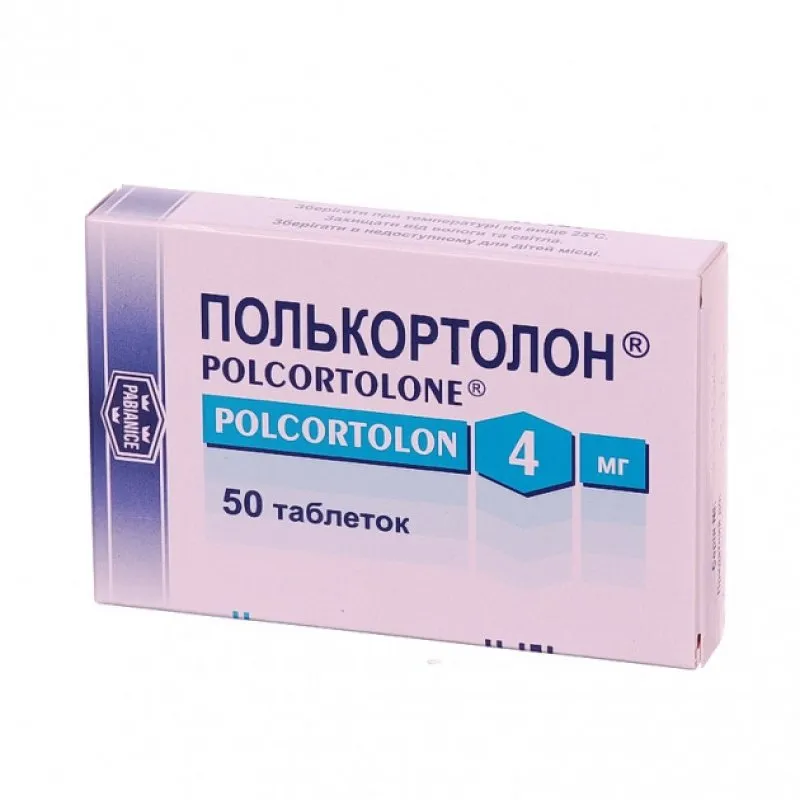
Table of Contents
I N S T R U C T I O N for medical use of the medicinal product P O L C O R T O L O N E ® (POLCORTOLONE®)
Composition:
Active ingredient:
1 tablet contains 4 mg of triamcinolone;
Excipients: lactose monohydrate; potato starch, magnesium stearate.
Pharmaceutical form. Tablets.
Main physico-chemical characteristics: white or almost white tablets, round-shaped, with flat surfaces, bevelled edge, scored, engraved on one side with the letter "o", on the other side with the symbol "".
Pharmacotherapeutic group.
Corticosteroids for systemic use. Glucocorticoids.
ATC code H02AB08.
Pharmacological properties.
Pharmacodynamics.
The main effects of triamcinolone in humans are glucocorticoid activity and suppression of inflammatory responses. Glucocorticoid activity leads to increased gluconeogenesis and reduced glucose uptake in tissues. Protein catabolism is accelerated and synthesis of dietary proteins is reduced, although the overall effect on nitrogen balance depends on other factors, including diet, dose, and duration of treatment. A negative nitrogen balance may occur at doses of 12 to 24 mg per day. Fats are mobilized and their deposition increases in the shoulders, face, and abdomen. Triamcinolone exerts mineralocorticoid effects. During corticosteroid therapy, the number of erythrocytes and neutrophilic leukocytes increases; the number of eosinophilic and basophilic leukocytes decreases, as does lymphoid tissue mass.
Corticosteroids prevent or suppress the initial signs of inflammation, namely redness, tenderness, increased temperature at the site of inflammation, swelling, as well as delayed consequences, including fibroblast proliferation and collagen deposition.
Pharmacokinetics.
Like prednisone, triamcinolone is likely metabolized in the liver. After absorption through the skin, topically applied corticosteroids behave similarly to systemic corticosteroids: metabolism occurs primarily in the liver.
The majority of triamcinolone is converted into 6-beta-hydroxytriamcinolone.
Systemically administered corticosteroids pass into breast milk in quantities unlikely to cause adverse effects in the infant.
The plasma half-life of orally administered triamcinolone ranges from 2 to more than 5 hours.
According to study results, the pharmacokinetics of triamcinolone are dose-dependent. In the group of patients receiving 5 mg/kg, the mean half-life was 85 minutes; in the group receiving 10 mg/kg, it was 88 minutes. Total clearance was 61.6 L/h in the 5 mg/kg group and 48.2 L/h in the 10 mg/kg group. The difference was statistically significant. Less than 15% of the drug is excreted unchanged in urine.
Clinical characteristics.
Indications.
- Allergic reactions, including neurodermatitis, bullous dermatitis, hypersensitivity reactions to drugs, serum sickness. Corticosteroids should not be used for the treatment of acute conditions in anaphylactic reactions; however, they may be effective in preventing the late phase of the allergic reaction.
- Rheumatic diseases, primarily severe rheumatoid arthritis, when necessary to achieve a favorable response from prolonged-action antirheumatic agents. Corticosteroids are indicated for short-term treatment of periarticular rheumatism (epicondylitis, post-traumatic osteoarthritis, synovitis, bursitis) and psoriatic arthritis. For the latter indication, corticosteroids are recommended during exacerbations and as maintenance therapy.
- Dermatological diseases: dermatitis herpetiformis, exfoliative dermatitis, severe polymorphic erythema, severe psoriasis, severe seborrheic dermatitis, eczema, discoid lupus erythematosus, alopecia areata, and various acute and chronic dermatoses.
- Ophthalmological diseases: severe acute and chronic allergic and inflammatory conditions, including allergic conjunctivitis, allergic marginal corneal ulcers, anterior segment inflammation, choriorretinitis, diffuse posterior uveitis and chorioiditis, herpes zoster ophthalmicus, iritis and iridocyclitis, keratitis, optic neuritis, and sympathetic ophthalmia.
- Endocrine disorders: primary and secondary adrenocortical insufficiency, congenital adrenal hyperplasia, hypercalcemia caused by malignant tumor, subacute thyroiditis, and Addison's disease.
- Gastrointestinal diseases: regional enteritis (Crohn's disease) and ulcerative colitis during exacerbation.
- Respiratory diseases: aspiration pneumonitis, berylliosis, Löffler's syndrome, sarcoidosis, and acute miliary tuberculosis.
- Other diseases: tuberculous meningitis, multiple sclerosis (corticosteroids are used to treat exacerbations of multiple sclerosis; they reduce the duration of exacerbations but do not halt disease progression).
Contraindications.
Hypersensitivity to triamcinolone or to any other component of the medicinal product.
Systemic fungal infections. History of proximal myopathy.
Diverticulitis, glaucoma.
Children under 3 years of age.
Malignant neoplasms with metastases.
Other contraindications are relative and depend on the expected benefit of treatment, duration of use, and route of administration (e.g., systemic use versus local action). These are more warnings and precautions than absolute contraindications.
Inflammation in active stage and infection
Corticosteroids may mask signs of infection and reduce resistance to infection.
Corticosteroids may suppress the response to infection and activate or exacerbate local or systemic infections or active infections not treated with antimicrobial agents, as well as latent or cured tuberculosis.
Corticosteroid therapy increases the risk of tuberculosis in patients with latent tuberculosis or a positive Mantoux test. Treatment with corticosteroids in active tuberculosis should be limited to cases of fulminant or acute miliary disease, in which corticosteroids are administered together with appropriate antituberculosis therapy.
Corticosteroids increase the risk of severe, including fatal, infections in patients with viral infections such as varicella or measles.
Corticosteroids should be used with caution in patients with ocular herpes simplex due to the risk of corneal perforation.
The risk of varicella increases in patients receiving corticosteroid therapy who have not previously had this viral disease. Such patients should avoid contact with infected individuals; however, if exposure occurs, passive immunization is recommended.
Diabetes mellitus
Disease control may become more difficult during corticosteroid therapy.
Triamcinolone may increase blood glucose levels, potentially leading to glucosuria or diabetes mellitus.
Osteoporosis
With prolonged use, corticosteroids may worsen osteoporosis, especially in elderly patients; there is a risk of vertebral collapse. Corticosteroids should be used with caution in patients with osteoporosis.
Myopathy
A history of corticosteroid-induced proximal myopathy is a contraindication, as there is a risk of recurrence of this adverse effect, particularly associated with triamcinolone. Myopathy usually resolves within several months after discontinuation of the corticosteroid. Children are at the highest risk of developing this adverse effect.
Peptic ulcer
Peptic ulcer is somewhat associated with corticosteroid use, and there is a risk of hemorrhage or perforation. Patients who also take nonsteroidal anti-inflammatory drugs (NSAIDs) are at particularly high risk. Corticosteroids should be used with caution in patients with active or latent peptic ulcers.
Psychosis
Corticosteroids may cause psychiatric disorders ranging from euphoria, insomnia, mood swings, and personality changes to severe depression and pronounced psychosis. Corticosteroids may also exacerbate pre-existing emotional instability or psychotic tendencies. Particularly in patients with a history of paranoia or depression, use of this drug increases the risk of suicide.
Wound healing
Delayed wound healing may be significant in patients with recent intestinal anastomosis.
Vaccination
Patients receiving corticosteroid therapy should not be vaccinated, especially against smallpox. In particular, no other vaccinations should be administered to patients taking high doses of corticosteroids, as neurological complications or lack of antibody response may occur.
Interaction with other medicinal products and other forms of interactions.
When used concomitantly with amphotericin B and potassium-sparing agents, the patient should be monitored for possible development of hypokalemia.
Anticholinesterase agents exhibit antagonistic effects toward corticosteroids.
Paracetamol – hypernatremia, edema, increased calcium excretion; increased risk of paracetamol hepatotoxicity.
Anticoagulants, coumarin derivatives, indandione, heparin, streptokinase, urokinase – reduced, and in some patients increased, effectiveness; increased risk of ulceration and gastrointestinal bleeding.
Immunosuppressive agents – increased risk of infection, development of lymphangitis, and other lymphoproliferative disorders.
Corticosteroids exhibit antagonism toward antihypertensive agents and diuretics. The hypokalemic effect of diuretics, including acetazolamide, is more pronounced.
Antituberculosis agents: serum concentration of isoniazid may increase.
Cyclosporine: careful monitoring is required for increased cyclosporine toxicity when used concomitantly with corticosteroids.
Estrogens, including oral contraceptives: the half-life and concentration of corticosteroids may increase, while clearance may decrease.
Hepatic enzyme inducers (including barbiturates, phenytoin, carbamazepine, rifampicin, primidone, aminoglutethimide) may increase the metabolic clearance of triamcinolone. The patient should be closely monitored for possible reduction in steroid effects, with appropriate dose adjustments.
Human growth hormone: the growth-promoting effect may be inhibited.
Ketoconazole: possible reduction in corticosteroid clearance and, consequently, enhanced effects.
Thyroid agents: metabolic clearance of adrenocorticoids is reduced in patients with hypothyroidism and increased in patients with hyperthyroidism. Changes in thyroid status may require adjustment of adrenocorticoid dosage.
Concomitant use with cholinolytics may cause antagonistic effects.
Combination of corticosteroids with nonsteroidal anti-inflammatory drugs increases the risk of peptic ulcers and gastrointestinal bleeding.
Aspirin should be used with caution together with corticosteroids in patients with hypoprothrombinemia.
It has been reported that concomitant use of corticosteroids and neuromuscular blockers opposes neuromuscular blockade.
Sodium – edema, increased blood pressure; dietary sodium restriction and avoidance of sodium-rich preparations may be necessary.
Clinical studies have shown that concomitant use of corticosteroids affects the action of oral anticoagulants, either enhancing or diminishing their effect.
It has been demonstrated that phenytoin increases hepatic metabolism of corticosteroids and reduces the efficacy of triamcinolone.
Concomitant use with mexiletine leads to accelerated metabolism of mexiletine and reduced serum concentration.
Concomitant use with alcohol increases the risk of gastrointestinal ulceration and bleeding.
Triamcinolone increases the body's requirement for folic acid.
Concomitant use with tricyclic antidepressants (e.g., clomipramine) may cause hypokalemia and increased risk of ventricular fibrillation.
Live virus vaccines – during use of immunosuppressive doses of glucocorticosteroids, development of viral diseases and reduced vaccine efficacy are possible.
Other vaccines – increased risk of neurological complications and reduced antibody formation.
Concomitant typhoid vaccination and immunosuppressive therapy (including corticosteroids) has been associated with impaired immune response to the vaccine.
Corticosteroid therapy tends to increase blood glucose in patients with diabetes mellitus, thus higher insulin doses may be required.
Concomitant use with testosterone, other androgenic hormones, or anabolic steroids may cause increased fluid retention and development of edema.
Concomitant use of phenobarbital and corticosteroids may lead to reduced plasma levels and therapeutic effects of corticosteroids.
Concomitant use of the drug with isoniazid may increase serum concentration of isoniazid.
The risk of hypokalemia may increase if triamcinolone is administered concomitantly with sympathomimetics and theophylline, which reduce plasma potassium levels, and with potassium-wasting diuretics; hypokalemia may also potentiate the effects of cardiac glycosides. The risk of hypokalemia may also increase with concomitant use of carbonic anhydrase inhibitors (e.g., acetazolamide).
It is expected that co-administration of glucocorticoids and CYP3A inhibitors, including products containing cobicistat, increases the risk of systemic adverse reactions. Such interactions should be avoided unless the benefit outweighs the increased risk of systemic adverse effects associated with glucocorticoid use; in such cases, the patient should be monitored for systemic effects of glucocorticoids.
Possible systemic effects include: Cushing's syndrome, Cushingoid appearance, adrenal suppression, growth retardation in children and adolescents, decreased bone mineral density, cataract, and glaucoma.
Special precautions for use.
Since complications associated with glucocorticoid therapy (including triamcinolone) depend on the dose and duration of treatment, in each individual case, a risk/benefit assessment regarding dose and duration of therapy should be performed. Patients receiving corticosteroid therapy who are exposed to stress should receive rapid-acting corticosteroid treatment, and the dose should be increased before, during, and after the stressful situation.
Adrenal suppression may persist for several months after discontinuation of therapy; therefore, replacement therapy may be necessary during periods of stress.
Corticosteroids should be used with caution in patients with nonspecific ulcerative colitis, recent intestinal anastomosis, renal insufficiency, arterial hypertension, and myasthenia gravis.
Use the drug with particular caution after recent intestinal anastomosis, in patients with thrombophlebitis, current or past history of severe affective disorders, especially steroid-induced psychosis, exanthematous diseases, congestive heart failure, or acute glomerulonephritis.
In patients with hypothyroidism or liver cirrhosis, triamcinolone has enhanced effects; therefore, the drug should be administered in lower doses.
Secondary adrenocortical insufficiency caused by drug administration can be minimized by gradual dose reduction. This type of insufficiency may persist for months after discontinuation of therapy.
Discontinuation of treatment after prolonged use may lead to glucocorticoid withdrawal syndrome, characterized by malaise, muscle pain, joint pain, and general discomfort. These symptoms may occur even in the absence of detectable adrenal insufficiency.
Laboratory parameters that may increase during corticosteroid therapy: leukocyte count (more than 20,000/mm³) without signs of inflammation or neoplasm, blood glucose, cholesterol, triglycerides, and low-density lipoproteins.
Reduction in urinary levels of 17-ketosteroids and 17-hydroxysteroids may occur due to adrenal suppression during triamcinolone therapy.
High doses of triamcinolone may cause elevated arterial pressure, fluid and sodium retention, and increased excretion of potassium and calcium.
In individuals arriving from tropical countries, infection with Entamoeba histolytica must be ruled out before initiating therapy.
Patients with hypoprothrombinemia should be cautious when treated with acetylsalicylic acid in combination with triamcinolone.
Triamcinolone should be used cautiously and only when clearly indicated in cases of abscesses or other purulent infections, muscle fatigue, impaired liver function, candidiasis or viral infections, hyperlipidemia, hypoalbuminemia, epilepsy.
Visual disturbances. Visual disorders may occur following systemic or local administration of corticosteroids. If a patient develops symptoms such as blurred vision or other visual problems, referral to an ophthalmologist is recommended to identify possible causes such as cataract, glaucoma, or rare conditions such as central serous chorioretinopathy (CSCR), which has been reported after both systemic and local corticosteroid use.
In patients taking high-dose triamcinolone, symptoms of peritonitis may be mild or even absent in the event of gastrointestinal tract perforation.
Abrupt discontinuation of therapy may lead to adrenal insufficiency; therefore, the dose of triamcinolone should be tapered gradually.
Special information about some excipients of Polkortolon
Polkortolon contains lactose. Patients with rare hereditary conditions such as galactose intolerance, Lapp lactase deficiency, or glucose-galactose malabsorption should not take this medicinal product.
Use during pregnancy or breastfeeding.
Triamcinolone is contraindicated in pregnant women and women who are breastfeeding. Women taking triamcinolone should discontinue breastfeeding.
Ability to affect reaction speed when driving or operating machinery.
Corticosteroids may cause sedation, depression, insomnia, personality changes, mania, hallucinations, or psychosis. Corticosteroids may also exacerbate pre-existing emotional instability or psychotic tendencies. Therefore, patients should avoid driving or operating complex machinery until their individual sensitivity to this drug has been established.
Method of Administration and Dosage.
The dose of triamcinolone should be individually adjusted depending on the disease and the patient's response to treatment. The lowest effective corticosteroid doses should be used for treatment, and if dose reduction is possible, it should be carried out gradually.
Tablets may be taken either once daily (preferably in the morning) or in divided doses, especially if the total daily dose exceeds 16 mg.
The usual daily dose for adults ranges from 4 to 32 mg. After achieving the desired effect, the dose should be gradually reduced (by 4 mg every 2–3 days) until reaching an adequate maintenance dose (usually approximately 4 mg per day).
Children with body weight exceeding 25 kg should receive the dose recommended for adults.
Children with body weight up to 25 kg should receive an initial dose of 12 mg per day; subsequent doses depend on the type of disease and the patient's response to treatment. Therapeutic effects are expected within 2 or 3 weeks. However, even more than six weeks of therapy may be required before definite positive results are observed.
Children.
Triamcinolone in tablet form is contraindicated in children under 3 years of age.
In pediatric practice, glucocorticoids should be used only for absolute indications and under strict medical supervision. During prolonged treatment with triamcinolone, continuous monitoring of the child's growth and development is necessary, and the frequency of dosing (daily or intermittent) should be carefully selected.
Overdose.
There have been rare reports of acute overdose, including fatal outcomes due to acute corticosteroid overdose.
Very high doses, usually only after several weeks of administration, may cause hyperadrenocorticism, suppression of the adrenal cortex, muscle weakness, osteoporosis, and erosive lesions of the stomach and duodenum. Treatment is symptomatic. Abrupt discontinuation of therapy should be avoided. A single ingestion of a large number of tablets does not cause clinically significant intoxication. Hemodialysis is ineffective for removing triamcinolone from the body.
Side effects
The frequency of adverse reactions is defined as follows:
Very common: (≥ 1/10), common: (≥ 1/100 to < 1/10), uncommon: (≥ 1/1000 to < 1/100), rare: (≥ 1/10,000 to < 1/1000), very rare: (< 1/10,000), including isolated cases; frequency not known: cannot be estimated from the available data.
Cardiac disorders
Frequency not known: reduced cardiac function, rapid or irregular heartbeat, congestive heart failure, hypertension.
Blood and lymphatic system disorders
Frequency not known: granulocytosis, lymphopenia, monocytopenia.
Nervous system disorders
Frequency not known: convulsions, intracranial hypertension with papilledema, headache, dizziness.
Eye disorders
Frequency not known: posterior subcapsular cataract, blurred vision, cataract, increased intraocular pressure, glaucoma1 with possible optic nerve damage and optic nerve edema (associated with benign intracranial hypertension), exophthalmos, visual disturbances.
Gastrointestinal disorders
Frequency not known: pancreatitis, duodenal ulcer, peptic ulcer with possible perforation and/or gastrointestinal bleeding, perforation of the large or small intestine, especially in patients with inflammation of the small intestine, melena, black vomit, flatulence, ulcerative esophagitis, dyspepsia, digestive disturbances, nausea, vomiting, increased appetite, purulent pharyngitis, dry mouth.
Skin and subcutaneous tissue disorders
Frequency not known: skin striae, acne, bruising, petechiae and hematomas, erythema, allergic dermatitis, urticaria, angioneurotic edema, acneiform eruptions, contusions, dermatitis, ecchymoses, facial erythema, atrophy, hirsutism, poor wound healing, increased sweating, wrinkles, telangiectasia and skin thinning, vasomotor edema, striae.
Musculoskeletal and connective tissue disorders
Frequency not known: muscle weakness, steroid myopathy, loss of muscle mass, vertebral compression fractures, aseptic necrosis of the femoral and humeral heads, pathological fractures of tubular bones, myopathy, osteonecrosis, osteoporosis2 (bone loss is greatest during the first 6 months of treatment and primarily affects cancellous bone), avascular necrosis, decreased muscle mass, bone fragility, pathological bone fractures, tendon rupture, growth retardation and delayed ossification in children, premature closure of epiphyseal growth plates.
Endocrine disorders
Frequency not known: irregular menstruation, menstrual disorders, Cushing's syndrome, growth suppression in children (with long-term treatment), secondary adrenal and pituitary insufficiency, especially under stressful conditions such as illness, trauma, or surgery; development of diabetes mellitus or increased insulin and antidiabetic drug requirements in patients with pre-existing diabetes, hirsutism, sodium retention (leading to fluid retention and arterial hypertension and compensatory increased renal excretion of potassium, resulting in hypokalemia), adrenal suppression, worsening of pre-existing diabetes, hypoglycemia (in patients without diabetes).
Metabolism and nutrition disorders
Frequency not known: negative nitrogen balance, increased blood and urine glucose levels, weight gain (central-type obesity), porphyria, increased total cholesterol, low-density lipoprotein, triglycerides, sodium retention in the body.
Infections and infestations
Frequency not known: oropharyngeal candidiasis, septic necrosis (especially in patients with systemic lupus erythematosus or rheumatoid arthritis), secondary fungal and viral infections.
Vascular disorders
Frequency not known: thromboembolic syndromes, swelling of the lower legs and feet, arterial hypertension, cardiac arrhythmias, congestive circulatory failure, hypokalemic alkalosis.
Immune system disorders
Frequency not known: hypersensitivity reactions, including severe allergic reactions (skin rash, urticaria, angioneurotic edema, bronchospasm, respiratory arrest, and anaphylactic reaction, itching, difficulty breathing, tightness in the chest, facial, lip, and tongue swelling).
Reproductive system and breast disorders
Frequency not known: menstrual cycle disturbances and vasomotor symptoms, impotence, increased or decreased sperm motility and count.
Psychiatric disorders
Frequency not known: euphoria, sudden mood swings, personality changes, severe depression, psychotic symptoms (ranging from schizophrenia to mania or delirium), sedation, depression, insomnia, mania, hallucinations, psychiatric disorders, suicidal thoughts, worsening of epilepsy and other psychiatric conditions, sleep disturbances, anxiety, psychomotor hyperactivity, aggression (especially in children).
Respiratory, thoracic and mediastinal disorders
Frequency not known: pulmonary tuberculosis, dysphonia, irritated dry throat (after use of corticosteroid oral inhalers).
General disorders and administration site conditions
Frequency not known: malaise, secondary fungal or viral infections, increased or decreased sperm motility and count, disturbances in water-electrolyte balance (sodium and fluid retention, potassium loss, alkalosis due to potassium deficiency, increased calcium excretion), sleep disturbances, prolonged sore throat, cold or fever, avascular necrosis, local skin depigmentation, skin atrophy, tendon injury.
1 The effect of systemic corticosteroids on pre-existing glaucoma is usually insignificant; glaucoma is most likely to develop one year or more after initiation of systemic corticosteroid therapy.
2 To prevent osteoporosis, the lowest effective corticosteroid dose should be used; whenever possible, locally acting and inhaled agents should also be used, despite the fact that osteoporosis has also occurred in patients using inhaled preparations.
Shelf life. 3 years.
Storage conditions.
Store at temperatures not exceeding 25 °C.
Store in the original packaging to protect from light and moisture.
Keep out of reach of children.
Packaging.
25 tablets in a blister pack made of PVC/Al foil; 2 blisters per cardboard box.
Prescription status.
Prescription only.
Manufacturer.
Adamed Pharma SA, Poland.
Address of the manufacturer and location of business operations.
ul. marsz. J. Pilsudskiego 5, 95-200 Pabianice, Poland.