Pletol
Ukraine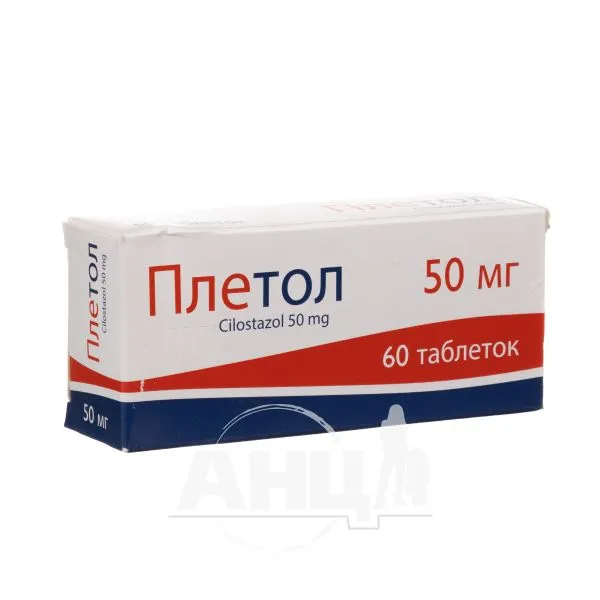
Table of Contents
INSTRUCTIONS FOR MEDICAL USE OF THE MEDICINAL PRODUCT PLETOL (PLETOL)
Composition:
Active substance: cilostazol;
1 tablet contains 50 mg or 100 mg of cilostazol;
Tablets of 50 mg: Excipients: corn starch, hydroxymethylpropylcellulose E 5, microcrystalline cellulose 101, magnesium stearate, microcrystalline cellulose 12, calcium carmellose;
Tablets of 100 mg: Excipients: corn starch, hydroxymethylpropylcellulose E 5, microcrystalline cellulose 101, magnesium stearate, calcium carmellose.
Pharmaceutical form. Tablets.
Main physicochemical properties:
Tablets of 50 mg: round, flat tablets, white to almost white in color, with "50" engraved on one side;
Tablets of 100 mg: round, flat tablets, white to almost white in color, with "100" engraved on one side.
Pharmacotherapeutic group.
Antithrombotic agents. Antiplatelet agents excluding heparin.
ATC code B01A C23.
Pharmacological Properties
Pharmacodynamics
Cilostazol is an inhibitor of platelet aggregation. The drug improves the ability to perform physical exertion, assessed by absolute walking distance in intermittent claudication (or maximum walking distance [MWD]) and initial claudication distance (or pain-free walking distance [PFWD]) in treadmill testing. Study results under various exercise loads demonstrated a significant absolute improvement of 42 meters in MWD with cilostazol compared to placebo. This corresponds to a relative improvement of 100% compared to placebo. This effect was somewhat lower in patients with diabetes mellitus.
Cilostazol exhibits a vasodilatory effect, confirmed by measurement of lower limb blood flow using strain-gauge plethysmography. Cilostazol also inhibits proliferation of smooth muscle cells and inhibits the release reaction of platelet-derived growth factor and PF-4 in human platelets.
Studies have shown that cilostazol causes reversible inhibition of platelet aggregation. The inhibition is effective against a range of aggregating agents (including arachidonic acid, collagen, adenosine diphosphate [ADP], and epinephrine); in patients, the inhibitory effect lasts up to 12 hours, and recovery of aggregation occurs within 48–96 hours after discontinuation of cilostazol, without rebound effect (hyperaggregation). An effect of cilostazol on plasma circulating lipids has also been established. The drug reduces triglyceride levels and increases HDL-cholesterol levels. Long-term use of the drug did not result in increased mortality among patients compared to placebo.
Pharmacokinetics
With regular administration of cilostazol at a dose of 100 mg twice daily in patients with peripheral vascular disease, a steady state is achieved within 4 days. The maximum concentration (Cmax) of cilostazol and its primary metabolites increases less than proportionally with dose escalation, whereas the area under the concentration-time curve (AUC) of cilostazol and its metabolites increases approximately proportionally to the administered dose. The apparent elimination half-life of cilostazol is 10.5 hours. There are two major metabolites—dehydrocilostazol and 4'-trans-hydroxycilostazol—with similar elimination half-lives. The dehydro metabolite has 4–7 times higher antithrombotic activity than the parent compound, while the 4'-trans-hydroxy metabolite has approximately 1/5 the activity of cilostazol. Plasma concentrations (measured by AUC) of the dehydro and 4'-trans-hydroxy metabolites are approximately 41% and 12% of the cilostazol concentration, respectively.
Metabolism
Cilostazol is primarily eliminated via metabolism, with subsequent excretion of its metabolites in urine. The primary cytochrome P450 isoenzymes involved in its metabolism are CYP3A4, to a lesser extent CYP2C19, and even less so CYP1A2.
Excretion
The main route of excretion is via urine (74%), with the remainder excreted in feces. Only negligible amounts of unchanged cilostazol are excreted in urine, and less than 2% of the dose is excreted as dehydrocilostazol. Approximately 30% of the initial dose is excreted in urine as the 4'-trans-hydroxy metabolite. The remaining portion is excreted as a sum of metabolites, none of which exceeds 5% of the total excreted amount.
Distribution
Cilostazol is 95–98% bound to plasma proteins, primarily to albumin. The dehydro metabolite and 4'-trans-hydroxy metabolite are protein-bound by 97.4% and 66%, respectively.
There is no evidence that cilostazol induces hepatic microsomal enzymes. The pharmacokinetics of cilostazol and its metabolites were not significantly influenced by age or gender in patients aged 50–80 years.
In patients with severe renal impairment, the free fraction of cilostazol was 27% higher, while Cmax and AUC were 29% and 39% lower, respectively, compared to individuals with normal renal function. Cmax and AUC of the dehydro metabolite were 41% and 47% lower, respectively, in patients with severe renal impairment compared to those with normal renal function. Cmax and AUC of 4'-trans-hydroxycilostazol were 173% and 209% higher, respectively, in patients with severe renal impairment. There are no data available for patients with moderate or severe hepatic impairment.
Clinical characteristics.
Indications.
To increase the maximum pain-free walking distance in patients with intermittent claudication who do not have rest pain or signs of peripheral tissue necrosis (peripheral arterial disease, Fontaine stage II).
Use as a second-line therapy in patients in whom lifestyle modifications (including smoking cessation and supervised exercise programs) and other appropriate measures have not led to significant symptom relief of intermittent claudication.
Contraindications.
- Known hypersensitivity to cilostazol or to any component of the drug;
- Severe renal impairment (creatinine clearance ≤ 25 mL/min);
- Moderate or severe hepatic impairment;
- Congestive heart failure;
- Pregnancy;
- Any known predisposition to bleeding (e.g., active peptic ulcer, recent hemorrhagic stroke (within 6 months), proliferative diabetic retinopathy, poorly controlled arterial hypertension);
- History of ventricular tachycardia, ventricular fibrillation, or multifocal ventricular ectopy in patients who have or have not received appropriate therapy, as well as QT interval prolongation;
- History of severe tachyarrhythmia;
- Concomitant treatment with two or more additional antiplatelet agents or anticoagulants (e.g., acetylsalicylic acid, clopidogrel, heparin, warfarin, acenocoumarol, dabigatran, rivaroxaban, or apixaban);
- Unstable angina, myocardial infarction within the last 6 months, or coronary intervention within the last 6 months.
Interaction with other medicinal products and other forms of interactions.
Antithrombotic agents. Cilostazol is a phosphodiesterase III inhibitor with antiplatelet activity. Administration to healthy volunteers at a dose of 150 mg for 5 days did not prolong bleeding time.
Acetylsalicylic acid (ASA). Short-term co-administration (up to 4 days) with ASA was associated with a 23–25% increase in inhibition of ADP-induced platelet aggregation compared to ASA alone. No clear trends toward increased incidence of hemorrhagic adverse effects were observed in patients receiving ASA and cilostazol compared to patients receiving placebo and equivalent doses of ASA.
Clopidogrel and other antiplatelet agents. Concomitant administration of cilostazol and clopidogrel did not affect platelet count, prothrombin time (PT), or activated partial thromboplastin time (aPTT). All healthy volunteers had prolonged bleeding time when receiving clopidogrel as monotherapy and when combined with cilostazol, but no significant additive effect on bleeding time was observed. However, caution should be exercised when combining cilostazol with any antithrombotic agents. Periodic monitoring of bleeding time should be considered. Treatment with cilostazol is contraindicated in patients taking two or more additional antiplatelet/anticoagulant agents. A higher incidence of bleeding events was observed during concomitant use of clopidogrel, ASA, and cilostazol in the CASTLE study.
Oral anticoagulants (e.g., warfarin). After single-dose administration, no inhibition of warfarin metabolism or effect on coagulation parameters (PT, aPTT, bleeding time) was observed. However, caution is recommended for patients taking cilostazol with any anticoagulant, and periodic monitoring should be performed to minimize the risk of bleeding. Treatment with cilostazol is contraindicated in patients taking two or more additional antiplatelet/anticoagulant agents.
Cytochrome P450 (CYP) inhibitors. Cilostazol is extensively metabolized by CYP enzymes, particularly CYP3A4 and CYP2C19, and to a lesser extent by CYP1A2. The dehydro metabolite, which has 4–7 times higher antiplatelet activity than cilostazol, is likely formed primarily by CYP3A4. The 4'-trans-hydroxy metabolite, with activity equal to 1/5 that of cilostazol, is likely formed via CYP2C19. Thus, agents that inhibit CYP3A4 (e.g., certain macrolides, azole antifungals, protease inhibitors) or CYP2C19 (e.g., proton pump inhibitors) increase the overall pharmacological activity of cilostazol by 32% and 42%, respectively, and may increase cilostazol-related adverse effects. Dose reduction of cilostazol to 50 mg twice daily may be necessary depending on individual efficacy and tolerability.
Administration of 100 mg cilostazol on day 7 of treatment with erythromycin (a moderate CYP3A4 inhibitor) 500 mg three times daily resulted in a 74% increase in cilostazol AUC, accompanied by a 24% decrease in AUC of its dehydro metabolite, but a notable increase in AUC of the 4'-trans-hydroxy metabolite. Based on AUC values, the total pharmacological activity of cilostazol increases by 34% when co-administered with erythromycin. Based on these data, the recommended dose of cilostazol is 50 mg twice daily when used concomitantly with erythromycin and similar agents (e.g., clarithromycin).
Concomitant administration of single doses of ketoconazole (a strong CYP3A4 inhibitor) 400 mg and cilostazol 100 mg led to a 117% increase in cilostazol AUC, accompanied by a 15% decrease in AUC of the dehydro metabolite and an 87% increase in AUC of the 4'-trans-hydroxy metabolite. Based on AUC values, the total pharmacological activity of cilostazol increases by 35% when used concomitantly with ketoconazole. Based on these data, the recommended dose of cilostazol is 50 mg twice daily when used concomitantly with ketoconazole and similar agents (e.g., itraconazole).
Administration of 100 mg cilostazol twice daily with diltiazem (a weak CYP3A4 inhibitor) 180 mg once daily resulted in a 44% increase in cilostazol AUC, accompanied by a 4% increase in AUC of the dehydro metabolite and a 43% increase in AUC of the 4'-trans-hydroxy metabolite. Based on AUC values, the total pharmacological activity of cilostazol increases by 19% when co-administered with diltiazem. Based on these data, dose adjustment is not required.
Administration of a single 100 mg dose of cilostazol with 240 mL of grapefruit juice (an intestinal CYP3A4 inhibitor) showed no significant effect on cilostazol pharmacokinetics. Therefore, dose adjustment is not required. However, consumption of large quantities of grapefruit juice may have a clinically significant effect on cilostazol pharmacokinetics.
Administration of cilostazol with omeprazole (a CYP2C19 inhibitor) resulted in a 22% increase in cilostazol AUC, accompanied by a 68% increase in AUC of the dehydro metabolite and a 36% decrease in AUC of the 4'-trans-hydroxy metabolite. Based on AUC values, the total pharmacological activity of cilostazol increases by 47% when co-administered with omeprazole. Based on these data, the recommended dose of cilostazol is 50 mg twice daily when used concomitantly with omeprazole.
Cytochrome P450 enzyme substrates. Cilostazol has been shown to increase the AUC of lovastatin (a sensitive CYP3A4 substrate) and its β-hydroxy acid by up to 70%. Caution should be exercised when co-administering cilostazol with CYP3A4 substrates with a narrow therapeutic index (such as cisapride, halofantrine, pimozide, ergot derivatives). Caution is also required when co-administering cilostazol with statins metabolized by cytochrome CYP3A4 enzymes, such as simvastatin, atorvastatin, and lovastatin.
Cytochrome P450 enzyme inducers. The effect of CYP3A4 and CYP2C19 inducers (such as carbamazepine, phenytoin, rifampicin, and St. John's wort preparations) on cilostazol pharmacokinetics has not been studied. Theoretically, antithrombotic effects may be altered; therefore, monitoring is necessary if cilostazol is used concomitantly with CYP3A4 and CYP2C19 inducers.
During studies, smoking (which induces CYP1A2) reduced plasma concentrations of cilostazol by 18%.
Other potential interactions
Caution should be exercised when co-administering cilostazol with any other agent capable of lowering blood pressure, due to the potential for additive hypotensive effects accompanied by reflex tachycardia.
Special precautions for use
The appropriateness of cilostazol therapy should be carefully evaluated alongside other treatment options, such as revascularization.
Due to its mechanism of action, cilostazol may cause tachycardia, palpitations, tachyarrhythmia, and/or arterial hypotension. The increase in heart rate associated with cilostazol is approximately 5 to 7 beats per minute; therefore, in patients at risk of this effect, the drug may provoke angina.
Patients who may be predisposed to an increased risk of serious cardiac adverse effects due to elevated heart rate, such as those with stable ischemic heart disease, should be closely monitored during cilostazol therapy. It should be noted that cilostazol is contraindicated in patients who have experienced unstable angina or myocardial infarction/coronary intervention within the previous 6 months, as well as in patients with a history of severe tachyarrhythmia.
Caution should be exercised when prescribing cilostazol to patients with atrial or ventricular ectopy, as well as in patients with atrial fibrillation or atrial flutter.
Patients should be advised to consult their physician promptly if bleeding or bruising occurs during therapy. If ocular bleeding occurs, cilostazol should be discontinued.
Since the drug is capable of inhibiting platelet aggregation, the risk of bleeding is increased during surgical procedures (including minor procedures such as tooth extraction). If a surgical intervention is required and antiplatelet effects are undesirable, cilostazol should be discontinued at least 5 days prior to surgery.
There have been isolated reports of hematological abnormalities, including thrombocytopenia, leukopenia, agranulocytosis, pancytopenia, and aplastic anemia. Most patients recovered after discontinuation of cilostazol. However, several cases of pancytopenia and aplastic anemia have been fatal.
Patients should be advised to report immediately any signs suggestive of early development of blood disorders, such as hyperthermia and sore throat. A complete blood count should be performed if infection is suspected or if any other clinical signs of hematological abnormalities are present. Cilostazol should be discontinued if clinical or laboratory evidence of hematological abnormalities is observed.
Increased plasma levels of cilostazol have been observed in patients receiving strong inhibitors of CYP3A4 or CYP2C19. In such cases, the recommended dose of cilostazol is 50 mg twice daily.
Caution is required when co-administering cilostazol with inhibitors or inducers of CYP3A4, CYP2C19, or substrates of CYP3A4.
Cilostazol should be prescribed with caution in patients with atrial or ventricular ectopy, atrial fibrillation, or atrial flutter.
Caution is required when cilostazol is used concomitantly with any other medicinal products that may lower blood pressure, due to the risk of additive hypotensive effects with reflex tachycardia.
Caution should be exercised when prescribing cilostazol with any other antithrombotic agents.
The stroke-preventing effect of this drug has not been studied in asymptomatic ischemic stroke.
Use during pregnancy or breastfeeding
Pregnancy
There are no confirmed data on the use of cilostazol during pregnancy, and the potential risk is unknown. Animal studies have shown reproductive toxicity. Due to the unknown potential risk, cilostazol should not be used during pregnancy.
Breastfeeding period
Animal studies have shown that cilostazol may pass into breast milk. There are no precise data on the passage of cilostazol into human breast milk. Given the potential for adverse effects on the infant, the use of cilostazol during breastfeeding is not recommended. If treatment with cilostazol is necessary, breastfeeding should be discontinued.
Fertility
Animal studies have shown that cilostazol does not affect fertility.
Ability to influence reaction speed when driving or operating machinery
Caution should be observed, as dizziness may occur during treatment with this drug.
Dosage and Administration
Dosing
The recommended dose of the medicinal product is 100 mg twice daily. Tablets should be taken 30 minutes before or 2 hours after meals, in the morning and in the evening.
Administration of the medicinal product with food may increase its maximum plasma concentration, thereby increasing the risk of adverse reactions. Significant improvement in patients is observed after 16–24 weeks of treatment; however, improvement has sometimes been noted as early as after 4–12 weeks of treatment. If no therapeutic effect is achieved within 6 months, the physician should consider alternative therapy. Patients receiving cilostazol should adhere to lifestyle modifications (smoking cessation and physical exercise) and continue pharmacological interventions (e.g., lipid-lowering and antiplatelet agents) to reduce the risk of cardiovascular events. Cilostazol does not replace these treatment modalities.
Dose reduction to 50 mg twice daily is recommended for patients receiving medicinal products that are strong inhibitors of CYP3A4, such as certain macrolides, azole antifungals, protease inhibitors, or agents that strongly inhibit CYP2C19, such as omeprazole (see section "Interaction with other medicinal products and other forms of interaction").
Elderly patients
No dose adjustment is required for this patient category.
Patients with renal impairment
No special dose adjustment is required for patients with creatinine clearance > 25 mL/min. Cilostazol is contraindicated in patients with creatinine clearance ≤ 25 mL/min.
Patients with hepatic impairment
The dose does not need to be changed in patients with mild hepatic disease. There are no data available for patients with moderate or severe hepatic impairment. Since cilostazol is extensively metabolized by hepatic enzymes, it is contraindicated in patients with moderate or severe hepatic impairment.
Elderly patients
No dose adjustment is required for this patient category.
Children
The medicinal product is not recommended for use in children due to lack of data on safety and efficacy.
Overdose
Information on acute overdose is limited. Possible symptoms include severe headache, diarrhea, tachycardia, and cardiac arrhythmia. Patients should be monitored and supportive therapy administered. Gastric emptying should be induced by emesis or gastric lavage.
Adverse reactions.
The most commonly reported adverse reactions in clinical trials with the drug were headache (>30%), diarrhea (>15%), and gastrointestinal disorders (>15%). These reactions were usually mild or moderate in intensity and sometimes improved with dose reduction.
Undesirable effects that may occur during cilostazol treatment are listed in the table below.
Frequency of adverse reactions: very common (≥1/10); common (≥1/100, <1/10); uncommon (≥1/1000, <1/100); rare (≥1/10,000, <1/1000); very rare (<1/10,000); frequency not known (cannot be estimated based on available data). The frequency of adverse reactions observed during post-marketing use is considered not known (cannot be estimated based on available data).
| From the cardiovascular and lymphatic systems |
common |
ecchymosis |
| uncommon |
anemia |
|
| rare |
prolonged bleeding time, thrombocytosis |
|
| frequency not known |
tendency to bleed, thrombocytopenia, granulocytopenia, agranulocytosis, leukopenia, pancytopenia, aplastic anemia |
|
| From the immune system |
uncommon |
allergic reaction |
| From the metabolism and nutrition |
common |
peripheral edema, facial edema, anorexia |
| uncommon |
hyperglycemia, diabetes mellitus |
|
| From the mental sphere |
uncommon |
anxiety |
| From the nervous system |
very common |
headache |
| common |
dizziness |
|
| uncommon |
insomnia, night terrors |
|
| frequency not known |
paresthesia, paresthesia |
|
| From the visual organs |
frequency not known |
conjunctivitis |
| From the auditory organs |
frequency not known |
tinnitus |
| From the cardiac system |
common |
palpitations, tachycardia, angina pectoris, arrhythmia, ventricular extrasystoles |
| uncommon |
myocardial infarction, atrial fibrillation, congestive heart failure, supraventricular tachycardia, ventricular tachycardia, syncope |
|
| From the vascular system |
uncommon |
ocular hemorrhage, nosebleeds, gastrointestinal bleeding, unexplained bleeding, orthostatic hypotension |
| frequency not known |
flushing, hypertension, hypotension, hemorrhage into the brain, lungs, muscles, respiratory tract; subcutaneous hemorrhages |
|
| From the respiratory system |
common |
rhinitis, pharyngitis |
| uncommon |
dyspnea, pneumonia, cough |
|
| frequency not known |
interstitial pneumonia |
|
| From the gastrointestinal tract |
very common |
diarrhea, defecation disorder |
| common |
nausea and vomiting, dyspepsia, flatulence, abdominal pain |
|
| uncommon |
gastritis |
|
| From the hepatobiliary system |
frequency not known |
hepatitis, liver function abnormalities, jaundice |
| From the skin and subcutaneous tissues |
common |
rash, pruritus |
| frequency not known |
eczema, skin rashes, Stevens-Johnson syndrome, toxic epidermal necrolysis, urticaria |
|
| From the musculoskeletal and connective tissue system |
uncommon |
myalgia |
| From the renal and urinary system |
rare |
renal failure, impaired renal function |
| frequency not known |
hematuria, polyuria |
|
| General disorders |
common |
chest pain, asthenia |
| uncommon |
chills, malaise |
|
| frequency not known |
pyrexia, pain |
|
| Laboratory tests |
frequency not known |
elevated levels of uric acid, blood urea, serum creatinine |
An increased number of cases of palpitations and peripheral edema was observed when cilostazol was used concomitantly with other vasodilators that may cause reflex tachycardia, such as dihydropyridine calcium channel blockers.
Headache was the only adverse effect leading to discontinuation of treatment in ≥3% of patients receiving cilostazol. Other common reasons for treatment discontinuation included severe palpitations and diarrhea (occurring at a frequency of 1.1%).
Use of cilostazol may be associated with an increased risk of bleeding, and this risk may be increased when the medicinal product is taken concomitantly with any other drug having a similar effect.
The risk of intraocular hemorrhage may be higher in patients with diabetes mellitus.
An increased frequency of diarrhea and severe palpitations was observed in patients aged 70 years and older.
Reporting of suspected adverse reactions
Reporting suspected adverse reactions after authorization of the medicinal product is important. It allows continued monitoring of the benefit-risk balance of the medicinal product. Healthcare professionals are required to report any suspected adverse reactions through the national reporting system.
Shelf life. 3 years.
Storage conditions.
Store at a temperature not exceeding 25 °C in the original packaging.
Keep out of reach and sight of children.
Packaging.
10 tablets in a blister; 3 or 6 blisters in a cardboard box.
Prescription category. Prescription only.
Manufacturer.
JSC "Adamed Pharma".
Manufacturer's address and location of its operations.
5, Marshal J. Pilsudskiego Street, 95-200 Pabianice, Poland.
Marketing authorization holder.
SEM Pharmaceuticals Limited.
Address of the marketing authorization holder.
89/201 Kennedy Avenue, 1077 Nicosia, Cyprus.