Pilocarpine hydrochloride
Ukraine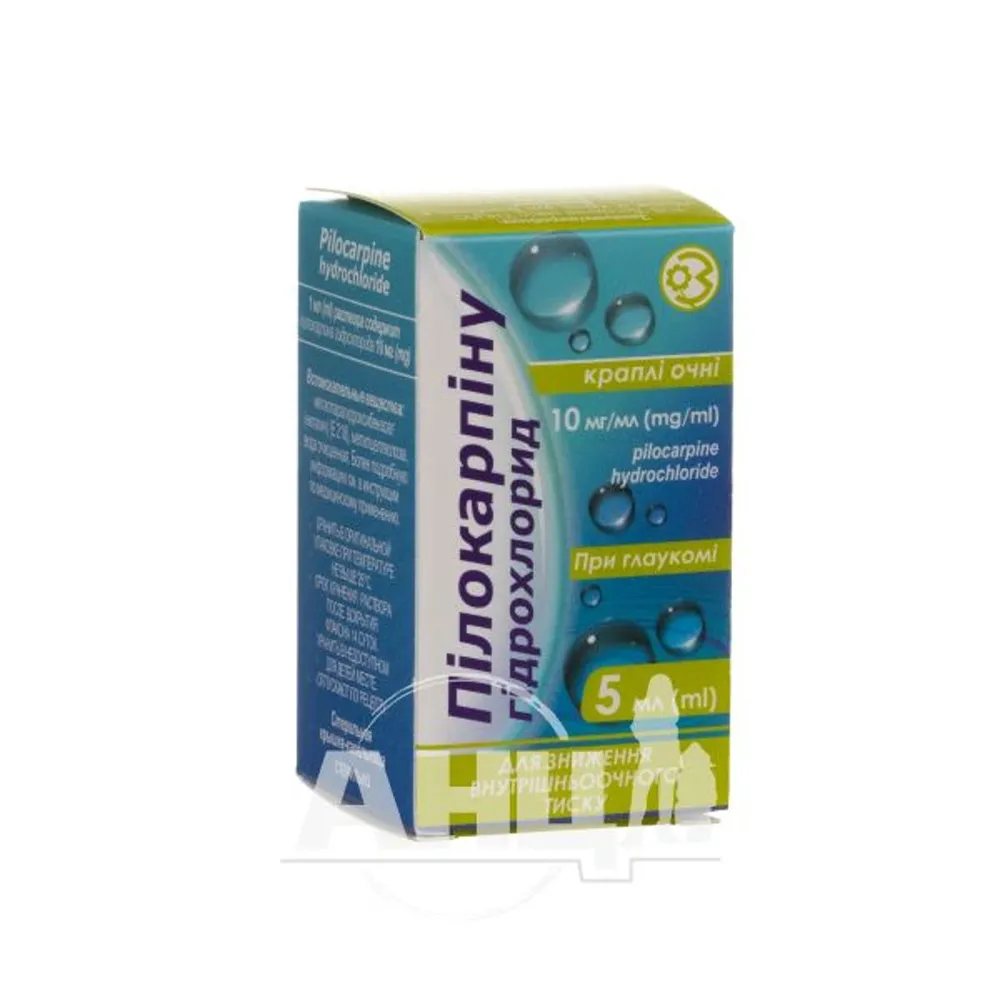
Table of Contents
INSTRUCTIONS FOR MEDICAL USE OF THE MEDICINAL PRODUCT PILOCARPINE HYDROCHLORIDE (PILOCARPINE HYDROCHLORIDE)
Composition:
Active substance: pilocarpine;
1 ml of solution contains pilocarpine hydrochloride 10 mg;
Excipients: methyl 4-hydroxybenzoate (nipagin) (E 218), methylcellulose, purified water.
Pharmaceutical form. Eye drops.
Main physicochemical properties: colorless transparent or slightly opalescent liquid.
Pharmacotherapeutic group. Agents used in ophthalmology. Antiglaucoma preparations and miotics. ATC code S01E B01.
Pharmacological properties.
Pharmacodynamics.
Pilocarpine hydrochloride belongs to M-cholinomimetic agents. Its mechanism of action is due to stimulation of peripheral M-cholinergic receptors, resulting in contraction of the iris sphincter muscle and ciliary muscle, accompanied by pupillary constriction (miosis) and opening of the anterior chamber angle. This improves outflow of aqueous humor, leading to a reduction in intraocular pressure and enhanced trophic processes in ocular tissues. The reduction in intraocular pressure reaches 3–4 mm Hg.
Pharmacokinetics.
Following instillation onto the conjunctiva, pilocarpine hydrochloride penetrates through the cornea and reaches maximum concentration in the aqueous humor within 30–40 minutes. The elimination half-life from the eye is 1.5–2 hours; however, the effect on intraocular pressure lasts for 4–8 hours. Pilocarpine hydrochloride does not undergo metabolism in ocular tissues but is eliminated with aqueous humor. It is inactivated via hydrolysis in blood serum and liver. The plasma elimination half-life is 30 minutes.
Clinical Characteristics.
Indications.
Primary and chronic open-angle glaucoma. Acute attack of closed-angle glaucoma. Chronic closed-angle glaucoma (prior to surgical intervention). Secondary glaucoma (due to central retinal vein thrombosis, acute retinal artery occlusion, optic nerve atrophy, pigmentary retinal degeneration, vitreous hemorrhage). Need for pupillary constriction in cases of mydriatic overdose, for diagnostic purposes, and during surgical procedures (except in individuals with high-degree myopia).
Contraindications.
Hypersensitivity to the components of the drug.
Iritis, iridocyclitis, iridocyclitic crisis, uveitis, cyclitis, keratitis, and other eye diseases in which pupillary constriction is undesirable (after ocular surgery to prevent formation of posterior synechiae).
Paradoxical reaction to the drug in the congestive form of glaucoma.
Acute inflammatory diseases of ocular tissues.
History of bronchial asthma.
Interaction with other medicinal products and other forms of interactions.
Antagonists of pilocarpine include atropine and other M-cholinolytic agents. When used concomitantly with adrenergic stimulants – antagonism of effect (influence on pupil diameter).
Timolol and phenylephrine enhance reduction of intraocular pressure (decrease production of aqueous humor).
Pilocarpine may be used in combination with sympathomimetics, β-adrenergic blockers, and carbonic anhydrase inhibitors.
M-cholinostimulating effect of pilocarpine is reduced when combined with tricyclic antidepressants, phenothiazine derivatives, chlorprothixene, clozapine; enhanced – by anticholinesterase agents.
The effect of pilocarpine may be potentiated by monoamine oxidase inhibitors (MAO inhibitors) and antihistamines.
Bradycardia and reduction in arterial blood pressure may occur during general anesthesia with halothane (in patients using pilocarpine eye drops).
Special precautions for use.
An examination of the fundus should be performed before initiating therapy.
Immediately before use, the bottle should be held in the palm of the hand to warm the medication to body temperature.
Pilocarpine should be used with caution in patients with a history of retinal detachment and in young patients with high myopia.
Use with caution in patients with acute heart failure, recent myocardial infarction, severe bradycardia, arterial hypotension, arterial hypertension, hyperthyroidism, epilepsy, peptic ulcer, urinary tract obstruction, vasomotor instability, or Parkinson's disease.
Miotic agents should be administered only in the absence of newly formed blood vessels in the iris.
Increasing the concentration and frequency of instillations (6 or more times) is not advisable, as this does not enhance the hypotensive effect and may lead to systemic adverse reactions.
Pilocarpine hydrochloride has virtually no effect on intraocular pressure in healthy individuals, but is effective in patients with various forms of glaucoma. It is recommended to replace pilocarpine hydrochloride with other non-miotic agents for 1–3 months during the course of a year. With prolonged instillation, miosis persists continuously, which is particularly important for elderly patients with incipient cataracts and lens sclerosis.
When using other eye drops concurrently, the interval between instillations should be at least 15 minutes.
The presence of methylparaben in the formulation may cause allergic reactions (possibly delayed).
Use during pregnancy or breastfeeding.
Use during pregnancy or breastfeeding is possible only if, in the physician's opinion, the expected benefit outweighs the potential risk of adverse effects.
Ability to influence reaction speed when driving or operating machinery.
When using this medicinal product, driving vehicles and engaging in other potentially hazardous activities requiring clear vision are not recommended.
Method of administration and dosage.
Pilocarpine should be administered by instilling 1–2 drops into each eye 2–4 times daily. The daily dose and duration of treatment are determined by the physician depending on the level of intraocular pressure. If necessary, the drug may be combined with β-adrenergic blockers.
In acute attacks of angle-closure glaucoma, pilocarpine should be administered as follows: during the first hour – 1 drop every 15 minutes; during the 2nd–3rd hours – 1 drop every 30 minutes; during the 4th–6th hours – 1 drop every 60 minutes; thereafter – 3–6 times daily until the attack is controlled.
Children. The drug should not be used in children.
Overdose.
Initial symptoms of overdose include nausea, bradycardia, persistent miosis, eye pain, visual disturbances, and headache. If these symptoms occur, the drug should be discontinued. Treatment of overdose is symptomatic. Atropine and tropicamide may be used as specific antidotes. In case of pronounced bradycardia due to overdose of parasympathomimetics, administer 0.5–2 mg of atropine parenterally.
Side effects.
Ocular side effects: ocular discomfort and burning sensation, miosis, accommodative spasm as a result of persistent miosis (during nighttime), decreased visual acuity, transient ocular pain, redness, increased lacrimation, allergic conjunctivitis and eyelid dermatitis, ciliary muscle spasm, superficial keratitis, rarely – retinal detachment, itching around the eyes, myopia, photophobia, conjunctival hyperemia, corneal edema and erosion, increased pupillary block, hemorrhage into the vitreous body. Prolonged treatment may lead to follicular conjunctivitis, contact eyelid dermatitis, keratopathy, cataract, reversible lens opacification, and changes in conjunctival tissue.
Nervous system side effects: headache (including in the temples and periorbital areas), tremor, dizziness.
Gastrointestinal side effects: hypersalivation, nausea, vomiting, diarrhea.
Cardiovascular side effects: increased blood pressure, arterial hypotension, bradycardia, changes in cardiac rhythm, vascular disturbances.
Skin side effects: allergic reactions (possibly delayed), increased sweating.
Respiratory system, thoracic and mediastinal side effects: bronchospasm, pulmonary edema, rhinorrhea.
Shelf life. 4 years.
The shelf life of the solution after opening the bottle is 14 days.
Storage conditions. Store in the original packaging at a temperature not exceeding 25 °C.
Keep out of reach of children.
Packaging. 5 ml or 10 ml in a bottle with a dropper cap in a carton.
Prescription status. Prescription only.
Manufacturer.
Limited Liability Company "Experimental Plant 'GNCLS'".
Limited Liability Company "FARMEKS GROUP".
Manufacturer's address and location of business activity.
8 Vorobiova Street, Kharkiv, Kharkiv Region, Ukraine.
(Limited Liability Company "Experimental Plant 'GNCLS')
100 Shevchenka Street, Boryspil, Kyiv Region, 08301, Ukraine.
(Limited Liability Company "FARMEKS GROUP")