Pilobact neo
Ukraine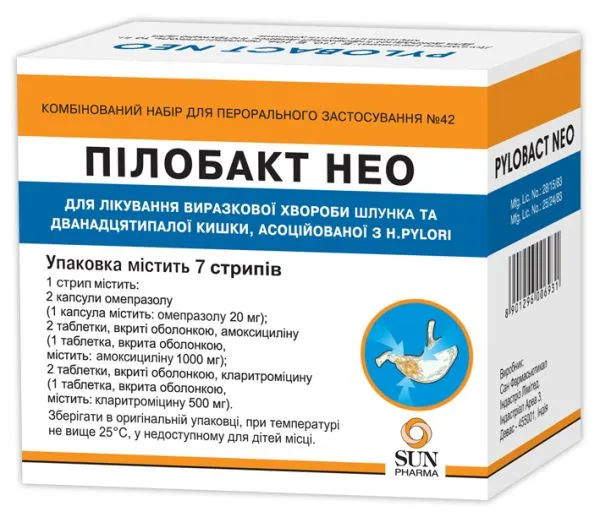
Table of Contents
INSTRUCTION FOR MEDICAL USE OF THE MEDICINAL PRODUCT PİLOBACT NEO (PYLOBACT NEO)
Composition:
Active substances:
Amoxicillin tablets – 1 coated tablet contains amoxicillin trihydrate equivalent to amoxicillin 1000 mg;
Clarithromycin tablets – 1 coated tablet contains clarithromycin 500 mg;
Omeprazole capsules – 1 capsule contains omeprazole 20 mg;
Excipients:
Amoxicillin tablets: microcrystalline cellulose, sodium starch glycolate, colloidal anhydrous silicon dioxide, talc, magnesium stearate; coating composition: hydroxypropylmethylcellulose, titanium dioxide (E 171), Parmasil, yellow azo dye West FCF (E 110), polyethylene glycol;
Clarithromycin tablets: microcrystalline cellulose, povidone, magnesium stearate, stearic acid, talc, colloidal anhydrous silicon dioxide, sodium croscarmellose; coating composition: hydroxypropylmethylcellulose, hydroxypropylcellulose, propylene glycol, sorbitan oleate, titanium dioxide (E 171), quinoline yellow dye (E 104), vanillin, Opacode (black) containing: shellac, black iron oxide, propylene glycol;
Omeprazole capsules: starch, dextrin, sugar powder, talc, cane sugar, sodium carboxymethyl starch, sodium carboxymethylcellulose, disodium hydrogen phosphate, anhydrous sodium sulfite, hypromellose, titanium dioxide (E 171), polyethylene glycol 4000, sodium citrate, polyacrylic acid resin emulsion, Non-Pareil granules, empty hard gelatin capsule size "2" containing: brilliant blue, carmoisine, gelatin, methylparaben, propylparaben.
Pharmaceutical form: 1. Amoxicillin – coated tablets.
- Clarithromycin – coated tablets.
3. Omeprazole – capsules.
Main physicochemical properties:
Amoxicillin tablets – orange-colored, capsule-shaped, biconvex, film-coated tablets;
Clarithromycin tablets – light yellow, oval, biconvex, film-coated tablets, marked “CXT500” in black ink on one side;
Omeprazole capsules – hard self-closing gelatin capsules with a blue cap and transparent pink body, size “2”, containing white or almost white spherical granules.
Pharmacotherapeutic group.
Combinations for eradication of Helicobacter pylori. ATC code A02BD05.
Pharmacological properties.
Pilobact Neo is a combination pack containing omeprazole, clarithromycin, and amoxicillin. Pilobact Neo is a first-line triple eradication therapy regimen for Helicobacter pylori (H. pylori), designed for a 7-day treatment course.
Pharmacodynamics.
Omeprazole is a proton pump inhibitor. Omeprazole reduces gastric hydrochloric acid secretion by inhibiting the activity of H+-K+-ATPase, resulting in blockade of the final stage of acid secretion. This leads to a reduction in both basal and stimulated acid secretion, regardless of the nature of the stimulus. The duration of gastric acid secretion inhibition lasts over 24 hours. Omeprazole increases gastric pH, thereby creating an optimal environment for antimicrobial activity. Omeprazole significantly reduces gastric juice volume and thus enhances the concentrations of clarithromycin and amoxicillin in the gastric mucosa.
Clarithromycin is a macrolide antibiotic exhibiting antibacterial activity against many aerobic and anaerobic gram-positive and gram-negative microorganisms, including H. pylori. Clarithromycin exerts its antibacterial effect by inhibiting protein synthesis through binding to the 50S subunit of ribosomes in susceptible bacteria. The minimum inhibitory concentration (MIC90) of clarithromycin and its active metabolite, 14-hydroxyclarithromycin, against H. pylori is 0.03 µg/mL and 0.06 µg/mL, respectively. Clarithromycin is stable in the acidic gastric environment. Amoxicillin is a semi-synthetic penicillin antibiotic with a broad spectrum of bactericidal activity related to its ability to inhibit bacterial cell wall synthesis. It is active against H. pylori; to date, no amoxicillin-resistant H. pylori strains have been identified.
Pharmacokinetics.
All three components of the pack are well absorbed after oral administration. Omeprazole is rapidly absorbed, with an absolute bioavailability of approximately 40%. The plasma elimination half-life is 0.5–1 hour. Omeprazole is 90–95% bound to plasma proteins. It undergoes extensive hepatic metabolism. Nearly 80% of omeprazole is excreted by the kidneys as metabolites.
Clarithromycin is widely distributed into body tissues, including gastric and duodenal mucosa. Tissue and body fluid concentrations of clarithromycin exceed serum concentrations by up to 10-fold. Food intake does not affect the bioavailability of the drug. Approximately 20% of clarithromycin is metabolized to form the main active metabolite, 14-hydroxyclarithromycin. The elimination half-life of clarithromycin is 5–7 hours. Approximately 20% of clarithromycin is excreted unchanged by the kidneys, and 15% is excreted as 14-hydroxyclarithromycin. It has been demonstrated that concomitant administration of omeprazole and clarithromycin favorably influences the pharmacokinetic properties of clarithromycin.
Amoxicillin is rapidly and almost completely absorbed from the gastrointestinal tract after oral administration and is not degraded in the acidic gastric environment. Food does not affect amoxicillin absorption. Peak plasma concentrations are reached within 1–2 hours. Plasma protein binding is approximately 20%. Amoxicillin is widely distributed into tissues, mucous membranes, and body fluids. The elimination half-life of amoxicillin is 1–1.5 hours. Approximately 60% of the administered dose is excreted unchanged in urine via tubular secretion and glomerular filtration.
Clinical characteristics.
Indications.
Eradication of Helicobacter pylori in patients with gastric and duodenal ulcers.
Contraindications.
Hypersensitivity to omeprazole, clarithromycin, other macrolides, amoxicillin, other beta-lactam antibiotics, substituted benzimidazoles, or any other component of the medicinal product.
Omeprazole, like other proton pump inhibitors, should not be used concomitantly with atazanavir and nelfinavir.
Concomitant use of clarithromycin is contraindicated with the following drugs:
- cisapride, astemizole, pimozide, terfenadine — may lead to QT interval prolongation and development of cardiac arrhythmias, including ventricular tachycardia, ventricular fibrillation, and torsades de pointes;
- HMG-CoA reductase inhibitors (statins) predominantly metabolized by CYP3A4 (lovastatin or simvastatin) — due to increased risk of myopathy, including rhabdomyolysis;
- ergot alkaloids, such as ergotamine, dihydroergotamine — may lead to ergot toxicity;
- oral midazolam (see "Interaction with other medicinal products and other types of interactions");
- colchicine — in patients with renal or hepatic impairment (see "Special precautions for use", "Interaction with other medicinal products and other types of interactions");
- ticagrelor, ivabradine, or ranolazine.
The medicinal product is contraindicated in patients with a history of QT interval prolongation or ventricular cardiac arrhythmias, including torsades de pointes (see "Special precautions for use", "Interaction with other medicinal products and other types of interactions").
Hypokalemia (risk of QT interval prolongation).
Severe hepatic impairment and concomitant renal impairment.
Interaction with other medicinal products and other types of interactions.
Amoxicillin
Phenylbutazone, oxyphenbutazone, and to a lesser extent – acetylsalicylic acid and sulfinpyrazone – inhibit tubular secretion of penicillin-class drugs, leading to increased elimination half-life and plasma concentration of amoxicillin.
Bacteriostatic agents (tetracycline-class antibiotics, macrolides, chloramphenicol) may neutralize the bactericidal effect of amoxicillin. Concomitant use of aminoglycosides is possible (synergistic effect).
Not recommended combinations
Probenecid. Concomitant use with probenecid is not recommended. Probenecid reduces renal tubular secretion of amoxicillin. Concurrent use of probenecid may lead to prolonged elevated levels of amoxicillin in blood.
Allopurinol. Concomitant use with amoxicillin may promote the occurrence of allergic skin reactions.
Digoxin. Absorption of digoxin increases; therefore, dose adjustment is required.
Anticoagulants. Oral anticoagulants and penicillin-class antibiotics are widely used in clinical practice, and no reports of interaction have been received. However, scientific publications have described cases of increased international normalized ratio (INR) in patients receiving acenocoumarol or warfarin during amoxicillin therapy. If concomitant use of these drugs is necessary, prothrombin time or INR should be carefully monitored, and amoxicillin may need to be discontinued if required. Dose adjustment of oral anticoagulants may also be needed.
Methotrexate. Amoxicillin may reduce renal clearance of methotrexate; therefore, serum methotrexate concentration should be monitored. Concomitant use of amoxicillin with methotrexate increases the risk of its toxic effects.
Amoxicillin should be used with caution together with oral hormonal contraceptives , as plasma levels of estrogens and progestogens may temporarily decrease, potentially reducing the effectiveness of hormonal contraceptives. Therefore, additional non-hormonal contraceptive methods are recommended.
Other types of interactions
Forced diuresis leads to decreased amoxicillin plasma concentration by increasing its elimination.
Diarrhea may reduce absorption of other medicinal products and adversely affect their efficacy.
Effect on diagnostic laboratory test results: when testing for glucose in urine, enzymatic glucose oxidase method is recommended. False-positive results are usually observed with chemical methods.
Amoxicillin may reduce the amount of estriol in urine in pregnant women.
At high concentrations, amoxicillin may reduce serum glucose levels. Amoxicillin may interfere with protein determination by colorimetric methods.
Clarithromycin
Clarithromycin does not interact with oral contraceptives.
Concomitant use of the following drugs with clarithromycin is strictly contraindicated due to the potential for severe interaction consequences
Cisapride, pimozide, astemizole, terfenadine. Increased serum levels of cisapride have been observed in patients receiving clarithromycin and cisapride simultaneously. This may lead to QT interval prolongation and development of arrhythmias, including ventricular tachycardia, ventricular fibrillation, and torsades de pointes. Similar effects were observed in patients taking clarithromycin and pimozide simultaneously.
Macrolides have been reported to alter terfenadine metabolism, leading to increased serum terfenadine levels, sometimes associated with arrhythmias such as QT interval prolongation, ventricular tachycardia, ventricular fibrillation, and torsades de pointes. In studies involving volunteers, concomitant use of clarithromycin and terfenadine resulted in a 2–3-fold increase in serum levels of terfenadine acid metabolite and QT interval prolongation, although no clinically apparent effect was observed. Similar effects were also noted with concomitant use of astemizole and other macrolides.
Ergot alkaloids. Concomitant use of clarithromycin with ergotamine or dihydroergotamine has been associated with signs of acute ergotism, characterized by vasospasm, ischemia of extremities and other tissues, including the central nervous system.
Oral midazolam. When midazolam is used with clarithromycin tablets (500 mg twice daily), the AUC (area under the concentration-time curve) of midazolam increases 7-fold after oral administration of midazolam. Concomitant use of oral midazolam and clarithromycin is contraindicated.
HMG-CoA reductase inhibitors. Concomitant use of clarithromycin is also contraindicated with HMG-CoA reductase inhibitors predominantly metabolized by CYP3A4 (e.g., lovastatin and simvastatin), colchicine, ticagrelor, ivabradine, and ranolazine (see section "Contraindications").
Like other macrolides, clarithromycin has been associated with increased concentrations of HMG-CoA reductase inhibitors. Rare cases of rhabdomyolysis have been reported in patients receiving these drugs concomitantly. Patients should be monitored for signs and symptoms of myopathy.
Rare cases of rhabdomyolysis have been reported in patients receiving concomitant clarithromycin and atorvastatin. In case of concomitant use, the atorvastatin dose should be minimized. Appropriate decisions regarding statin dose adjustment or use of a statin not dependent on CYP3A metabolism (e.g., fluvastatin or pravastatin) should be considered.
Effect of other medicinal products on clarithromycin pharmacokinetics
Medicinal products that are CYP3A inducers (e.g., rifampicin, phenytoin, carbamazepine, phenobarbital, St. John's wort preparations) may induce clarithromycin metabolism. This may result in subtherapeutic clarithromycin levels and reduced efficacy. Additionally, monitoring of plasma levels of the CYP3A inducer may be necessary, as they may be elevated due to CYP3A inhibition by clarithromycin. Concomitant use of rifabutin and clarithromycin has led to increased rifabutin levels and decreased clarithromycin levels in serum, with a simultaneous increased risk of uveitis.
Effect of the following medicinal products on clarithromycin blood concentration is known or suspected; therefore, dose adjustment or alternative therapy may be required
Efavirenz, nevirapine, rifampicin, rifabutin, and rifapentine. Potent inducers of cytochrome P450 enzymes, such as efavirenz, nevirapine, rifampicin, rifabutin, and rifapentine, may accelerate clarithromycin metabolism, reducing its plasma concentration but increasing the concentration of 14-OH-clarithromycin – a microbiologically active metabolite. Since the microbiological activity of clarithromycin and 14-OH-clarithromycin varies against different bacteria, the expected therapeutic effect may not be achieved with concomitant use of clarithromycin and cytochrome P450 enzyme inducers.
Etravirine. Clarithromycin efficacy was reduced by etravirine, although concentrations of the active metabolite 14-OH-clarithromycin increased. Since 14-OH-clarithromycin has reduced activity against Mycobacterium avium complex (MAC), overall activity against this pathogen may be altered. Therefore, alternative drugs to clarithromycin should be considered for treatment of MAC.
Fluconazole. Concomitant use of fluconazole 200 mg daily and clarithromycin 500 mg twice daily in healthy volunteers led to a 33% increase in steady-state Cmin of clarithromycin and an 18% increase in AUC. Steady-state concentrations of the active metabolite 14-OH-clarithromycin were not significantly altered with concomitant use of fluconazole. Dose adjustment of clarithromycin is not required.
Ritonavir. Concomitant use of ritonavir and clarithromycin led to significant inhibition of clarithromycin metabolism. Cmax of clarithromycin increased by 31%, Cmin by 182%, and AUC by 77%. Complete inhibition of 14-OH-clarithromycin formation was observed. Due to the wide therapeutic window, dose reduction of clarithromycin is not required for patients with normal renal function. However, dose adjustment is necessary for patients with renal impairment: for patients with CLCR 30–60 mL/min, the clarithromycin dose should be reduced by 50%. For patients with severe renal impairment (CLCR < 30 mL/min), the clarithromycin dose should be reduced by 75%. Clarithromycin doses exceeding 1 g/day should not be used concomitantly with ritonavir.
The same dose adjustments should be applied for patients with impaired renal function when ritonavir is used as a pharmacokinetic booster with other HIV protease inhibitors, including atazanavir and saquinavir.
Effect of clarithromycin on pharmacokinetics of other medicinal products
Antiarrhythmic agents. Post-marketing reports exist of torsades de pointes occurring with concomitant use of clarithromycin and quinidine or disopyramide. ECG monitoring is recommended for timely detection of QT interval prolongation. Serum concentrations of these drugs should be monitored during clarithromycin therapy.
Hydroxychloroquine and chloroquine. Clarithromycin should be used with caution in patients receiving medicinal products that prolong the QT interval due to the potential risk of cardiac arrhythmia and serious cardiovascular adverse reactions.
Corticosteroids. Caution should be exercised when using clarithromycin concomitantly with systemic or inhaled corticosteroids that are predominantly metabolized by CYP3A, due to potential increased systemic effects of corticosteroids. Patients receiving these drugs concomitantly should be closely monitored for adverse reactions associated with systemic corticosteroid use.
CY3A. Concomitant use of clarithromycin, a CYP3A enzyme inhibitor, and a drug primarily metabolized by CYP3A, may lead to increased plasma concentration of the latter, thereby enhancing or prolonging its therapeutic effect and increasing the risk of adverse reactions.
Caution should be exercised when using clarithromycin in patients receiving medicinal products that are CYP3A substrates, especially if the CYP3A substrate has a narrow therapeutic range (e.g., carbamazepine) and/or is extensively metabolized by this enzyme.
Dose adjustment may be required, and if possible, careful monitoring of serum concentrations of the CYP3A-metabolized drug is recommended for patients receiving clarithromycin concomitantly.
It is known (or suspected) that the following drugs or drug groups are metabolized by the same CYP3A isoenzyme: alprazolam, astemizole, carbamazepine, cilostazol, cisapride, cyclosporine, disopyramide, ergot alkaloids, lovastatin, methylprednisolone, midazolam, omeprazole, oral anticoagulants (e.g., warfarin), pimozide, quinidine, rifabutin, sildenafil, simvastatin, tacrolimus, terfenadine, triazolam, and vinblastine, although this list is not complete. A similar interaction mechanism has been observed with phenytoin, theophylline, and valproate, which are metabolized by another cytochrome P450 isoenzyme.
Omeprazole. Concomitant use of clarithromycin with omeprazole leads to increased steady-state concentrations of omeprazole. When omeprazole alone was used, the mean gastric juice pH value measured over 24 hours was 5.2; with concomitant use of omeprazole and clarithromycin, it was 5.7.
Sildenafil, tadalafil, and vardenafil. There is a possibility of increased plasma concentrations of phosphodiesterase inhibitors (sildenafil, tadalafil, and vardenafil) when used concomitantly with clarithromycin, which may require dose reduction of phosphodiesterase inhibitors.
Theophylline, carbamazepine. Slight but statistically significant increases in plasma concentrations of theophylline or carbamazepine have been reported with concomitant use of clarithromycin.
Solifenacin. Solifenacin is primarily metabolized by CYP2D6. However, in patients lacking CYP2D6, metabolism occurs via CYP3A4. In this population, CYP3A4 inhibition leads to significant increases in solifenacin plasma concentrations. Dose reduction of solifenacin may be necessary when used concomitantly with clarithromycin.
Triazolobenzodiazepines (e.g., alprazolam, midazolam, triazolam). Combined use of oral midazolam and clarithromycin should be avoided. With intravenous administration of midazolam with clarithromycin, careful patient monitoring is required for timely dose adjustment.
The same precautions should be observed when using other benzodiazepines metabolized by CYP3A, including triazolam and alprazolam. When using benzodiazepines whose elimination does not depend on CYP3A (temazepam, nitrazepam, lorazepam), clinically significant interaction with clarithromycin is unlikely.
Data exist on drug interaction and development of adverse effects from the central nervous system (CNS) (such as somnolence and confusion) with concomitant use of clarithromycin and triazolam. Patients should be monitored, considering the possibility of increased pharmacological effects on the CNS.
Other types of interactions
Colchicine. Colchicine is a substrate of CYP3A and P-glycoprotein (P-gp). Clarithromycin and other macrolides are known to inhibit CYP3A and P-gp. With concomitant use of clarithromycin and colchicine, inhibition of P-gp and CYP3A by clarithromycin may lead to increased colchicine exposure. Patients should be monitored for clinical symptoms of colchicine toxicity. The colchicine dose should be reduced when used concomitantly with clarithromycin in patients with normal renal and hepatic function. Concomitant use of clarithromycin with colchicine in patients with renal or hepatic impairment is contraindicated.
Digoxin. Digoxin is considered a P-gp substrate. Clarithromycin is known to inhibit P-gp. With concomitant use, P-gp inhibition may lead to increased digoxin exposure. Increased digoxin serum concentrations have been reported in patients using clarithromycin with digoxin. In some patients, signs of digitalis toxicity developed, including potentially fatal arrhythmias. Serum digoxin concentrations should be carefully monitored in patients using digoxin with clarithromycin.
Zidovudine. Concomitant use of clarithromycin and zidovudine in HIV-infected patients may lead to decreased steady-state serum concentrations of zidovudine. Since clarithromycin may interfere with absorption of oral zidovudine when taken simultaneously, a 4-hour interval between doses of clarithromycin and zidovudine should be maintained. Such interaction has not been reported with use of clarithromycin suspension and zidovudine or didanosine in children.
Phenytoin and valproate. Reports exist of interaction between CYP3A inhibitors, including clarithromycin, and medicinal products not considered to be metabolized by CYP3A (e.g., phenytoin and valproate). Determination of serum levels of these medicinal products is recommended when prescribed concomitantly with clarithromycin. Increased serum levels have been reported.
Bidirectional effect of medicinal products
Atazanavir. Concomitant use of clarithromycin (500 mg twice daily) with atazanavir (400 mg once daily), both substrates and inhibitors of CYP3A, led to a doubling of clarithromycin exposure and a 70% reduction in 14-OH-clarithromycin exposure, with a 28% increase in atazanavir AUC. Since clarithromycin has a wide therapeutic range, dose reduction is not necessary for patients with normal renal function. The clarithromycin dose should be reduced by 50% for patients with CLCR 30–60 mL/min and by 75% for patients with CLCR <30 mL/min. Clarithromycin doses exceeding 1000 mg/day should not be used concomitantly with protease inhibitors.
Calcium channel blockers. Due to the risk of arterial hypotension, clarithromycin should be used with caution concomitantly with calcium channel blockers metabolized by CYP3A4 (e.g., verapamil, amlodipine, diltiazem). Plasma concentrations of both clarithromycin and calcium channel blockers may increase with interaction. Arterial hypotension, bradyarrhythmia, and lactic acidosis have been observed with concomitant use of clarithromycin and verapamil.
Oral hypoglycemic agents / insulin. Combined use of clarithromycin and oral hypoglycemic agents and/or insulin may cause pronounced hypoglycemia. When used concomitantly with hypoglycemic agents such as nateglinide, pioglitazone, repaglinide, and rosiglitazone, clarithromycin may inhibit the CYP3A enzyme, leading to hypoglycemia. Careful glucose level monitoring is recommended.
Itraconazole. Clarithromycin and itraconazole are substrates and inhibitors of CYP3A; therefore, clarithromycin may increase itraconazole plasma levels and vice versa. When itraconazole is used with clarithromycin, patients should be closely monitored for signs or symptoms of enhanced or prolonged pharmacological effect.
Saquinavir. Concomitant use of clarithromycin (500 mg twice daily) with saquinavir (soft gelatin capsules, 1200 mg three times daily), both substrates and inhibitors of CYP3A, led to a 177% increase in steady-state AUC and a 187% increase in Cmax compared to saquinavir alone. Meanwhile, AUC and Cmax of clarithromycin increased by approximately 40% compared to clarithromycin alone. Dose adjustment is not necessary if both medicinal products are used concomitantly for a limited period and at the aforementioned doses and dosage forms. Results of drug interaction studies using soft gelatin capsules may not correspond to effects observed with saquinavir in hard gelatin capsule form. Results of drug interaction studies using saquinavir alone may not correspond to effects observed with saquinavir and ritonavir therapy. When saquinavir is used with ritonavir, possible effects of ritonavir on clarithromycin should be considered (see above).
Oral anticoagulants. Concomitant use of clarithromycin with warfarin carries a risk of serious bleeding, significant increase in INR (international normalized ratio), and prothrombin time. While patients receive clarithromycin and oral anticoagulants concomitantly, INR and prothrombin time should be frequently monitored.
Direct oral anticoagulants (DOACs). Direct oral DOACs dabigatran and edoxaban are substrates for the efflux transporter P-glycoprotein (Pgp). Rivaroxaban and apixaban are metabolized by CYP3A4 and are also Pgp substrates.
Use of direct oral anticoagulants such as dabigatran, rivaroxaban, and apixaban concomitantly with clarithromycin requires caution, especially in patients at high risk of bleeding (see section "Special precautions for use").
Omeprazole
Effect of omeprazole on pharmacokinetics of other medicinal products
Absorption. Reduced gastric acidity during omeprazole therapy may increase or decrease absorption of drugs whose absorption depends on gastric juice pH.
Ketoconazole, itraconazole, posaconazole, erlotinib. As with other drugs that suppress gastric acidity, absorption and thus clinical efficacy of medicinal products such as posaconazole, erlotinib, ketoconazole, and itraconazole may be reduced during omeprazole use. Concomitant use of omeprazole with posaconazole and erlotinib should be avoided.
Digoxin. Concomitant treatment with omeprazole (20 mg daily) and digoxin increases digoxin bioavailability by 10%. Cases of digoxin-induced toxicity are rarely reported. However, caution should be exercised when prescribing high doses of omeprazole to elderly patients. Therapeutic drug monitoring of digoxin should be intensified.
Clopidogrel. Data on concomitant use of clopidogrel and omeprazole are conflicting regarding reduced concentration of clopidogrel's active metabolite and clinical aspects of this pharmacokinetic/pharmacodynamic interaction concerning major cardiovascular events. Therefore, concomitant use of omeprazole and clopidogrel should be avoided. With concomitant use, mean platelet aggregation decreases by 47% (after 24 hours) and by 30% (on day 5).
Metronidazole, amoxicillin. No interaction with metronidazole and amoxicillin has been established. These antibacterial agents are used in combination with omeprazole for eradication of H. pylori. Increased omeprazole concentration with concomitant use of clarithromycin is considered a beneficial interaction during H. pylori eradication.
Interaction with over-the-counter drugs (paracetamol, nonsteroidal anti-inflammatory drugs, antacids) is not clinically significant.
Omeprazole absorption may be delayed by food intake; therefore, the drug should be taken on an empty stomach.
Metabolism. Omeprazole inhibits CYP2C19 – the main enzyme metabolizing omeprazole.
Thus, metabolism of concomitant drugs also metabolized by CYP2C19, such as diazepam, phenytoin, warfarin (R-warfarin), other vitamin K antagonists, and cilostazol, may be slowed.
Plasma concentration monitoring of phenytoin is recommended during the first two weeks after starting omeprazole therapy; and if phenytoin dose adjustment was made, monitoring and further dose adjustment of the drug should be conducted after omeprazole therapy ends.
INR monitoring is recommended in patients using warfarin or other vitamin K antagonists; dose reduction of warfarin (or other vitamin K antagonist) may be required.
However, concomitant use of 20 mg omeprazole daily does not alter coagulation time in patients on long-term warfarin therapy.
Data exist that use of 40 mg omeprazole increases Cmax and AUC of cilostazol by 18% and 26%, respectively, and one of its active metabolites by 29% and 69%, respectively.
Omeprazole is also partially metabolized by CYP3A4 but does not inhibit this enzyme.
Thus, omeprazole does not affect metabolism of drugs metabolized by CYP3A4, such as cyclosporine, lidocaine, quinidine, estradiol, erythromycin, and budesonide.
Omeprazole at doses of 20–40 mg daily does not significantly affect any other CYP enzymes.
Unknown interaction mechanism
Tacrolimus. Data exist that concomitant use of omeprazole increases serum levels of tacrolimus. Intensified monitoring of tacrolimus levels and renal function (creatinine clearance) is required, and dose adjustment of tacrolimus may be necessary.
Methotrexate. Data exist on increased methotrexate levels in some patients with concomitant use of proton pump inhibitors. If high-dose methotrexate is required, temporary discontinuation of omeprazole should be considered.
Atazanavir and nelfinavir. It has been observed that omeprazole interacts with certain antiretroviral agents. Clinical significance and mechanism of such interaction are not always known. Increased gastric juice pH during omeprazole use may alter absorption of antiretroviral agents. Another possible interaction mechanism may involve CYP2C19. With use of certain antiretroviral agents such as atazanavir and nelfinavir, reduced serum levels of the latter have been observed with concomitant use of omeprazole. Therefore, concomitant use of omeprazole with such drugs as atazanavir and nelfinavir is contraindicated.
Saquinavir
Concomitant use of omeprazole with saquinavir/ritonavir resulted in approximately 70% increase in saquinavir plasma concentrations, which was associated with good tolerability in HIV-infected patients.
Effect of other drugs on omeprazole pharmacokinetics
Inhibitors of CYP2C19 and CYP3A4. Since omeprazole is metabolized by CYP2C19 and CYP3A4, drugs that inhibit CYP2C19, CYP3A4, or both enzymes (such as clarithromycin and voriconazole) may cause increased omeprazole serum levels by slowing its metabolism. Concomitant use of voriconazole may lead to more than twofold increase in omeprazole concentration. Since high doses of omeprazole are well tolerated, dose adjustment is not required during short-term concomitant use. However, dose adjustment should be considered for patients with severe hepatic impairment and in cases of long-term treatment.
Inducers of CYP2C19, CYP3A4. Drugs that induce CYP2C19, CYP3A4, or both enzymes (such as rifampicin, St. John's wort) may cause decreased omeprazole serum levels by accelerating its metabolism.
Special precautions for use.
Amoxicillin
Hypersensitivity. Prior to initiating amoxicillin therapy, ensure that the patient has no history of hypersensitivity reactions to penicillins, cephalosporins, or other beta-lactam antibacterial agents.
Cross-hypersensitivity and cross-resistance (10–15%) may occur between penicillins and cephalosporins.
Severe, and sometimes fatal, cases of hypersensitivity (including anaphylactic reactions and severe skin reactions) have been reported in patients receiving penicillin therapy. Hypersensitivity reactions may also progress to Kounis syndrome, a serious allergic reaction that may lead to myocardial infarction (see section "Adverse reactions"). Such reactions occur more frequently in patients with a history of severe allergic reactions and in patients with atopy. Treatment with the drug must be discontinued and replaced with another appropriate therapy. Management of symptoms of anaphylactic reaction may be required, for example immediate administration of adrenaline, corticosteroids (intravenously), and emergency treatment of respiratory failure.
Cases of drug-induced enterocolitis syndrome (DIES), mainly in children, have been reported during amoxicillin treatment (see section "Adverse reactions"). DIES is an allergic reaction, the main symptom of which is persistent vomiting (1–4 hours after amoxicillin intake) in the absence of allergic skin or respiratory symptoms. Additional symptoms may include abdominal pain, diarrhea, hypotension, or leukocytosis with neutrophilia. Severe cases have been reported, including progression to shock.
The drug should not be administered to patients with severe gastrointestinal disorders associated with diarrhea and vomiting due to the risk of reduced absorption.
Renal impairment. In patients with impaired renal function, elimination of amoxicillin is slowed; therefore, depending on the degree of impairment, either discontinue amoxicillin therapy or reduce the total daily dose.
Overgrowth of non-susceptible microorganisms. Prolonged use may occasionally lead to overgrowth of microorganisms resistant to the drug. Antibiotic-associated colitis, ranging in severity from mild to life-threatening, has been reported with nearly all antibacterial agents.
In case of severe diarrhea characteristic of pseudomembranous colitis (mostly caused by Clostridium difficile), discontinuation of the drug is recommended, medical advice should be sought, and appropriate treatment initiated. The use of agents that inhibit peristalsis is contraindicated in such cases.
Prolonged therapy. During prolonged treatment, periodic evaluation of organ system functions, including renal, hepatic, and hematopoietic systems, is recommended. Elevated liver enzyme levels and changes in blood parameters have been reported.
Crystalluria. Crystalluria (including acute kidney injury) has been very rarely observed in patients with reduced urine output, primarily during parenteral therapy. Adequate fluid intake is necessary when high doses of the drug are administered to prevent crystalluria potentially caused by amoxicillin. High concentrations of amoxicillin in urine may cause precipitation of the drug in urinary catheters; therefore, catheters should be visually inspected at regular intervals.
Skin reactions. The appearance of generalized erythema with fever and pustules at the beginning of treatment may indicate the development of acute generalized exanthematous pustulosis, requiring discontinuation of amoxicillin therapy.
Amoxicillin is not recommended for the treatment of patients with viral infections, acute lymphocytic leukemia, or infectious mononucleosis due to an increased risk of erythematous skin rashes. Amoxicillin should be avoided in suspected infectious mononucleosis, as the development of a measles-like rash in such cases may be associated with hypersensitivity to amoxicillin.
Seizures. Seizures may occur in patients with impaired renal function, those receiving high doses of the drug, or those predisposed to seizures (e.g., history of seizures, treated epilepsy, meningitis).
Anticoagulants. Very rarely, prolonged prothrombin time has been reported in patients receiving amoxicillin. When amoxicillin is co-administered with anticoagulants, appropriate monitoring and dose adjustment of the latter should be performed if necessary.
Effect on diagnostic tests. Elevated amoxicillin levels in serum and urine may affect certain laboratory tests. False-positive results in general chemical analyses may occur due to high amoxicillin concentrations in urine. Enzymatic glucose oxidase methods are recommended for glucose testing in urine during amoxicillin therapy. The presence of amoxicillin may interfere with estriol testing in pregnant women.
Clarithromycin
Prolonged or repeated use of antibiotics may lead to overgrowth of non-susceptible bacteria and fungi. In case of superinfection, clarithromycin should be discontinued and appropriate therapy initiated.
The drug is eliminated by the liver and kidneys. Caution is advised when administering the drug to patients with hepatic impairment or moderate to severe renal impairment. The drug should be used with caution in patients with severe renal impairment. During clarithromycin use, hepatic dysfunction, including elevated liver enzymes, and hepatocellular and/or cholestatic hepatitis with or without jaundice have been reported. This hepatic dysfunction may be severe but is usually reversible. In some cases, fatal hepatic failure has been reported, primarily associated with serious underlying diseases and/or concomitant medication. Clarithromycin should be discontinued immediately upon the onset of signs and symptoms of hepatitis such as anorexia, jaundice, dark urine, pruritus, or abdominal pain.
Diarrhea, ranging from mild to pseudomembranous colitis with fatal outcome caused by Clostridium difficile, has been reported with nearly all antibacterial agents, including clarithromycin. The possibility of C. difficile-associated diarrhea should always be considered in any patient with diarrhea following antibiotic use. Additionally, careful history taking is necessary, as cases of C. difficile-associated diarrhea have been reported up to 2 months after antibiotic administration. Worsening of symptoms of myasthenia gravis has been reported in patients receiving clarithromycin.
Colchicine. Cases of colchicine toxicity (including fatal outcomes) have been reported with concomitant use of clarithromycin and colchicine, especially in elderly patients, particularly in the presence of renal impairment. If concomitant use of colchicine and clarithromycin is necessary, patients should be monitored for possible clinical signs of colchicine toxicity. The dose of colchicine should be reduced in all patients receiving both colchicine and clarithromycin. Concomitant use of clarithromycin with colchicine is contraindicated in patients with renal or hepatic impairment.
Concomitant use of clarithromycin with triazolobenzodiazepines, such as triazolam, or intravenous midazolam should be used with caution.
Oral anticoagulants. Caution should be exercised when clarithromycin is co-administered with direct oral anticoagulants such as dabigatran, rivaroxaban, apixaban, and edoxaban, particularly in patients at high risk of bleeding (see section "Interaction with other medicinal products and other forms of interaction").
Cardiovascular complications. Prolongation of cardiac repolarization and QT interval, indicating a risk of cardiac arrhythmia and torsades de pointes, has been observed during treatment with macrolides, including clarithromycin (see section "Adverse reactions"). Due to the risk of ventricular arrhythmias (including torsades de pointes), clarithromycin should be used with caution in the following patient groups:
- Patients with ischemic heart disease, severe heart failure, conduction disorders, or clinically significant bradycardia (<50 beats/min).
- Patients with electrolyte imbalances, such as hypomagnesemia. Clarithromycin must not be used in patients with hypokalemia.
- Patients concurrently taking other drugs associated with QT interval prolongation.
Concomitant use of clarithromycin with astemizole, cisapride, pimozide, and terfenadine is contraindicated.
Clarithromycin must not be used in patients with congenital or acquired QT interval prolongation or a history of ventricular arrhythmia.
Epidemiological studies on the risk of adverse cardiovascular outcomes with macrolide use have yielded inconclusive results. These studies have shown a small short-term risk of arrhythmia, myocardial infarction, and cardiovascular death associated with macrolide use, including clarithromycin. These findings should be weighed against the benefits of clarithromycin therapy.
Pneumonia. Due to possible resistance of Streptococcus pneumoniae to macrolides, susceptibility testing is important when prescribing clarithromycin for community-acquired pneumonia. For hospital-acquired pneumonia, clarithromycin should be used in combination with other appropriate antibiotics.
Skin and soft tissue infections of mild to moderate severity. These infections are most commonly caused by Staphylococcus aureus and Streptococcus pyogenes, which may be macrolide-resistant. Therefore, susceptibility testing is important. In cases where beta-lactam antibiotics cannot be used (e.g., allergy), other antibiotics such as clindamycin may be used as first-line agents. Currently, macrolides play a role only in the treatment of certain skin and soft tissue infections (e.g., infections caused by Corynebacterium minutissimum (erythrasma), acne vulgaris, and erysipelas) and in situations where penicillin therapy cannot be used.
In case of severe acute hypersensitivity reactions such as anaphylaxis, acute generalized exanthematous pustulosis, Stevens-Johnson syndrome, toxic epidermal necrolysis, drug reaction with eosinophilia and systemic symptoms (DRESS), or Henoch-Schönlein purpura, clarithromycin therapy should be immediately discontinued and appropriate treatment initiated.
Clarithromycin should be used with caution when co-administered with CYP3A4 enzyme inducers.
Possible cross-resistance between clarithromycin and other macrolides, as well as with lincomycin and clindamycin, should be considered.
Any antimicrobial therapy, including clarithromycin, used for H. pylori infection treatment may lead to the development of microbial resistance. In a small number of patients, H. pylori may develop resistance to clarithromycin.
Omeprazole
In the presence of any alarming symptoms (e.g., significant weight loss, recurrent vomiting, dysphagia, hematemesis, or melena), and in suspected or confirmed gastric ulcer, malignancy must be excluded, as treatment may mask symptoms and delay diagnosis.
Concomitant use of atazanavir with proton pump inhibitors (PPIs) is not recommended. If combination of atazanavir with PPIs cannot be avoided, careful clinical monitoring (e.g., viral load) is recommended, along with increasing the atazanavir dose to 400 mg with 100 mg ritonavir; the omeprazole dose should not exceed 20 mg.
Omeprazole, like all drugs that inhibit gastric acid secretion, may reduce absorption of vitamin B12 (cyanocobalamin) due to hypo- or achlorhydria. This should be considered in patients with cachexia or risk factors for reduced vitamin B12 absorption during long-term therapy.
Omeprazole is a CYP2C19 inhibitor. Potential interactions with drugs metabolized by CYP2C19 should be considered at the beginning or end of omeprazole therapy. An interaction occurs between clopidogrel and omeprazole. The clinical significance of this interaction is not established. Therefore, concomitant use of omeprazole and clopidogrel should be avoided.
Treatment with proton pump inhibitors slightly increases the risk of gastrointestinal infections caused by Salmonella and Campylobacter.
As with any prolonged treatment, especially if exceeding 1 year, patient monitoring is necessary.
Data on a causal relationship between proton pump inhibitor (PPI) use and increased risk of osteoporosis-related fractures are conflicting. Therefore, patients with progressive osteoporosis and risk of osteoporotic fracture should receive appropriate clinical monitoring.
During treatment with antisecretory drugs, plasma gastrin levels increase due to reduced gastric acid secretion. Reduced acid secretion also increases chromogranin A (CgA) levels. Elevated CgA levels may affect test results for neuroendocrine tumors. To prevent this effect, PPIs should be discontinued 5 days before CgA measurement. If CgA and gastrin levels do not return to reference ranges after initial measurements, these parameters should be re-measured 14 days after discontinuation of PPI therapy.
In patients taking PPIs, including omeprazole, for at least 3 months, significant hypomagnesemia may occur (in most cases, patients had been taking the drug for about 1 year). Hypomagnesemia may be suspected based on serious symptoms such as fatigue, muscle spasms, seizures, delirium, dizziness, or ventricular arrhythmia. However, it should be noted that in some cases, symptoms may be masked, delaying timely recognition of this complication. In most patients, symptoms of hypomagnesemia resolve and the condition normalizes after magnesium supplementation and discontinuation of PPIs.
In patients requiring long-term PPI use and in those concurrently taking digoxin or other drugs that may cause hypomagnesemia (e.g., diuretics), magnesium levels should be checked before starting treatment and periodically during therapy.
PPI use may occasionally lead to the development of subacute cutaneous lupus erythematosus. In case of skin manifestations, particularly in sun-exposed areas, and if accompanied by arthralgia, immediate medical consultation is required, and discontinuation of omeprazole should be considered. A history of subacute cutaneous lupus erythematosus following PPI use increases the risk of developing subacute cutaneous lupus erythematosus with other PPIs.
Renal function impairment
Acute tubulointerstitial nephritis (TIN) has been observed in patients taking omeprazole. It may occur at any time during omeprazole therapy (see section "Adverse reactions"). Acute tubulointerstitial nephritis may progress to renal failure.
If TIN is suspected, omeprazole should be discontinued and appropriate treatment initiated immediately.
The medicinal product contains the colorant "Sunset Yellow" (E 110), which may cause allergic reactions.
Use during pregnancy or breastfeeding.
Pilobact Neo is contraindicated during pregnancy or breastfeeding.
Ability to affect reaction speed when driving or operating machinery.
When using the medicinal product, patients should refrain from driving vehicles and operating machinery.
When driving or operating machinery, possible adverse reactions of the nervous system such as seizures, dizziness, vertigo, hallucinations, confusion, and disorientation should be considered.
Method of Administration and Dosage
Pilobact Neo is a combination pack containing omeprazole, clarithromycin, and amoxicillin. Pilobact Neo is a first-line triple eradication therapy regimen for H. pylori, designed for 7 days of treatment.
One strip, containing 2 capsules of omeprazole, 2 tablets of clarithromycin, and 2 tablets of amoxicillin, is intended for one day of treatment in adults. In the morning, take 1 capsule of omeprazole and 1 tablet each of clarithromycin and amoxicillin; repeat the same doses in the evening.
The total duration of therapy is 7 days.
Children
Contraindicated in children under 16 years of age.
Overdose
Omeprazole
Only limited data on omeprazole overdose in humans are available, none of which resulted in life-threatening symptoms or required specific treatment.
Single oral doses of up to 560 mg of omeprazole, and even up to 2400 mg (i.e., 120 times higher than the usual recommended dose), have been reported.
Symptoms: Overdose occurs with significant exceeding of the recommended single dose and is accompanied by symptoms such as nausea, vomiting, dizziness, abdominal pain, headache, and diarrhea. Isolated cases were accompanied by apathy, depression, and confusion. All symptoms associated with omeprazole overdose are reversible; no serious consequences have been reported.
Treatment: The rate of drug elimination from the body remains unchanged even with increased doses, so specific treatment is not required.
There is no specific antidote. A significant portion of omeprazole is protein-bound in plasma, making hemodialysis ineffective. Symptomatic treatment is recommended.
Amoxicillin
Symptoms: Nausea, vomiting, diarrhea; vomiting and diarrhea may lead to disturbances in fluid and electrolyte balance. Crystalluria due to amoxicillin intake has been observed, which in rare cases led to renal failure (see section "Special Precautions").
Treatment: Induce vomiting or perform gastric lavage, followed by administration of activated charcoal and an osmotic laxative. Maintenance of fluid and electrolyte balance is essential.
Amoxicillin is not effectively removed by hemodialysis. No specific antidote is known.
Clarithromycin
Symptoms: Available reports suggest that clarithromycin overdose may cause gastrointestinal symptoms. In one patient with a history of bipolar disorder who ingested 8 grams of clarithromycin, altered mental status, paranoid behavior, hypokalemia, and hypoxemia developed.
Treatment: Adverse reactions associated with overdose should be managed by gastric lavage and symptomatic therapy.
As with other macrolides, hemodialysis or peritoneal dialysis are unlikely to significantly affect serum clarithromycin levels.
Side effects
The components of the combination pack are generally well tolerated, and adverse reactions are usually mild and reversible.
Criteria for assessing the frequency of adverse reactions: very common (≥ 1/10), common (≥ 1/100, < 1/10), uncommon (≥ 1/1000, < 1/100), rare (≥ 1/10,000, < 1/1000), very rare (< 1/10,000), frequency not known (cannot be estimated from available data).
Amoxicillin
The most frequently reported adverse reactions are diarrhea, nausea, and skin rash.
Central and peripheral nervous system: very rare – hyperkinesia, dizziness, and convulsions. Convulsions may occur in patients with impaired renal function or in individuals receiving high doses of amoxicillin; frequency not known — aseptic meningitis.
Cardiovascular system: frequency not known — Kounis syndrome.
Gastrointestinal system: common – diarrhea, nausea, flatulence, soft stools, perianal itching; uncommon – vomiting; very rare – antibiotic-associated colitis (including pseudomembranous and hemorrhagic colitis), enanthema (especially on the oral mucosa), dry mouth, taste disturbances, intestinal candidiasis, black hairy tongue (these adverse effects are generally mild and resolve either during treatment or shortly after therapy completion. The occurrence of such effects can be prevented by taking amoxicillin with food); frequency not known — drug-induced enterocolitis syndrome (SMED).
Hepatobiliary system: very rare – hepatitis, cholestatic jaundice, mild and transient increases in liver enzyme concentrations [aspartate aminotransferase (AST), alanine aminotransferase (ALT)].
Skin and subcutaneous tissue: common — skin rashes, mainly maculopapular; uncommon – urticaria and pruritus; very rare — erythema multiforme, Stevens-Johnson syndrome, toxic epidermal necrolysis, exfoliative bullous dermatitis, drug reaction with eosinophilia and systemic symptoms (DRESS syndrome), acute generalized exanthematous pustulosis.
Renal and urinary system: very rare – development of interstitial nephritis; frequency not known — crystalluria (including acute renal failure).
Blood and lymphatic system: very rare – reversible leukopenia (including severe neutropenia or agranulocytosis), reversible thrombocytopenia, hemolytic anemia, eosinophilia, pancytopenia, myelosuppression, granulocytopenia, prolonged bleeding time and prothrombin time.
Infections and infestations: common: candidiasis of skin and mucous membranes; frequency not known — overgrowth of microorganisms not sensitive to the drug.
Immune system: very rare — severe allergic reactions, including anaphylaxis, anaphylactic shock, angioedema, serum sickness, allergic vasculitis, laryngeal edema; frequency not known – Jarisch-Herxheimer reaction. Sudden onset of urticaria indicates an allergic reaction to amoxicillin and requires immediate discontinuation of therapy.
Clarithromycin
The most common and frequent adverse reactions during treatment with clarithromycin in adults and children are abdominal pain, diarrhea, nausea, vomiting, and taste disturbances. These adverse reactions are generally mild and consistent with the known safety profile of macrolide antibiotics.
Central nervous system: common – dysgeusia (disturbance of taste sensation), headache; uncommon – loss of consciousness^1, dyskinesia^1, taste disturbances, dizziness, somnolence, tremor; frequency not known – convulsions, ageusia (loss of taste sensation), parosmia, anosmia, paresthesia.
Psychiatric disorders: common – insomnia; uncommon – anxiety, nervousness^3; frequency not known – psychosis, confusion, depersonalization, depression, disorientation, hallucinations, nightmares, mania.
Ear and labyrinth disorders: uncommon — vertigo, hearing impairment, tinnitus; frequency not known — hearing loss (usually reversible after discontinuation of therapy).
Gastrointestinal system: common — diarrhea, nausea, abdominal pain, dyspepsia, vomiting; uncommon — esophagitis^1, gastroesophageal reflux disease^2, gastritis, proctalgia^2, stomatitis, glossitis, abdominal distension^4, constipation, dry mouth, eructation, flatulence; frequency not known – acute pancreatitis, tongue discoloration, tooth discoloration (tooth discoloration is usually reversible with professional dental cleaning).
Hepatobiliary system: common – abnormal liver function tests; uncommon – cholestasis^4, hepatitis^4, elevated levels of ALT, AST, γ-glutamyl transferase (GGT); frequency not known – liver failure, cholestatic jaundice, hepatocellular jaundice.
Skin: common – rash, hyperhidrosis; uncommon – bullous dermatitis^1, pruritus, urticaria, maculopapular rashes^3; frequency not known – severe skin reactions [e.g., acute generalized exanthematous pustulosis, Stevens-Johnson syndrome, toxic epidermal necrolysis, drug reaction with eosinophilia and systemic symptoms (DRESS)], acne, Henoch-Schönlein purpura, erythrasma, linear IgA disease.
Musculoskeletal and connective tissue disorders: uncommon — muscle spasms^3, musculoskeletal rigidity^1, myalgia^2; frequency not known – rhabdomyolysis**^2, myopathy.
Urinary system: uncommon – increased blood creatinine^1, increased blood urea^1; frequency not known – renal failure, interstitial nephritis.
Blood and lymphatic system: uncommon – leukopenia, neutropenia^4, thrombocytosis^3, eosinophilia^4; frequency not known – agranulocytosis, thrombocytopenia.
Immune system: uncommon – anaphylactoid reactions^1, hypersensitivity; frequency not known – anaphylactic reactions, angioedema.
Metabolism and nutrition disorders: uncommon – anorexia, decreased appetite; frequency not known – hypoglycemia.
Cardiovascular system: common – vasodilation^1; uncommon – cardiac arrest^1, atrial fibrillation^1, QT interval prolongation, extrasystoles^1, palpitations; frequency not known – torsades de pointes, ventricular tachycardia, hemorrhage, ventricular fibrillation.
Respiratory system: uncommon – asthma^1, epistaxis^2, pulmonary embolism^1.
Infections and infestations: uncommon – cellulitis^1, candidiasis, gastroenteritis^2, infection^3, vaginal infection; frequency not known – pseudomembranous colitis, botulism.
General disorders: uncommon – malaise^4, fever^3, asthenia, chest pain^4, chills^4, fatigue^4.
Laboratory investigations: uncommon – altered albumin/globulin ratio^1, elevated alkaline phosphatase in blood^4, elevated lactate dehydrogenase in blood^4; frequency not known – increased international normalized ratio, prolonged prothrombin time, change in urine color.
* Frequency not known because these reactions were reported voluntarily and the patient population size is not established. The exact frequency or causal relationship to drug intake cannot always be determined. The overall clinical experience with clarithromycin exceeds 1 billion patient-days.
** In some cases of rhabdomyolysis, clarithromycin was co-administered with other drugs associated with rhabdomyolysis (such as statins, fibrates, colchicine, or allopurinol).
1,2,3,4 These adverse reactions were reported only with the following formulations: 1 – lyophilized powder for infusion solution, 2 – prolonged-release tablets, 3 – suspension, 4 – immediate-release tablets.
There have been very rare reports of uveitis, primarily in patients concurrently taking rifabutin. Most reactions were reversible.
Cases of colchicine toxicity (including fatal outcomes) have been reported when clarithromycin was used concomitantly with colchicine, particularly in elderly patients, including those with renal impairment.
The frequency, type, and severity of adverse reactions in children are expected to be the same as in adults.
Patients with impaired immune system.
In AIDS patients and other immunocompromised individuals receiving high doses of clarithromycin for longer than recommended for mycobacterial infections, it may not always be possible to distinguish adverse reactions related to drug use from symptoms of the underlying or concomitant diseases.
In adult patients receiving clarithromycin at a daily dose of 1000 mg, the most common adverse effects were nausea, vomiting, taste disturbances, abdominal pain, diarrhea, rash, abdominal distension, headache, constipation, hearing impairment, and elevated ALT and AST levels. Dyspnea, insomnia, and dry mouth occurred uncommonly. In 2–3% of patients, marked increases in ALT and AST levels and significant decreases in leukocyte and platelet counts were observed. In several patients, increased blood urea levels were noted.
Omeprazole
The most common adverse reactions are headache, abdominal pain, constipation, diarrhea, flatulence, and nausea/vomiting. None of these effects were considered dose-dependent.
Central and peripheral nervous system: headache; dizziness, paresthesia, somnolence, insomnia, vertigo, fatigue, weakness, sleep disturbances; in isolated cases – reversible confusion, agitation, depression, or hallucinations, mild disorientation, aggression, excitement, visual disturbances, mainly in severely ill patients. Convulsions may occur in patients with impaired renal function.
Gastrointestinal tract: diarrhea, nausea, vomiting, constipation, abdominal pain, flatulence; in isolated cases – dry mouth, stomatitis, gastrointestinal candidiasis, microscopic colitis, fundic gland polyps (benign).
Hepatobiliary system: rare – elevated liver enzymes; in isolated cases – encephalopathy in severe liver disease, hepatitis with or without jaundice, liver failure.
Endocrine disorders: in isolated cases – gynecomastia.
Blood and lymphatic system: leukopenia, thrombocytopenia, agranulocytosis, and pancytopenia.
Nutrition and metabolism disorders: hyponatremia, hypomagnesemia. Severe hypomagnesemia may lead to hypocalcemia; hypomagnesemia may also cause hypokalemia.
Skin and subcutaneous tissue: rash, pruritus, urticaria, erythema multiforme, Stevens-Johnson syndrome, alopecia, photosensitivity, dermatitis, hyperemia, toxic epidermal necrolysis, subacute cutaneous lupus erythematosus.
Musculoskeletal and connective tissue disorders: arthritis symptoms and myalgia, muscle weakness, joint and muscle pain, arthralgia, fracture of the femur, wrist, or spine.
Other: rare – general weakness, hypersensitivity reactions, including anaphylactic reaction, urticarial rash, Quincke's edema, fever, bronchospasm, tubulointerstitial nephritis (with possible progression to renal failure), anaphylactic shock; in isolated cases – increased sweating, peripheral edema, blurred vision, taste disturbances, decreased serum sodium concentration, impotence, malaise.
The adverse event profile observed in children is consistent with that in adults, both during short-term and long-term therapy. There are no data on long-term or delayed effects of omeprazole treatment on sexual maturation and growth.
Reporting of adverse reactions after drug registration is highly important. It enables ongoing monitoring of the benefit-risk balance of the medicinal product. Healthcare professionals, pharmacists, and patients or their legal representatives should report all suspected adverse reactions and lack of efficacy via the Automated Pharmacovigilance Information System at: https://aisf.dec.gov.ua.
Shelf life. 2 years.
Storage conditions.
Store in original packaging at a temperature not exceeding 25 °C, in a place inaccessible to children.
Packaging.
1 strip contains: 2 amoxicillin tablets, 2 clarithromycin tablets, and 2 omeprazole capsules;
7 strips in a cardboard box.
Prescription status. Prescription only.
Manufacturer.
Sun Pharmaceutical Industries Limited.
Manufacturer's address and place of business.
Industrial Area 3, Dewas – 455001, India / Industrial Area 3, Dewas, 455001, India.