Pikovit
Ukraine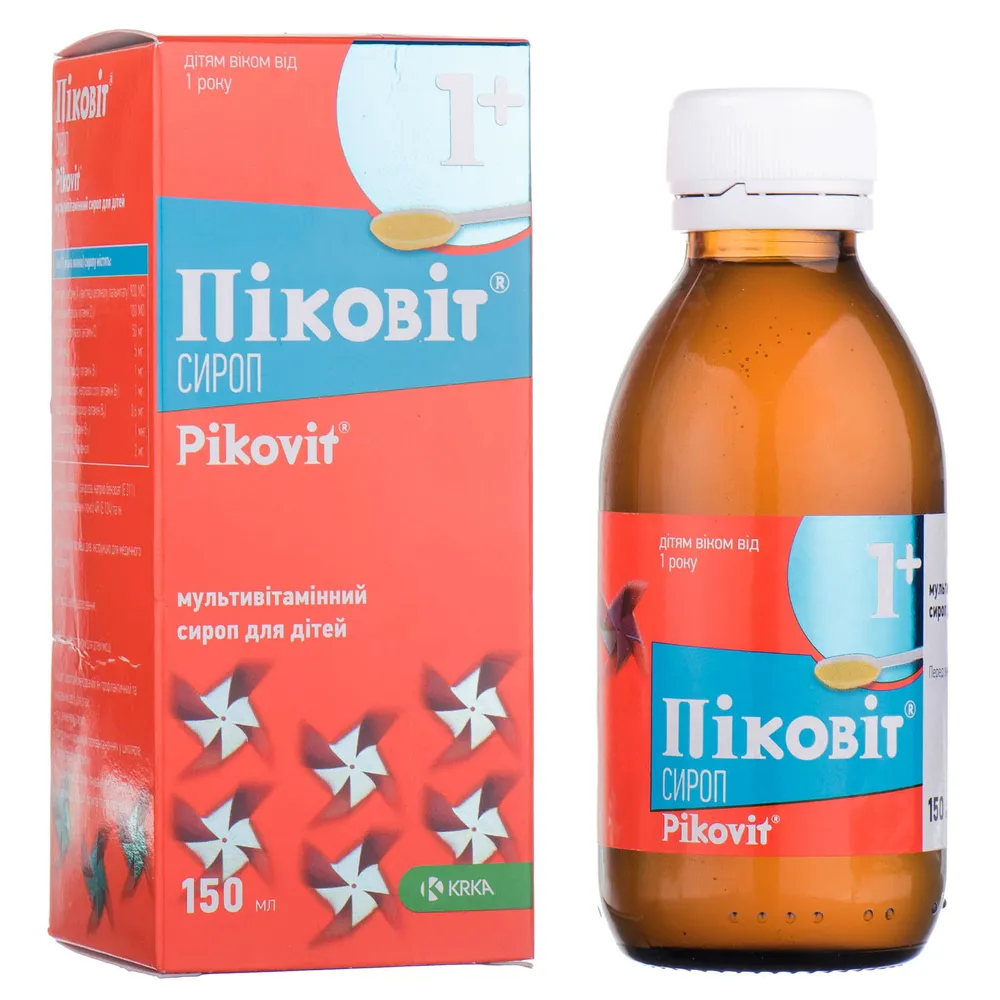
Table of Contents
INSTRUCTIONS FOR MEDICAL USE OF THE MEDICINAL PRODUCT PICOVIT® (PIKOVIT®)
Composition:
Active ingredients: 5 ml of syrup (1 measuring spoon) contains:
- 900 IU retinol (vitamin A as retinyl palmitate),
- 100 IU cholecalciferol (vitamin D3),
- 50 mg ascorbic acid (vitamin C),
- 1 mg thiamine hydrochloride (vitamin B1),
- 1 mg sodium riboflavin phosphate (vitamin B2),
- 0.6 mg pyridoxine hydrochloride (vitamin B6),
- 1 mcg cyanocobalamin (vitamin B12),
- 5 mg nicotinamide,
- 2 mg dexpanthenol (D-panthenol);
Excipients: agar, tragacanth, sucrose, glucose solution, orange flavor, grapefruit flavor concentrate, orange flavor concentrate, polysorbate 80, citric acid monohydrate, Ponceau 4R (E 124), sodium benzoate (E 211), purified water.
Pharmaceutical form. Syrup.
Main physicochemical properties: a thick, viscous syrup ranging in color from light yellow to brownish-orange. Has a pleasant odor and a sour taste.
Pharmacotherapeutic group. Multivitamin complexes without additives. ATC code A11B A.
Pharmacological properties.
Pharmacodynamics.
Pikovit®, syrup, contains 9 essential vitamins that participate in regulating numerous biochemical processes in the body. The effects of vitamins and minerals in the body are primarily physiological rather than pharmacodynamic. They play an important role in maintaining vital functions and psychological well-being.
Vitamins of group B (B1, B2, B6, pantothenic acid, and nicotinamide) participate in carbohydrate, protein, and fat metabolism and also play an important role in the functioning of the nervous system.
Vitamin B1 promotes optimization of cognitive function, positively affects growth processes and energy metabolism, and normalizes appetite. It is also necessary for maintaining muscle tone in the gastrointestinal tract (GI tract) and the heart.
Vitamin B2 supports normal function of the visual organs and normalizes nervous system activity. It is involved in energy processes during the conversion of fats and carbohydrates.
Vitamin B6 participates in amino acid metabolism. It is required for the conversion of tryptophan to niacin, glycogenolysis, antibody and hemoglobin formation, and homocysteine metabolism.
Vitamin B12 prevents the development of anemia, activates energy metabolism, improves concentration and memory, and supports the nervous system.
Vitamin A is necessary for normal metabolic processes, including regulation of body growth and development. It ensures normal visual function, maintains tissue structural integrity, and increases the body's resistance to adverse environmental factors.
Vitamin D3 regulates calcium absorption and promotes proper mineralization of bones and teeth.
Vitamin C has strong reducing properties and participates in redox processes, regulation of carbohydrate metabolism, and influences amino acid metabolism, thyroxine metabolism, biosynthesis of catecholamines, steroid hormones, and insulin. It is essential for blood coagulation, collagen and procollagen synthesis, and regeneration of connective and bone tissues. Vitamin C normalizes capillary permeability. It controls iron absorption, promotes iron absorption in the intestine, and participates in hemoglobin synthesis. It also enhances the body's nonspecific resistance.
Pharmacokinetics.
There are no data available on the pharmacokinetics of Pikovit® syrup. Water-soluble vitamins (B-complex vitamins and vitamin C) are well absorbed in amounts corresponding to daily requirements. Excess amounts are excreted in urine, and in some cases, in feces. These vitamins are stored in the body only in limited quantities; therefore, they should be regularly administered to maintain adequate tissue concentrations.
Fat-soluble vitamins A and D3, when administered orally, are well absorbed in the small intestine in the presence of dietary fats.
Clinical characteristics.
Indications.
Pikovit®, syrup, is primarily indicated for children:
- in case of decreased appetite;
- in case of physical and mental overloads in schoolchildren;
- in case of developmental delay;
- as an adjunctive agent during antibiotic therapy;
- in seasonal deficiency of fruits and vegetables in the diet.
Contraindications.
Hypersensitivity to the components of the medicinal product; hypervitaminosis A and D; nephrolithiasis; renal insufficiency; severe renal function disorders; gout; hyperuricemia; erythremia; erythrocytosis; thromboembolism; thrombophlebitis; fructose intolerance, glucose-galactose malabsorption syndrome, sucrase-isomaltase deficiency; disorders of iron or copper metabolism; hypercalcemia; hypercalciuria; thyrotoxicosis; chronic glomerulonephritis; chronic heart failure; history of sarcoidosis; active gastric and duodenal peptic ulcer (due to possible increase in gastric juice acidity); active form of pulmonary tuberculosis; concomitant use of retinoids.
Interaction with other medicinal products and other forms of interactions.
Due to the possibility of developing hypervitaminosis A, concomitant use of Pikovit® syrup with other preparations containing vitamin A or oral retinoids is not recommended. Vitamin A should not be administered together with oral retinoids, as their combination may be toxic. Retinol may reduce the anti-inflammatory effect of glucocorticoids. Concomitant use with nitrates and cholestyramine is contraindicated, as they impair retinol absorption.
During sulfonamide therapy, large doses of vitamin C should be avoided to prevent crystalluria. Vitamin C enhances iron absorption, but slows down the absorption of beta-adrenergic blockers and indirect-acting anticoagulants. Concurrent administration of vitamin C and deferoxamine increases iron tissue toxicity, especially in cardiac muscle, which may lead to circulatory decompensation. Vitamin C may be administered only 2 hours after deferoxamine injection. Prolonged use of high doses of ascorbic acid (more than 1 g, equivalent to 100 ml of Pikovit® syrup) by patients treated with disulfiram inhibits the disulfiram-alcohol reaction. Calcium chloride, salicylates, and corticosteroids reduce ascorbic acid stores in the body when used long-term. Absorption of ascorbic acid is reduced when taken simultaneously with fruit or vegetable juices, alkaline drinks, and, in case of adult use of Pikovit® syrup, with concomitant use of oral contraceptives.
Vitamin B6 reduces the effect of levodopa if the patient is taking levodopa alone; it prevents or reduces toxic manifestations observed during isoniazid and other antituberculosis drug therapy. Thiamine may reduce curare-like effects. Para-aminosalicylic acid (PAS), cimetidine, potassium preparations, and alcohol reduce vitamin B12 absorption. Riboflavin is incompatible with streptomycin and reduces the efficacy of antibacterial agents (oxytetracycline, doxycycline, erythromycin, tetracycline, and lincomycin). It should be taken at least 3 hours before or 3 hours after the antibiotic dose. Tricyclic antidepressants, imipramine, and amitriptyline inhibit riboflavin metabolism, especially in cardiac tissues. Concurrent use with quinine may intensify hemorrhages.
Concomitant use of vitamin D3 and thiazide diuretics increases the risk of hypercalcemia. Ion-exchange resins such as cholestyramine and laxative agents (paraffin oil) may reduce vitamin D3 absorption. Due to metabolic activation, vitamin D3 activity may be reduced when used concomitantly with phenytoin or barbiturates. Therefore, the product is recommended to be taken either before or at least 2 hours after taking other medicinal products. Since concomitant oral administration of calcium- and vitamin D3-containing preparations enhances the effect of cardiac glycosides, medical supervision and electrocardiogram monitoring are required during their simultaneous use.
Special precautions.
If hypersensitivity reactions to any component of the medicinal product occur, it should be discontinued.
Use with caution in patients with liver disorders, acute nephritis, cardiac decompensation, allergic diseases, idiosyncrasy, history of peptic ulcer of the stomach and duodenum, cholelithiasis, chronic pancreatitis, patients with neoplasms, history of kidney disorders, predisposition to thrombosis and bleeding (hemophilia, thrombocytopenia, thrombopathies).
Absorption of ascorbic acid may be impaired in intestinal dyskinesia, enteritis, and achylia. Since ascorbic acid enhances iron absorption, its use in high doses may be hazardous in patients with hemochromatosis, thalassemia, polycythemia, leukemia, and sideroblastic anemia. As a reducing agent, ascorbic acid may interfere with laboratory test results, for example, in determining glucose, bilirubin levels, and activities of transaminases and lactate dehydrogenase.
Discoloration of urine to a yellow color may occur, which is completely harmless and is due to the presence of riboflavin in the formulation.
The product should not be prescribed concomitantly with other multivitamins, as this may lead to overdose.
Do not exceed the recommended dose.
Special information about some of the excipients
Pikovit® syrup contains sucrose and glucose; therefore, patients with rare hereditary forms of fructose intolerance, glucose-galactose malabsorption, or sucrase-isomaltase deficiency should not take this product. If a patient has known intolerance to certain sugars, consultation with a physician is recommended prior to use. Pikovit® syrup should be used with caution in patients with diabetes mellitus, as 5 mL of syrup (1 measuring spoon) contains 3.3 g of sucrose and 0.7 g of glucose.
The azo dye Ponceau 4R (E 124) may cause allergic reactions.
Use during pregnancy or breastfeeding.
Vitamin doses in Pikovit® syrup are adapted for children.
Women during pregnancy or breastfeeding may take vitamins and minerals only after mandatory consultation with a physician. Pregnancy should not be planned earlier than 6–12 months after high-dose retinol therapy (over 10,000 IU) due to the risk of embryonic abnormalities caused by high vitamin A levels in the body.
Effect on ability to drive vehicles or operate machinery.
There are no reports regarding the effect of the medicinal product on the ability to drive vehicles or operate other (potentially hazardous) machinery. Vitamin doses in Pikovit® syrup are adapted for children.
Dosage and Administration
For the prevention of vitamin deficiency
Children aged 1 to 3 years – 0.5 measuring spoon (2.5 ml) of syrup per day.
Children aged 4 to 6 years – 1 measuring spoon (5 ml) of syrup per day.
Children aged 7 to 14 years – 1.5 measuring spoons (7.5 ml) of syrup per day.
For the treatment of vitamin deficiency
Children aged 1 to 3 years – 1 measuring spoon (5 ml) of syrup twice daily.
Children aged 4 to 6 years – 1 measuring spoon (5 ml) of syrup three times daily.
Children aged 7 to 14 years – 1 measuring spoon (5 ml) of syrup three times, up to four times daily.
The syrup should be administered to the child after meals, using the measuring spoon provided. It may also be mixed with tea, juice, or fruit puree. Shake well before use.
In cases of reduced appetite, the syrup should be given for 1 month. For other indications, it should be administered as needed, depending on the duration and frequency of symptoms, following consultation with a physician.
Children. The product is intended for children aged 1 year and older.
Overdose
No intoxication is expected when the recommended doses are administered. The risk of overdose is minimal. In case of overdose, the likelihood of the listed adverse reactions increases, and abdominal distension (meteorism) may occur.
Prolonged use of high doses may lead to hypervitaminosis A and D3, although overdose of Pиковіt® syrup is unlikely. Overdose of vitamin D3 may cause weakness, anorexia, nausea, vomiting, diarrhea, weight loss, fever, seizures, and cardiovascular and renal disturbances. Hypercalcemia may develop due to hypersensitivity to vitamin D3. Symptoms of hypercalcemia include anorexia, polyuria, nausea, vomiting, general weakness, headache, apathy, and thirst.
Overdose of vitamin A may lead to headache, dizziness, sleep disturbances, nausea, vomiting, drowsiness, photophobia, and seizures. If any of the above symptoms occur, discontinue the medication immediately and seek medical advice.
Prolonged use of high doses of ascorbic acid may suppress the function of the islet apparatus of the pancreas; therefore, its functional capacity should be monitored. Overdose may alter renal excretion of ascorbic and uric acids during urine acidification, increasing the risk of oxalate stone formation. High-dose ascorbic acid may cause heartburn. Significant overdose (when vitamin C intake exceeds 1 g per day, equivalent to 100 ml of Pиковіt® syrup) may lead to renal failure, sleep disturbances, sensation of warmth, increased fatigue, disturbances in zinc and copper metabolism, increased excitability, erythrocytopenia, and neutrophilic leukocytosis.
If signs of overdose occur, administration of the product should be discontinued. If possible, initiate treatment. Induce vomiting and ensure adequate hydration. In case of hypercalcemia, follow a diet restricted in calcium and vitamin D3. Further treatment should be symptomatic.
Side effects.
The use of recommended doses of Pиковіt® syrup does not usually cause adverse effects; however, side reactions may occur in individuals with increased sensitivity.
Immune system disorders: In sensitive individuals, allergic reactions are possible, including anaphylactic shock, angioedema, bronchospasm.
Skin and subcutaneous tissue disorders: Skin rashes, urticaria, pruritus, erythema, eczema.
Metabolism and nutrition disorders: Hypercalcemia, calcinosis.
Gastrointestinal disorders: Dyspeptic disorders, nausea, vomiting, belching, stomach pain, constipation, diarrhea, increased gastric juice secretion, heartburn.
Nervous system disorders: Headache, dizziness, drowsiness, increased excitability.
Eye disorders: Visual disturbances.
Renal and urinary disorders: Change in urine color, hypercalciuria, glomerular apparatus kidney damage.
Other: Hyperthermia, increased sweating.
With prolonged use at high doses, the following adverse effects may occur.
Metabolism and nutrition disorders: Hyperuricemia, decreased glucose tolerance, hyperglycemia, impaired glycogen synthesis.
Nervous system disorders: Paresthesia.
Cardiac disorders: Cardiac arrhythmias, arterial hypertension, myocardial dystrophy.
Blood and lymphatic system disorders: Thrombocytosis, hyperprothrombinemia, thrombosis.
The use of ascorbic acid in doses exceeding 1 g per day (corresponding to more than 100 ml of Pиковіt® syrup) in patients with glucose-6-phosphate dehydrogenase deficiency may cause hemolysis of erythrocytes (hemolytic anemia).
Gastrointestinal disorders: Irritation of the gastrointestinal mucosa.
Skin and subcutaneous tissue disorders: Dryness and cracking of palms and soles, hair loss, seborrheic rashes.
Renal and urinary disorders: Renal failure, crystalluria, formation of urate, cystine and/or oxalate calculi.
Investigations: Transient increase in the activity of aspartate aminotransferase, lactate dehydrogenase, alkaline phosphatase; increased levels of calcium in blood and urine, glucosuria.
Reporting suspected adverse reactions.
Reporting suspected adverse reactions after marketing authorization is of great importance. It allows continuous monitoring of the benefit-risk balance of the medicinal product. Healthcare professionals should report any suspected adverse reactions via the national reporting system.
Shelf life: 2 years.
After opening the bottle, the syrup should be used within 2 months.
Storage conditions.
Store at a temperature not exceeding 25 °C, in the original packaging to protect from light.
Keep out of reach of children.
Packaging. 150 ml of syrup in a bottle; 1 bottle with a measuring spoon in a cardboard box.
Availability. Over-the-counter (without prescription).
Manufacturer.
KRKA, d.d., Novo mesto / KRKA, d.d., Novo mesto.
Manufacturer's location and address of place of business.
Smarjeska cesta 6, 8501 Novo mesto, Slovenia / Smarjeska cesta 6, 8501 Novo mesto, Slovenia.