Piklon
Ukraine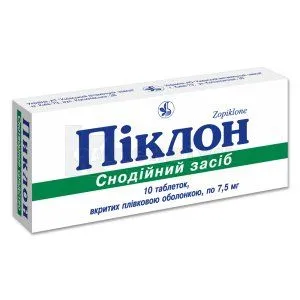
Table of Contents
INSTRUCTIONS FOR MEDICAL USE OF THE MEDICINAL PRODUCT PIKLON (PIKLON)
Composition:
Active substance: 1 tablet contains zopiclone 7.5 mg;
Excipients: lactose monohydrate, corn starch, sodium starch glycolate (type A), calcium hydrogen phosphate, magnesium stearate;
Coating: film-coating mixture Opadry II White (hypromellose, lactose monohydrate, polyethylene glycol, titanium dioxide (E 171), triacetin).
Pharmaceutical form. Film-coated tablets.
Main physicochemical properties: white or almost white, round, biconvex film-coated tablets with a score line.
Pharmacotherapeutic group. Hypnotics and sedatives. ATC code N05CF01.
Pharmacological Properties.
Pharmacodynamics.
Zopiclone belongs to the cyclopyrrolone group and is structurally related to the pharmaceutical class of benzodiazepines. The pharmacodynamic effects of zopiclone are qualitatively similar to those of other compounds in this class: it acts as a myorelaxant, anxiolytic, sedative, hypnotic agent, anticonvulsant, and amnestic (causing memory impairment).
These effects are due to its action as a specific agonist at receptors belonging to the GABA-omega macromolecular receptor complex in the central nervous system (known as BZ1 and BZ2, which modulate chloride ion channel opening).
In humans, zopiclone has been shown to prolong sleep duration, improve sleep quality, and reduce the frequency of nocturnal and early morning awakenings.
This effect is characterized by distinct electroencephalographic features that differ from those typical of benzodiazepines. Polysomnographic studies show that zopiclone reduces the duration of stage I sleep, increases the duration of stage II sleep, maintains or prolongs deep sleep stages (III and IV), and preserves rapid eye movement (REM) sleep, also known as REM stage.
Pharmacokinetics.
Absorption. Zopiclone is rapidly absorbed: peak plasma concentrations are reached within 1.5–2 hours and are 30, 60, and 115 ng/mL after administration of 3.75 mg, 7.5 mg, and 15 mg, respectively. Bioavailability is approximately 80%.
Absorption is not affected by the time of administration, multiple dosing, or patient gender.
Distribution. Zopiclone is very rapidly distributed from the vascular compartment. Plasma protein binding is low (approximately 45%), and binding is non-saturable. The risk of drug interactions due to displacement from protein binding sites is very low.
Plasma concentration decline over the dose range of 3.75 mg to 15 mg is dose-independent. The elimination half-life is approximately 5 hours.
Benzodiazepines and related compounds cross the blood-brain barrier and placenta and are excreted into breast milk. During breastfeeding, the pharmacokinetic profiles of zopiclone in milk and maternal plasma are similar. The estimated percentage of the dose ingested by the infant does not exceed 0.2% of the maternal dose received over 24 hours.
Metabolism. Zopiclone undergoes extensive hepatic metabolism. Two major metabolites are formed: N-oxide (pharmacologically active in animals) and N-desmethylated derivative (pharmacologically inactive in animals). Apparent elimination half-lives, determined in urinary excretion studies, are approximately 4.5 and 7.5 hours, respectively. This is consistent with the observation that no significant accumulation occurs after repeated dosing (15 mg) over 14 days. No increase in enzymatic activity was observed in animal studies, even with high-dose administration.
Excretion. The low renal clearance of unchanged zopiclone (mean 8.4 mL/min), compared to plasma clearance (232 mL/min), indicates that zopiclone is primarily eliminated in metabolized form. Approximately 80% of the substance is excreted by the kidneys as free metabolites (N-oxide and N-desmethylated derivative), and about 16% is excreted in feces.
Special patient populations at risk.
Elderly patients: Although hepatic metabolism is somewhat reduced and the mean elimination half-life is 7 hours, no accumulation of zopiclone in plasma has been observed after repeated administration in numerous studies.
Patients with renal impairment: With long-term use, no accumulation of zopiclone or its metabolites has been observed. Zopiclone penetrates dialysis membranes. Hemodialysis is not effective in treating overdose because zopiclone has a large volume of distribution.
Patients with liver cirrhosis: The plasma clearance of zopiclone is significantly reduced due to impaired demethylation, and therefore dose adjustment is required for these patients.
Clinical characteristics.
Indications.
Severe sleep disorders in adults: situational and transient insomnia.
Contraindications.
The medicinal product must never be used in patients with:
- hypersensitivity to zopiclone or to any of the excipients of the medicinal product;
- severe respiratory insufficiency;
- sleep apnea syndrome;
- severe, acute or chronic hepatic insufficiency (due to the risk of encephalopathy);
- myasthenia gravis.
Interaction with other medicinal products and other forms of interaction.
Sedative agents.
It should be taken into account that many medicinal products or substances may cause additive central nervous system (CNS) depressant effects and reduce the patient's concentration ability. Impaired concentration ability may be hazardous when driving vehicles or operating machinery. Such substances include morphine derivatives (analgesics, antitussives and opioid substitution therapy agents), neuroleptics, barbiturates, benzodiazepines, non-benzodiazepine anxiolytics (such as meprobamate), hypnotics, sedative antidepressants (amitriptyline, doxepin, mianserin, mirtazapine, trimipramine), sedative H1-antihistamines, centrally acting antihypertensives, baclofen and thalidomide.
Hypnotic agents.
Currently, hypnotics prescribed include either benzodiazepines and their derivatives (zolpidem, zopiclone), or H1-antihistamines. In addition to enhancing sedative effects, when co-administered with other CNS depressants or when alcohol is consumed, possible potentiation of respiratory depression caused by benzodiazepines should be considered, particularly in elderly patients, when used concomitantly with morphine-like substances, other benzodiazepines or phenobarbital.
Unwanted combinations.
Alcohol (as beverage or excipient) potentiates the sedative effect of benzodiazepines and related substances. Due to reduced concentration ability, driving vehicles or operating machinery may be hazardous.
Patients should avoid consuming alcoholic beverages or taking medications containing alcohol.
Sodium oxybate (sodium oxybutyrate). Enhanced central nervous system depression. Impaired concentration ability may be hazardous when driving vehicles or operating machinery.
Combinations requiring precautions.
Rifampicin. Decreased plasma concentration and reduced efficacy of zopiclone due to enhanced hepatic metabolism; therefore, concomitant use of zopiclone and rifampicin requires careful clinical monitoring. If necessary, an alternative hypnotic may be prescribed.
Barbiturates. Increased risk of respiratory depression, which may be fatal in case of overdose.
Morphine derivatives. Increased risk of respiratory depression, which may be fatal in case of overdose.
Other hypnotic agents. Enhanced central nervous system depression.
Other sedative agents. Enhanced central nervous system depression.
Combinations with warnings.
Other agents that depress central nervous system activity: morphine derivatives (analgesics, antitussives and opioid substitution therapy agents, except buprenorphine), neuroleptics, barbiturates, anxiolytics, other hypnotics, sedative antidepressants, antiepileptic drugs, anaesthetics, sedative H1-antihistamines, centrally acting antihypertensives, baclofen, thalidomide, pizotifen. Enhanced depression of CNS activity. Due to reduced concentration ability, driving vehicles or operating machinery may be hazardous. In addition, concomitant use of zopiclone with morphine derivatives (analgesics, antitussives and opioid substitution therapy agents) and barbiturates increases the risk of respiratory depression, which may be fatal in case of overdose.
Narcotic analgesics enhance euphoria, which may lead to increased psychological dependence.
Zopiclone is metabolized by cytochrome P450 (CYP3A4 isoenzyme); therefore, plasma levels of zopiclone may increase when used concomitantly with CYP3A4 inhibitors, and may decrease when used concomitantly with CYP3A4 inducers.
Buprenorphine. When buprenorphine is used as substitution therapy for opioid dependence, the risk of respiratory depression increases, which may potentially be fatal. The risk/benefit ratio of using this combination should be carefully evaluated. Patients should be warned to strictly adhere to the doses prescribed by the physician.
Opioids. Concomitant use of benzodiazepines or benzodiazepine-like agents, including zopiclone, and opioids increases the risk of sedation, respiratory depression, coma and death. Dose and duration of concomitant use of benzodiazepines and opioids should be limited (see section "Special precautions for use").
Clozapine. Increased risk of collapse with respiratory arrest and/or cardiac arrest.
Clarithromycin, erythromycin, telithromycin. Slight enhancement of sedative effects of zopiclone.
Ketoconazole, itraconazole, voriconazole. Slight enhancement of sedative effects of zopiclone.
Nelfinavir, ritonavir-boosted protease inhibitor. Slight enhancement of sedative effects of zopiclone.
Special precautions for use.
Warnings. This medicinal product contains lactose and therefore should not be used in patients with rare hereditary diseases such as galactose intolerance, lactase deficiency, or glucose-galactose malabsorption syndrome.
This medicinal product may be prescribed to patients with celiac disease.
Drug tolerance. When benzodiazepines or related substances are used for several weeks, their sedative and hypnotic effects may gradually decrease despite unchanged dosage.
In patients whose treatment with Pyclon did not exceed 4 weeks, no significant drug tolerance was observed.
Drug dependence. Treatment with benzodiazepines and related substances, especially prolonged use, may lead to physical and psychological dependence.
Several factors contribute to the development of dependence: duration of treatment, dose, history of dependence on medicinal products or other substances including alcohol, and presence of anxiety.
Dependence may develop even with therapeutic doses in patients without specific risk factors.
In rare cases, dependence on zopiclone has been observed with therapeutic doses.
After discontinuation of treatment, dependence may lead to withdrawal symptoms.
Some of these symptoms occur frequently: insomnia, headache, excessive anxiety, myalgia, muscle tension, and irritability.
Other symptoms occur less frequently: agitation or even confusion, limb paresthesia, increased sensitivity to light, noise, and physical contact, depersonalization, derealization, hallucinations, and seizures.
Withdrawal symptoms also include tremor, palpitations, tachycardia, delirium, nightmares, irritability, hyperacusis, numbness, and tingling in the limbs.
Withdrawal symptoms may develop several days after treatment discontinuation. When short-acting benzodiazepines are used, especially at high doses, withdrawal symptoms may even occur between doses.
The risk of drug dependence increases when multiple benzodiazepines are used concomitantly in the treatment of anxiety disorders or sleep disturbances.
There have also been isolated reports of drug abuse.
Rebound insomnia. This transient rebound effect may manifest as a worsening of the insomnia for which benzodiazepines or related drugs were initially prescribed.
Psychomotor disturbances. Like all other sedative/hypnotic agents, zopiclone depresses the central nervous system. Psychomotor disturbances may occur several hours after drug intake.
The risk of psychomotor disturbances, including impaired ability to drive, increases in the following situations:
- administration of this medicinal product less than 12 hours before performing tasks requiring concentration (see section "Ability to influence reaction speed when driving or operating machinery");
- use of doses higher than recommended;
- concomitant use with other agents that depress central nervous system function, alcohol, illicit substances, or other medicinal products that increase zopiclone blood concentration (see section "Interaction with other medicinal products and other types of interactions").
Patients should be advised to avoid hazardous activities requiring full attention or motor coordination, such as operating machinery or driving, after taking zopiclone, especially within 12 hours of drug intake.
Amnesia and impaired psychomotor function. Anterograde amnesia and impaired psychomotor function may occur within several hours after tablet intake. To reduce the risk of these effects, the patient should take the tablet immediately before sleep, i.e., while already in bed (see section "Method of administration and dosage"), and ensure optimal conditions for several hours of uninterrupted sleep (7–8 hours).
Behavioral disorders. In some patients, benzodiazepines and related substances may cause altered states of consciousness (varying in severity) with memory and behavioral disturbances.
Possible symptoms include:
- worsening of insomnia, nightmares, agitation, nervousness;
- delirium, hallucinations, oneirophrenic state, confusion, psychosis-like symptoms;
- mental inhibition, mild excitability;
- euphoria, irritability;
- anterograde amnesia;
- suggestibility (susceptibility to suggestion).
These symptoms may be accompanied by disorders potentially harmful to the patient or others:
- abnormal behavior;
- auto-aggression or aggression toward others, especially if family members or friends attempt to prevent the patient from doing what he or she desires;
- automatic behavior followed by amnesia.
The appearance of these symptoms requires immediate discontinuation of treatment.
Psychotic behavioral changes occur more frequently in patients with aggressive behavior and unusual reactions to sedatives, benzodiazepines, or alcohol consumption, and may also include depersonalization, restlessness, and anger.
The drug affects cognitive functions, specifically mental activity and attention concentration. The risk of these complications is higher in patients with cerebral disorders.
Some patients may experience daytime restlessness or anxiety.
Sleepwalking and related behavior. In patients receiving zopiclone treatment, episodes of behavioral disturbances (when the patient takes a hypnotic-sedative drug and does not fully awaken) have been observed, such as driving while asleep, preparing and eating food, making phone calls—actions that the patient does not remember. Although behavioral disturbances associated with sleepwalking may occur with zopiclone monotherapy at therapeutic doses, concomitant alcohol consumption and use of other central nervous system depressants increase the risk of such behavior, as does the use of zopiclone at doses exceeding the maximum recommended dose.
Patients who develop sleepwalking-related behavioral disturbances should discontinue zopiclone, as this may be dangerous for both the patient and others (see sections "Interaction with other medicinal products and other types of interactions" and "Adverse reactions").
Risk with concomitant opioid use. Concomitant use of opioids with benzodiazepines or benzodiazepine-like agents, including zopiclone, may lead to sedation, respiratory depression, coma, and death.
Opioids and benzodiazepine-like medicinal products should be co-prescribed only for patients in whom other treatment methods have proven ineffective.
If concomitant use of zopiclone and opioids is considered necessary, the following measures should be taken:
- prescribe the lowest effective drug doses;
- use the shortest possible duration of this therapeutic regimen;
- closely monitor the patient for early signs of respiratory depression and sedation.
Risk of drug accumulation. Benzodiazepines and related substances (like any other medicinal product) remain in the body for a time approximately equal to 5 elimination half-lives (see section "Pharmacokinetics").
In elderly patients and patients with impaired liver function, the elimination half-life may be significantly prolonged.
After repeated dosing, zopiclone or its metabolites reach steady-state levels much later and at higher concentrations.
Drug efficacy and safety can only be evaluated once steady-state has been achieved.
Dose adjustment may be necessary (see section "Method of administration and dosage").
No zopiclone accumulation has been observed in patients with renal insufficiency (see section "Pharmacokinetics").
Elderly patients. Caution should be exercised when treating elderly patients with benzodiazepines or related agents due to the increased risk of behavioral disorders and the risk of sedative and/or myorelaxant effects, which may lead to falls—often with serious consequences for this patient group.
Precautions for use. Particular caution is recommended when prescribing to patients with a history of alcoholism or other types of dependence on medicinal products or other substances (see section "Interaction with other medicinal products and other types of interactions").
Before prescribing a hypnotic agent, a comprehensive assessment should always be performed in cases of insomnia, and underlying causes should be addressed.
Insomnia may be a symptom of a physical or mental disorder. If insomnia persists or worsens after a short treatment period, the clinical diagnosis should be re-evaluated.
Duration of treatment. The duration of treatment should be clearly defined based on the indication and the type of insomnia present (see section "Method of administration and dosage").
Depression – major depressive episode. Since insomnia may be a symptom of depression, depression should be treated. If insomnia persists, the clinical diagnosis should be re-evaluated.
Benzodiazepines and related agents should not be prescribed as monotherapy for patients with a major depressive episode, as they do not treat depression, which may therefore progress, accompanied by an increased risk of suicide. To minimize the risk of intentional overdose, patients should have access to the smallest possible number of zopiclone tablets.
Gradual dose reduction. Patients should be clearly instructed on how to gradually discontinue treatment.
In addition to the necessity of gradual dose reduction, patients should also be warned about the risk of rebound insomnia to minimize the development of any insomnia that may arise due to withdrawal symptoms—even with gradual discontinuation.
Patients should be informed about possible discomfort during the period of gradual treatment cessation.
Respiratory insufficiency. When prescribing benzodiazepines and related agents to patients with respiratory insufficiency, one must remember their depressant effect on the respiratory center (especially since anxiety and restlessness may be warning signs of respiratory decompensation requiring transfer to an intensive care unit) (see section "Adverse reactions").
Elderly patients with renal insufficiency. Although no zopiclone accumulation has been observed after prolonged use, this patient group should be prescribed half the usual recommended dose as a precautionary measure (see section "Method of administration and dosage" and section "Special precautions for use").
Caution should be exercised when prescribing the drug to patients with depression.
It is not recommended for patients with severe hepatic insufficiency and encephalopathy.
The drug should not be prescribed at the initial stage of psychosis treatment.
Use during pregnancy or breastfeeding.
Pregnancy.
In cohort studies involving a large amount of data, no evidence has been found that benzodiazepine use during the first trimester of pregnancy leads to fetal malformations. However, some case-control epidemiological studies have reported an increased incidence of cleft lip and cleft palate associated with benzodiazepine use. The incidence of cleft lip and palate was less than 2 cases per 1000 newborns exposed to benzodiazepines during intrauterine development, compared to an expected rate of 1 case per 1000 in the general population.
Reduced fetal movement and changes in fetal heart rate have been described with high-dose benzodiazepine use during the second and/or third trimesters of pregnancy. The use of benzodiazepines near the end of pregnancy, even at low doses, may result in neonatal effects such as axial hypotonia and difficulty sucking, leading to poor weight gain. Although these effects are reversible, they may persist for 1–3 weeks depending on the elimination half-life of the prescribed benzodiazepine. High-dose use may lead to respiratory depression or apnea and hypothermia in the newborn. In addition, the newborn may develop a withdrawal syndrome, even in the absence of apparent drug effects. Characteristic symptoms include excessive excitability, psychomotor agitation, and tremor in the newborn, appearing some time after delivery. The time to onset of these symptoms depends on the drug's elimination half-life and may be prolonged with long half-life agents.
Given these data, as a precautionary measure, zopiclone should not be used during pregnancy, regardless of the trimester.
Women of reproductive age receiving zopiclone treatment should be instructed to contact their physician if they plan to become pregnant or if they become pregnant early in gestation, so that their need for treatment can be reassessed.
If zopiclone treatment is absolutely necessary during pregnancy, high doses should be avoided shortly before delivery, and the above-described neonatal effects should be considered during newborn monitoring.
Breastfeeding period.
Zopiclone is not recommended during breastfeeding.
Ability to influence reaction speed when driving or operating machinery.
Zopiclone may have a pronounced effect on the ability to drive vehicles and operate machinery.
Patients who drive or operate machinery should be warned that, as with any other hypnotic agent, somnolence, slowed reaction time, dizziness, lethargy, blurred vision or diplopia, and reduced attention concentration may occur, impairing the ability to drive, especially within the first 12 hours after zopiclone intake (see section "Adverse reactions"). To minimize this risk, an interval of at least 12 hours between zopiclone intake and driving, operating machinery, or working at heights is recommended.
Impaired driving ability and behavioral changes such as falling asleep at the wheel may occur with zopiclone monotherapy at therapeutic doses.
Furthermore, these effects are potentiated by concomitant alcohol consumption or use of other central nervous system depressants (see sections "Special precautions for use" and "Interaction with other medicinal products and other types of interactions"). Patients must be warned not to consume alcohol or other psychoactive substances during zopiclone treatment.
Method of Administration and Dosage
For oral use.
Dosing. Treatment should always be initiated with the lowest effective dose; the maximum dose must not be exceeded.
The medicinal product should be taken in bed immediately before going to sleep and must not be repeated during the night!
The 3.75 mg dose is specifically intended for elderly patients over 65 years of age and individuals belonging to high-risk groups.
Standard doses:
- Adults under 65 years of age: 7.5 mg once daily;
- Patients over 65 years of age: 3.75 mg once daily; the 7.5 mg dose may be used only in exceptional cases;
- Patients with impaired liver function or chronic respiratory insufficiency: recommended dose is 3.75 mg once daily (see section "Pharmacokinetics");
- Patients with renal insufficiency: treatment should be initiated with a dose of 3.75 mg once daily (see section "Pharmacokinetics").
In all cases, the daily dose of the medicinal product PycloN must not exceed 7.5 mg.
Treatment duration. Treatment should be as short as possible. The total treatment duration must not exceed 4 weeks, including the period of gradual discontinuation (see section "Special precautions for use").
Patients should be advised to take the medicinal product for:
- 2–5 days in cases of situational insomnia (e.g., during travel);
- 2–3 weeks in cases of transient insomnia (e.g., caused by a significant life event).
In some cases, it may be necessary to extend the recommended treatment period. In such situations, the patient's condition should be re-evaluated thoroughly.
Children. Safety and efficacy of zopiclone in children and adolescents (under 18 years of age) have not been established. Therefore, zopiclone is not recommended for use in this patient population.
Overdose.
Overdose may be life-threatening, especially in cases of concomitant overdose with other central nervous system depressants (including alcohol).
Symptoms. Ingestion of a large amount of zopiclone leads primarily to central nervous system depression, ranging from drowsiness to coma, depending on the dose ingested. Mild overdose may present with symptoms of confusion or lethargy.
In more severe cases, ataxia, muscle hypotonia, arterial hypotension, methemoglobinemia, respiratory depression, and occasionally fatal outcomes have been observed. Other risk factors, such as concomitant diseases, may exacerbate overdose symptoms.
Treatment. If oral overdose occurred less than one hour ago and the patient is conscious, emesis may be induced. In other cases, gastric lavage should be performed with protection of the airways. Administration of activated charcoal may then be beneficial to reduce drug absorption.
Careful monitoring of cardiac and respiratory functions in a specialized unit is recommended.
Hemodialysis is not considered useful in the treatment of overdose, as zopiclone has a large volume of distribution.
For diagnosis and/or management of accidental or intentional benzodiazepine overdose, administration of intravenous flumazenil may be helpful.
Flumazenil has an effect opposite to that of benzodiazepines and may therefore precipitate neurological disturbances (agitation, restlessness, seizures, and emotional lability), particularly in patients with epilepsy.
Adverse Reactions
Adverse reactions are categorized by frequency using the following classification: very common (≥1/10); common (≥1/100, <1/10); uncommon (≥1/1,000, <1/100); rare (≥1/10,000, <1/1,000); very rare (<1/10,000); frequency not known (cannot be estimated from available data).
Adverse effects depend on dosage and individual patient sensitivity.
Psychiatric disorders:
Uncommon – excitement, nightmares;
Rare – impaired consciousness, libido changes, irritability, aggression, aggressive outbursts, hallucinations;
Frequency not known – behavioral disturbances, delirium, anger attacks, nervousness, somnambulism (see section "Special precautions"), physical and psychological dependence on the drug, even at therapeutic doses, with withdrawal syndrome or rebound symptoms after discontinuation (see section "Special precautions"), confusion, insomnia, tension.
Psychotic-like symptoms, inappropriate behavior, and other behavioral disturbances may occur during treatment with benzodiazepines and their derivatives. In rare cases, these may be severe.
Patients more susceptible to these symptoms include elderly patients and children.
Depression.
Latent depression may become manifest during treatment with benzodiazepines and their derivatives.
Nervous system disorders:
Common – reduced reaction speed or even drowsiness (especially in elderly patients), dysgeusia;
Uncommon – dizziness, headache;
Rare – anterograde amnesia, which may occur with therapeutic doses (risk increases proportionally with dose);
Frequency not known – ataxia, paresthesia, cognitive disorders such as memory, attention, and speech impairment.
Respiratory, thoracic and mediastinal disorders:
Rare – dyspnea;
Frequency not known – respiratory depression.
Skin and subcutaneous tissue disorders:
Rare – skin rash, pruritus, urticaria.
Musculoskeletal and connective tissue disorders:
Frequency not known – muscle hypotonia.
General disorders:
Uncommon – asthenia.
Immune system disorders:
Very rare – angioedema, anaphylactic reactions.
Eye disorders:
Frequency not known – diplopia.
Gastrointestinal disorders:
Common – dry mouth;
Uncommon – nausea;
Frequency not known – dyspepsia, vomiting.
Hepatobiliary disorders:
Very rare – increased blood levels of transaminases and/or alkaline phosphatase, which in exceptional cases may lead to clinical signs of impaired liver function.
Injury, poisoning and procedural complications:
Rare – falls (especially in elderly patients) (see section "Special precautions").
Reporting of suspected adverse reactions.
Reporting suspected adverse reactions after marketing authorization is an important procedure. It allows ongoing monitoring of the benefit-risk ratio of the medicinal product. Healthcare professionals should report any suspected adverse reactions through the national pharmacovigilance system.
Shelf life. 3 years.
Storage conditions.
Store in the original packaging at a temperature not exceeding 25°C.
Keep out of reach of children.
Packaging.
10 tablets in a blister; 1 blister per carton.
Prescription status.
Prescription only.
Manufacturer.
PJSC "KYIV VITAMIN PLANT"
Manufacturer's address and place of business.
38 Kopilivska Street, Kyiv, 04073, Ukraine.
Web-site: www.vitamin.com.ua