Pergoveris®
Ukraine
Table of Contents
INSTRUCTIONS FOR MEDICAL USE OF THE MEDICINAL PRODUCT PERGOVERIS® (PERGOVERIS®)
Composition:
Active substances: follitropin alfa, lutropin alfa;
1 vial of powder contains 150 IU (equivalent to 11 μg) of follitropin alfa (recombinant human follicle-stimulating hormone, r-hFSH) and 75 IU (equivalent to 3 μg) of lutropin alfa (recombinant human luteinizing hormone, r-hLH);
Excipients: sucrose, sodium hydrogen phosphate dihydrate, sodium dihydrogen phosphate monohydrate, methionine, polysorbate 20, concentrated phosphoric acid, sodium hydroxide;
Solvent: 1 ml of water for injections.
Medicinal form. Powder and solvent for solution for injection.
Main physicochemical properties: the medicinal product is a white or almost white lyophilisate in the form of a pellet; solvent – clear colorless liquid.
Pharmacotherapeutic group. Sex hormones and modulators of the genital system. Gonadotropins and other ovulation stimulants. Gonadotropins. Combinations.
ATC code G03G A30.
Pharmacological Properties
Pharmacodynamics
Pergoveris® is a preparation of recombinant follicle-stimulating hormone (follitropin alfa, r-hFSH) and luteinizing hormone (lutropin alfa, r-hLH), produced by Chinese hamster ovary cells using recombinant DNA technology.
Mechanism of action
Luteinizing hormone (LH) and follicle-stimulating hormone (FSH) are secreted by the anterior pituitary in response to gonadotropin-releasing hormone (GnRH) and play a supportive role in follicular development and ovulation. In theca cells, LH stimulates the secretion of androgens, which are transported to granulosa cells for conversion into estradiol (E2) via aromatase. In granulosa cells, FSH promotes the development of ovarian follicles, while LH is involved in follicular development, steroidogenesis, and maturation.
Pharmacodynamic effects
Following administration of r-hFSH, serum levels of inhibin and estradiol increase, leading to induction of follicular development. Serum inhibin levels rise rapidly and can be detected as early as day 3 after r-hFSH administration, whereas estradiol levels require more time, with increases observed only from day 4 of treatment. Total follicular volume begins to increase approximately 4–5 days after daily administration of r-hFSH doses, and depending on the patient's response, maximal effect is achieved approximately 10 days after initiation of gonadotropin treatment. The primary effect of r-hLH administration is a dose-dependent increase in E2 secretion and enhancement of r-hFSH action on follicular growth.
Clinical efficacy
In clinical studies, patients with severe deficiency of both FSH and LH were defined by endogenous serum LH levels < 1.2 IU/L, measured in a central laboratory. In these studies, the ovulation rate per cycle was 70–75%. However, it should be noted that LH level measurements obtained in different laboratories may vary.
A clinical dose-finding study was conducted in women with hypogonadotropic hypogonadism and endogenous serum LH levels below 1.2 IU/L. Daily administration of 75 IU r-hLH (in combination with 150 IU r-hFSH) resulted in adequate follicular development and estrogen secretion. In contrast, a daily dose of 25 IU r-hLH (in combination with 150 IU r-hFSH) led to inadequate follicular development. Therefore, daily administration of less than one vial of the product may not ensure adequate follicular development.
Although for most patients undergoing assisted reproductive technology (ART) protocols, monotherapy with recombinant FSH is acceptable, published data indicate advantages of combined use of r-hFSH and r-hLH in patients who have an inadequate response to r-hFSH monotherapy (a subgroup of patients with suboptimal response to r-hFSH). Adding r-hLH to therapy aims to increase ovarian sensitivity to r-hFSH, promote estradiol secretion by preovulatory follicles and thus support endometrial growth, as well as to support late follicular luteinization, thereby helping achieve normal progesterone levels in the luteal phase.
Pharmacokinetics
When follitropin alfa and lutropin alfa are administered simultaneously, no pharmacokinetic interaction occurs.
Follitropin alfa
Distribution
After intravenous administration, follitropin alfa distributes into the extracellular fluid, with an initial half-life of approximately 2 hours and elimination with a terminal half-life ranging from 14 to 17 hours. The volume of distribution at steady state ranges from 9 to 11 L.
After subcutaneous administration, absolute bioavailability is 66%, and the apparent terminal half-life ranges from 24 to 59 hours. Dose proportionality has been demonstrated after subcutaneous administration for doses up to 900 IU. Repeated administration of follitropin alfa results in a threefold accumulation, reaching steady state within 3–4 days.
Elimination
Total clearance is 0.6 L/h, and approximately 12% of the administered dose of follitropin alfa is excreted in urine.
Lutropin alfa
Distribution
After intravenous administration, lutropin alfa is rapidly distributed, with an initial half-life of approximately 1 hour and eliminated with a terminal half-life of approximately 9 to 11 hours. The volume of distribution at steady state ranges from 5 to 14 L. Lutropin alfa exhibits linear pharmacokinetics, meaning that AUC values are directly proportional to the administered dose.
After subcutaneous administration, absolute bioavailability is 56%, and the apparent terminal half-life ranges from 8 to 21 hours. Dose proportionality has been demonstrated after subcutaneous administration for doses up to 450 IU. The pharmacokinetics of lutropin alfa are comparable after single and multiple doses, and the accumulation ratio of lutropin alfa is minimal.
Elimination
Total clearance ranges from 1.7 to 1.8 L/h, with less than 5% of the administered dose excreted in urine.
Clinical Characteristics.
Indications.
- Stimulation of follicular development in women with severe deficiency of luteinizing hormone (LH) and follicle-stimulating hormone (FSH).
- Controlled ovarian stimulation in patients with suboptimal response to treatment in assisted reproductive technologies (ART), such as in vitro fertilization (IVF), intracytoplasmic sperm injection (ICSI), gamete intrafallopian transfer (GIFT), and zygote intrafallopian transfer (ZIFT). In clinical studies, suboptimal response to treatment was defined by the following criteria:
- fewer than 7 preovulatory follicles or oocytes, and/or
- requirement of high FSH doses (≥ 3000 IU per cycle), and/or
- advanced maternal age (35 years or older).
Contraindications.
- Hypersensitivity to follitropin alfa, lutropin alfa, or to any of the excipients;
- tumors of the hypothalamus or pituitary gland;
- ovarian enlargement or ovarian cysts not related to polycystic ovary syndrome;
- gynecological bleeding of unknown origin;
- carcinoma of the ovaries, uterus, or breasts.
Pergeveris® should also not be administered in cases where an effective treatment response cannot be expected, such as:
- primary ovarian failure;
- congenital genital abnormalities incompatible with pregnancy;
- uterine fibroids incompatible with pregnancy.
Interaction with other medicinal products and other forms of interaction.
Pergeveris® should not be mixed with other medicinal products and administered as a single injection, except for follitropin alfa, for which studies have shown that co-administration does not significantly affect the activity, stability, pharmacokinetic, or pharmacodynamic properties of the active substances.
Special precautions for use.
Tracking
To improve the traceability of biological medicinal products, it is essential to clearly record the name and batch number of the administered medicinal product.
General recommendations
Pergonvesis® contains substances with significant gonadotropic activity capable of causing adverse reactions ranging from mild to severe. Therefore, it should be prescribed only by physicians experienced in the management of infertility and its treatment.
Prior to initiating treatment, infertile couples must undergo evaluation to identify existing or potential contraindications to pregnancy. Specifically, patients should be assessed for hypothyroidism, adrenal insufficiency, hyperprolactinemia, and appropriate specific therapy should be initiated if necessary.
Therapy with gonadotropins requires a significant time commitment from physicians and other healthcare professionals, as well as appropriate equipment for monitoring treatment. Safe and effective use of Pergonvesis® in women requires regular monitoring of ovarian response by ultrasound, preferably combined with assessment of serum estradiol levels. The response of patients to FSH/LH administration is highly individual, with some patients showing very weak response to FSH/LH. Women should receive the lowest effective dose of the drug according to the treatment objective.
Porphyria
Patients with porphyria or a family history of porphyria should be under close medical supervision during treatment with Pergonvesis®, as such therapy may increase the risk of acute attacks. If early signs of this condition appear or if the condition worsens, discontinuation of treatment may be necessary.
Ovarian hyperstimulation syndrome (OHSS)
An expected consequence of controlled ovarian stimulation is a certain degree of ovarian enlargement. This phenomenon, most commonly observed in women with polycystic ovary syndrome, usually resolves spontaneously without specific treatment.
In contrast to uncomplicated ovarian enlargement, OHSS is a syndrome that progresses in severity. It is characterized by marked ovarian enlargement, high serum levels of sex steroids, and increased vascular permeability, which may lead to fluid accumulation in the abdominal cavity, pleural space, and rarely, in the pericardial cavity.
In severe cases, OHSS may present with symptoms such as abdominal pain and distension, significant ovarian enlargement, weight gain, dyspnea, oliguria, and gastrointestinal symptoms including nausea, vomiting, and diarrhea.
Clinical examination may reveal hypovolemia, hemoconcentration, electrolyte imbalance, ascites, hemoperitoneum, pleural effusions, hydrothorax, acute respiratory distress syndrome, and thromboembolic complications.
In very rare cases, severe OHSS may be complicated by ovarian torsion and thromboembolic events such as pulmonary embolism, ischemic stroke, and myocardial infarction.
Independent risk factors for developing OHSS include young age, low body weight, polycystic ovary syndrome, high doses of exogenous gonadotropins, high or rapidly rising serum estradiol levels (> 900 pg/mL, or > 3300 pmol/L in anovulation), previous episodes of OHSS, a large number of growing ovarian follicles (> 3 follicles with diameter ≥ 14 mm in anovulation), or a large number of oocytes retrieved in ART cycles.
Adherence to the recommended dosing and administration regimen of Pergonvesis® and FSH may minimize the risk of ovarian hyperstimulation. Monitoring of stimulation cycles using ultrasound and serum estradiol measurement is recommended to detect risk factors early.
There is evidence suggesting that LH plays a key role in the initiation of OHSS and that this syndrome may become more severe and prolonged if pregnancy occurs. Therefore, in the presence of signs of OHSS, such as serum estradiol levels > 5500 pg/mL, or > 20200 pmol/L, and/or development of ≥ 40 follicles in total, it is recommended to cancel the administration of hCG and advise the patient to abstain from sexual intercourse or use barrier contraception for at least 4 days. OHSS may progress rapidly (within 24 hours) and become a serious medical complication within a few days. It most commonly occurs after discontinuation of hormonal treatment and peaks approximately 7–10 days after treatment ends. OHSS usually resolves spontaneously with the onset of menstruation. Therefore, patients should remain under medical supervision for at least 2 weeks after hCG administration.
If severe OHSS occurs, gonadotropin treatment should be discontinued if still ongoing. The patient should be hospitalized and specific OHSS therapy initiated.
If there is suspicion of OHSS risk, consideration should be given to discontinuing treatment.
Ovarian torsion
Cases of ovarian torsion have been reported after treatment with other gonadotropin products. These cases may be associated with other risk factors such as OHSS, pregnancy, previous abdominal surgery, history of ovarian torsion, pre-existing or concurrent ovarian cysts, or polycystic ovary syndrome. Ovarian damage due to compromised blood supply can be minimized by early diagnosis and immediate surgical detorsion.
Multiple pregnancy
In patients undergoing ovulation induction, the frequency of multiple pregnancies and multiple births is increased compared to natural conception. Most multiple pregnancies are twins. Multiple pregnancy, especially of higher order, carries an increased risk of adverse obstetric and perinatal outcomes.
To minimize the risk of multiple pregnancy, careful monitoring of ovarian response is recommended.
Patients should be informed about the potential risk of multiple births before starting treatment. If there is suspicion of risk for multiple pregnancy, discontinuation of treatment should be considered.
Pregnancy loss
The rate of pregnancy loss due to miscarriage or spontaneous abortion is higher in patients undergoing follicular stimulation for ovulation induction than in the general population.
Ectopic pregnancy
Women with a history of tubal disease are at risk of ectopic pregnancy regardless of whether conception occurs spontaneously or following fertility treatment. The incidence of ectopic pregnancy after ART has been reported to be higher than in the general population.
Reproductive system neoplasms
There have been reports of both benign and malignant neoplasms of the ovaries and other reproductive organs in women who have used multiple fertility drugs. It has not yet been established whether gonadotropin treatment increases the baseline risk of developing such tumors in infertile women.
Congenital anomalies
The incidence of congenital anomalies after ART may be slightly higher than after spontaneous conception. This is believed to be due to differences in parental characteristics (e.g., maternal age, sperm quality) and multiple pregnancies.
Thromboembolic events
In women with recent or existing thromboembolic disorders or in women with established risk factors for thromboembolic events, such as personal or family history, thrombophilia, or severe obesity (body mass index > 30 kg/m²), gonadotropin treatment may further increase this risk. In such women, the benefits of gonadotropin use should be carefully weighed against the risk of such events. However, it should be noted that pregnancy itself and OHSS both increase the risk of thromboembolic complications.
Pergonvesis® contains less than 1 mmol of sodium (23 mg) per dose, i.e., it is essentially "sodium-free."
Use during pregnancy or breastfeeding.
Pregnancy
There are no indications for the use of Pergonvesis® during pregnancy. Data from a limited number of cases of use during pregnancy suggest no adverse effects of follitropin alfa and lutropin alfa on pregnancy, embryonic or fetal development, delivery, or postnatal development following controlled ovarian stimulation. However, clinical data are insufficient to exclude a teratogenic effect of Pergonvesis® if used during pregnancy.
Breastfeeding
Pergonvesis® is not indicated for use during breastfeeding.
Ability to affect reaction speed when driving or operating machinery.
Pergonvesis® has no or negligible effect on the ability of patients to drive or operate machinery.
Method of Administration and Dosage
Treatment with the medicinal product Pergoveris® must be initiated under the supervision of a physician experienced in the management of fertility disorders.
Women with severe deficiency of LH and FSH secretion
In women with deficiency of LH and FSH secretion, the aim of therapy with Pergoveris® is to promote follicular development followed by final oocyte maturation after administration of human chorionic gonadotropin (hCG). If such patients suffer from amenorrhea and have low endogenous estrogen secretion, treatment may be initiated at any time.
Pergoveris® is administered as a course of daily injections. Treatment should be individualized based on the patient's response, assessed by ultrasound monitoring of follicular size and serum estrogen levels. The recommended treatment regimen starts with daily administration of the contents of one vial of Pergoveris® (150 IU r-hFSH and 75 IU r-hLH). If a lower daily dose is administered, the follicular response may be inadequate due to insufficient luteinizing hormone activity.
If an increase in FSH dose is considered necessary, it should be adjusted every 7–14 days by increments of 37.5–75 IU, using a registered preparation of follitropin alfa. The duration of stimulation may be extended up to 5 weeks within a single treatment cycle.
When optimal response is achieved, a single injection of 250 mcg recombinant hCG (r-hCG) or 5000–10000 IU hCG should be administered 24–48 hours after the last injection of Pergoveris®. Patients are advised to have intercourse on the day of hCG administration and the following day. Alternatively, intrauterine insemination or other assisted reproductive technology procedures may be performed according to the physician’s individual decision in each specific case.
Luteal phase support should be considered, as deficiency of compounds with luteotropic activity (LH/hCG) after ovulation may lead to premature luteal phase deficiency.
If an excessive response occurs, treatment should be discontinued and administration of hCG should be withheld. In the subsequent treatment cycle, therapy should be initiated with a lower FSH dose than that used in the previous cycle (see section "Special Warnings and Precautions for Use").
Patients with suboptimal response to treatment during ART procedures
Treatment is recommended to begin with daily administration of 300 IU r-hFSH for the first 5–7 days of the treatment cycle. Starting from day 6–8 of controlled ovarian stimulation, FSH injections should be replaced by daily administration of the contents of two vials of Pergoveris® (300 IU r-hFSH and 150 IU r-hLH).
An alternative treatment regimen starts with daily administration of the contents of two vials of Pergoveris® (300 IU r-hFSH and 150 IU r-hLH) from the first day of controlled ovarian stimulation, performed after pituitary desensitization.
Treatment should continue until adequate follicular development is achieved (assessed by serum estrogen levels and/or ultrasound findings), with FSH dosage adjusted according to the patient’s response. Typically, the total daily dose of r-hFSH should not exceed 450 IU.
When adequate follicular development is achieved, hCG should be administered to induce final follicular maturation required for oocyte retrieval. To reduce the risk of ovarian hyperstimulation syndrome (OHSS), hCG administration should be withheld if ovarian enlargement is abnormally increased on the last day of therapy.
If an excessive response occurs, treatment should be discontinued and administration of hCG should be withheld. In the subsequent treatment cycle, therapy should be initiated with a lower FSH dose than that used in the previous cycle.
Special Patient Groups
Elderly patients
There are no relevant indications for the use of Pergoveris® in elderly patients. Safety and efficacy in this population have not been established.
Patients with renal or hepatic impairment
The safety, efficacy, and pharmacokinetic parameters of Pergoveris® in patients with renal or hepatic impairment have not been established.
If self-administering Pergoveris®, please read and follow the instructions below carefully.
Pergoveris® is intended for subcutaneous injection. Immediately before use, the powder should be reconstituted with the diluent supplied in the package. Each vial is for single use only. The reconstituted solution should be clear and free of particles.
Self-administration of Pergoveris® should only be performed by well-informed and properly trained patients who have access to professional consultation if needed. The first injection of Pergoveris® must be administered under direct supervision of a healthcare professional.
- Wash your hands. It is important that your hands and all materials used are as clean as possible.
- Prepare all necessary materials. On a clean surface, place one vial of the medicinal product, one vial of diluent, two alcohol swabs, one syringe, one needle for reconstitution, one fine needle for subcutaneous injection, and a container for used glass and needles.
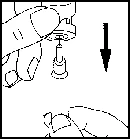
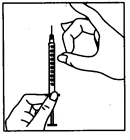
- Remove the protective cap from the vial of diluent. Then attach the reconstitution needle to the syringe and draw air into the syringe by pulling the plunger back to approximately the 1 mL mark. Insert the needle into the diluent vial, push the air into the vial using the plunger, turn the vial upside down, and carefully withdraw all the diluent into the syringe. Carefully place the syringe on the work surface without touching the needle.
|
|
|
|
|
|
|
|
|
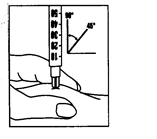
- Disposal of used materials: Immediately after completing the injection, place all needles and empty glass vials into a sharps container. Any unused solution should also be disposed of properly.
Children.
There are no appropriate indications for the use of Pergoveris® in pediatric patients.
Overdose.
The effects of Pergoveris® overdose are unknown; however, there is a possibility of developing ovarian hyperstimulation syndrome (see section "Special precautions for use").
Treatment is symptomatic.
Side effects.
General description of safety profile
When the medicinal product was used, the most frequently reported adverse reactions were headache, ovarian cysts, and local reactions at the injection site (e.g., pain, erythema, hematoma, swelling and/or irritation at the injection site).
Mild or moderate ovarian hyperstimulation syndrome (OHSS) was commonly reported and should be considered an inherent risk of the stimulation procedure. Severe forms of OHSS are uncommon.
Very rarely, thromboembolic events may occur, which are usually associated with severe OHSS.
List of adverse reactions
Adverse reactions observed during administration of the medicinal product are listed below and classified by system organ class and by frequency, defined as follows: very common (≥ 1/10), common (≥ 1/100 to < 1/10), uncommon (≥ 1/1000 to < 1/100), rare (≥ 1/10000 to < 1/1000), very rare (< 1/10000), frequency not known (cannot be estimated from the available data).
Immune system disorders
Very rare: Hypersensitivity reactions ranging from mild to severe, including anaphylactic reactions and shock.
Nervous system disorders
Very common: Headache.
Vascular disorders
Very rare: Thromboembolism, usually associated with severe OHSS.
Respiratory system disorders
Very rare: Worsening or exacerbation of asthma.
Gastrointestinal disorders
Common: Abdominal pain and sensation of abdominal distension, abdominal discomfort, nausea, vomiting, diarrhea.
Reproductive system and breast disorders
Very common: Ovarian cysts.
Common: Breast pain, pelvic pain, mild to moderate OHSS (including associated symptoms).
Uncommon: Severe OHSS (including associated symptoms) (see section "Special precautions").
Rare: Complications of severe OHSS.
General disorders and administration site reactions
Very common: Injection site reactions ranging from mild to severe (e.g., pain, erythema, hematoma, swelling and/or irritation at the injection site).
Reporting suspected adverse reactions after authorization of the medicinal product is important. It allows continued monitoring of the benefit-risk balance of the product. Healthcare and pharmaceutical professionals, as well as patients or their legal representatives, should report any suspected adverse reactions and lack of efficacy via the Automated Pharmacovigilance Information System at: https://aisf.dec.gov.ua.
Shelf life. 3 years.
The product is intended for immediate and single use after first opening of the vial and reconstitution.
Do not use after the expiry date stated on the packaging.
Storage conditions.
Store at temperatures not exceeding 25 °C.
Store in the original packaging to protect from light.
Keep out of reach of children.
Incompatibilities.
Pergeveris® can be mixed with follitropin alfa and both products may be administered together in a single injection.
Packaging.
- Powder for solution for injection in vials, pack of 1 or 3, supplied with solvent (1 ml of water for injection) in vials, pack of 1 or 3, in blister packs; 1 blister pack per cardboard box.
- Powder for solution for injection in vials, pack of 5, supplied with solvent (1 ml of water for injection) in vials, pack of 5, in blister packs; 2 blister packs per cardboard box.
Prescription category. Prescription only.
Manufacturer.
Merck Serono S.A., Aubonne branch / Merck Serono S.A., Succursale d’Aubonne.
Manufacturer's name and address.
Zone Industrielle de l’Ouriettaz, 1170 Aubonne, Switzerland / Zone Industrielle de l’Ouriettaz, 1170 Aubonne, Switzerland.