Pentasa
Ukraine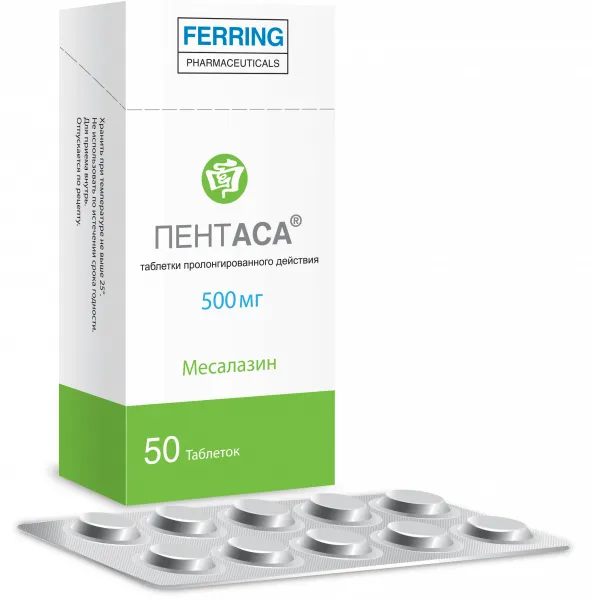
Table of Contents
INSTRUCTIONS FOR MEDICAL USE OF THE MEDICINAL PRODUCT PENTASA (PENTASA®)
Composition:
Active substance: mesalazine;
1 tablet contains 500 mg of mesalazine;
Excipients: povidone, ethylcellulose, magnesium stearate, talc, microcrystalline cellulose.
Pharmaceutical form. Prolonged-release tablets.
Main physicochemical characteristics: round tablets with specks ranging from white-grey to pale brown in color. With a bevel, a score line, and embossing "500" and "mg" on both sides of the score line on one side of the tablet, and "PENTASA" on the other side of the tablet. Diameter: 13.5 mm.
Pharmacotherapeutic group. Anti-inflammatory agents used in intestinal disorders. Aminosalicylic acid and related substances.
ATC code A07EC02.
Pharmacological properties.
Pharmacodynamics.
Mesalazine is the active component of sulfasalazine, which is used for the treatment of ulcerative colitis and Crohn's disease.
Clinical studies indicate that the therapeutic effects of mesalazine following oral and rectal administration are due to its local action on the inflamed areas of the intestinal mucosa rather than systemic effects. Available data suggest that the severity of intestinal inflammation in patients with ulcerative colitis is reversibly correlated with mesalazine concentration in the mucosal tissue.
In patients with inflammatory bowel diseases, increased leukocyte migration, abnormal cytokine production, elevated production of arachidonic acid metabolites (particularly leukotriene B4), and increased concentrations of free radicals in inflamed intestinal tissues have been observed.
The mechanism of action of mesalazine is not fully understood, although mechanisms such as stimulation of peroxisome proliferator-activated receptors gamma (PPAR-γ) and inhibition of nuclear factor kappa-B (NF-κB) in the intestinal mucosa may be involved.
The pharmacological effect of mesalazine in in vitro and in vivo studies includes inhibition of leukocyte chemotaxis, reduction in cytokine and leukotriene production, and neutralization of free radicals. Although not definitively established, these processes are believed to play a key role in the clinical efficacy of mesalazine.
The risk of colorectal cancer is somewhat increased in ulcerative colitis. A comparative analysis of 9 non-experimental studies (3 cohort studies and 6 case-control studies), involving 334 cases of colorectal cancer and 140 cases of dysplasia in 1932 patients with ulcerative colitis, demonstrated that patients treated with mesalazine had a 50% reduction in the risk of developing colorectal cancer, as well as a combined clinical outcome for colorectal cancer and dysplasia. The reduction in colorectal cancer risk is dose-dependent, as indicated by comparative analysis of dose records showing chemopreventive effects of mesalazine at doses ≥ 1.2 g/day. Furthermore, chemoprophylaxis is associated with cumulative lifetime mesalazine exposure. Maintenance therapy with mesalazine has been shown to reduce the risk of colorectal cancer development.
The action of mesalazine, demonstrated in experimental models and patient biopsies, supports its role in preventing colitis-associated colorectal cancer and in reducing the number of inflammation-related and unrelated signaling pathways involved in colitis-induced colorectal carcinogenesis. However, data from a meta-analysis including reference and general populations provided inconclusive clinical evidence regarding the benefit of mesalazine in reducing cancer risk associated with ulcerative colitis.
Pharmacokinetics.
The therapeutic effect of mesalazine is primarily determined by its local contact with the inflamed areas of the intestinal mucosa.
Pentasa, prolonged-release tablets, consists of mesalazine microgranules coated with ethylcellulose. After administration and dissolution, mesalazine is gradually released from each microgranule as the tablet passes through the gastrointestinal tract from the duodenum to the rectum, regardless of intestinal pH. One hour after oral administration, microgranules are detected in the duodenum, independent of food intake. The mean intestinal transit time in healthy volunteers is 3–4 hours.
Absorption. Approximately 30 to 50% of the orally administered dose is absorbed in the small intestine in healthy volunteers. Mesalazine is detectable in blood plasma within 15 minutes after administration, and maximum plasma concentration is reached within 1–6 hours after dosing. Plasma mesalazine concentrations gradually decline and are no longer detectable 12 hours after administration. The plasma concentration-time curve of acetylmesalazine follows a similar pattern, but generally exhibits higher concentrations and slower elimination.
Dosing regimens of mesalazine once daily (1 × 4 g/day) and twice daily (2 × 2 g/day) result in comparable systemic exposure (AUC) over 24 hours, indicating continuous release of mesalazine from the dosage form throughout the treatment period. Steady-state levels are achieved after 5 days of oral administration.
| Mesalazine |
Single dose |
Steady state |
||
| Cmax (ng/mL) |
AUC0–24 (h·ng/mL) |
Cmax (ng/mL) |
AUC0–24 (h·ng/mL) |
|
| 2 g twice daily |
5103.51 |
36,456 |
6803.70 |
57,519 |
| 4 g once daily |
8561.36 |
35,657 |
9742.51 |
50,742 |
The molecular weight of mesalazine is 153.13 g/mol; of acetylmesalazine is 195.17 g/mol.
The passage and release of mesalazine after oral administration are not food-dependent, whereas systemic exposure may increase.
Distribution. Plasma protein binding of mesalazine is approximately 50%, and of acetylmesalazine approximately 80%. Mesalazine and acetylmesalazine do not cross the blood-brain barrier.
Biological transformation. Mesalazine is converted to N-acetylmesalazine (acetylmesalazine) both presystemically in the intestinal mucosa and systemically in the liver, primarily by N-acetyltransferase-1 (NAT-1). Minor acetylation is carried out by colonic bacteria. Acetylation of mesalazine is probably not related to the patient's acetylator phenotype. The plasma metabolic ratio of acetylmesalazine to mesalazine is 3.5 and 1.3, respectively, after oral administration at a dose of 500 mg three times daily and 2 g three times daily, reflecting dose-dependent acetylation, which in turn may be caused by saturation of the drug. Acetylmesalazine is also considered to be clinically and toxicologically inactive.
Elimination. The elimination half-life of mesalazine is approximately 40 minutes, and of acetylmesalazine approximately 70 minutes. Due to the gradual release of mesalazine from the drug during passage through the gastrointestinal tract, the elimination half-life after oral administration cannot be determined. However, steady-state conditions are achieved after 5 days of daily intake.
Mesalazine and acetylmesalazine are excreted in urine and feces. Acetylmesalazine is predominantly present in urine.
In patients with impaired liver or kidney function, due to reduced elimination rate and increased systemic concentration of mesalazine, the risk of kidney damage may increase.
Special patient groups
Pathophysiological changes such as diarrhea and increased intestinal activity observed in active inflammatory bowel disease have only a minor effect on the penetration of mesalazine into the intestinal mucosa after oral administration. In patients with accelerated intestinal transit, a 20–25% increase in daily dose excretion in urine has been observed. Similarly, fecal excretion was increased.
Clinical Characteristics.
Indications.
Ulcerative colitis, mild to moderate severity; Crohn's disease.
Contraindications.
Hypersensitivity to mesalazine, to any component of the drug, or to salicylates. Severe impairment of liver and/or kidney function. Gastric or duodenal ulcer. Hemorrhagic diathesis.
Interaction with other medicinal products and other forms of interaction.
Concomitant treatment with Pentasa and azathioprine, 6-mercaptopurine, or thioguanine has been associated with an increased incidence of myelosuppressive effects in studies; an interaction between these agents is likely. The mechanism of this interaction has not been fully elucidated. It is recommended to regularly monitor leukocyte levels and adjust thiopurine doses accordingly.
There are unconfirmed reports that mesalazine may reduce the anticoagulant effect of warfarin.
Possible enhancement of the hypoglycemic effect of sulfonylurea derivatives and of the toxic effect of methotrexate. The activity of furosemide, spironolactone, sulfonamides, rifampicin, and uricosuric agents (probenecid and sulfinpyrazone) may be reduced. Mesalazine may potentially potentiate the adverse effects of glucocorticoids on gastric mucosa and may reduce digoxin absorption.
Special precautions for use.
Most patients intolerant or hypersensitive to sulfasalazine may use Pentasa without risk of similar reactions. However, the drug should be used with caution in patients with allergy to sulfasalazine (risk of allergy to salicylates).
If acute intolerance symptoms occur, such as abdominal cramps and severe abdominal pain, nausea, severe headache, or rash, treatment should be discontinued immediately.
The drug should be used with caution in patients with impaired liver function.
Liver function tests, such as ALT or AST, should be monitored before or during treatment at the physician's discretion.
The drug is not recommended for use in patients with renal insufficiency. Renal function (e.g., serum urea, serum creatinine, urine sediment, and methemoglobin concentration) should be monitored regularly, especially at the beginning of treatment. The patient's urological status (test strips) should be determined before and during treatment, at the physician's discretion. In patients who develop impaired renal function during treatment, mesalazine-induced nephrotoxicity should be suspected.
Concomitant use of other drugs with known nephrotoxic effects requires more frequent monitoring of renal function.
Cases of nephrolithiasis associated with mesalazine use, including formation of stones composed entirely of mesalazine, have been reported. Patients should be advised to maintain adequate fluid intake during treatment.
Patients with respiratory disorders, particularly bronchial asthma, should be under close medical supervision throughout the treatment course (see section "Adverse reactions").
Mesalazine-induced hypersensitivity reactions affecting the heart (myocarditis and pericarditis) are rare. Hematological abnormalities have been very rarely reported during mesalazine therapy. Before and during treatment, the physician may, at their discretion, recommend blood tests including white blood cell count.
When used concomitantly with azathioprine, 6-mercaptopurine, or thioguanine, the risk of hematological abnormalities may increase (see section "Interaction with other medicinal products and other forms of interaction"). If signs or suspicion of such adverse reactions occur, treatment should be discontinued.
Additional blood and urine tests are recommended 14 days after initiation of treatment, followed by 2–3 additional tests at 4-week intervals. If results remain within normal limits, subsequent tests should be performed every three months. If additional symptoms occur, these tests should be performed immediately.
Interference with laboratory tests
There have been several reports of potential interference with urinary normetanephrine measurement by liquid chromatography, leading to false-positive results in patients exposed to sulfasalazine or its metabolite, mesalamine/mesalazine.
Severe skin adverse reactions
Severe skin adverse reactions (SSARs), including drug reaction with eosinophilia and systemic symptoms (DRESS syndrome), Stevens-Johnson syndrome (SJS), and toxic epidermal necrolysis (TEN), have been reported in association with mesalazine therapy.
Mesalazine should be discontinued at the first signs of severe skin reactions, such as skin rash, mucosal lesions of the gastrointestinal tract, or any other signs of hypersensitivity.
Mesalazine may cause a red-brown discoloration of urine upon contact with sodium hypochlorite-based bleach (e.g., in toilets cleaned with sodium hypochlorite-containing bleaches).
Use during pregnancy or breastfeeding.
Pregnancy.
It is known that mesalazine crosses the placental barrier. The concentration of the drug in umbilical cord plasma is lower than that in maternal plasma. Equal concentrations of the metabolite acetylmesalazine are found in both umbilical and maternal plasma.
In several non-experimental studies, no teratogenic effects or evidence of significant risk in humans have been observed. Animal studies with oral mesalazine did not reveal any direct or indirect harmful effects on pregnancy, embryonic and fetal development, parturition, or postnatal development.
Appropriate well-controlled studies on the use of Pentasa in pregnant women are lacking. Limited published data on mesalazine suggest no increased overall risk of congenital malformations.
Some data indicate an increased risk of preterm birth, stillbirth, and low birth weight; however, these adverse pregnancy outcomes may also be related to active inflammatory bowel disease.
Cases of hematological disorders (pancytopenia, leukopenia, thrombocytopenia, anemia) have been reported in newborns whose mothers used mesalazine.
Renal insufficiency in a newborn has been reported in only one case following prolonged high-dose mesalazine use (2–4 g orally) during pregnancy.
Mesalazine may be used during pregnancy only if, in the physician’s opinion, the potential benefit to the mother outweighs the potential risk to the fetus. The underlying disease (inflammatory bowel disease) itself may increase the risk of adverse pregnancy outcomes.
Breastfeeding.
Mesalazine passes into breast milk. The concentration of mesalazine in breast milk is lower than in maternal plasma, whereas the metabolite formed (acetylmesalazine) appears in milk at similar or higher concentrations.
Data on oral administration of the drug during breastfeeding are limited. Controlled studies on the effect of Pentasa during breastfeeding have not been conducted. Hypersensitivity reactions such as diarrhea in infants cannot be excluded. If diarrhea develops in a breastfed infant, breastfeeding should be discontinued.
Pentasa may be taken during breastfeeding, but only if, in the physician’s opinion, the potential benefit to the mother outweighs the potential risk to the infant.
Fertility.
Animal studies have demonstrated no effect of mesalazine on fertility in males or females.
Ability to affect reaction speed when driving or operating machinery.
Mesalazine has no effect or a negligible effect on the ability to drive or operate machinery. If dizziness occurs during treatment, patients should refrain from driving.
Method of administration and dosage.
| Adults Individual dosing. |
|||
| Ulcerative colitis |
Crohn's disease |
||
| Acute phase |
Up to 4 g of mesalazine once daily or in divided doses (divided into 2–3 doses). |
Up to 4 g of mesalazine daily in divided doses (divided into 2–3 doses). |
|
| Maintenance therapy |
Recommended dose is 2 g of mesalazine once daily. |
Up to 4 g of mesalazine daily in divided doses. |
|
| Children (≥ 6 years) Individual dosing. There are only limited documented data on efficacy in children aged 6–18 years. |
|||
| Ulcerative colitis |
Crohn's disease |
||
| Acute phase |
Initial dose – 30–50 mg/kg/day in divided doses. Maximum dose – 75 mg/kg/day in divided doses. Total dose – not more than 4 g/day (maximum dose for adults). |
||
| Maintenance therapy |
Initial dose – 15–30 mg/kg/day in divided doses. Total dose – not more than 2 g/day (recommended dose for adults). |
Initial dose – 15–30 mg/kg/day in divided doses. Total dose – not more than 4 g/day (recommended dose for adults). |
|
As a rule, children with a body weight of less than 40 kg should receive half the adult dose, while children with a body weight over 40 kg should receive the full adult dose.
Tablets should be taken orally without chewing. For easier swallowing, the tablet may be dissolved in 50 ml of cold water. The solution should be stirred and taken immediately.
The duration of treatment is determined by the physician depending on the course of the disease.
Children.
The drug should not be used for the treatment of children under 6 years of age.
Overdose.
There is only limited clinical experience with overdose of Pentasa, which does not indicate the presence of renal or hepatic toxicity. There is no specific antidote; treatment should be symptomatic and supportive. There have been reports of patients taking daily doses of up to 8 g of the drug for a month without experiencing any adverse effects.
Due to the formulation of prolonged-release granules and the specific pharmacokinetic properties of mesalazine, poisoning is not expected even after ingestion of large doses of the drug.
In general, symptoms would correspond to those of salicylate poisoning: acid-base imbalance, hyperventilation and pulmonary edema, dehydration caused by sweating and vomiting, hypoglycemia.
Treatment of overdose: in cases of acidosis or alkalosis – restoration of acid-base and electrolyte balance; in dehydration – rehydration; in hypoglycemia – administration of glucose. Additionally, intravenous infusion of electrolyte solutions should be performed to increase diuresis. Close monitoring of kidney function is required.
Side effects
The most commonly observed side effects during clinical trials were: diarrhea, nausea, abdominal pain, headache, vomiting, and rash. Hypersensitivity reactions and drug fever are occasionally observed.
Severe cutaneous adverse reactions (SCARs) have been reported with mesalazine treatment, including drug reaction with eosinophilia and systemic symptoms (DRESS syndrome), Stevens-Johnson syndrome (SJS), and toxic epidermal necrolysis (TEN) (see section "Special precautions").
The frequency of adverse effects reported during clinical trials and post-marketing surveillance is defined as follows: common (≥ 1/100 to < 1/10), rare (≥ 1/10,000 to < 1/1,000), very rare (< 1/10,000), frequency not known (cannot be estimated based on available data).
Blood and lymphatic system disorders: very rare – eosinophilia (as part of an allergic reaction), anemia, aplastic anemia, leucopenia (including granulocytopenia and neutropenia), thrombocytopenia, agranulocytosis, pancytopenia.
Immune system disorders: very rare – pancolitis, hypersensitivity reactions, including anaphylactic reactions, drug reactions with eosinophilia and systemic symptoms (DRESS syndrome).
Nervous system disorders: common – headache; rare – dizziness; very rare – peripheral neuropathy, benign intracranial hypertension (in children during puberty).
Cardiac disorders: rare – myocarditis*, pericarditis*.
Respiratory, thoracic and mediastinal disorders: very rare – allergic and fibrotic lung changes (including dyspnea, cough, bronchospasm, allergic alveolitis, pulmonary eosinophilia, interstitial lung disease, lung infiltration, pneumonitis).
Gastrointestinal disorders: common – diarrhea, abdominal pain, nausea, vomiting, flatulence; rare – increased amylase levels, acute pancreatitis*; very rare – pancolitis.
Hepatobiliary disorders: very rare – liver function abnormalities, including elevated liver enzymes, cholestatic parameters (e.g., increased alkaline phosphatase, gamma-glutamyl transferase, and bilirubin), hepatotoxicity (including hepatitis*, cholestatic hepatitis, cirrhosis, liver failure).
Skin and subcutaneous tissue disorders: common – rash (including urticaria, erythematous rash); rare – photosensitivity reactions**; very rare – reversible alopecia, angioedema, allergic dermatitis, erythema multiforme; frequency not known – Stevens-Johnson syndrome, toxic epidermal necrolysis, drug reaction with eosinophilia and systemic symptoms (DRESS syndrome).
Musculoskeletal and connective tissue disorders: very rare – myalgia, arthralgia, lupus-like reactions.
Renal and urinary disorders: very rare – renal function abnormalities (including acute and chronic interstitial nephritis*, nephrotic syndrome, acute and chronic renal failure, which may resolve upon discontinuation of the drug); frequency not known – nephrolithiasis***, change in urine color***.
Reproductive system and breast disorders: very rare – oligospermia (reversible).
General disorders: very rare – drug fever.
*The mechanism of mesalazine-induced myocarditis, pericarditis, pancreatitis, nephritis, and hepatitis is unknown, but an allergic origin is possible.
**Photosensitivity: more severe reactions have been reported in patients with pre-existing skin conditions such as atopic dermatitis and atopic eczema.
***See section "Special precautions" for detailed information.
It is important to note that some of these disorders may be related to the underlying inflammatory bowel disease.
Reporting of suspected adverse reactions
Reporting suspected adverse reactions after drug authorization is important. It allows continued monitoring of the benefit-risk balance of the medicinal product. Healthcare professionals are requested to report any suspected adverse reactions via the national reporting system.
Shelf life. 3 years.
Storage conditions.
Keep out of reach and sight of children. Store at temperatures not exceeding 25°C, protected from light.
Packaging. 10 tablets per blister, 5 or 10 blisters per cardboard box.
Prescription category. Prescription only.
Manufacturer.
Ferring GmbH, Germany.
Address of manufacturer and location of its operations.
Wittland 11, 24109 Kiel, Germany.