Pentalgin-zdorovya
Ukraine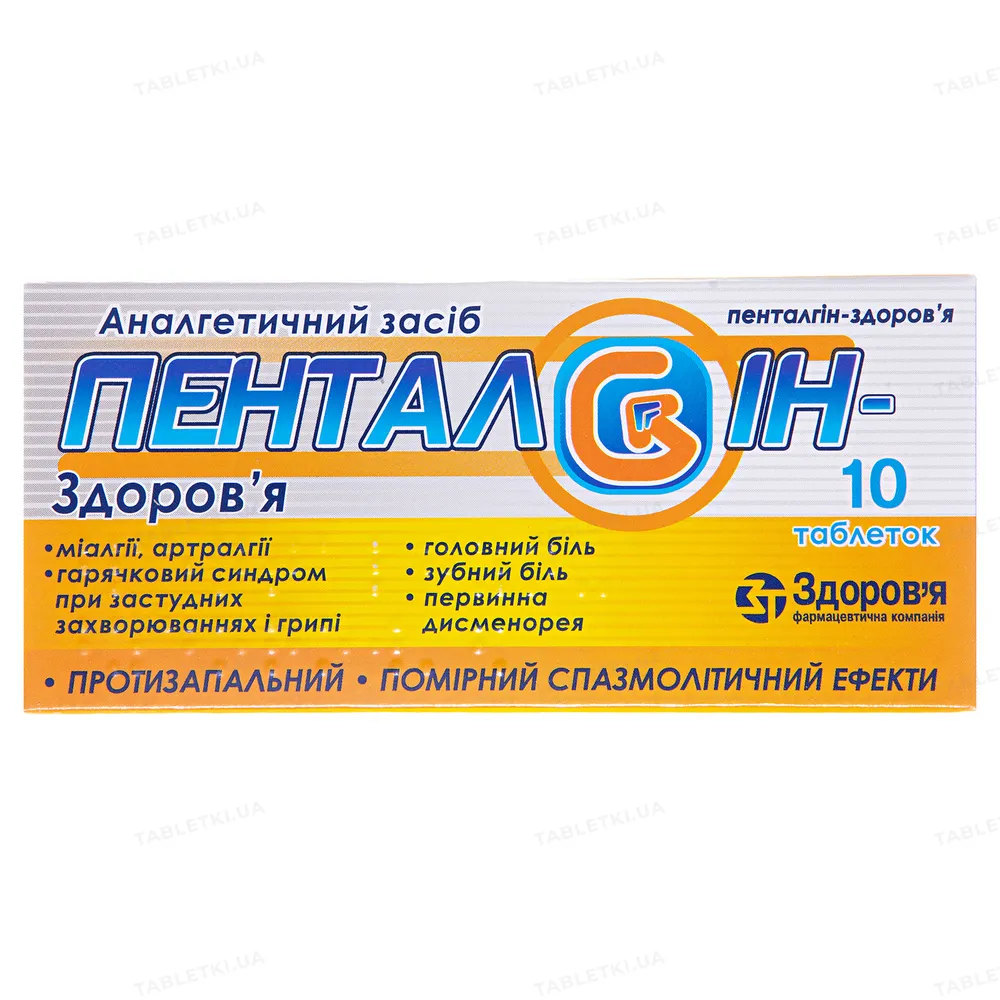
Table of Contents
INSTRUCTION FOR MEDICAL USE OF THE MEDICINAL PRODUCT PENTALGIN-ZDOROVYE (PENTALGIN-ZDOROVYE)
Composition:
Active substances: 1 tablet contains paracetamol DS 90 % calculated as paracetamol 210 mg, propyphenazone 210 mg, caffeine 50 mg, phenobarbital 20 mg, codeine phosphate 10 mg;
Excipients: microcrystalline cellulose; maize starch; lactose monohydrate; magnesium stearate; sodium croscarmellose; sodium lauryl sulfate; polyethylene glycol; talc; colloidal anhydrous silicon dioxide.
Pharmaceutical form. Tablets.
Main physicochemical properties: tablets are white or white with a creamy shade, with a flat surface, beveled edge and a score line.
Pharmacotherapeutic group. Analgesics and antipyretics. Propyphenazone combinations with psycholeptics. ATC code N02B B74.
Pharmacological Properties
Pharmacodynamics
An analgesic and antipyretic agent. The pharmacological effects of the drug are determined by the properties of its active ingredients.
Paracetamol is a non-narcotic analgesic that exerts analgesic and antipyretic effects by inhibiting the synthesis of prostaglandins and other mediators of pain and inflammation, primarily in the central nervous system (CNS). It reduces the excitability of the thermoregulatory center in the hypothalamus.
Propyphenazone exhibits pronounced analgesic and antipyretic effects due to blockade of prostaglandin synthesis, primarily in the CNS. At high doses, it also demonstrates anti-inflammatory and moderate spasmolytic effects.
Codeine produces analgesic effects by stimulating opioid receptors in various regions of the CNS and peripheral tissues, resulting in activation of the antinociceptive system and reduced emotional perception of pain. It also exerts a central antitussive effect by suppressing excitability of the cough center.
Phenobarbital exerts a depressant effect on the CNS, with sedative, hypnotic, and some myorelaxant properties. It reduces emotional response to pain sensations.
Caffeine stimulates psychomotor centers in the brain, exhibits analeptic activity, enhances the effect of analgesics, counteracts drowsiness and fatigue, and increases physical and mental performance.
Pharmacokinetics
Paracetamol is rapidly absorbed in the gastrointestinal tract and binds to plasma proteins. The plasma half-life is 1–4 hours. It is metabolized in the liver to form paracetamol glucuronide and sulfate. It is excreted by the kidneys mainly as conjugation products, with less than 5% excreted unchanged.
Caffeine is well absorbed throughout the intestine. It is metabolized in the liver and excreted in urine (10% unchanged).
Phenobarbital is completely but slowly absorbed. It is metabolized in the liver and induces hepatic microsomal enzymes. The elimination half-life is 3–4 days. It is excreted by the kidneys as inactive metabolites, with 25–50% excreted unchanged. It readily crosses the placental barrier.
Codeine, due to its lipophilicity, rapidly penetrates the blood-brain barrier and accumulates in fatty tissue and, to a lesser extent, in tissues with high perfusion rates (lungs, liver, kidneys, and spleen). Codeine is hydrolyzed in tissues by esterases (with cleavage of the methyl group), followed by conjugation in the liver with glucuronic acid. Codeine metabolites possess their own analgesic activity. Codeine is excreted mainly as metabolites in urine; a significantly smaller portion of metabolites conjugated with glucuronic acid is excreted in bile. In patients with renal insufficiency, accumulation of these active metabolites may occur, prolonging the drug's duration of action.
Propyphenazone is rapidly and completely absorbed after oral administration.
Propyphenazone is metabolized primarily in the liver, forming the main metabolite N-desmethylpropyphenazone.
The administered dose of propyphenazone is excreted in urine predominantly as a glucuronic acid conjugate.
Propyphenazone crosses the placenta and is also excreted in breast milk.
In hepatic and renal insufficiency, metabolism and excretion of propyphenazone may be impaired.
Clinical characteristics.
Indications.
Mild to moderate pain of various origins: headache, toothache, neuralgia, myalgia, arthralgia, primary dysmenorrhea. Fever associated with colds and influenza.
Contraindications.
Individual hypersensitivity to components of the medicinal product, as well as to pyrazolone or related compounds (containing phenazone, propyphenazone, aminophenazone, metamizole), acetylsalicylic acid, phenylbutazone, opioid analgesics. Severe hepatic and/or renal insufficiency, peptic ulcer of the stomach and duodenum in the stage of exacerbation, glucose-6-phosphate dehydrogenase deficiency, anemia, leukopenia, granulocytopenia, agranulocytosis, respiratory diseases with dyspnea and obstructive syndrome (including bronchial asthma; conditions accompanied by respiratory depression); intracranial hypertension, arterial hypertension, marked arterial hypotension, acute myocardial infarction, alcohol intoxication, alcoholism, glaucoma; sleep disorders and increased excitability, acute porphyria; congenital hyperbilirubinemia (including Gilbert's syndrome), drug and narcotic dependence (including in medical history), pancreatitis, diabetes mellitus, prostate hypertrophy; blood disorders; organic cardiovascular diseases (decompensated heart failure, conduction disorders, severe atherosclerosis, tendency to vascular spasm, ischemic heart disease); epilepsy, hyperthyroidism; depression and/or depressive disorders with patient's tendency to suicidal behavior, myasthenia, elderly age; head trauma, postoperative period after surgery on biliary tract. Do not use simultaneously with monoamine oxidase inhibitors (MAOIs) and within 2 weeks after discontinuation of MAOIs; contraindicated in patients taking tricyclic antidepressants or β-blockers. Use of the medicinal product is contraindicated if there is suspicion of acute surgical pathology in the patient before diagnosis is established.
Use of the medicinal product is contraindicated in the following patient groups:
- children under 12 years of age;
- children aged 12 to 18 years undergoing tonsillectomy and/or adenoidectomy to prevent development of obstructive sleep apnea;
- children aged 12 to 18 years with compromised respiratory function;
- women during pregnancy or breastfeeding;
- patients of any age who are ultra-rapid metabolizers via CYP2D6.
Interaction with other medicinal products and other types of interactions.
When used concomitantly with drugs that depress the CNS (sedatives, hypnotics, tranquilizers, muscle relaxants, alcohol), mutual enhancement of adverse effects is possible (CNS depression, respiratory center depression, development of hypotension).
When co-administered with microsomal oxidation inducers (barbiturates, carbamazepine, phenytoin, nicotine, rifampicin, salicylamide, etc.), tricyclic antidepressants, or with alcohol consumption, the risk of hepatotoxic effects significantly increases.
Concomitant use with drugs containing paracetamol may lead to paracetamol overdose. Concomitant use of paracetamol with hepatotoxic agents (alcohol, phenytoin, carbamazepine, isoniazid, and rifampicin) increases the toxic effects of the drugs on the liver. Paracetamol reduces the effectiveness of diuretics. The absorption rate of paracetamol may be increased by domperidone.
Caution should be exercised when using paracetamol concomitantly with flucloxacillin, as such concomitant use is associated with metabolic acidosis with a high anion gap due to pyroglutamic acidosis, particularly in patients with risk factors (see section "Special precautions for use").
Concomitant use with oral anticoagulants (acenocoumarol, warfarin) or nonsteroidal anti-inflammatory drugs may lead to gastrointestinal adverse effects.
Caffeine enhances the action (improves bioavailability) of analgesic-antipyretic agents, potentiates the effects of xanthine derivatives, α- and β-adrenergic agonists, psychostimulants, and MAO inhibitors (furazolidone, procarbazine, selegiline).
Caffeine reduces the effectiveness of anxiolytics, hypnotics, and sedatives; it is an antagonist of anesthetic agents and other drugs that depress the CNS, and a competitive antagonist of adenosine and adenosine triphosphate preparations. When used concomitantly with ergotamine, caffeine improves ergotamine absorption from the gastrointestinal tract; when used with thyroid-stimulating agents, it increases thyroid effect. Caffeine reduces blood lithium concentration. Hormonal contraceptives and isoniazid enhance the effect of caffeine.
Codeine may inhibit the effects of metoclopramide and domperidone on gastrointestinal motility. Codeine may enhance the effects of CNS depressants (including alcohol, anesthetics, hypnotic drugs, sedatives, tricyclic antidepressants, phenothiazine tranquilizers); however, this interaction is not clinically significant when recommended doses of the drug are used.
Phenobarbital induces liver enzymes and thus may accelerate the metabolism of certain drugs metabolized by these enzymes (including indirect anticoagulants, cardiac glycosides, antimicrobial, antiviral, antifungal, antiepileptic, anticonvulsant, oral hypoglycemic, hormonal, immunosuppressive, cytostatic, antiarrhythmic, antihypertensive drugs, etc.). Phenobarbital enhances the effects of analgesics, local anesthetics, and CNS depressant drugs (anesthetics, neuroleptics, tranquilizers), and alcohol.
Concomitant use of phenobarbital with other drugs exhibiting sedative effects leads to enhanced sedative-hypnotic effect and may be accompanied by respiratory depression. Drugs with acidic properties (ascorbic acid, ammonium chloride) enhance the effect of barbiturates. Possible influence on blood concentrations of phenytoin, as well as carbamazepine and clonazepam. MAO inhibitors prolong the effects of phenobarbital.
Rifampicin may reduce the effect of phenobarbital. When used concomitantly with gold preparations, the risk of kidney damage increases.
With prolonged concomitant use with nonsteroidal anti-inflammatory drugs, there is a risk of gastric ulcer formation and bleeding.
Concomitant use of phenobarbital with zidovudine enhances the toxicity of both drugs. Phenobarbital may accelerate the metabolism of oral contraceptives, leading to loss of their effect.
Long-term use of anticonvulsant drugs may reduce the effectiveness of paracetamol.
Repeated administration of paracetamol may potentiate the effect of anticoagulants (dicoumarol derivatives).
When used concomitantly with antiarrhythmic agents, phenobarbital enhances the hypotensive effect of sotalol and accelerates the metabolism of mexiletine.
Propyphenazone may enhance the effects of oral antidiabetic agents, sulfonamide preparations, anticoagulants, and ulcerogenic effects of corticosteroids.
The effectiveness of the drug may be reduced when used concomitantly with cholestyramine, cholinolytics, antidepressants, and alkaline substances.
Paracetamol accelerates the elimination of chloramphenicol; metoclopramide accelerates the absorption of paracetamol.
Caffeine accelerates the absorption of ergotamine.
Special precautions for use
Medical advice should be sought regarding the possibility of using the medicinal product in patients with renal or hepatic impairment (see section "Contraindications"). Prior to administration, medical consultation is necessary if the patient is taking warfarin or similar anticoagulant agents.
Cases of high anion gap metabolic acidosis (HAGMA) due to 5-oxoproline (pyroglutamic acid) accumulation have been reported in patients with severe underlying conditions such as severe renal insufficiency and sepsis, or in patients with malnutrition or other causes of glutathione deficiency (e.g., chronic alcoholism), who were treated with therapeutic doses of paracetamol over a prolonged period or in combination with flucloxacillin. If HAGMA due to pyroglutamic acidosis is suspected, immediate discontinuation of paracetamol is recommended, along with careful monitoring of the patient’s condition. Measurement of urinary 5-oxoproline levels may be useful in identifying pyroglutamic acidosis as the underlying cause of HAGMA in patients with multiple risk factors.
Frequent unjustified use of codeine, as well as high-dose intake, may lead to gastrointestinal adverse reactions. Codeine inhibits intestinal peristalsis to a lesser extent than morphine, but prolonged use may still cause constipation.
The risk of developing Stevens–Johnson syndrome and toxic epidermal necrolysis (Lyell’s syndrome) is highest during the first weeks of treatment.
Use with caution in patients with peptic ulcer disease of the stomach and duodenum in remission (see section "Contraindications"), and in patients with polyneuropathies.
Excessive consumption of caffeine-containing products (coffee, tea) during treatment may cause symptoms of overdose. In very large doses, caffeine may lead to exhaustion of nerve cells.
Prolonged uncontrolled use of the drug in high doses may lead to tolerance (reduced analgesic effect), dependence on the drug (due to the presence of codeine), and renal and/or hepatic insufficiency.
If treatment lasts more than 7 days, monitoring of peripheral blood count and liver function (liver transaminase activity) is required.
The medicinal product may alter the results of athletes’ doping control tests and may complicate diagnosis in cases of acute abdomen. Alcohol consumption must be avoided during treatment.
Prolonged use of the drug should be avoided due to the risk of accumulation and dependence, and withdrawal syndrome may occur. If chest pain does not resolve after taking the drug, medical advice must be sought to rule out acute coronary syndrome. Use with caution in patients with thyroid disorders (including hypothyroidism; see section "Contraindications"), mild to moderate hypotension, hyperkinesias, adrenal insufficiency, acute or persistent pain, acute intoxication with medicinal products, and inflammatory or obstructive gastrointestinal diseases. The risk of neutropenia and agranulocytosis is primarily associated with propyphenazone. If such a reaction occurs after taking the drug (e.g., fever, sore throat, oral ulcers and abscesses, perianal abscesses, and decreased granulocyte count in blood), administration should be discontinued immediately. These adverse effects are usually reversible and resolve within 1–2 weeks.
Metabolism involving CYP2D6
Codeine is converted to its active metabolite—morphine—in the liver by the CYP2D6 enzyme. If a patient has a deficiency or complete absence of this enzyme, adequate analgesic effect will not be achieved. Up to 7% of Caucasian population may have this CYP2D6 metabolic characteristic. However, if a patient is an ultra-rapid metabolizer via CYP2D6, there is an increased risk of adverse effects—symptoms of opioid toxicity—even when standard doses are used. In such patients, rapid conversion of codeine to morphine leads to higher-than-expected serum morphine concentrations.
General symptoms of opioid toxicity include confusion, drowsiness, shallow breathing, pinpoint pupils, nausea, vomiting, constipation, and loss of appetite. In severe cases, circulatory and respiratory depression may occur, which can be life-threatening and very rarely fatal.
Data on the prevalence of CYP2D6 ultra-rapid metabolizers in various populations are provided below:
| Population |
Prevalence, % |
| Africans/Ethiopians |
29 |
| African Americans |
3.4–6.5 |
| Mongoloids |
1.2–2 |
| Caucasians |
3.6–6.5 |
| Greeks |
6 |
| Hungarians |
1.9 |
| Northern Europeans |
1–2 |
Postoperative use in children
There have been reports of life-threatening adverse events, including fatalities, associated with the use of codeine in children after tonsillectomy and/or adenoidectomy for the prevention of obstructive sleep apnea (see section "Contraindications"). All children received codeine doses within the recommended range. However, evidence suggests that these children were either ultra-rapid or extensive metabolizers of codeine.
Children with compromised respiratory function
Codeine is contraindicated in children whose respiratory function may be compromised by neuromuscular disorders, severe cardiac or respiratory diseases, upper respiratory tract infections or lung infections, multiple trauma, or major surgical procedures. These factors may exacerbate symptoms of morphine toxicity.
If a patient has known sugar intolerances, a physician should be consulted before taking this medication.
It should be noted that patients with alcoholic liver disease have an increased risk of hepatotoxic effects of paracetamol; the drug may also affect laboratory test results for blood glucose and uric acid levels.
Patients who take analgesics daily for mild forms of arthritis should consult a physician.
Do not exceed the recommended doses.
Do not take this medication with other products containing paracetamol.
If symptoms persist, consult a physician.
If headaches become persistent, consult a physician.
Use during pregnancy or breastfeeding.
This medication is contraindicated during pregnancy and breastfeeding.
Pregnancy.
There have been reports suggesting a possible association between congenital respiratory and cardiac malformations in infants and codeine use during the first trimester of pregnancy. Regular use of codeine during pregnancy may lead to physical dependence in the fetus, resulting in withdrawal symptoms in the newborn. Codeine use during labor may depress respiration in the newborn. The use of opioid analgesics may cause gastric stasis during labor, increasing the risk of aspiration pneumonia in the mother.
Increased risk of fetal abnormalities has been reported with barbiturate use. Phenobarbital use during the third trimester of pregnancy may result in physical dependence, leading to withdrawal syndrome in the newborn, manifested by seizures, irritability, and coagulation disorders. Phenobarbital use during labor may cause respiratory depression in the newborn.
Breastfeeding period.
The use of this medication during breastfeeding is contraindicated.
When used at normal therapeutic doses, codeine and its active metabolite may be present in breast milk at very low concentrations, which are unlikely to have a negative effect on the infant. However, if the patient is an ultra-rapid metabolizer via CYP2D6, higher levels of morphine may accumulate in breast milk, and in very rare cases, this may lead to potentially fatal opioid toxicity symptoms in the infant.
Phenobarbital passes into breast milk in significant amounts and may cause CNS depression.
Ability to affect reaction speed when driving or operating machinery.
During treatment with this drug, patients should avoid potentially hazardous activities requiring increased attention, concentration, and speed of mental and motor reactions.
Dosage and Administration
Adults are prescribed 1–2 tablets 1–3 times daily. It is advisable to take the tablets after meals, swallowing them with a small amount of water.
Children aged 12 years and older are prescribed ½–1 tablet 1–2 times daily.
The maximum daily dose is 6 tablets (in 3–4 divided doses) for adults and 3 tablets for children aged 12 years and older.
The duration of treatment depends on therapeutic efficacy and response, and usually does not exceed 5 days when treating pain syndrome and 3 days when treating fever.
Children. The drug is indicated for children aged 12 years and older.
The use of the drug is contraindicated in children under 12 years of age due to the risk of developing serious and life-threatening adverse reactions resulting from the variable and unpredictable metabolism of codeine to morphine in this age group (see section "Contraindications").
Codeine must not be used in children aged 12 to 18 years who are undergoing tonsillectomy and/or adenoidectomy for the prevention of postoperative obstructive sleep apnea, due to the risk of serious and life-threatening adverse reactions (see sections "Contraindications", "Special Warnings and Precautions").
Codeine must not be used in children aged 12 to 18 years with compromised respiratory function due to the risk of serious and life-threatening adverse reactions (see sections "Contraindications", "Special Warnings and Precautions").
Codeine must not be used in children aged 12 to 18 years who are ultra-rapid metabolizers via CYP2D6 (see sections "Contraindications", "Special Warnings and Precautions").
Overdose
In overdose, each active component may cause specific symptoms. Overdose is usually related to paracetamol.
Symptoms: exceeding the recommended doses may cause nausea, vomiting, gastralgia, increased sweating, pallor, tachycardia, arrhythmia, respiratory center depression, disorientation, arterial hypotension, anorexia, abdominal pain, hepatonecrosis, elevated liver transaminase activity, prolonged prothrombin time. Large doses of the drug may lead to hypothermia, bradycardia, reduced diuresis, central nervous system (CNS) depression, progressing to coma.
Paracetamol. In patients with risk factors (chronic use of carbamazepine, phenobarbital, phenytoin, primidone, rifampicin, St. John’s wort, or other drugs inducing liver enzymes; alcohol abuse; glutathione deficiency, e.g. due to malnutrition, AIDS, fasting, cystic fibrosis, cachexia), ingestion of 5 g or more of paracetamol may result in liver damage. It should be noted that paracetamol doses exceeding 6 g may cause severe hepatotoxicity. Liver injury may manifest 12–48 hours after overdose. Glucose metabolism disturbances and metabolic acidosis may occur. In severe poisoning, liver failure may progress, leading to hemorrhage, hypoglycemia, and toxic encephalopathy with impaired consciousness, in some cases resulting in death. Acute renal failure with acute tubular necrosis may present as severe lumbar pain, hematuria, proteinuria, and may develop even in the absence of severe kidney damage. Cardiac arrhythmias and pancreatitis have also been reported. Liver injury is possible in adults who have ingested 10 g or more of paracetamol and in children who have ingested more than 150 mg/kg body weight.
Codeine. In case of codeine overdose, acute respiratory center depression may occur, manifesting as cyanosis, slowed breathing, drowsiness, and rarely, pulmonary edema. Dyspnea, apnea, arterial hypotension, seizures, and urinary retention are also possible.
Caffeine. Large doses of caffeine may cause epigastric pain, vomiting, increased diuresis, hyperventilation, extrasystoles, tachycardia, or cardiac arrhythmia; and may affect the CNS (loss of consciousness, insomnia, nervous excitation, irritability, mood disturbances, anxiety, tremor, seizures).
Propyphenazone. Propyphenazone overdose may lead to CNS effects (seizures, coma).
Phenobarbital. In case of phenobarbital overdose, symptoms may include nausea, ataxia, nystagmus, respiratory depression up to respiratory arrest, headache, tachycardia, weakness, cardiovascular depression including arrhythmias, decreased blood pressure, and even collapse.
Treatment: discontinue the drug, gastric lavage, administration of intestinal adsorbents (activated charcoal, etc.), symptomatic therapy.
Treatment of paracetamol overdose: prompt medical intervention is required in paracetamol overdose. The patient should be immediately hospitalized. Symptoms may be limited to nausea and vomiting or may not reflect the severity of overdose or risk of organ damage. Administration of activated charcoal should be considered if excessive paracetamol dose was ingested within the past 1 hour. Plasma paracetamol concentration should be measured 4 hours or more after ingestion (earlier measurements are unreliable).
Antidotes for paracetamol are acetylcysteine and methionine. Treatment with N-acetylcysteine may be administered within 24 hours after paracetamol ingestion, but maximum protective effect is achieved when administered within 8 hours. The efficacy of the antidote decreases sharply after this period. If necessary, intravenous N-acetylcysteine should be administered at recommended doses. In the absence of vomiting, oral methionine may be used as an alternative in remote areas outside hospital settings. General supportive measures should also be implemented.
Treatment of codeine overdose: symptomatic therapy, including measures to support respiratory function: monitoring of vital signs (pulse, respiration, body temperature, blood pressure). Administer naloxone in cases of coma or respiratory depression. The patient should be observed for at least 4 hours after administration, or 8 hours if supportive therapy is required.
Adverse Reactions
The drug must be discontinued and immediate medical advice sought if adverse reactions occur.
Therapeutic doses of the drug are generally well tolerated. Adverse reactions are mainly due to the presence of paracetamol in the formulation.
Gastrointestinal system: nausea, vomiting, constipation, sensation of fullness and epigastric pain; with prolonged use of high doses, hepatotoxic effects, hepatic necrosis (dose-dependent effect), dyspepsia, heartburn, dry mouth, oral mucosal ulcers, acute pancreatitis in patients with a history of cholecystectomy.
Hepatobiliary system: liver function disturbances, including liver failure (hepatotoxicity is usually associated with paracetamol overdose), increased liver enzyme activity, jaundice.
Metabolism and nutrition: metabolic acidosis with high anion gap.
Cases of metabolic acidosis with high anion gap as a result of pyroglutamic acidosis have been observed in patients with risk factors who were taking paracetamol (see section "Special precautions for use"). Pyroglutamic acidosis may occur as a result of low glutathione levels in these patients.
Nervous system: dizziness, drowsiness, reduced speed of mental and motor reactions, impaired concentration, psychomotor agitation and disorientation, paradoxical excitation, headache, tremor, paresthesia, restlessness, fear, irritability, sleep disturbances, insomnia, confusion, euphoria, dysphoria, hallucinations, anxiety, sedation; with prolonged use at high doses, dependence may develop. Also ataxia, impaired coordination, nystagmus, fatigue, cognitive disorders, general weakness, depression, hyperkinesia (in children), asthenia.
Cardiovascular system: collapse, palpitations, tachycardia, changes in blood pressure, arterial hypotension, arrhythmia, bradycardia, chest pain.
Blood and lymphatic system: anemia, including megaloblastic and hemolytic anemia, bruising or bleeding; sulfhemoglobinemia and methemoglobinemia (cyanosis, dyspnea, chest pain), leukopenia, granulocytopenia, agranulocytosis, leukocytosis, lymphocytosis. With prolonged use at high doses – aplastic anemia, pancytopenia, agranulocytosis, neutropenia, thrombocytopenia.
Urinary system: urinary retention, impaired kidney function, renal colic, interstitial nephritis, papillary necrosis. With prolonged use at high doses, nephrotoxic effects may occur (renal colic, interstitial nephritis, papillary necrosis).
Immune system: anaphylaxis, hypersensitivity reactions, including skin itching, skin and mucous membrane rashes (usually generalized rash, erythematous rash, urticaria), angioedema, erythema multiforme (including Stevens–Johnson syndrome), toxic epidermal necrolysis (Lyell’s syndrome).
Skin and subcutaneous tissues: exfoliative dermatitis, purpura, allergic dermatitis, hemorrhages, photosensitization.
Respiratory system: bronchospasm in patients sensitive to nonsteroidal anti-inflammatory drugs, dyspnea.
Other: hypoglycemia, up to hypoglycemic coma, miosis, increased sweating. With prolonged use, there is a risk of impaired osteogenesis, folate deficiency, impotence, withdrawal syndrome, which usually may occur after abrupt discontinuation of the drug and is characterized by the appearance of nightmares, nervousness, increased body temperature, and enlarged lymph nodes.
Shelf life. 2 years.
Storage conditions. Store in the original packaging at a temperature not exceeding 25 °C.
Keep out of reach of children.
Packaging. 10 tablets per blister, 1 or 2 blisters per cardboard box.
Prescription status. Prescription only.
Manufacturer. LIMITED LIABILITY COMPANY "CORPORATION "ZDOROVIYA".
Manufacturer's address and place of business.
22, Shevchenka Street, Kharkiv, Kharkiv Oblast, 61013, Ukraine.